21 Modern Long Narrow Hallway Ideas for a More Polished, Spacious Look
A long, narrow hallway can be one of the trickiest areas of a home to decorate. There may be plenty of wall space, yet very little usable floor area. Add too much furniture and the passage feels cramped; leave everything empty and it can feel unfinished. The most successful approach is usually to work with the hallway’s length rather than fight against it.
That doesn’t require an expensive renovation. A runner, carefully placed mirrors, warm lighting, or a coordinated wall treatment can make an ordinary hallway feel much more considered. On the other end of the budget, custom millwork, natural stone, architectural lighting, and full-height paneling can turn the same type of passage into a sophisticated design feature.
The 21 modern long narrow hallway ideas below deliberately cover both ends of that spectrum—from attainable changes suitable for apartments and everyday family homes to polished luxury concepts for larger renovation budgets.
1. Keep the Foundation Light and Warm
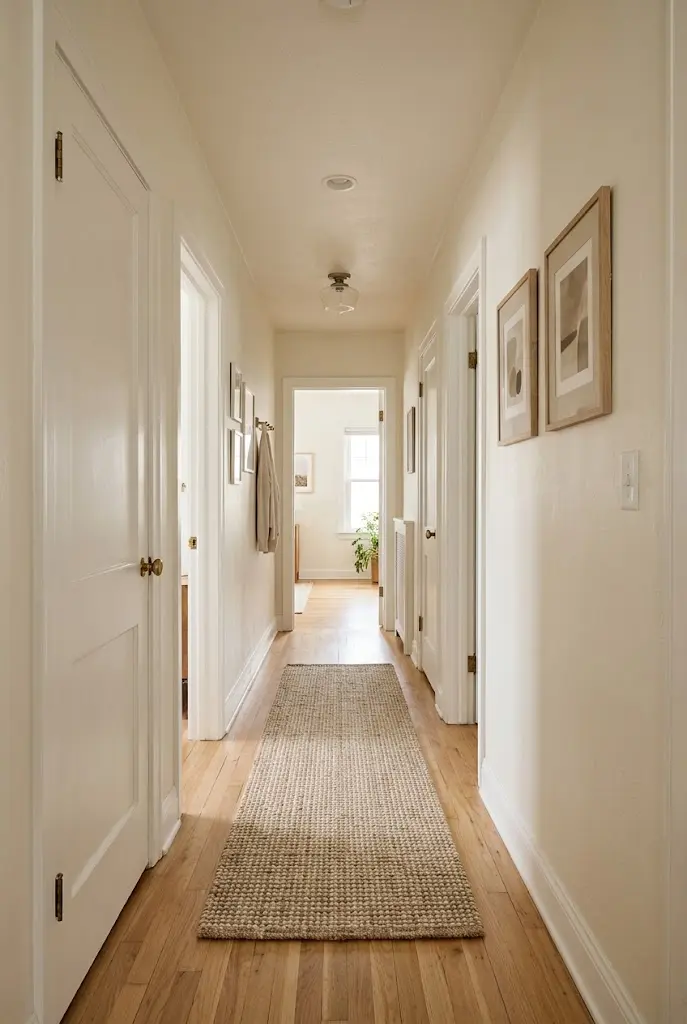
One of the simplest approaches is to build the hallway around warm off-white, soft ivory, light greige, or pale beige walls. These colors maintain a bright appearance without giving the space the starkness that can sometimes come with brilliant white.
Continue the restrained palette through the doors, trim, and ceiling, then introduce contrast through a runner, artwork, or small decorative details. Light oak or oak-look flooring is particularly effective in a modern hallway because its grain adds visual interest without requiring extra objects.
This is also one of the more accessible ideas on the list. You don’t necessarily need custom furniture or architectural changes—a thoughtful paint color, consistent trim, and restrained styling can create the effect.
2. Add a Full-Length Statement Runner
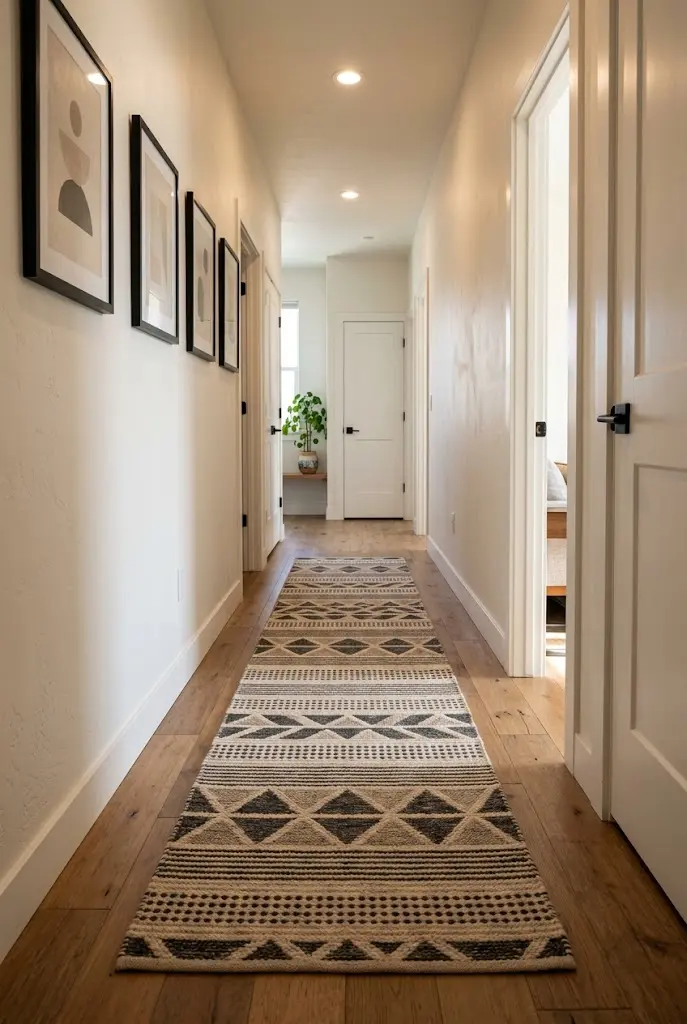
A runner naturally suits a long hallway because its proportions echo the architecture. It can also bring color and texture into a space where bulky decorative pieces aren’t practical.
For a contemporary look, consider a low-pile runner with a subtle geometric pattern, narrow stripe, faded motif, or textured neutral weave. Leaving some flooring visible along both sides keeps the runner from visually consuming the passage.
This is an especially useful budget-conscious update because the runner itself can become the primary decorative element. If the hallway already has good flooring and neutral walls, very little else may be necessary.
3. Create a Luxury Wall-Paneling Moment
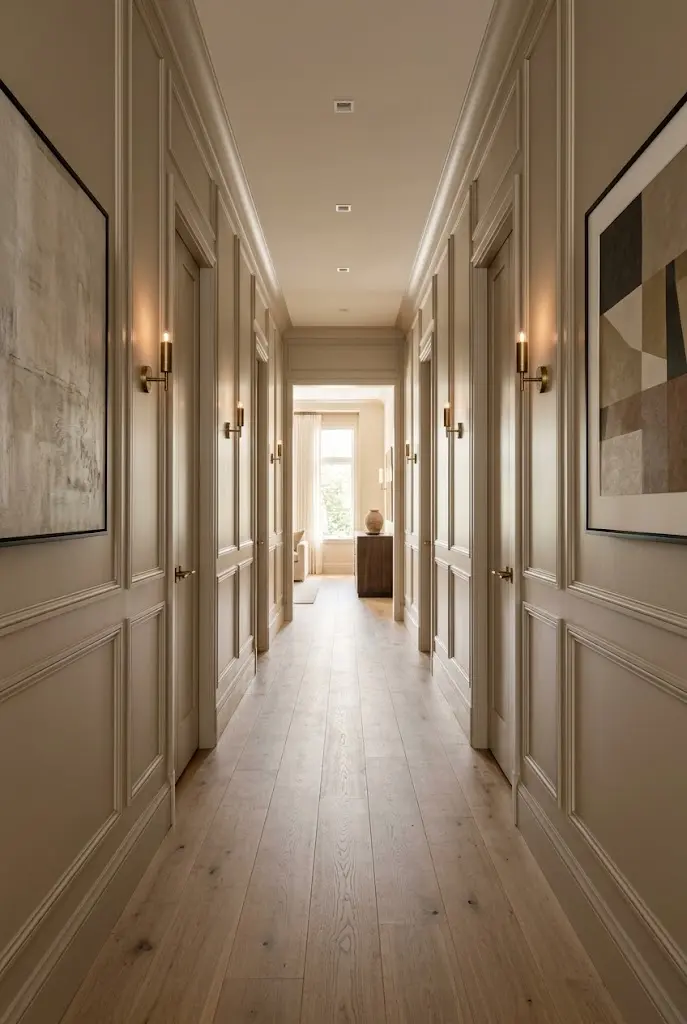
For a more architectural treatment, slim wall molding or full-height paneling can give a long hallway rhythm and structure. Instead of seeing one uninterrupted wall, the eye reads a sequence of balanced sections.
For an upscale contemporary interior, consider painted panel molding in warm greige, taupe, or soft mushroom. Pair it with understated wall sconces and minimal artwork rather than filling every panel.
The proportions matter. In a particularly narrow hallway, shallow applied molding is generally more practical than deep decorative elements that project into the walking path.
4. Use Large Mirrors to Break Up a Blank Wall
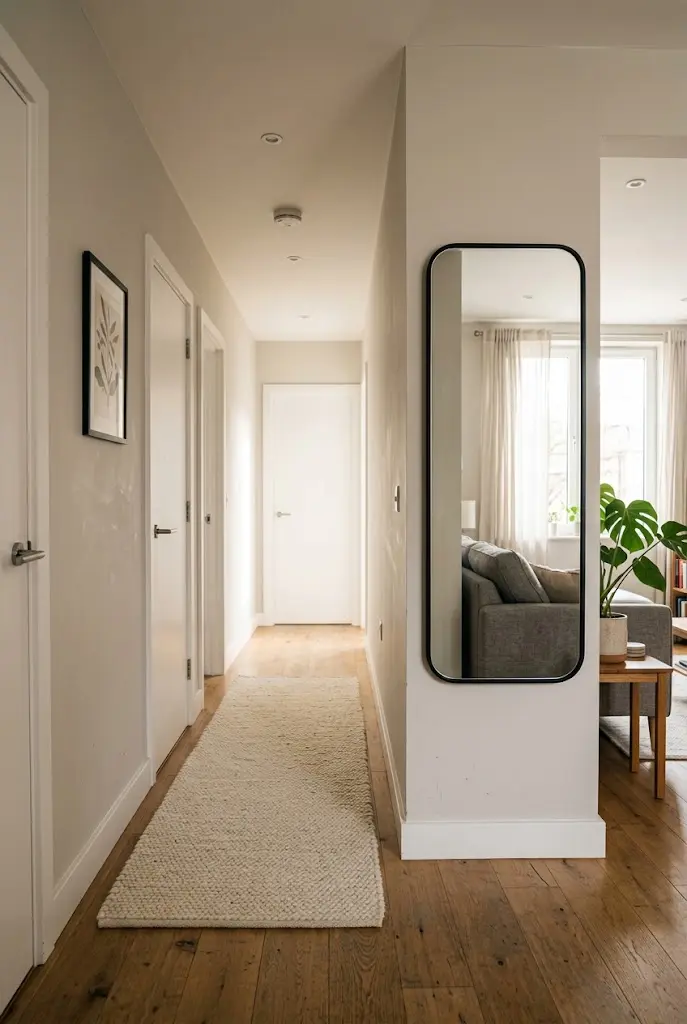
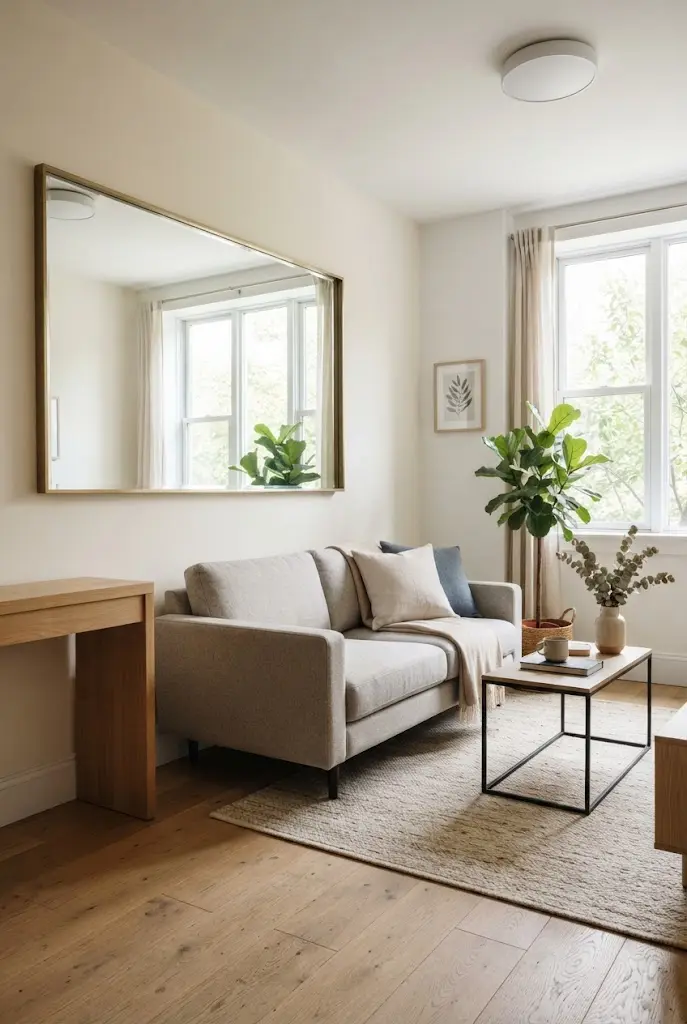
Mirrors can provide visual relief in a corridor dominated by solid walls and doors. Rather than covering the entire hallway in reflective surfaces, try one or two generously sized mirrors positioned where they can reflect an attractive room, artwork, or natural light.
A thin black, bronze, oak, or brushed-metal frame keeps the treatment contemporary. Rounded corners can soften a hallway with many straight architectural lines.
For a less expensive version, use one large ready-made mirror rather than several custom pieces. Keep it relatively shallow and securely wall-mounted so it doesn’t interfere with traffic.
5. Install a Slim Floating Console
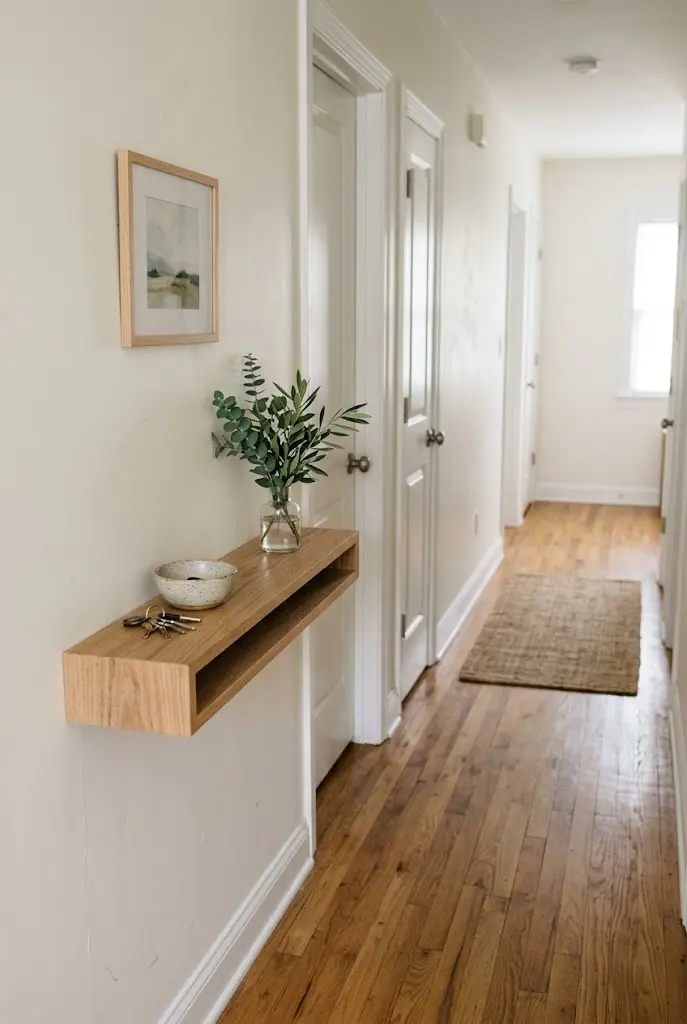
A narrow hallway doesn’t automatically rule out furniture. Where circulation space permits, a very shallow floating console can provide somewhere for keys or a small decorative object without adding bulky legs to the floor.
Choose a design that visually relates to another material in the hallway. A slim oak shelf works well with timber floors, while a painted floating console can almost disappear against a matching wall.
Keep the styling controlled. A small tray, compact vase, or single sculptural object is often enough.
6. Turn the Ceiling Into a Design Feature
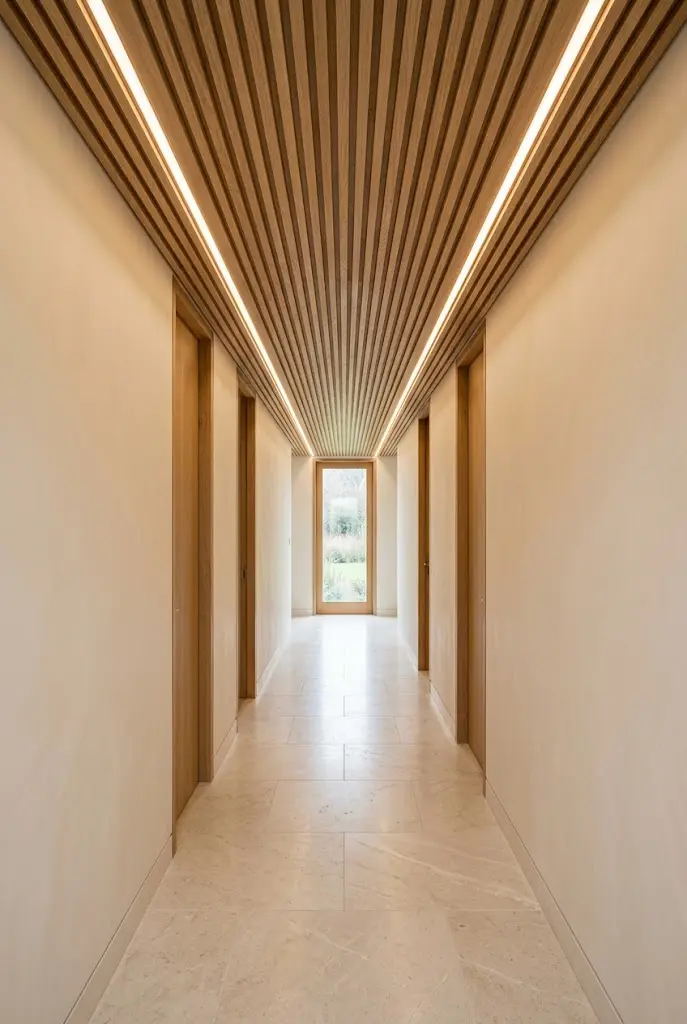
When floor space is scarce, look upward. A long hallway ceiling can become an architectural feature through carefully placed lighting, a subtle paint shift, or restrained wood detailing.
For a high-end interpretation, narrow timber ceiling slats paired with concealed linear lighting can visually emphasize the hallway’s direction. A simpler alternative is to paint the ceiling a slightly warmer or deeper version of the wall color and replace a basic fixture with a series of neat flush mounts.
The key is maintaining sufficient visual height. Heavy ceiling treatments can make an already enclosed passage feel more compressed.
7. Build an Affordable Gallery Wall

A gallery wall can give personality to an otherwise plain corridor without occupying a single inch of usable floor area.
For a modern result, establish one consistent element. You might use identical black frames, matching light-wood frames, or a collection of different sizes unified by similar neutral artwork. Keeping the spacing reasonably consistent prevents a narrow hallway from becoming visually chaotic.
This is an ideal approach for renters and budget-conscious decorators because the artwork can be collected gradually rather than purchased as one expensive installation.
8. Try a Dark and Dramatic Hallway
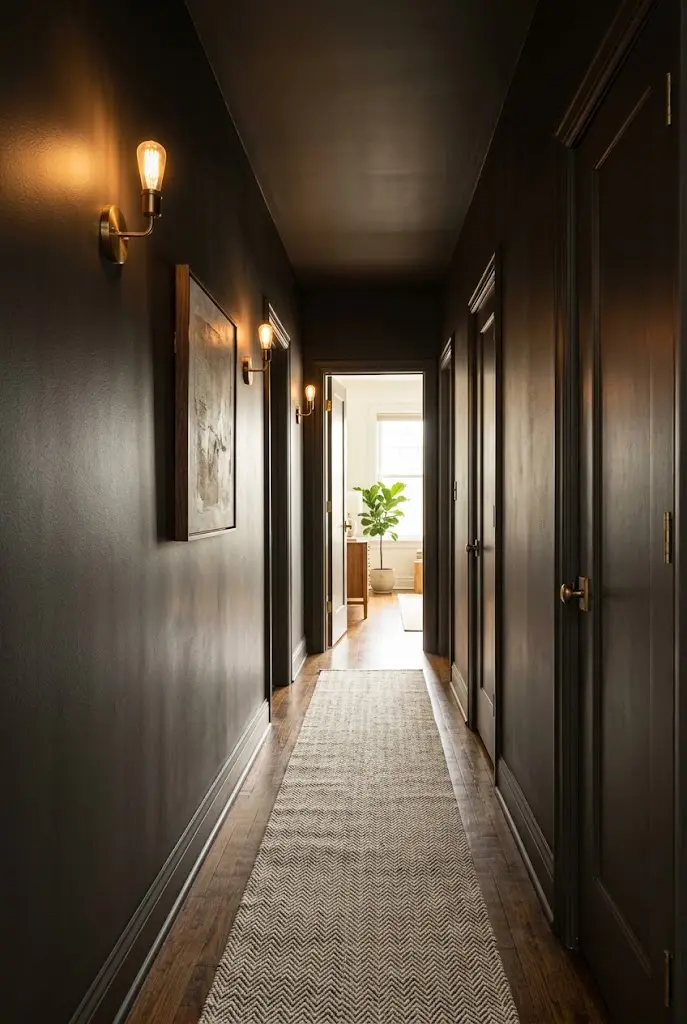
Light colors aren’t the only option for narrow spaces. A deep charcoal, chocolate brown, muted olive, or near-black hallway can create a deliberately intimate atmosphere—particularly when the corridor connects brighter rooms.
The approach works best when lighting is treated as part of the design rather than an afterthought. Wall sconces, ceiling lights, and illumination from adjoining rooms prevent darker finishes from becoming visually flat.
For greater continuity, paint doors and trim in the same deep color rather than outlining every architectural interruption in white.
9. Introduce a High-End Stone Floor
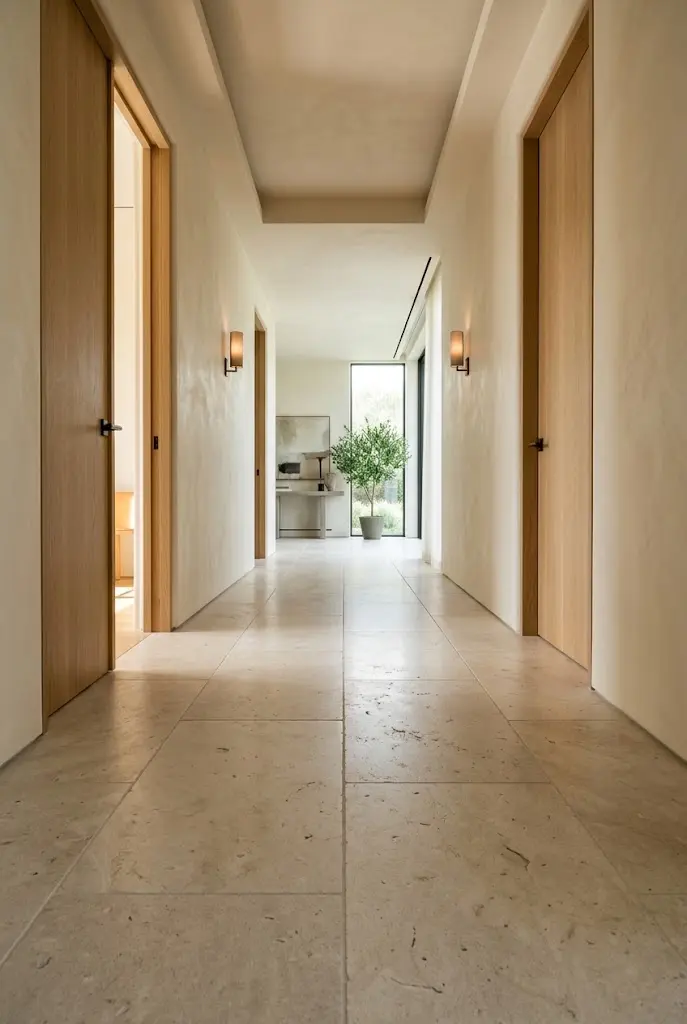
Natural stone can make a corridor feel architecturally significant before any furniture or decoration is introduced. Limestone, travertine, or subtly veined marble can create a continuous visual surface particularly suited to a refined contemporary home.
In a narrow hallway, larger slabs or tiles with restrained variation generally create a calmer effect than a highly fragmented pattern. If the stone itself has prominent veining, keep the walls and accessories quieter.
Because genuine stone can represent a substantial investment, this idea makes the most sense when flooring is already part of a larger renovation.
10. Add Half-Wall Color Blocking
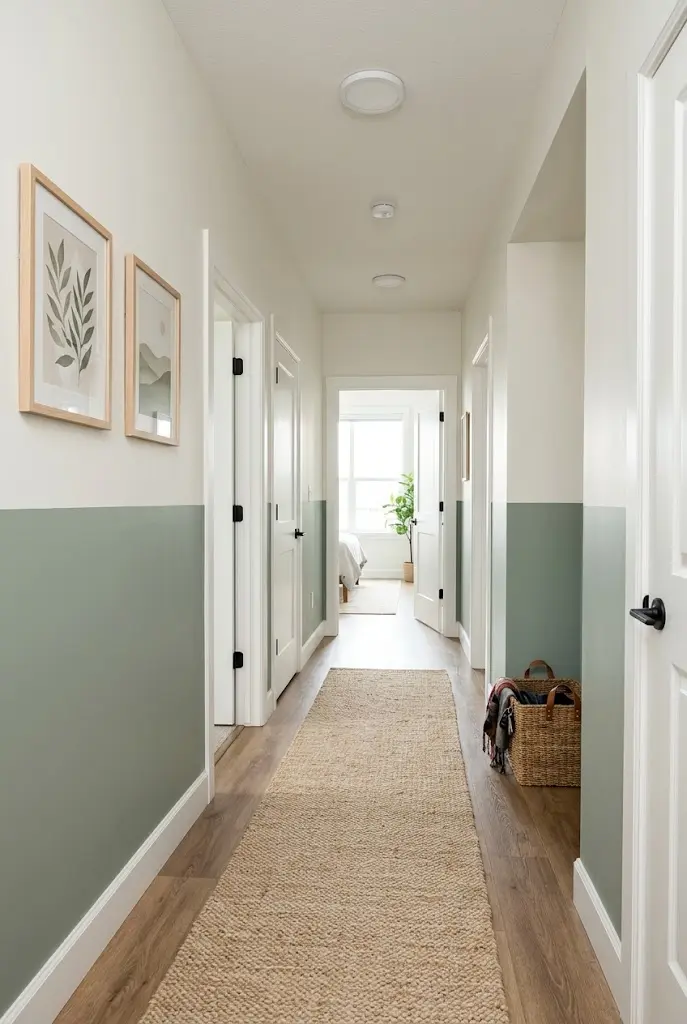
Painting the lower portion of the wall a different color is a relatively inexpensive way to introduce architectural definition without installing paneling.
Try warm white above with muted sage, dusty blue, taupe, or clay below. A crisp horizontal transition can create a contemporary graphic effect, while a slim molding strip adds a slightly more traditional architectural reference.
For busy households, a slightly deeper lower color can also make minor everyday marks less visually dominant than they might be against an entirely pale wall.
11. Use Repeated Wall Sconces to Create Rhythm
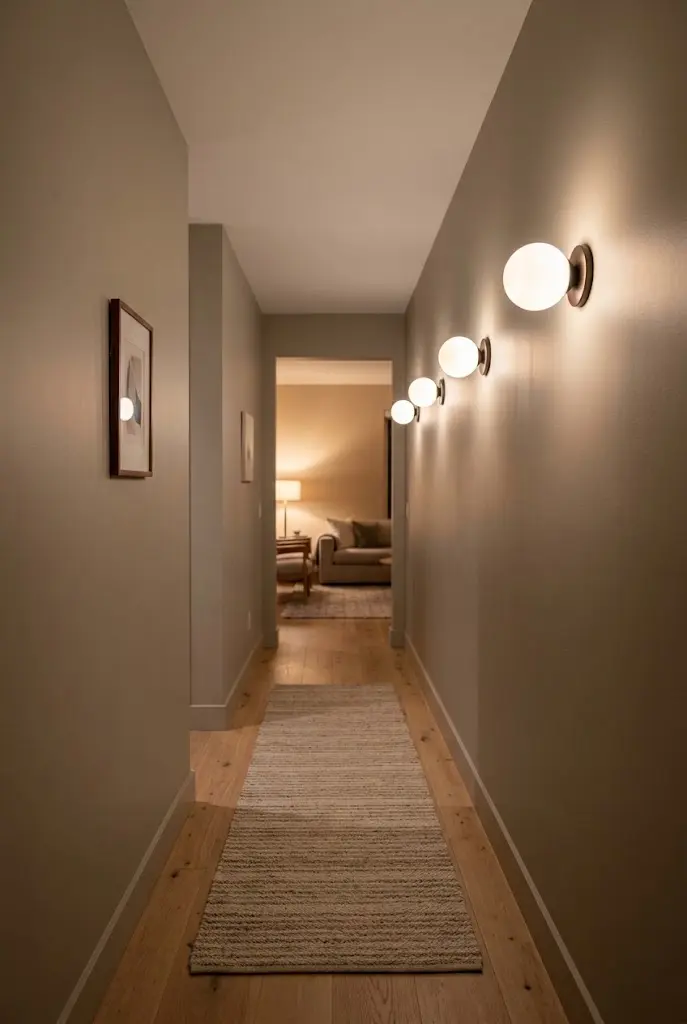
A long hallway benefits from lighting that is distributed along its length rather than concentrated in one central fixture. Repeating compact wall sconces creates a sequence of light and shadow that helps the corridor feel intentionally designed.
Simple globe, cylinder, or directional sconces work particularly well in contemporary interiors. Their projection should be considered carefully in a tight passage so they don’t become physical obstacles.
This concept can range from affordable hardwired fixtures to custom designer lighting, depending on the renovation budget.
12. Install Hidden Full-Height Storage
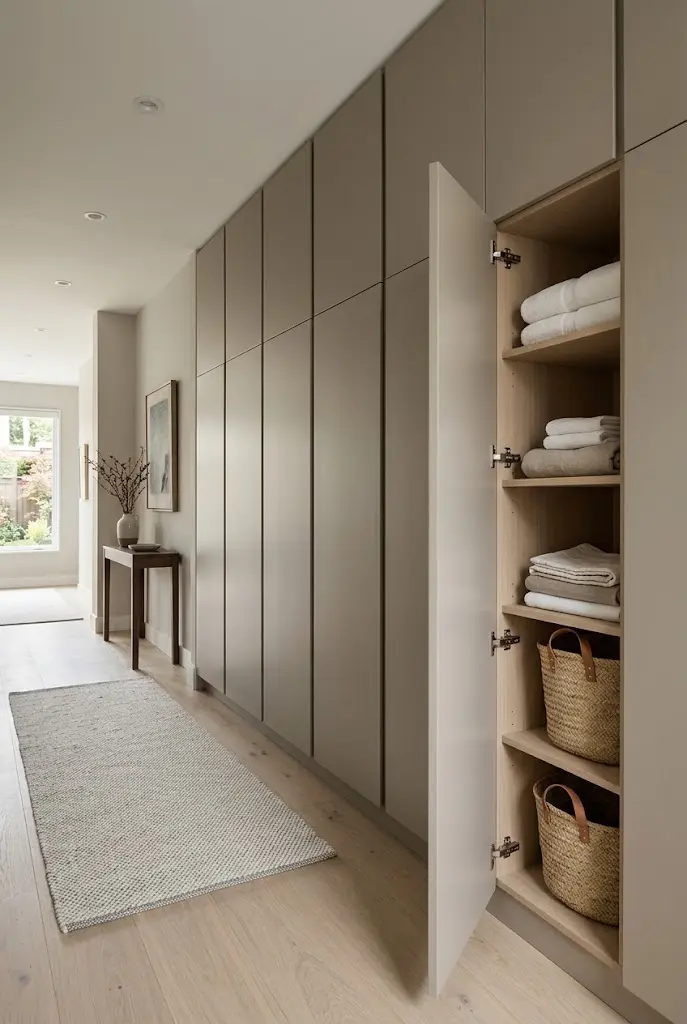
For homeowners investing in a major renovation, a long hallway can sometimes conceal valuable storage behind flush cabinetry.
Full-height handleless doors painted to match the walls reduce visual interruption while providing space for linens, coats, cleaning supplies, or household items depending on the hallway’s location and available depth.
This approach requires careful planning because storage should never reduce the passage to an impractical width. When adequate wall depth exists, however, it can turn otherwise unused space into highly functional cabinetry.
13. Bring in Natural Wood Accents
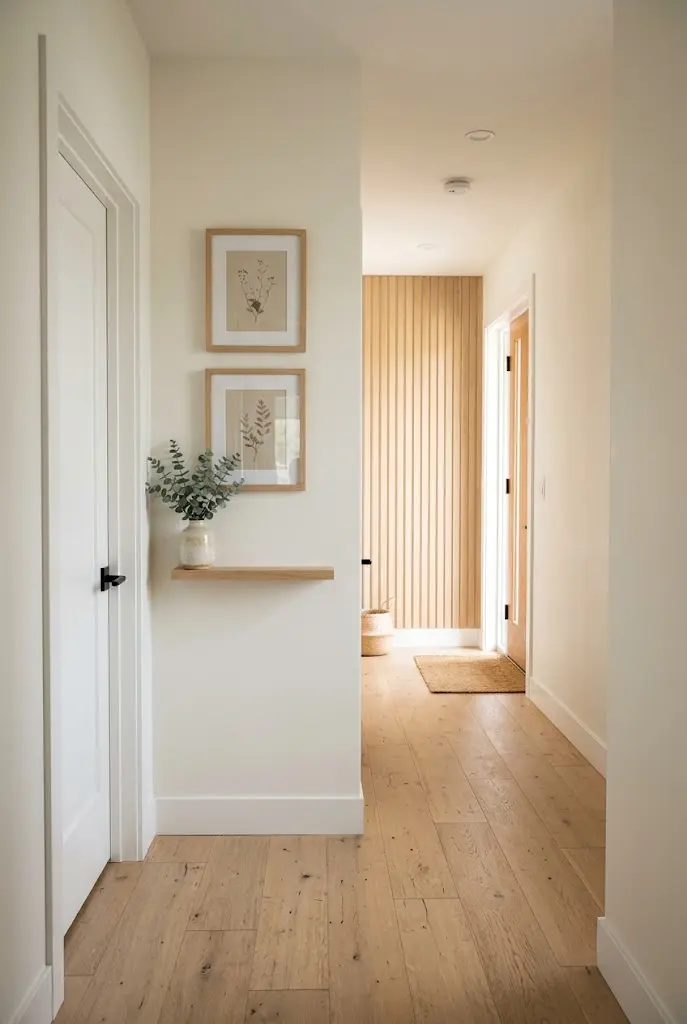
Wood can warm up a corridor dominated by painted drywall and hard flooring. You don’t need to cover every surface. A single oak bench at a wider end, timber frames, a narrow floating shelf, or one slatted wall section may be enough.
For an attainable look, coordinate two or three wood accents rather than purchasing a complete matching furniture collection. Similar undertones will help them feel related without looking overly staged.
Natural wood is especially effective alongside warm white, soft beige, muted green, and charcoal.
14. Create a Boutique-Hotel Hallway
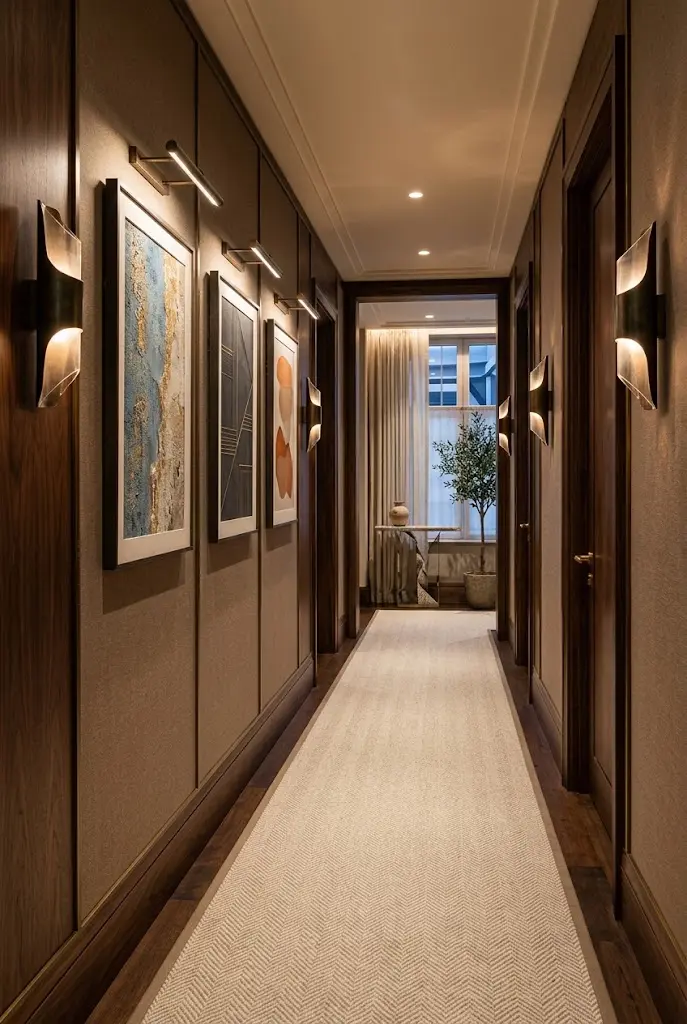
For a genuinely luxurious interpretation, treat the corridor almost like a boutique-hotel passage. The sophistication comes from coordinated materials rather than filling the space with decorative objects.
Consider upholstered wall sections, dark timber, brushed metal, thick wool carpeting or runners, and low-level atmospheric lighting. Artwork can be individually illuminated to create focal points along the route.
Keep the palette restrained. Deep walnut, warm taupe, bronze, cream, and muted stone tones can create richness without relying on bright color.
15. Use One Oversized Artwork Instead of Many Small Pieces
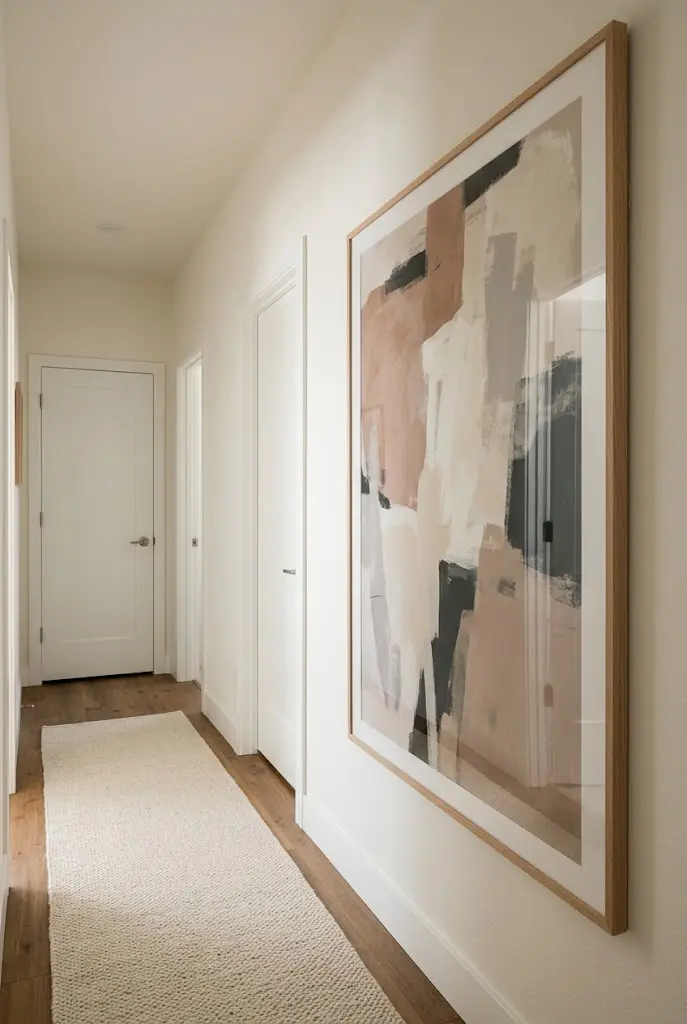
A single large artwork can be surprisingly effective in a long hallway. It provides a clear focal point and avoids the visual busyness that sometimes develops when many small objects compete for attention.
Choose a piece with enough negative space to suit the narrow setting. Large abstract shapes, muted landscapes, or restrained geometric compositions can complement modern architecture.
You don’t necessarily need expensive original artwork to use the concept. A large-format print in a simple frame can produce a similar sense of scale at a more accessible price.
16. Upgrade the Doors for a Cleaner Architectural Look
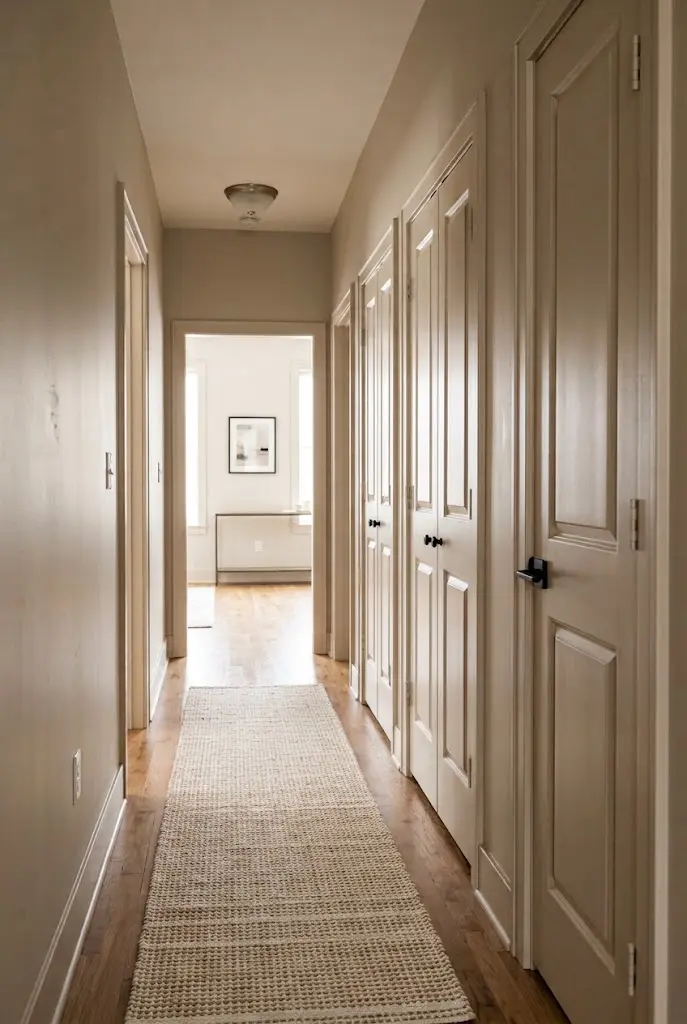
Hallways often contain several doors, so their appearance has a significant effect on the overall design. Replacing or refinishing them can sometimes make more visual difference than adding decoration.
For an accessible update, paint existing doors and trim the same color as the walls and replace mismatched hardware with consistent simple handles. For a higher budget, full-height flush doors can create a cleaner architectural plane.
Either approach reduces unnecessary visual interruption and lets the hallway read as one cohesive space.
17. Add a Narrow End-of-Hallway Focal Point
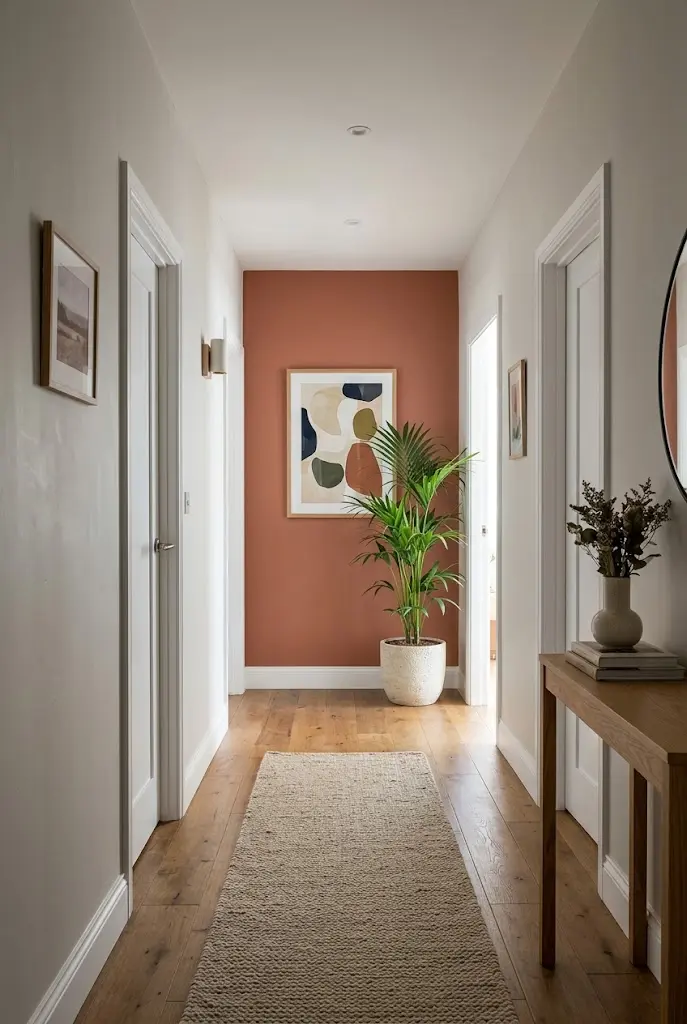
The far wall of a long hallway naturally attracts attention, so give the eye something intentional to land on.
Depending on available space, that could be one framed artwork, a sculptural wall object, a compact pedestal, or a plant where adequate natural light is available. A painted accent wall is another inexpensive option.
Avoid placing deep furniture at the end if it interferes with a doorway or required circulation. The goal is visual punctuation, not filling every empty surface.
18. Introduce Refined Fluted Wall Detailing
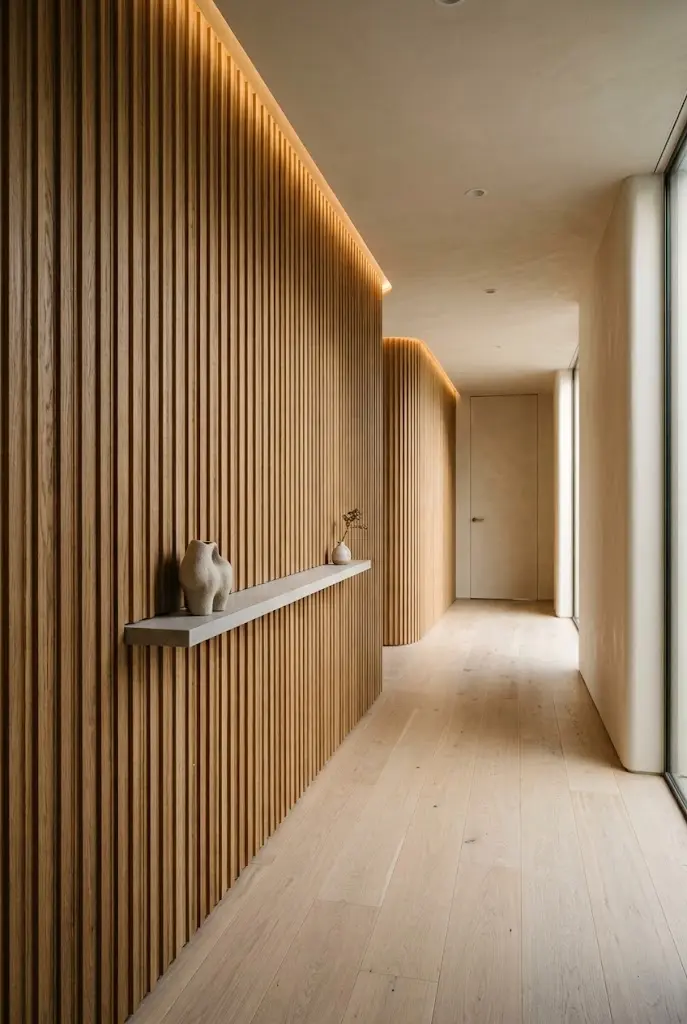
Fluted or ribbed surfaces can add texture without requiring strong patterns or multiple decorative accessories. Used selectively, they work particularly well in contemporary high-end interiors.
Rather than lining both sides of a narrow passage, apply the treatment to one feature wall or the end of the hallway. Natural oak creates warmth, while painted fluting can provide a quieter monochromatic effect.
Integrated lighting can emphasize the shallow grooves after dark, creating subtle highlights and shadows.
19. Use Plants Without Crowding the Walkway
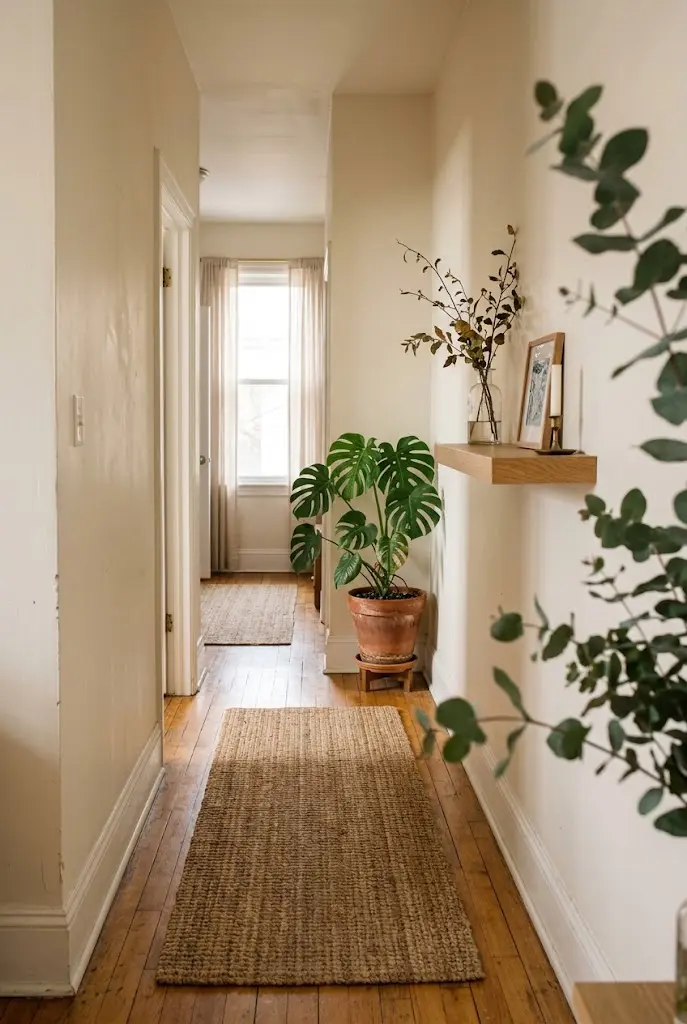
Greenery can soften the hard lines of a long corridor, but floor plants aren’t always practical in a very narrow passage.
Use the wider end of the hallway, a recessed niche, or a small wall-mounted planter where appropriate. If floor width is extremely limited, even a vase of branches on a shallow console can introduce organic shape without obstructing movement.
Plant choice should suit the actual light conditions of the location; decorative greenery shouldn’t be positioned solely for appearance if the environment isn’t appropriate for it.
20. Create a Monochromatic Quiet-Luxury Scheme

A high-end hallway doesn’t have to rely on dramatic marble or decorative metalwork. A restrained tonal palette can create an equally sophisticated result.
Build the space around closely related shades—warm ivory, oatmeal, sand, putty, and pale taupe—then vary the materials. Matte plaster, wool, oak, linen, and honed stone can provide depth even when the colors remain quiet.
This approach is particularly successful when architectural detailing and lighting are carefully resolved because there are fewer decorative elements to distract from the quality of the surfaces.
21. Combine Budget Pieces With One Premium-Looking Feature
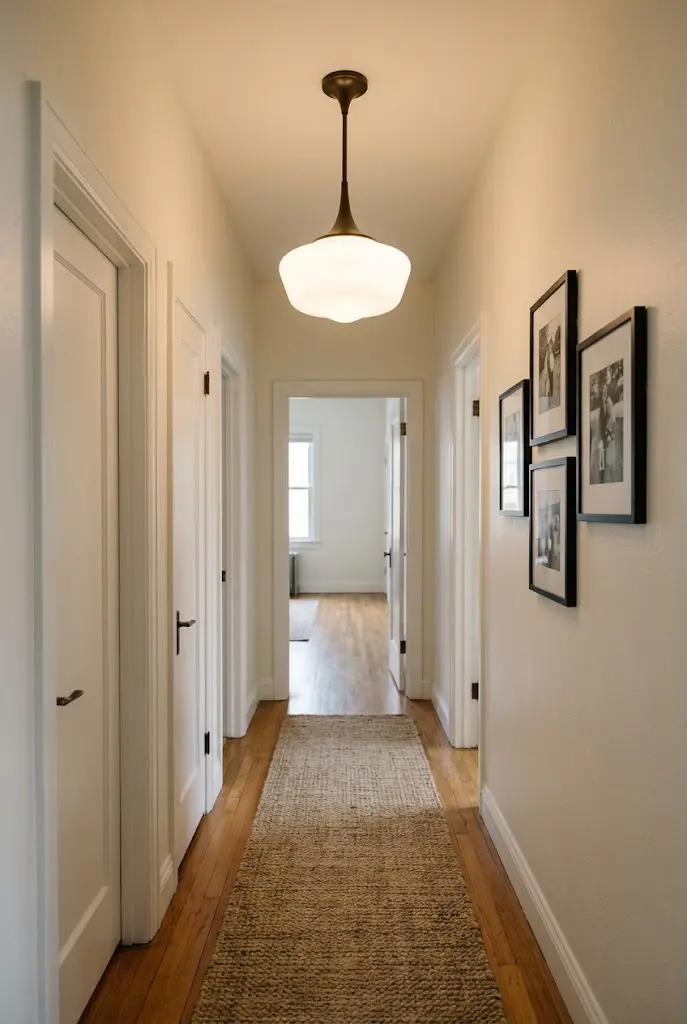
A polished hallway doesn’t require every component to be expensive. One of the most practical strategies is to keep the foundation simple and concentrate attention on a single feature.
For example, retain existing flooring, repaint the walls, use affordable frames and a ready-made runner, then invest more attention in one statement pendant, substantial mirror, or professionally executed accent wall. The eye tends to notice the deliberate focal feature rather than mentally calculate the cost of every individual item.
The important part is restraint. Combining numerous unrelated statement pieces can make a narrow hallway feel busy. One memorable element surrounded by quieter choices often feels more resolved.
A Simple Way to Choose the Right Hallway Style
The best solution depends less on whether an idea is labeled luxury or budget and more on what your existing hallway actually needs. A corridor with decent flooring and plenty of daylight might need little beyond paint, artwork, and a runner. A darker passage may benefit more from improved lighting and mirrors before decorative accessories are added.
For an affordable refresh, prioritize paint, a runner, coordinated frames, existing-door updates, and one mirror. These changes can create a more cohesive appearance without rebuilding the hallway.
With a mid-range budget, consider upgraded lighting, a floating console, selective wood detailing, improved doors, or professionally installed molding.
For a luxury renovation, the money is often better concentrated in permanent architectural elements: custom storage, full-height paneling, stone flooring, integrated lighting, high-quality timber, or refined wall finishes. These elements become part of the architecture rather than temporary decoration.
Regardless of budget, maintaining a comfortable walking path should come first. Long narrow hallways rarely benefit from being filled simply because an empty wall or corner exists.