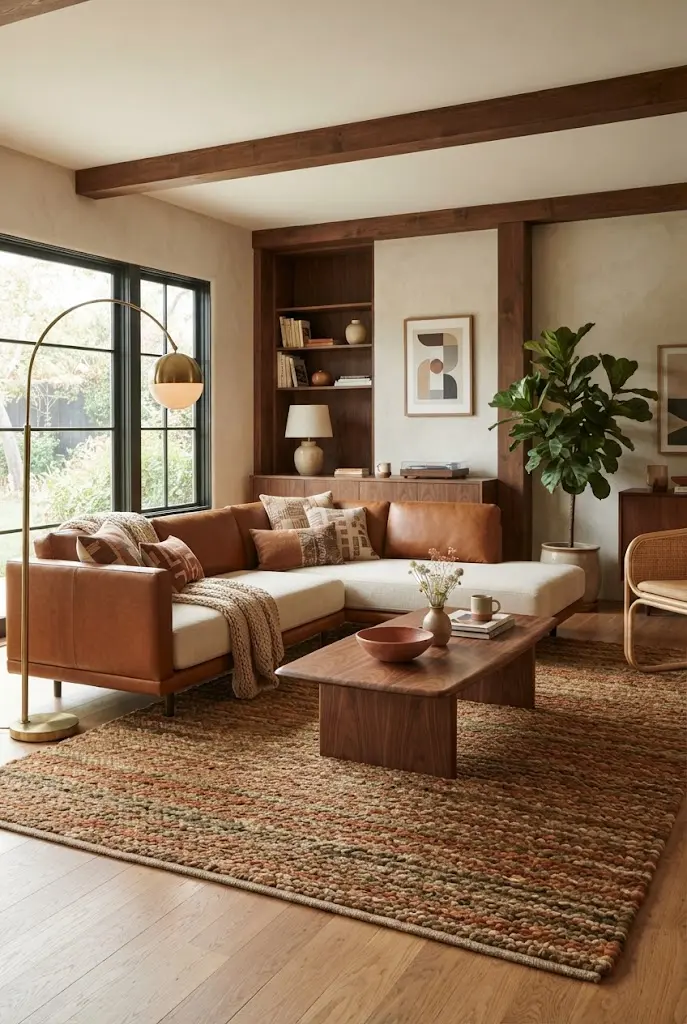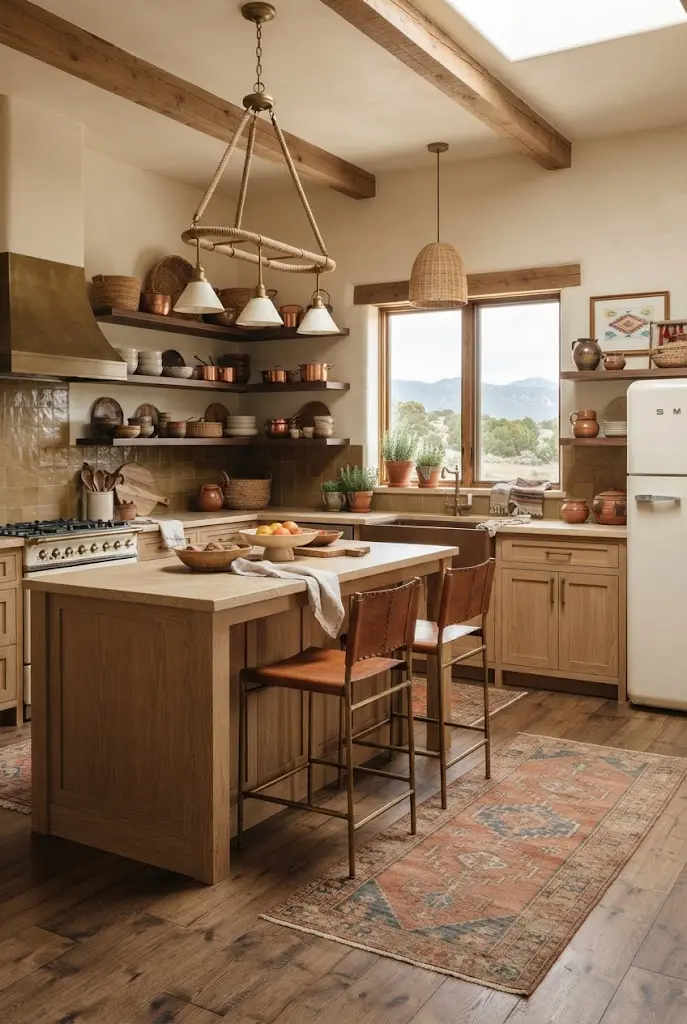
14 Unique ’70s House Design Ideas for a Retro-Inspired Home
The 1970s brought a distinctive approach to American home design that embraced warmth, texture, individuality, and relaxed living.
From dramatic wood paneling to earthy color palettes, ’70s interiors were designed to feel inviting and expressive.
Many of these details are returning today as homeowners look for spaces with character and nostalgic charm.
Retro-inspired design does not require recreating an entire home from the past.
Instead, you can combine a few recognizable ’70s elements with contemporary furniture and practical finishes.
Natural materials such as wood, stone, rattan, and cork help create an authentic foundation.
Rich shades of avocado, rust, mustard, brown, and burnt orange add recognizable vintage personality.
Curved furniture, patterned textiles, and statement lighting can bring softer retro details into modern rooms.
The key is balancing nostalgic features with clean layouts and comfortable everyday pieces.
These 14 ideas show how to capture the spirit of ’70s American house design while keeping your home inviting and livable.
1. Embrace Warm Wood Paneling
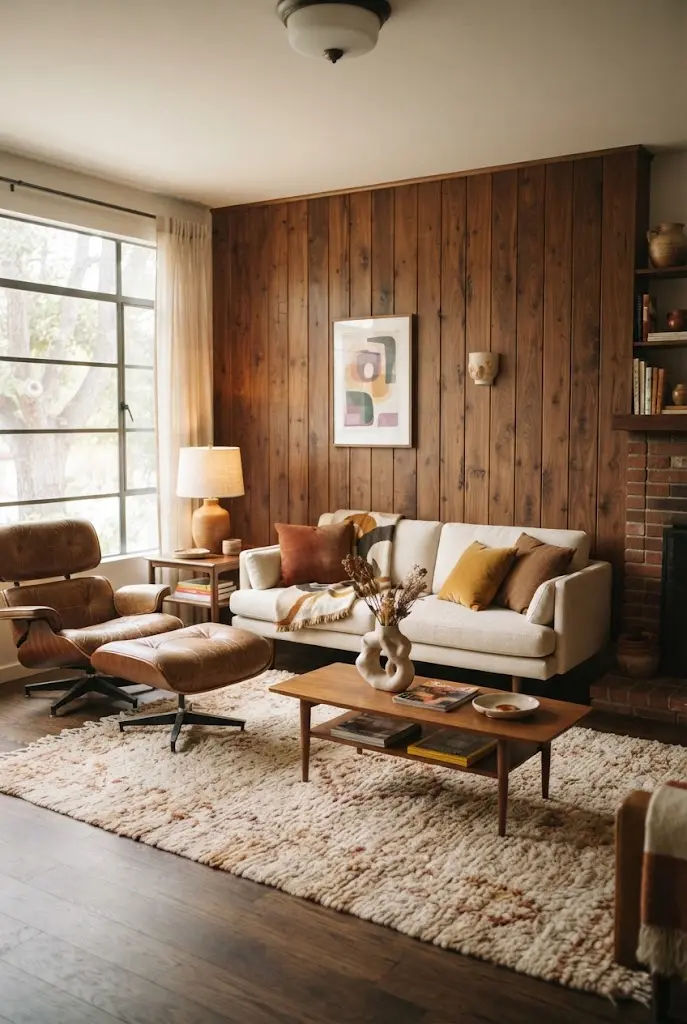
Wood paneling was one of the most recognizable features of many American homes during the 1970s.
Instead of covering every wall, use it strategically to create a warm architectural focal point.
A walnut or medium-toned wood wall can add depth behind a sofa, fireplace, or television area.
Choose natural-looking grain rather than overly glossy finishes for a more authentic appearance.
Pair the paneling with cream upholstery and neutral rugs to keep the room balanced.
Vintage-inspired furniture can reinforce the nostalgic character without making the space feel dated.
Modern lighting fixtures can provide contrast and improve the overall atmosphere.
A few ceramic accessories or woven pieces can complement the natural wood beautifully.
For a contemporary home, consider using paneling on one accent wall instead of throughout the room.
This approach preserves the cozy ’70s feeling while keeping the interior fresh and practical.
2. Add Earthy ’70s Colors
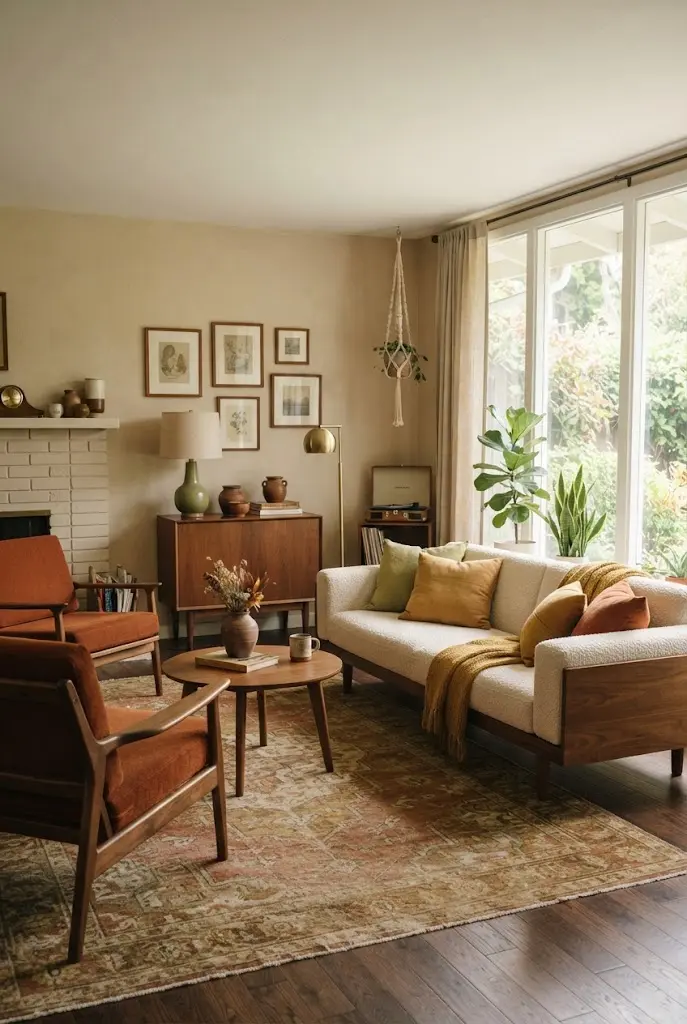
Color played an important role in creating the warm personality associated with 1970s interiors.
Popular palettes often included avocado green, mustard yellow, burnt orange, rust, chocolate brown, and warm beige.
You can introduce these colors through furniture, curtains, cushions, rugs, or artwork.
For a subtle approach, start with one dominant earthy shade and keep the rest of the room neutral.
A rust-colored armchair can become a striking focal point against creamy walls.
Mustard cushions and olive accessories can add smaller bursts of retro color.
Deep brown wood furniture helps ground the palette and prevents brighter shades from becoming overwhelming.
Vintage-inspired textiles can make the color combination feel authentic and layered.
Modern neutral finishes can keep the overall room comfortable for everyday living.
The result is a welcoming space that references the ’70s without looking like a themed room.
3. Create a Conversation Pit
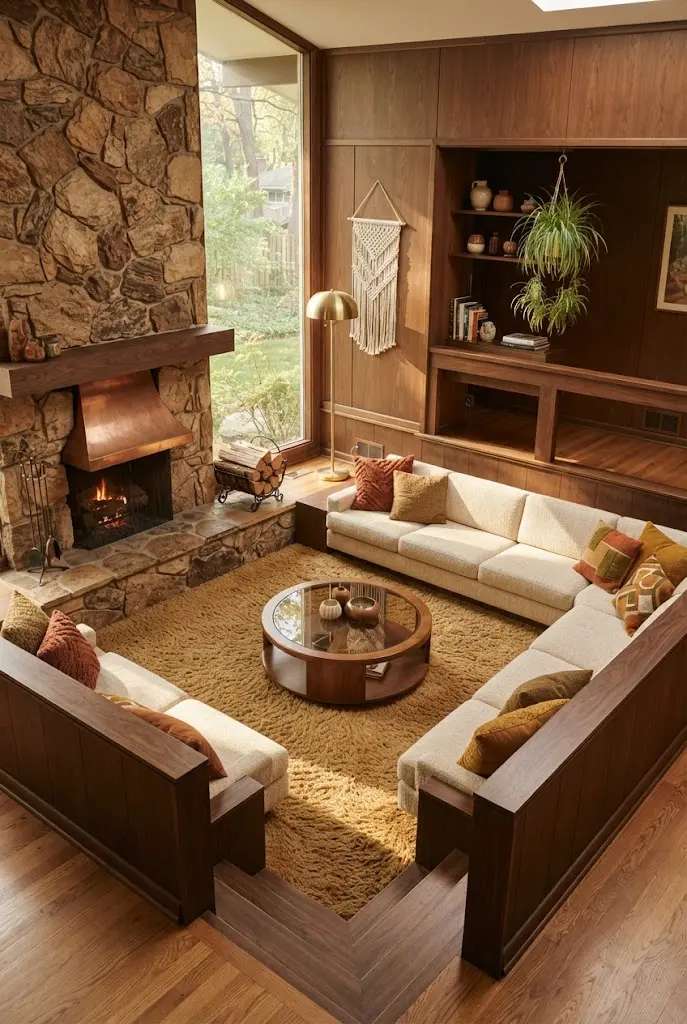
Conversation pits became an iconic symbol of relaxed social living in some mid-century and 1970s homes.
The idea centers on lowering a seating area below the surrounding floor level.
This arrangement creates an intimate zone where family and guests can gather comfortably.
If a true sunken pit is impractical, you can recreate the feeling with a large low seating arrangement.
Place sofas or lounge chairs around a central coffee table to encourage conversation.
Use plush cushions, textured upholstery, and a soft rug for additional comfort.
Warm wood, stone, and earthy colors can strengthen the retro atmosphere.
Keep the surrounding architecture simple so the seating area remains the visual focus.
Modern safety and accessibility should always be considered when creating a lowered floor area.
Even without construction, the same social layout can bring a relaxed ’70s influence into a contemporary home.
4. Use Statement Pendant Lighting
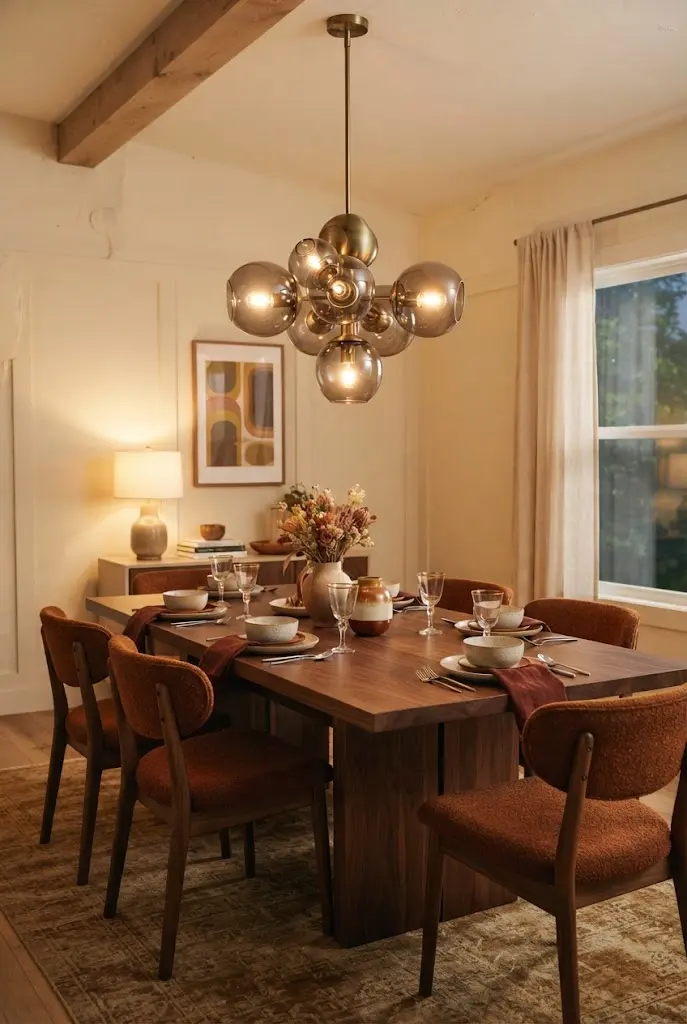
Lighting fixtures in the 1970s often had bold silhouettes and sculptural forms.
A dramatic pendant can instantly introduce a retro influence without changing the entire room.
Look for globe shapes, smoked glass, mushroom forms, or layered metal designs.
Oversized fixtures work particularly well above dining tables and kitchen islands.
Warm bulbs can enhance earthy interiors and make wood surfaces appear richer.
Choose fixtures with interesting curves or geometric shapes for stronger visual character.
A vintage-inspired pendant can also become an artwork-like focal point.
Keep surrounding lighting simple so the statement fixture does not compete with too many decorative objects.
Modern LED technology can provide the appearance of vintage lighting while offering practical illumination.
This is one of the easiest ways to introduce recognizable ’70s personality into a modern American home.
5. Bring in Shag Textures
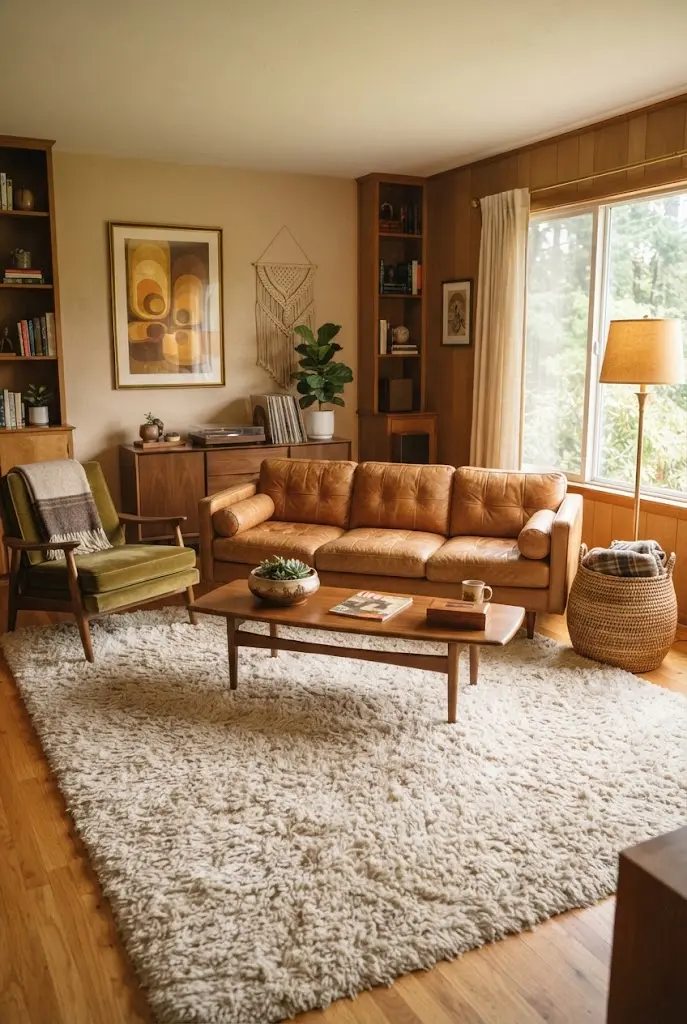
Shag textures are strongly associated with the cozy side of 1970s interiors.
A thick textured rug can instantly make a room feel softer and more nostalgic.
For a modern interpretation, choose a neutral cream, oatmeal, taupe, or muted brown version.
This keeps the texture recognizable without overwhelming the rest of the design.
Place the rug beneath a low sofa and coffee table to create a comfortable gathering zone.
Layering it with woven baskets and soft cushions can make the room feel even more inviting.
Wood furniture provides a natural contrast against the plush surface.
Avoid using too many heavily textured pieces in the same room.
A single statement rug can provide enough retro character while remaining practical.
The combination of tactile flooring and warm furnishings creates a relaxed atmosphere inspired by classic ’70s homes.
6. Choose Low-Profile Furniture
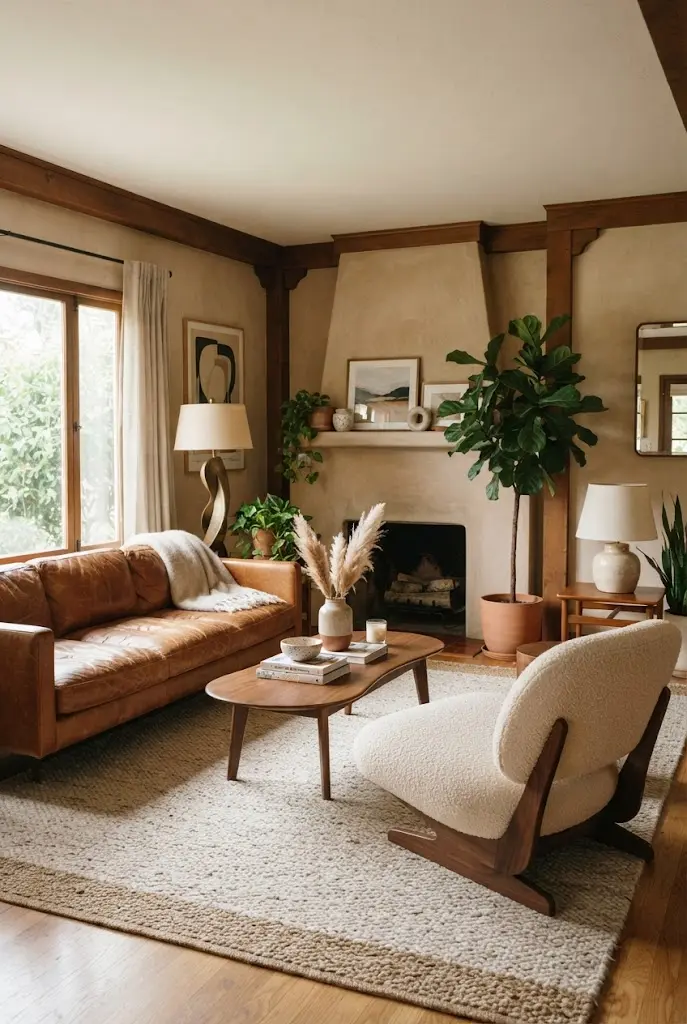
Low furniture was a natural fit for the relaxed and informal character of many 1970s interiors.
A low sofa or lounge chair can make a room feel grounded and comfortable.
Choose silhouettes with broad cushions, rounded edges, or simple rectangular forms.
Leather and textured fabric both work well with a retro-inspired palette.
Pair low seating with a substantial wooden coffee table for visual balance.
Floor lamps and table lamps can add additional layers of warm illumination.
Keep furniture arrangements open enough for easy movement through the room.
Curved seating can soften rooms dominated by straight architectural lines.
Modern versions of low-profile furniture provide the nostalgic shape with updated comfort.
Together, these pieces create an inviting living space that feels casual, warm, and distinctly retro.
7. Install a Retro Fireplace
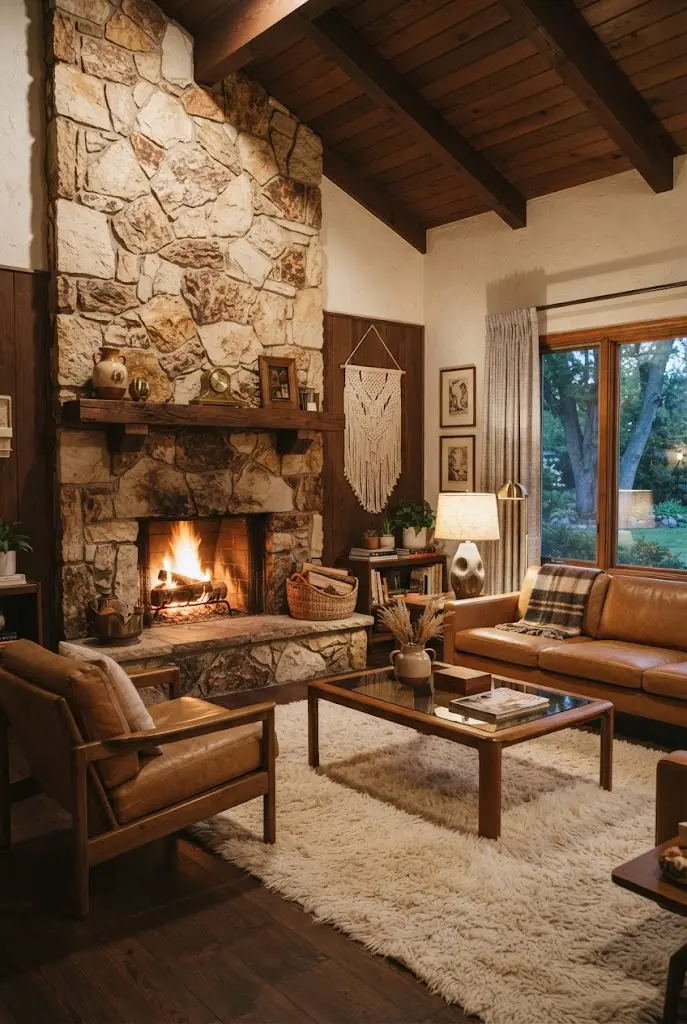
A fireplace can become the architectural centerpiece of a ’70s-inspired living room.
Brick, stone, tile, and dark wood were all effective materials for creating dramatic fireplace surrounds.
Choose a material with visible texture rather than an overly polished modern finish.
Natural stone can give the room an earthy connection to the outdoors.
A chunky mantel can provide space for ceramics, books, or vintage-inspired artwork.
Pair the fireplace with low lounge seating to reinforce the relaxed character of the period.
Warm lighting can highlight the texture of the fireplace after sunset.
Keep accessories carefully selected so the feature remains visually strong.
A modern fireplace insert can provide updated functionality while preserving a vintage-inspired appearance.
The finished design can make the living room feel cozy, architectural, and full of character.
8. Incorporate Rattan and Wicker
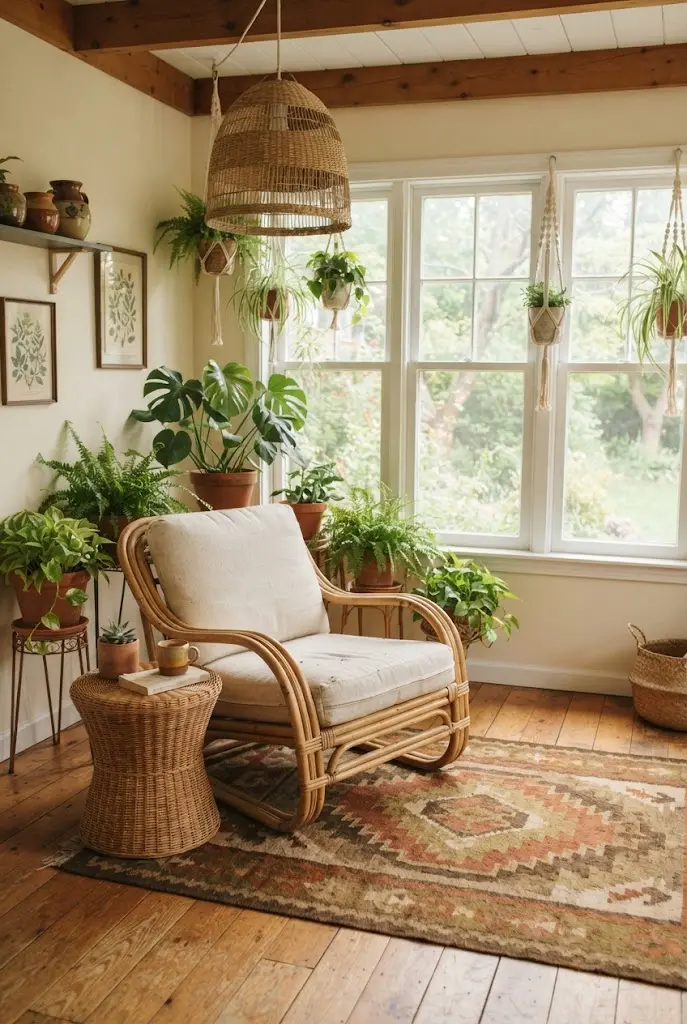
Natural woven materials fit beautifully with the relaxed side of ’70s design.
Rattan chairs, wicker baskets, and woven pendant shades can add warmth without heavy visual weight.
These materials work especially well in living rooms, sunrooms, bedrooms, and covered patios.
Choose natural honey, tan, or medium-brown finishes for a warm vintage effect.
Pair woven furniture with linen, cotton, leather, or wool textiles.
A rattan lounge chair can become a simple statement piece beside a large window.
Wicker storage baskets can provide useful organization while reinforcing the design theme.
A woven pendant can introduce texture overhead without requiring architectural changes.
Keep the surrounding palette restrained so the natural fibers remain noticeable.
The result is a relaxed combination of texture and craftsmanship that feels both retro and timeless.
9. Try Cork Wall Accents
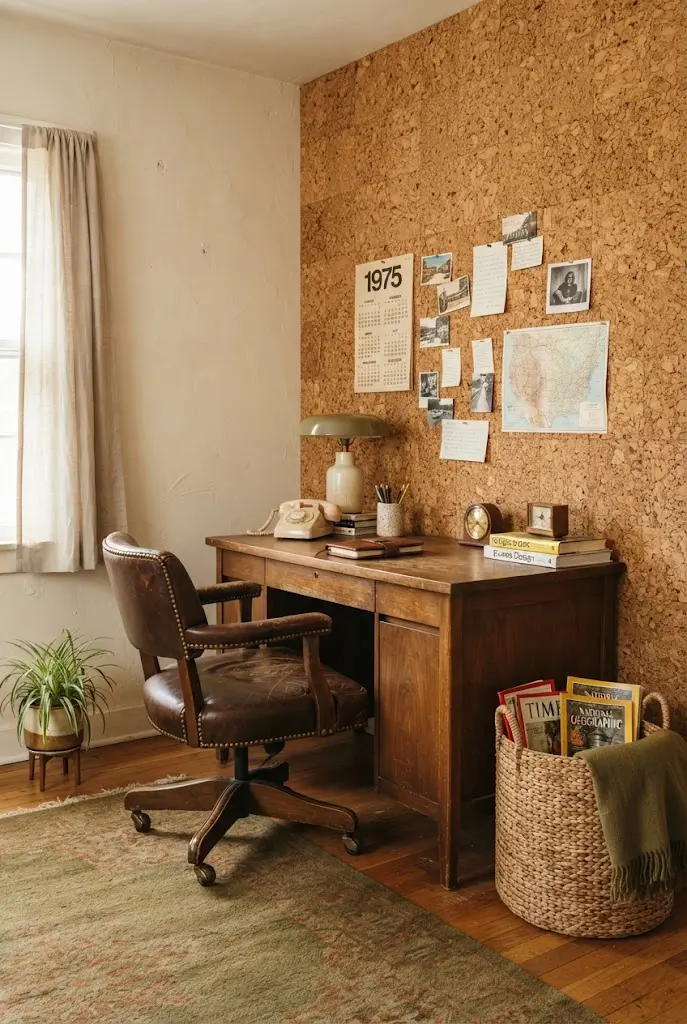
Cork is a natural material that can introduce subtle retro character into a modern interior.
Its warm brown color and organic texture work especially well with ’70s-inspired palettes.
Use cork as an accent wall in a home office, kitchen nook, or casual dining space.
The material can add visual warmth without the heavier appearance of dark wood paneling.
Pair it with cream walls, walnut furniture, and muted green accessories.
Simple framed artwork can provide contrast against the textured surface.
Cork also works nicely with natural textiles such as linen and woven cotton.
Keep the rest of the room relatively simple to allow the material to stand out.
Modern cork products can provide a cleaner installation while retaining the organic appearance.
This creates a subtle nod to the decade without making the room feel overly themed.
10. Add Geometric and Floral Patterns
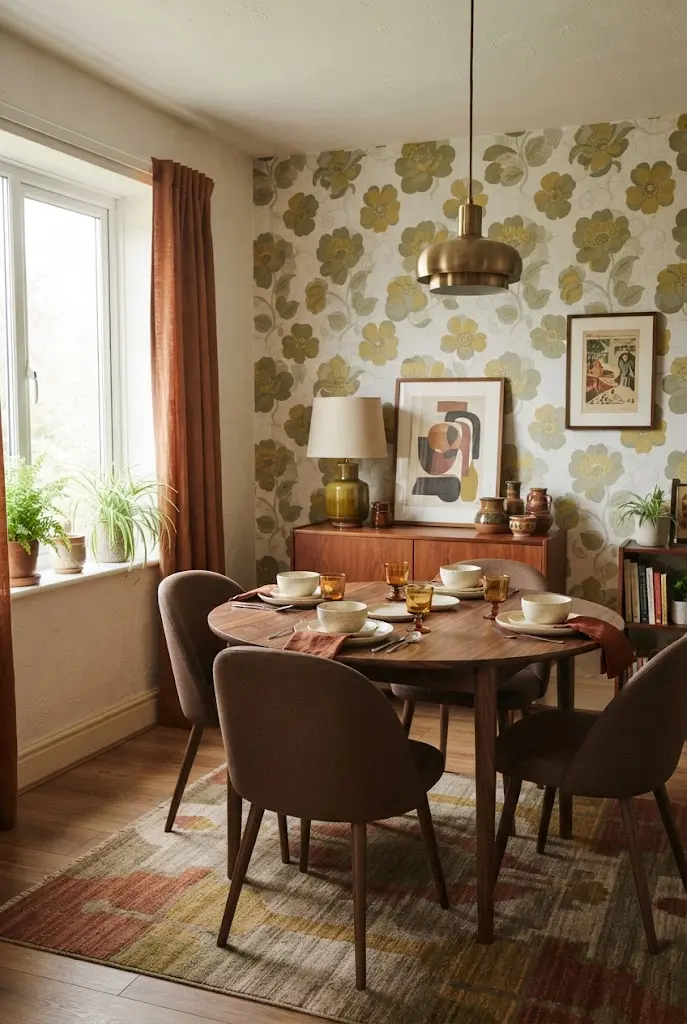
Patterns can make a retro-inspired interior feel playful and expressive.
The 1970s were known for bold geometric shapes, oversized florals, and repeating motifs.
You can introduce patterns through wallpaper, curtains, rugs, cushions, or upholstered furniture.
Choose one strong pattern and balance it with solid-colored furnishings.
Muted mustard, olive, rust, cream, and brown create an authentic vintage palette.
Large-scale floral wallpaper can work especially well in powder rooms or dining areas.
Geometric rugs can provide similar energy without permanently changing the walls.
Use modern fabric quality for improved durability and everyday comfort.
Avoid combining several competing patterns unless the room is intentionally maximalist.
A carefully chosen pattern can give a contemporary home an unmistakable retro personality.
11. Design a Sunken Living Area
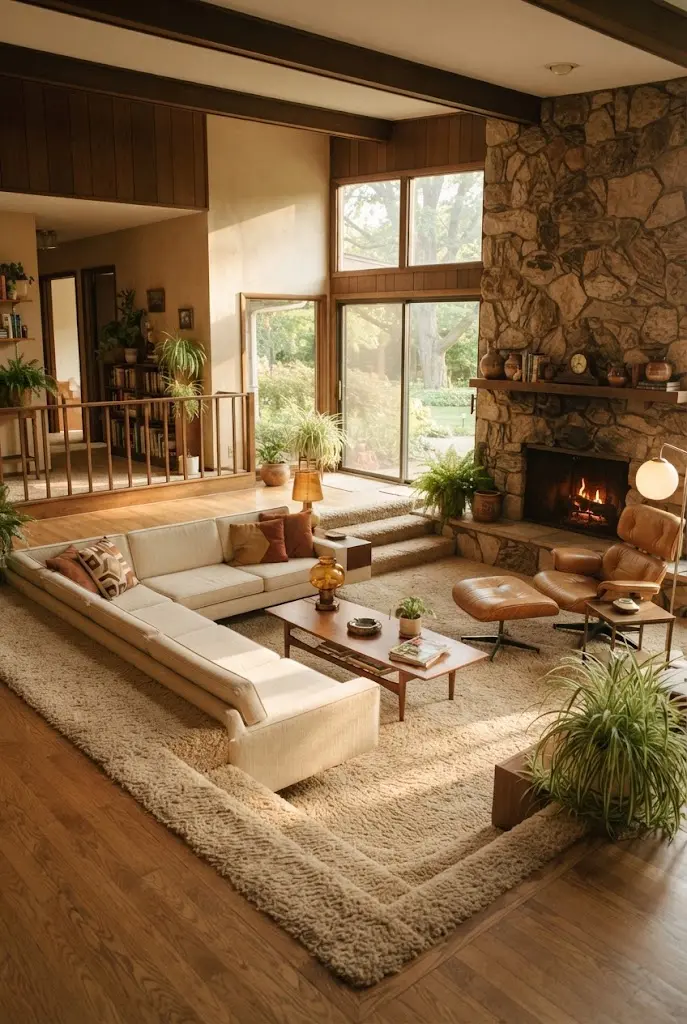
A sunken living area can give a home a strong architectural connection to 1970s design.
The lowered floor naturally separates the social space from the rest of the room.
Use broad steps or a clearly defined transition to create the change in level.
Low sofas and lounge chairs can emphasize the lowered geometry.
Natural wood, stone, or textured carpeting can reinforce the retro aesthetic.
Keep furniture arranged around a central table to encourage conversation.
Large windows can make the area feel open rather than enclosed.
Warm neutral colors prevent the architectural feature from feeling visually heavy.
If structural changes are not practical, a low seating arrangement can suggest the same visual effect.
This design approach creates a distinctive focal point while preserving the relaxed spirit of ’70s interiors.
12. Use Wood-and-Brick Combinations
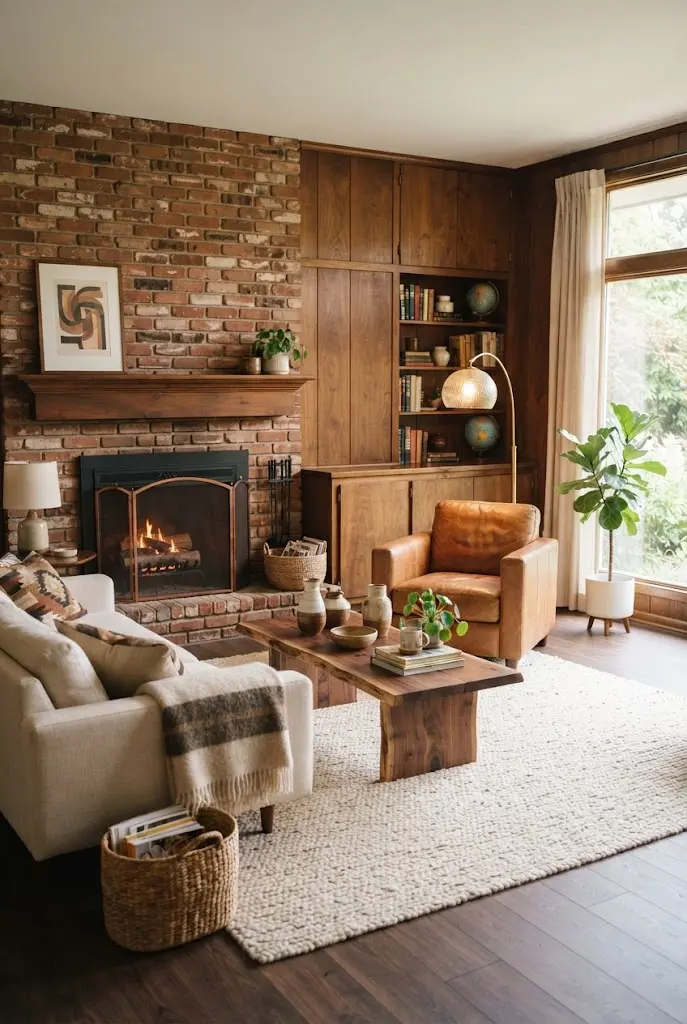
Combining wood and brick can create the earthy architectural character often associated with retro American interiors.
Exposed brick adds texture while wood introduces warmth and visual continuity.
Use the materials together around fireplaces, kitchen walls, entryways, or living rooms.
Medium and dark wood tones work particularly well with warm brick colors.
Cream upholstery can soften the stronger architectural surfaces.
Vintage-inspired lighting can enhance the texture after dark.
Natural rugs and woven accessories can connect the materials with the rest of the room.
Keep the brick authentic-looking rather than using overly uniform finishes.
A limited material palette can make the space feel cohesive rather than visually busy.
This combination creates a grounded interior with strong architectural personality and retro appeal.
13. Create a Retro Kitchen Nook
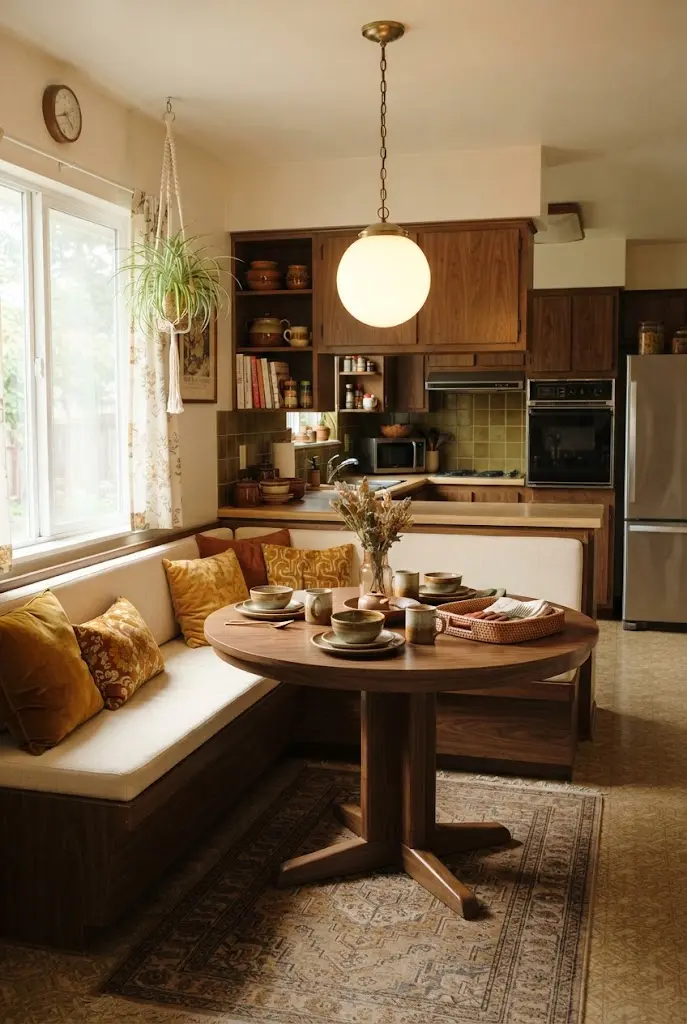
Kitchen dining nooks were well suited to the casual family-oriented lifestyle associated with many American homes.
A compact built-in bench can make a kitchen feel more welcoming and efficient.
Use warm wood cabinetry or paneling to establish the retro foundation.
A round or oval table can soften the geometry of the room.
Upholstery in rust, mustard, olive, or brown can introduce period-inspired color.
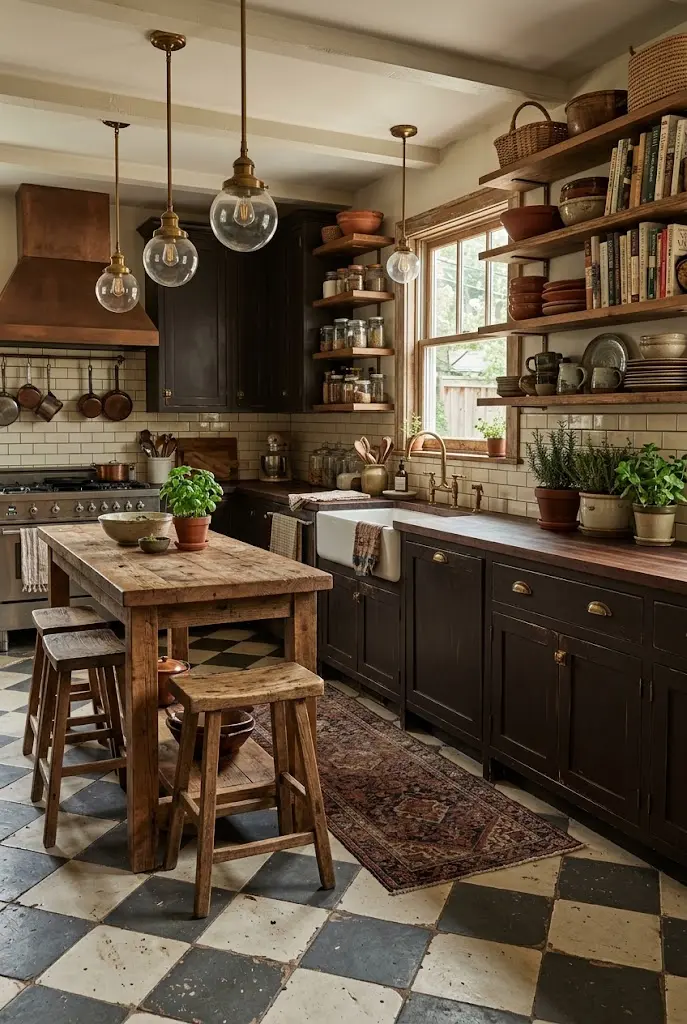
Pendant lighting above the table provides both atmosphere and practical illumination.
Open shelves can display ceramics, glassware, and simple vintage-inspired objects.
Modern appliances can be integrated without compromising the overall retro appearance.
Natural daylight and comfortable seating make the nook feel like a genuine everyday gathering place.
This small feature can bring significant ’70s personality to an otherwise contemporary kitchen.
14. Mix Vintage Shapes With Modern Comfort
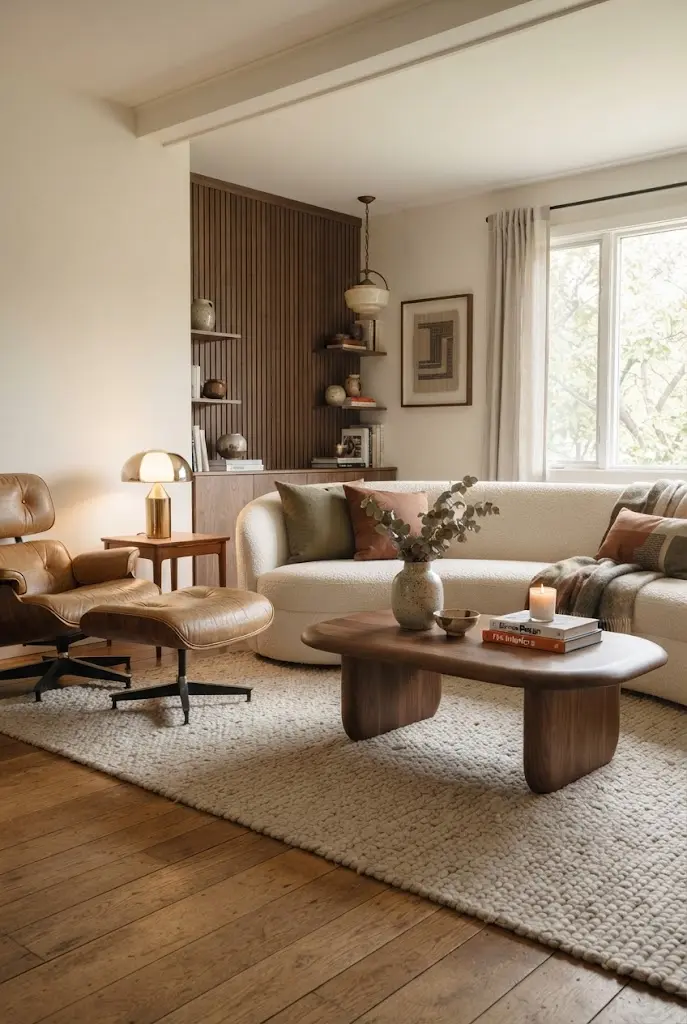
The easiest way to create a retro-inspired home is to combine vintage forms with contemporary functionality.
You do not need every item in the room to come directly from the 1970s.
Instead, select recognizable shapes such as curved chairs, rounded tables, low sofas, and sculptural lamps.
Combine these silhouettes with modern upholstery, durable flooring, and updated technology.
Warm wood can connect newer pieces with authentic vintage furniture.
Earthy colors help establish the nostalgic atmosphere without requiring excessive decoration.
A few vintage accessories can provide personality and visual history.
Keep the floor plan practical so the room remains comfortable for everyday American family life.
This balanced approach allows the design to feel inspired by the decade rather than copied from it.
The finished home can have retro character, modern comfort, and a timeless sense of warmth.