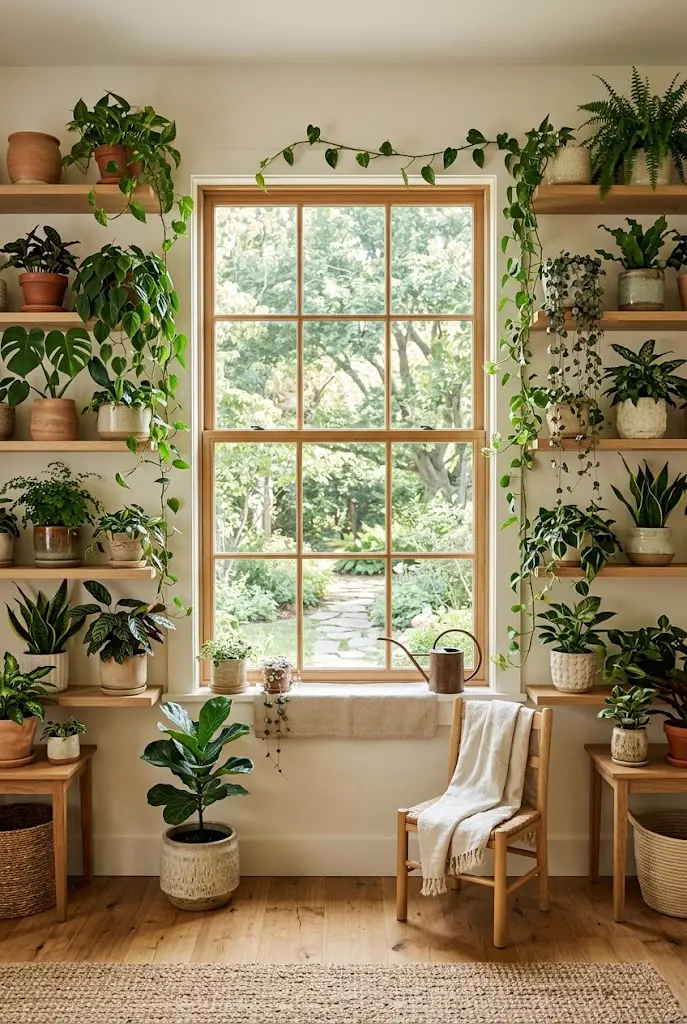
15 Natural Hallway Decor Elements for a Cozy First Impression
Your hallway is one of the first spaces guests see when they enter your home. Natural hallway decor can make this transitional area feel warm, relaxed, and welcoming. Simple materials such as wood, woven fibers, stone, linen, and greenery bring an organic character indoors. These ideas work well in American houses, apartments, townhomes, and smaller entryways. You can combine practical storage with decorative details without making the hallway feel crowded. Neutral colors and natural textures also create a timeless look that works across many interior styles. From wooden benches to woven baskets, small changes can make a noticeable difference. Here are 15 natural hallway decor elements to help create a cozy first impression.
1. Reclaimed Wood Console Table
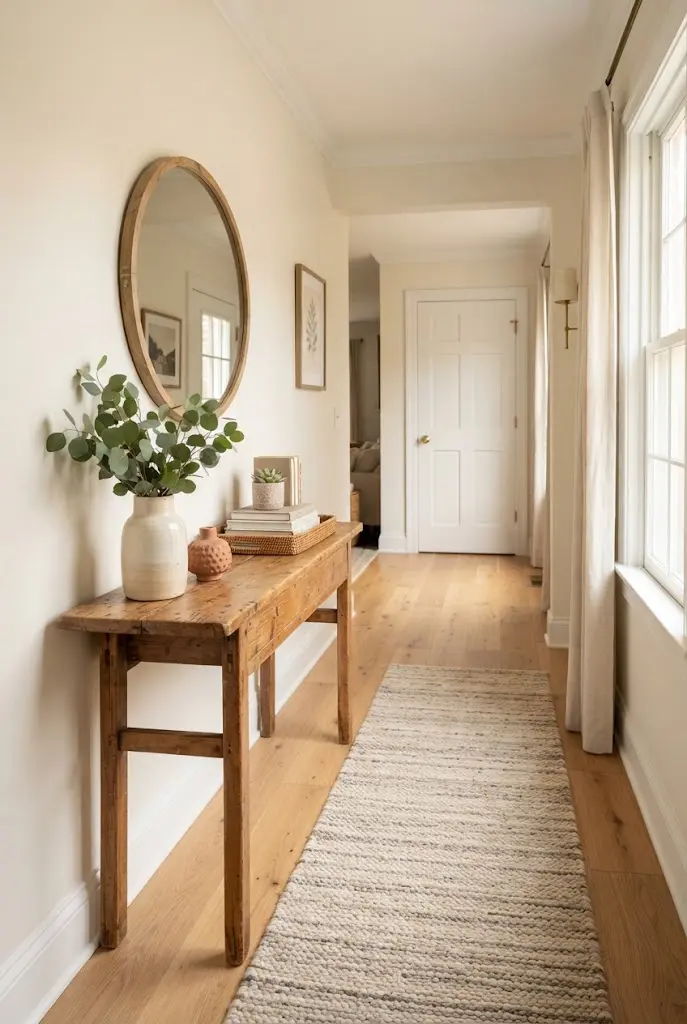
A reclaimed wood console table can immediately give a hallway a warmer and more grounded appearance. The natural grain, subtle imperfections, and slightly aged surface add character without making the space feel overly decorated. In a typical American entryway, a narrow console works especially well because it provides useful surface space without blocking the walking path. Choose a simple rectangular design with enough clearance underneath for baskets or shoes. Keep the tabletop relatively uncluttered with only a few carefully selected accessories. A ceramic vase, small plant, or woven tray can complement the wood beautifully. Lighter wood tones can make narrow hallways feel brighter and more spacious, while darker reclaimed wood creates a richer farmhouse or rustic atmosphere. Pairing the table with neutral walls helps the natural material become the focal point. The result is a practical entryway feature that feels warm from the moment someone walks through the door.
2. Woven Natural-Fiber Runner
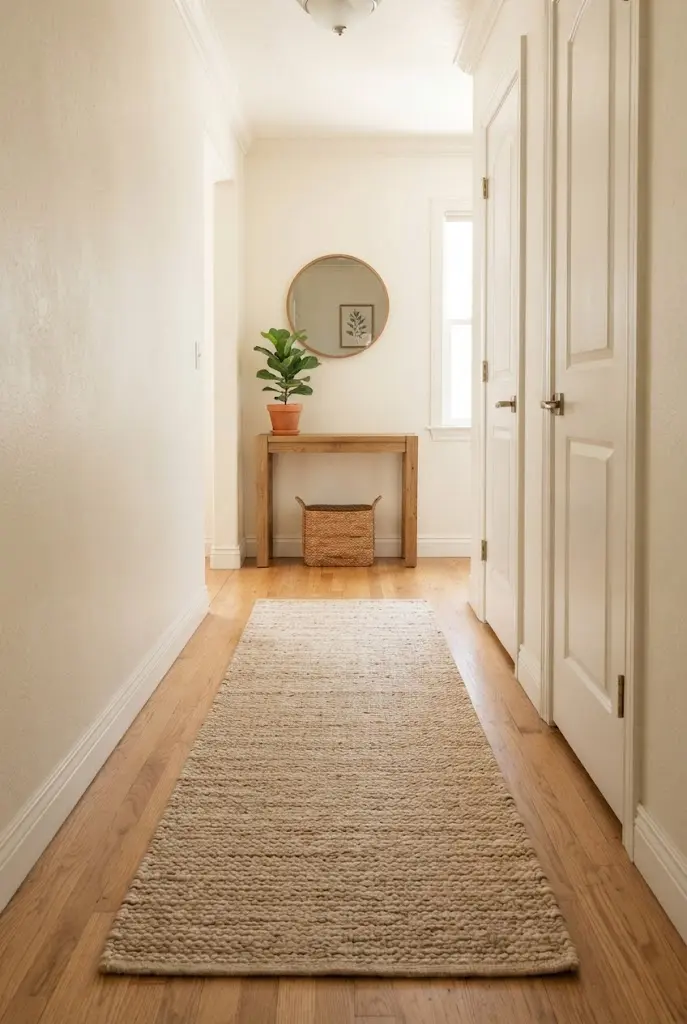
A woven runner is an easy way to introduce natural texture into a hallway without making major changes to the room. Materials such as jute, sisal, cotton, and wool can create a relaxed foundation underfoot. For American homes with hardwood, laminate, or tile flooring, a runner can visually connect the hallway with nearby rooms. Neutral beige, cream, tan, and soft brown tones work particularly well with natural decorating schemes. Choose a runner that leaves visible floor space along both sides so the hallway does not look cramped. A subtle woven pattern can add interest while maintaining a calm appearance. Low-pile options are practical for busy household areas because doors can open more easily over them. A runner can also visually lengthen a narrow hallway by creating a clear directional line. Pair it with wood furniture and greenery for a cohesive organic look. The combination creates a welcoming pathway that feels comfortable rather than overly formal.
3. Large Green Indoor Plant
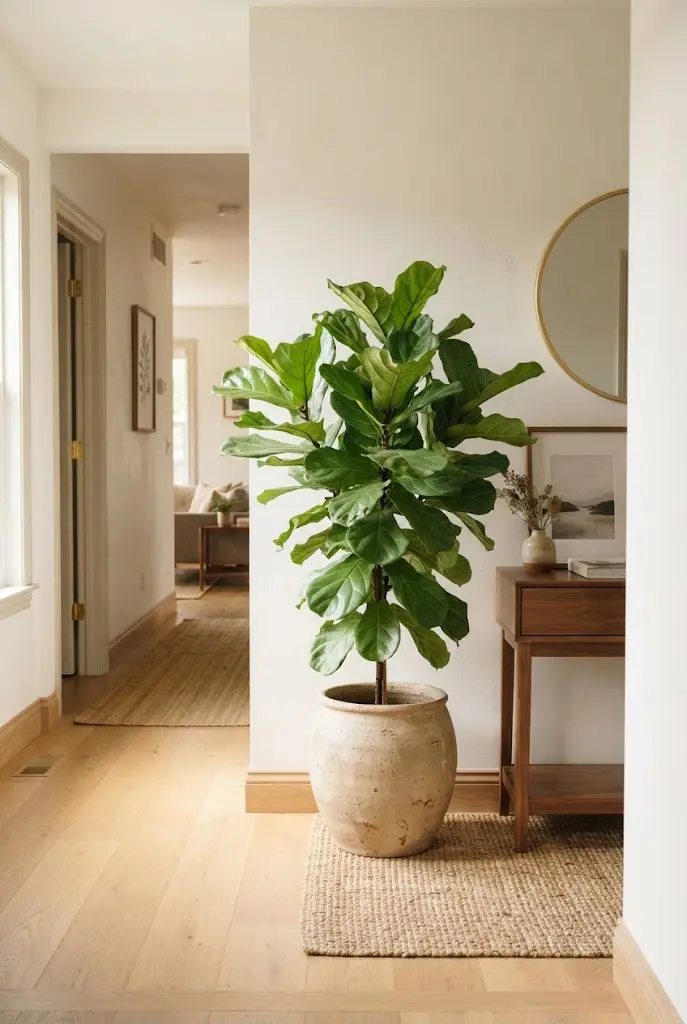
A large indoor plant can make an otherwise plain hallway feel more connected to nature. Plants with attractive foliage work especially well near a console table, empty corner, or wider section of the hallway. A tall plant can add vertical interest while helping soften hard architectural lines. Consider varieties with a naturally sculptural shape, such as a fiddle-leaf fig, rubber plant, olive tree, or similar indoor-friendly greenery. The plant should be placed where it does not interfere with doors, stairs, or normal foot traffic. A simple terracotta, stone, or woven planter can reinforce the natural theme. In a bright hallway, natural light can highlight the texture and color of the leaves. If the hallway receives little daylight, choose a plant appropriate for lower-light conditions. Avoid filling the space with too many plants because one well-positioned specimen can have a stronger visual effect. Combined with wood and neutral materials, greenery creates a relaxed and welcoming atmosphere.
4. Rattan Storage Baskets
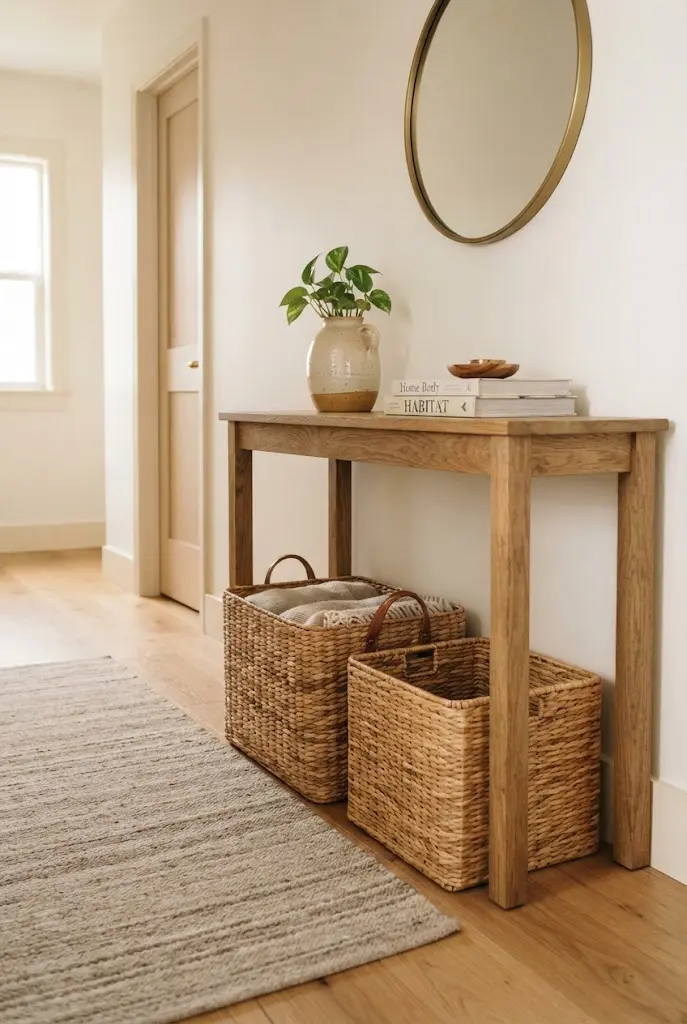
Rattan storage baskets combine natural texture with practical hallway organization. They are especially useful for American entryways where families need convenient places for shoes, scarves, hats, dog accessories, or everyday items. Place two or three baskets underneath a console table or on a lower shelf to keep the arrangement visually organized. Natural tan and honey-colored rattan can add warmth against white or beige walls. Choose baskets with slightly different sizes while keeping the overall style consistent. Their woven surfaces provide visual texture without requiring bright colors or complicated patterns. Lidded baskets can hide clutter while open baskets make frequently used items easier to reach. In smaller apartments, baskets can provide storage without requiring another large piece of furniture. Pair them with wood furniture and a neutral rug for a cohesive natural look. Keeping the baskets neatly arranged prevents the hallway from appearing messy. This small addition can make the space both attractive and functional.
5. Natural Wood Coat Hooks
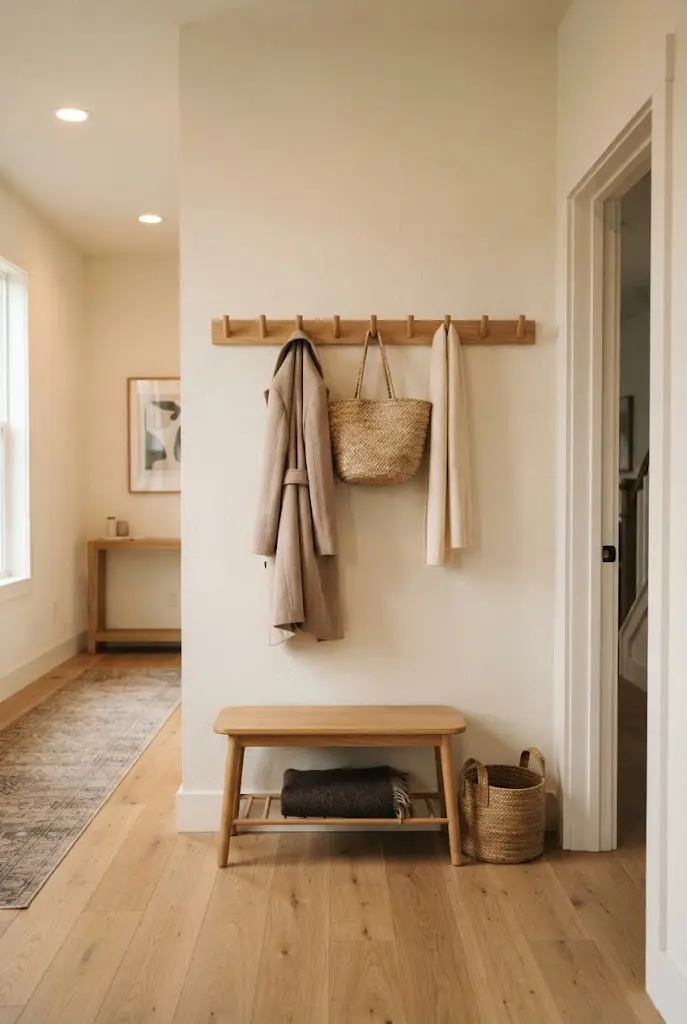
Natural wood hooks offer a simple way to make a hallway more useful while preserving an organic aesthetic. A row of wooden pegs can provide convenient hanging space for lightweight coats, hats, scarves, and everyday bags. This is particularly useful in American homes where the main entryway may not have a separate mudroom or coat closet. Choose hooks made from oak, maple, walnut, or another naturally finished wood. Installing them on a simple painted or lightly textured wall can create a clean contrast. Keep the spacing consistent so the arrangement looks intentional rather than improvised. A few neutral items hanging from the hooks can demonstrate their purpose without creating visual clutter. Wooden hooks can also work above a small bench for a compact entryway solution. Their simple shape complements Scandinavian, farmhouse, rustic, and modern organic interiors. The combination of natural wood and practical storage creates a welcoming yet functional hallway.
6. Linen Accent Curtains
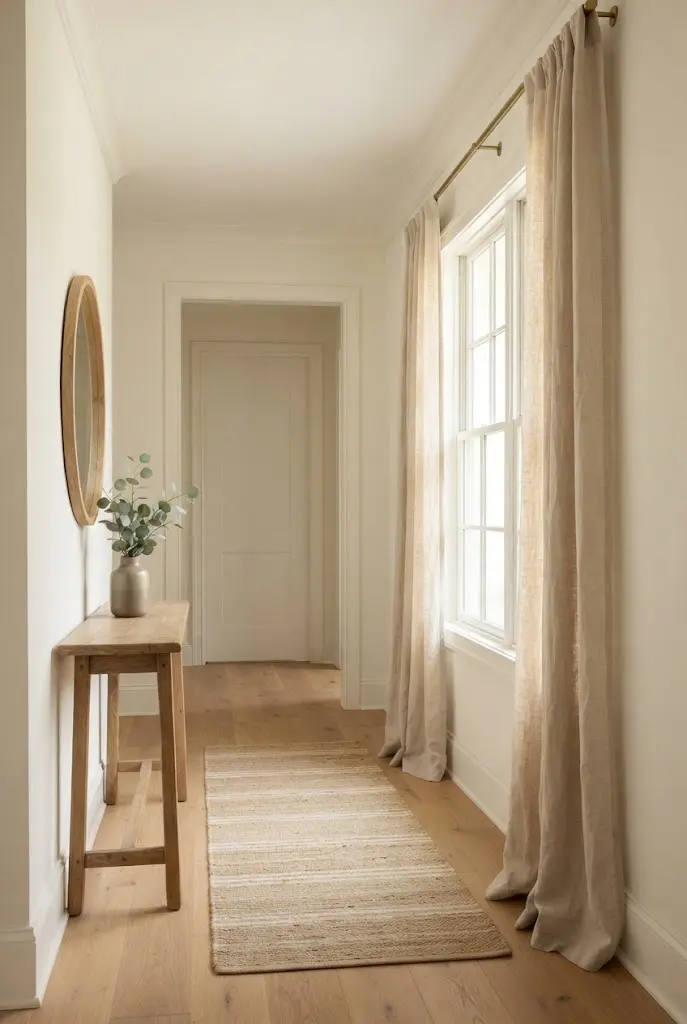
If your hallway includes a nearby window, linen curtains can soften the space while maintaining a natural aesthetic. Linen has a relaxed texture that works beautifully with wood, greenery, and neutral-colored walls. Choose lightweight curtains in shades such as ivory, oatmeal, warm white, or natural beige. Their slightly irregular texture adds visual interest without introducing a strong pattern. Curtains should hang naturally rather than appearing stiff or overly formal. In a bright American hallway, sheer linen can allow daylight to filter through while maintaining a soft atmosphere. If privacy is important, a lined option can provide additional coverage. Keep the curtain hardware simple, using a natural wood or understated metal finish. This approach works particularly well in homes with transitional, modern farmhouse, Scandinavian, or organic modern interiors. The result is a softer hallway with a comfortable residential feel.
7. Stone or Ceramic Decorative Pieces
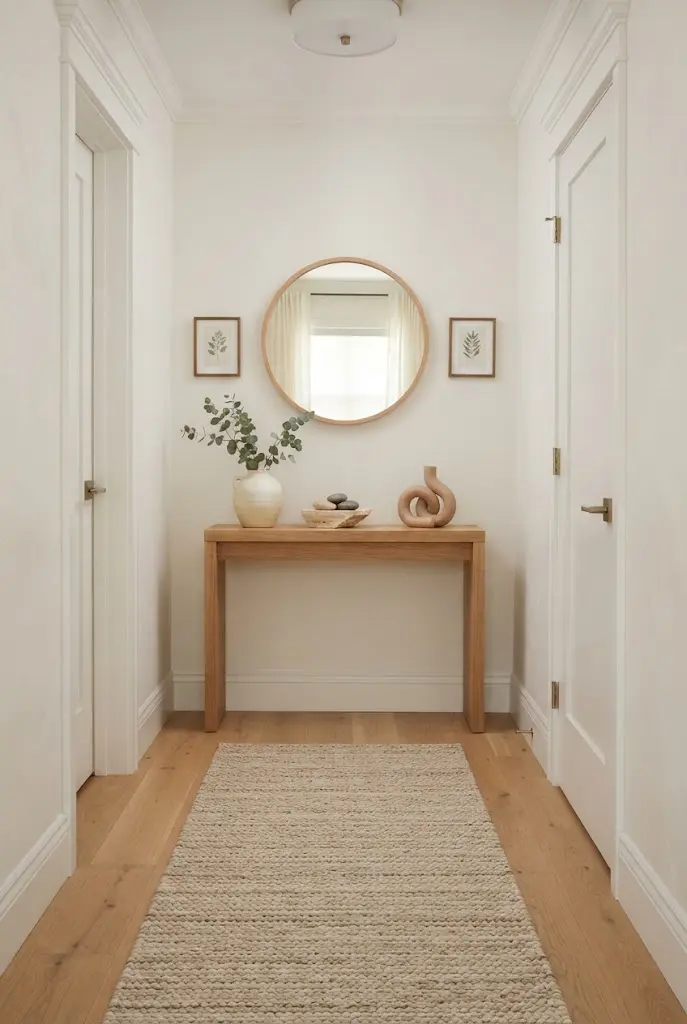
Small stone and ceramic accessories can introduce an earthy quality without overwhelming the hallway. A handcrafted ceramic vase, stone bowl, or sculptural clay object can sit naturally on a console table or shelf. Neutral shades such as sand, cream, taupe, and muted gray are easy to coordinate with wood furniture. Look for pieces with subtle variations because perfectly uniform surfaces can feel less organic. One or two larger accessories often look better than filling every available surface. A ceramic vase containing a few branches can connect the decorative arrangement with the natural theme. Stone accessories can also provide contrast against warm wood while keeping the overall palette subdued. These pieces are particularly effective in minimalist and modern organic interiors. Their simple forms allow the hallway architecture and materials to remain visible. Used thoughtfully, earthy accessories can make the entry feel intentional without looking overly styled.
8. Dried Botanical Arrangement
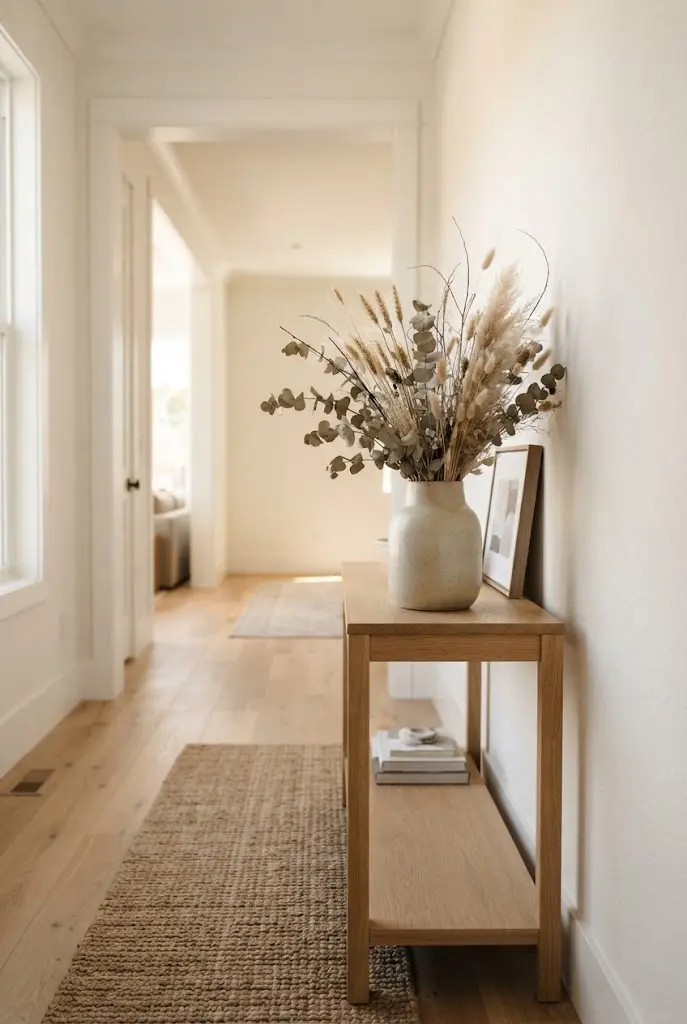
Dried botanicals can bring natural shapes and muted colors into a hallway without requiring the maintenance of fresh flowers. Pampas grass, dried eucalyptus, wheat stems, branches, or other preserved botanicals can create an airy decorative arrangement. Place them in a simple ceramic, stoneware, or glass vase on a console table. Keep the arrangement relatively loose so the stems retain a natural appearance. Neutral dried materials pair especially well with beige walls, wood furniture, and woven accessories. They can also introduce subtle seasonal character without relying on bright artificial colors. In a narrow hallway, choose a vertical arrangement that adds height without extending too far into the walking area. The muted palette helps maintain a calm atmosphere. Avoid overly large arrangements that make the space feel crowded. A carefully selected bundle of dried botanicals can provide an effortless finishing touch to a natural hallway.
9. Natural Wood Framed Mirror
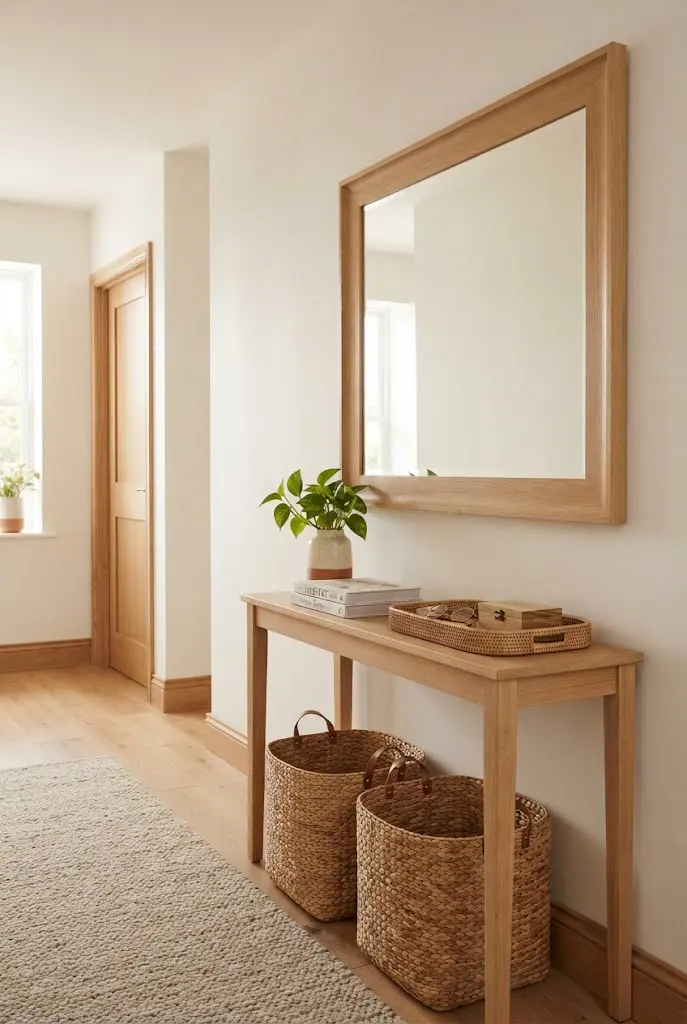
A wood-framed mirror can make a hallway feel brighter while adding another natural material to the design. Mirrors are particularly helpful in smaller American entryways because they reflect light and can create the impression of additional depth. Choose a frame made from oak, walnut, reclaimed wood, or another natural-looking material. A simple rectangular or gently rounded shape can work well depending on the architecture. Position the mirror above a console table or on an open wall where it does not interfere with doors. The reflection should ideally capture natural light or an attractive part of the home rather than clutter. Pairing the mirror with greenery and ceramic accessories can create a balanced arrangement. Avoid using a mirror that is too large for a narrow wall because it can dominate the space. Natural wood keeps the reflective surface from feeling too sleek or cold. This combination offers both practical function and welcoming visual appeal.
10. Wooden Bench
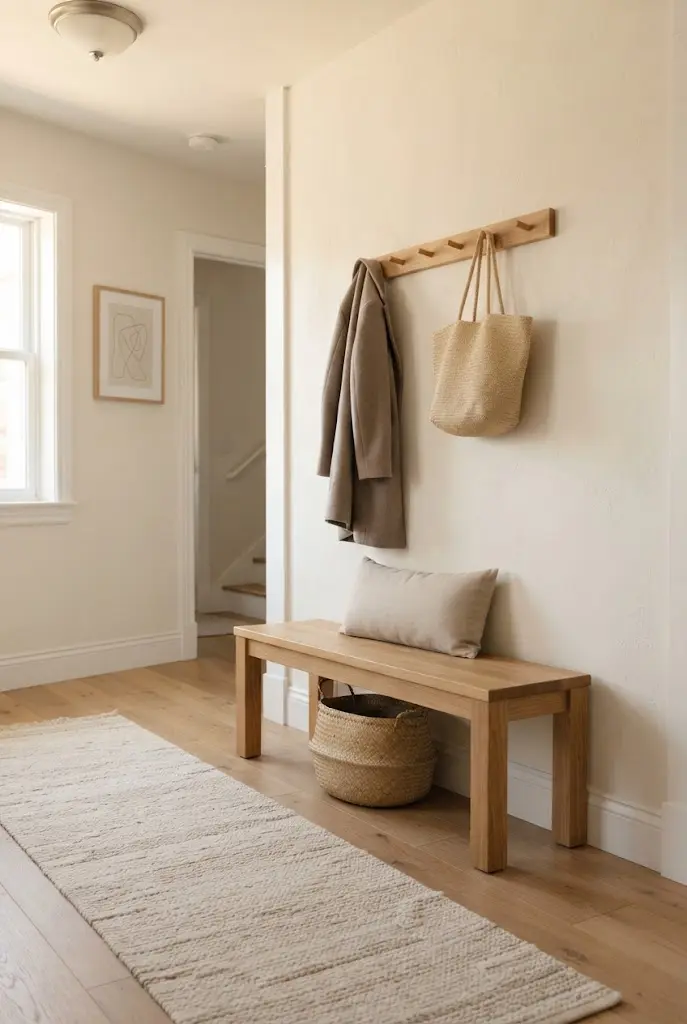
A wooden bench can make an entry hallway feel both inviting and practical. It gives family members and guests a comfortable place to sit while putting on or removing shoes. A simple solid-wood bench works particularly well with natural hallway decor because its material adds warmth without requiring much decoration. For additional comfort, add a small neutral linen cushion or a simple woven seat pad. The bench should be narrow enough to preserve a comfortable walking path through the hallway. It can also provide useful storage underneath when paired with baskets. Light oak creates a fresh Scandinavian-inspired appearance, while darker wood can create a more traditional or rustic mood. Place the bench beneath wall hooks for a practical entry station. Keep the surrounding area relatively open so the furniture does not make the hallway feel crowded. This is a particularly useful choice for family homes where the entryway needs to handle everyday activity.
11. Woven Wall Art

Woven wall art can introduce natural texture without taking up valuable floor space. Materials such as rattan, seagrass, cane, or woven cotton can create subtle visual interest on a blank hallway wall. A single large woven piece can act as a focal point, while a small group of complementary pieces can create a more collected appearance. Choose neutral tones that coordinate with the hallway’s existing furniture and flooring. Natural fibers work particularly well against white, cream, beige, or muted green walls. The irregular texture can soften the hard surfaces commonly found in hallways. Keep the installation securely mounted and positioned at a comfortable viewing height. Avoid covering every wall because negative space helps the woven material stand out. Pairing wall art with a wood console or greenery creates a cohesive organic arrangement. It is an easy way to make a plain hallway feel more finished without adding bulky furniture.
12. Earth-Tone Wall Color

An earthy wall color can transform the atmosphere of a hallway more dramatically than many decorative accessories. Soft shades of warm beige, clay, muted sage, mushroom, or creamy taupe can create a comforting backdrop for natural materials. The best color depends on the amount of natural and artificial light available in the hallway. Lighter earth tones are useful for narrow spaces because they maintain brightness and visual openness. Slightly deeper shades can create a cozy effect in wider hallways or spaces with good lighting. Natural wood furniture tends to look especially attractive against warm neutral colors. Keep the trim simple and coordinate nearby rooms so the hallway feels connected to the rest of the home. Matte or low-sheen finishes can provide a sophisticated appearance. Avoid extremely saturated colors if the goal is a calm organic aesthetic. A carefully chosen earth tone creates the foundation for the other natural elements in the space.
13. Natural Wood Picture Frames
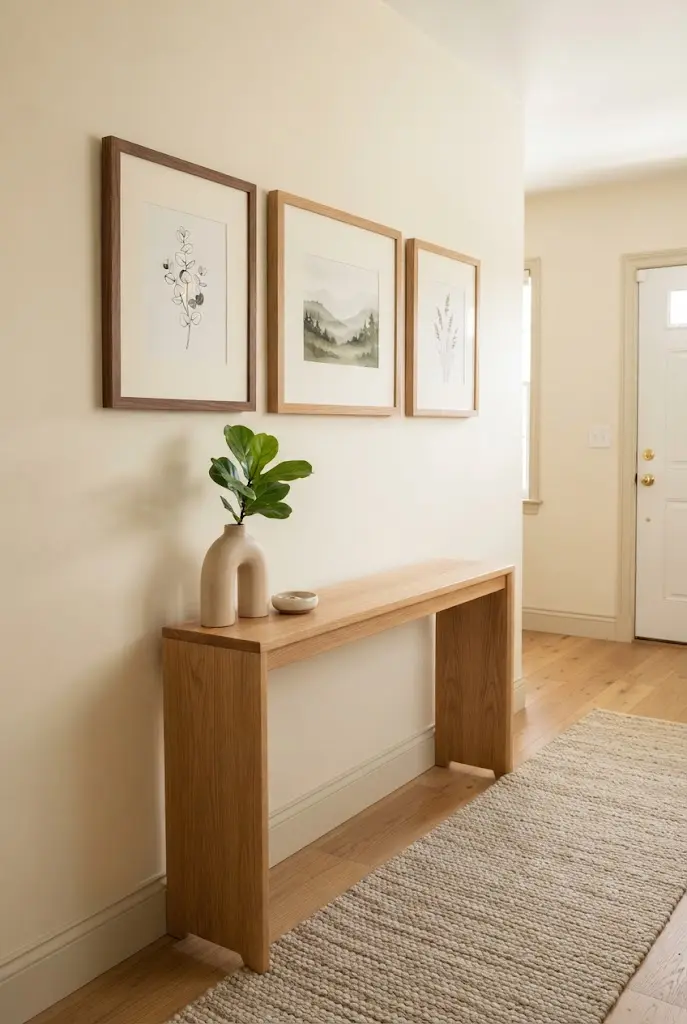
Natural wood picture frames can personalize a hallway while maintaining a connection to organic materials. Instead of using many unrelated frames, choose a small collection with similar wood tones for a cohesive appearance. Family photographs, botanical artwork, landscapes, or simple neutral prints can work well in an American home. Oak and walnut frames provide warmth while keeping the display sophisticated. Arrange the frames at consistent heights or create a carefully balanced gallery wall. Leave enough empty wall space around the display so it does not feel crowded. Pairing framed artwork with a wood console and greenery can reinforce the natural theme. The frames should complement rather than compete with the hallway’s other features. Avoid using too many bright colors if you want a calm, earthy atmosphere. This approach adds personality while keeping the overall design timeless and welcoming.
14. Natural Fiber Lampshade
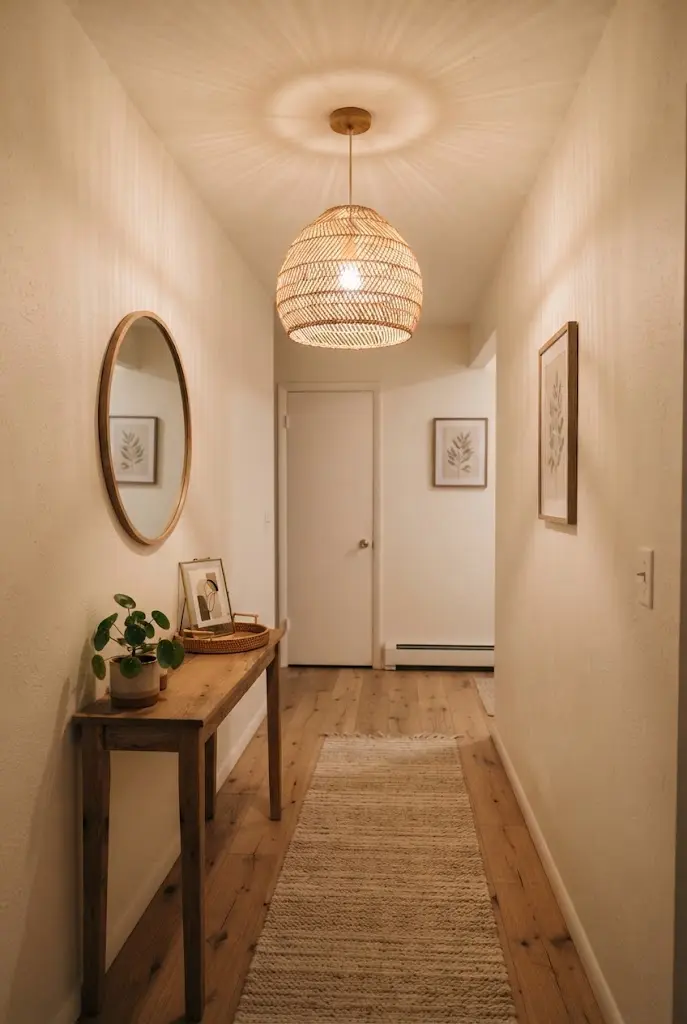
A natural-fiber lampshade can introduce warmth through both texture and lighting. Materials such as rattan, woven grass, bamboo, or linen can create attractive shadows when illuminated. In a hallway with limited natural light, a pendant or wall-adjacent lamp can make the space feel more comfortable during the evening. Choose a fixture that fits the ceiling height and does not interfere with doors or normal movement. Warm white lighting generally works well with wood and earth-tone materials. A woven shade can become a subtle focal point without requiring additional wall decoration. Keep the design relatively simple so the texture remains the main feature. Pairing the lamp with natural flooring and neutral walls creates a cohesive atmosphere. Proper scale is important because an oversized fixture can overwhelm a narrow hallway. The right natural-fiber lighting adds warmth while making the hallway feel intentionally designed.
15. Natural Wood and Greenery Combination
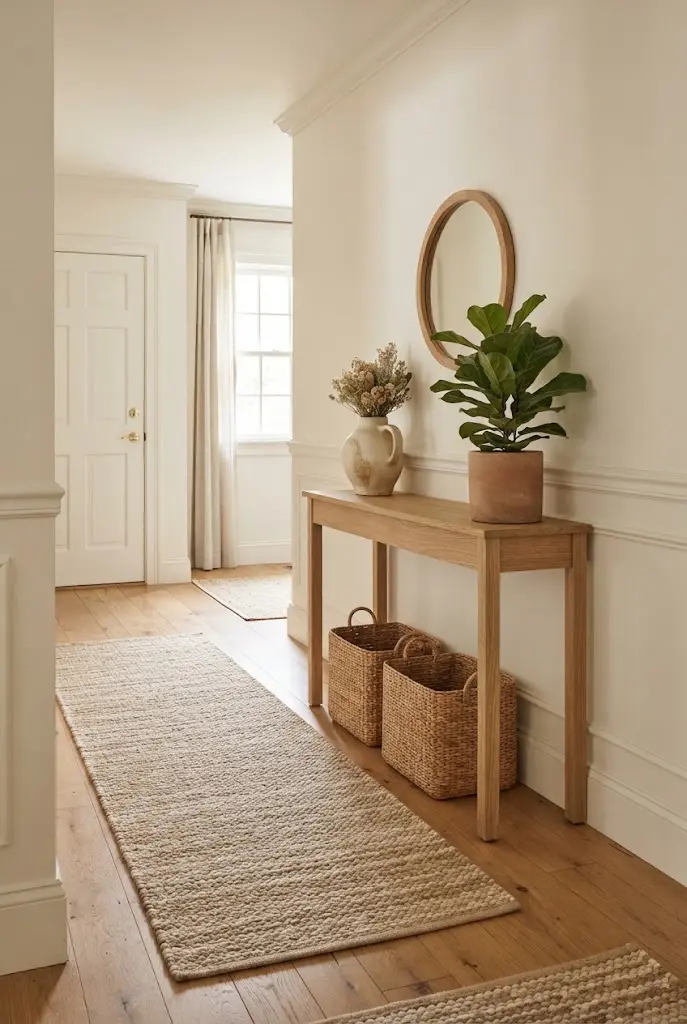
Combining natural wood with greenery can bring several of these ideas together into one cohesive hallway design. Wood introduces warmth and structure, while plants add freshness and organic shapes. A narrow wooden console with a small plant, woven basket, ceramic vase, and neutral runner can create a complete entryway without excessive decoration. The key is to use a limited number of materials and repeat them throughout the space. Natural oak, rattan, linen, ceramic, and greenery work particularly well together. Keep the color palette focused on warm whites, beige, tan, soft green, and natural brown. This approach works across many American interior styles, from modern organic and Scandinavian to farmhouse and transitional. Make sure furniture leaves enough room for comfortable movement through the hallway. Natural textures should feel layered rather than randomly collected. With the right balance, the hallway can create a cozy first impression while remaining practical for everyday life.
Conclusion
Natural hallway decor does not require a complete renovation or expensive furniture. A few carefully chosen materials can change how the space feels as soon as someone enters your home. Wood, woven fibers, greenery, linen, ceramic, stone, and earthy colors work particularly well together because they create visual warmth without overwhelming the hallway. The most successful approach is to balance beauty, storage, lighting, and comfortable movement. Start with one or two larger elements, then add smaller natural accents that support the overall style. For smaller American homes and apartments, prioritize slim furniture and wall-mounted storage. For larger homes, a bench, console, mirror, and larger plant can create a more substantial entryway. With thoughtful layering, your hallway can become more than a passage between rooms—it can create a genuinely cozy first impression.