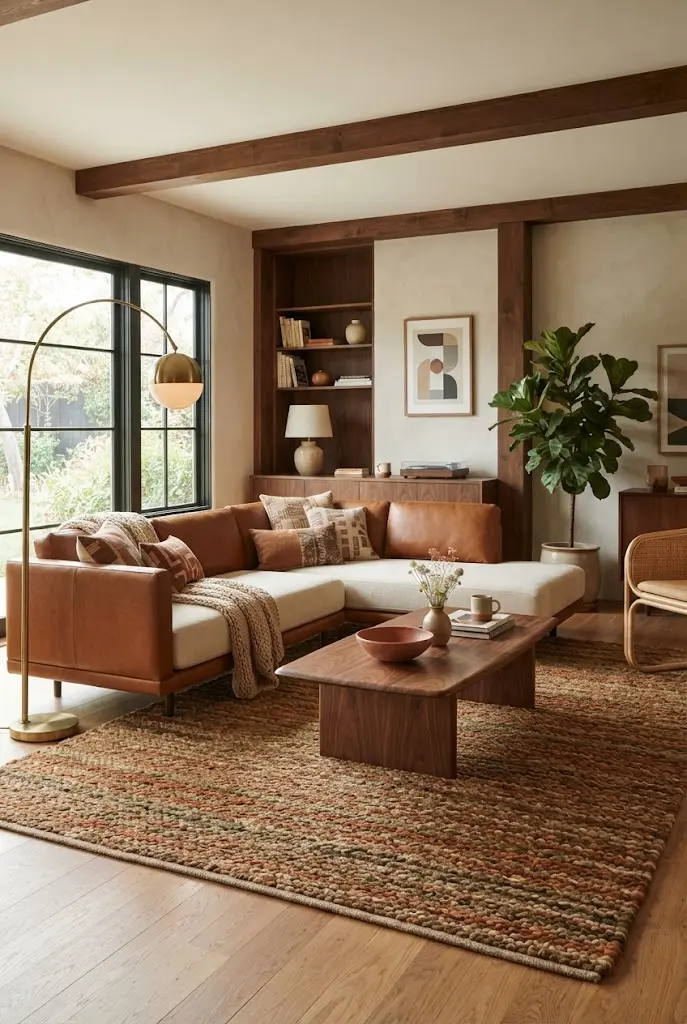
31 Cozy Living Room Ideas to Make Your Home Feel More Inviting
A cozy living room can make your home feel warmer, more comfortable, and inviting.
With the right furniture, colors, textures, and lighting, you can create a relaxing space for everyday living.
Soft textiles and layered decor can instantly add warmth and personality.
Natural materials such as wood, woven accents, and greenery can make the room feel welcoming.
Whether your style is modern, farmhouse, traditional, or eclectic, small changes can make a big difference.
These cozy living room ideas are perfect for creating a comfortable gathering space for family and friends.
From warm lighting to comfortable seating, each idea can help transform your living room into a relaxing retreat.
These ideas are inspired by comfortable and practical American home interiors.
1. Layer Soft Throw Blankets
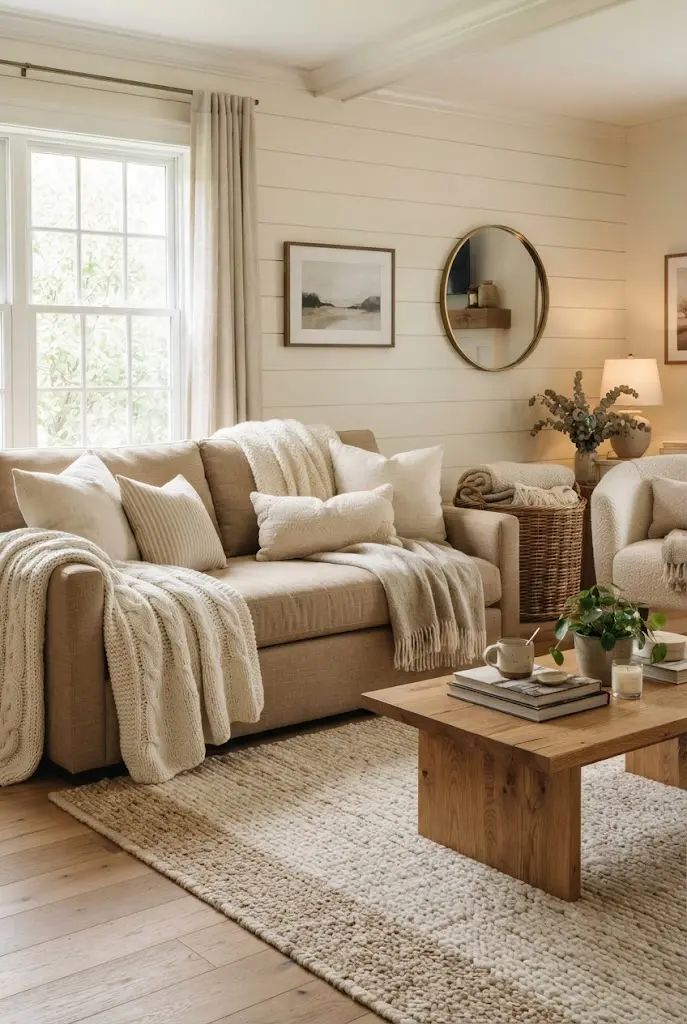
Adding soft throw blankets is one of the easiest ways to make a living room feel cozy. Choose chunky knits, woven blankets, or plush fabrics that add warmth and texture to sofas and chairs. Drape a blanket casually over the arm of your sofa for a relaxed appearance. Neutral shades such as cream, beige, taupe, and warm gray work beautifully in many interiors. You can also introduce seasonal colors for a fresh look throughout the year. Keep several blankets within easy reach so the room feels practical as well as decorative. A basket beside the sofa can provide an attractive place to store extra blankets. Mixing different textures creates visual interest without making the room feel cluttered. This simple addition can make your seating area look much more comfortable. It is especially inviting during cool evenings spent relaxing at home.
2. Add Warm Ambient Lighting
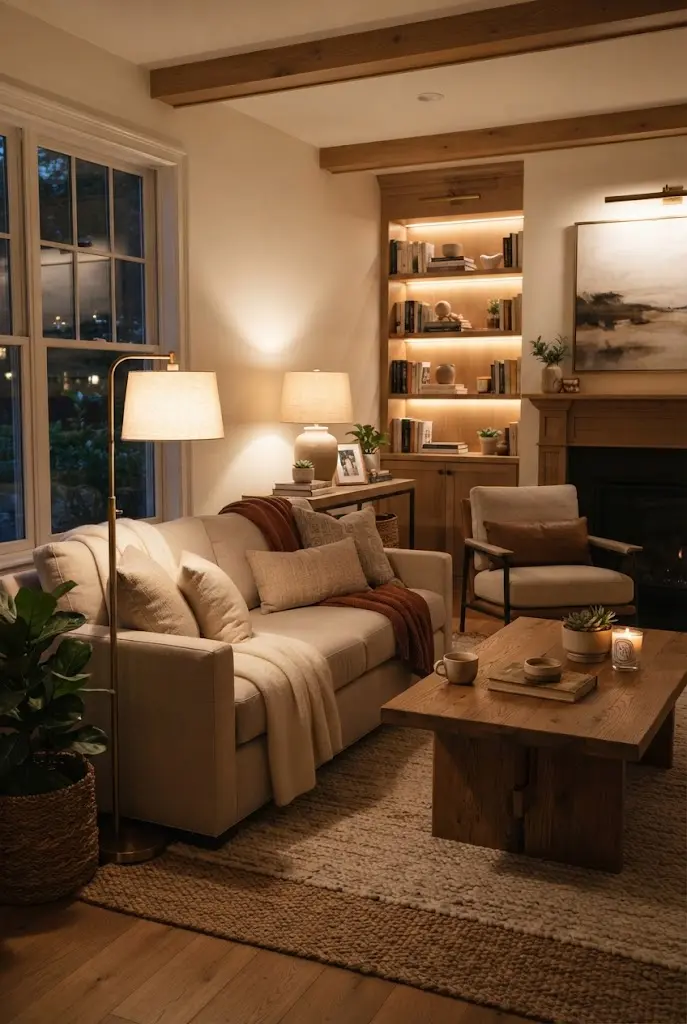
Warm lighting can completely change the atmosphere of a living room. Instead of relying only on bright ceiling lights, use several smaller sources of illumination. Table lamps, floor lamps, wall sconces, and accent lights can create a softer environment. Choose bulbs that produce a warm white glow for a comfortable evening atmosphere. Position a floor lamp beside a sofa or reading chair for both style and functionality. A table lamp on a console can add another layer of gentle lighting. Lamps with fabric shades can make the light feel especially soft and inviting. Keep the lighting distributed throughout the room instead of concentrating it in one area. This layered approach helps create depth and warmth after sunset. The result is a living room that feels relaxing and welcoming at any time of day.
3. Choose a Comfortable Sectional Sofa
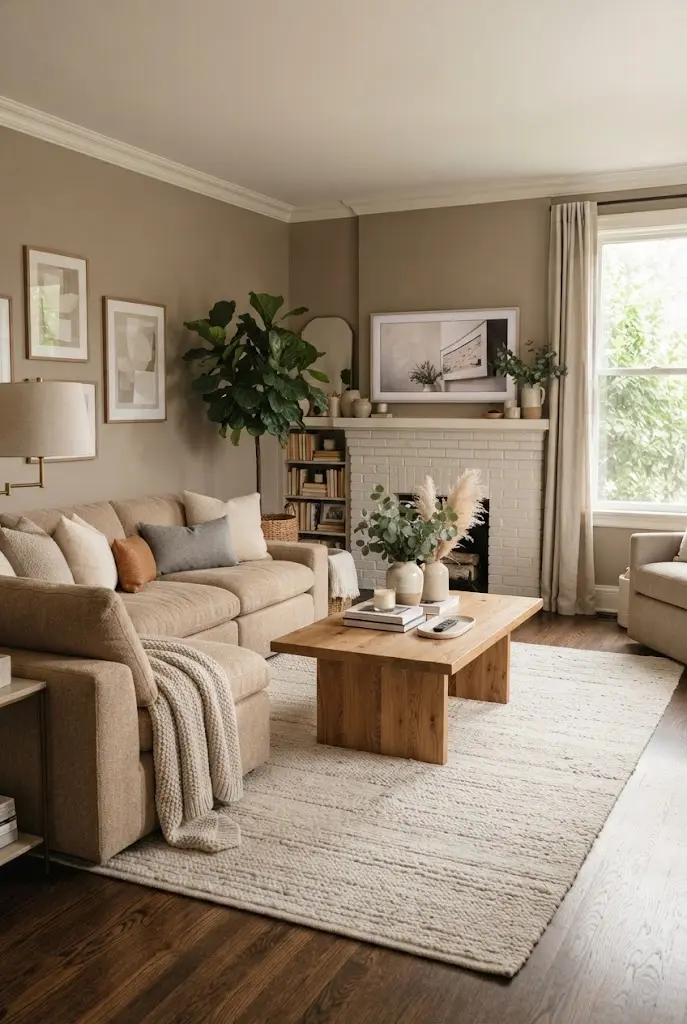
A comfortable sectional sofa can become the main gathering point of a cozy living room. Look for deep seating and supportive cushions that encourage people to relax. Soft neutral upholstery can create a calm foundation for the rest of the decor. Sectionals are especially useful for larger American living rooms where family and friends regularly gather. Add several pillows in different sizes to make the seating even more inviting. A large sectional can also help define an open-concept living area. Choose a configuration that works naturally with the room’s layout and walking paths. Performance fabrics can be practical for busy households. Layering a soft rug underneath the sofa can make the seating area feel more grounded. With the right arrangement, a sectional can make the entire room feel comfortable and welcoming.
4. Use a Plush Area Rug
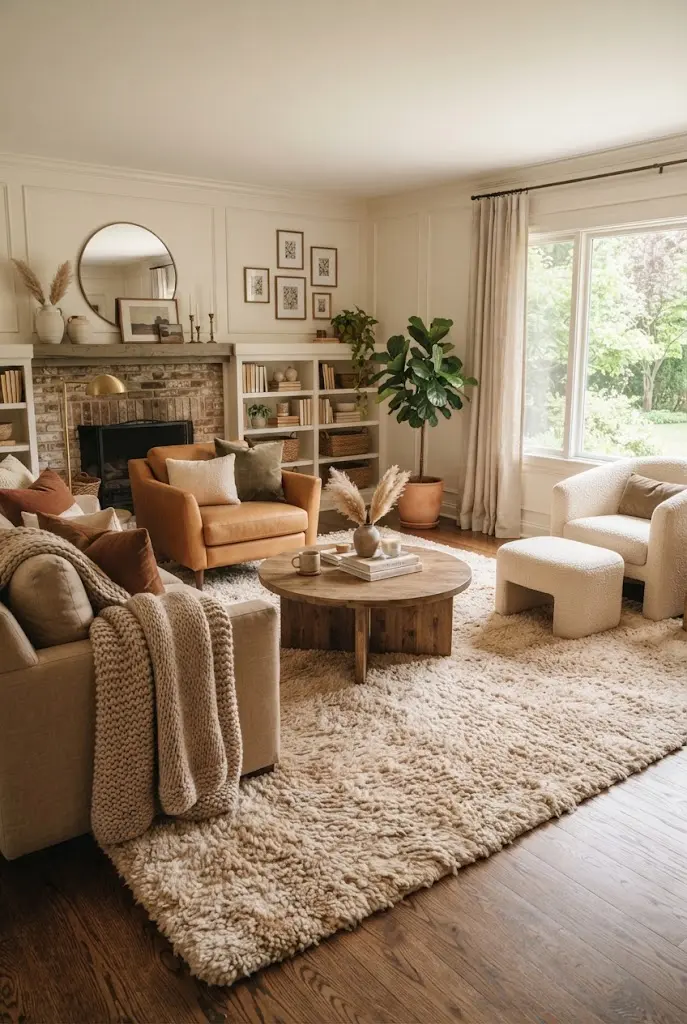
A plush area rug can instantly make a living room feel warmer and more comfortable. Rugs add softness underfoot while visually connecting furniture into one cohesive seating area. Choose a thick woven, wool, or textured rug for a cozy appearance. Neutral rugs work well when you want a calm and timeless atmosphere. Patterned rugs can introduce personality while still maintaining warmth. Make sure the rug is large enough to sit beneath at least the front legs of the main furniture. Cream, beige, tan, muted brown, and soft gray are popular choices for cozy interiors. A textured rug can also add subtle visual depth without overwhelming the room. Rugs are especially helpful in rooms with hardwood or other hard flooring. This simple layer can make the entire living space feel softer and more inviting.
5. Decorate With Cozy Throw Pillows
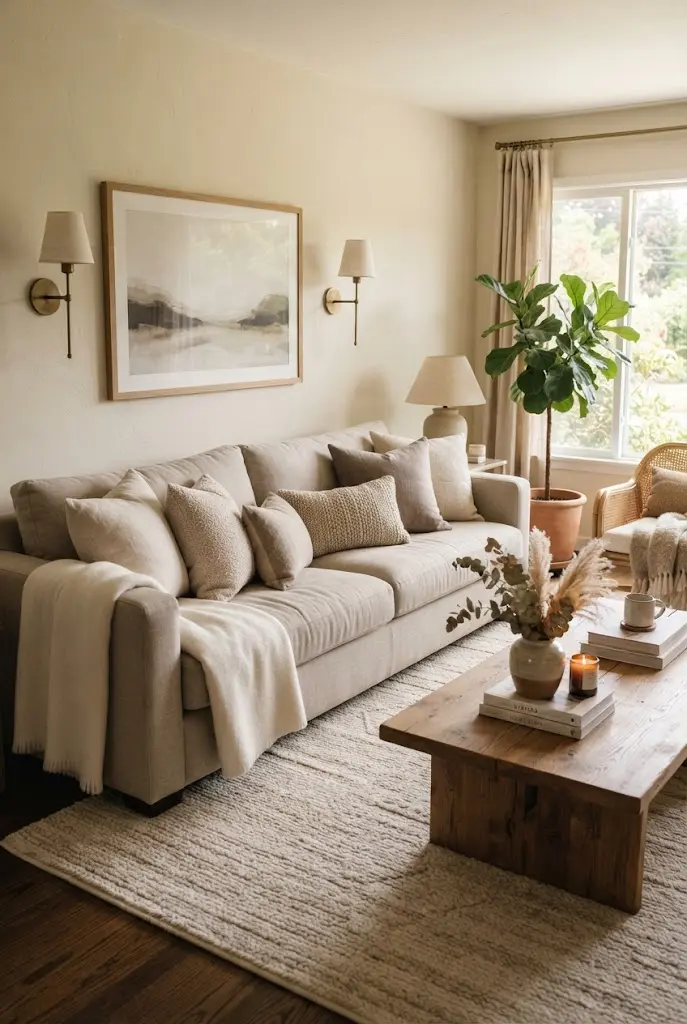
Throw pillows can make a living room look instantly softer and more inviting. Mix several sizes and textures to create a comfortable layered appearance. Velvet, linen, boucle, cotton, and woven pillow covers can provide different tactile qualities. Stick with a coordinated color palette so the room still feels organized. Warm neutrals are easy to combine with wood furniture and natural accents. Add one or two subtle patterns for visual interest without making the sofa look busy. Arrange larger pillows toward the back and smaller ones toward the front. Seasonal pillow covers can also refresh the space without requiring major changes. Avoid overcrowding the seating area so the sofa remains practical. Thoughtfully arranged pillows can make even a simple living room feel more welcoming.
6. Bring in Natural Wood Accents
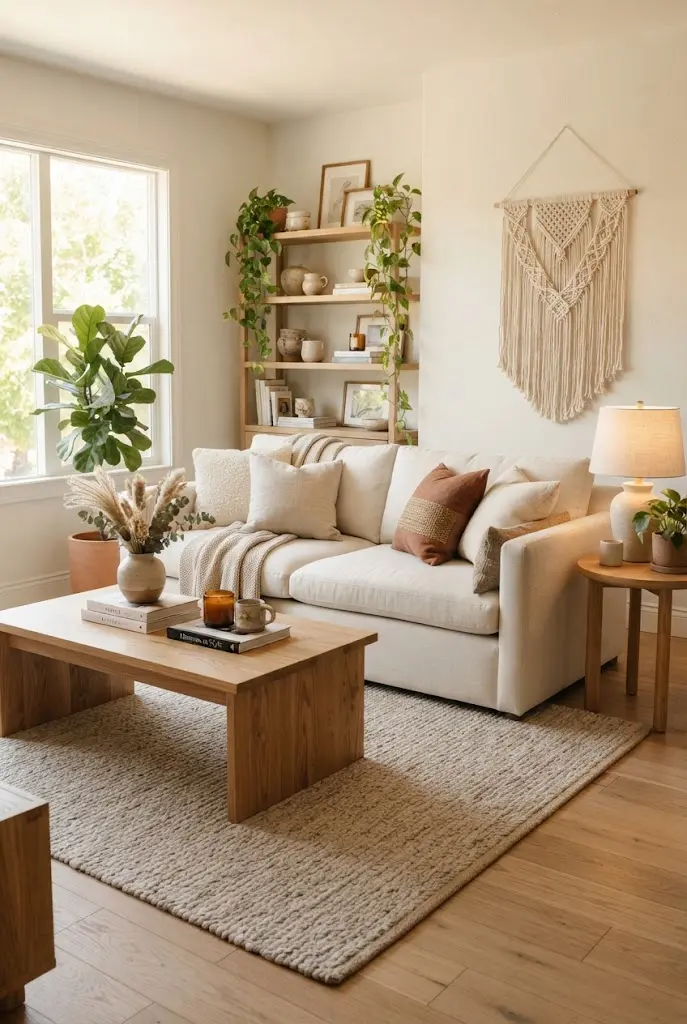
Natural wood can add warmth and character to a living room. Wooden coffee tables, side tables, shelving, and decorative pieces can create a comfortable organic atmosphere. Choose finishes with visible grain for a more natural appearance. Light oak can create an airy Scandinavian-inspired feeling, while darker wood can provide a richer traditional look. Combining wood with soft fabrics creates an appealing contrast between hard and soft textures. A wooden tray on the coffee table can also provide a simple decorative detail. Avoid using too many matching wood pieces if you want a collected look. Mixing different but complementary wood tones can make the space feel more relaxed. Natural wood works beautifully with neutral colors and greenery. These accents can make a living room feel connected to nature and more inviting.
7. Create a Cozy Reading Corner
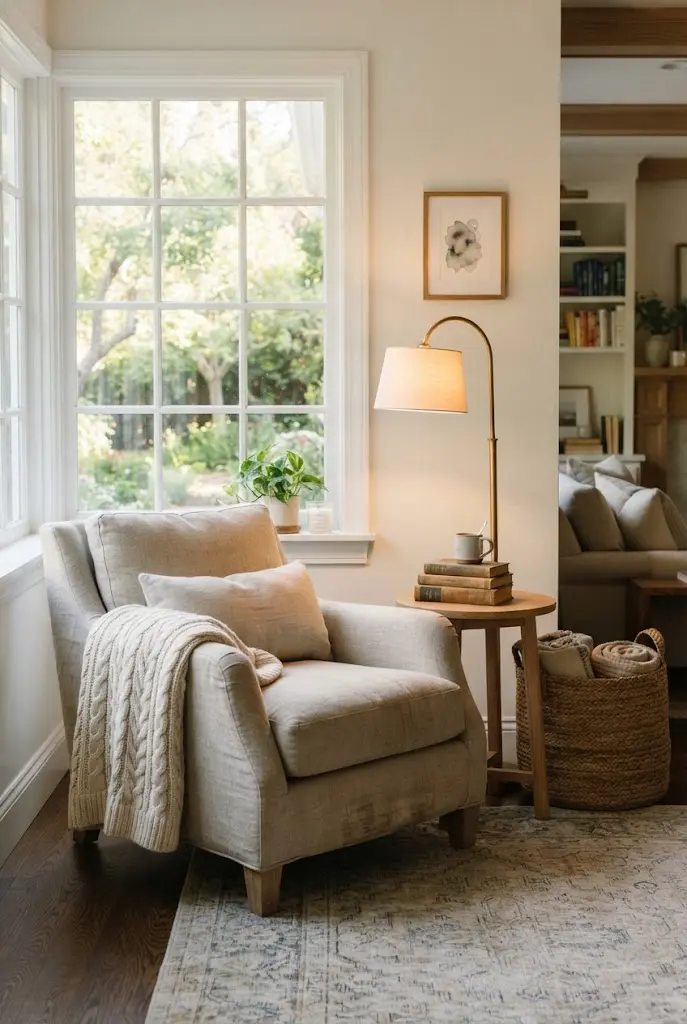
A dedicated reading corner can give your living room a peaceful and comfortable purpose. Place a comfortable armchair near a window or floor lamp for convenient reading light. Add a small side table where books, tea, or a decorative object can be placed. A soft throw blanket can make the chair even more inviting. Choose upholstery that complements the colors already used throughout the room. A small ottoman can provide a comfortable place to rest your feet. Add a floor lamp with a warm shade to create a relaxing atmosphere after sunset. A nearby basket can hold extra blankets or magazines. Keep the surrounding area uncluttered so the corner feels peaceful. This small arrangement can make your living room feel more personal and welcoming.
8. Add Indoor Greenery
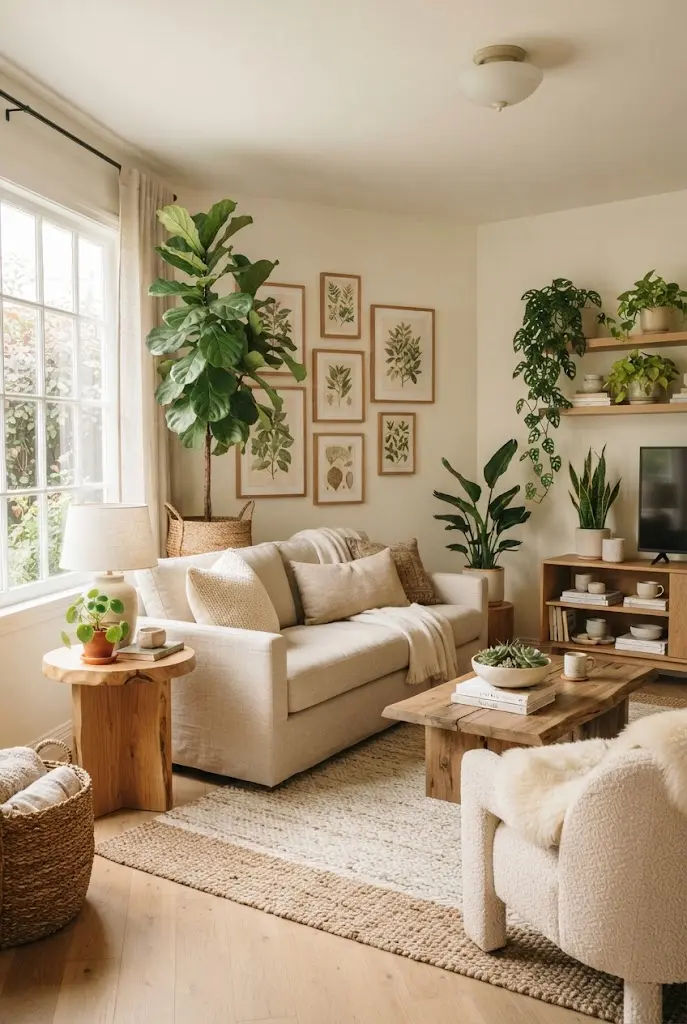
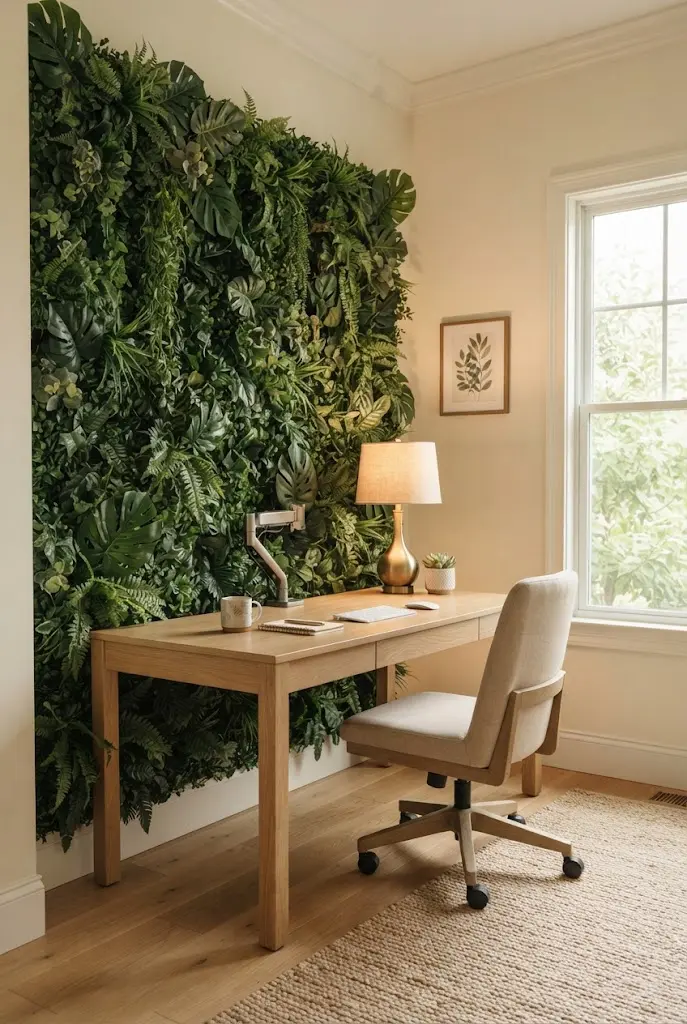
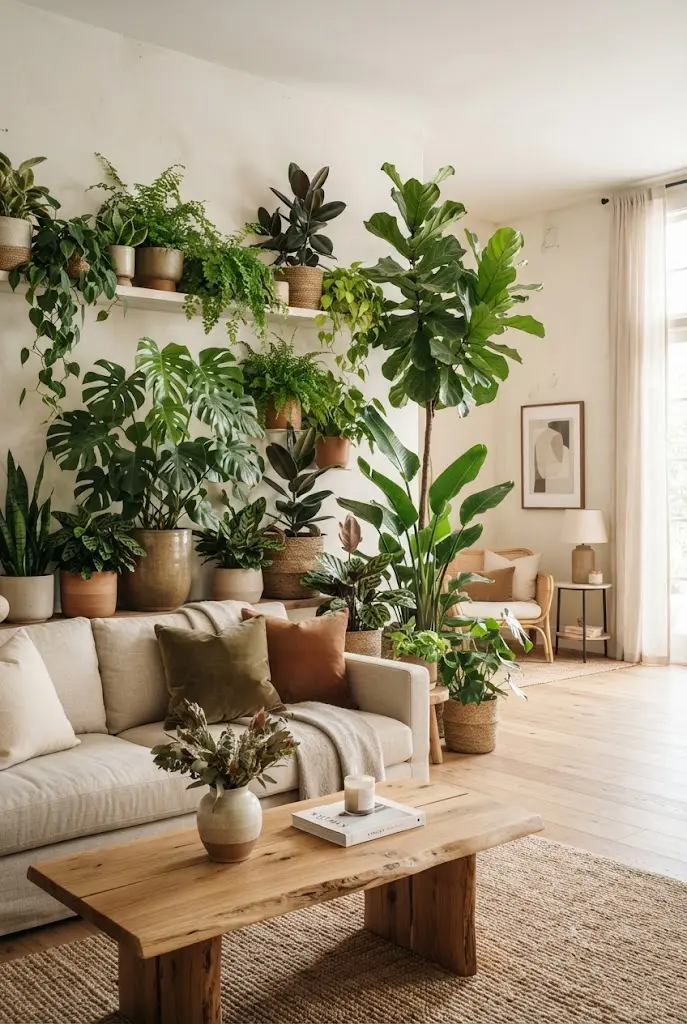
Indoor plants can make a living room feel fresh, natural, and welcoming. Place a tall plant in an empty corner to add height and visual interest. Smaller plants can sit on shelves, side tables, or window ledges. Choose low-maintenance varieties if you prefer easy-care greenery. Natural green tones pair beautifully with cream, beige, brown, and wood finishes. Decorative planters can also become part of the room’s overall design. Avoid filling every surface with plants because a few well-positioned pieces can have greater impact. Large leafy plants can soften hard architectural lines. Plants can also help bring a sense of nature indoors. A thoughtful combination of greenery and natural materials creates a relaxed and cozy environment.
9. Hang Soft Curtains
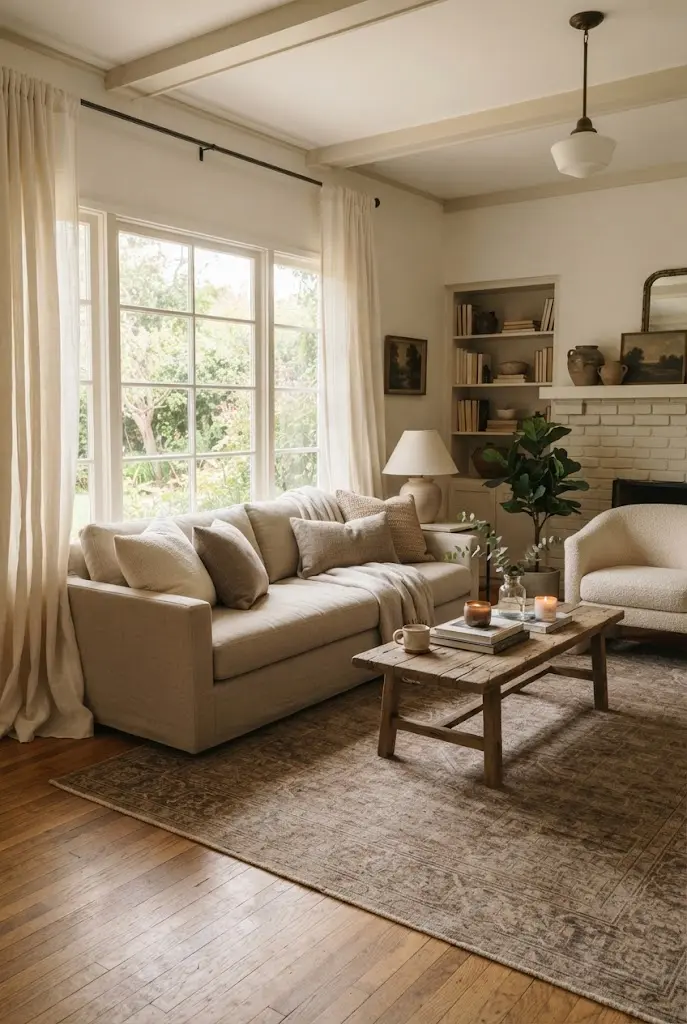
Soft curtains can make a living room feel warmer while also adding visual softness around windows. Choose linen, cotton, or gently textured fabrics for a relaxed appearance. Neutral curtains in cream, ivory, beige, or warm gray can blend naturally with many decorating styles. Hang the curtain rod slightly above the window frame to create the appearance of greater height. Allow the panels to extend toward the floor for an elegant finish. During the day, sheer curtains can filter sunlight beautifully. Heavier curtains can provide additional warmth and privacy in the evening. Choose fabrics that complement your sofa and area rug. Simple curtain panels can make a noticeable difference without overwhelming the room. They help create a soft and finished backdrop for your living space.
10. Style a Warm Fireplace
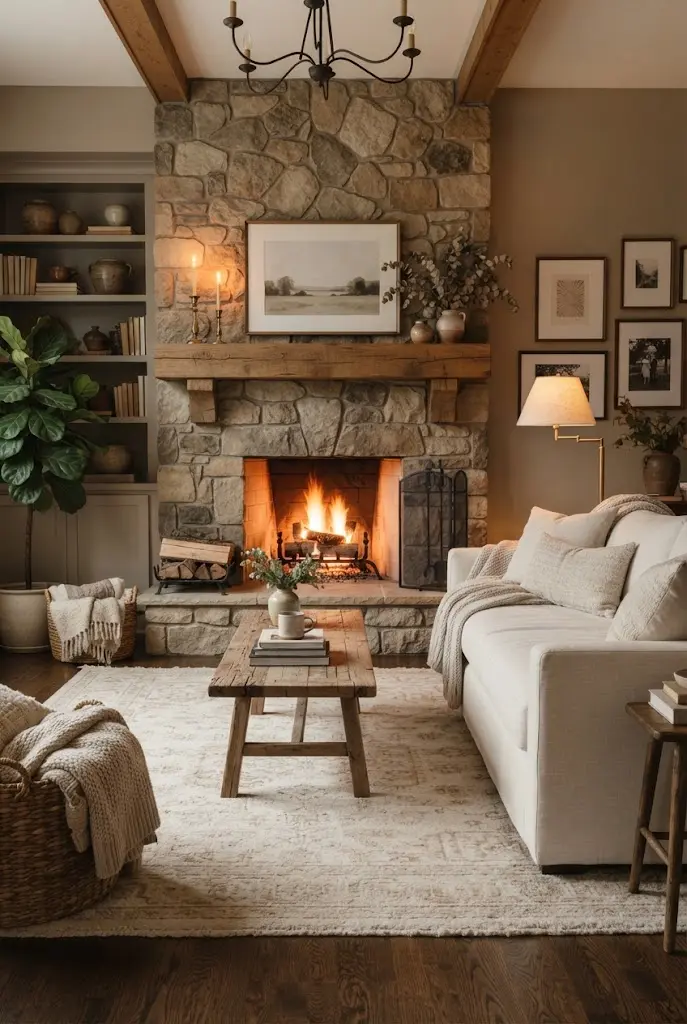
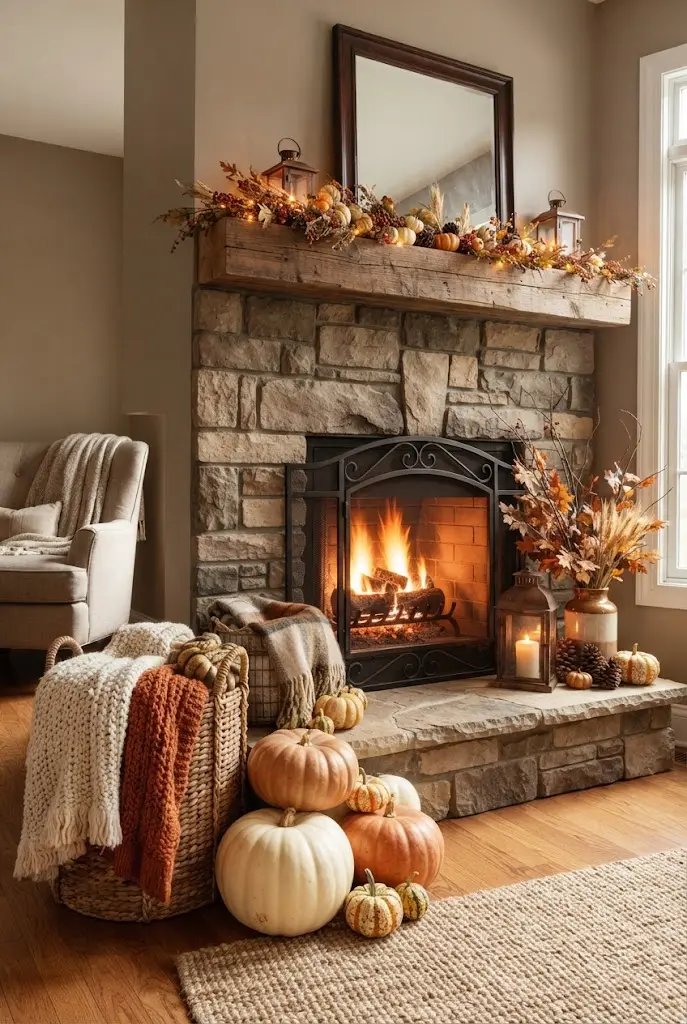
A fireplace can become a natural focal point in a cozy living room. Whether you have a traditional fireplace or a modern design, styling the surrounding area can make the room feel inviting. Add a simple mantel arrangement with candles, framed art, or seasonal decorations. Keep the decor balanced so the fireplace remains the main feature. A comfortable sofa positioned toward the fireplace can create a natural conversation area. A textured rug can soften the seating zone. Wood accents and warm neutral colors can complement the fireplace beautifully. If the fireplace is functional, a neat basket for firewood can add both practicality and charm. During colder months, the glow of a fire can create an especially relaxing atmosphere. This feature can give the entire room a strong sense of warmth and comfort.
11. Use a Neutral Color Palette
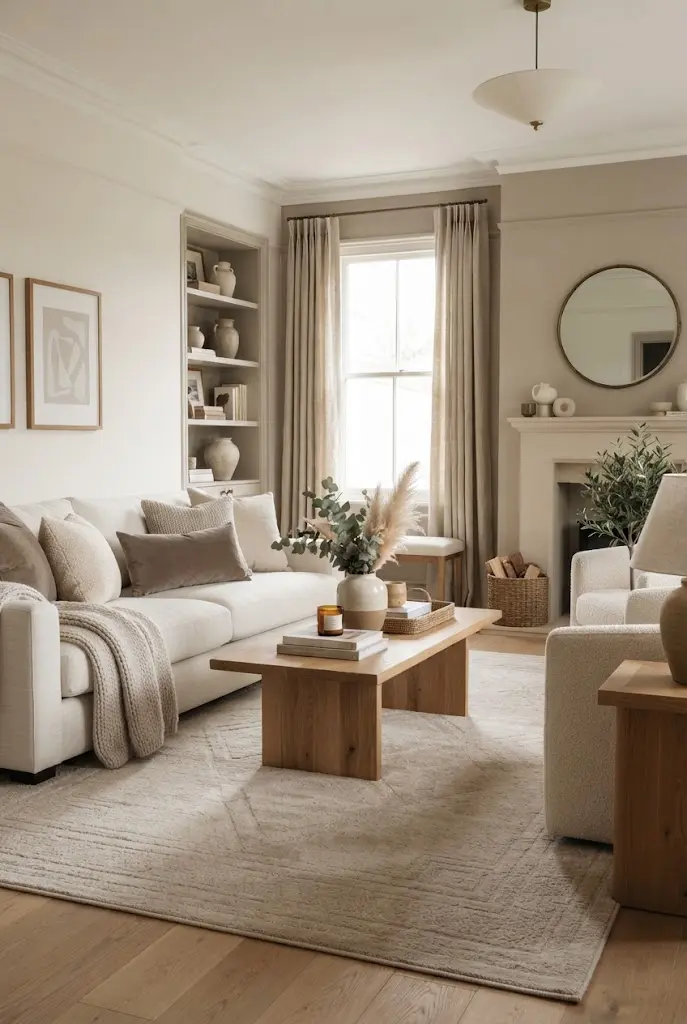
A neutral color palette can create a calm and comfortable living room. Shades such as cream, beige, ivory, taupe, warm gray, and soft brown provide a peaceful foundation. Layering several neutral shades keeps the room interesting without making it feel overwhelming. Add texture through pillows, blankets, rugs, curtains, and upholstery. Natural wood can introduce warmth and contrast against lighter walls. Small amounts of muted color can also be added through artwork or accessories. Keep the larger furniture pieces in timeless shades for easier decorating changes later. Neutral interiors can work with farmhouse, modern, traditional, and transitional styles. Soft lighting enhances the warmth of neutral colors during the evening. This approach creates a versatile living room that feels comfortable throughout the year.
12. Add a Wooden Coffee Table
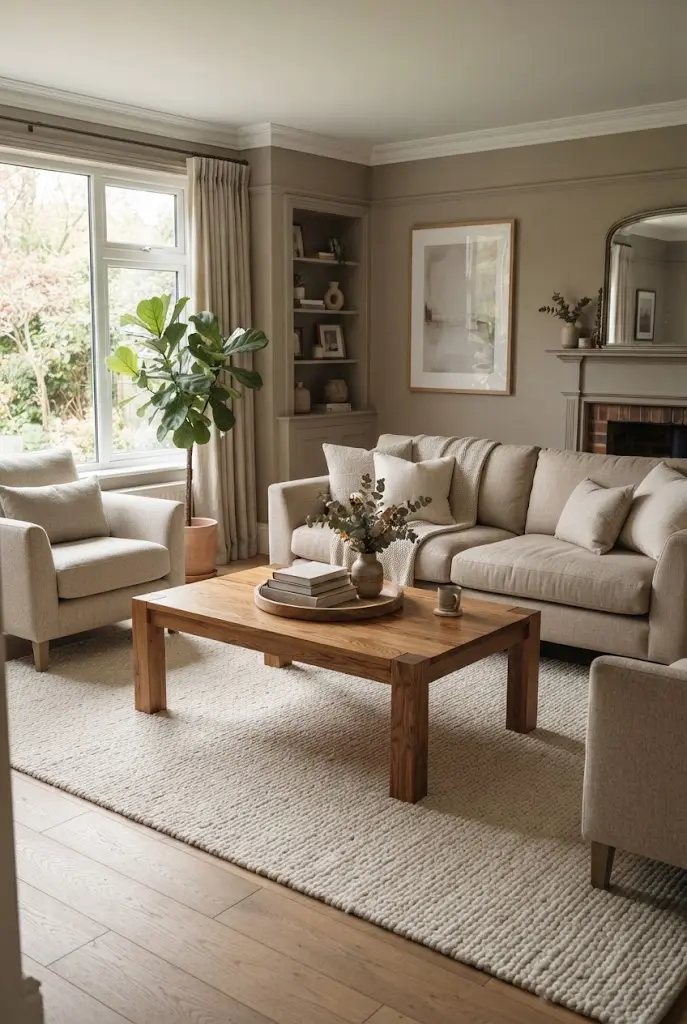
A wooden coffee table can provide warmth and functionality in a cozy living room. Look for a design with a natural finish and visible wood grain. Rounded or softly shaped tables can make the seating area feel more relaxed. Use the table to display a small tray, coffee table books, candles, or a simple vase. Avoid filling every inch of the surface so it remains practical for everyday use. A lower-profile table can work particularly well with deep sofas and relaxed seating. Choose a wood tone that complements other furniture in the room. Mixing wood with soft textiles creates a pleasing balance of textures. The table can also help visually anchor a large area rug. A simple natural wood coffee table can make the room feel warm without appearing overly decorated.
13. Create a Gallery Wall
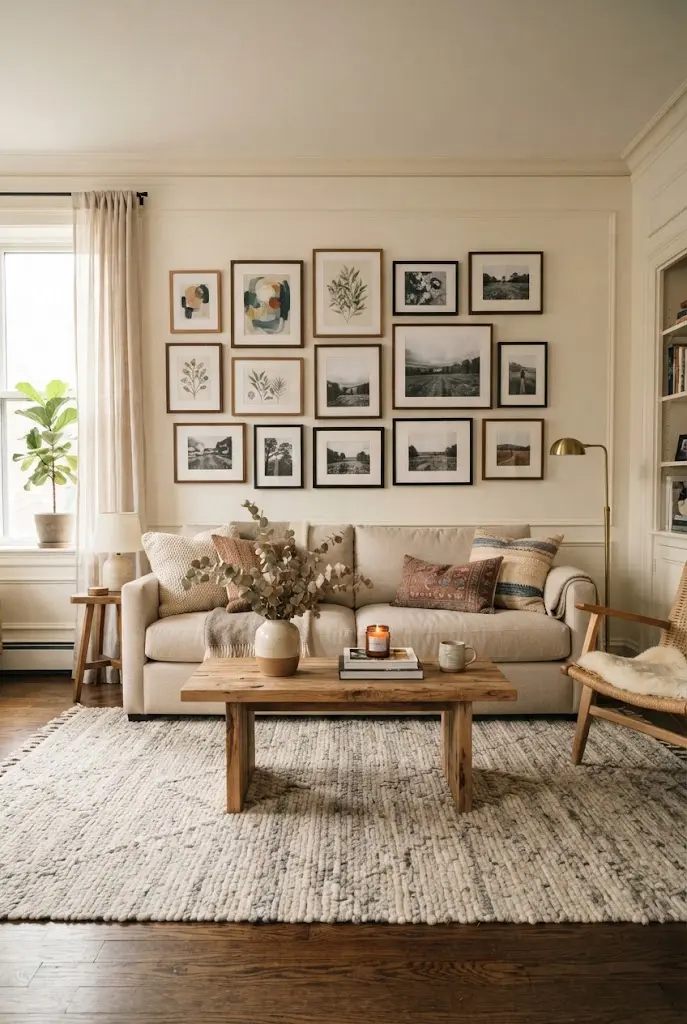
A gallery wall can make a cozy living room feel more personal and thoughtfully decorated. Choose artwork that reflects your preferred colors, memories, or design style. A mixture of photography, artwork, and simple prints can create a collected appearance. Use frames in complementary finishes such as natural wood, black, or warm metallic tones. Arrange the pieces with enough spacing to keep the wall visually balanced. A gallery wall above the sofa can create a strong focal point. Keep the artwork within a coordinated palette so the arrangement feels intentional. Family photographs can add warmth and personality to the space. Abstract artwork can provide a more modern appearance. This decorating idea can turn an otherwise empty wall into a welcoming feature.
14. Layer Different Textures
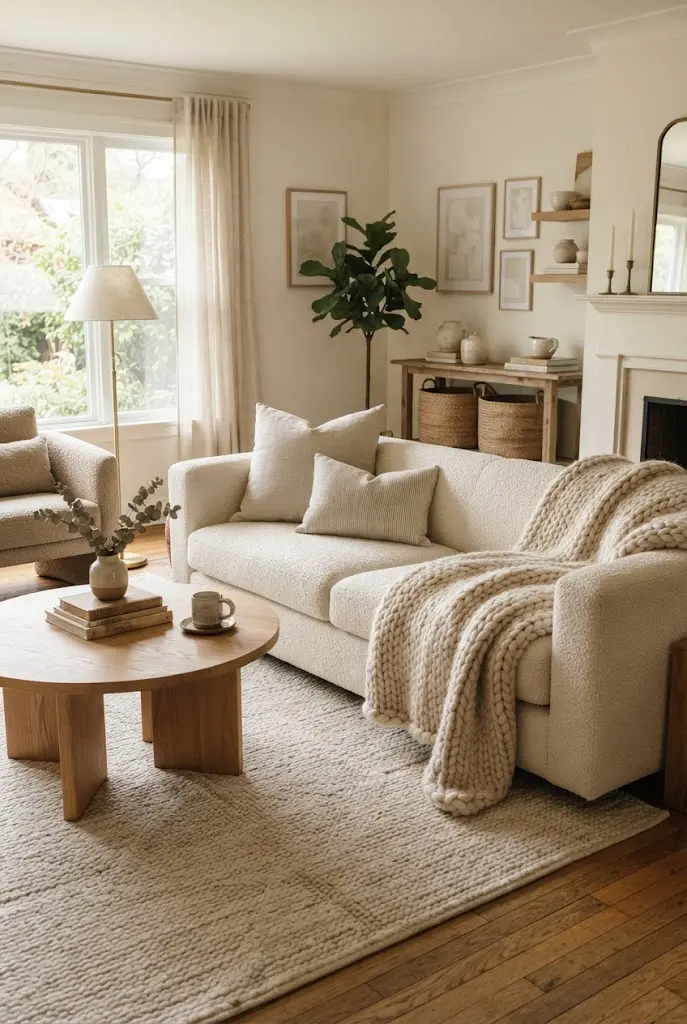
Layering textures can make a living room feel much more comfortable and visually interesting. Combine materials such as linen, boucle, wool, cotton, velvet, wood, and woven fibers. Use a textured rug as a foundation and add soft cushions to the sofa. A knitted blanket can introduce another tactile layer. Wooden furniture can provide contrast against soft upholstery. Woven baskets can add both texture and useful storage. Try to repeat a few textures throughout the room so everything feels connected. Avoid using too many competing patterns at once. Neutral colors allow different textures to stand out naturally. The result is a living room that feels warm, relaxed, and thoughtfully designed.
15. Include a Comfortable Ottoman
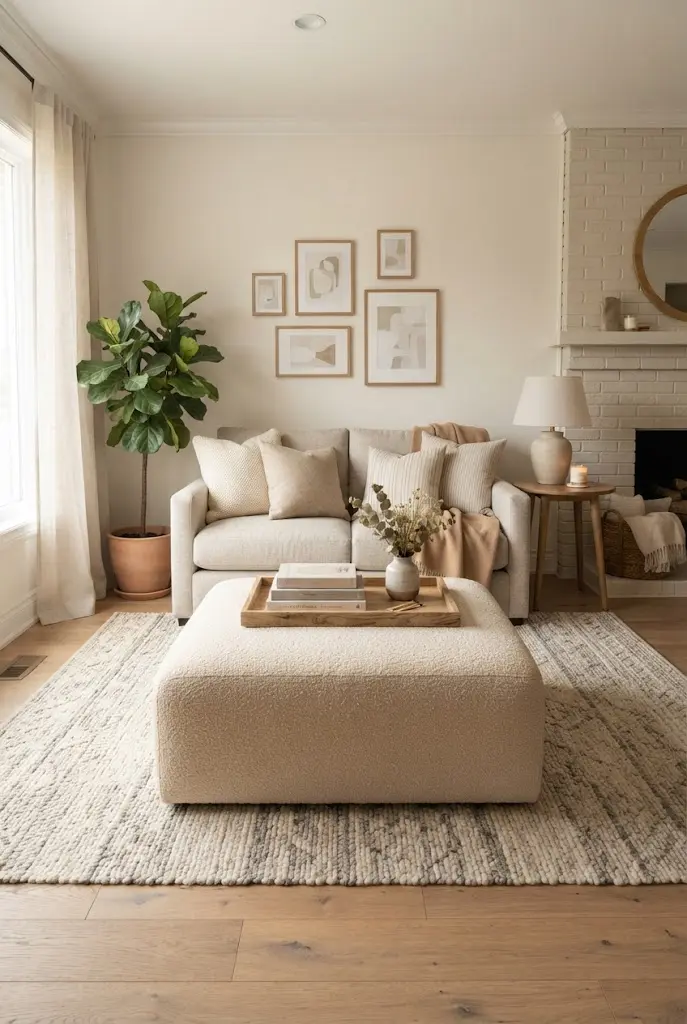
A comfortable ottoman can make a living room more flexible and relaxing. Use it as a footrest, extra seating, or even a casual surface with a decorative tray. Upholstered ottomans in soft fabrics can add warmth to the seating arrangement. Choose a size that fits comfortably without blocking walking paths. Round ottomans can soften rooms with lots of straight furniture lines. Rectangular styles can work well with larger sofas. A textured fabric such as boucle or linen can add visual interest. Place a tray on top when you need a temporary surface for books or drinks. Keep the color coordinated with the sofa and area rug. This versatile piece can make everyday living more comfortable.
16. Decorate With Candles
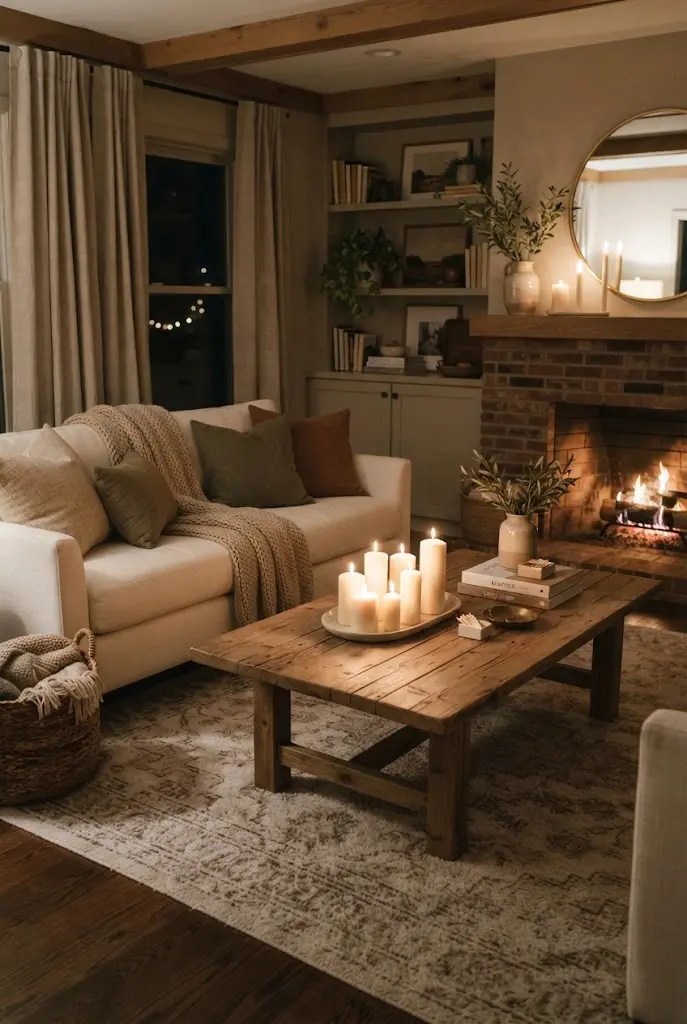
Candles can create a soft and intimate atmosphere in the living room. Arrange a few candles on a coffee table, mantel, or side table for subtle evening warmth. Use simple holders in ceramic, glass, wood, or metal finishes. Group candles in different heights to create visual variety. Keep the colors coordinated with the rest of the room. Unscented candles can provide ambiance without introducing a strong fragrance. LED candles are another option for households looking for a flameless alternative. Candles work especially well alongside books, small plants, and decorative trays. Keep arrangements simple so they do not make surfaces feel cluttered. Their gentle glow can make an already comfortable room feel even more inviting.
17. Use Woven Baskets for Storage
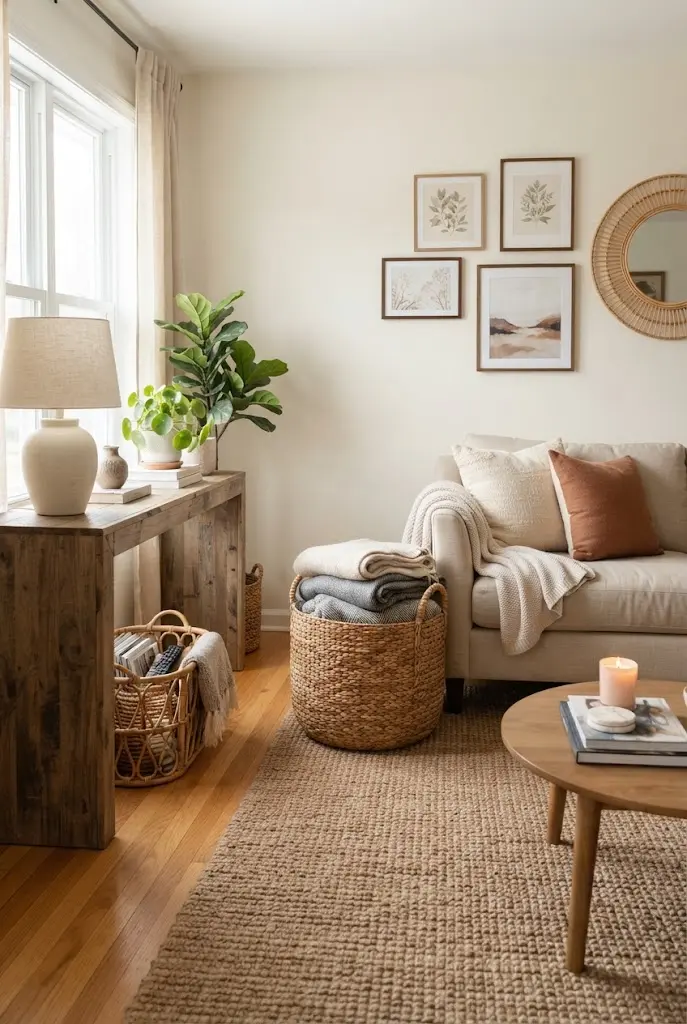
Woven baskets can add warmth while keeping a living room organized. Use them to store blankets, pillows, magazines, or children’s items. Natural seagrass, rattan, and jute baskets bring organic texture into the space. Place a large basket beside the sofa for easy access to blankets. Smaller baskets can sit on shelves or inside storage units. Choose baskets that complement the room’s natural materials and color palette. Open baskets make frequently used items easy to reach. Lidded baskets can hide less attractive belongings while maintaining a neat appearance. This approach combines practical storage with attractive decor. A few carefully placed baskets can make the room feel relaxed and organized.
18. Arrange Furniture for Conversation
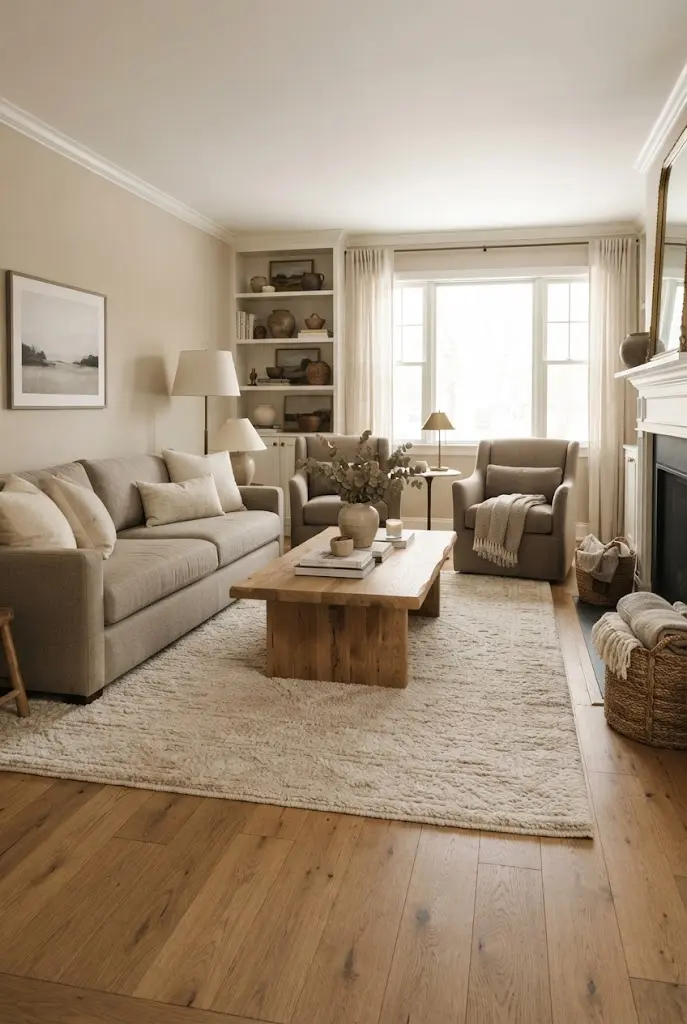
Furniture placement can strongly influence how inviting a living room feels. Arrange sofas and chairs so people can comfortably face one another. Avoid pushing every piece of furniture against the walls if the room allows for a more connected arrangement. A coffee table placed centrally can help anchor the conversation area. Leave enough space around furniture for comfortable movement. Use an area rug to visually connect the seating pieces. In larger rooms, create multiple seating zones rather than leaving one oversized empty area. A pair of chairs can provide flexible seating opposite a sofa. Keep the television from becoming the only focal point if you want a social atmosphere. Thoughtful furniture placement can make the living room feel naturally welcoming.
19. Add a Soft Floor Lamp
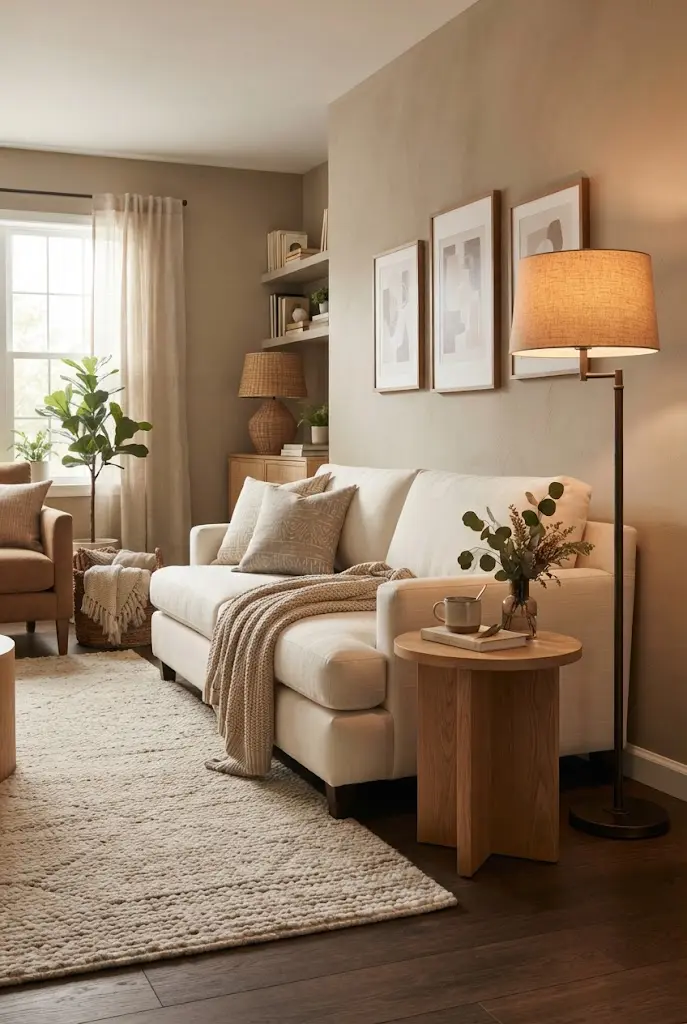
A floor lamp can provide both practical lighting and decorative character. Place one beside a sofa, reading chair, or empty corner that needs visual height. Choose a fabric shade for a softer and warmer glow. Arched floor lamps can work well over seating areas where a side table lamp may not be practical. Wooden or metal bases can complement the room’s furniture. Use warm white bulbs to create a comfortable evening atmosphere. A floor lamp can also become a decorative focal point without taking up much floor space. Choose a simple silhouette if your room already has plenty of visual details. The right lamp can make dark corners feel more useful and inviting. It is a small addition that can have a noticeable impact on ambiance.
20. Introduce Warm Earth Tones
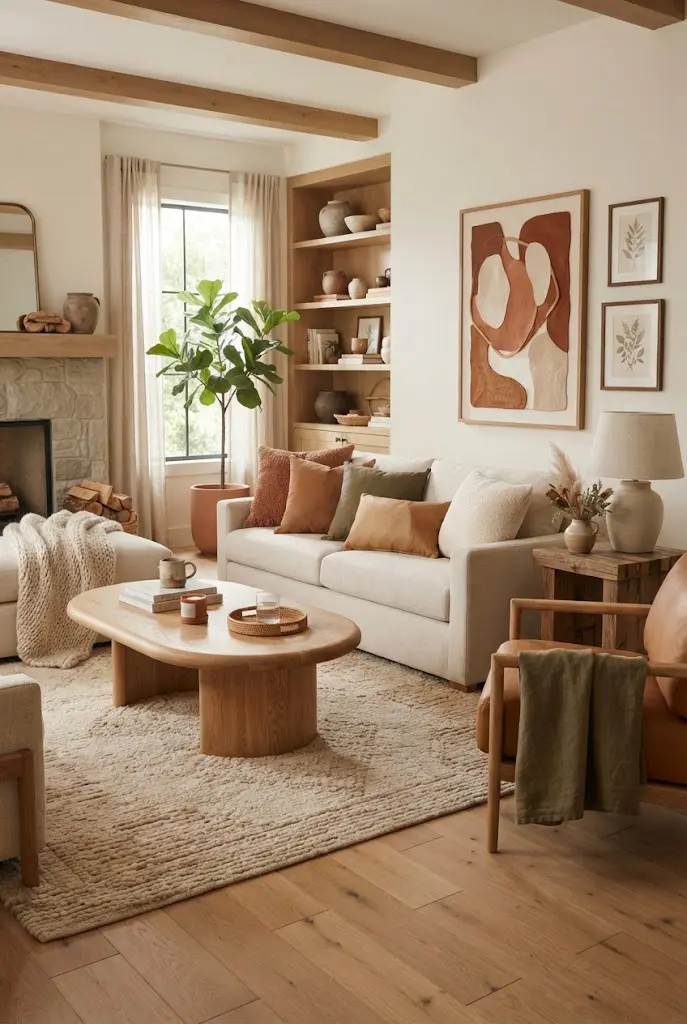
Warm earth tones can give a living room a cozy and grounded feeling. Colors such as terracotta, camel, rust, olive, tan, and warm brown work beautifully with neutral foundations. Use these shades through pillows, blankets, artwork, rugs, or accent chairs. You do not need to repaint the entire room to introduce warmth. A few carefully selected accessories can create noticeable visual change. Earth tones pair especially well with natural wood and woven materials. Keep the main furniture neutral if you want the accent colors to remain flexible. Layer several related shades instead of using one bold color everywhere. These colors can create a welcoming atmosphere that feels connected to nature. Earth-toned accents are especially appealing during fall and winter but can work year-round.
21. Add a Cozy Window Seat
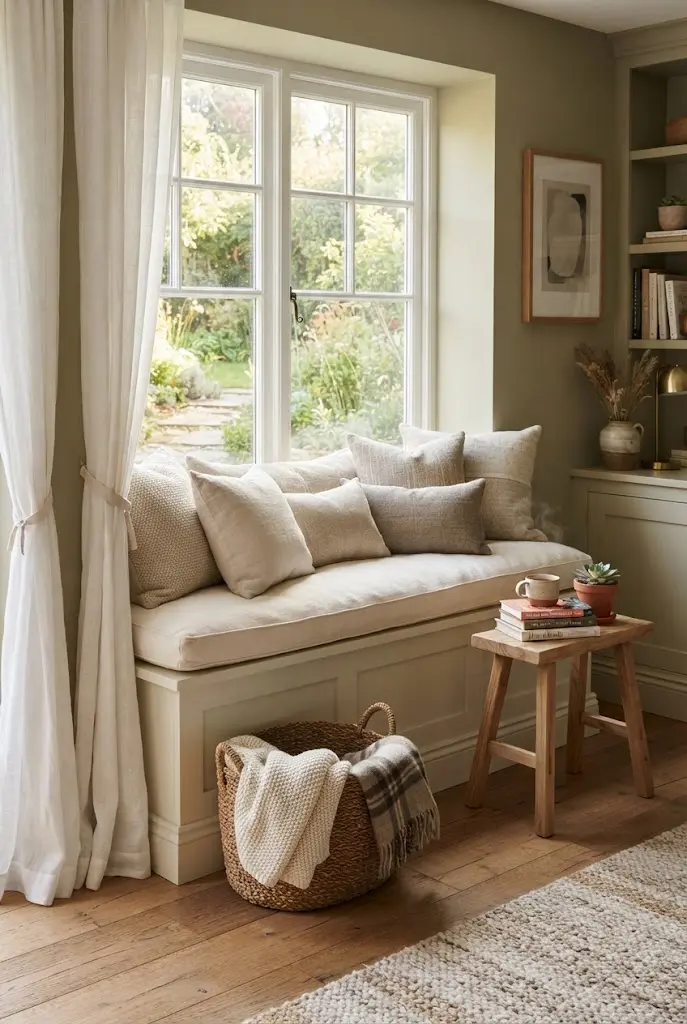
A window seat can turn an unused area into one of the most inviting parts of the living room. Add a thick cushion to create a comfortable place for reading or relaxing. Layer several pillows against the wall for additional support. Soft curtains can frame the window and make the area feel more private. A small nearby table can hold books or a cup of coffee. Choose durable upholstery if the window seat will receive frequent use. Natural daylight can make the space feel bright and peaceful during the day. Add a basket underneath for convenient blanket storage if space allows. Keep the styling simple so the window remains the main feature. A cozy window seat can add both charm and functionality to the living room.
22. Display Books on the Coffee Table
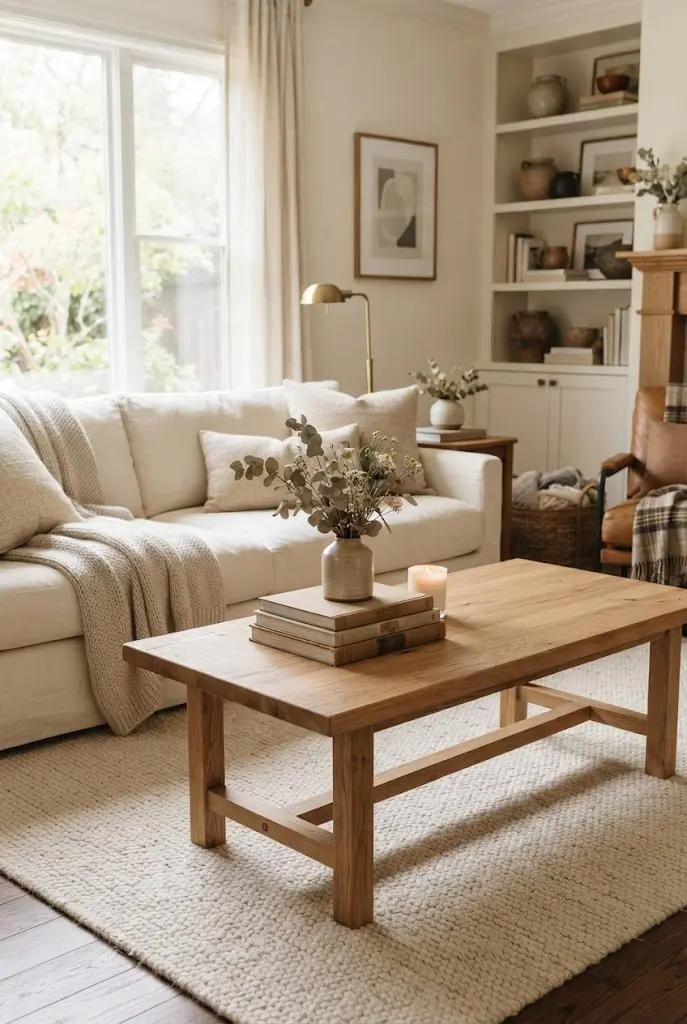
Coffee table books can make a living room feel personal and lived-in. Choose books with attractive covers that complement the room’s color palette. Stack two or three books and place a small decorative object on top. Books about interiors, travel, photography, cooking, or art can reflect your interests. Keep the arrangement simple enough that the table remains functional. A small vase or candle can add another layer without creating clutter. Neutral-colored books work especially well in calm interiors. Rotate the books occasionally to refresh the arrangement. This small detail can make the room feel more thoughtful and personal. Books also encourage a relaxed atmosphere where people feel comfortable sitting and browsing. A styled coffee table can become a subtle focal point in the seating area.
23. Mix Modern and Traditional Pieces
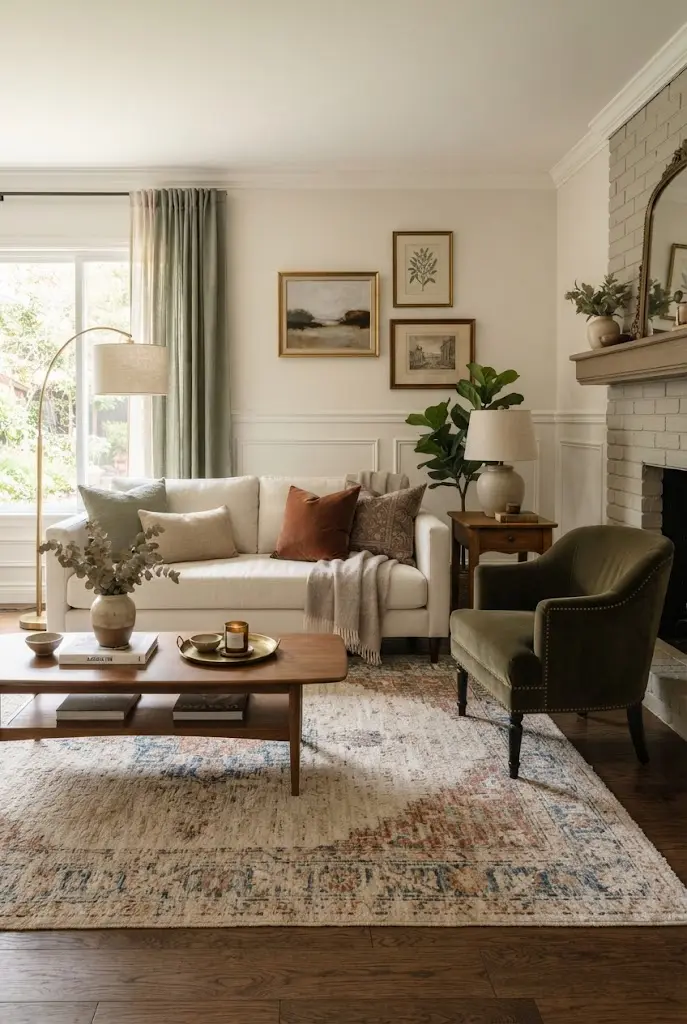
Combining modern and traditional furniture can create a living room that feels comfortable and timeless. Pair a clean-lined sofa with a classic wooden coffee table or vintage-inspired armchair. Use modern lighting alongside traditional artwork for an interesting contrast. Keep the color palette consistent so the different styles feel connected. Natural materials can help bridge modern and classic pieces. Avoid making every item match perfectly because variation can create a more collected atmosphere. A few antique-inspired accessories can add character without making the room feel old-fashioned. Modern textiles can keep traditional furniture feeling fresh. This combination works especially well in American homes with a mix of architectural styles. The result can feel personal, relaxed, and welcoming.
24. Create a Cozy TV Area
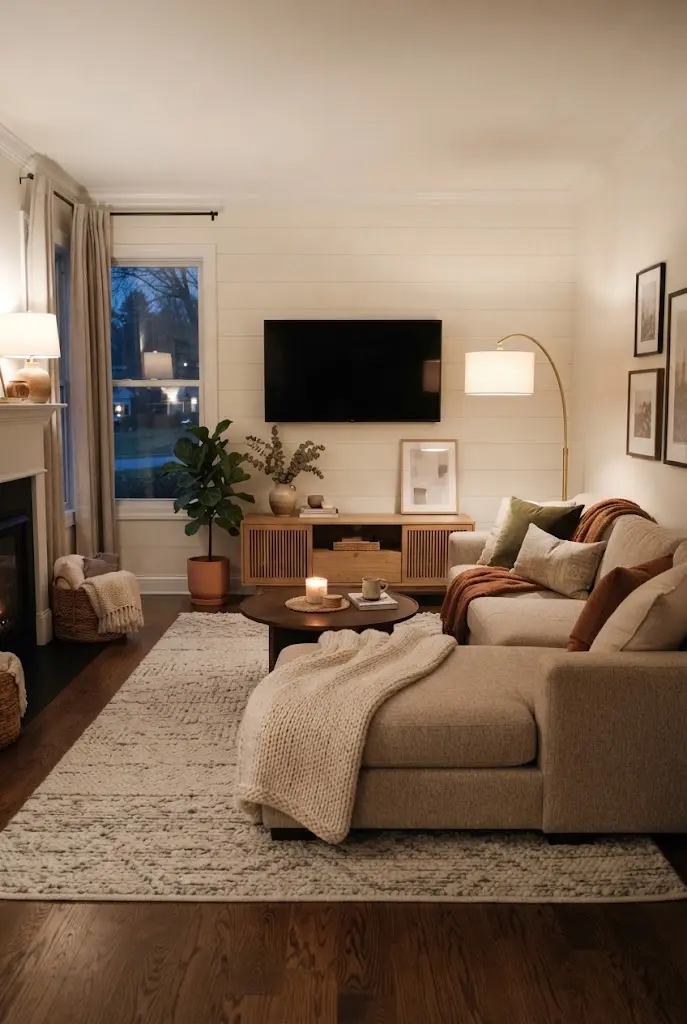
A comfortable TV area can make the living room a favorite place for relaxing together. Position the sofa so everyone has a clear view of the screen. Add soft cushions and blankets for extra comfort during movie nights. A media console can provide storage while keeping electronics organized. Choose a console finish that coordinates with the room’s wood tones and furniture. A large area rug can help visually define the entertainment zone. Keep decorative accessories around the television simple so they do not become distracting. Soft ambient lighting can reduce the harsh feeling of a bright screen at night. Add a nearby basket for blankets and remote controls. With thoughtful styling, the TV area can feel comfortable without becoming visually cluttered.
25. Use Soft Accent Chairs
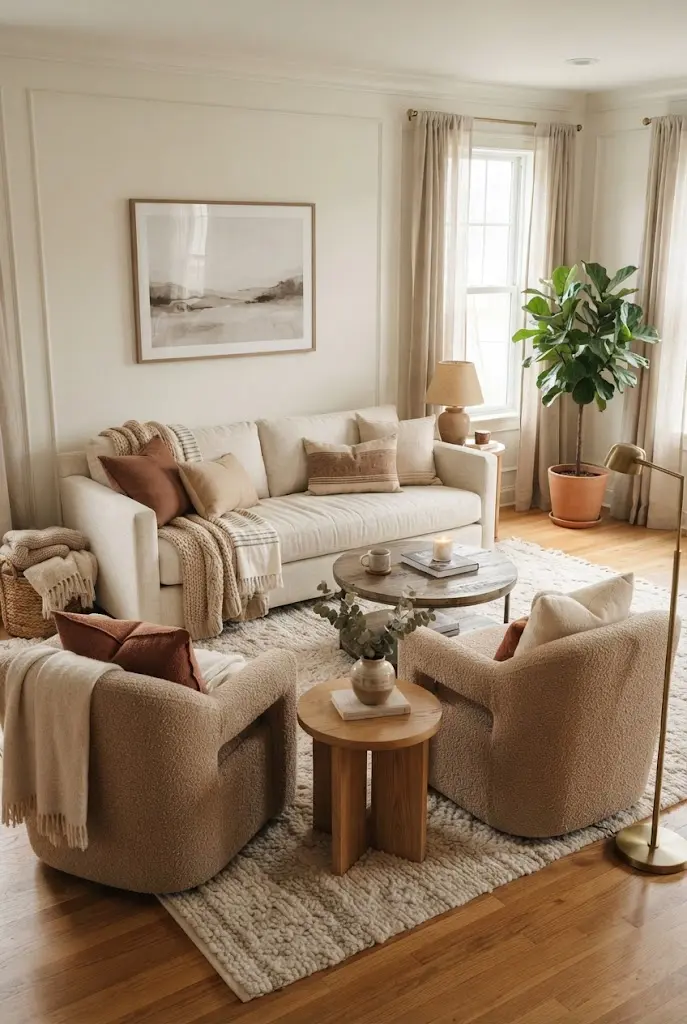
Accent chairs can provide extra seating while adding personality to a cozy living room. Choose upholstered chairs with comfortable shapes and supportive cushions. A boucle, linen, velvet, or woven chair can introduce a new texture. Position two chairs opposite a sofa to encourage conversation. A single chair can also fill an empty corner and create a reading spot. Use colors that complement the existing palette rather than competing with it. Add a small pillow or throw blanket for extra comfort. Wooden or natural-fiber chair frames can bring additional warmth. Make sure the chair leaves enough room for comfortable movement around it. A well-chosen accent chair can make the entire seating arrangement feel more complete.
26. Add Personal Family Photos
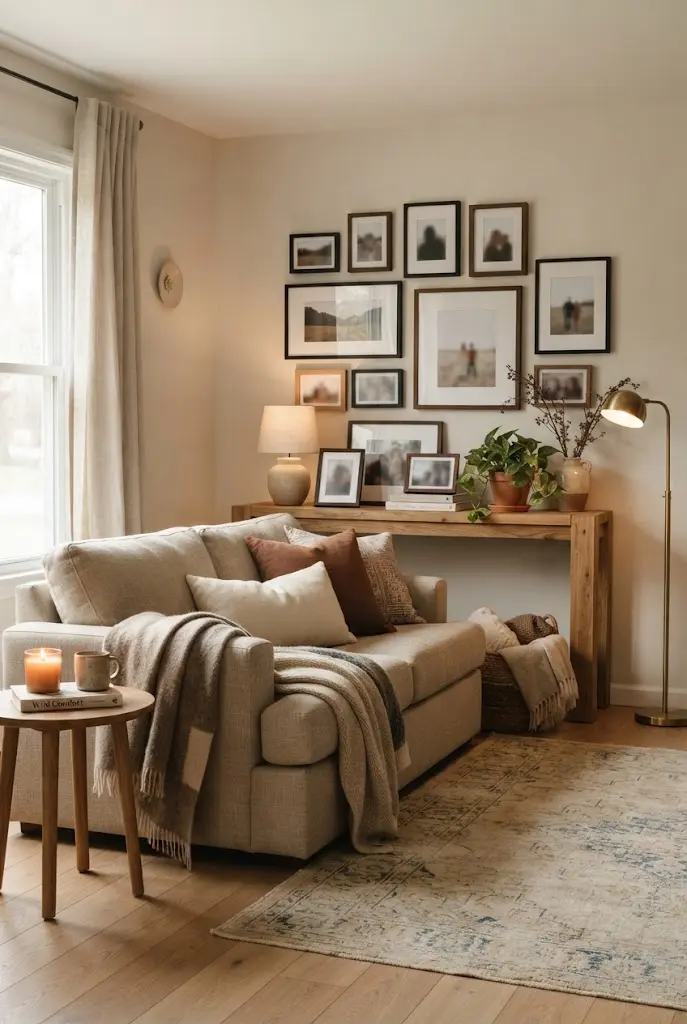
Personal photographs can make a living room feel genuinely lived-in and welcoming. Display favorite family moments in simple frames on shelves, consoles, or walls. Choose frames that coordinate with the overall decor rather than competing with the photographs. A mixture of small and medium frames can create a relaxed arrangement. Black, natural wood, or warm metallic frames can work beautifully in cozy interiors. Avoid overcrowding surfaces with too many photographs. One thoughtfully arranged collection can have more impact than scattered frames throughout the room. Family photographs can also make a neutral space feel more personal. Keep the arrangement easy to update as new memories are made. These small personal details can give the living room a sense of warmth and belonging.
27. Incorporate Rattan and Woven Decor
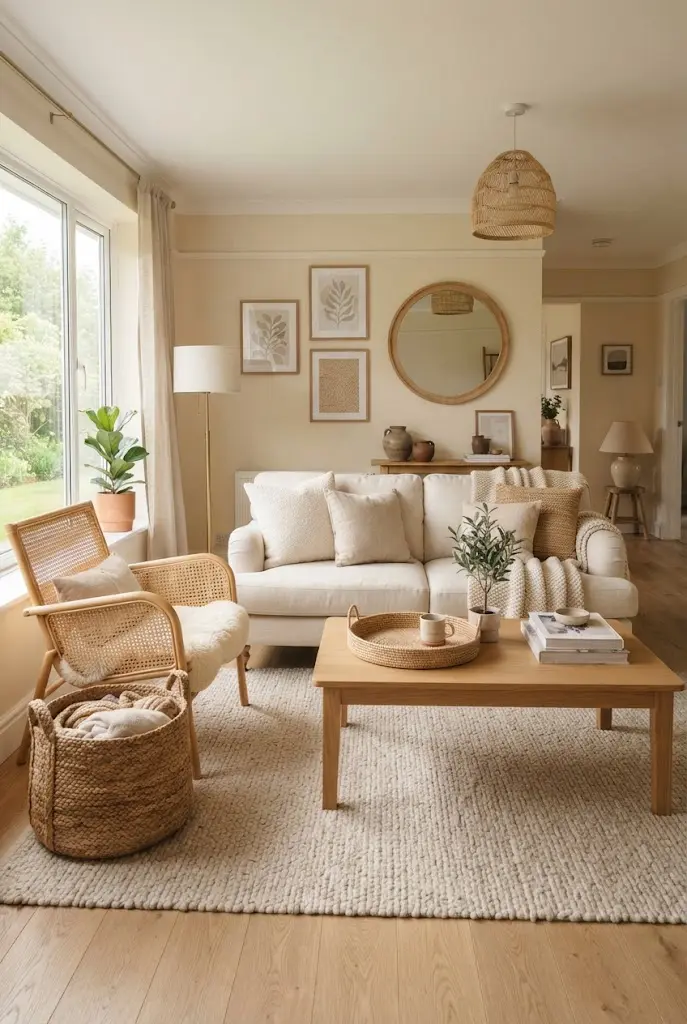
Rattan and woven decor can bring natural warmth and texture into a living room. Consider woven baskets, rattan chairs, pendant shades, trays, or decorative wall pieces. These materials pair especially well with neutral upholstery and natural wood. Their organic texture can soften a room filled with smooth modern surfaces. Choose a few pieces rather than covering the entire room in woven materials. Rattan furniture can also add a relaxed coastal or bohemian touch. Woven trays are practical for organizing coffee table accessories. Natural fibers can make the room feel connected to outdoor materials. Keep the colors close to their natural tan and honey shades for a warm appearance. These accents can make the living room feel casual, comfortable, and inviting.
28. Style Open Shelving
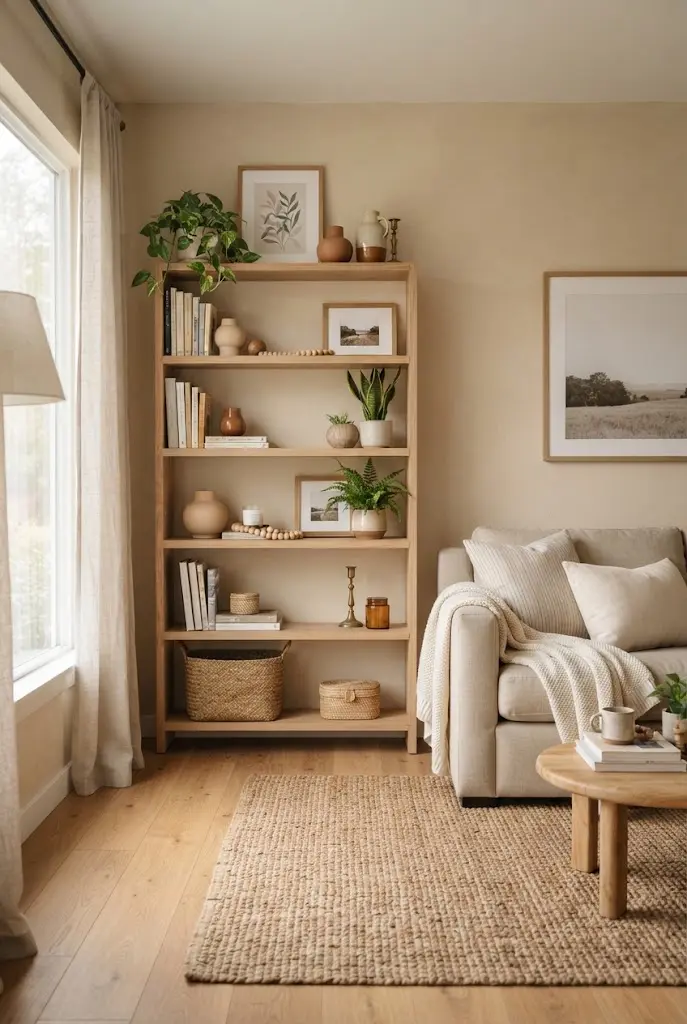
Open shelving can add personality and storage to a cozy living room. Use shelves to display books, plants, ceramics, framed artwork, and meaningful objects. Mix taller and shorter pieces to create visual balance. Leave some empty space so the shelves do not appear crowded. Natural wood shelves can add warmth against a light wall. Keep the color palette coordinated with the rest of the room. Group similar objects together rather than placing everything randomly. A few woven baskets can hide smaller items while maintaining an attractive appearance. Rotate decorative pieces seasonally to keep the room feeling fresh. Thoughtfully styled shelves can make a living room feel personal and collected.
29. Add a Soft Bench
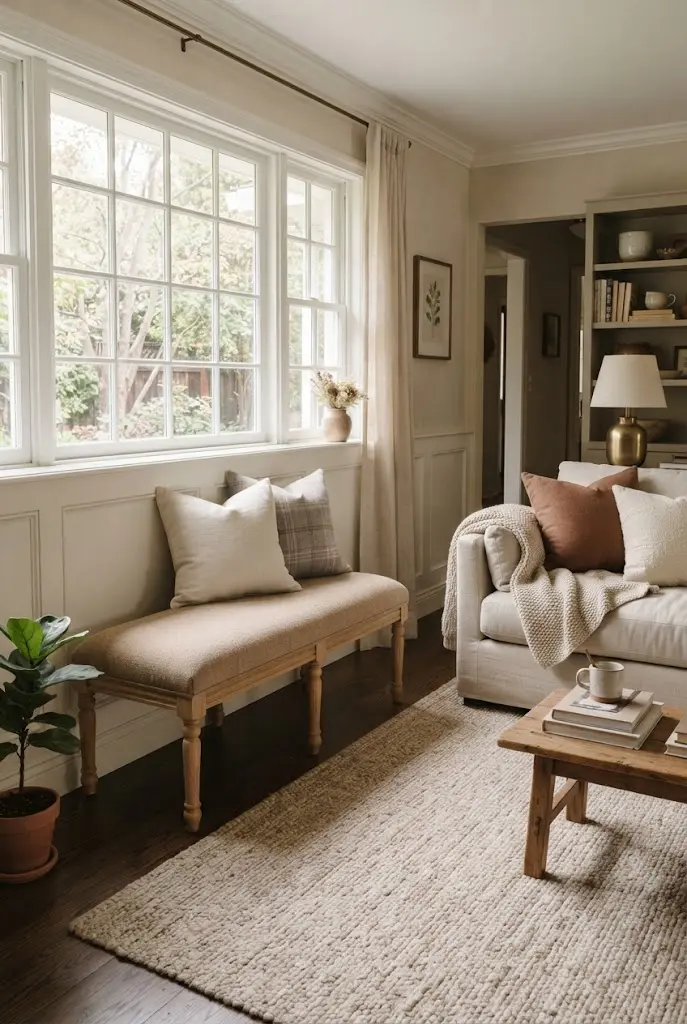
A soft upholstered bench can provide flexible seating while adding visual interest. Place it beneath a window, along a wall, or opposite the main sofa. Choose a fabric that complements the room’s existing textiles. A bench can be useful when entertaining guests because it provides extra seating without taking up as much visual space as a large chair. Add one or two pillows for additional comfort. A wooden-legged bench can introduce natural warmth. Keep the surrounding area open so the bench does not interfere with movement. In smaller rooms, a slim bench can be especially practical. The piece can also provide a place to sit while putting on shoes if the living room connects to another area. This versatile furniture choice can make the room feel both functional and inviting.
30. Keep the Room Clutter-Free
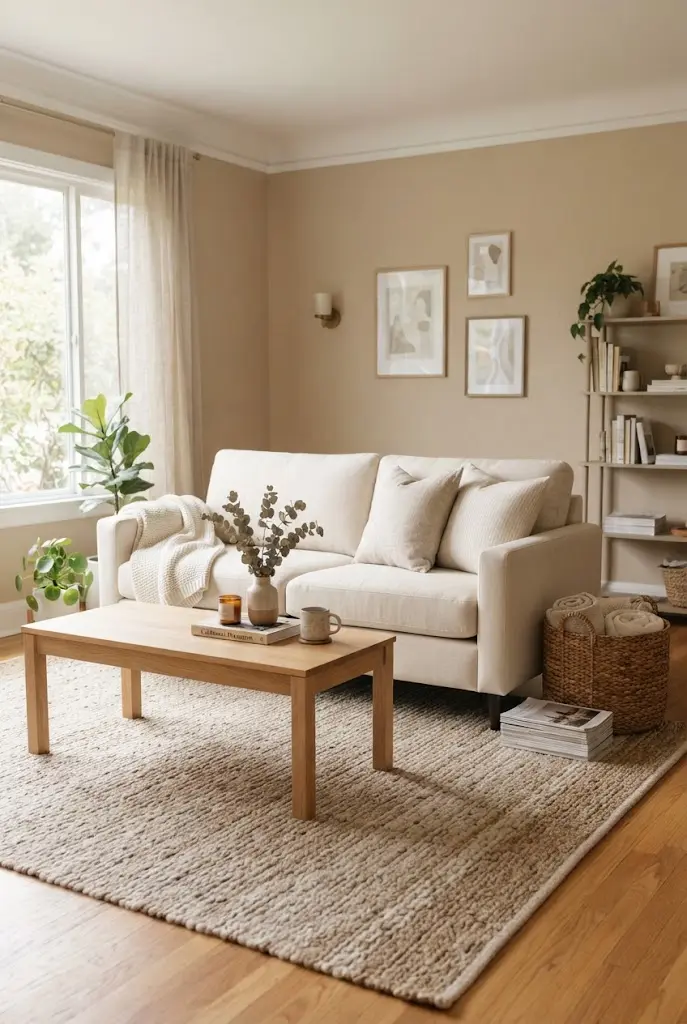
A cozy living room does not need to be filled with decorations. Keeping surfaces organized can actually make the room feel more peaceful and comfortable. Use baskets, cabinets, shelves, and storage ottomans to hide everyday clutter. Keep coffee tables styled with only a few useful decorative pieces. Make sure walking paths remain clear and furniture is easy to move around. A simple arrangement allows textures, lighting, and furniture to become the focus. Remove items that do not contribute to the room’s function or atmosphere. Regularly returning blankets, books, and small objects to their places can maintain a tidy appearance. A clean environment can make relaxation feel easier. Thoughtful organization allows a cozy living room to feel warm without becoming crowded.
31. Create a Relaxed Layered Look
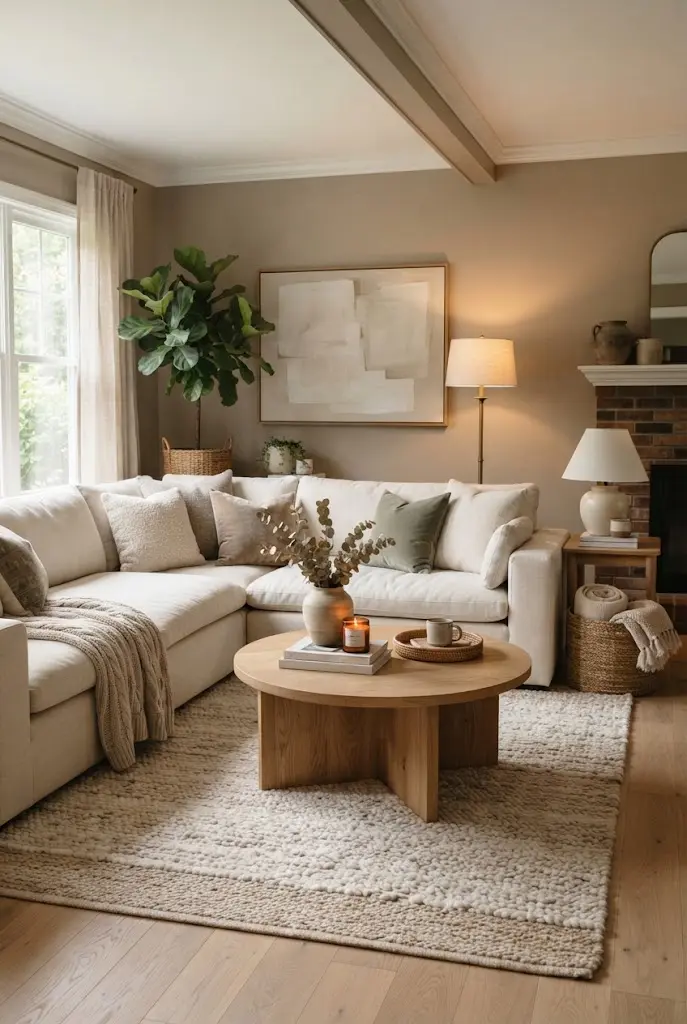
A relaxed layered look can bring all the elements of a cozy living room together. Combine comfortable furniture with soft textiles, warm lighting, natural materials, and personal accessories. Layer rugs, pillows, blankets, artwork, and greenery without making the room feel overcrowded. Keep a consistent color palette so the different elements feel connected. Use a mixture of smooth and textured materials for visual depth. Add personal objects that make the space feel like your home rather than a showroom. Comfortable seating should remain the main priority. Warm lamps and natural daylight can create different moods throughout the day. Leave enough open space so the room remains easy to use. This balanced approach can create a living room that feels welcoming, comfortable, and naturally inviting.