32 Farmhouse Boho Kitchen Ideas to Make Your Home Feel Cozy
Farmhouse boho kitchens combine the welcoming character of American farmhouse style with the relaxed, collected beauty of bohemian interiors.
This look works especially well with natural materials, warm neutrals, vintage accents, and handmade details.
Think reclaimed or white oak wood, creamy cabinets, woven textures, aged metals, and earthy colors.
Open shelving can display pottery, cutting boards, cookbooks, and everyday kitchen pieces.
Vintage rugs and natural fiber lighting can instantly make a kitchen feel softer and more inviting.
Plants, herbs, ceramics, and wood accessories add organic character without making the room feel overly decorated.
The best farmhouse boho kitchens feel practical enough for everyday cooking while still looking personal and layered.
Whether you have a large kitchen or a compact space, small decorative changes can create this cozy aesthetic.
The following ideas can help you bring farmhouse warmth and bohemian personality into an American home.
1. Add Warm White Shaker Cabinets

Warm white shaker cabinets are a natural starting point for a farmhouse boho kitchen because they create a clean but welcoming foundation. Choose an off-white, ivory, or creamy paint rather than a stark bright white to keep the room relaxed. Pair the cabinets with natural wood shelves or a butcher-block island for additional warmth. Aged brass or antique bronze hardware can reinforce the vintage farmhouse character. Keep some cabinet areas styled simply so the room does not become visually crowded. Handmade ceramic pieces can add subtle bohemian personality to open shelves. Linen towels and woven baskets work beautifully against creamy cabinetry. If the kitchen has windows, allow plenty of natural daylight to highlight the warm finishes. This approach feels especially comfortable in traditional American homes. The result is a timeless kitchen that blends farmhouse simplicity with boho softness.
2. Choose a Reclaimed Wood Island
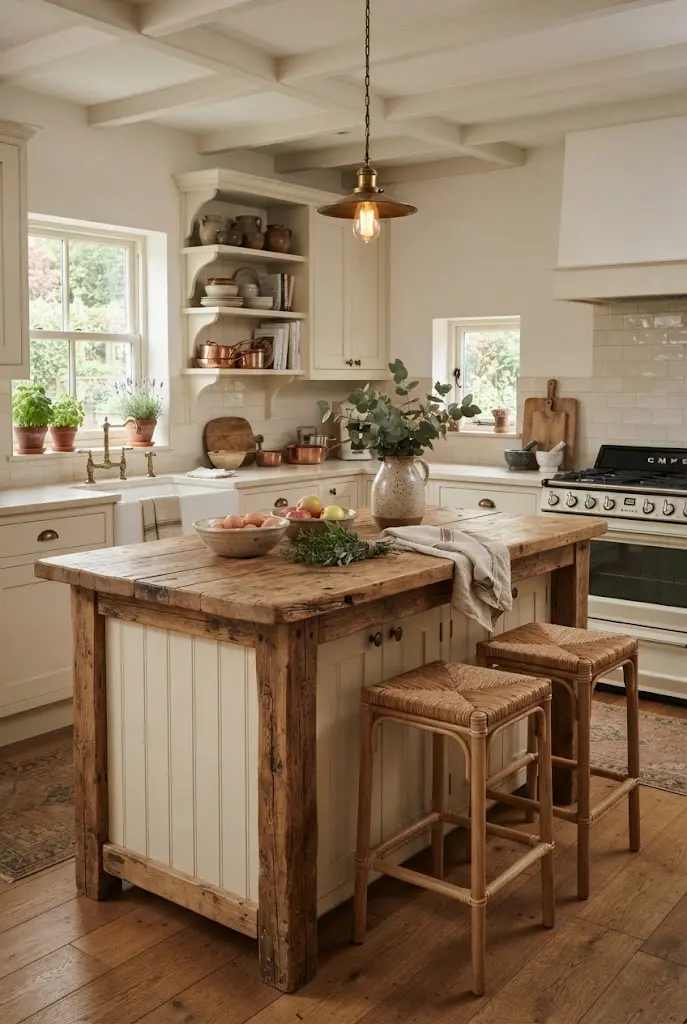
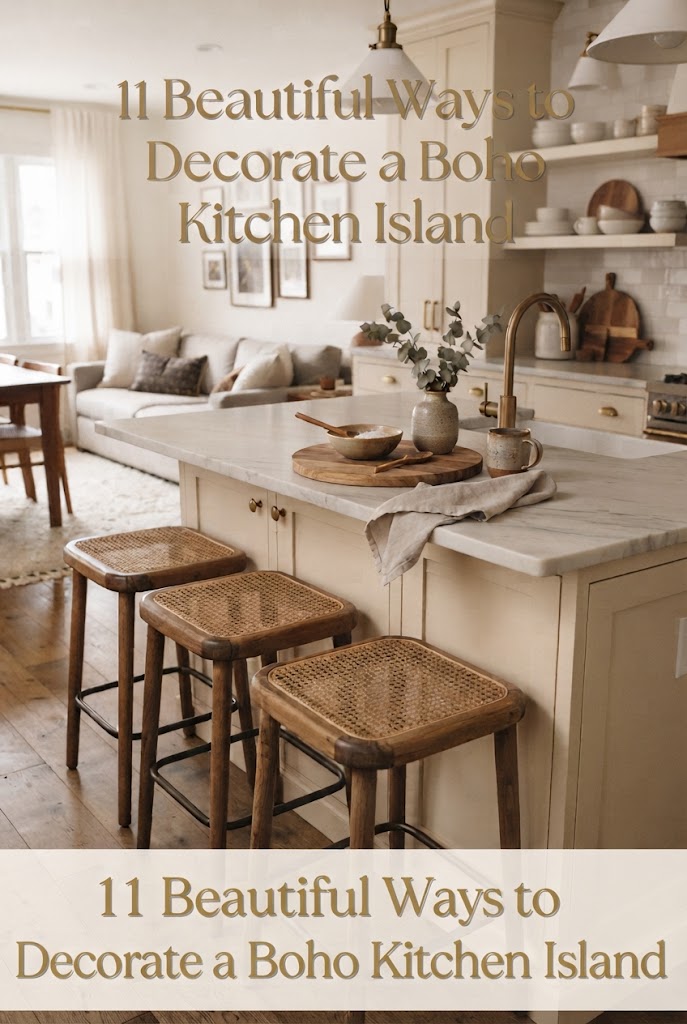
A reclaimed wood island can instantly give a farmhouse boho kitchen a sense of history and warmth. Look for a substantial wood surface with visible grain, knots, and gentle signs of age. The island can have a painted base in cream, muted sage, or warm taupe. Pair it with simple counter stools made from wood, leather, or woven materials. Keep the styling practical with a ceramic bowl, cutting board, and a few fresh herbs. Avoid making the island look overly staged because farmhouse boho design benefits from natural imperfection. A vintage pendant light above the island can strengthen the collected appearance. The combination of old-looking wood and soft neutral colors creates an inviting focal point. This style works particularly well in open-concept American kitchens. It also provides useful workspace while becoming the social center of the room.
3. Layer in a Vintage Runner Rug

A vintage runner is one of the easiest ways to introduce bohemian character into a farmhouse kitchen. Choose a faded pattern with earthy tones such as rust, beige, olive, muted blue, or terracotta. Place it along the main cabinet run or between the island and countertops. A slightly worn appearance can make the kitchen feel collected rather than overly coordinated. Pair the rug with natural wood cabinetry and cream walls to let the pattern stand out. Low-pile or washable styles are especially practical for busy kitchen areas. A vintage-inspired runner also adds softness underfoot while cooking and preparing meals. Keep the rest of the accessories relatively simple so the rug remains visually balanced. Small imperfections and faded colors contribute to the relaxed farmhouse boho mood. This is an affordable update that can dramatically change the personality of a kitchen.
4. Install Open Wood Shelving
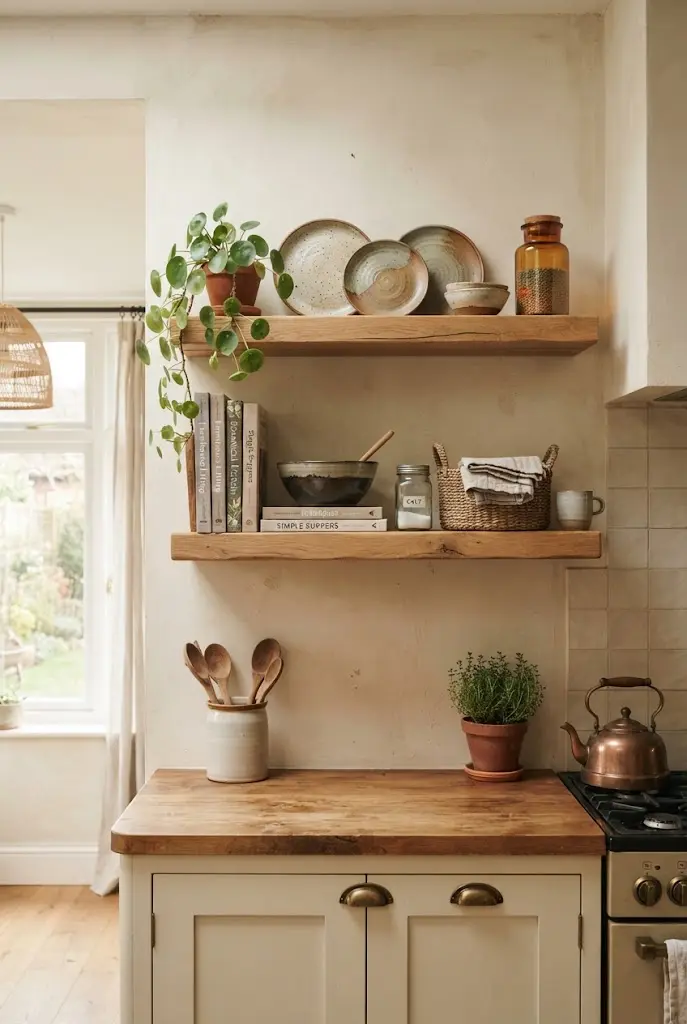
Open wood shelving can make a farmhouse boho kitchen feel casual and collected. Use thick natural oak, walnut, or reclaimed boards with visible grain. Style the shelves with a mixture of everyday dishes, handmade pottery, glass jars, cookbooks, and small plants. Avoid arranging everything too symmetrically because boho interiors look better when objects feel naturally collected. Keep enough empty space between groups so the shelves remain functional. Warm wood tones can soften white or cream walls beautifully. A few vintage kitchen objects can add farmhouse character without making the room feel themed. Use baskets or small containers to hide less attractive everyday items. Open shelving also makes frequently used dishes easy to reach. The result is both decorative and practical. It creates a relaxed visual rhythm that works beautifully in a cozy kitchen.
5. Mix Cream and Natural Wood
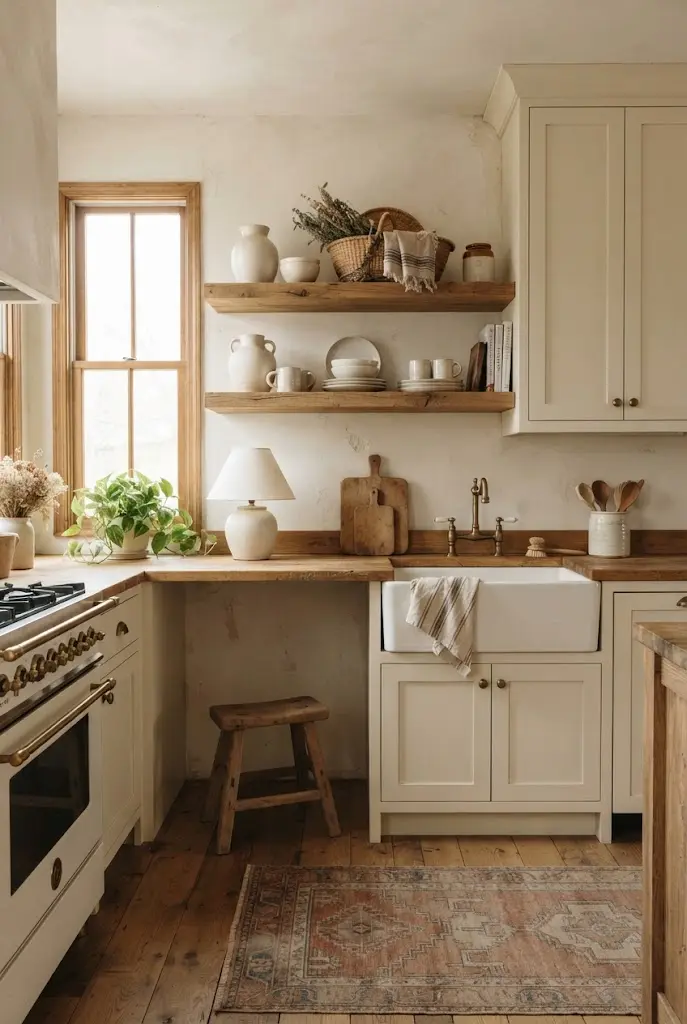
Combining creamy finishes with natural wood creates an easy farmhouse boho foundation. Cream cabinets can keep the kitchen light while wood counters, shelving, stools, or beams add depth. Choose wood with natural variation instead of highly polished uniform surfaces. Oak is particularly useful because its warm neutral tone works with many earthy colors. Add woven baskets and linen textiles to reinforce the relaxed aesthetic. Ceramic accessories in ivory, beige, and terracotta can bridge the two materials. Brass or aged bronze hardware provides a subtle vintage accent. Keep the walls relatively simple so the natural materials remain the focus. This palette is versatile enough for both traditional and modern American homes. It creates a cozy environment without relying on excessive decoration.
6. Add Woven Pendant Lighting
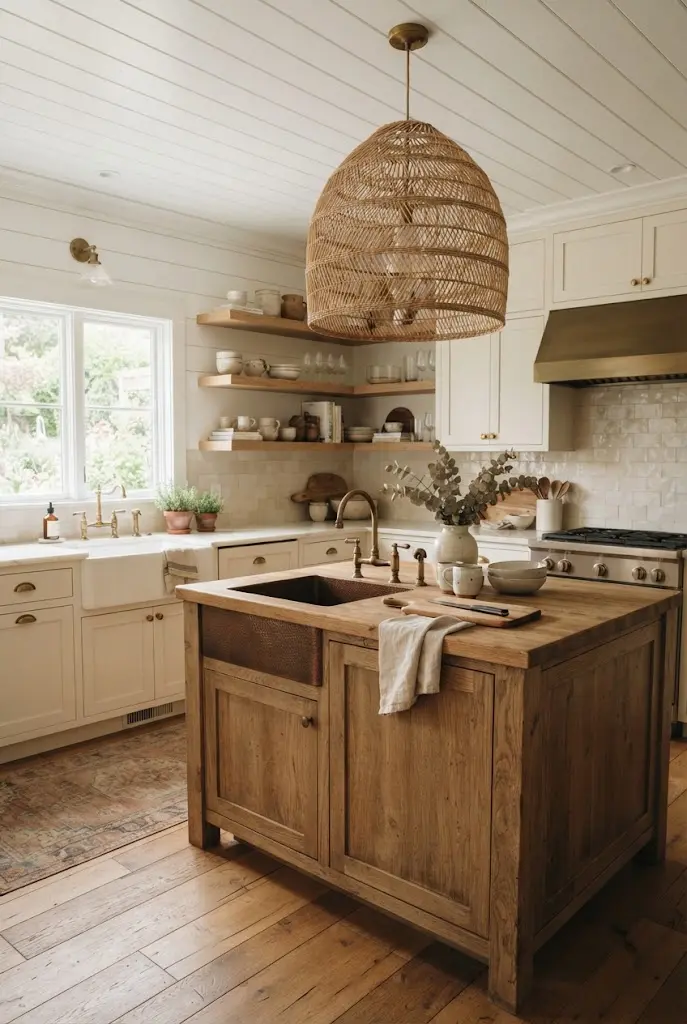
Woven pendant lights bring texture and a relaxed bohemian feeling above a kitchen island or breakfast area. Choose natural rattan, cane, seagrass, or woven fiber shades in warm neutral tones. Their organic texture works particularly well with farmhouse wood finishes. Hang one large pendant or a small group depending on the kitchen’s size. Keep the shape relatively simple so it does not overwhelm the room. Warm bulbs can create a comfortable glow in the evening. During the day, natural light can reveal the texture of the woven shade. Pair the lighting with cream cabinetry and aged metal hardware for balance. A woven pendant also adds visual interest without introducing a strong color. This simple feature can make an otherwise ordinary kitchen feel much more layered. It is especially effective above a large farmhouse-style island.
7. Use Terracotta Accents
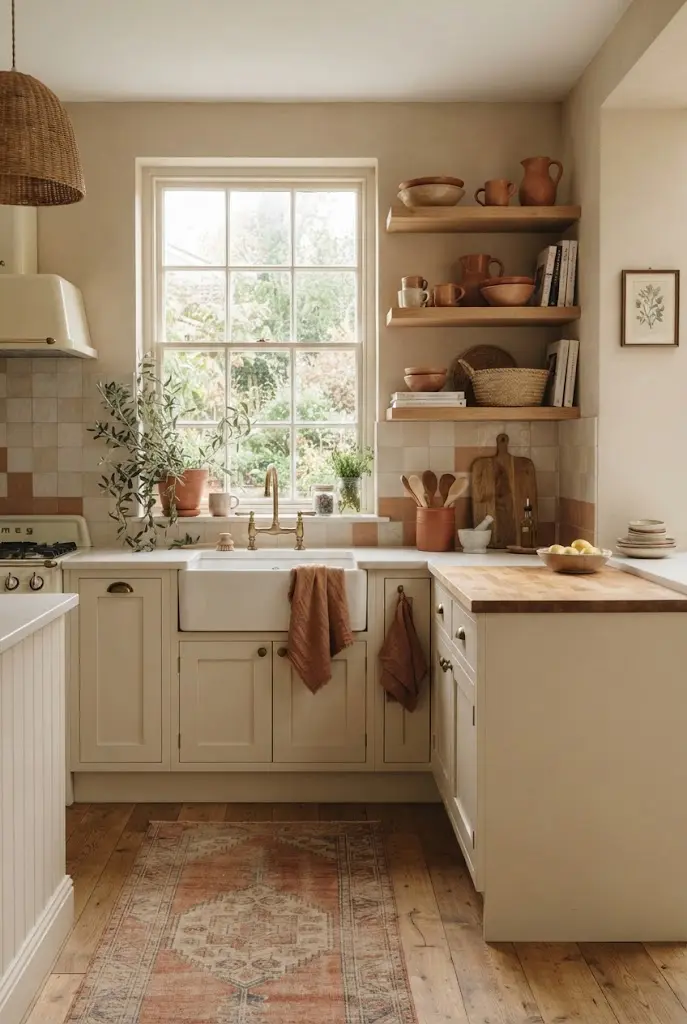
Terracotta is an excellent accent color for a farmhouse boho kitchen because it adds warmth without becoming overwhelming. Introduce it through pottery, planters, textiles, tiles, or small decorative objects. A terracotta bowl filled with fruit can become a simple countertop centerpiece. Terracotta-colored linen towels can repeat the tone in a subtle way. If you want a larger statement, consider a muted terracotta backsplash or floor tile. Combine the color with cream, oak, olive green, and warm beige. These shades create an earthy palette that feels comfortable and organic. Avoid using too many saturated orange tones because the look works best when colors are slightly muted. Handmade terracotta pottery can also add authentic craft character. The result feels warm, artistic, and relaxed. This palette works especially well in kitchens with plenty of natural daylight.
8. Display Handmade Pottery
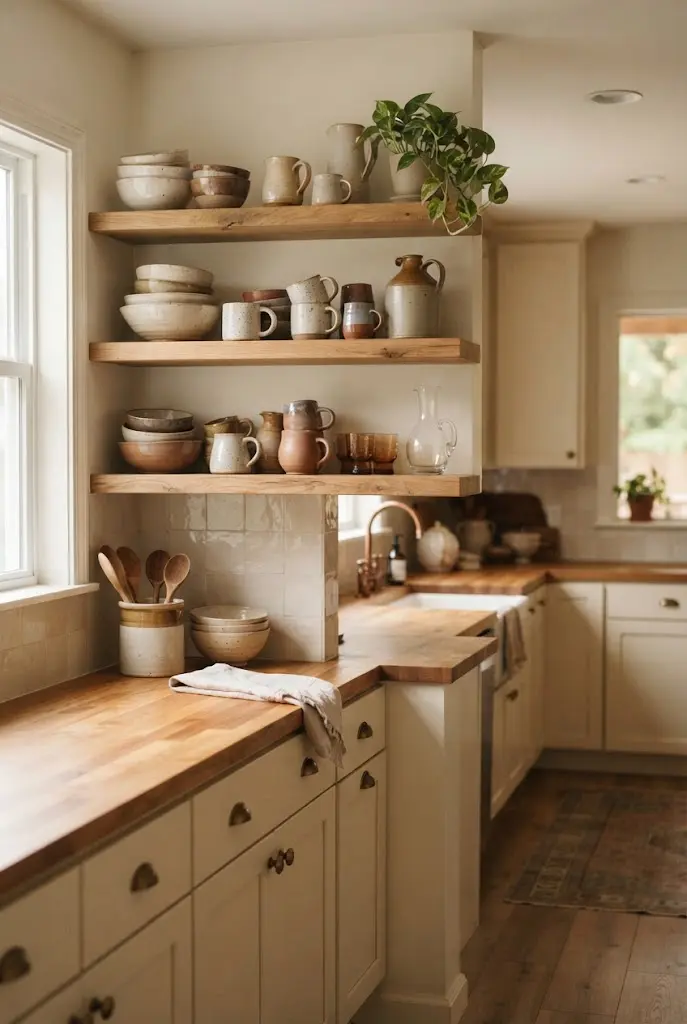
Handmade pottery adds personality to a farmhouse boho kitchen without making it feel overly decorated. Display a small collection of irregular ceramic bowls, mugs, pitchers, and plates on open shelving. Choose pieces with natural glazes in cream, sand, brown, olive, or muted terracotta. Slight variations in shape and finish make the collection feel authentic. A large handmade pitcher can work as a centerpiece on a kitchen island. Use pottery that looks functional rather than purely decorative. Combining handmade pieces with vintage kitchenware creates a collected appearance. Keep the arrangement loose and asymmetrical for a relaxed bohemian effect. Natural daylight will highlight the subtle texture of ceramic surfaces. This approach can make even a modern kitchen feel more personal. It is also easy to change seasonally without redesigning the entire room.
9. Bring in Olive Green Cabinets
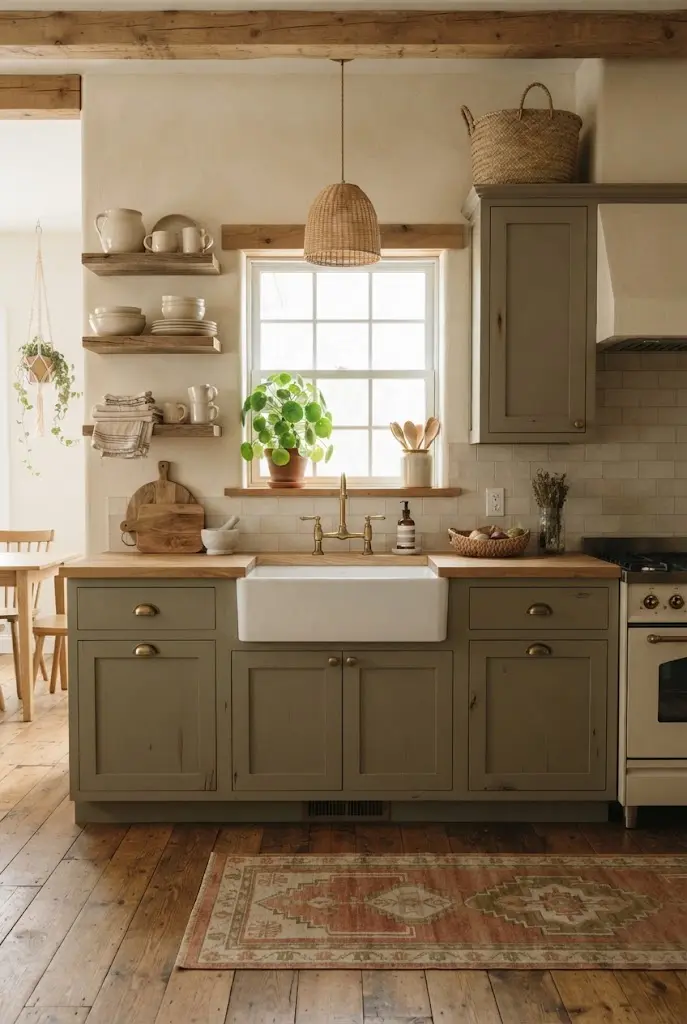
Olive green cabinets can give a farmhouse boho kitchen a rich natural character. Choose a muted, dusty olive rather than a bright or highly saturated green. Pair it with warm white walls and natural oak countertops. Brass hardware can add a gentle vintage touch against the darker cabinet color. Add woven baskets, cream ceramics, and leafy plants to reinforce the earthy atmosphere. Olive works particularly well with terracotta and faded rust accents. Keep the backsplash simple to prevent the space from becoming visually busy. Natural daylight can make the green appear soft and sophisticated. This color is especially appealing in kitchens that receive plenty of sunlight. It creates a cozy statement while remaining grounded in nature-inspired tones. The finished room feels relaxed, timeless, and welcoming.
10. Create a Cozy Breakfast Nook
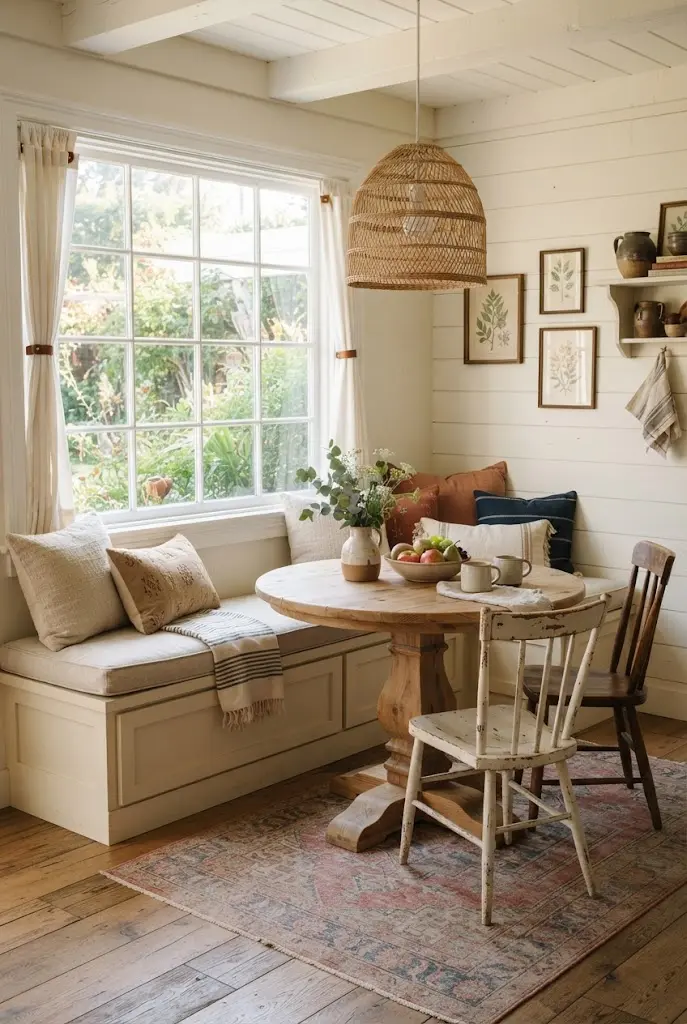
A small breakfast nook can make a farmhouse boho kitchen feel more useful and inviting. Place a simple wood table near a sunny window if space allows. Add a built-in bench or vintage wooden chairs with comfortable cushions. Linen seat cushions in cream, oatmeal, or muted patterns fit naturally into the style. A woven pendant or simple wall sconce can provide additional warmth. Style the table with a ceramic vase, fresh branches, or a bowl of seasonal fruit. Keep the setting practical enough for morning coffee and everyday meals. Natural wood and soft textiles create contrast against harder kitchen surfaces. A vintage rug can help define the nook within an open-plan room. This small area can become one of the most charming parts of the kitchen. It encourages the relaxed, lived-in quality that defines farmhouse boho style.
11. Add Butcher-Block Countertops
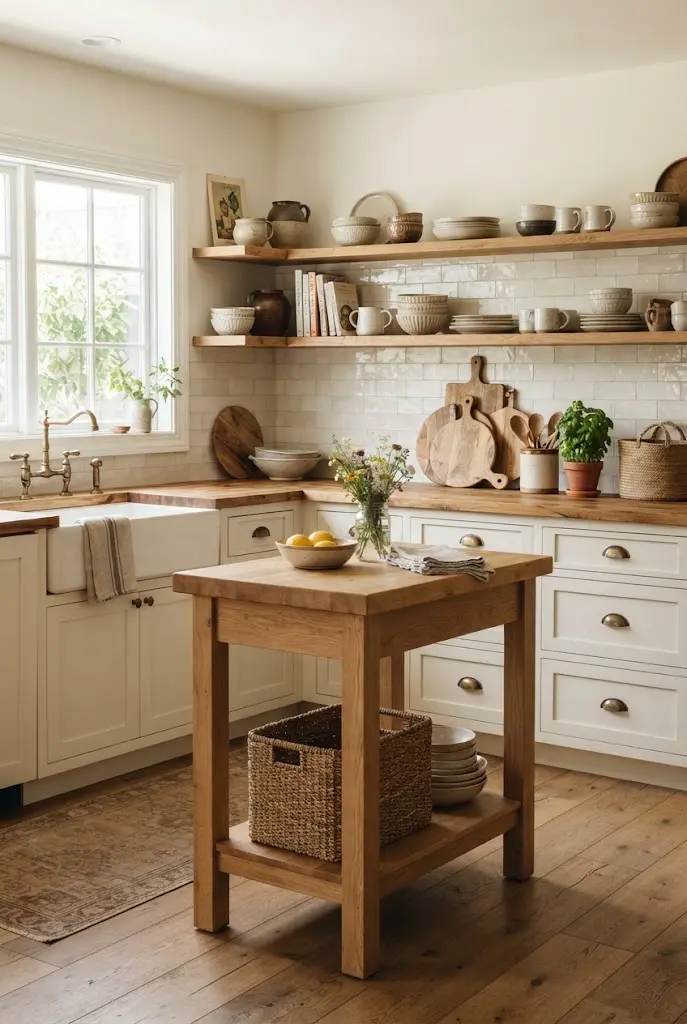
Butcher-block countertops bring warmth and traditional farmhouse character into the kitchen. Natural wood surfaces pair beautifully with creamy or olive cabinetry. Choose a finish that allows the grain to remain visible rather than a glossy coating. The subtle variation in the wood makes the kitchen feel more organic. Keep a wooden cutting board or bowl nearby to reinforce the material connection. Brass hardware can add a refined contrast against the wood. Handmade ceramics also work naturally with butcher-block surfaces. Because wood can show signs of use, it contributes to the lived-in quality of farmhouse style. Use proper kitchen-safe finishes and maintenance practices for practical durability. The result feels warm without becoming overly rustic. This is a particularly effective choice for kitchens that need more visual softness.
12. Hang Linen Café Curtains
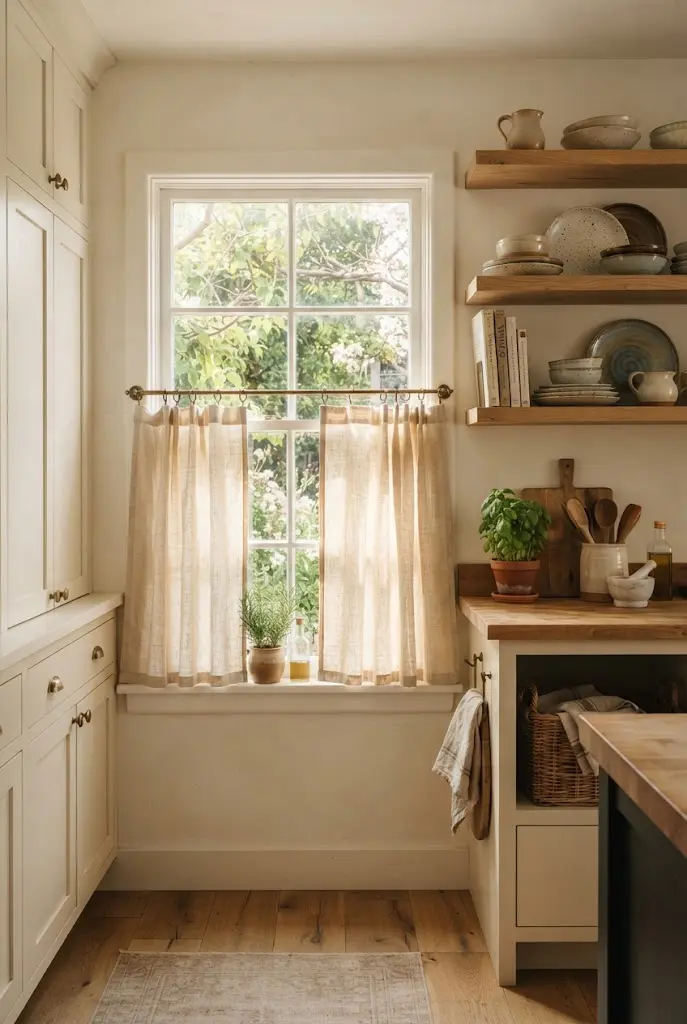
Linen café curtains can soften kitchen windows while maintaining the casual farmhouse feeling. Choose natural linen in oatmeal, cream, soft beige, or a subtle faded pattern. Hang them halfway up the window to provide privacy while still allowing daylight into the room. Their slightly rumpled texture adds a relaxed bohemian quality. Pair them with simple wood or brass curtain hardware. Keep the surrounding window area uncluttered so the fabric remains a soft focal point. Linen works especially well with natural wood and handmade ceramics. If the kitchen has multiple windows, use matching curtains for a cohesive appearance. Avoid overly formal treatments because farmhouse boho style should feel easygoing. The gentle movement of linen can make the room feel more comfortable. This is a small change with a surprisingly strong visual effect.
13. Style a Farmhouse Sink
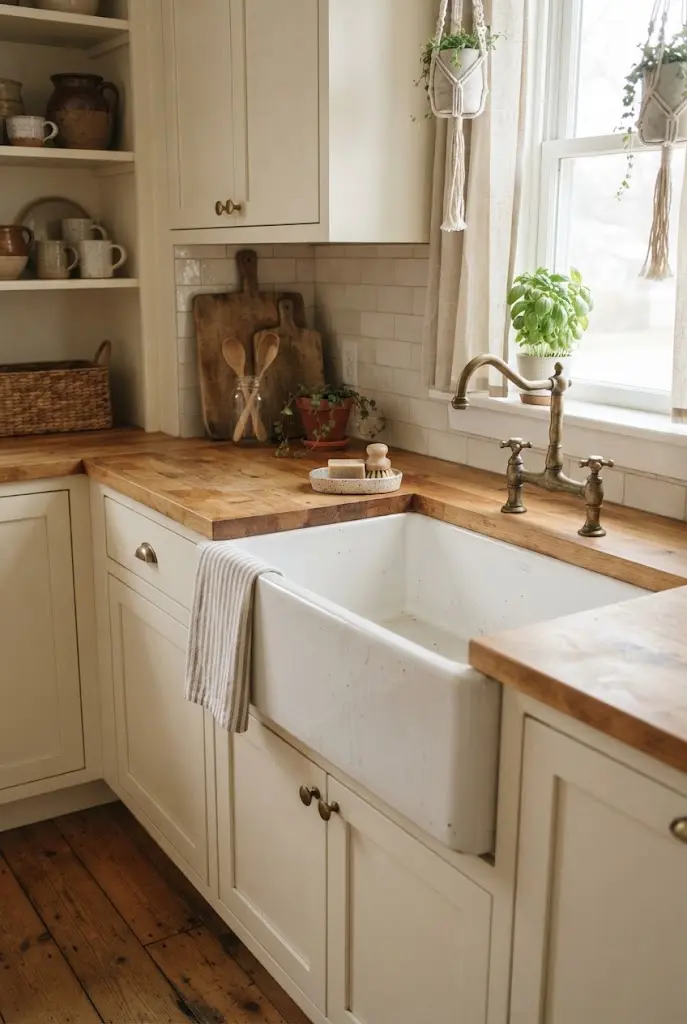
A deep farmhouse sink can become both a practical feature and a visual centerpiece. White fireclay or porcelain sinks pair naturally with cream cabinetry and wood countertops. Choose a simple bridge faucet or aged brass fixture to emphasize the vintage character. Keep the area around the sink relatively uncluttered. A small ceramic soap dish, linen towel, and potted herb can provide useful styling. Natural light from a nearby window makes the sink area feel especially inviting. Wood cutting boards can lean against the backsplash for additional warmth. The combination of white ceramic and natural materials keeps the space balanced. This style fits comfortably into both traditional and updated American kitchens. It also reinforces the hardworking character associated with farmhouse interiors. Adding a few bohemian handmade details prevents the space from feeling too conventional.
14. Decorate With Indoor Herbs
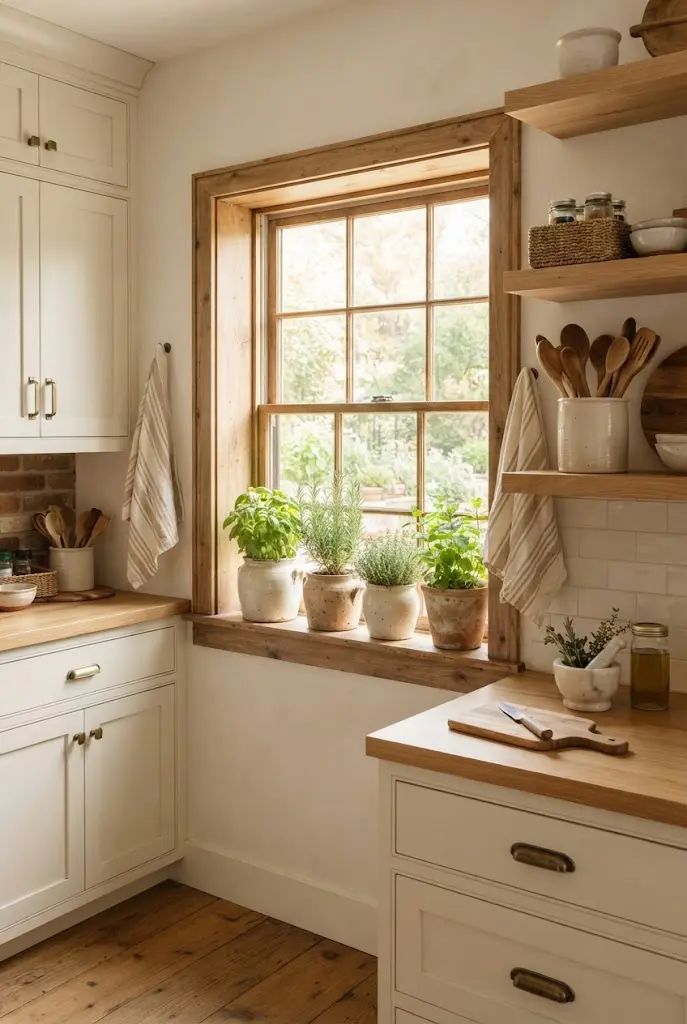
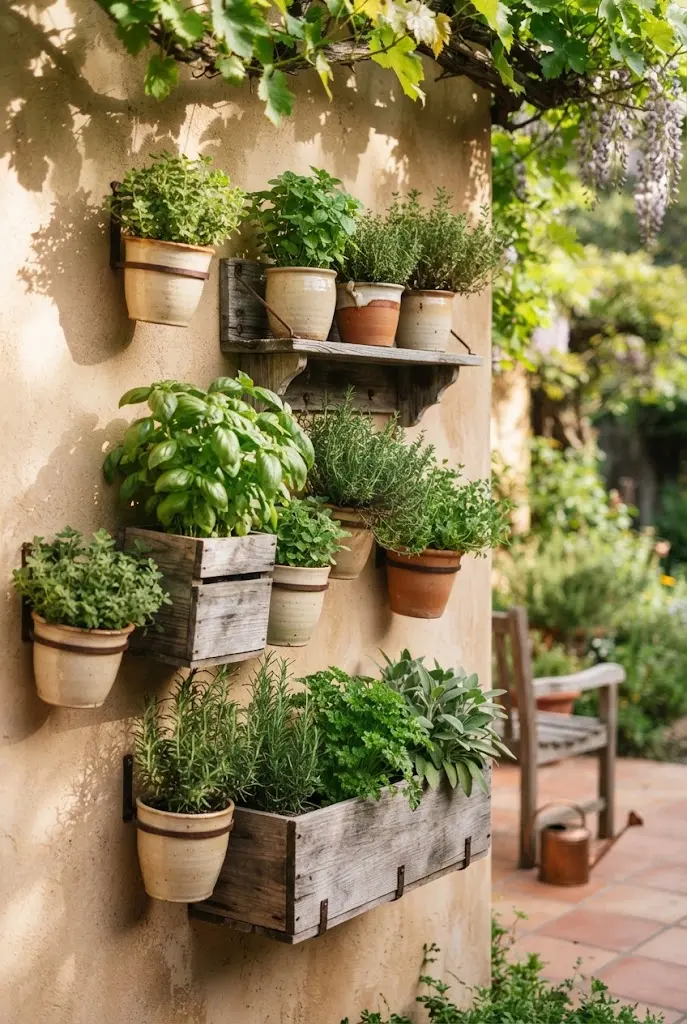
Fresh herbs can make a farmhouse boho kitchen feel alive and useful. Place basil, rosemary, thyme, or mint in small ceramic or terracotta pots near a sunny window. Use mismatched handmade containers for a collected bohemian appearance. Wooden plant stands or a simple open shelf can organize the pots. The greenery adds a natural contrast against cream or wood finishes. Herbs also provide practical ingredients for everyday cooking. Avoid overcrowding the window because the space should remain functional. Combine the plants with wooden utensils and woven baskets. The result feels fresh without requiring major renovation. Living greenery is one of the easiest ways to soften a hard kitchen environment.
15. Use Antique Brass Hardware

Antique brass hardware can instantly make a new kitchen feel more established and collected. Choose simple knobs, pulls, or cup handles with a slightly aged finish. Brass looks especially beautiful against cream, olive, or warm taupe cabinets. Avoid overly shiny polished brass because a softer finish better suits the farmhouse boho aesthetic. Pair the hardware with natural wood and handmade ceramics. Small brass accents can also appear in lighting fixtures or faucets for continuity. The goal is to create subtle repetition rather than matching every metal perfectly. A few slightly different vintage finishes can make the kitchen feel more authentic. This update is also relatively easy because hardware can often be replaced without major construction. It gives ordinary cabinetry a more custom appearance. The final result feels warm, timeless, and intentionally collected.
16. Add a Rustic Wood Range Hood
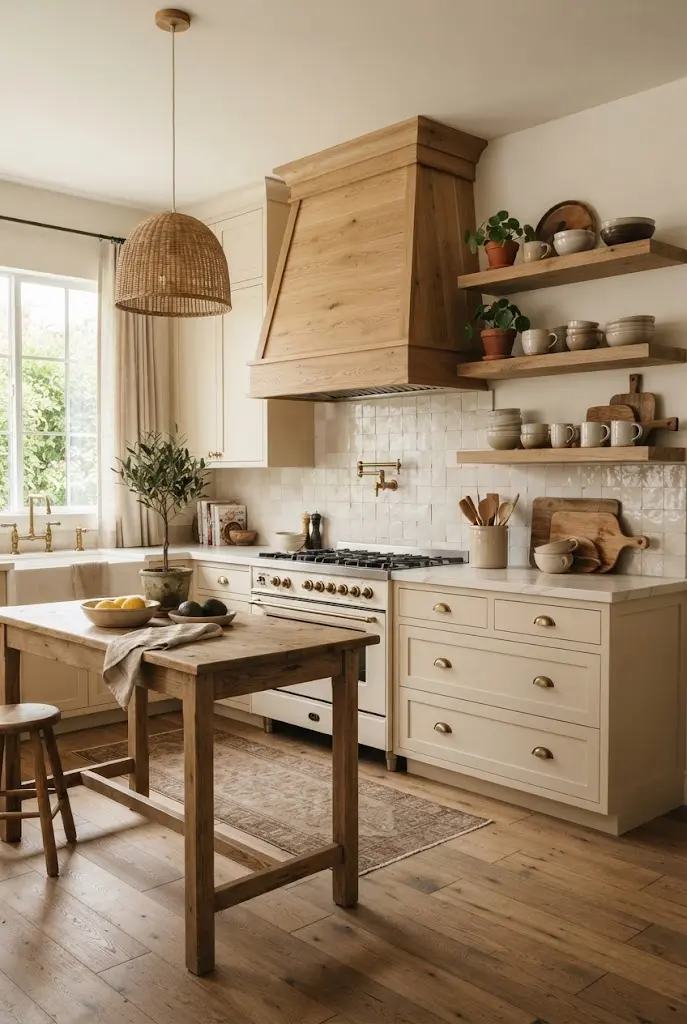
A wood range hood can give a farmhouse boho kitchen a strong architectural focal point. Use natural oak, reclaimed wood, or painted wood with subtle grain. A simple hood shape works better than overly ornate detailing. Pair it with cream cabinets and a neutral backsplash for a balanced composition. The wood hood can visually connect the upper cabinetry with a wood island or open shelves. Add small ceramic objects nearby rather than filling the area with decorations. Warm lighting can emphasize the natural grain in the evening. This feature works particularly well in larger American kitchens where the range wall needs a focal point. The combination of wood and plaster or tile feels relaxed and handcrafted. It also creates an inviting sense of permanence. The overall effect is rustic without looking dated.
17. Layer Neutral Textiles
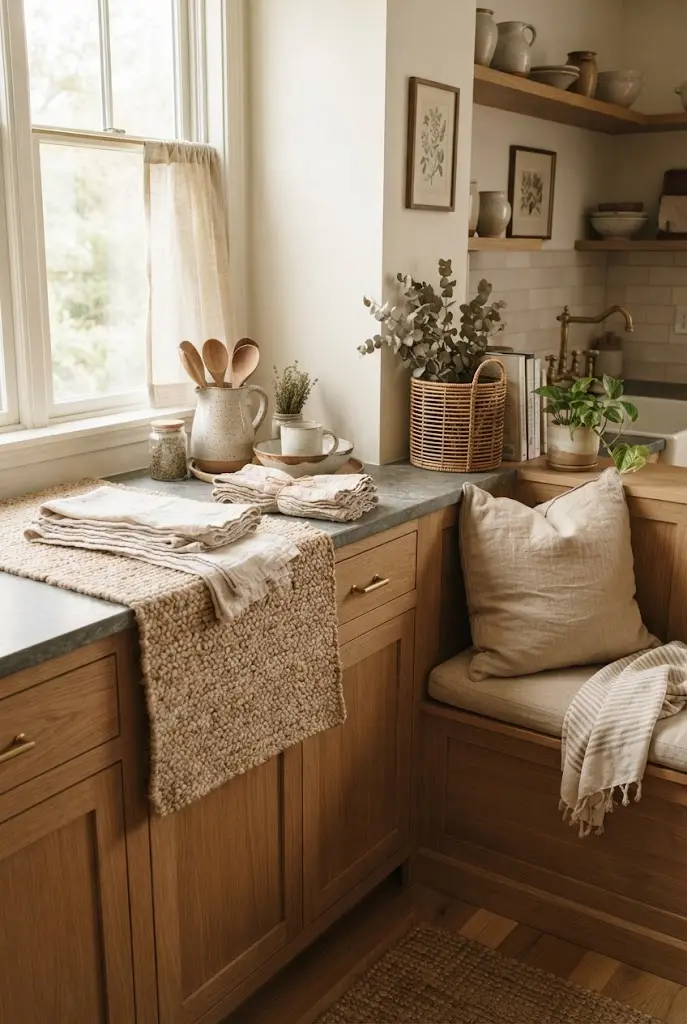
Neutral textiles can soften the hard surfaces found in most kitchens. Use linen towels, woven runners, cotton napkins, and simple seat cushions. Choose colors such as ivory, oatmeal, sand, taupe, and faded beige. Slight variations in texture are more important than strong patterns. Drape a linen towel naturally from an oven handle or place folded towels on open shelving. Add a woven cushion to a breakfast bench for additional comfort. Avoid making every textile identical because a collected look feels more natural. Natural fabrics also photograph beautifully in soft daylight. They can introduce warmth without competing with cabinetry or countertops. Changing textiles seasonally provides an easy way to refresh the room. This approach helps a practical kitchen feel more like a comfortable living space.
18. Mix Vintage and Modern Pieces
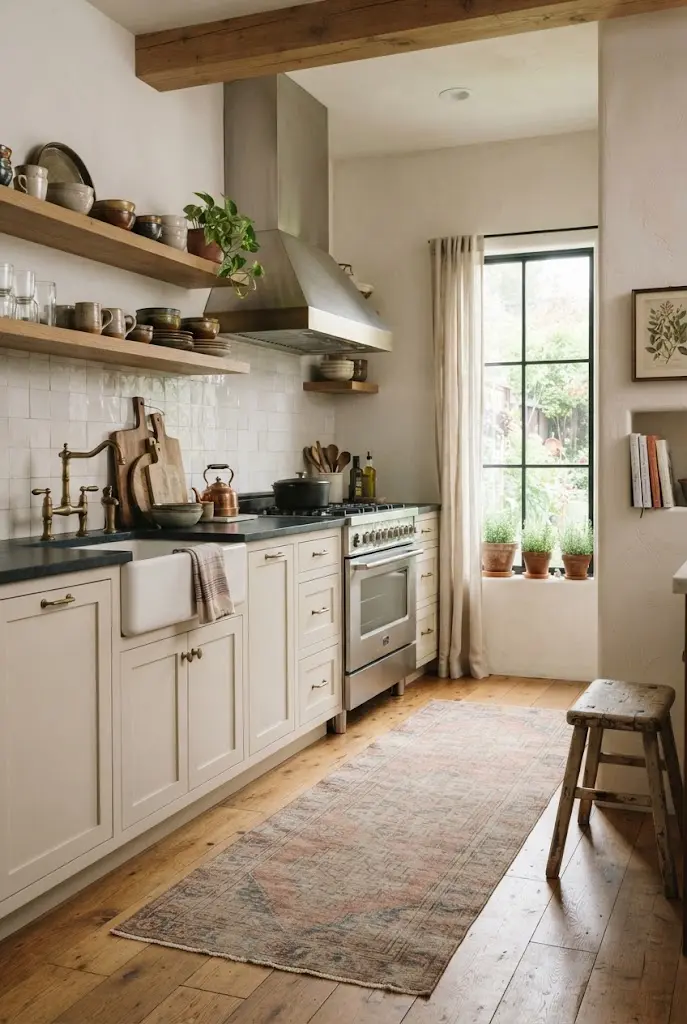
The farmhouse boho style becomes especially interesting when vintage pieces are mixed with modern conveniences. Pair updated cabinetry with an antique stool, vintage rug, or old wooden cutting board. Modern appliances can remain visible while decorative elements provide character. The goal is not to make every item look old. Instead, combine different periods so the kitchen feels naturally collected. Use consistent earthy colors to keep the mixture visually cohesive. A modern quartz countertop can sit comfortably beside reclaimed wood shelving. Vintage ceramics can be displayed alongside contemporary dishes. This combination is practical for today’s American homes while maintaining a warm personality. Avoid overly themed farmhouse decorations that can make the space feel artificial. A balanced mixture usually looks more sophisticated and authentic.
19. Choose a Natural Stone Backsplash

Natural stone can add texture and quiet sophistication to a farmhouse boho kitchen. Look for limestone, travertine, soapstone, or another softly patterned stone in warm neutral shades. Avoid highly dramatic veining if you want a relaxed appearance. Pair the stone with oak cabinetry or cream-painted cabinets. Handmade pottery and woven accessories complement the natural surface beautifully. The subtle variation in stone makes the kitchen feel less manufactured. Soft daylight can reveal the texture and small tonal differences. A natural stone backsplash can also provide a durable working surface behind the range. Keep surrounding accessories restrained so the stone remains visible. This approach combines farmhouse practicality with organic bohemian character. The result feels grounded, warm, and sophisticated.
20. Hang Vintage Artwork

Vintage artwork can make a kitchen feel more personal and less purely functional. Choose botanical prints, old food illustrations, landscapes, or simple abstract pieces in muted earthy tones. Frame them in aged wood or understated brass frames. Place artwork on a small wall, above a breakfast nook, or on a shelf rather than directly beside cooking surfaces. Keep the palette connected to the rest of the kitchen. Faded greens, browns, creams, and rust tones work especially well. A slightly imperfect frame can add farmhouse character. Avoid filling every wall because a few meaningful pieces usually look more intentional. Artwork also provides an opportunity to introduce personality without changing permanent finishes. The result feels more like a lived-in home than a showroom. This small detail can have a major impact on the room’s atmosphere.
21. Install Exposed Wood Beams
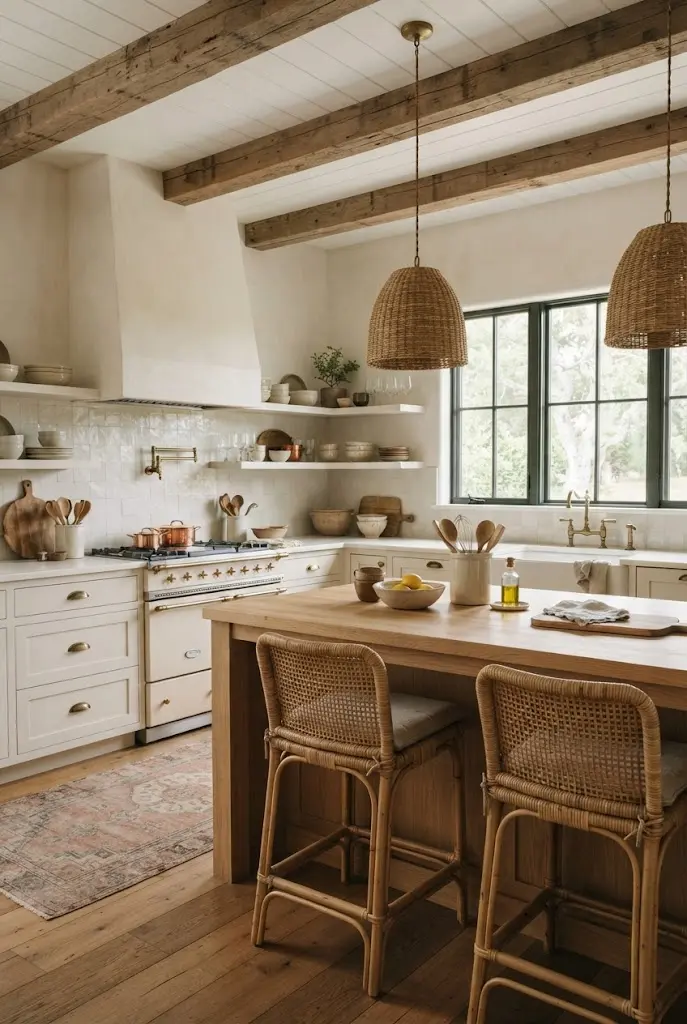
Exposed wood beams can emphasize the farmhouse architecture of a kitchen while adding natural warmth. If your home already has structural beams, allow their authentic character to remain visible. For new decorative beams, choose a finish that complements the existing wood rather than matching everything exactly. Natural oak or reclaimed wood works particularly well. Pair the beams with creamy walls and simple cabinetry to prevent the ceiling from feeling heavy. Woven lighting can echo the organic texture overhead. Keep countertops and backsplashes relatively calm so the architectural detail remains the focus. This treatment works especially well in open-plan kitchens. The combination creates a sense of age and permanence. It can also make a newer home feel more connected to traditional farmhouse architecture. The result is cozy without relying on excessive rustic décor.
22. Add Woven Storage Baskets

Woven baskets provide useful storage while reinforcing the bohemian side of the kitchen. Place them on open shelves, underneath an island, or inside a pantry area. Choose natural rattan, seagrass, wicker, or other plant-based fibers. Their irregular texture contrasts nicely with smooth cabinetry and stone countertops. Use baskets for towels, produce, cookbooks, or less attractive everyday items. Keep the colors natural rather than brightly dyed. One or two larger baskets can create more impact than many small containers. Their warm texture pairs especially well with oak and cream finishes. They also make open storage look intentional rather than cluttered. This is an inexpensive way to introduce both function and visual warmth. The overall effect feels relaxed and naturally collected.
23. Use a Deep Farmhouse Wood Tone
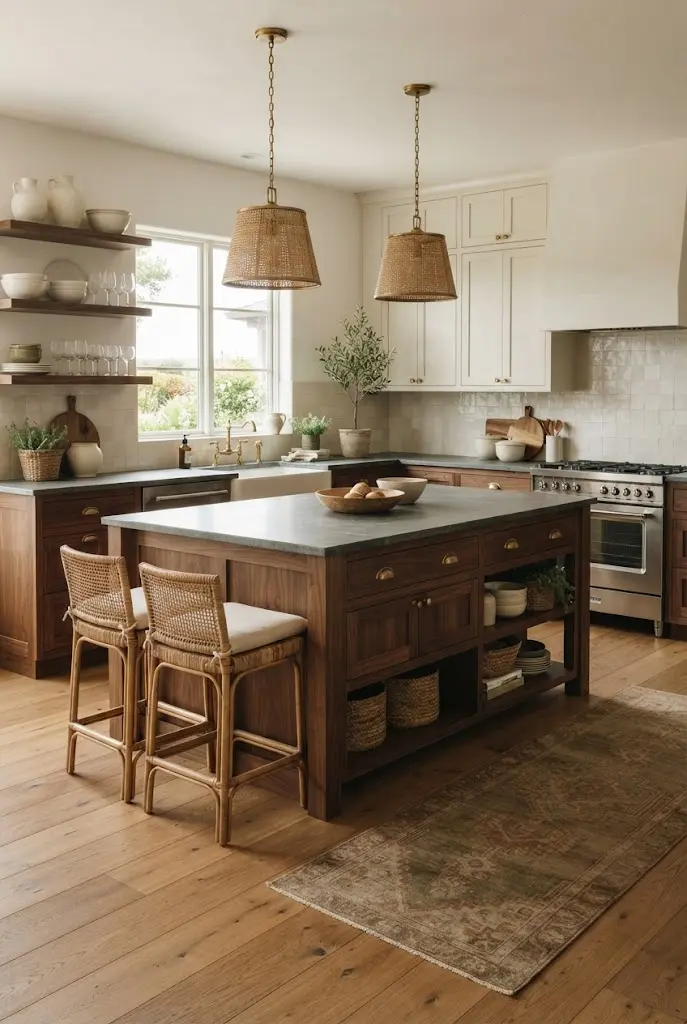
Deep walnut or medium-brown wood can give a farmhouse boho kitchen a richer, more dramatic feeling. Use it selectively on an island, lower cabinets, shelving, or furniture. Balance darker wood with creamy walls and lighter countertops. Woven accessories and ivory ceramics can prevent the room from feeling too heavy. Add muted green or terracotta accents for an earthy palette. Natural wood grain should remain visible so the material feels authentic. Warm lighting can make deep wood especially inviting in the evening. This approach works well in larger kitchens with plenty of natural light. The contrast creates depth while maintaining the relaxed character of farmhouse boho style. Avoid combining too many different dark finishes. A carefully chosen wood tone can become the foundation for the entire room.
24. Create a Coffee Station
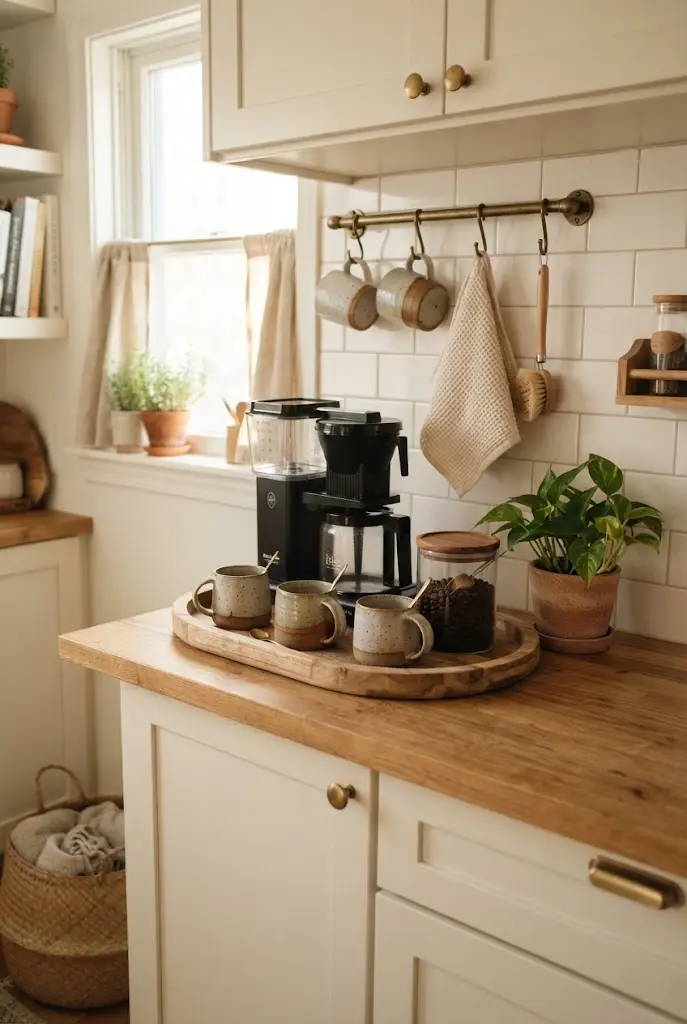
A dedicated coffee station can make a kitchen feel more personal and useful. Set aside a small section of countertop for a coffee maker, mugs, beans, and a few accessories. Use a wooden tray to keep the area organized. Display handmade mugs on a simple hook rail or open shelf. Add a small plant or ceramic vase to soften the arrangement. Neutral containers and warm wood tones fit naturally into the farmhouse boho palette. Keep appliances practical rather than overly decorative. A vintage sign may work in some homes, but simple styling often feels more sophisticated. This little corner can become a welcoming ritual area in the morning. It also adds personality without requiring a full kitchen renovation. The result feels casual, useful, and distinctly homey.
25. Add a Freestanding Hutch

A freestanding wooden hutch can introduce vintage farmhouse character while providing valuable storage. Look for a piece with natural wear, simple lines, and warm wood tones. Paint it creamy white or muted olive if you want a softer appearance. Display everyday dishes, glassware, pottery, and woven baskets inside or on open shelves. Leave some areas empty so the furniture does not appear overloaded. The hutch can also provide a visual transition between the kitchen and dining area. Pair it with a vintage rug and natural textiles for additional warmth. Its independent furniture-like appearance makes the kitchen feel less fitted and more collected. This works particularly well in larger American kitchens. The combination of storage and personality makes the hutch both beautiful and practical.
26. Choose a Soft Plaster Wall Finish
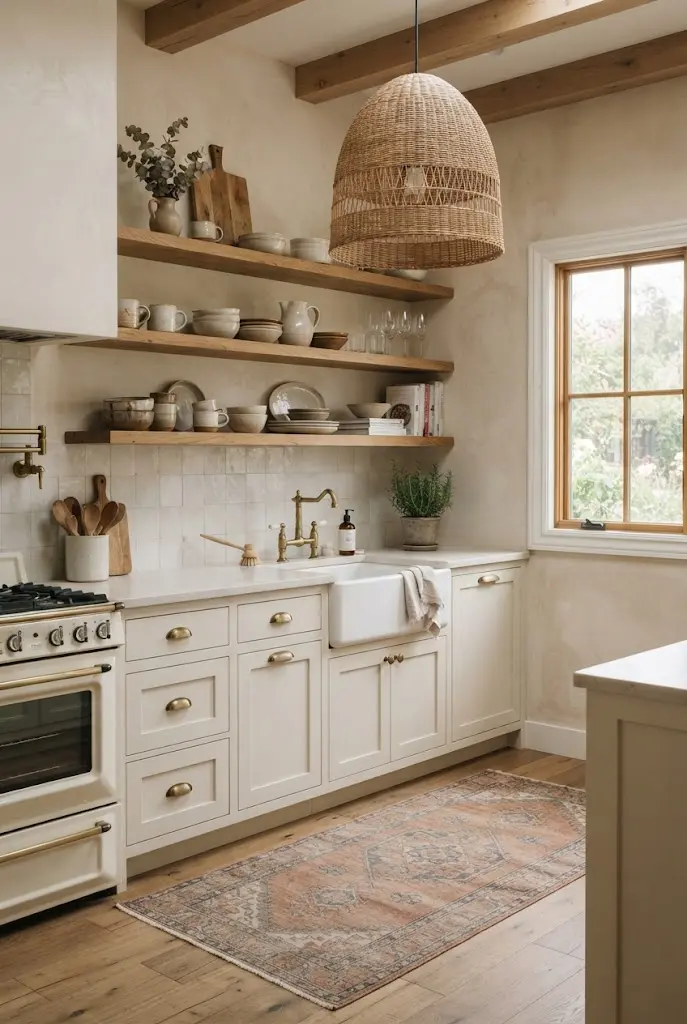
A softly textured plaster wall can give a farmhouse boho kitchen an organic, handcrafted feeling. Choose warm white, ivory, beige, or light taupe rather than a stark smooth finish. The subtle texture catches daylight and creates gentle tonal variation. Pair the walls with wood cabinetry and handmade ceramics for a natural material palette. Plaster works particularly well behind open shelving or around a breakfast nook. Keep the texture understated so the kitchen remains visually calm. Small imperfections are part of the charm and can make the space feel less manufactured. Add woven lighting and vintage textiles for additional softness. This treatment creates a warm backdrop without requiring bold color. It also works beautifully with both traditional and contemporary kitchen elements. The result feels relaxed, tactile, and timeless.
27. Introduce Muted Floral Textiles
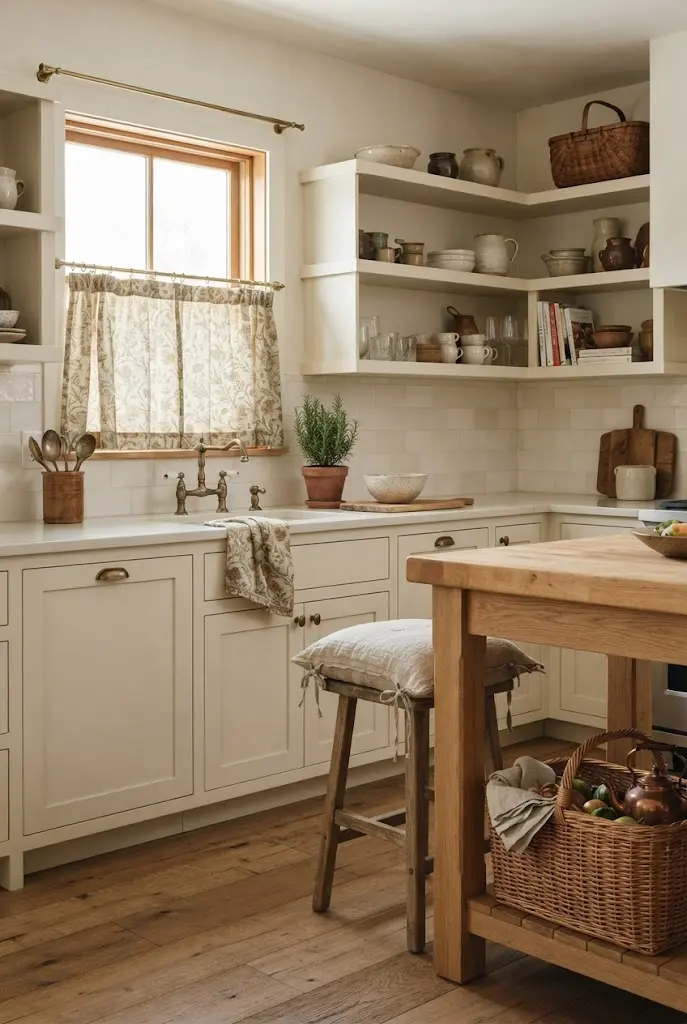
Muted floral textiles can add a gentle romantic element to farmhouse boho kitchens. Choose small-scale botanical patterns in faded olive, cream, rust, beige, or dusty blue. Use them on café curtains, seat cushions, tea towels, or small table linens. Keep the pattern slightly faded to maintain the vintage character. Combine floral textiles with plain linen so the kitchen does not become too busy. Natural wood and cream cabinetry provide a calm background. A small floral cushion can be enough to introduce the pattern. This detail works particularly well in breakfast nooks and dining corners. Avoid matching every textile because varied fabrics create a more collected feeling. The result feels charming without becoming overly traditional. It is a simple way to blend farmhouse nostalgia with bohemian softness.
28. Add a Rustic Pot Rack
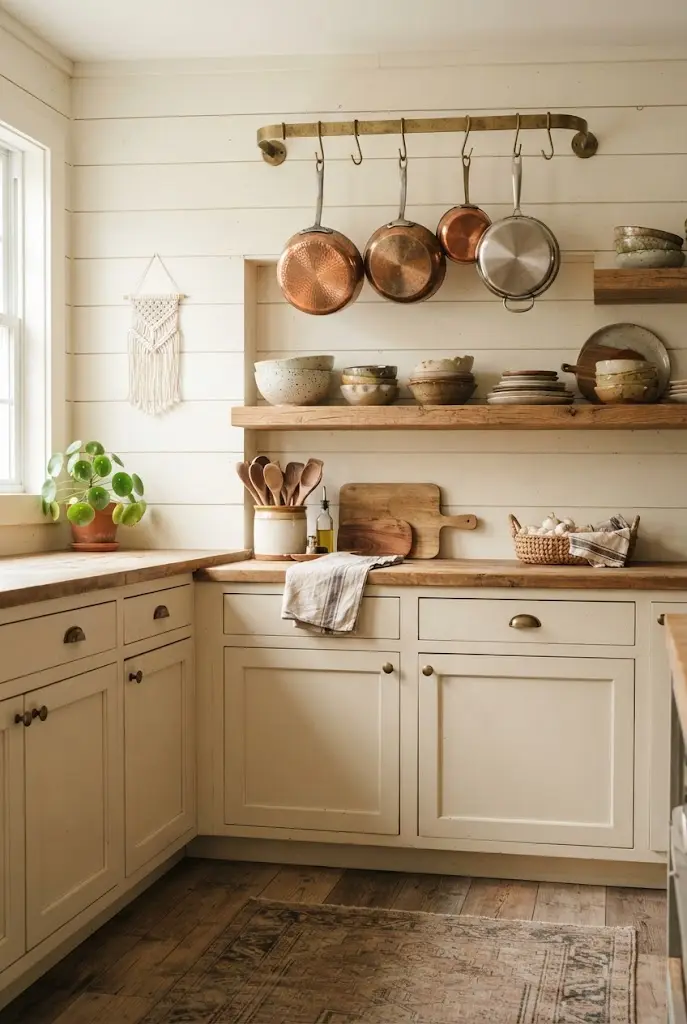
A simple wall-mounted or ceiling-mounted pot rack can make a farmhouse boho kitchen feel functional and collected. Choose aged brass, dark metal, or natural wood depending on the rest of the room. Hang a few copper or stainless-steel pans rather than filling the rack completely. Add wooden utensils and a small woven basket nearby for additional texture. The practical display creates a casual working-kitchen atmosphere. Keep the arrangement organized but not overly symmetrical. Open storage works especially well with farmhouse aesthetics because it makes everyday tools part of the décor. Combine the rack with cream cabinets and natural wood for warmth. It can also free valuable cabinet space in smaller kitchens. The result feels authentic and useful rather than purely decorative. This is a strong choice for homeowners who like kitchens with visible personality.
29. Style With Seasonal Produce
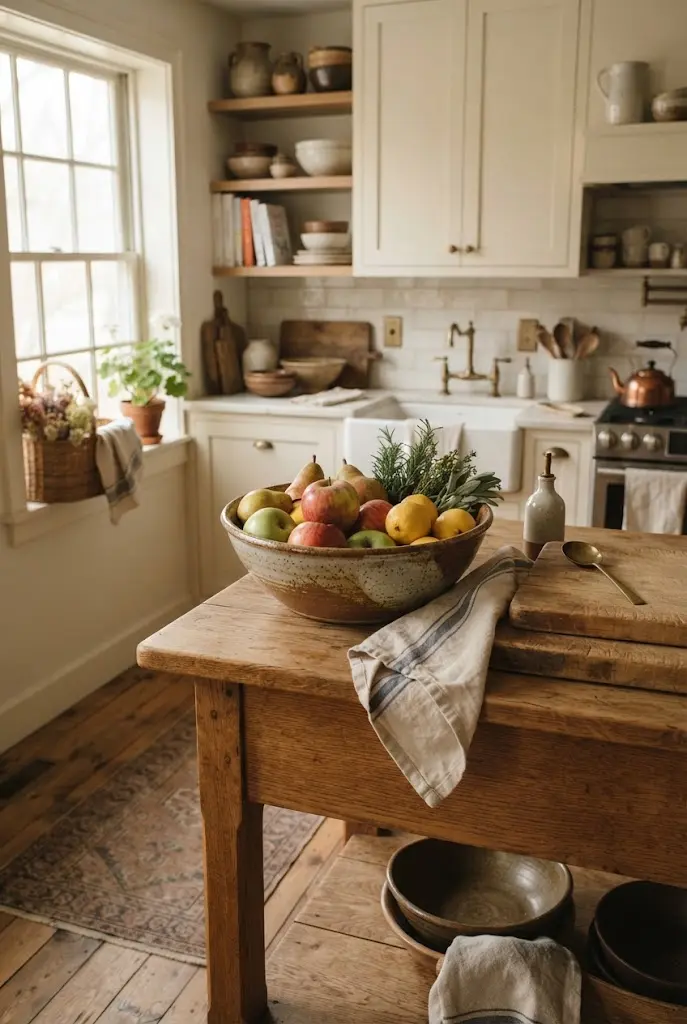
Fresh produce can become beautiful natural décor in a farmhouse boho kitchen. Display lemons, apples, pears, onions, or seasonal vegetables in handmade ceramic bowls or woven baskets. Choose produce with realistic variations rather than perfectly arranged pieces. A bowl of fruit on the island adds color while remaining useful. Combine it with wooden cutting boards and neutral pottery. Seasonal produce also helps the kitchen feel lived-in and connected to everyday cooking. Avoid excessive displays that make the countertop impractical. A few simple ingredients can provide more warmth than decorative objects. Earthy greens, warm yellows, reds, and oranges can complement neutral cabinetry. This approach is especially effective in lifestyle photography because it communicates everyday comfort. The kitchen feels fresh, welcoming, and genuinely used.
30. Use Dark Metal Accents

Dark metal accents can provide definition in a soft farmhouse boho kitchen. Introduce black or charcoal through window frames, cabinet hardware, lighting, stools, or small accessories. Keep the amount controlled so the kitchen remains warm rather than industrial. Dark metal looks especially good against cream cabinetry and natural oak. Combine it with woven textures to soften the contrast. A black-framed window can provide a strong architectural element in a modern American home. Simple metal stools can also complement a reclaimed wood island. Repeat the dark tone in only a few places for visual balance. This approach gives the room a slightly more contemporary edge. It allows farmhouse and boho elements to coexist with modern details. The result feels grounded, stylish, and approachable.
31. Create a Cozy Layered Kitchen Corner

A layered corner can bring together many farmhouse boho elements without redesigning the entire kitchen. Start with a natural wood cabinet or small open shelf. Add handmade pottery, a woven basket, vintage cutting board, linen towel, and a small plant. Keep the palette centered on cream, oak, beige, olive, and muted terracotta. Vary heights and textures so the arrangement feels naturally collected. Leave enough negative space to prevent visual clutter. A small framed botanical print can add personality. Soft daylight is ideal for highlighting the different textures. The corner can sit near the pantry, breakfast nook, or end of a cabinet run. These small details make the kitchen feel thoughtfully decorated. The overall result is cozy, practical, and distinctly farmhouse boho.
32. Keep the Overall Look Relaxed and Collected
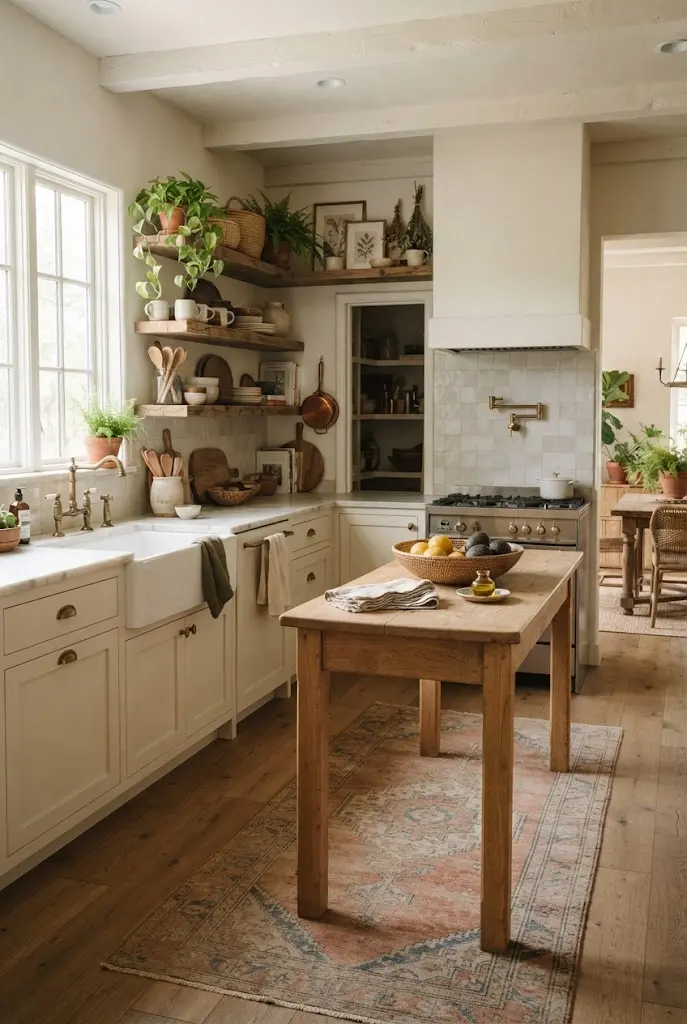
The most successful farmhouse boho kitchens do not look perfectly coordinated. They combine practical pieces, natural materials, vintage finds, and personal objects in a comfortable way. Start with a simple foundation of warm neutrals and wood. Then layer in textiles, pottery, plants, vintage pieces, and earthy accents gradually. Allow some objects to show natural wear because small imperfections create authenticity. Keep countertops functional instead of covering every surface with décor. Mix old and new pieces so the kitchen feels connected to real everyday life. Use a limited palette to prevent all the different textures from becoming overwhelming. Natural light can enhance the warmth of wood, linen, stone, and ceramic surfaces. The goal is a kitchen that feels welcoming rather than staged. By combining farmhouse practicality with bohemian personality, you can create a cozy space that feels uniquely yours.