32 Simple Herb Planter Ideas to Bring Greenery to Your Home
Growing fresh herbs at home is an easy way to add greenery, fragrance, and practical beauty to your living space.
You do not need a large backyard or complicated gardening system to create a useful herb garden.
Simple planters can work beautifully on kitchen counters, sunny windowsills, patios, balconies, porches, and garden beds.
Popular herbs such as basil, rosemary, thyme, mint, parsley, cilantro, and oregano can thrive in suitable containers.
For many U.S. homes, container gardening also makes it easier to move plants indoors during colder seasons.
Repurposed containers, terracotta pots, wooden boxes, and hanging planters can all become attractive herb-growing spaces.
The key is choosing containers with good drainage and placing them where the herbs receive appropriate sunlight.
These simple herb planter ideas combine everyday practicality with natural home decor.
Whether you have a tiny apartment or a spacious suburban garden, there is an option to fit your space.
Here are 32 easy ideas to inspire a fresh and inviting herb-growing setup.
1. Terracotta Herb Pots
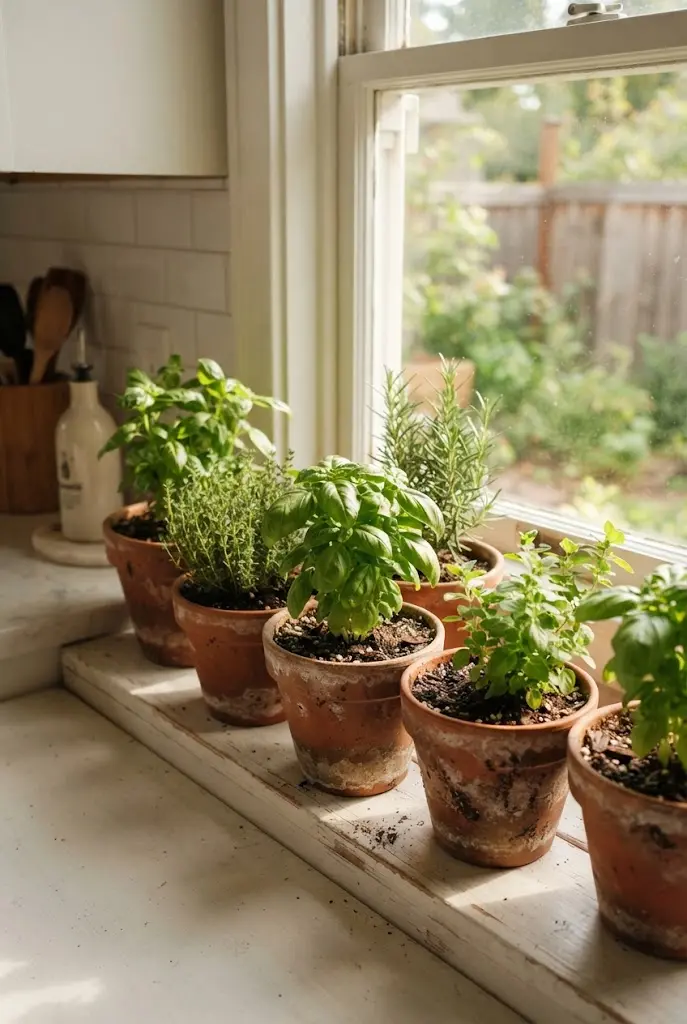
Terracotta pots are a classic choice for growing herbs at home.
Their warm earthy color works naturally with kitchens, patios, porches, and garden spaces.
Use individual pots for basil, rosemary, thyme, or oregano to keep each herb organized.
Choose containers with drainage holes to help prevent excess moisture around the roots.
A sunny kitchen windowsill can provide a convenient location for smaller herb pots.
Larger terracotta containers can also be grouped together on an outdoor patio.
Adding simple handwritten plant labels can make the collection easier to identify.
The natural texture of terracotta pairs beautifully with wooden shelves and neutral decor.
This approach is inexpensive, timeless, and easy for beginner gardeners.
It is an especially simple way to bring a Mediterranean-inspired garden feeling into a home.
2. Wooden Crate Herb Garden
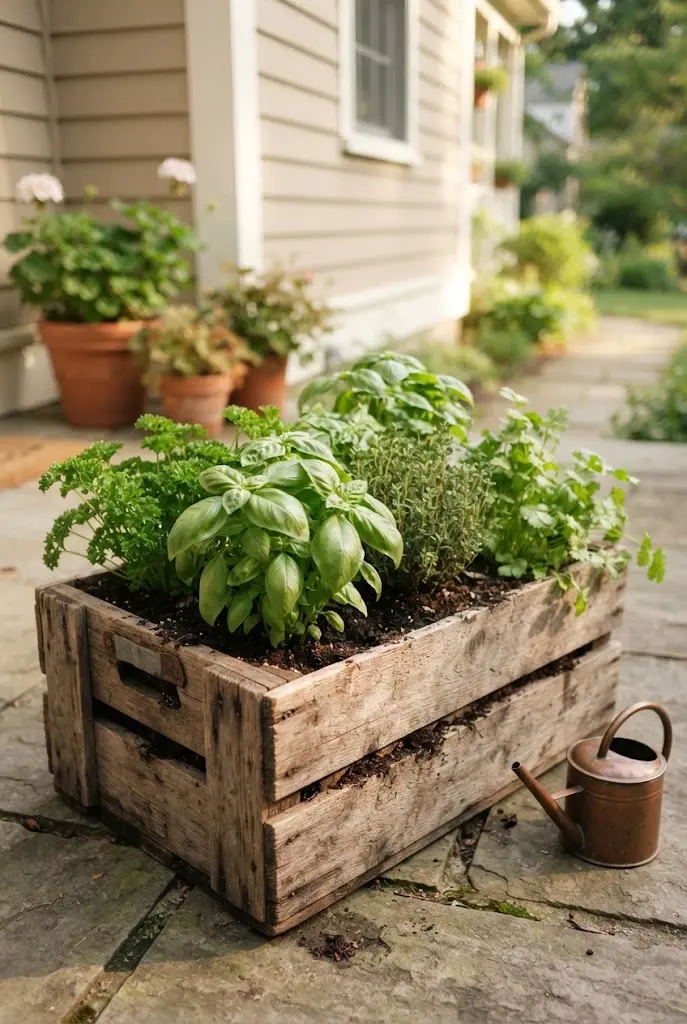
A wooden crate can become a charming container for a small collection of herbs.
Look for untreated or food-safe wood when growing edible plants.
A sturdy crate can hold several smaller herb pots or serve as one larger planter.
Place basil, parsley, cilantro, and thyme together for a practical kitchen garden.
The natural wood adds warmth and complements rustic or farmhouse-inspired spaces.
You can place the crate near a sunny back door, patio, balcony, or kitchen window.
Small drainage holes or appropriately placed inner containers can help manage excess water.
Adding simple plant markers creates a neat and organized appearance.
The crate can also be moved when sunlight conditions change throughout the year.
This is a practical way to combine gardening with casual rustic home decor.
3. Kitchen Window Herb Garden
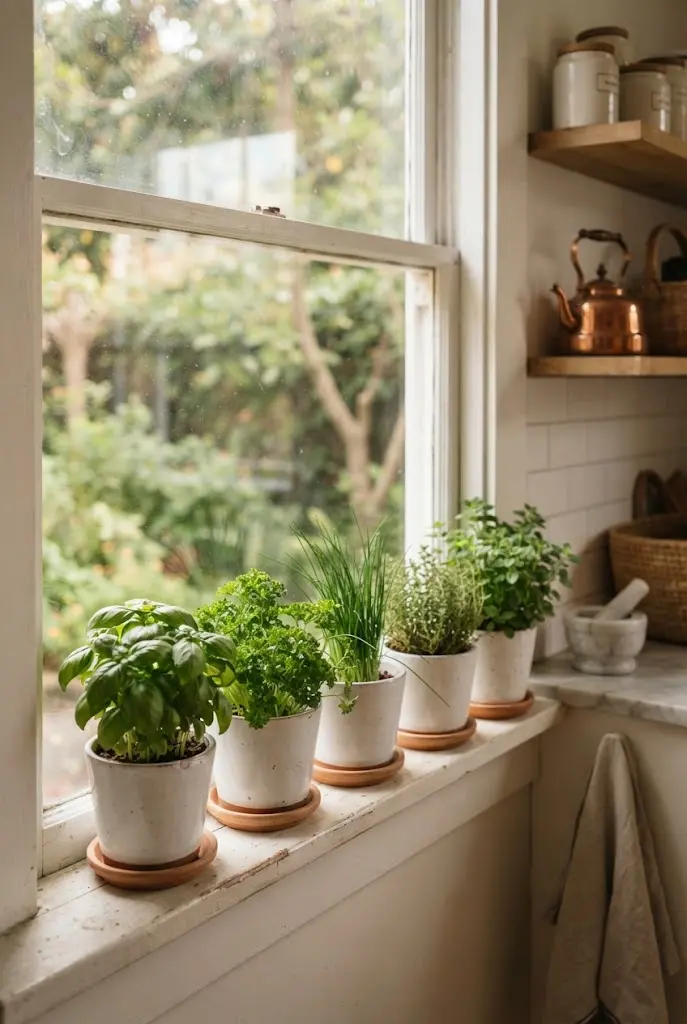
A sunny kitchen window can be an ideal location for a compact herb garden.
Small pots can sit along the sill without taking up valuable counter space.
Basil, parsley, chives, thyme, and oregano can create a useful collection.
Choose pots that fit comfortably without blocking the window or interfering with its operation.
Grouping containers in different sizes can add visual interest while keeping the setup practical.
White ceramic or neutral stoneware pots work well with many American kitchen styles.
Regularly harvesting the herbs encourages fresh growth when the plants are properly cared for.
The greenery can also soften an otherwise plain windowsill.
Keep the plants positioned according to their individual light requirements.
This simple setup makes fresh herbs easy to see and reach while cooking.
4. Mason Jar Herb Planters
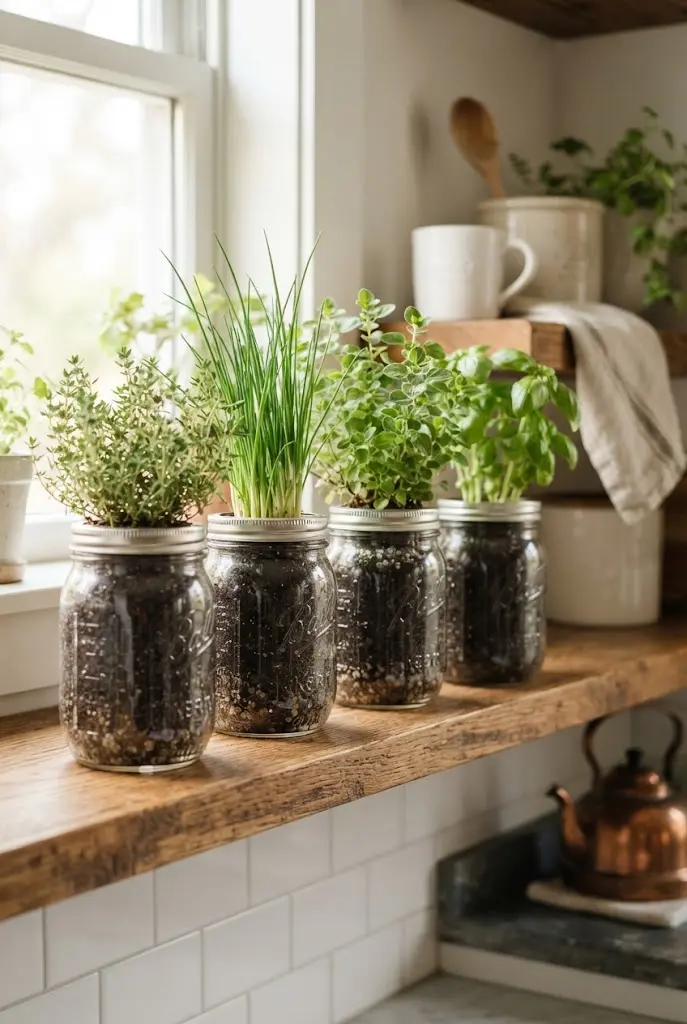
Mason jars can provide a simple and attractive container option for small herbs.
They fit well with farmhouse, rustic, cottage, and casual kitchen decorating styles.
Use suitable drainage solutions so the roots are not left sitting in stagnant water.
Small herbs such as chives, thyme, or young basil plants can work particularly well.
Line several jars along a sunny shelf for an organized mini garden.
Wooden boards beneath the jars can protect surfaces while adding warmth.
Simple handwritten labels can distinguish different herbs.
Clear glass also allows the growing environment to become part of the visual display.
Keep the arrangement close to an appropriate light source.
This idea is especially useful for renters and people working with limited space.
5. Hanging Herb Planters
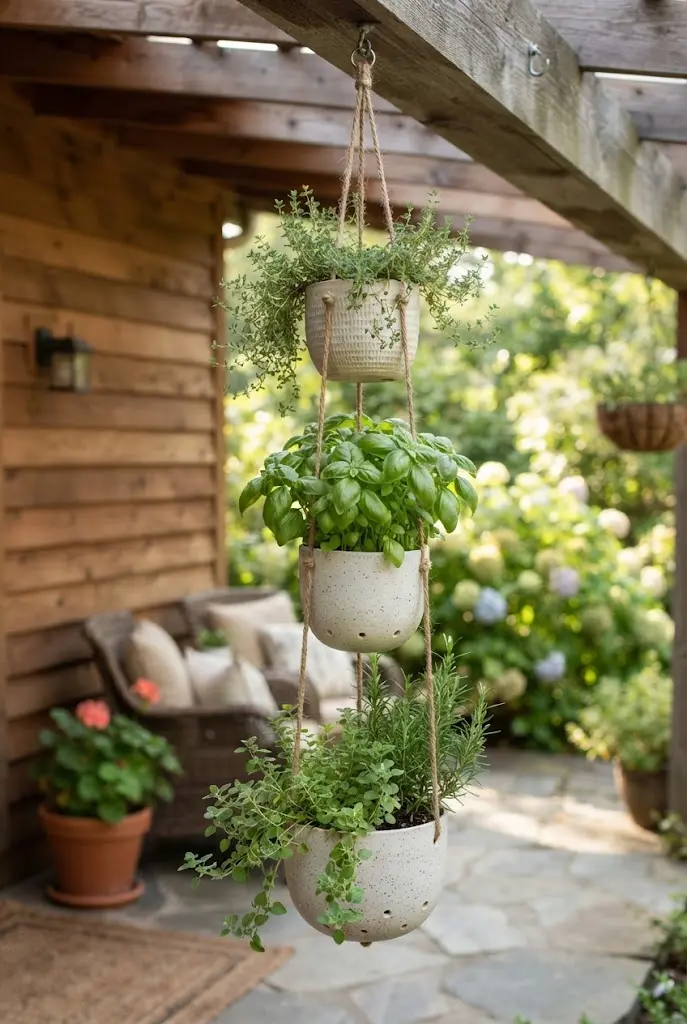
Hanging planters can save valuable floor and counter space.
They work particularly well on covered porches, balconies, patios, or bright indoor areas.
Choose lightweight containers that are securely supported before adding soil and mature plants.
Trailing herbs can create an especially attractive effect when grown in elevated containers.
You can arrange several planters at different heights for a layered garden display.
Natural rope, wood, ceramic, or metal planters can complement different decorating styles.
Make sure the plants receive enough light for their specific growing needs.
A hanging garden can also keep herbs away from crowded countertops.
Regular trimming helps maintain a tidy shape and encourages useful new growth.
This approach brings greenery upward while making a small space feel more vibrant.
6. Vintage Tin Herb Containers
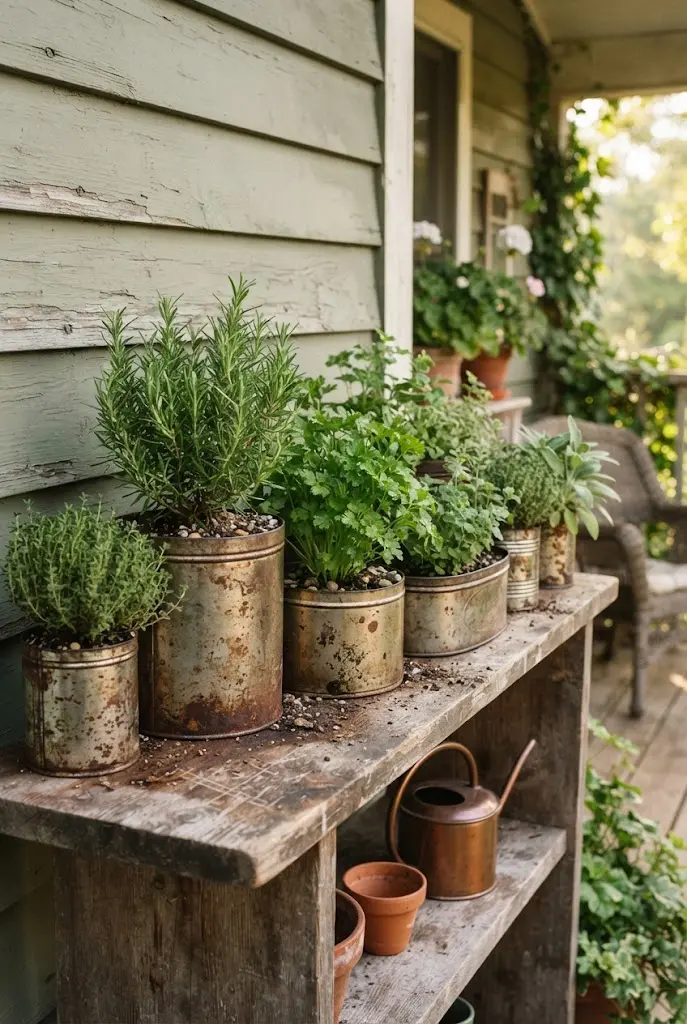
Vintage-style metal tins can give an herb garden a charming collected look.
They can complement cottage, farmhouse, and rustic home interiors.
Use containers that are safe for planting and provide appropriate drainage.
A collection of different sizes can create an informal garden display.
Place them on a covered porch, sunny windowsill, or protected outdoor shelf.
Green herbs look particularly attractive against aged neutral metal surfaces.
Consider using individual tins for rosemary, thyme, oregano, and parsley.
Simple plant labels can make the arrangement both decorative and functional.
Avoid containers that may contain unsafe residues or deteriorated coatings.
With the right preparation, vintage-inspired containers can add personality to a basic herb garden.
7. Tiered Herb Plant Stand
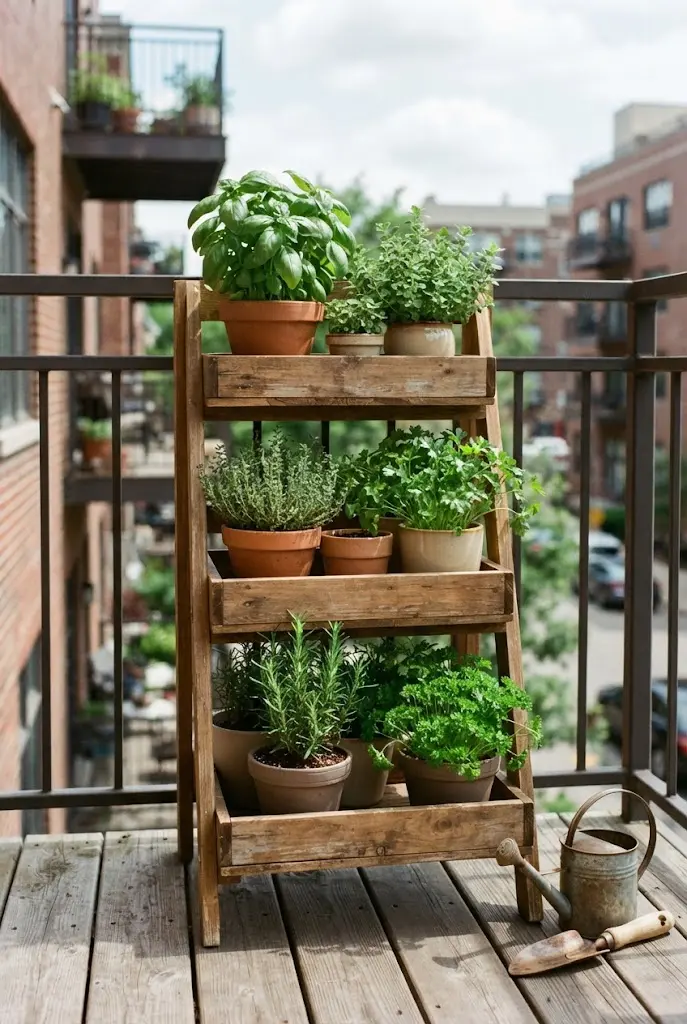
A tiered plant stand can organize several herbs vertically.
This makes good use of limited patio, balcony, or kitchen space.
Place taller herbs toward the back and smaller plants toward the front.
Each level can hold several appropriately sized containers.
Wooden stands bring warmth, while black metal stands can create a more modern appearance.
Position the stand where all plants can receive suitable sunlight.
Rotating containers occasionally can help maintain balanced growth when appropriate.
A tiered arrangement also makes individual herbs easy to identify and harvest.
It creates a visually layered display without requiring a large garden bed.
This is a practical solution for small homes and apartment gardening.
8. Reclaimed Wood Herb Box
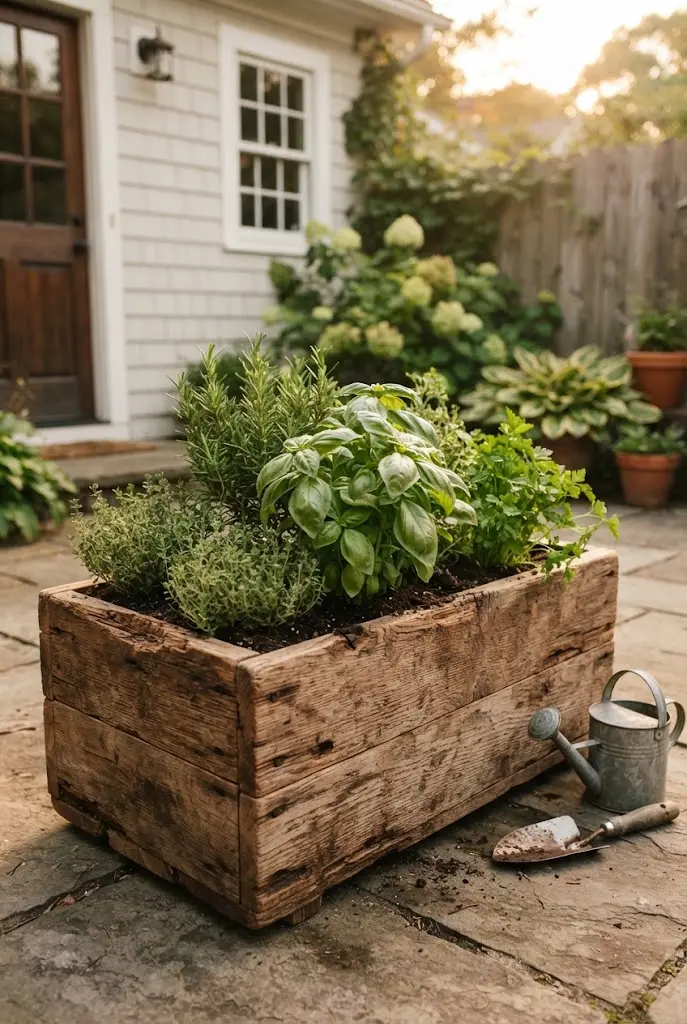
A reclaimed wood box can create a warm handmade look for an herb garden.
The natural texture of aged wood pairs beautifully with fresh green leaves.
Build or choose a box that provides enough depth for the herbs you plan to grow.
Several herbs can share the same container if their growing needs are compatible.
Use a sunny patio, porch, garden wall, or kitchen area as the display location.
A simple wood finish can preserve the material while maintaining its rustic character.
Drainage should be planned carefully to protect the roots and surrounding surface.
Plant labels can add a useful finishing touch without overwhelming the natural design.
The box can become a permanent seasonal feature in a small outdoor garden.
It is a simple way to reuse materials while adding greenery to your home.
9. White Ceramic Herb Pots
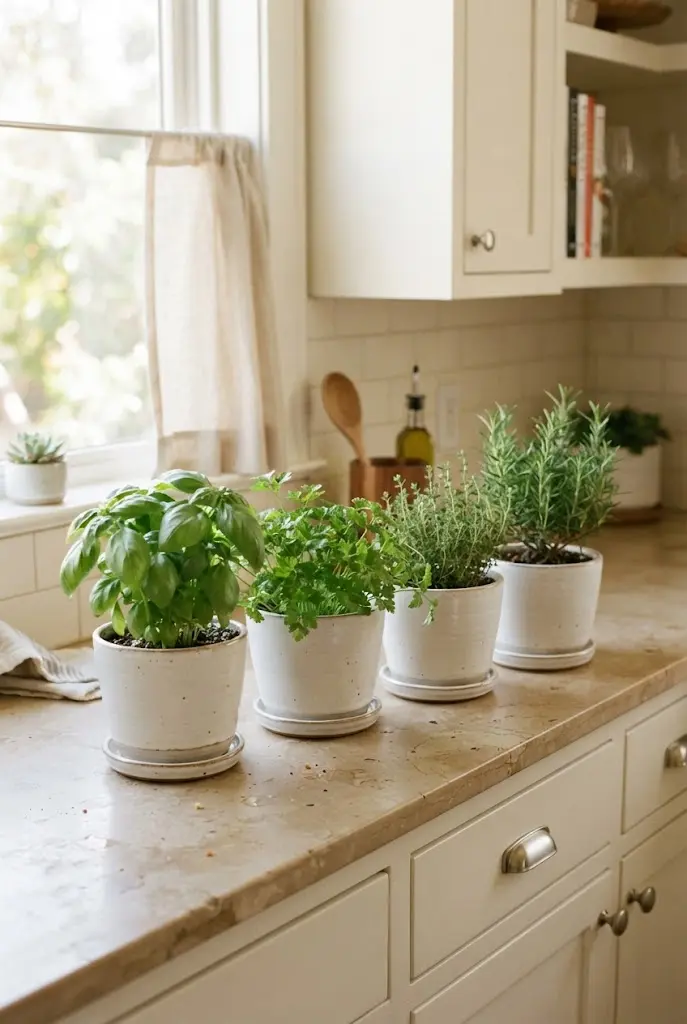
White ceramic pots create a clean and timeless herb display.
They work especially well in bright kitchens with neutral cabinetry.
Choose several matching pots for a coordinated appearance.
You can also mix shapes and sizes for a more relaxed arrangement.
Basil and parsley provide fresh green contrast against white surfaces.
Place the pots on a counter, open shelf, or sunny windowsill.
A small tray beneath the containers can protect the surface from moisture.
Simple ceramic plant markers can help keep the collection organized.
The clean color makes the herbs become the main visual focus.
This idea suits modern, farmhouse, Scandinavian, and traditional American kitchens.
10. Herb Planters on a Kitchen Shelf
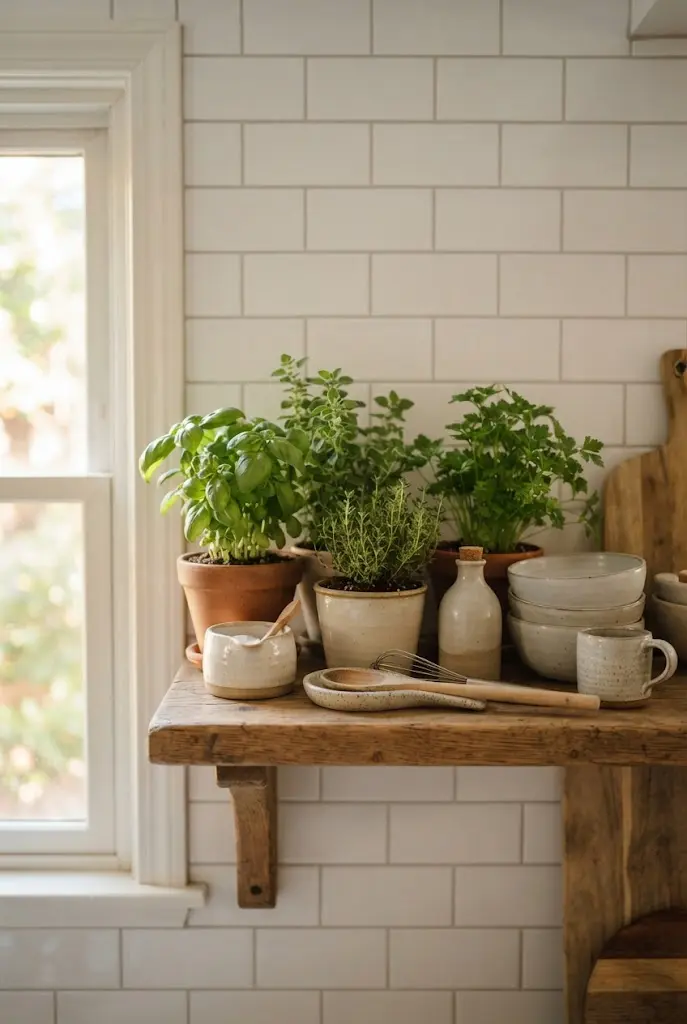
An open kitchen shelf can become a convenient home for small herb plants.
Arrange compact pots where they receive enough natural light.
Keeping herbs near the cooking area makes harvesting especially convenient.
Use matching containers for a neat look or mix materials for a more collected style.
Place herbs beside wooden cutting boards, ceramic dishes, or natural baskets.
Avoid overcrowding the shelf so every plant has room for healthy growth.
A small tray can collect minor water drips and protect the shelf.
Rotate plants if necessary based on their light exposure.
Fresh greenery can soften the straight lines of modern kitchen shelving.
This is an easy decor update that also has a practical purpose.
11. Galvanized Bucket Herb Garden
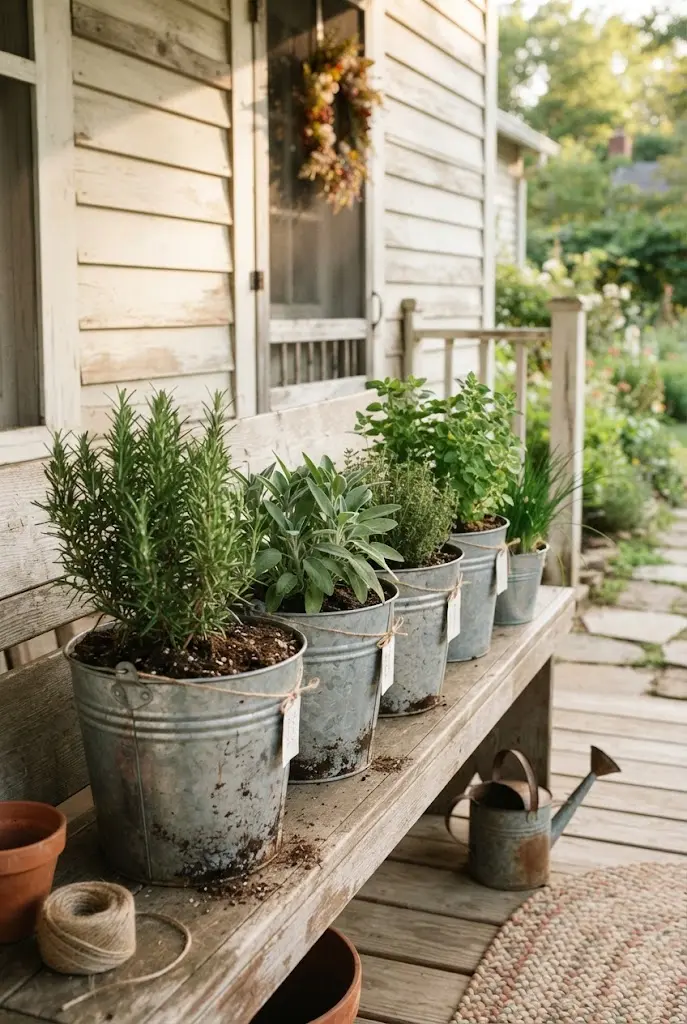
Small galvanized buckets can create a casual farmhouse-inspired herb garden.
Their silver finish provides an attractive contrast with vibrant green foliage.
Choose appropriately sized buckets with drainage prepared for container gardening.
Group several containers together for a cohesive outdoor display.
They work especially well on porches, patios, garden paths, or near a kitchen door.
Use herbs such as rosemary, sage, thyme, and oregano for a fragrant arrangement.
Wooden plant labels can soften the industrial appearance of the metal.
The buckets can be moved when seasonal conditions or sunlight change.
Avoid leaving containers in locations where excessive heat or water buildup could harm plants.
This is a simple way to combine farmhouse character with practical herb growing.
12. Window Box Herb Planter
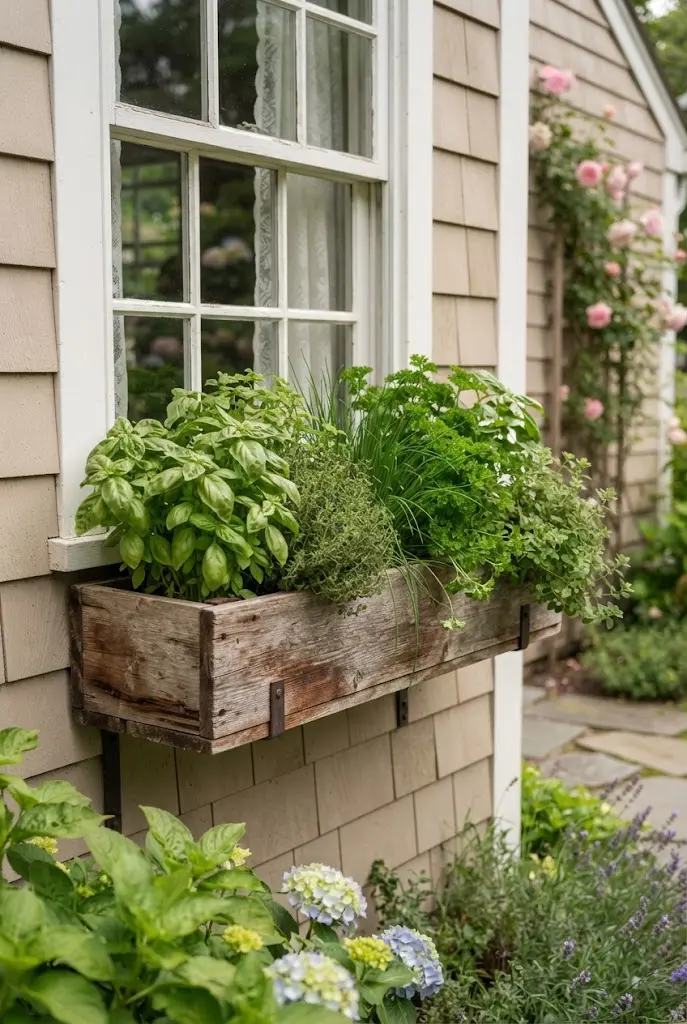
A window box can turn an ordinary window into a small herb garden.
Choose a box with enough depth and width for the selected herbs.
Basil, parsley, thyme, chives, and oregano can create an attractive mixed planting.
Place the box where it receives suitable sunlight throughout the day.
Make sure it is securely installed before filling it with soil and mature plants.
A wooden box offers rustic warmth, while painted versions can suit traditional homes.
The greenery can add visual interest to a kitchen or exterior window.
Regular harvesting keeps useful herbs close at hand.
Good drainage is important because window boxes can receive rain as well as watering.
This idea works especially well for suburban homes with limited garden space.
13. Small Herb Pots on a Patio Table
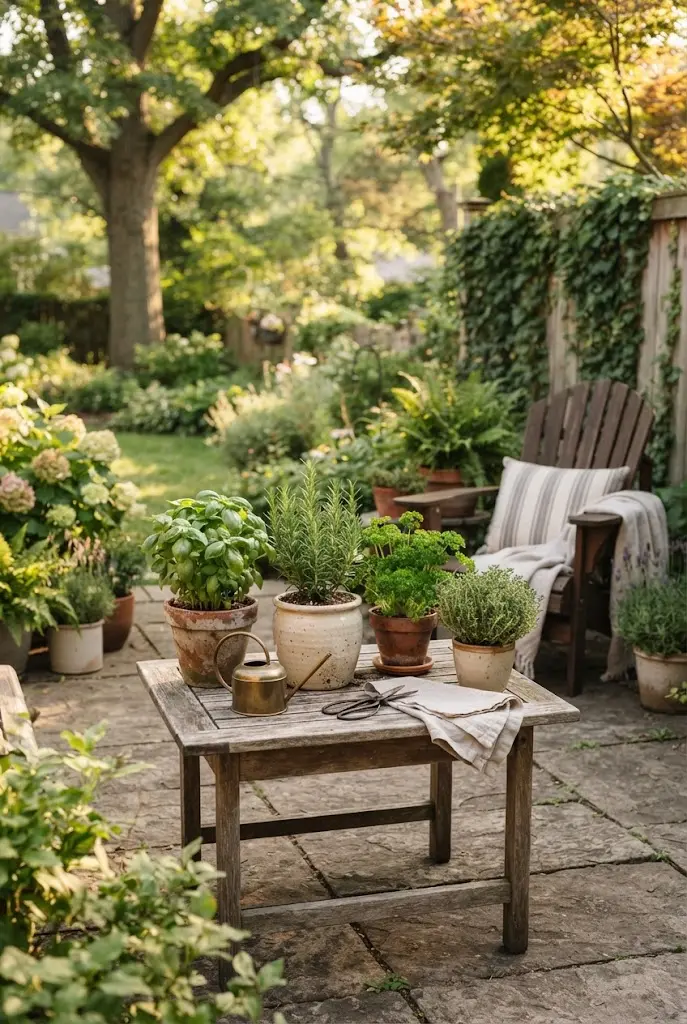
A patio table can provide a convenient spot for compact herb planters.
This setup keeps fresh herbs close to outdoor dining and cooking areas.
Use a shallow tray to group several small containers together.
Choose herbs that fit the available sunlight and climate conditions.
Terracotta, ceramic, or simple stone-colored pots can complement outdoor furniture.
A small rosemary plant can add both fragrance and texture to the arrangement.
Basil and parsley provide softer green foliage for contrast.
Keep the table functional by avoiding overly crowded containers.
Move delicate plants when weather conditions become unsuitable.
This simple setup adds a fresh garden accent without requiring a dedicated planting bed.
14. Herb Garden in a Wooden Trough
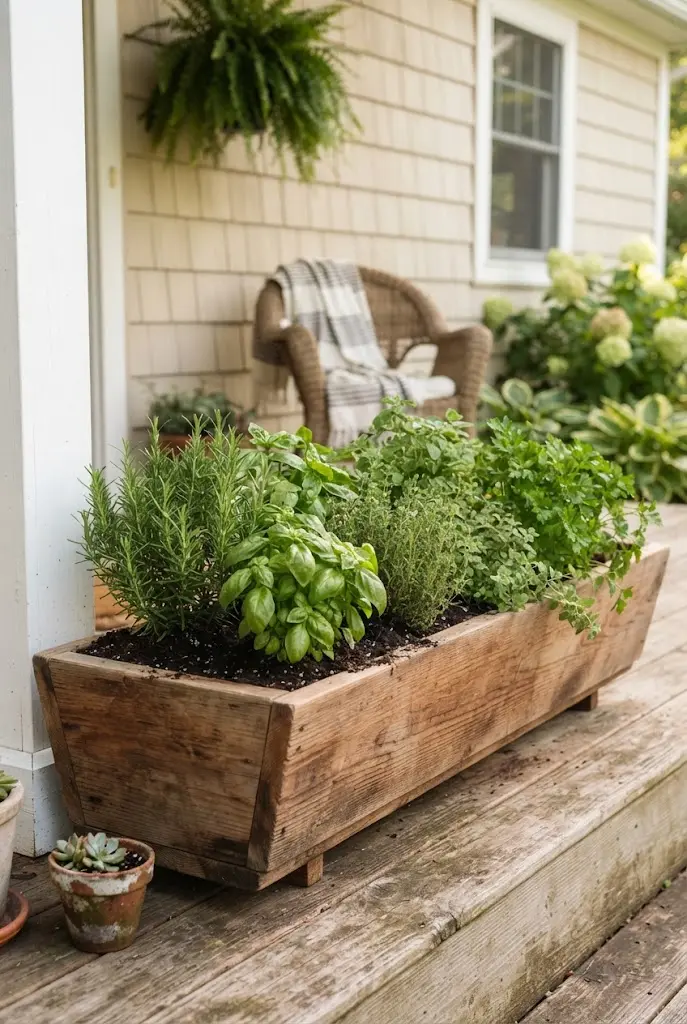
A long wooden trough can hold several herbs in one organized planter.
Its elongated shape works nicely along patios, porch railings, or garden paths.
Choose herbs with similar watering and light preferences when planting together.
The container can become a natural visual border beside an outdoor seating area.
Natural wood complements green foliage and other organic garden materials.
Leave enough space between plants to support healthy growth.
A quality drainage setup helps prevent water from collecting around roots.
The trough can be labeled with small wooden markers for easy identification.
Harvesting several herbs from one container can make everyday cooking more convenient.
It is a simple alternative to creating a permanent garden bed.
15. Wall-Mounted Herb Planters
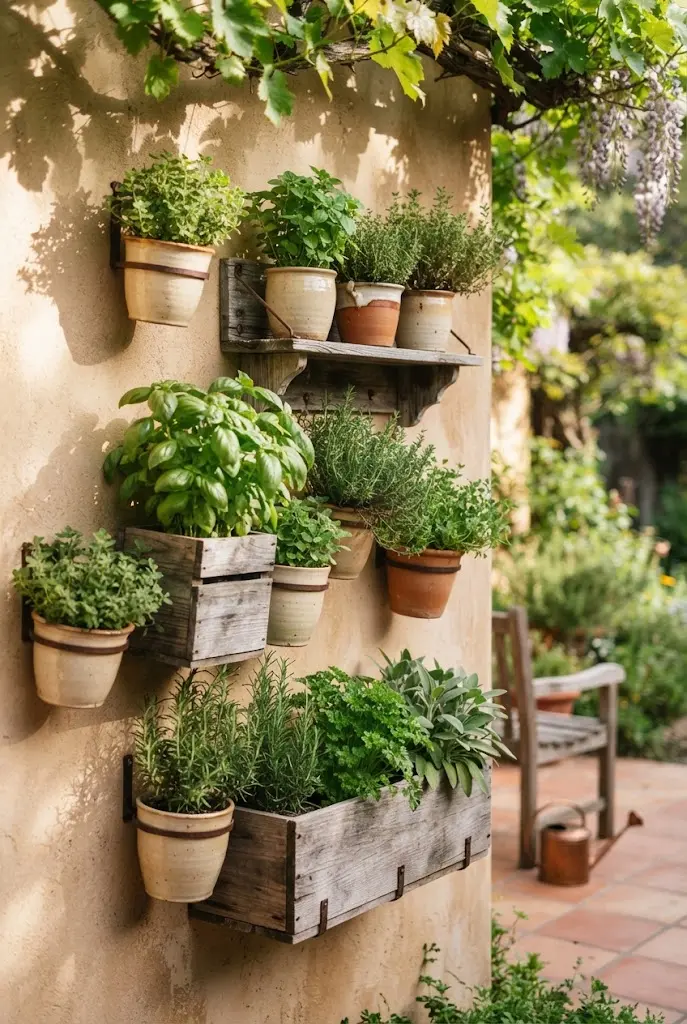
Wall-mounted planters make excellent use of vertical space.
They are particularly useful for patios, balconies, kitchens, and narrow outdoor areas.
Install them securely on a suitable wall or support structure.
Use compact herbs that will not become too heavy for the containers.
Arrange several planters in an offset pattern instead of a rigid row for visual interest.
Natural wood and ceramic finishes can create a warm organic appearance.
Keep each plant accessible enough for watering and harvesting.
A vertical garden can also turn a plain wall into a lively focal point.
Choose the installation location according to the plants’ sunlight requirements.
This idea brings greenery upward while preserving valuable floor space.
16. Herb Planters on a Porch Step
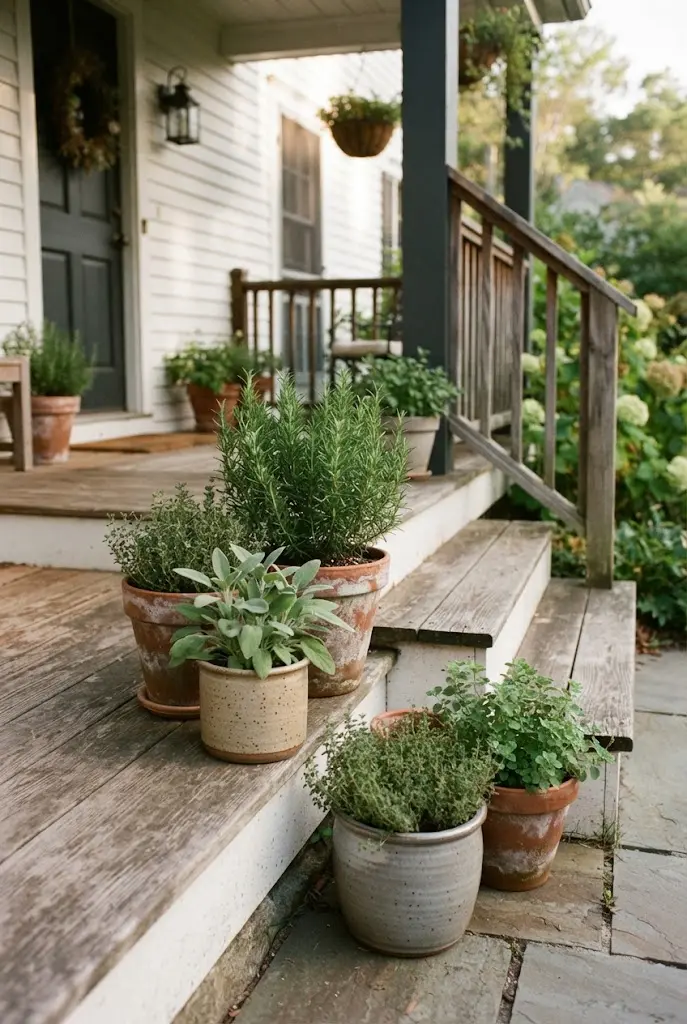
A wide porch step can become a simple location for small herb pots.
Use sturdy containers that do not interfere with safe walking paths.
Group the plants toward one side of the step for an organized arrangement.
Terracotta pots provide a classic look against wood or stone porch surfaces.
Rosemary, thyme, oregano, and sage can add attractive texture and fragrance.
Make sure the plants receive enough sunlight for their specific needs.
A few different pot heights can create a more natural composition.
Avoid placing containers where they could easily be knocked over.
This approach works especially well for homes with covered front or back porches.
It adds a subtle garden touch without requiring extensive landscaping.
17. Recycled Can Herb Planters
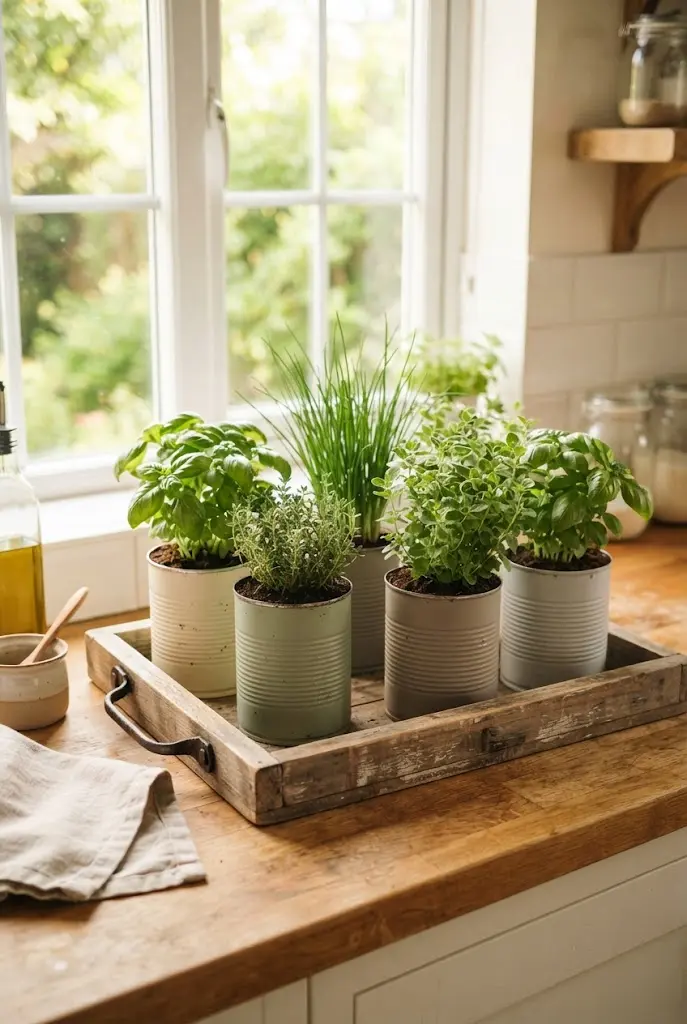
Clean recycled cans can be transformed into small herb containers.
This idea provides an inexpensive way to reuse everyday household materials.
Make sure containers are thoroughly cleaned and prepared before planting.
Appropriate drainage holes are important for container-grown herbs.
Painted or naturally finished cans can suit different home decorating styles.
Small herbs such as thyme, chives, and oregano fit well into compact containers.
Arrange several cans on a wooden tray or shelf for a tidy display.
Simple plant labels can make the collection more practical.
Use safe, durable finishes if decorating the outside of the cans.
This approach combines creativity, reuse, and beginner-friendly gardening.
18. Herb Planter Basket
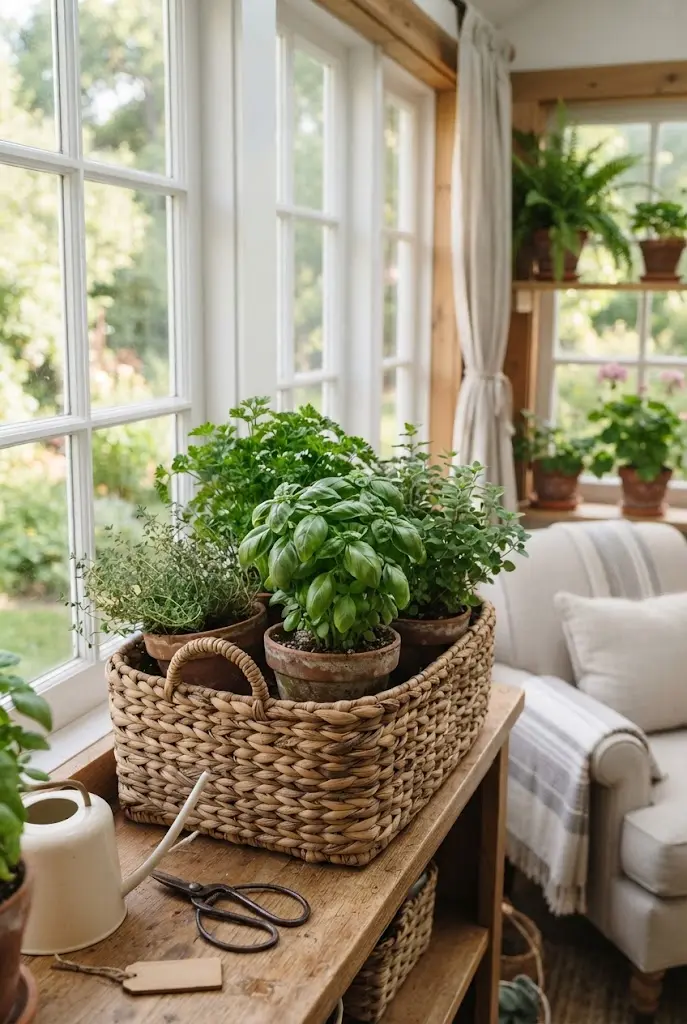
A sturdy basket can create a soft natural container for a small herb garden.
Use a suitable liner or inner container to protect the basket from excessive moisture.
Natural woven textures complement the greenery beautifully.
A basket planter works well in kitchens, sunrooms, covered patios, and porches.
Choose herbs that remain compact enough for the container.
Basil, parsley, thyme, and oregano can create a useful combination.
Place the basket where watering and drainage will not damage the surrounding surface.
The organic texture can make the garden feel warm and relaxed.
A basket also works nicely with boho, cottage, and farmhouse interiors.
It is an easy way to soften the look of conventional plant containers.
19. Herb Planters on a Rolling Cart
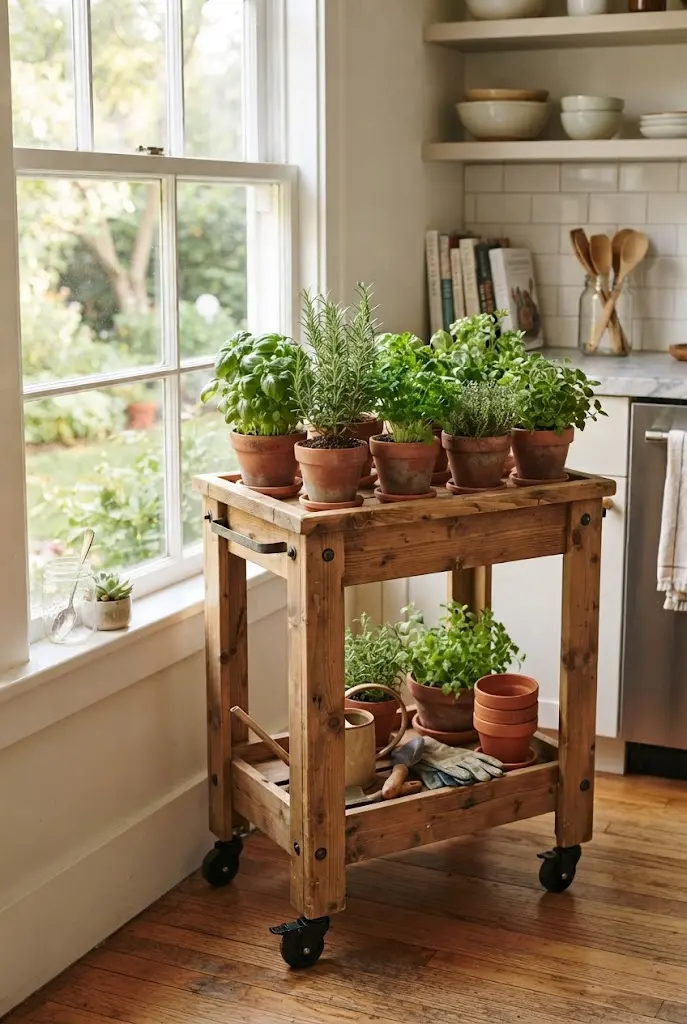
A small rolling cart can provide a flexible home for container herbs.
This is useful when plants need to be moved to follow sunlight or avoid severe weather.
Choose a sturdy cart that can safely support the combined weight of containers and soil.
Place smaller herb pots on different levels for a layered appearance.
Wooden carts create a warm rustic feeling, while metal carts can look more contemporary.
The cart can be positioned near a sunny kitchen window or patio door.
Keep enough space around the plants for easy watering and harvesting.
A tray can help protect shelves from small water spills.
The movable design makes this setup especially useful in compact homes.
It also creates a flexible gardening station that can change with the seasons.
20. Stone Pot Herb Garden
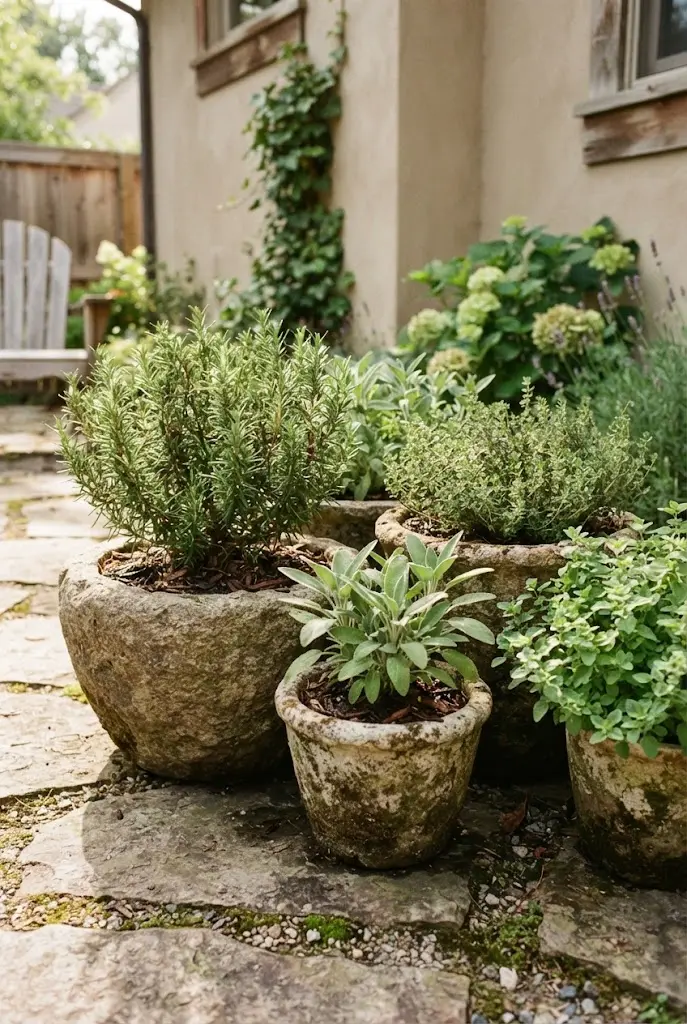
Stone or stone-look containers can give an herb garden a grounded natural appearance.
Their neutral colors work well with both modern and traditional outdoor spaces.
Use appropriately sized pots for herbs that need more room to develop.
Rosemary and sage look especially attractive against textured stone surfaces.
Arrange several containers near a patio, garden entrance, or sunny wall.
Mixing stone pots with wooden elements can create a balanced organic display.
Ensure each container provides suitable drainage for its plants.
The heavier material can also help keep containers stable in outdoor areas.
A simple grouping can look polished without requiring elaborate landscaping.
This style works particularly well for homes with natural stone or neutral exterior finishes.
21. Rustic Ladder Herb Garden
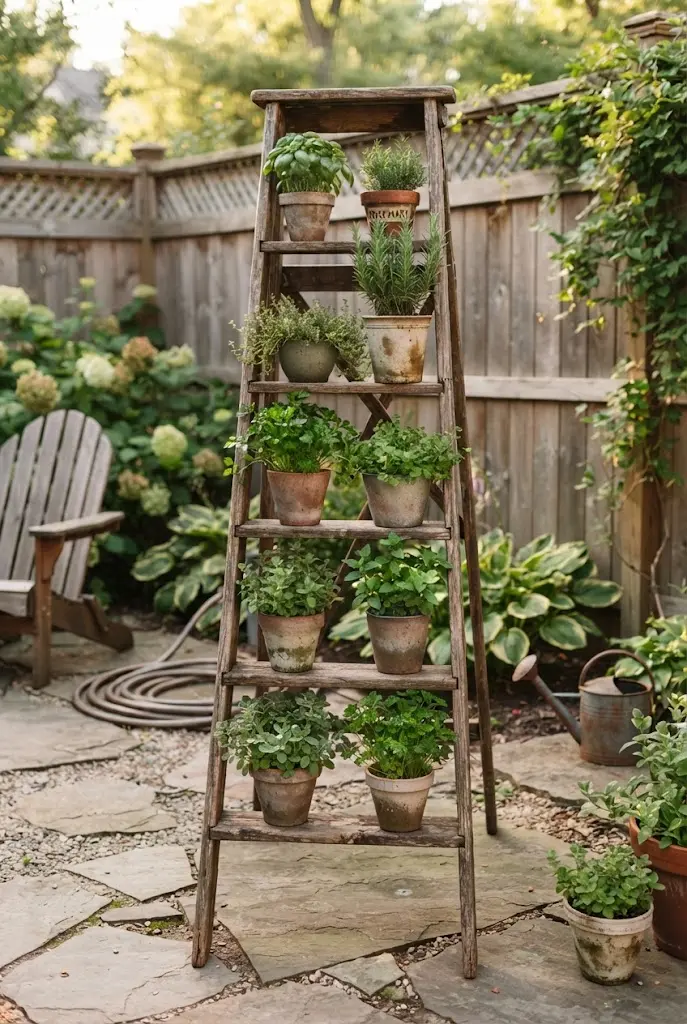
An old wooden ladder can be repurposed as a vertical plant display.
Place stable containers on the ladder steps to create several levels of greenery.
This makes good use of vertical space in a small garden or covered patio.
Use lightweight pots and make sure the ladder is positioned securely.
Arrange taller plants toward the upper or rear sections and shorter herbs in front.
Natural wood adds rustic warmth and complements green foliage.
The uneven levels create a more interesting composition than a traditional plant shelf.
Keep watering access in mind when arranging the containers.
This can be a charming addition to farmhouse and cottage-style outdoor spaces.
It is a creative way to turn an unused household item into a useful garden feature.
22. Minimalist Black Herb Pots
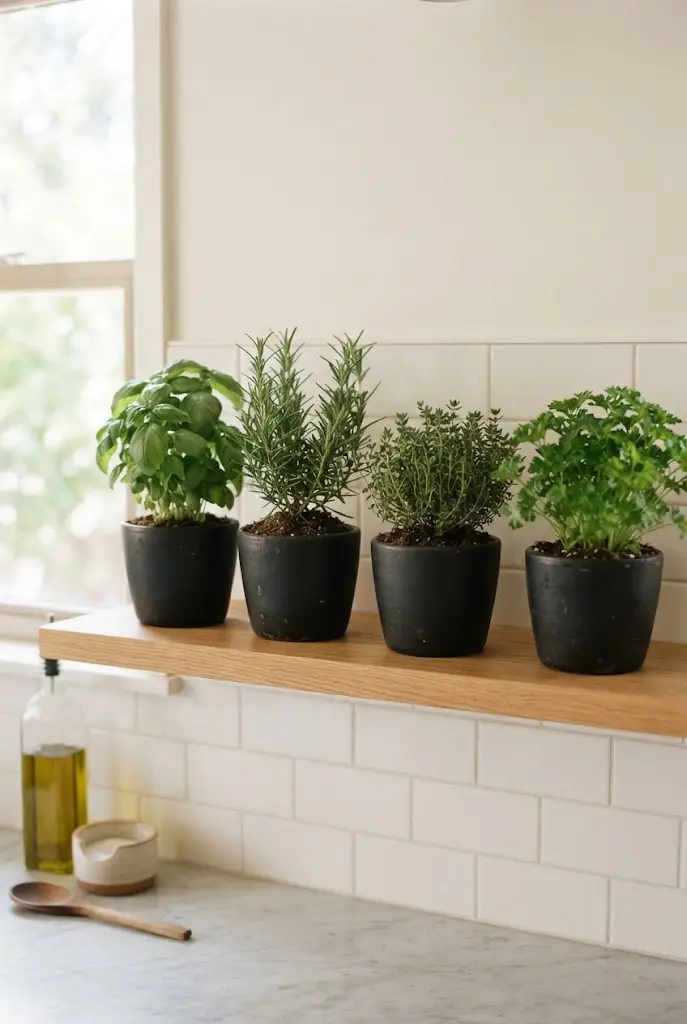
Black planters can create a clean contemporary contrast with fresh green herbs.
They work especially well in modern kitchens, balconies, and patios.
Choose simple shapes without excessive decoration for a minimalist appearance.
Place several pots together to create a cohesive collection.
Basil, rosemary, thyme, and parsley provide varied leaf shapes and textures.
A light wood shelf can soften the dark containers.
Keep the arrangement uncluttered so the greenery remains the focal point.
Good drainage is still essential regardless of the planter style.
This idea can fit easily into many modern American apartments and homes.
The result is simple, functional, and visually polished.
23. Herb Planters in a Sunny Sunroom
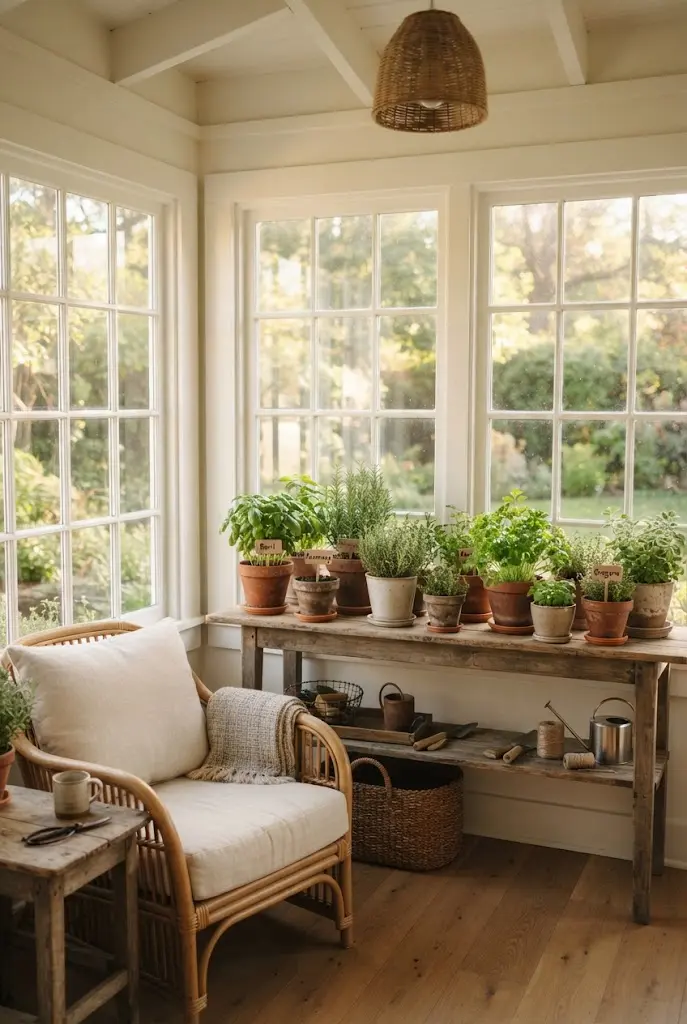
A sunny sunroom can provide a bright environment for a collection of container herbs.
Use compact pots that can be arranged around windows without blocking natural light.
Basil and parsley can create a fresh green focal point.
Rosemary and thyme add texture and fragrance to the collection.
Natural wood furniture and woven baskets can complement the plants.
Use trays underneath containers to protect flooring from water.
Keep plants positioned according to their individual light requirements.
A sunroom garden can become both decorative and useful for cooking.
The greenery can make the room feel more connected to an outdoor garden.
This setup is particularly attractive during seasons when outdoor gardening is limited.
24. Hanging Window Herb Rail
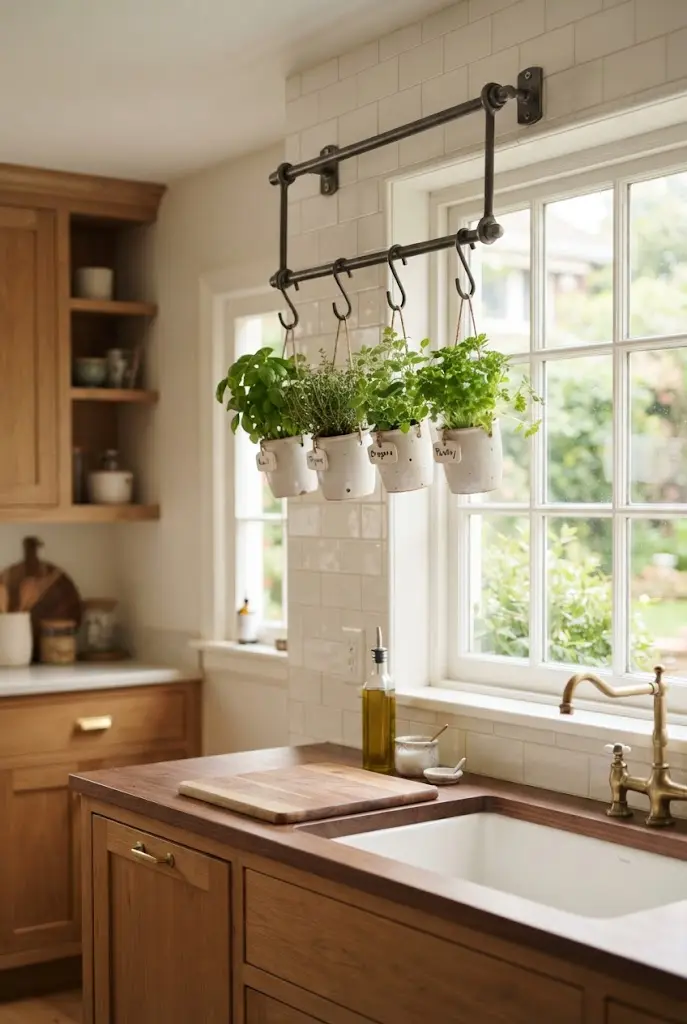
A narrow rail beneath or beside a sunny window can hold small hanging herb containers.
This approach makes use of vertical space while keeping the counter clear.
Use secure hooks and containers appropriate for the weight of mature plants.
Small herbs can create an attractive row of greenery near a cooking area.
Choose containers that complement the kitchen’s existing materials.
Natural wood, ceramic, or simple metal finishes can work well.
Leave enough space between plants for air movement and maintenance.
Position them where they receive suitable natural light.
The setup can be especially useful in smaller apartments.
It creates a compact herb garden without requiring a large countertop footprint.
25. Herb Planter in a Raised Garden Bed
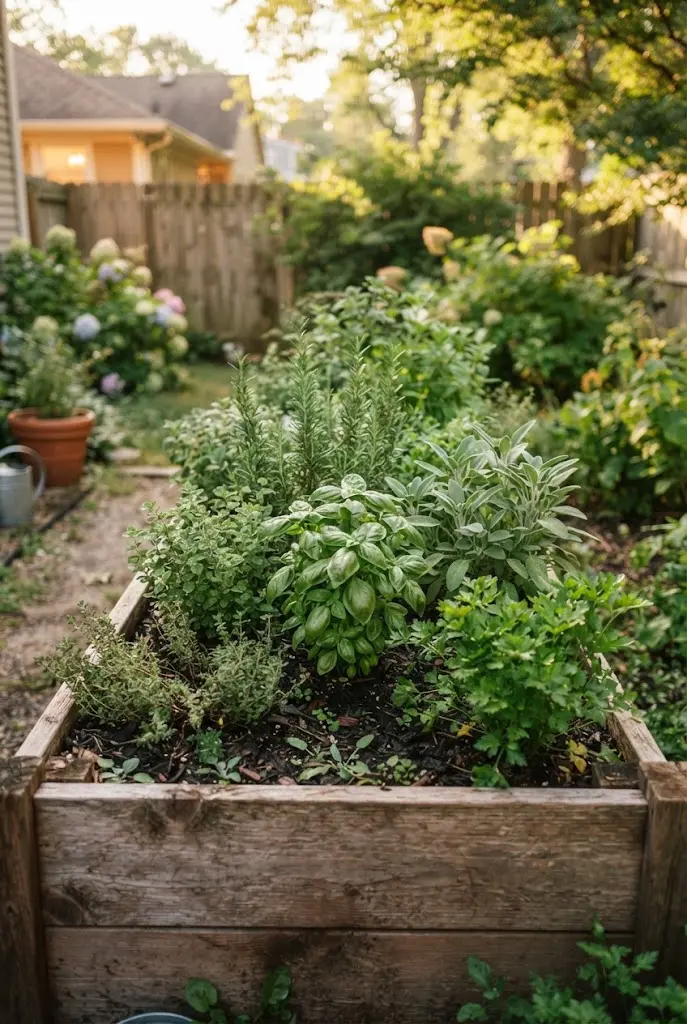
A raised garden bed can dedicate one section specifically to culinary herbs.
This gives herbs a defined area while keeping them organized outdoors.
Use a sunny location with suitable soil and drainage.
Arrange taller herbs behind shorter varieties to improve visibility.
Rosemary, sage, thyme, oregano, basil, and parsley can create a varied planting.
Wooden raised beds complement many American backyard garden styles.
Mulch can help give the area a finished appearance and reduce exposed soil.
Labels can make it easier to identify each herb throughout the growing season.
Keep the planting arrangement practical enough for easy harvesting.
This is a useful choice for homeowners who want herbs integrated into a larger garden.
26. Small Balcony Herb Garden
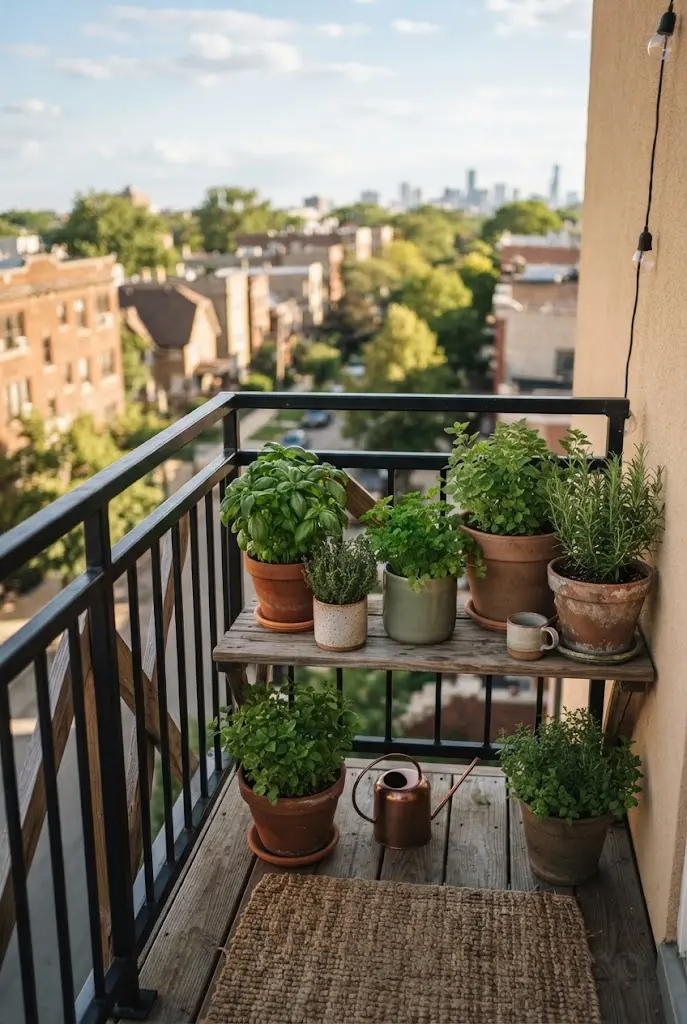
A balcony can support a compact herb garden with carefully selected containers.
Use rail-safe planters or stable pots that do not obstruct walkways.
Choose herbs based on the amount of sunlight available on the balcony.
Vertical shelves can provide additional growing space without using much floor area.
Basil, thyme, parsley, and oregano can work well in compact arrangements.
Neutral containers can help keep a small balcony visually calm.
A small watering can and tray can make maintenance more convenient.
Group plants according to their light and watering needs.
The greenery can make an apartment balcony feel more welcoming.
This idea is practical for urban U.S. renters and homeowners with limited outdoor space.
27. Concrete Herb Planters
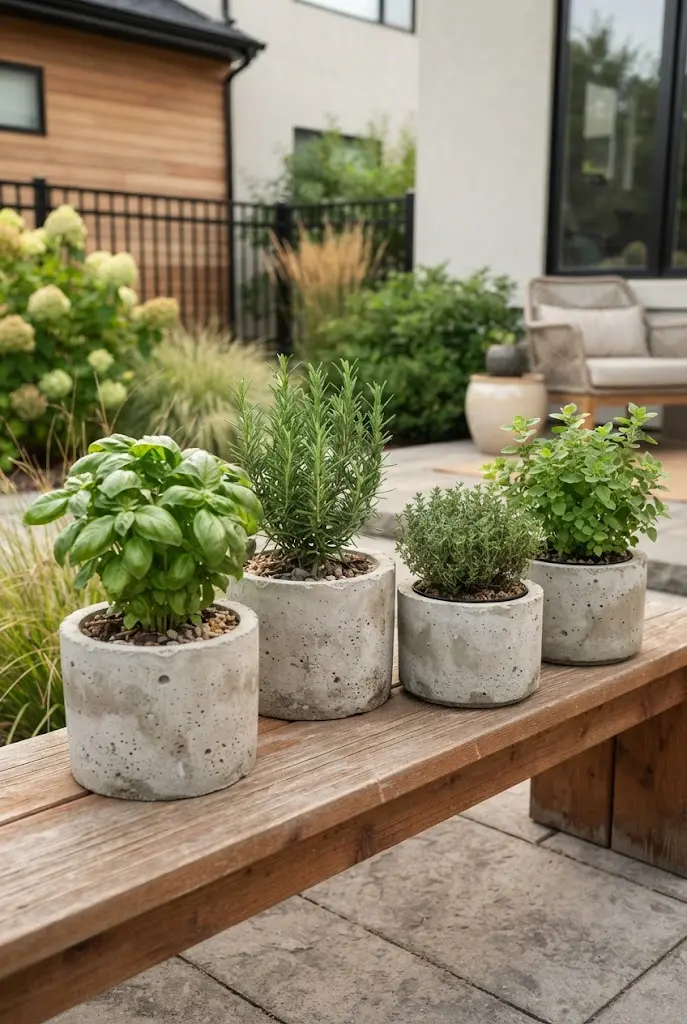
Simple concrete planters can give an herb garden a modern architectural look.
Their neutral gray surface provides strong contrast with bright green foliage.
Use compact concrete containers for kitchens, patios, or modern balconies.
Small herbs can be grouped together for a clean contemporary arrangement.
Pairing concrete with warm wood can prevent the display from feeling too cold.
Good drainage remains important for healthy container-grown herbs.
The substantial weight of concrete can help keep outdoor planters stable.
Choose container sizes that are practical to move if necessary.
The simple material works well with modern American home exteriors.
This idea combines minimal design with everyday gardening functionality.
28. Herb Garden on a Kitchen Cart
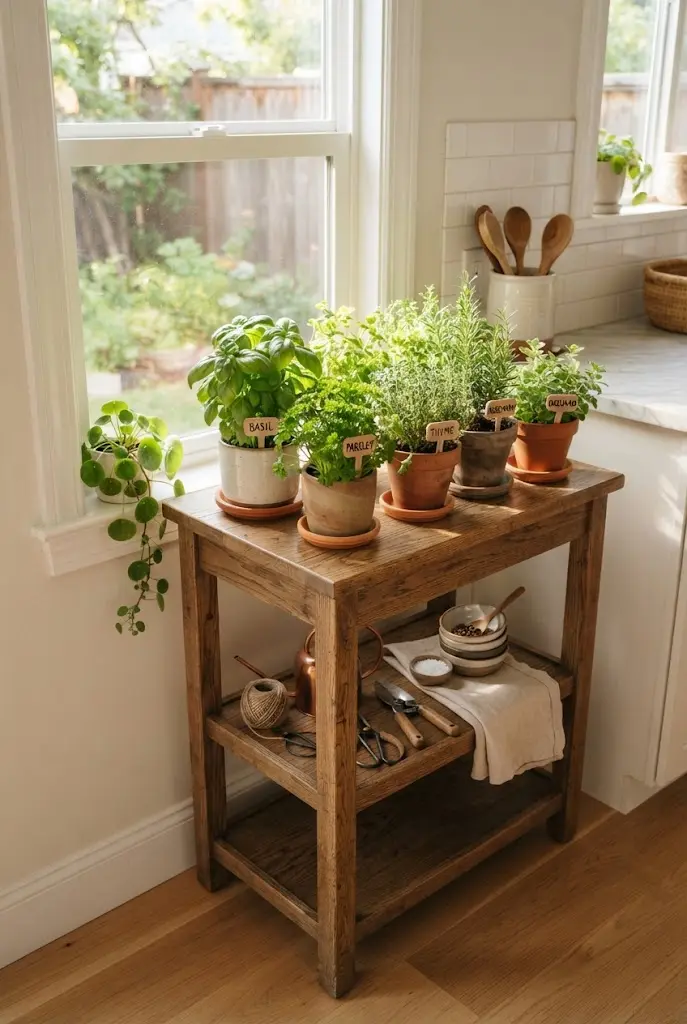
A compact kitchen cart can become a movable herb-growing station.
Place small pots on the top shelf for easy access while cooking.
The lower shelf can hold gardening tools, a watering can, or extra containers.
Wooden carts suit farmhouse kitchens, while simple metal carts work in modern spaces.
Keep the cart close to a bright window when possible.
Choose containers that fit securely without making the cart unstable.
A removable tray can protect the surface from water.
The mobile setup can be moved when cleaning or changing the kitchen arrangement.
Fresh herbs can add natural color to an otherwise neutral cooking space.
This idea combines organization, decoration, and practical gardening in one small footprint.
29. Herb Planters Along a Garden Path
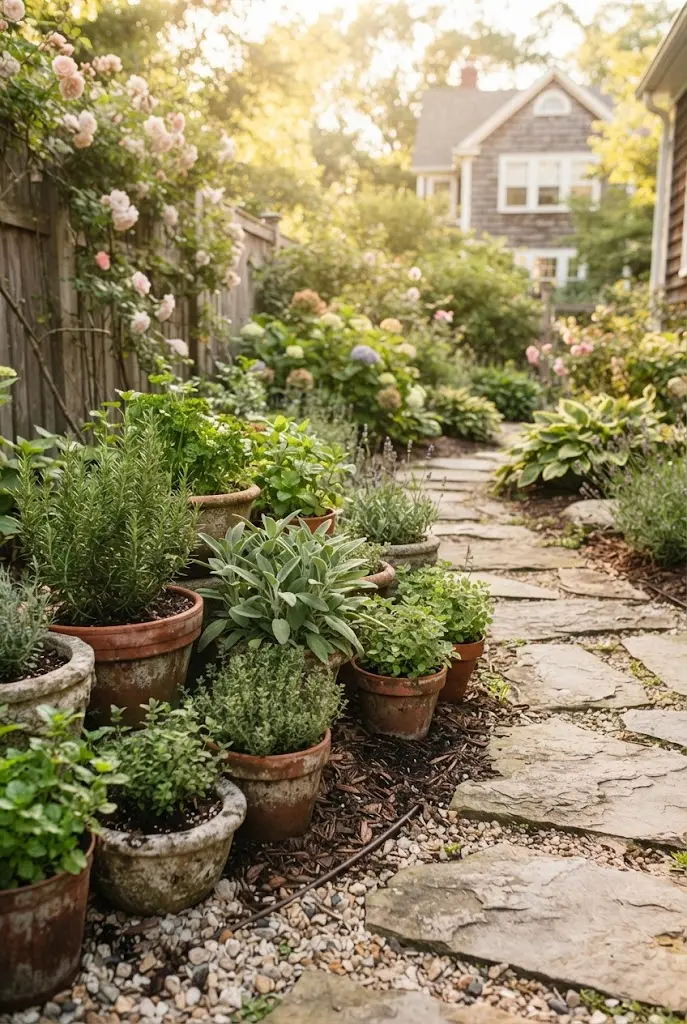
Small herb containers can add greenery beside a garden path.
Use sturdy planters that can handle outdoor conditions.
Arrange them with enough space so the walkway remains comfortable and safe.
Terracotta or stone containers can blend naturally with garden surroundings.
Rosemary, sage, thyme, and oregano add varied foliage and pleasant fragrance.
The planters can create a transition between the home and larger garden areas.
Choose locations that provide the appropriate amount of sunlight.
Grouping containers in uneven sizes can create a relaxed natural appearance.
Keep the design simple so the pathway remains the main circulation area.
This idea adds useful herbs without requiring a dedicated garden bed.
30. Colorful Painted Herb Pots
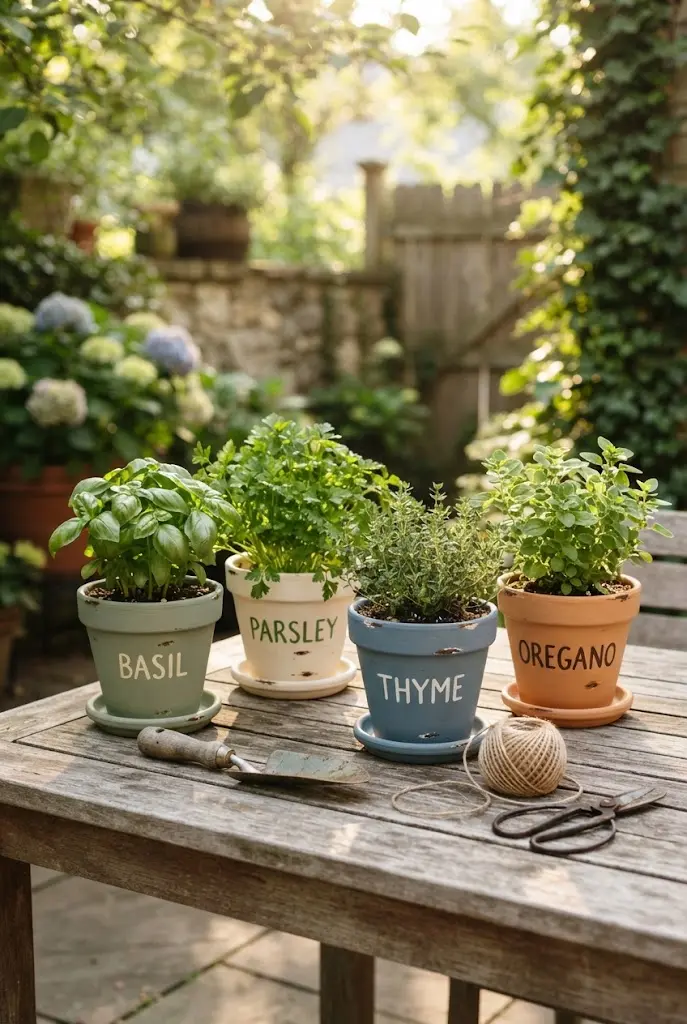
Painted pots can add personality to a simple herb garden.
Choose colors that complement the surrounding kitchen or outdoor space.
Soft greens, warm creams, muted blues, and earthy terracotta tones can create a natural palette.
Use suitable containers and finishes designed for the intended environment.
Small pots can be grouped on a shelf, windowsill, or patio table.
Keep the plant labels simple so the colorful containers remain the main decorative feature.
Basil, parsley, thyme, and oregano provide a lively green contrast.
A coordinated color palette can make several different containers feel intentional.
This idea is particularly useful when you want the herb garden to double as decor.
It offers an easy way to personalize ordinary planters without changing the plants themselves.
31. Herb Planters in a Farmhouse Entryway
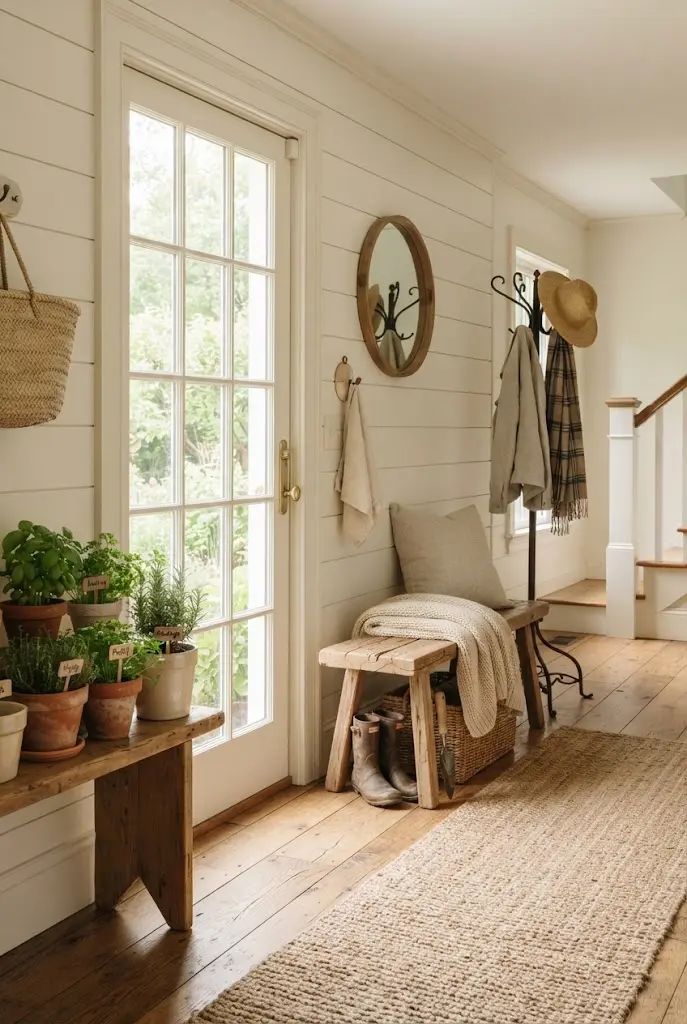
A bright farmhouse entryway can accommodate a few compact herb planters.
Place them near a sunny window or glass door where the plants receive appropriate light.
Simple ceramic or terracotta pots can complement farmhouse materials.
Wooden benches, baskets, and natural textiles can enhance the organic feeling.
Keep the arrangement compact so the entryway remains functional.
Basil, thyme, parsley, and rosemary can provide varied textures.
A small tray can help protect the floor from moisture.
The greenery can make an entry area feel fresh and welcoming.
Choose plant locations that do not interfere with doors or walking paths.
This approach brings a subtle garden element into an everyday transition space.
32. Mixed Herb Container Collection
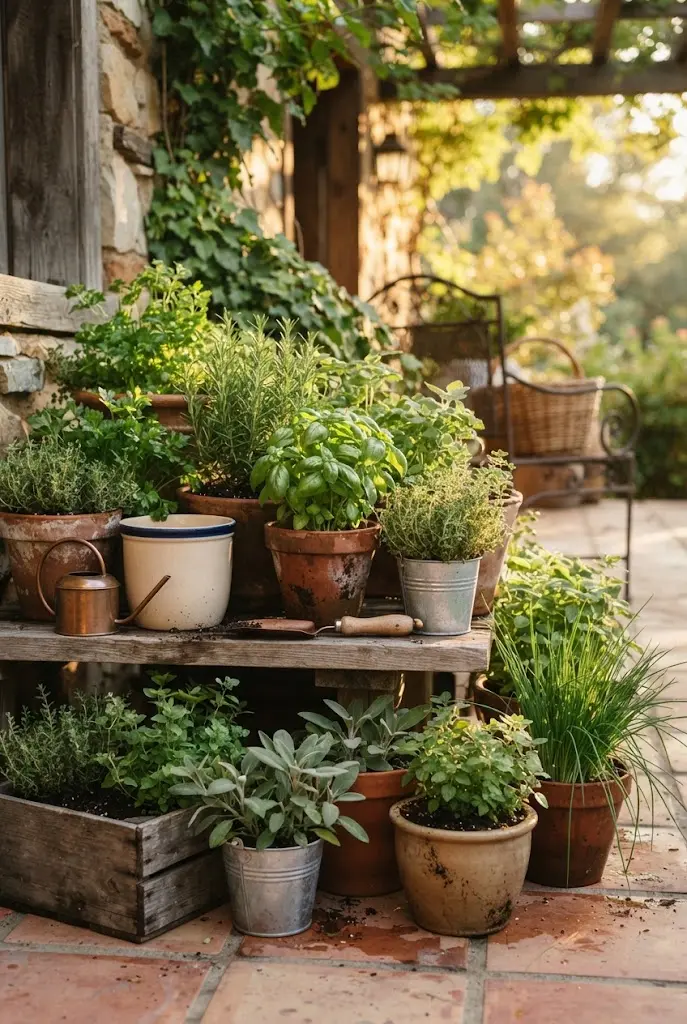
A mixed collection of simple containers can create a relaxed and personalized herb garden.
Combine terracotta, ceramic, wood, and metal planters for a collected appearance.
Choose herbs according to their individual sunlight, watering, and space requirements.
Place larger containers toward the back and smaller ones toward the front.
Use the collection on a sunny patio, kitchen windowsill, porch, or balcony.
Different leaf shapes can make the garden feel naturally layered.
A few simple plant labels can keep the arrangement practical.
Avoid overcrowding so each herb has enough space to grow properly.
The mix-and-match approach allows you to use containers you already own.
It is an easy finishing idea for creating a useful and attractive home herb garden.