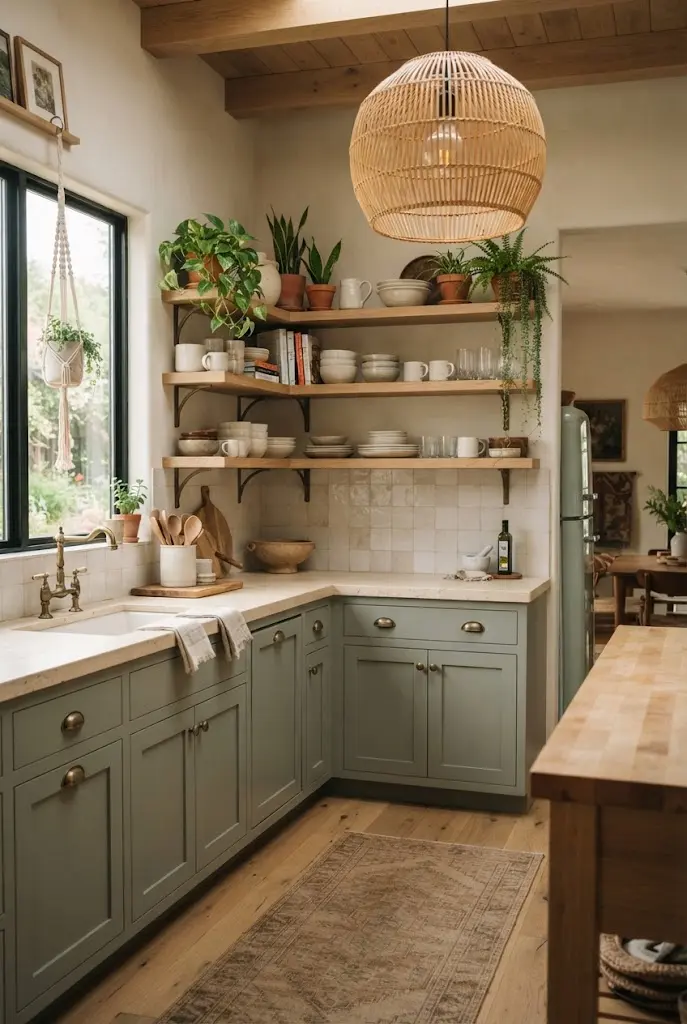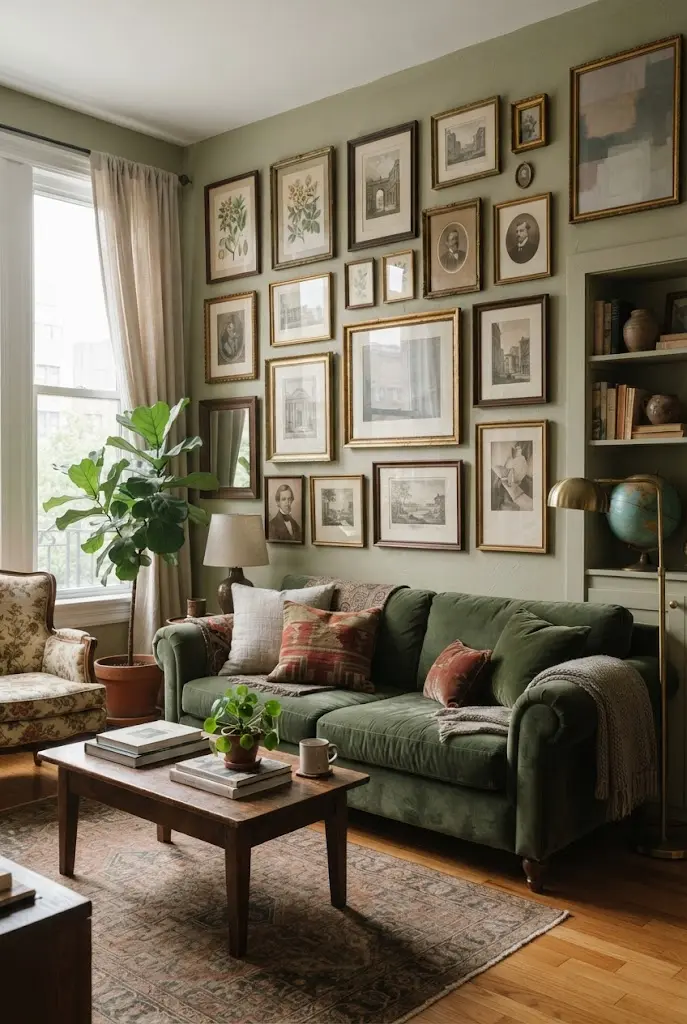
23 Essentials to Create a Cozy ’70s Vintage Kitchen Revival
A ’70s vintage kitchen brings together warm colors, natural textures, playful patterns, and nostalgic details.
From wood cabinetry and avocado-inspired greens to earthy tile and retro appliances, the style feels welcoming and lived-in.
You can recreate the character of a classic American kitchen without making the room feel outdated.
The key is to combine recognizable ’70s elements with practical modern conveniences.
Warm lighting, vintage accessories, and natural materials can instantly create a cozy atmosphere.
Even a few carefully selected details can give a contemporary kitchen a nostalgic personality.
These 23 essentials offer approachable ways to bring authentic ’70s charm into a modern American home.
1. Warm Wood Cabinets
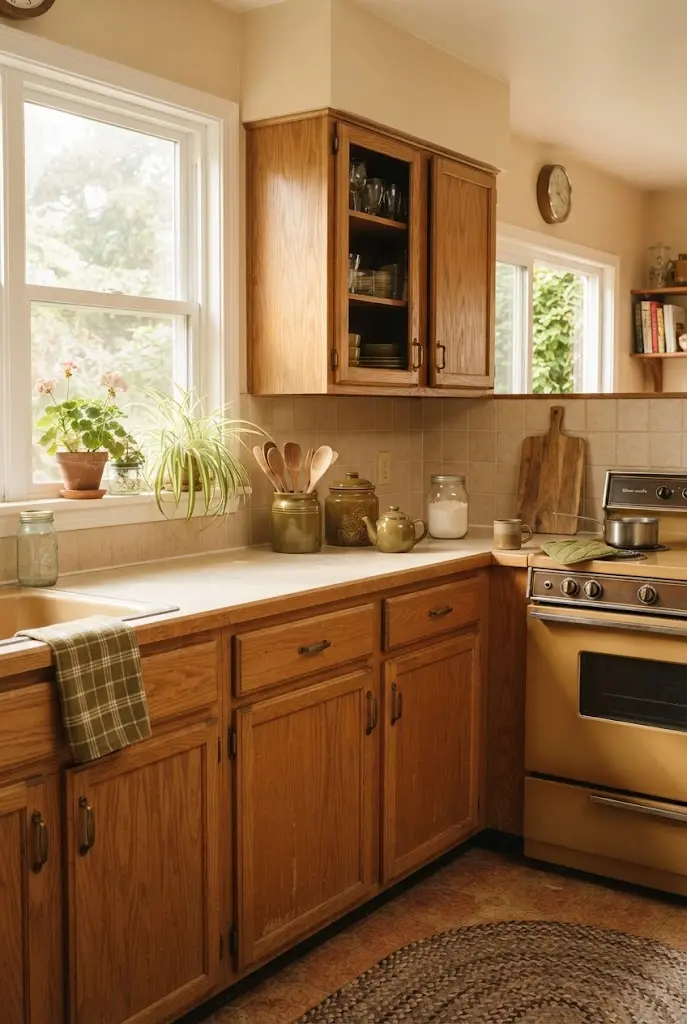
Wood cabinetry is one of the defining elements of a cozy ’70s kitchen.
Choose oak, walnut, teak-inspired finishes, or medium-toned wood with visible grain.
Flat or simple cabinet doors can give the kitchen an authentic period feeling.
Avoid making every surface perfectly polished because vintage kitchens often had natural variation.
Wood cabinets pair beautifully with cream, mustard, olive, and terracotta accents.
For an updated approach, keep the cabinetry traditional while using modern hardware.
Open shelving can also be added to display ceramics and vintage kitchenware.
Warm wood makes the room feel inviting and visually grounded.
It works particularly well in open-plan American homes where the kitchen connects to living spaces.
This single feature can establish the foundation for the entire ’70s revival.
2. Avocado Green Accents
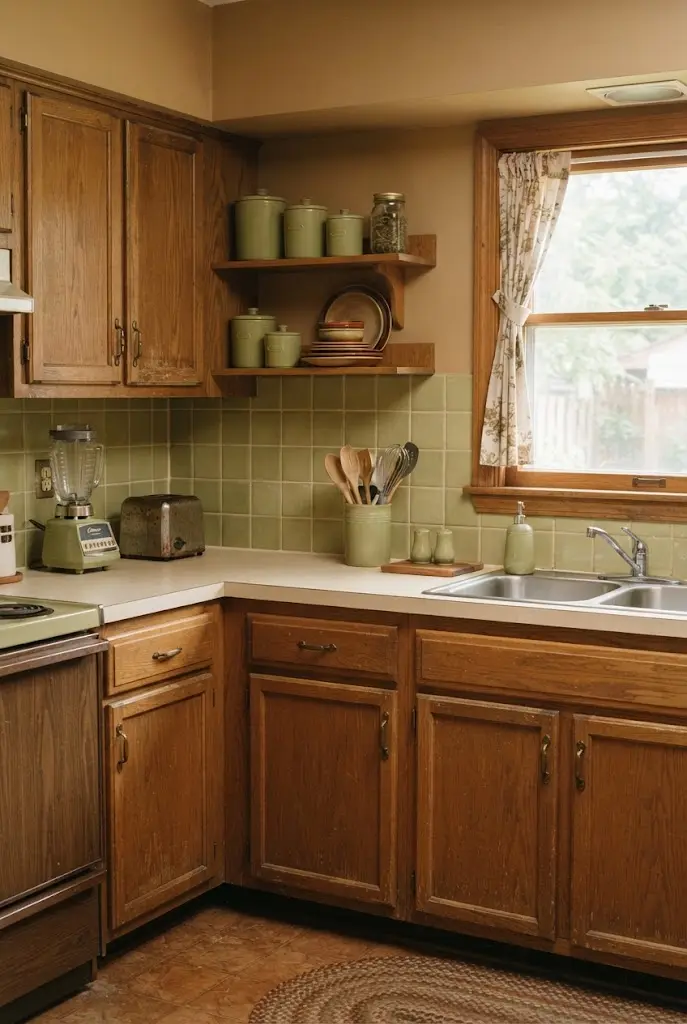
Avocado green instantly brings nostalgic ’70s character into a kitchen.
You do not need to cover the entire room in green to achieve the effect.
Use the shade on a backsplash, small appliance, tile, curtains, or decorative pottery.
Pair it with warm wood so the color feels natural rather than overwhelming.
Cream walls and countertops can soften stronger green elements.
Muted avocado tones tend to feel more authentic than extremely bright modern greens.
A vintage-style refrigerator can become a statement feature when available.
Green ceramic dishes can reinforce the color throughout the room.
Small repeated accents help create visual continuity.
The result is colorful, nostalgic, and surprisingly comfortable.
3. Retro Tile Backsplash
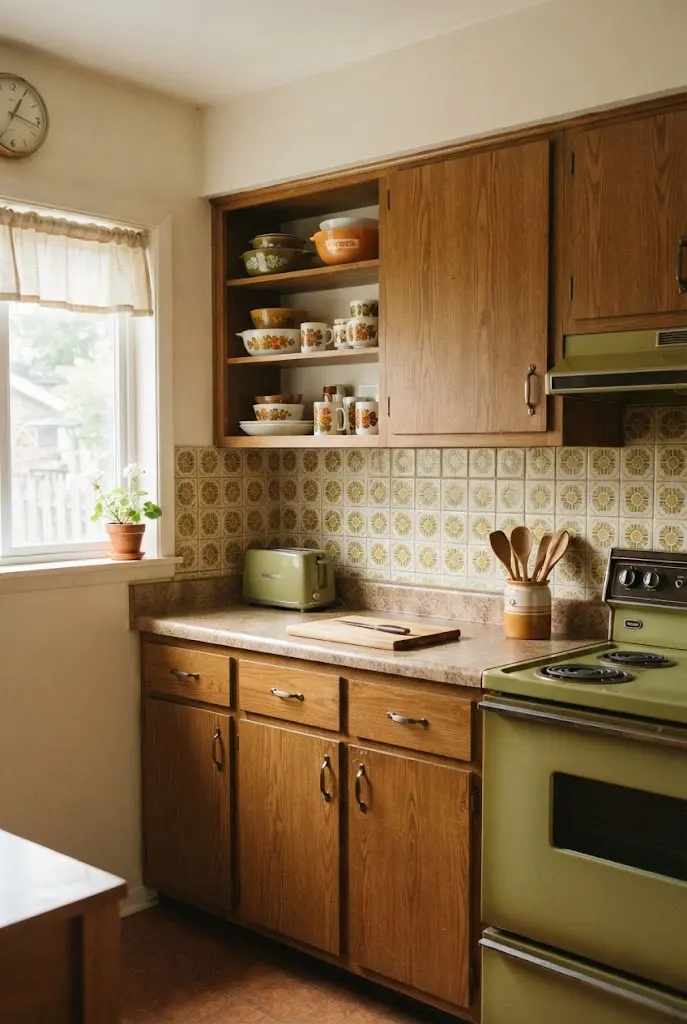
A patterned or colorful tile backsplash can immediately establish a vintage mood.
Small square tiles were common in many kitchens from the era.
Try earthy combinations such as cream, brown, olive, mustard, or rust.
Geometric patterns can add visual interest without requiring major remodeling.
Handmade-looking tile is another way to introduce natural variation.
Keep the rest of the kitchen relatively simple when using a bold backsplash.
This allows the tile to become the visual centerpiece.
A slightly imperfect surface can make the kitchen feel more authentic.
Modern grout can still be used for easier maintenance.
The finished look should feel inspired by the ’70s rather than like a themed showroom.
4. Earth-Toned Color Palette
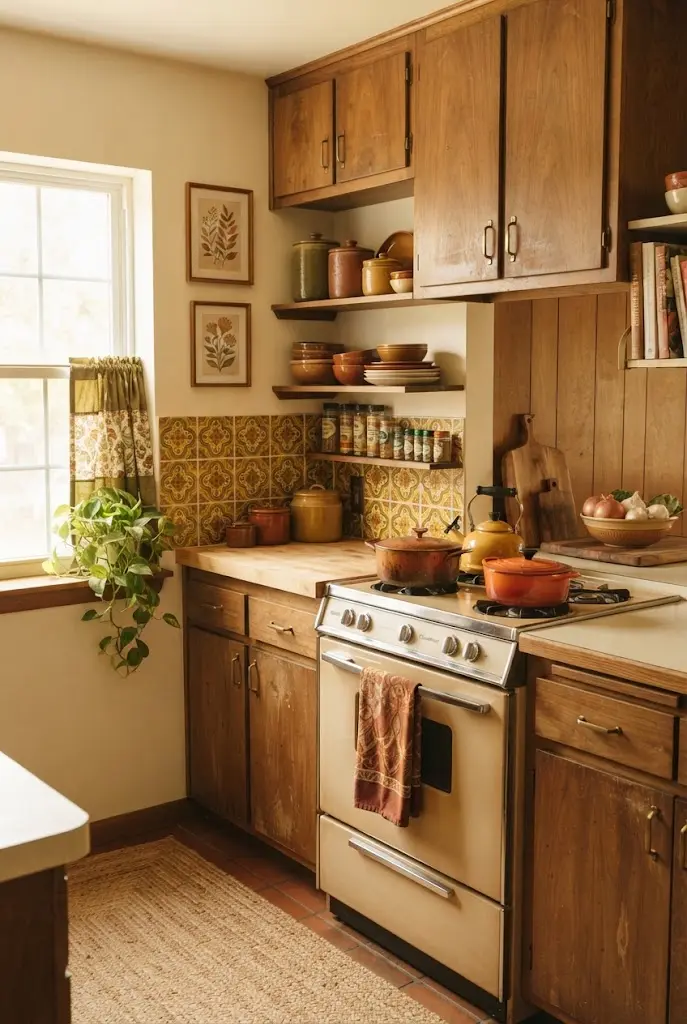
Earthy colors were central to many ’70s interiors.
Think burnt orange, mustard yellow, olive green, warm brown, beige, and rust.
These colors can be introduced through paint, textiles, artwork, and accessories.
A neutral base prevents the palette from feeling visually heavy.
Warm cream walls can provide a softer backdrop for stronger colors.
Wood naturally complements almost every shade in this palette.
Use two or three primary colors rather than introducing every retro shade at once.
Vintage-inspired colors work especially well under warm lighting.
They can make a large kitchen feel more intimate and comfortable.
The overall effect should resemble a relaxed American home from the period.
5. Vintage-Inspired Appliances
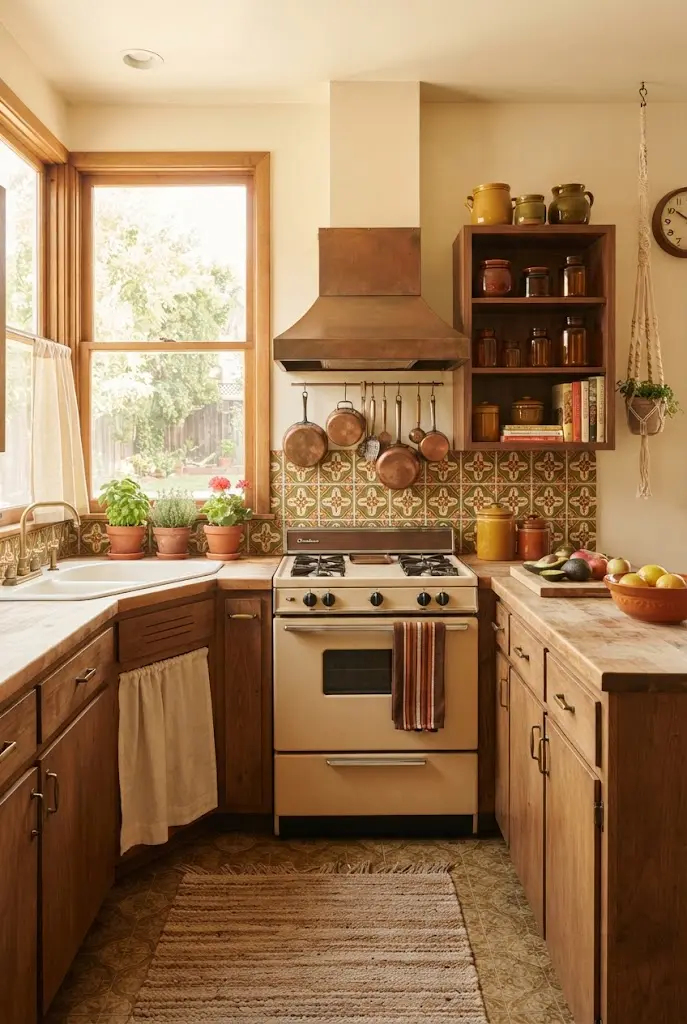
Retro-style appliances can become strong focal points in a kitchen revival.
Rounded edges and simple hardware can echo appliances from the 1970s.
A refrigerator or range in cream, muted green, or another period-inspired shade can work beautifully.
Modern versions provide contemporary performance while maintaining nostalgic styling.
Choose one statement appliance rather than filling the kitchen with matching retro pieces.
This keeps the room visually sophisticated.
Pair the appliance with natural wood and simple countertops.
Vintage-inspired knobs and handles can further reinforce the theme.
The appliance should look integrated rather than like a novelty decoration.
This approach balances nostalgia with everyday practicality.
6. Formica-Inspired Countertops
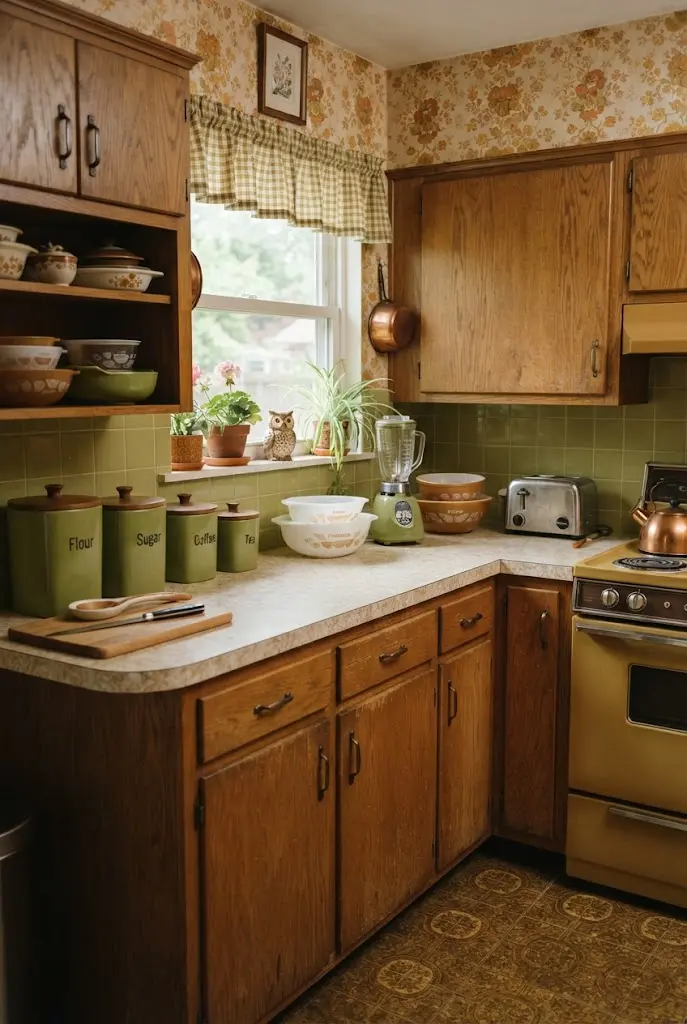
Laminate countertops were extremely common in American kitchens during the ’70s.
Today, you can recreate the look without sacrificing modern functionality.
Choose a vintage-inspired laminate pattern in cream, brown, tan, or subtle geometric designs.
Solid warm colors can create a more understated interpretation.
Pairing laminate-style counters with wood cabinets creates an authentic contrast.
Rounded countertop edges can further enhance the period feeling.
Modern laminate options can be durable and easy to clean.
Avoid overly glossy finishes if you want a more natural appearance.
The countertop should complement rather than compete with the cabinetry.
This detail adds a surprisingly strong dose of retro character.
7. Patterned Kitchen Curtains
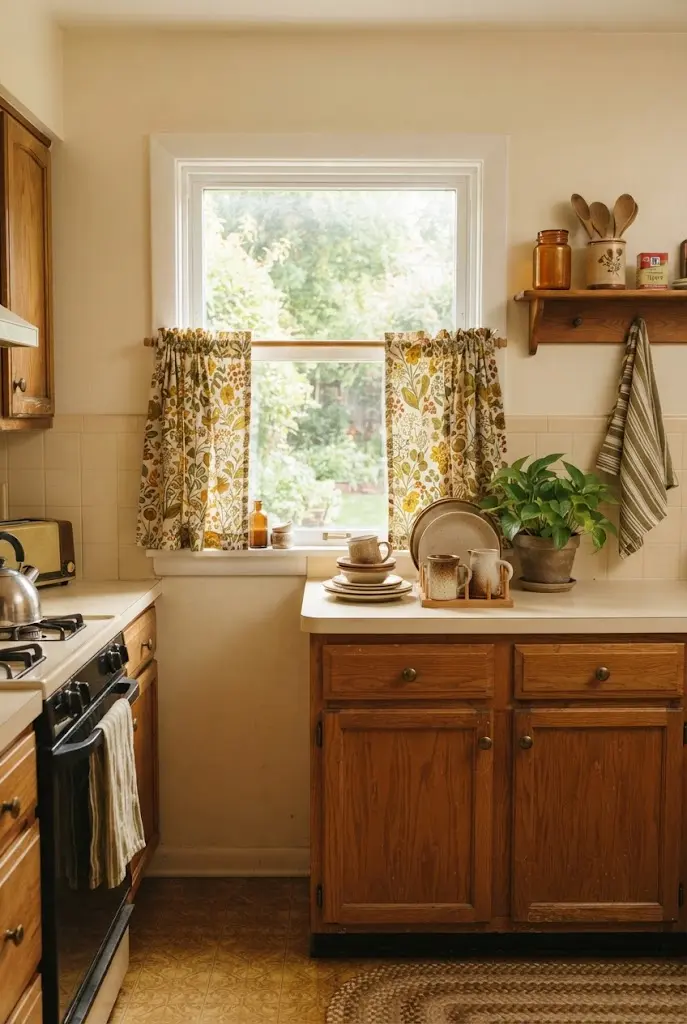
Kitchen curtains were an easy way to introduce personality into ’70s interiors.
Look for small floral, geometric, stripe, or botanical patterns.
Colors such as rust, mustard, olive, cream, and brown work especially well.
Café curtains can create a particularly nostalgic feeling around kitchen windows.
Natural cotton and linen blends can keep the look relaxed.
Avoid using patterns on every surface because the room can quickly feel busy.
Instead, let the curtains provide one concentrated decorative moment.
Coordinate the fabric with dish towels or small upholstered pieces.
Natural daylight filtering through fabric adds warmth.
The result feels homey and distinctly vintage without looking outdated.
8. Open Wood Shelving
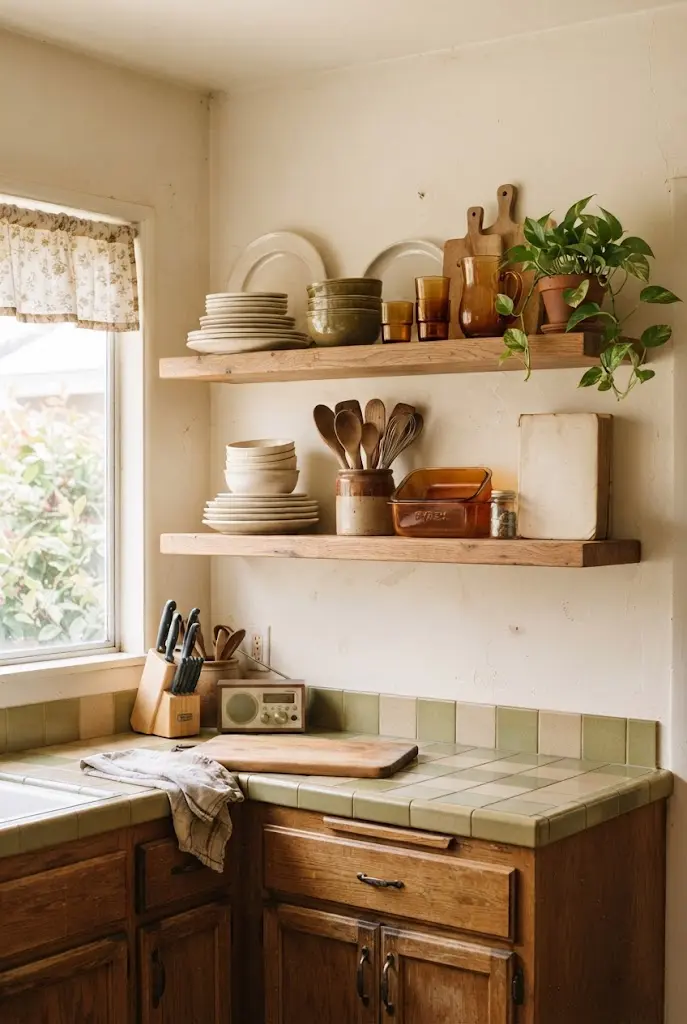
Open shelving adds both practicality and vintage character.
Natural wood shelves can visually connect with oak or walnut cabinetry.
Use them to display everyday ceramics, glassware, and cooking pieces.
A mix of useful and decorative objects creates an authentic lived-in appearance.
Avoid arranging everything too perfectly.
Vintage kitchens often felt collected gradually rather than professionally styled.
Choose dishes in earthy colors for additional visual warmth.
Simple brackets can reinforce the period-inspired look.
Open shelves also make smaller kitchens feel more open.
They are an affordable way to introduce retro personality without remodeling the entire room.
9. Vintage Ceramic Cookware
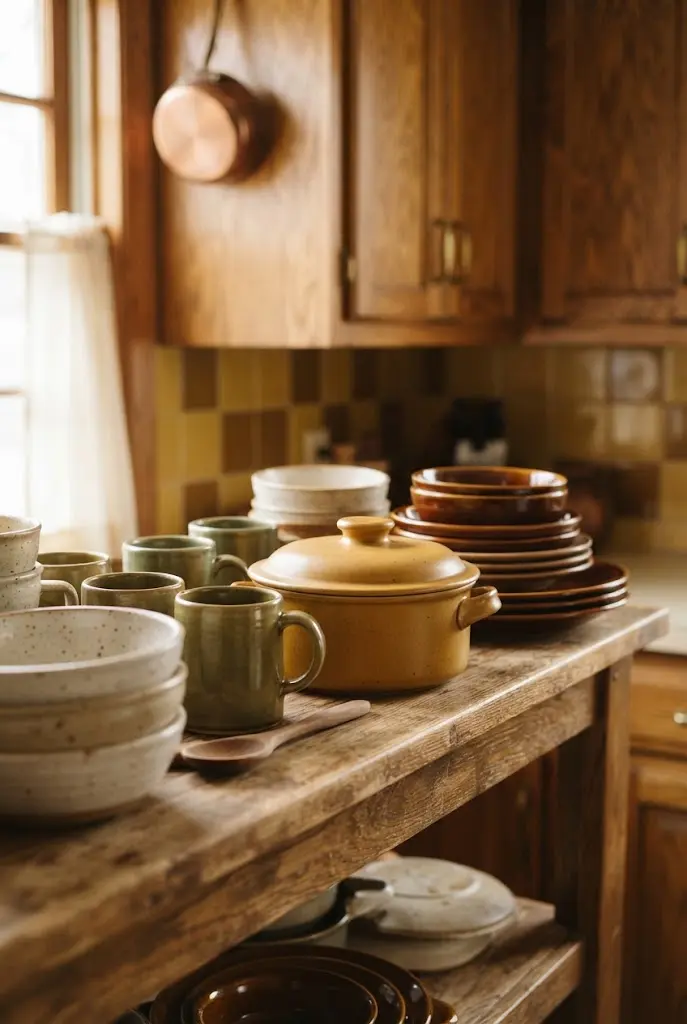
Ceramics can provide some of the easiest vintage details to add.
Look for earthy bowls, stoneware mugs, casserole dishes, and serving pieces.
Cream, brown, olive, mustard, and rust colors work beautifully.
Pieces with slightly irregular handmade shapes can feel especially authentic.
Display frequently used ceramics on open shelves or countertops.
Avoid overcrowding the space with decorative objects.
A few carefully selected pieces can have more visual impact.
Vintage-inspired ceramics can also be mixed with modern cookware.
This creates a natural blend between old and new.
The result feels collected, useful, and comfortable.
10. Warm Pendant Lighting
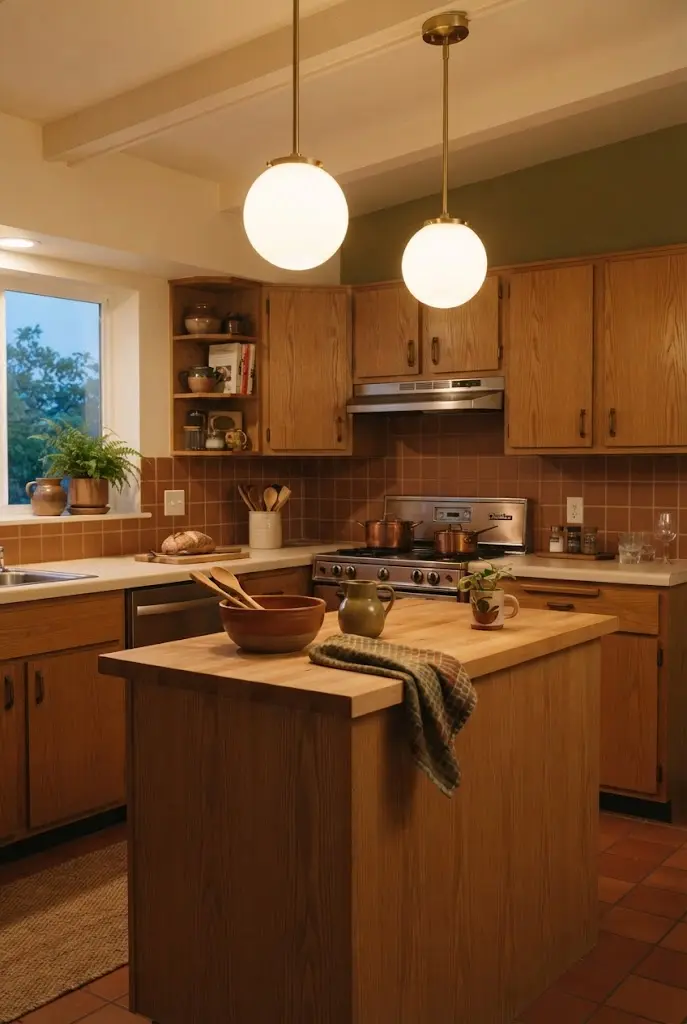
Lighting can completely change how a vintage kitchen feels.
Choose fixtures with warm bulbs and simple retro silhouettes.
Globe pendants, woven shades, or aged-metal fixtures can work particularly well.
Warm light emphasizes wood and earthy colors.
A pendant above the kitchen island can create an inviting focal point.
Avoid extremely cool white lighting because it can make vintage colors look harsh.
Layer overhead lighting with under-cabinet or decorative lamps.
Natural daylight should remain an important part of the room.
The goal is a cozy glow rather than a dramatic theatrical effect.
Good lighting allows every vintage detail to feel intentional.
11. Wood Kitchen Island
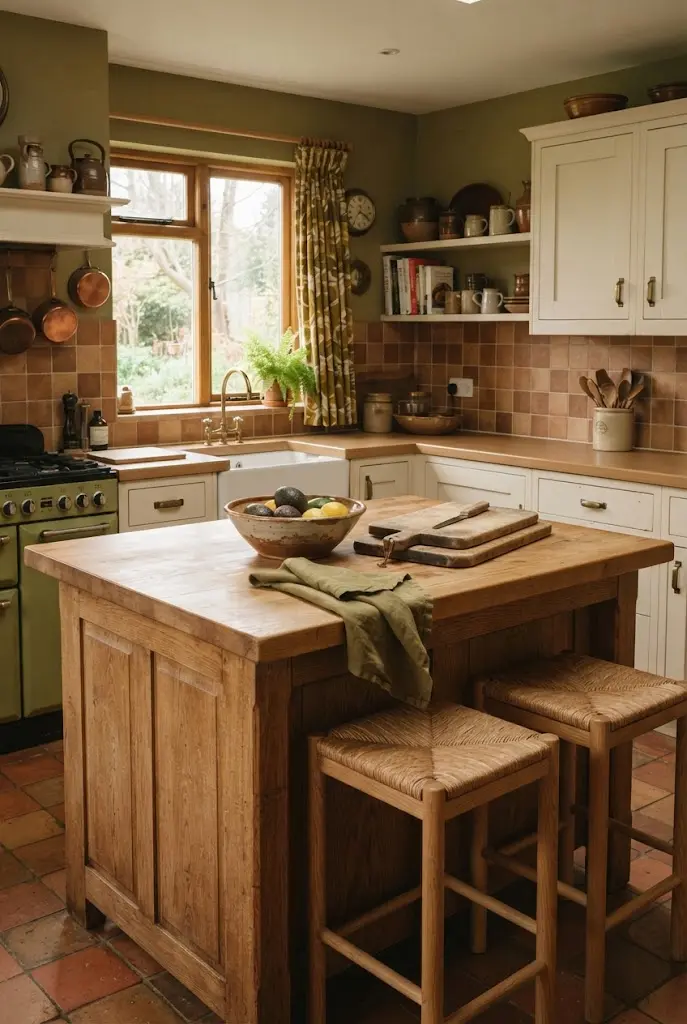
A substantial wood island can become the heart of a cozy vintage kitchen.
Choose a warm oak, walnut, or butcher-block appearance.
The island does not need elaborate detailing to feel period-inspired.
Simple cabinetry and visible wood grain are often enough.
Add a few stools with natural wood or woven seats.
The island can also provide space for displaying a ceramic bowl or cutting boards.
Warm wood contrasts nicely with cream or colored cabinets.
A slightly oversized island can make the kitchen feel communal.
Keep the countertop practical for modern cooking and entertaining.
This creates a comfortable meeting point for family and guests.
12. Butcher-Block Details
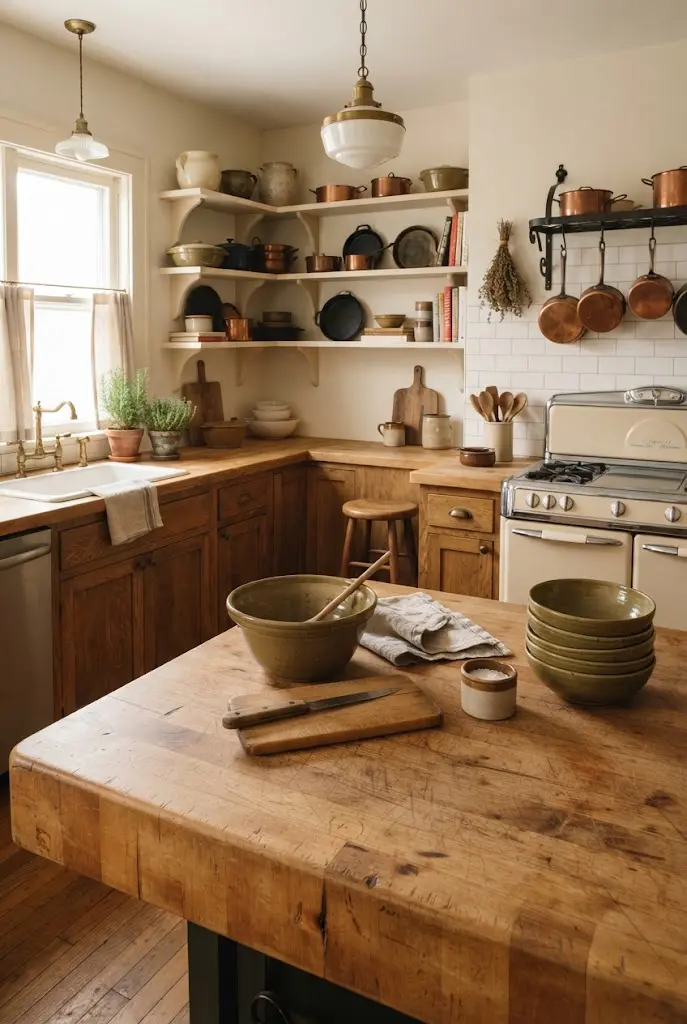
Butcher-block surfaces bring natural warmth into a retro kitchen.
Use them on an island, small prep area, or countertop section.
The wood grain creates a pleasant contrast against painted cabinetry.
Warm timber was a natural companion to the earthy colors of the ’70s.
Choose a finish that allows the grain to remain visible.
Small butcher-block accessories can provide the same effect without renovation.
Wooden cutting boards and serving boards are easy additions.
Mix different wood tones carefully to avoid visual clutter.
The surface should feel functional rather than purely decorative.
This makes the kitchen feel practical, warm, and genuinely lived-in.
13. Retro Geometric Patterns
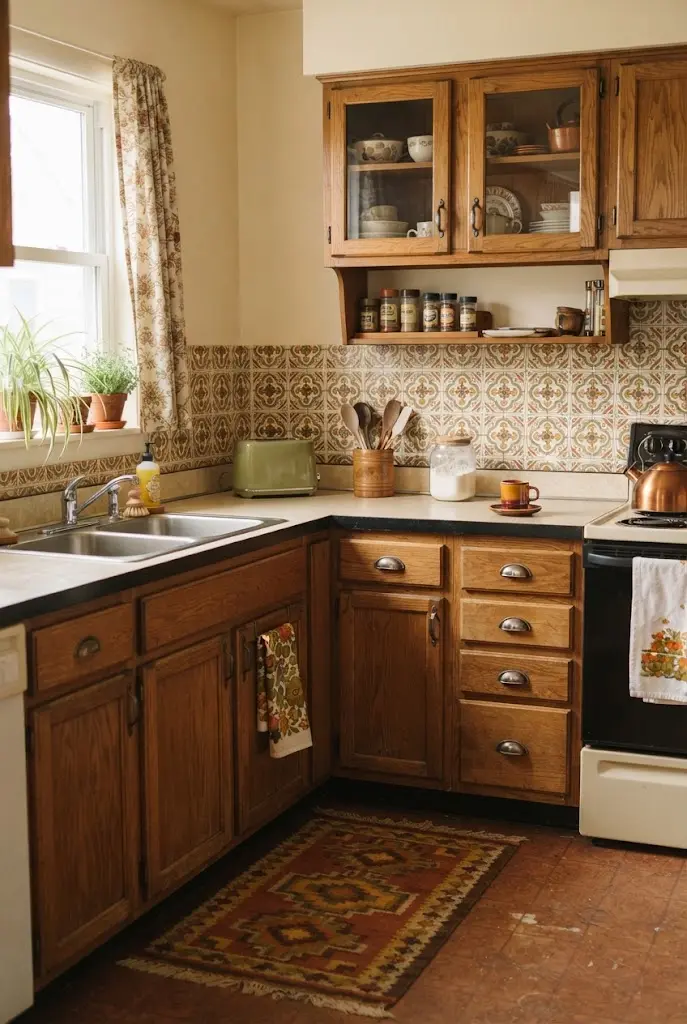
Geometric patterns were a recognizable part of many ’70s interiors.
You can use them on flooring, backsplash tile, wallpaper, or textiles.
Simple diamonds, circles, stripes, and repeating shapes can work well.
Choose muted colors to prevent the kitchen from feeling overly themed.
A patterned runner can be an easy starting point.
For a stronger statement, consider geometric backsplash tile.
Keep other surfaces relatively quiet when using bold patterns.
This creates balance while still celebrating the era.
Patterns can also visually define a breakfast or dining corner.
Used thoughtfully, they add personality without overwhelming the kitchen.
14. Terracotta and Rust Accents
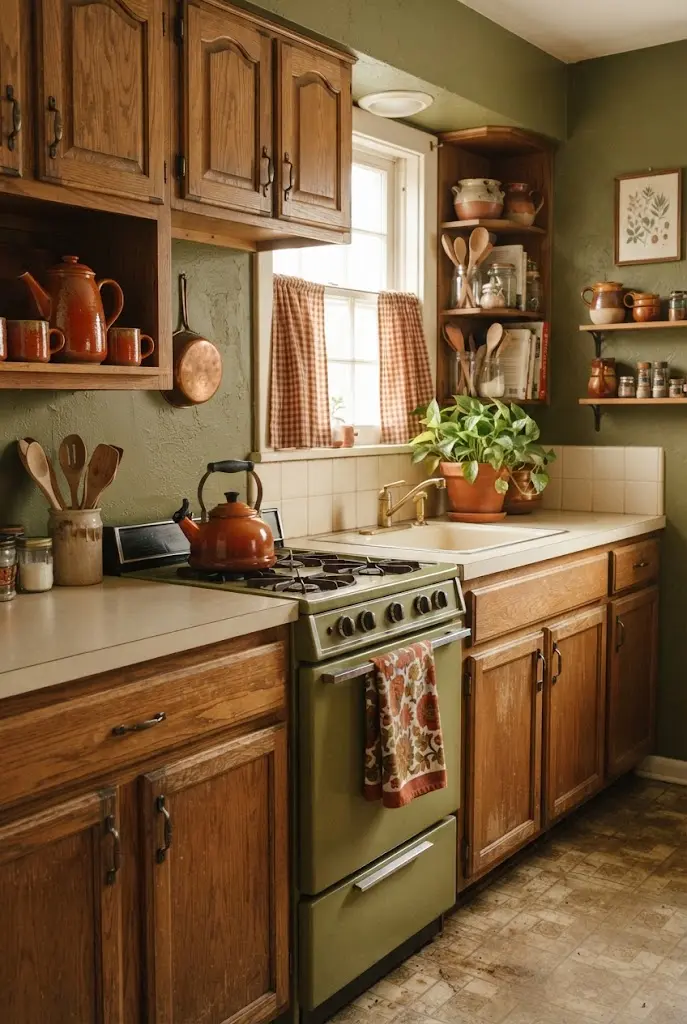
Rust and terracotta shades add warmth to a vintage kitchen palette.
These colors work beautifully with natural wood and cream surfaces.
Introduce them through pottery, textiles, artwork, or a small backsplash section.
Terracotta planters can bring an earthy touch near a sunny window.
Rust-colored dish towels provide a simple seasonal accent.
You can also use vintage-inspired cookware in warm orange-brown shades.
These colors become especially attractive under warm evening lighting.
Keep the strongest tones concentrated in accessories.
That makes them easy to update later if your style changes.
The result is cozy, grounded, and nostalgic.
15. Vintage Glassware
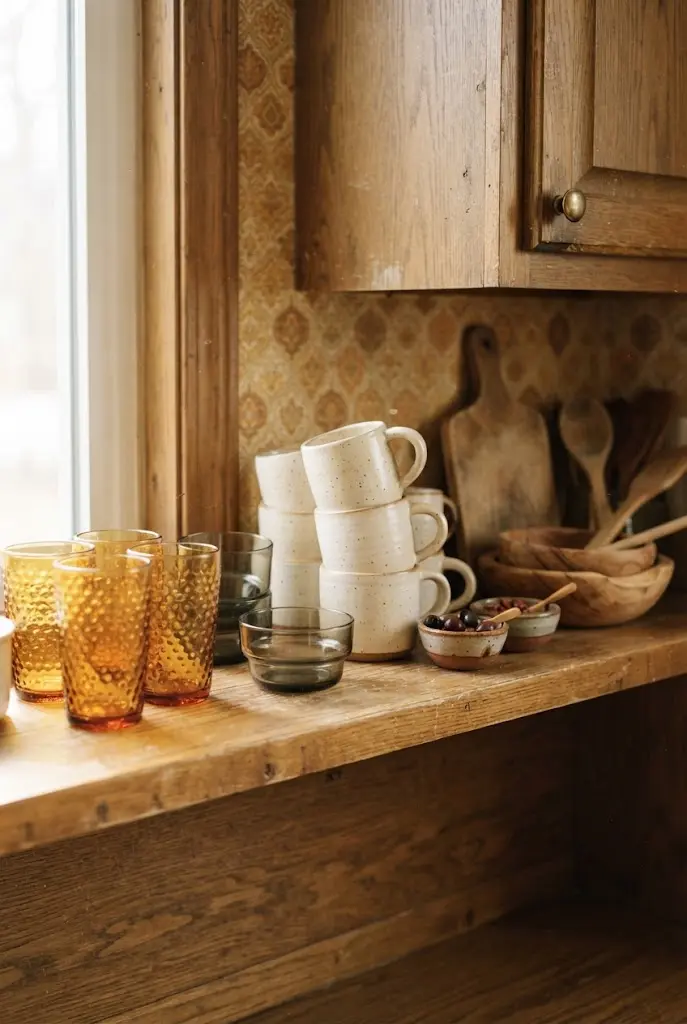
Amber and smoked glassware can bring an authentic nostalgic quality to the kitchen.
Display a few pieces on open shelves or inside glass-front cabinets.
Look for simple shapes rather than overly ornate designs.
Amber glass works particularly well with warm wood.
Clear glass can help prevent the display from feeling too dark.
Mix glasses with ceramic dishes and wooden serving pieces.
The combination creates an interesting range of textures.
Vintage-style glassware is also practical for entertaining.
A small collection can make an otherwise modern kitchen feel more established.
It is an easy detail to add without changing the architecture.
16. Indoor Herb Garden
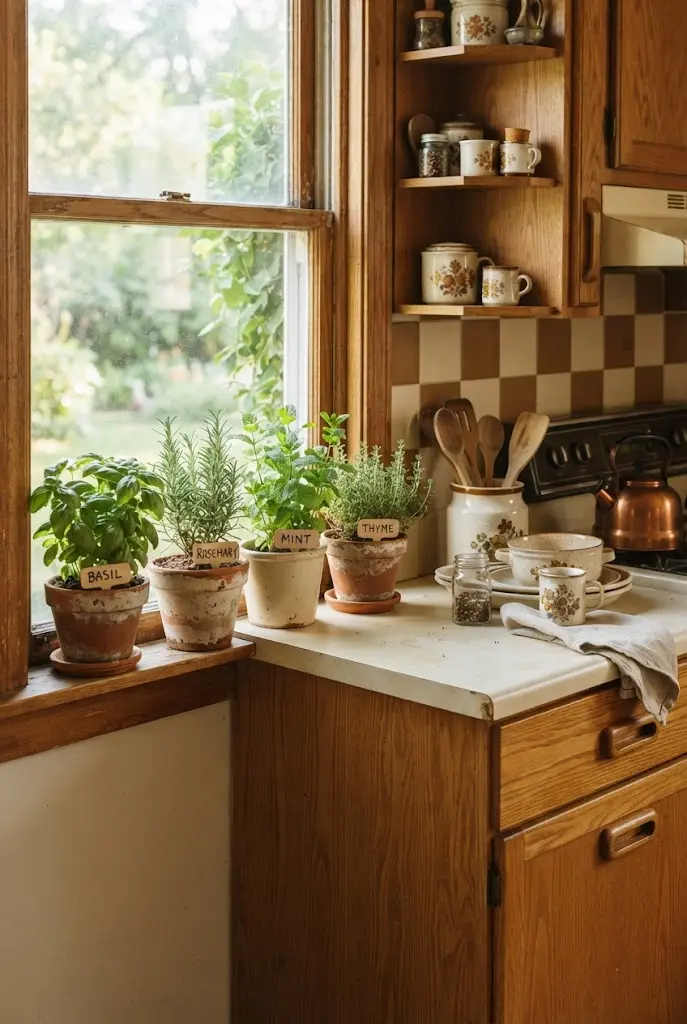
Plants can soften the hard surfaces of a vintage kitchen.
A small herb garden near a sunny window is both attractive and useful.
Choose terracotta pots or simple ceramic planters.
Basil, rosemary, mint, and thyme can provide natural greenery.
The plants look especially appealing against warm wood.
Use a small collection rather than filling every counter with greenery.
A hanging planter can also add a subtle ’70s-inspired touch.
Natural plants make the kitchen feel more lived-in.
They can introduce green without relying entirely on painted surfaces.
This creates a fresh balance between retro and contemporary style.
17. Woven Natural Textures
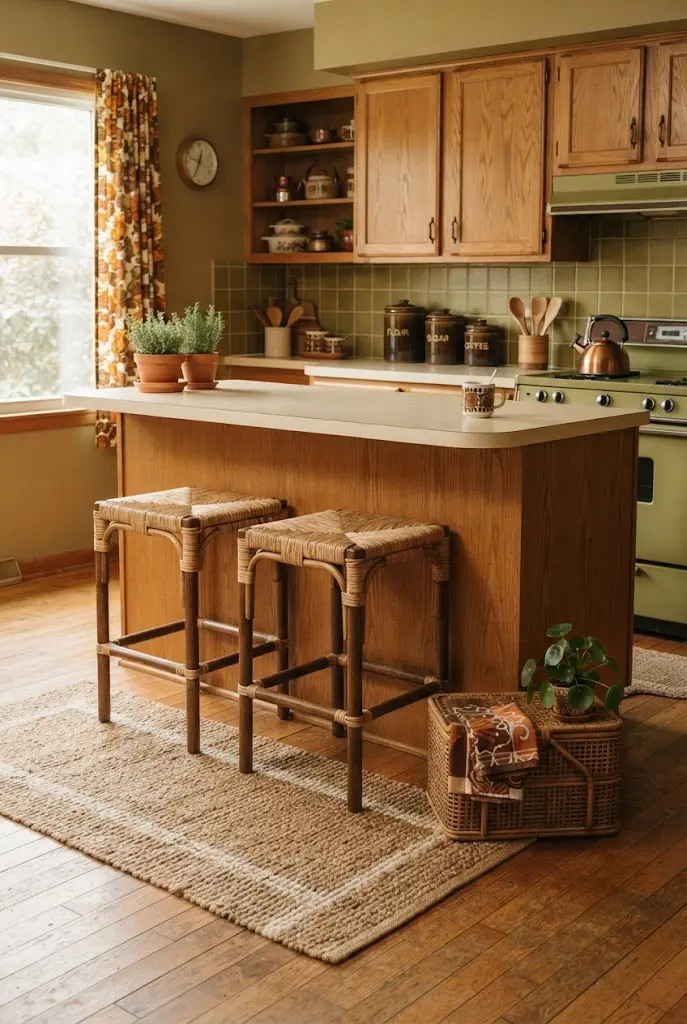
Woven textures can make a retro kitchen feel softer and more relaxed.
Consider rattan stools, woven baskets, cane details, or natural fiber runners.
These materials pair naturally with wood cabinetry.
They also introduce texture without requiring bold colors.
A woven basket can store produce or kitchen linens.
Rattan seating can create a casual breakfast area.
Natural fibers work particularly well in homes with abundant daylight.
Keep the shapes simple so the kitchen remains functional.
Combining woven materials with ceramics creates a pleasing textural contrast.
The result feels earthy, comfortable, and subtly nostalgic.
18. Vintage-Inspired Flooring
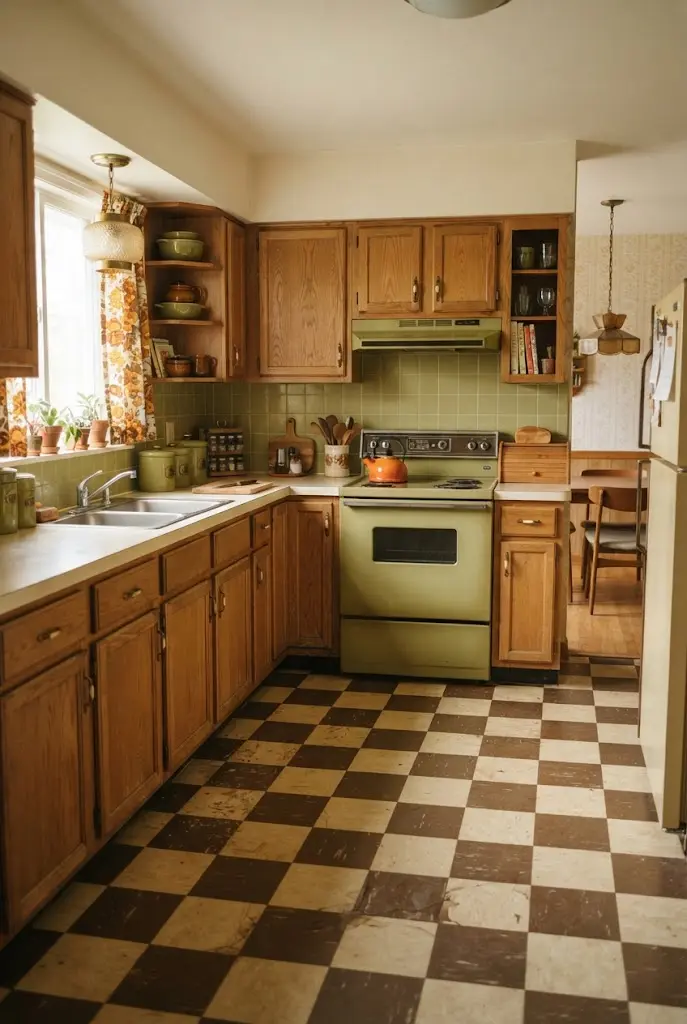
Flooring can quietly establish the period character of the entire room.
Checkerboard patterns, warm vinyl, natural wood, and earthy tile can all work.
For a subtle revival, choose cream and brown rather than stark black and white.
Small geometric patterns can also evoke the era.
Wood flooring provides a softer and more timeless option.
Choose materials that can withstand everyday kitchen use.
A vintage-style runner can introduce the look without replacing the floor.
The flooring should complement rather than compete with the backsplash.
Warm tones make the kitchen feel more inviting.
This foundation helps connect the other ’70s-inspired elements.
19. Vintage Artwork
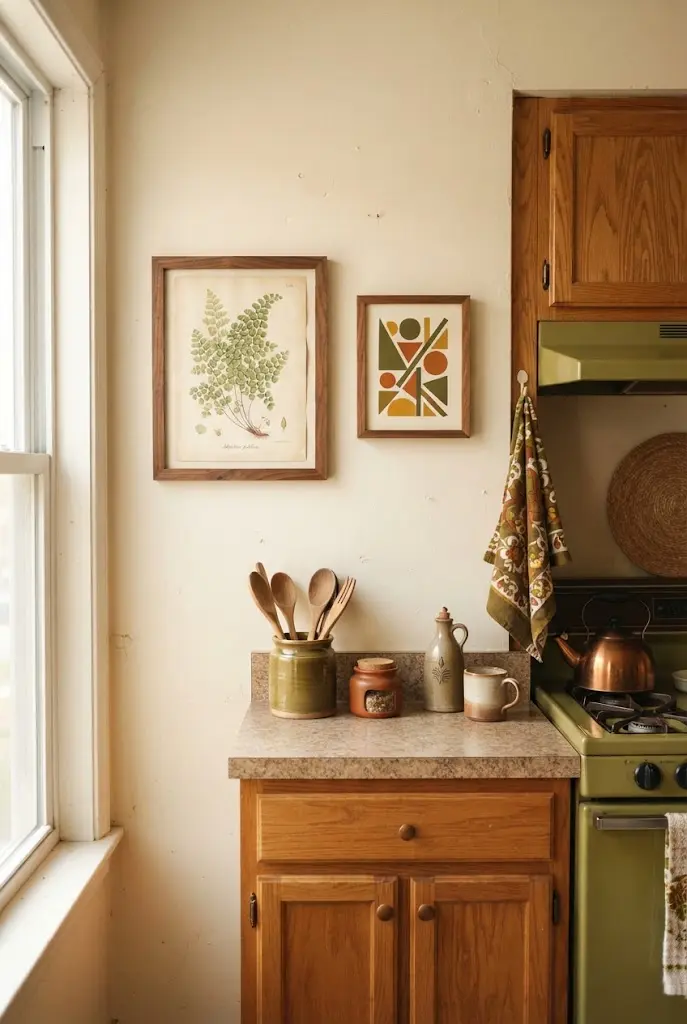
Kitchen artwork can add personality without requiring structural changes.
Choose botanical prints, abstract geometric art, food illustrations, or retro-inspired posters.
Warm wood frames complement the cabinetry beautifully.
Look for colors that repeat elsewhere in the room.
A small gallery wall can work particularly well near a breakfast area.
One oversized print can create a simpler focal point.
Avoid filling every wall because negative space keeps the kitchen feeling calm.
Vintage artwork can also introduce colors that are difficult to incorporate elsewhere.
The goal is to make the room feel personal rather than staged.
A few carefully selected pieces can complete the nostalgic atmosphere.
20. Retro Bar Stools
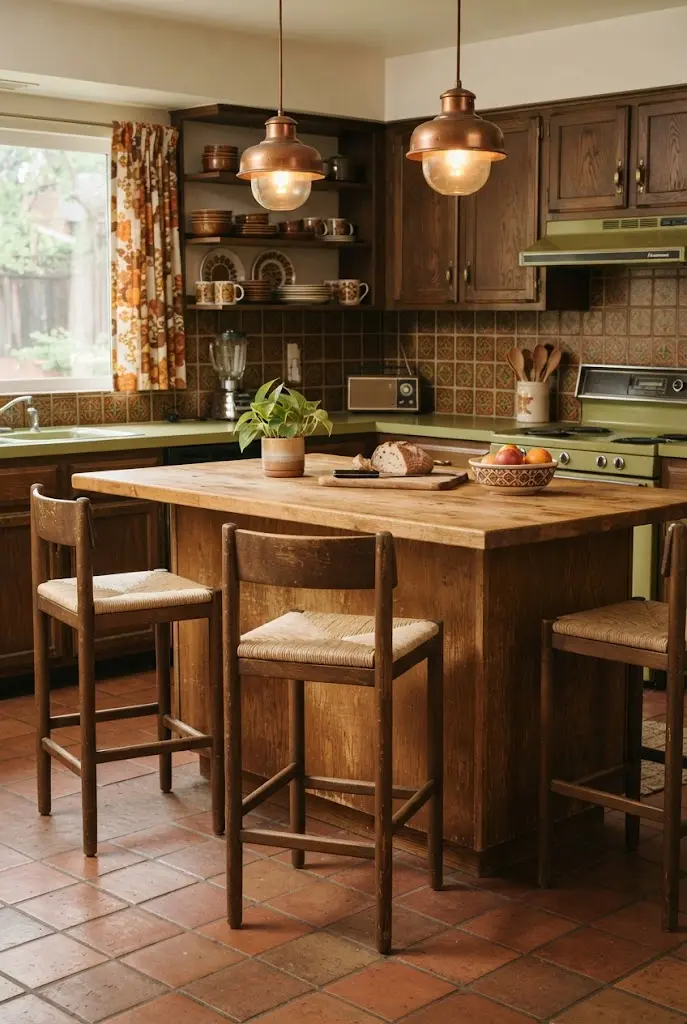
Bar stools can bring a strong sense of period character to an island or peninsula.
Choose wood, cane, vinyl, or simple upholstered designs.
Rounded silhouettes can subtly echo vintage furniture.
Warm brown, cream, rust, or olive upholstery works well.
Avoid overly ornate stools that make the kitchen feel like a theme set.
Comfort should remain a priority for everyday use.
Natural wood stools can bridge vintage styling and modern practicality.
Place them around a wood island for a cohesive appearance.
A small breakfast area can become one of the kitchen’s most inviting features.
This is an easy way to add both seating and personality.
21. Earthy Ceramic Pendant Details
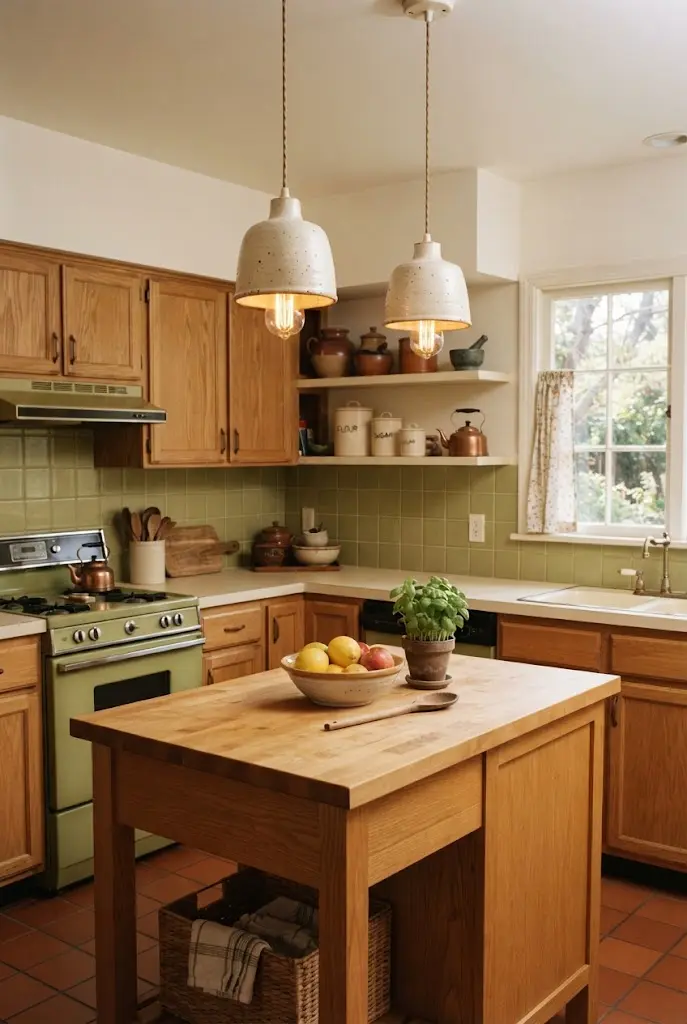
Ceramic lighting can add another layer of handmade texture.
Choose simple pendant shades in cream, brown, terracotta, or muted green.
Slightly irregular ceramic surfaces can make the fixtures feel artisanal.
Hang one above a small breakfast table or several above an island.
Keep the shapes relatively simple to avoid visual clutter.
Warm bulbs help emphasize the ceramic texture.
The fixture can become a subtle focal point without dominating the room.
Pair ceramic lighting with wood and woven materials.
This combination creates a naturally layered interior.
It feels vintage-inspired while remaining appropriate for a contemporary home.
22. Cozy Breakfast Nook
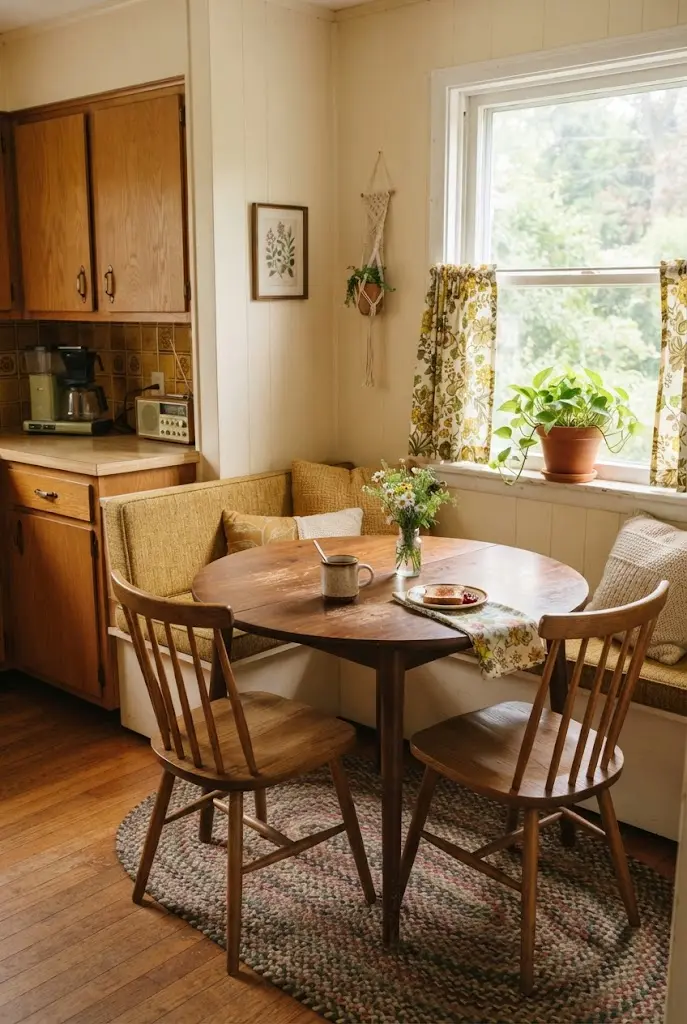
A breakfast nook can capture the relaxed social feeling associated with vintage American kitchens.
Place a small round wood table near a sunny window.
Add a simple built-in bench or vintage-inspired chairs.
Use cushions in mustard, rust, olive, or cream.
A small patterned curtain can make the area feel even more nostalgic.
Natural wood furniture keeps the space connected to the kitchen.
Add a ceramic vase or small plant as a finishing detail.
The nook should feel comfortable enough for casual meals and morning coffee.
Soft natural light can make this corner particularly inviting.
It becomes a charming extension of the kitchen rather than a separate formal dining area.
23. Layered Vintage Accessories
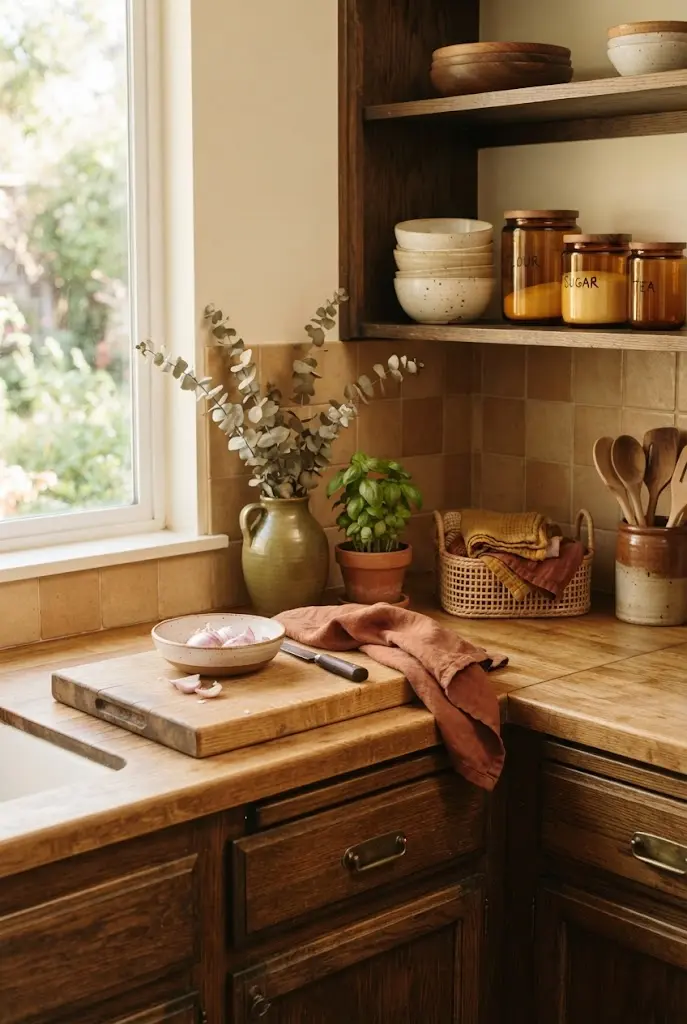
The final ingredient is a thoughtful collection of vintage-inspired accessories.
Mix wooden cutting boards, ceramic bowls, glassware, woven baskets, and old-style kitchen tools.
Choose objects that look useful rather than purely decorative.
Layering different materials gives the room depth and personality.
Repeat colors such as olive, rust, cream, mustard, and brown throughout the space.
Avoid making every item perfectly coordinated.
A little variation makes the kitchen feel collected over time.
Keep frequently used objects within easy reach.
This creates the comfortable, lived-in quality that makes vintage kitchens appealing.
With the right balance, the room can feel unmistakably ’70s while still functioning beautifully for modern American life.