31 Ways to Embrace Retro ’70s Interior Design at Home
The ’70s are making a stylish comeback in American home interiors.
This decade was known for warm colors, earthy materials, expressive patterns, and relaxed spaces.
Think walnut wood, shag textures, terracotta, avocado green, burnt orange, and rich brown tones.
Today’s interpretation can capture that nostalgic character without making a home feel dated.
The key is combining vintage-inspired details with modern comfort and practical layouts.
From kitchens and living rooms to bedrooms and entryways, ’70s influences can work throughout the house.
Natural materials and handcrafted accents also make this style feel welcoming and collected.
You can embrace the look through furniture, lighting, color, textiles, artwork, and architectural details.
Whether you live in a suburban ranch, city apartment, or modern home, small changes can create retro charm.
Here are 32 ways to bring the warmth and personality of ’70s interior design into your home.
1. Choose Warm Earthy Colors
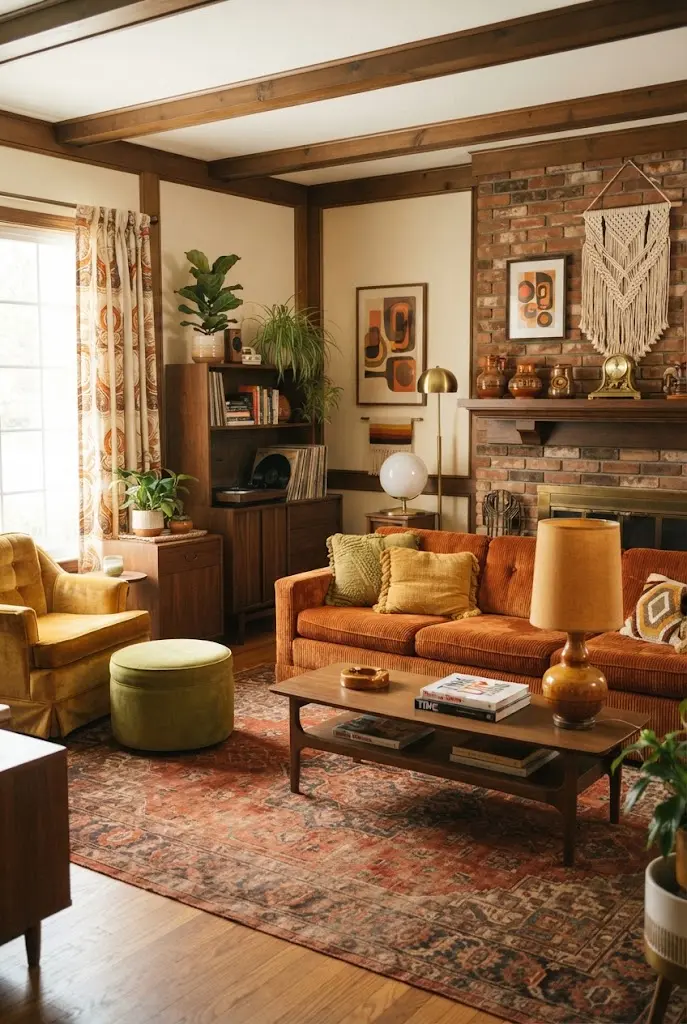
Warm earthy colors are one of the easiest ways to introduce a ’70s atmosphere.
Try shades such as burnt orange, mustard yellow, avocado green, caramel, chocolate brown, and rust.
These colors work especially well on walls, upholstery, rugs, and decorative accessories.
For a modern American home, balance stronger shades with cream or warm white.
A muted palette can feel sophisticated while still reflecting the decade’s personality.
Consider using one dominant earthy shade instead of covering an entire room in intense color.
Wood furniture naturally complements these tones and adds additional warmth.
Vintage-inspired artwork can repeat the same colors throughout the space.
Textiles are another low-commitment way to experiment with retro hues.
Together, these colors create an inviting interior with unmistakable ’70s character.
2. Add Walnut Wood Furniture
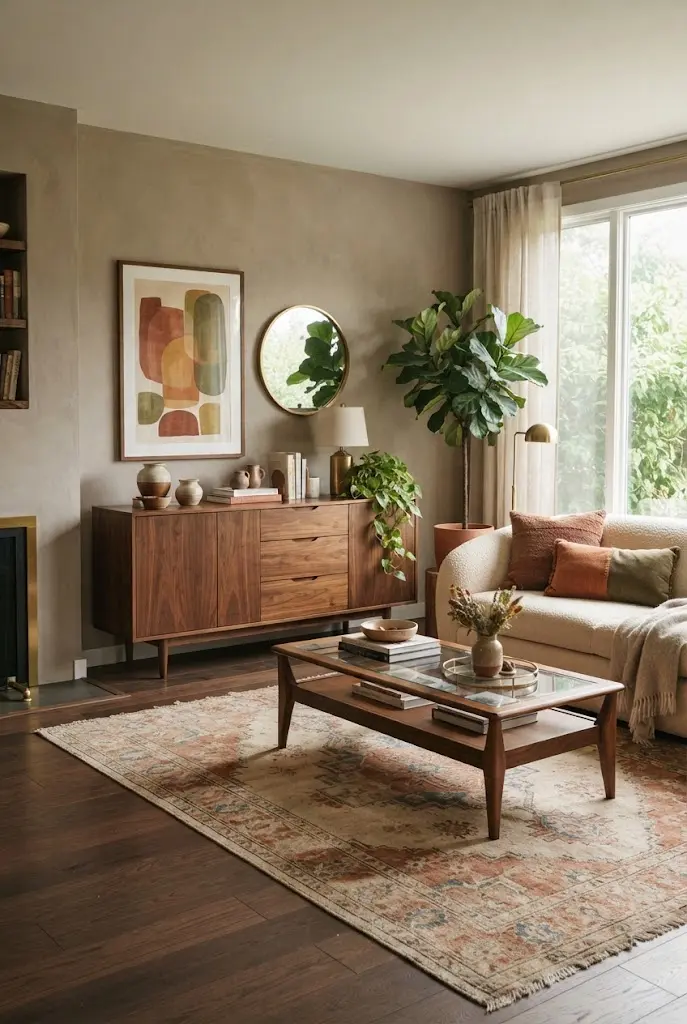
Walnut wood instantly gives an interior the rich warmth associated with many ’70s spaces.
Look for coffee tables, credenzas, dining tables, shelving, and bedroom furniture with visible wood grain.
Mid-century and vintage-inspired silhouettes pair naturally with this material.
Choose pieces with simple lines rather than overly ornate details for a contemporary interpretation.
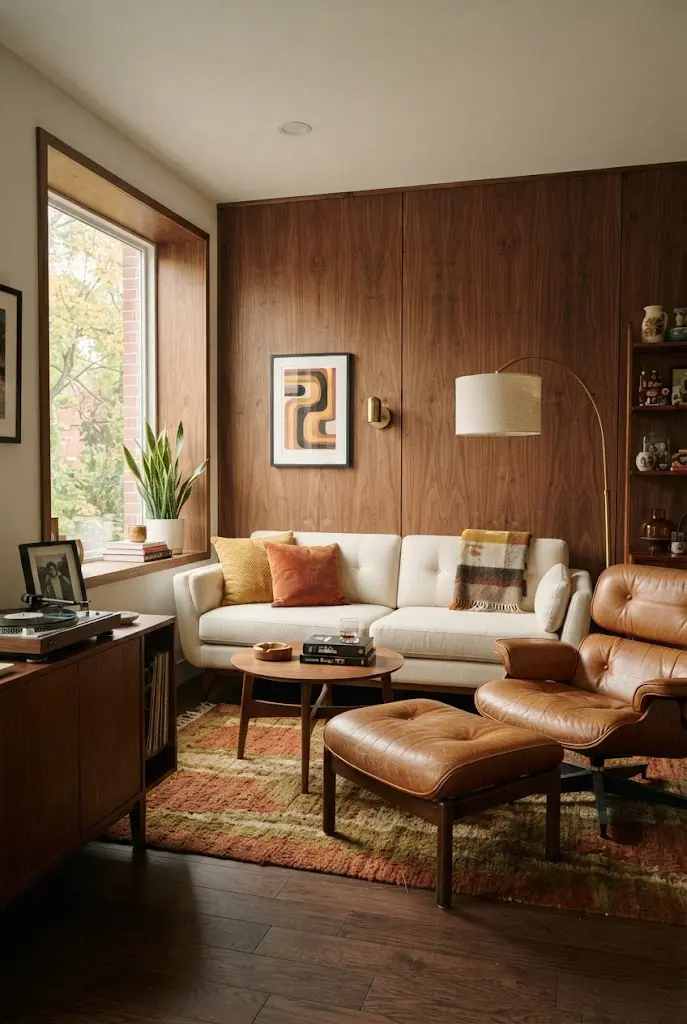
A walnut sideboard can become a strong focal point in a living or dining room.
Open shelving can display ceramics, books, plants, and vintage accessories.
Pair darker wood with cream upholstery to keep the room visually balanced.
Brass hardware can add another layer of period-inspired warmth.
Natural wood also works beautifully with woven materials and earthy textiles.
The result is a cozy interior that feels nostalgic without looking like a museum.
3. Use Shag-Style Rugs
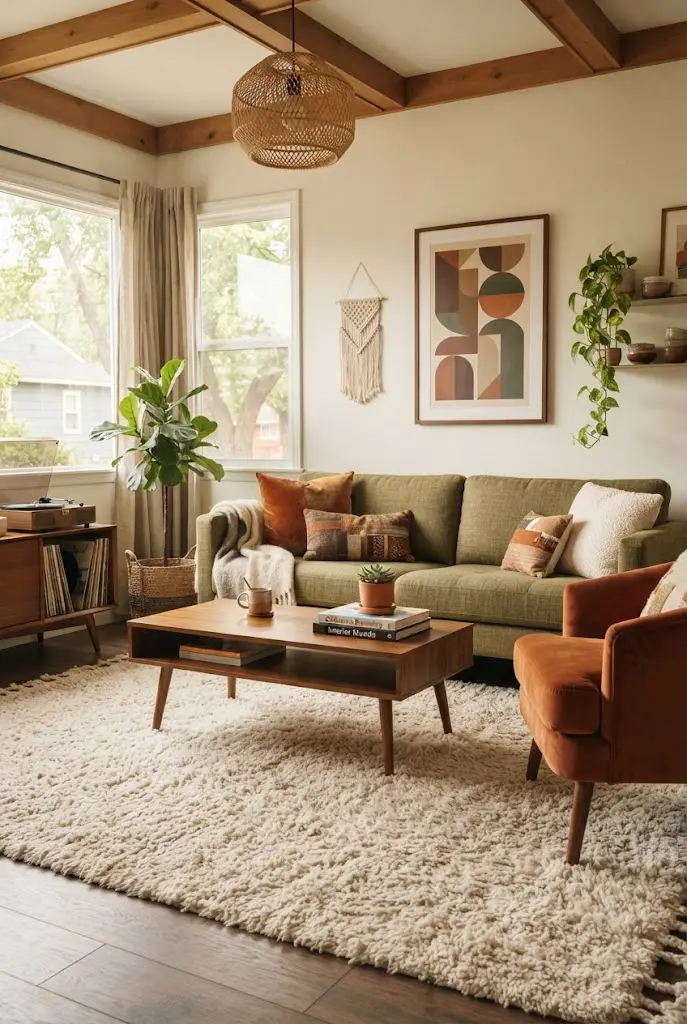
A shag-style rug can bring instant retro texture into a room.
The soft pile reflects one of the most recognizable textile trends associated with the ’70s.
Instead of choosing an extremely bright rug, consider cream, beige, caramel, or muted rust.
These colors make the look easier to integrate into a contemporary home.
Place a shag rug beneath a coffee table to define a living room seating area.
It can also work beside a bed or underneath a comfortable reading chair.
Pairing shag texture with smooth walnut furniture creates an interesting contrast.
Keep the rest of the room relatively restrained so the rug remains a feature.
A vintage-inspired geometric pattern can add even more personality when used carefully.
This approach creates softness and nostalgia without overwhelming the space.
4. Bring in Avocado Green
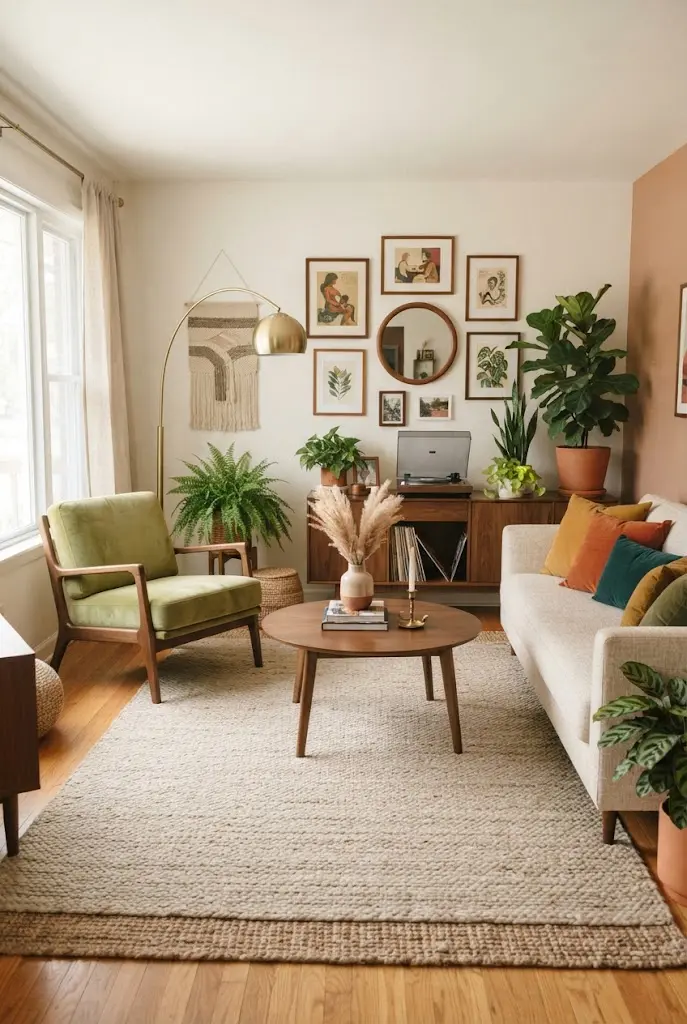
Avocado green is a classic color associated with retro ’70s interiors.
For a modern home, use it as an accent rather than making it the only dominant color.
An avocado green armchair can create a strong focal point in a neutral living room.
You could also introduce the shade through curtains, cushions, ceramics, or artwork.
Muted versions tend to feel more sophisticated than highly saturated greens.
Pair avocado with walnut, cream, tan, and brass for a balanced palette.
Plants can reinforce the natural quality of the green without making the room feel themed.
A green vintage-inspired cabinet can also work beautifully in a dining room.
Repeating the color in two or three small areas creates visual continuity.
This makes the retro shade feel intentional and contemporary.
5. Install Retro-Inspired Pendant Lighting
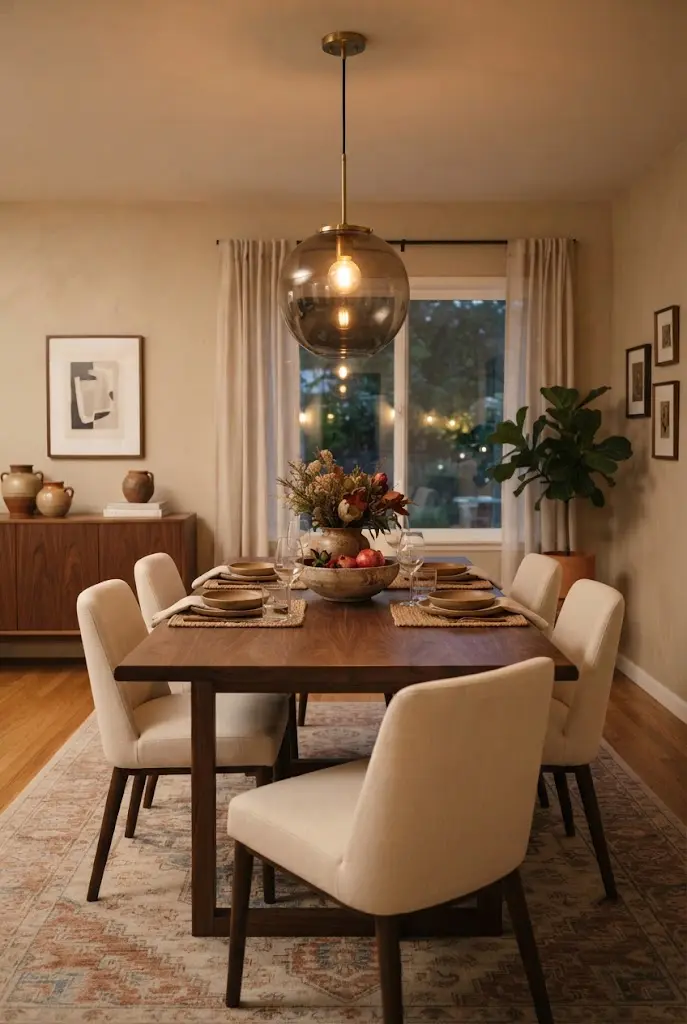
Lighting can completely change the atmosphere of a room.
Pendant lights with rounded, sculptural, or globe-like shapes can evoke the ’70s beautifully.
Look for designs in smoked glass, warm metal, ceramic, or textured finishes.
A large pendant above a dining table can become an architectural focal point.
In a kitchen, multiple pendants can provide both character and practical illumination.
Choose warm bulbs to create a comfortable evening atmosphere.
Avoid making every light fixture strongly vintage so the room maintains a modern balance.
A sculptural floor lamp can reinforce the same design language elsewhere.
Soft lighting works especially well with wood and earthy textiles.
The overall effect should feel warm, relaxed, and inviting.
6. Incorporate Geometric Patterns
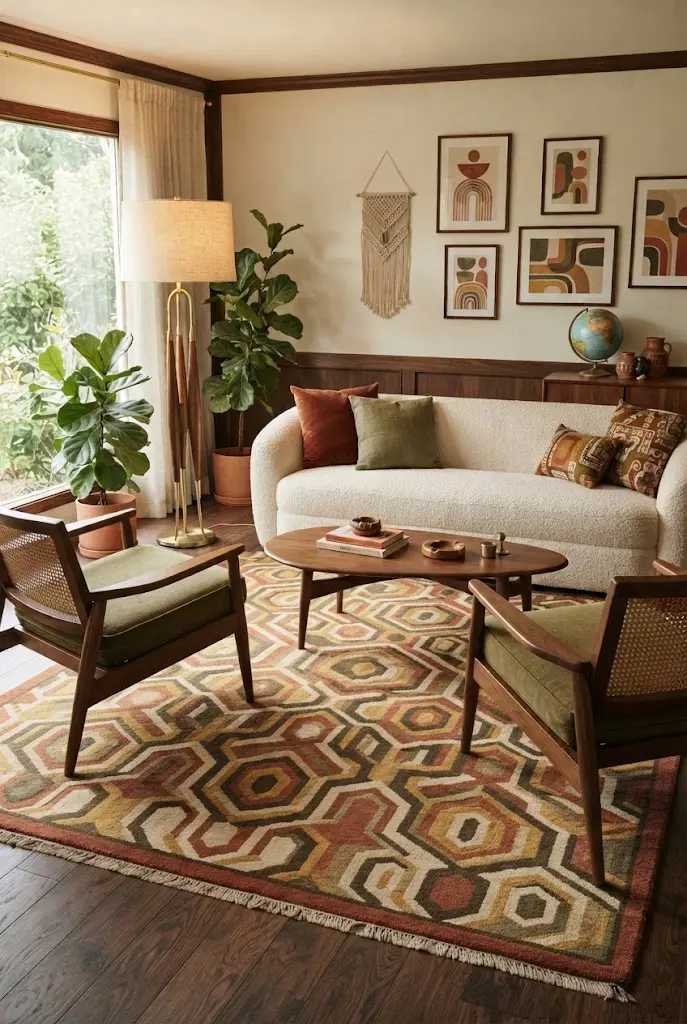
Geometric patterns were an important part of ’70s decorating.
Today, they can be introduced through rugs, pillows, curtains, wallpaper, and artwork.
Look for patterns involving arches, circles, diamonds, stripes, or abstract organic shapes.
Earthy colors help the patterns feel connected to the rest of the room.
A patterned rug can establish a strong visual foundation without requiring permanent changes.
For walls, consider using patterned wallpaper on a single accent wall.
Keep larger furniture pieces relatively simple when using bold patterns.
Mixing two subtle patterns can create depth without becoming visually chaotic.
Repeating one pattern color elsewhere helps the room feel cohesive.
This creates retro personality while keeping the overall design polished.
7. Try a Conversation Pit
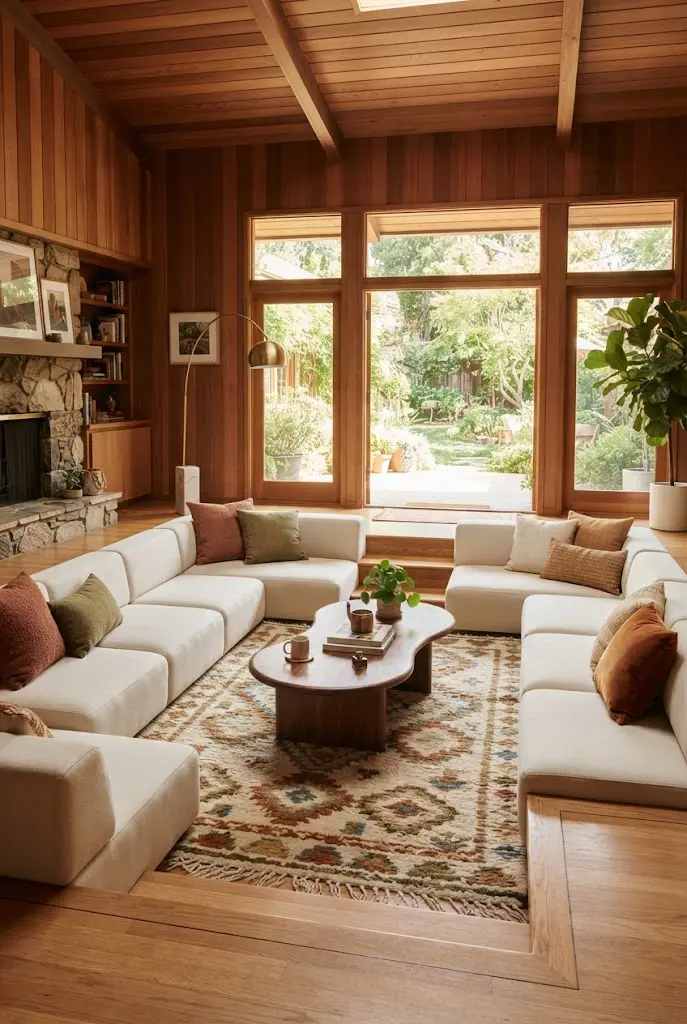
Conversation pits are one of the most memorable architectural ideas associated with the ’70s.
While a full sunken living room may not suit every home, the concept can inspire modern seating arrangements.
Create a lower-feeling lounge area with modular sofas and surrounding chairs.
Use a large rug to visually define the conversation zone.
Low furniture helps create the relaxed atmosphere associated with the era.
Rounded coffee tables can soften the arrangement further.
Earthy upholstery adds warmth and visual depth.
Keep pathways around the seating area clear for everyday practicality.
The goal is to encourage comfortable conversation rather than formal entertaining.
This idea works especially well in spacious family rooms and open-plan homes.
8. Use Curved Furniture
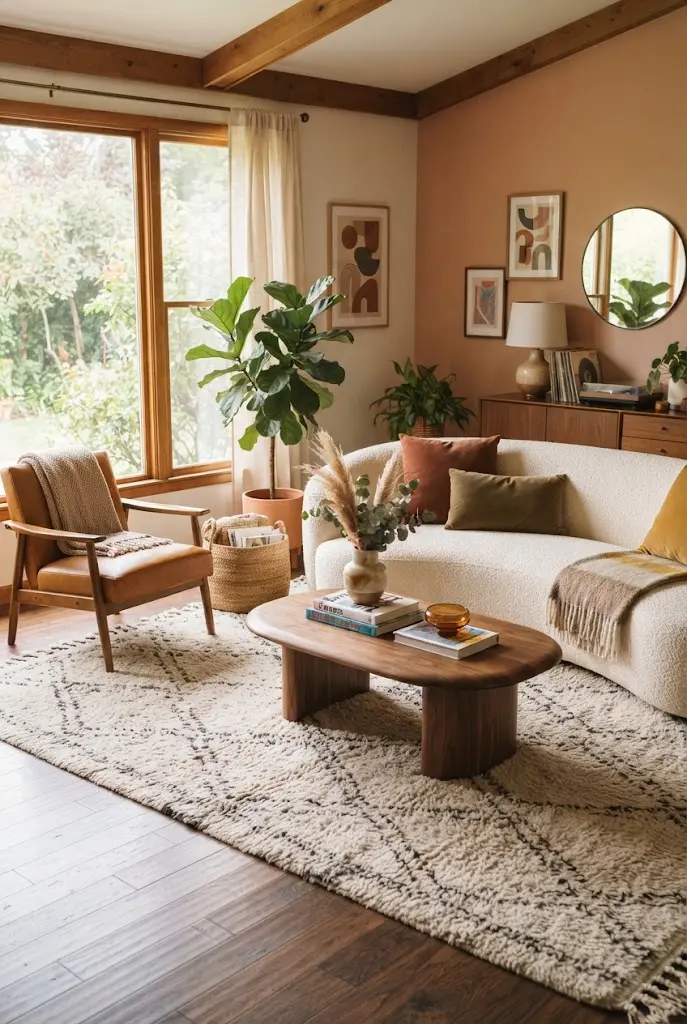
Curved furniture can instantly soften a room and create a retro-inspired silhouette.
Rounded sofas, barrel chairs, circular ottomans, and curved coffee tables work particularly well.
Choose contemporary upholstery if you want the space to feel current.
Cream, rust, caramel, olive, and brown fabrics complement the ’70s palette.
Curves also make seating arrangements feel more relaxed and conversational.
A rounded sofa can become the main focal point of a large living room.
Pair it with straight-lined walnut furniture to create visual contrast.
Avoid filling the entire room with curved pieces because variety creates balance.
Organic curves also pair beautifully with plants and woven accessories.
The result feels comfortable, expressive, and subtly nostalgic.
9. Add Macramé Wall Decor
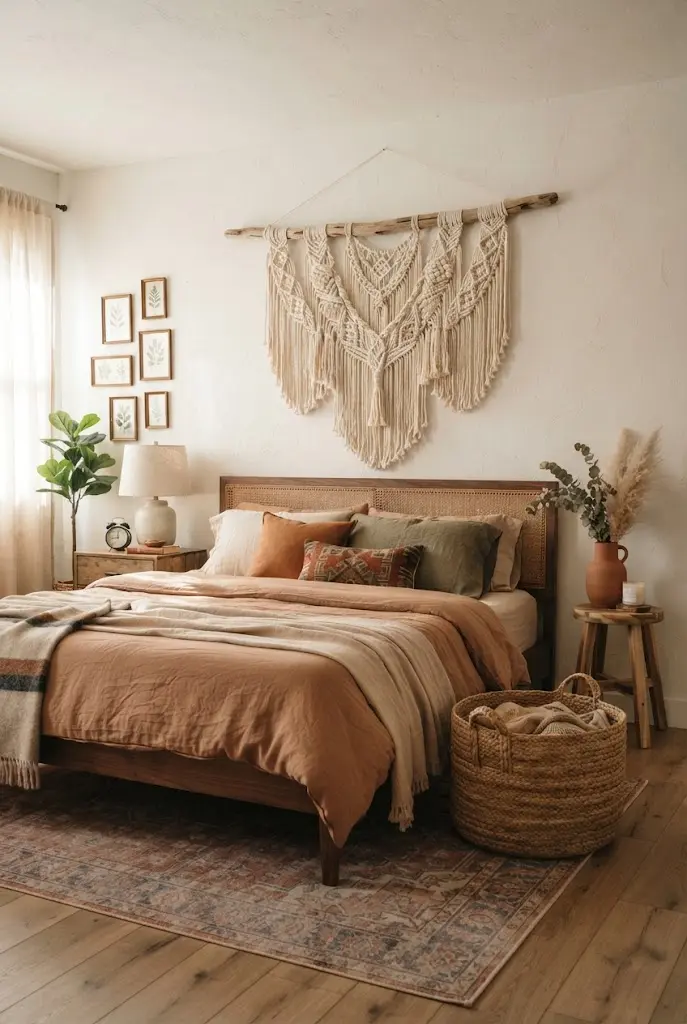
Macramé became a popular decorative element during the ’70s.
A modern interpretation can bring texture without making the room feel overly themed.
Choose a large neutral macramé piece for a living room or bedroom wall.
Natural cotton, cream, beige, and off-white work particularly well.
Hang it above a walnut console, bed, or reading chair for a layered effect.
The woven texture adds softness to walls dominated by paint or wood.
Combine it with ceramics, plants, and natural fibers for a cohesive look.
Avoid using too many small macramé decorations throughout the same room.
One substantial piece usually creates more impact than several tiny items.
This approach keeps the nostalgic reference subtle and sophisticated.
10. Choose Terracotta Accessories
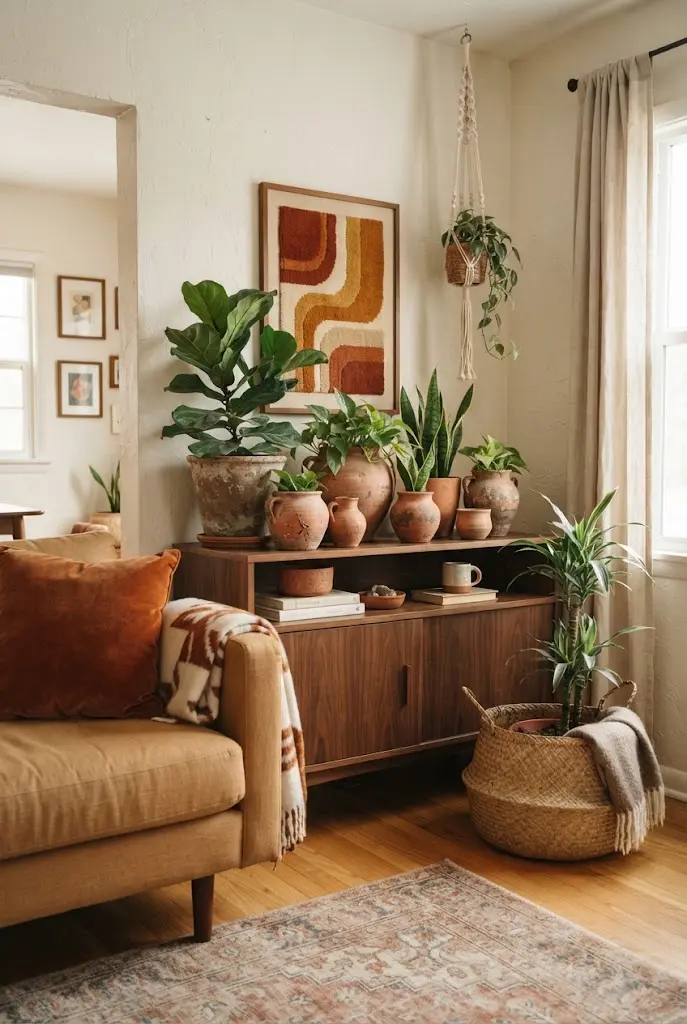
Terracotta is a natural fit for the warm color palette of ’70s interiors.
Use terracotta through planters, vases, lamps, bowls, or decorative objects.
The handmade appearance of clay adds warmth and visual character.
Pair terracotta with cream walls and walnut furniture for a grounded look.
Muted rust-colored accessories can create a similar effect when real clay is not practical.
Group a few pieces together instead of scattering them randomly.
Plants in terracotta pots reinforce the decade’s connection to natural materials.
Handmade ceramics can make the room feel collected over time.
These accessories are easy to change when your decorating preferences evolve.
They provide a simple way to introduce retro warmth without major renovations.
11. Display Vintage-Inspired Ceramics
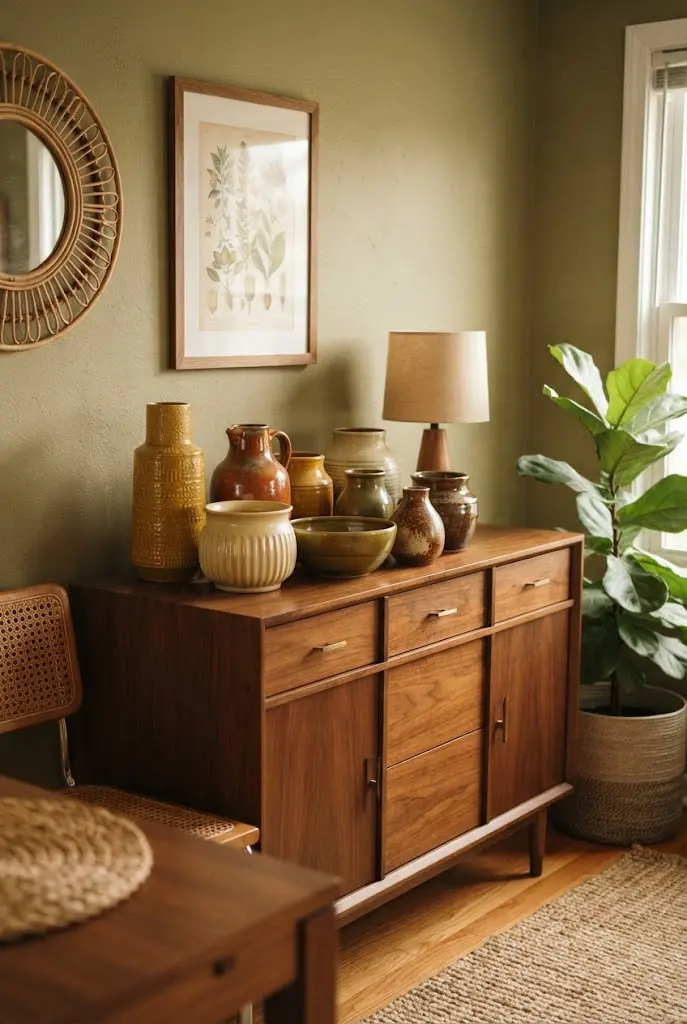
Ceramics can provide small but meaningful references to retro decorating.
Look for handmade-looking vessels with rounded forms and earthy glazes.
Mustard, brown, olive, rust, cream, and amber are particularly fitting colors.
Display ceramics on open shelving, a sideboard, or a dining table.
Mix different shapes so the arrangement feels collected rather than perfectly matched.
Vintage flea-market finds can add authentic character when available.
Modern handmade pottery can achieve a similar visual effect.
Avoid filling every surface because negative space keeps the display sophisticated.
A large sculptural vase can become a focal point on a console.
These small details help reinforce the ’70s mood throughout the home.
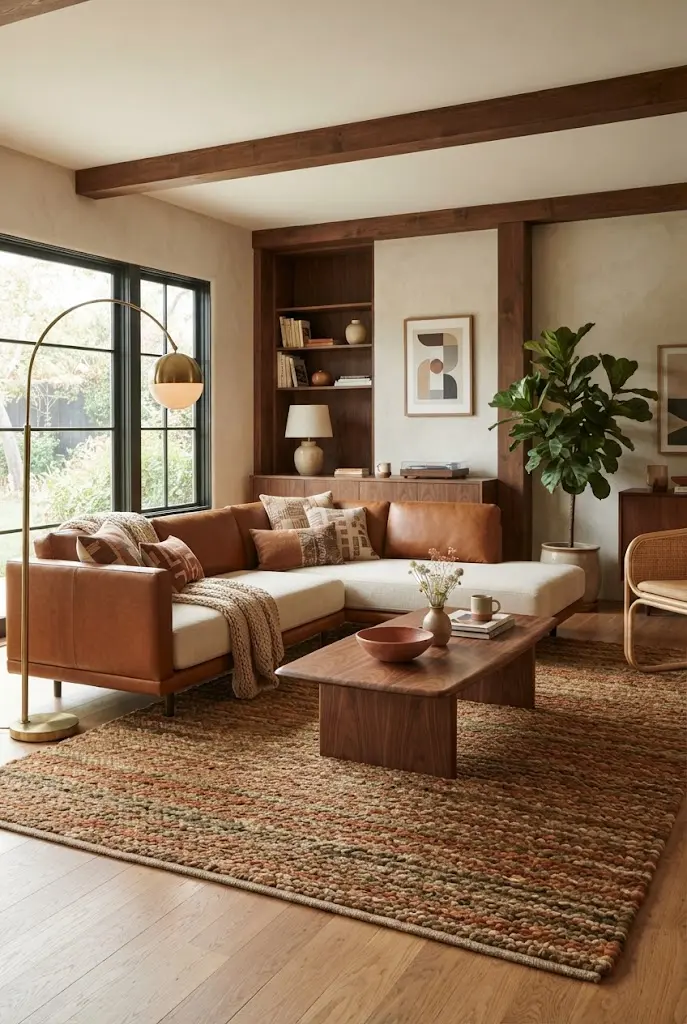
12. Mix Leather Seating
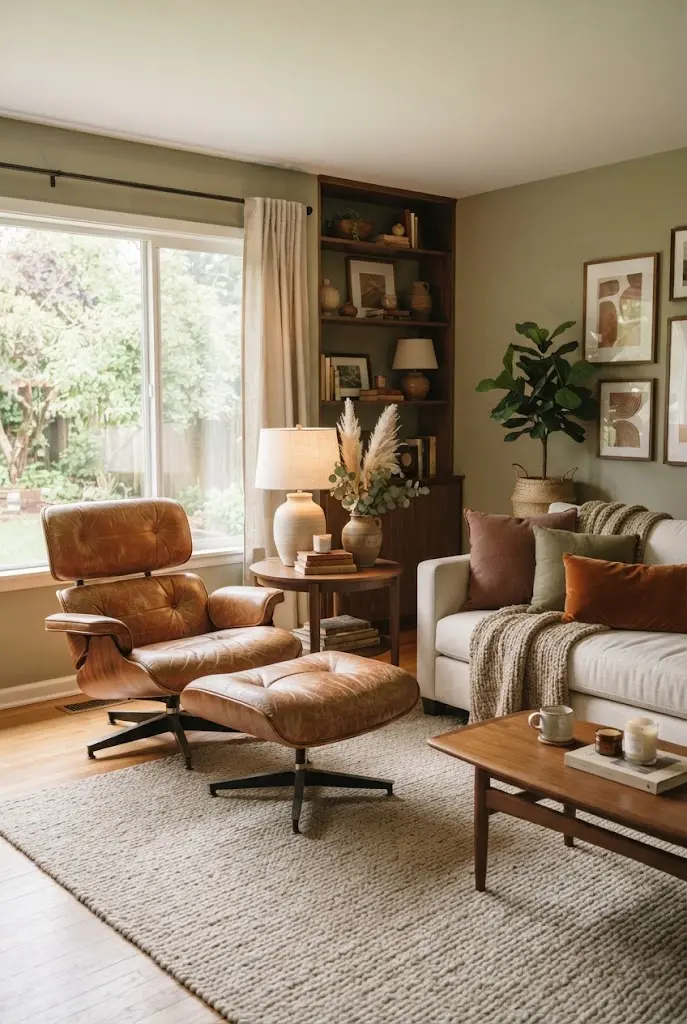
Leather seating can add richness and durability to a retro-inspired room.
Brown and cognac leather are especially compatible with ’70s palettes.
Look for low-profile chairs, sofas, ottomans, or sling-style seating.
Natural leather develops character over time, making it suitable for a collected interior.
Pair leather with cream textiles to keep the room from feeling too dark.
Walnut furniture provides another warm layer that complements the material.
A vintage-inspired leather chair can serve as a comfortable reading spot.
Add a woven throw or patterned cushion for additional softness.
Choose simple silhouettes rather than overly decorative designs.
The combination creates a relaxed and timeless interpretation of ’70s style.
13. Use Rattan and Woven Materials
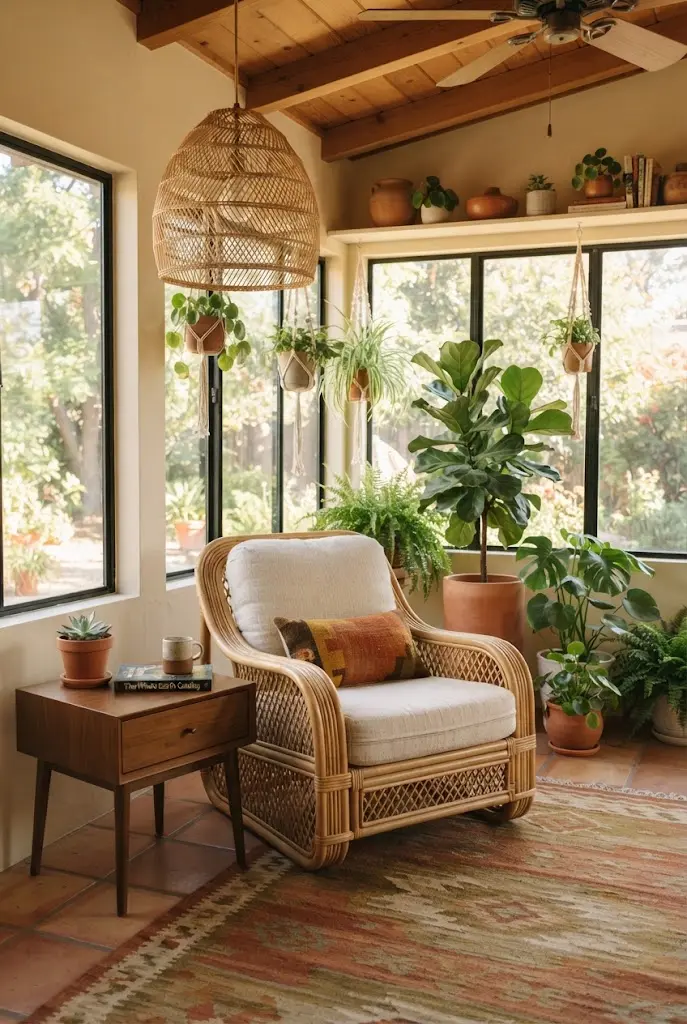
Rattan and woven materials bring a relaxed natural quality to retro interiors.
Consider rattan chairs, baskets, lampshades, headboards, and occasional tables.
Their texture works beautifully with warm wood and earthy colors.
A woven pendant light can add softness above a dining table or kitchen island.
Rattan seating is particularly effective in sunrooms and casual living spaces.
Combine woven pieces with linen, cotton, and wool for tactile variety.
Keep the overall palette warm and neutral if the room already contains bold patterns.
Plants can reinforce the natural, relaxed atmosphere.
Choose sturdy, well-made pieces that feel practical for everyday American living.
The result captures the easygoing side of ’70s decorating.
14. Add a Statement Fireplace
A fireplace can serve as a major architectural feature in a retro-inspired home.
Brick, stone, tile, or plaster surrounds can all work with ’70s influences.
Look for warm materials rather than highly polished contemporary finishes.
A low horizontal fireplace can create a relaxed mid-century-to-’70s feeling.
Place simple furniture around it to keep the architecture visually important.
Wood shelving can add additional warmth to the surrounding wall.
Earthy ceramics and plants can soften the harder fireplace materials.
If your home already has a fireplace, updating the surround may be enough.
Avoid adding excessive decorative objects around the hearth.
A thoughtfully designed fireplace can anchor the entire room.
15. Try Retro Wallpaper
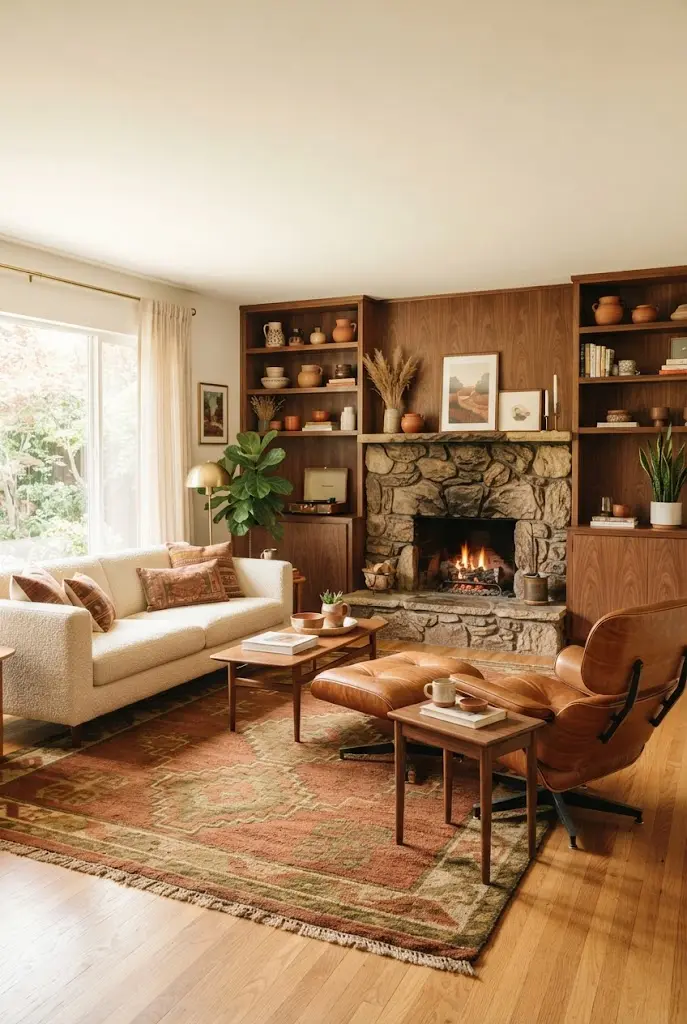
Wallpaper can transform a room more dramatically than almost any accessory.
For a ’70s-inspired look, consider botanical, geometric, abstract, or organic patterns.
Warm neutrals and earthy colors are easier to live with than extremely bright combinations.
Use wallpaper on one accent wall if you want a restrained interpretation.
A powder room can be a great place to experiment with a bolder pattern.
Bedrooms also work well because wallpaper can create a cozy enclosed feeling.
Pair patterned walls with simple furniture to avoid visual overload.
Repeating one wallpaper color in textiles can tie the design together.
Modern wallpaper materials can also make installation and maintenance easier.
This is an effective way to add personality while preserving the rest of the room.
16. Decorate With Indoor Plants
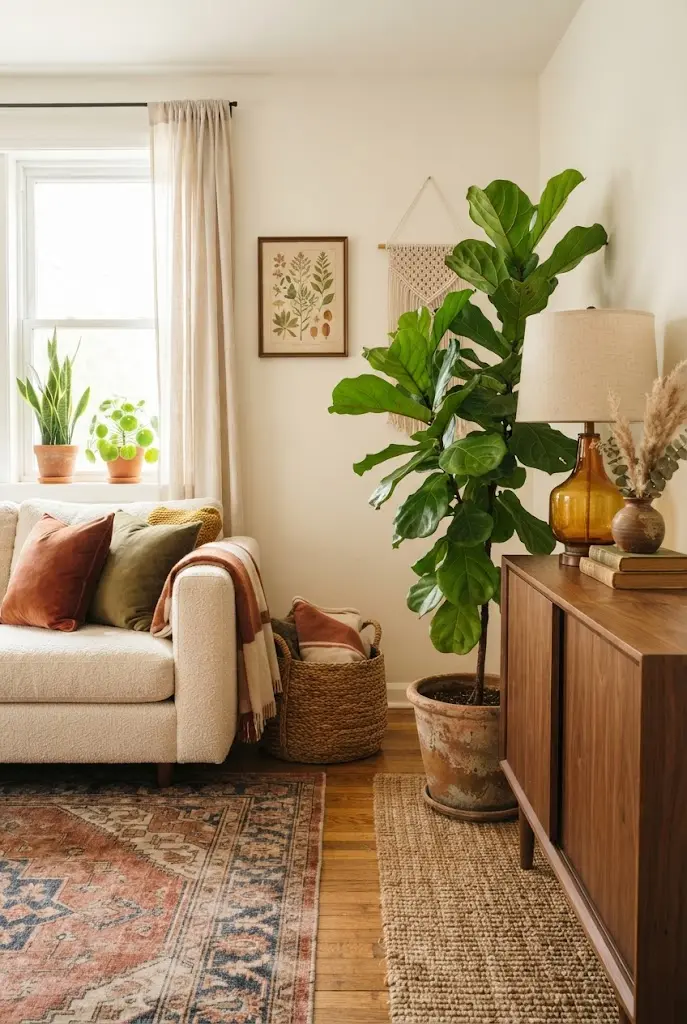
Indoor plants were an important part of the relaxed natural atmosphere of many ’70s interiors.
Large leafy plants can add life and movement to a room.
Try placing plants beside windows, sofas, bookshelves, or empty corners.
Terracotta and woven planters reinforce the retro aesthetic.
Choose plants that suit the actual light conditions in your home.
Mix different heights to create a more natural arrangement.
Avoid making the space look like a greenhouse unless that is intentional.
One large statement plant can be enough for a smaller room.
Green foliage also complements brown, orange, cream, and mustard beautifully.
The result is a fresher interpretation of classic retro decorating.
17. Use Sunburst Mirrors
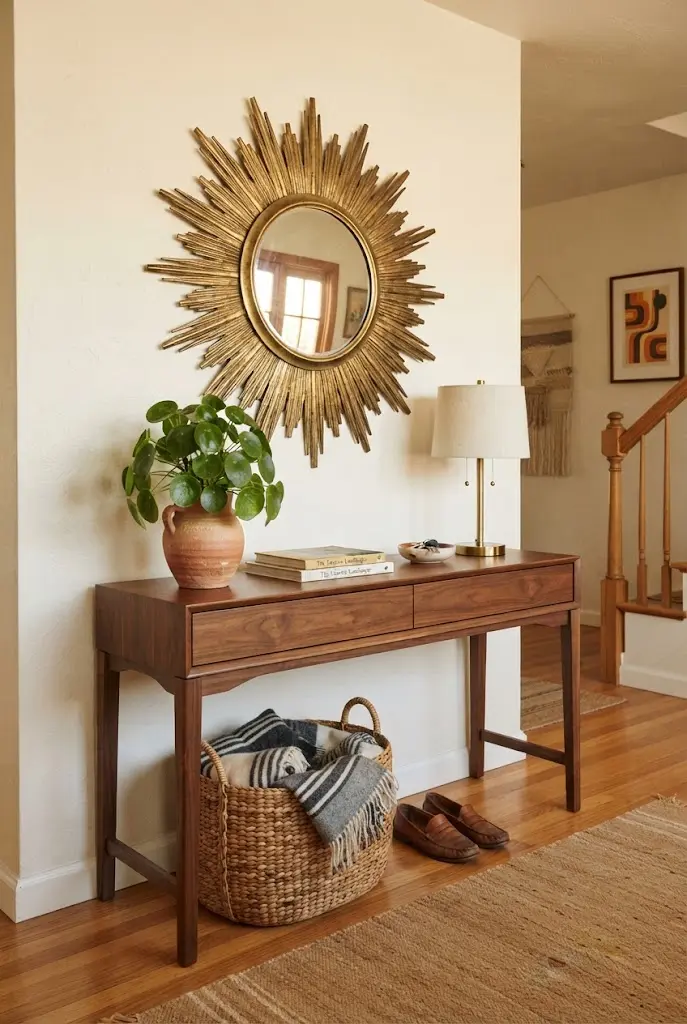
Sunburst mirrors can add a decorative focal point with strong retro character.
A brass, wood, or mixed-material version can work above a console or fireplace.
Choose a size that fits the wall without dominating the entire room.
The radiating shape adds movement to otherwise simple walls.
Pair the mirror with understated furniture and warm neutral colors.
A walnut console underneath can reinforce the natural wood palette.
Avoid using several statement mirrors in the same space.
Instead, allow one sunburst design to become the primary decorative accent.
Soft lighting can highlight the dimensional shape around the mirror.
This creates a recognizable retro reference without overwhelming the room.
18. Choose Low-Profile Furniture
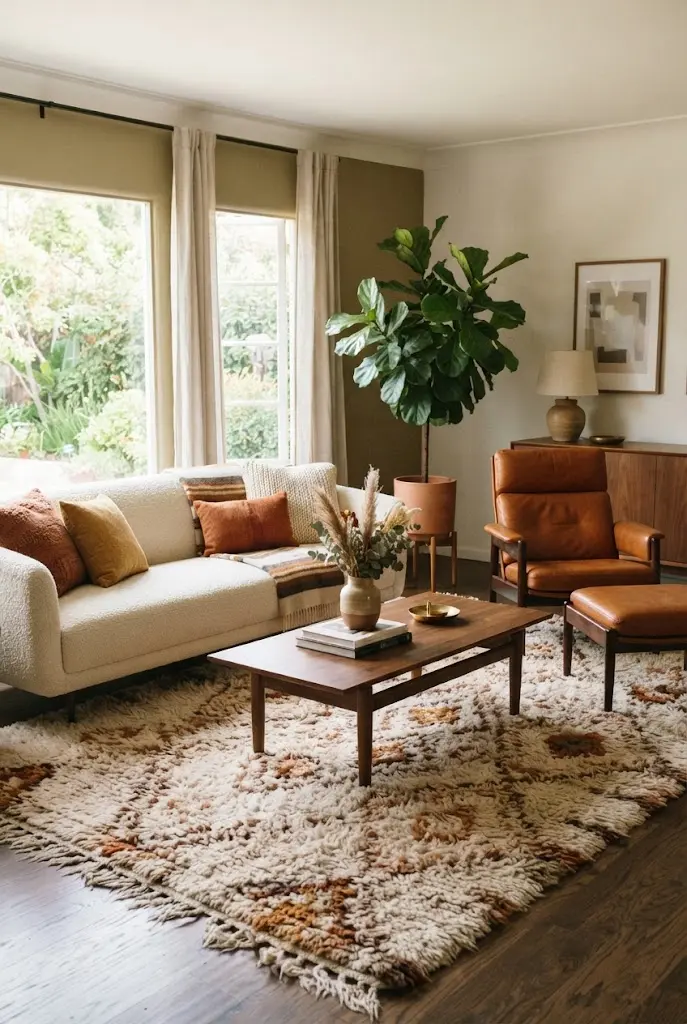
Low-profile furniture helps create the relaxed visual language associated with the ’70s.
Look for sofas and chairs with lower seats and simple horizontal silhouettes.
This furniture can make a room feel more open and informal.
Pair low seating with a substantial textured rug for visual grounding.
Walnut and leather work especially well with these shapes.
Rounded cushions can make the furniture feel more comfortable and inviting.
Avoid filling the room with oversized furniture that blocks natural pathways.
Use a few carefully selected pieces rather than many small items.
This approach is especially useful in large family rooms.
The overall effect feels casual, comfortable, and retro-inspired.
19. Bring in Amber Glass
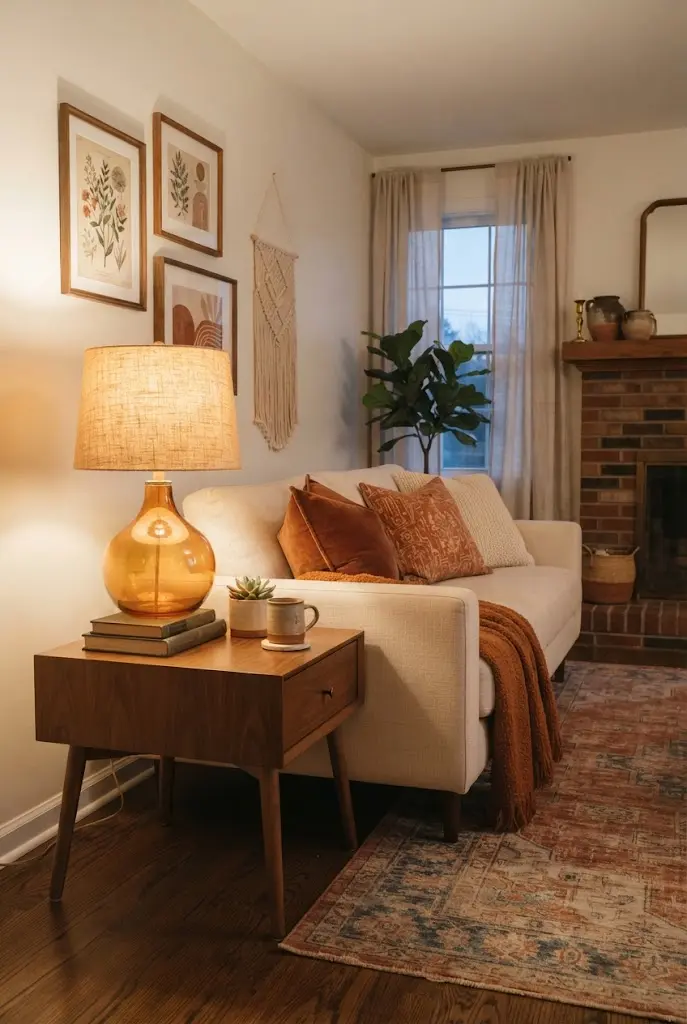
Amber glass can add a warm vintage glow to a room.
Use it in table lamps, pendant lights, vases, or decorative vessels.
The golden-brown color works naturally with walnut and earthy textiles.
Amber glass becomes especially attractive when illuminated in the evening.
Pair a glass lamp with a cream or rust-colored shade for a softer look.
Small amber vases can also add color without committing to permanent changes.
Use several pieces in different locations rather than creating one crowded display.
The translucent material adds visual depth to shelves and tables.
Brass accents can complement amber glass particularly well.
Together, these details create a cozy retro atmosphere.
20. Add a Conversation-Friendly Dining Area
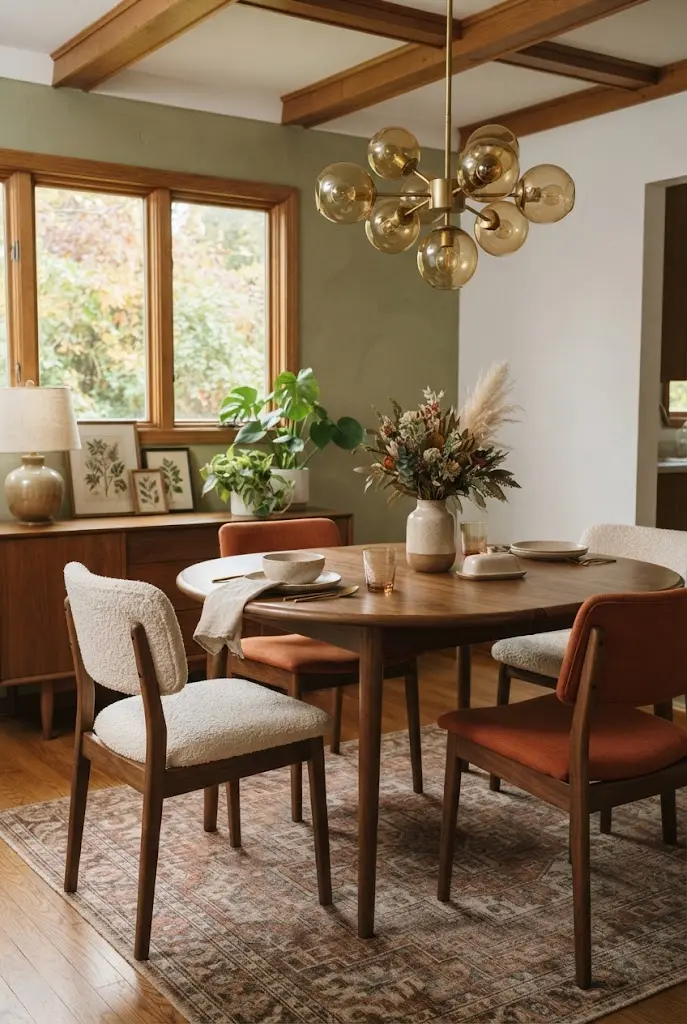
Dining spaces can easily reflect the social atmosphere associated with the ’70s.
Choose a substantial wood dining table with comfortable upholstered or wooden chairs.
Rounded tables can make conversations feel more intimate.
A patterned rug beneath the table can introduce retro visual interest.
Warm pendant lighting helps create a welcoming dining environment.
Ceramic tableware can add handcrafted character.
Keep the centerpiece simple so the table remains practical for everyday meals.
Earthy colors can connect the dining room with nearby living spaces.
Natural wood also helps make the room feel grounded and timeless.
The finished space should feel ready for both family dinners and relaxed gatherings.
21. Use Burnt Orange Accents
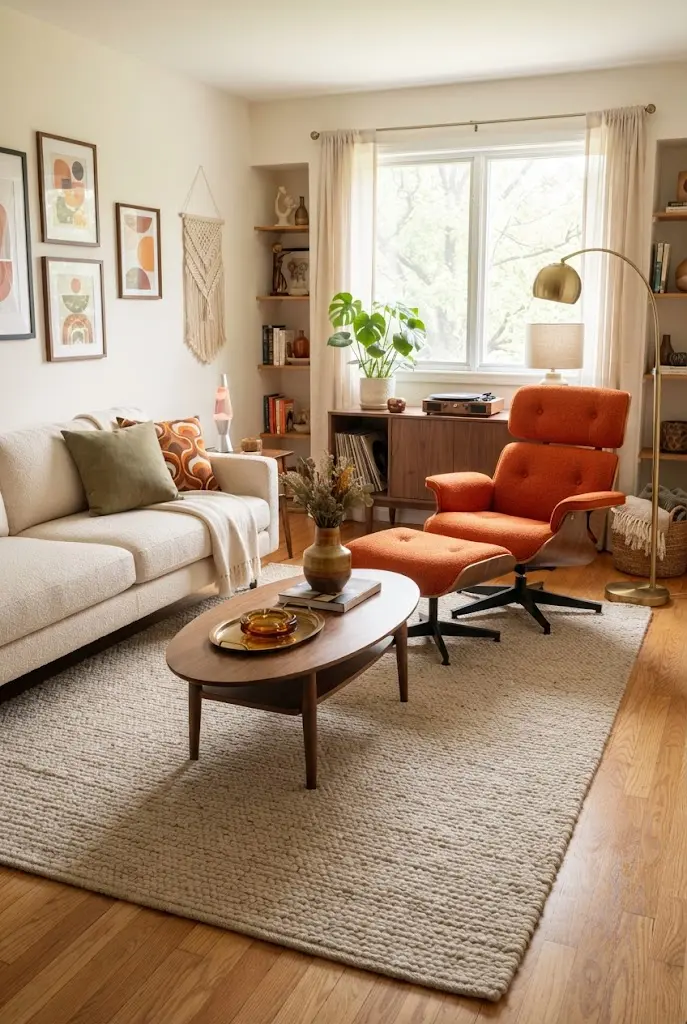
Burnt orange is one of the most recognizable colors of retro decorating.
It can be introduced through a chair, rug, curtains, cushions, or artwork.
The color works beautifully with cream, walnut, brown, and muted green.
A burnt-orange accent chair can provide a strong focal point in a neutral room.
Smaller accessories allow you to experiment without making the room feel too themed.
Textured fabrics can make the color look richer and more sophisticated.
Repeat the shade in small details to create a cohesive palette.
Avoid pairing too many saturated colors unless you want a very bold vintage effect.
Natural wood helps soften the intensity of orange.
This approach brings warmth and personality into otherwise neutral spaces.
22. Create a Retro Reading Nook
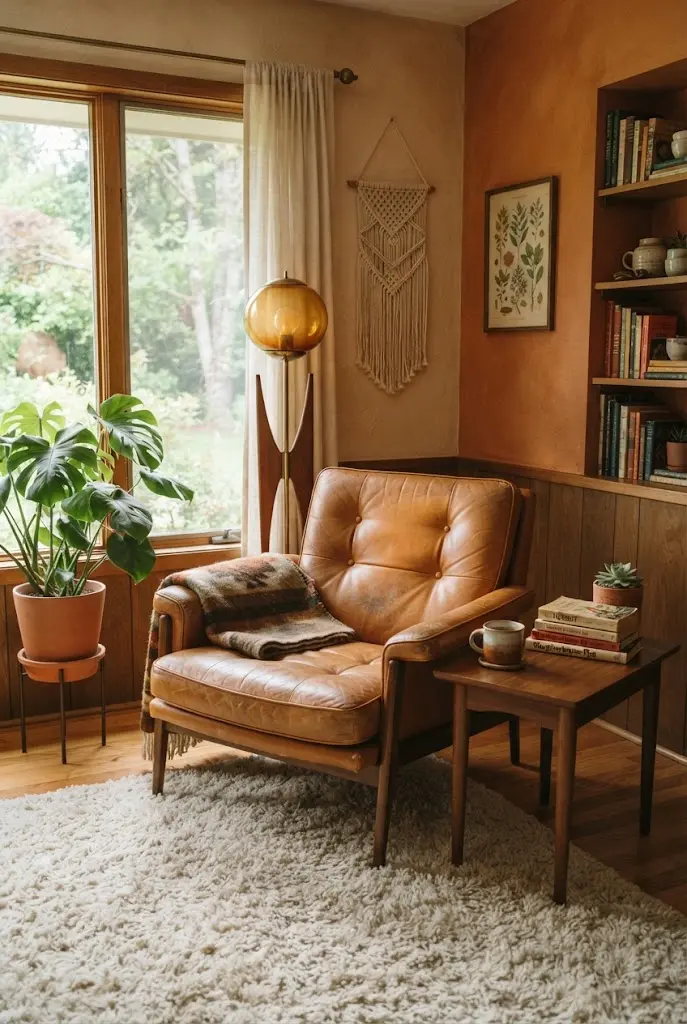
A dedicated reading nook can capture the comfortable side of ’70s interior design.
Choose a low lounge chair with soft upholstery or natural leather.
Add a small walnut side table for books, tea, or a ceramic lamp.
A shag-style rug can visually separate the nook from the rest of the room.
A floor lamp provides practical light while adding sculptural interest.
Use warm colors such as caramel, rust, mustard, or olive in small amounts.
Place the chair near a window whenever possible for natural daylight.
A large plant can make the corner feel more relaxed and organic.
Keep the area uncluttered so it remains inviting and functional.
This small space can become a charming retro-inspired feature within a larger home.
23. Layer Textured Textiles
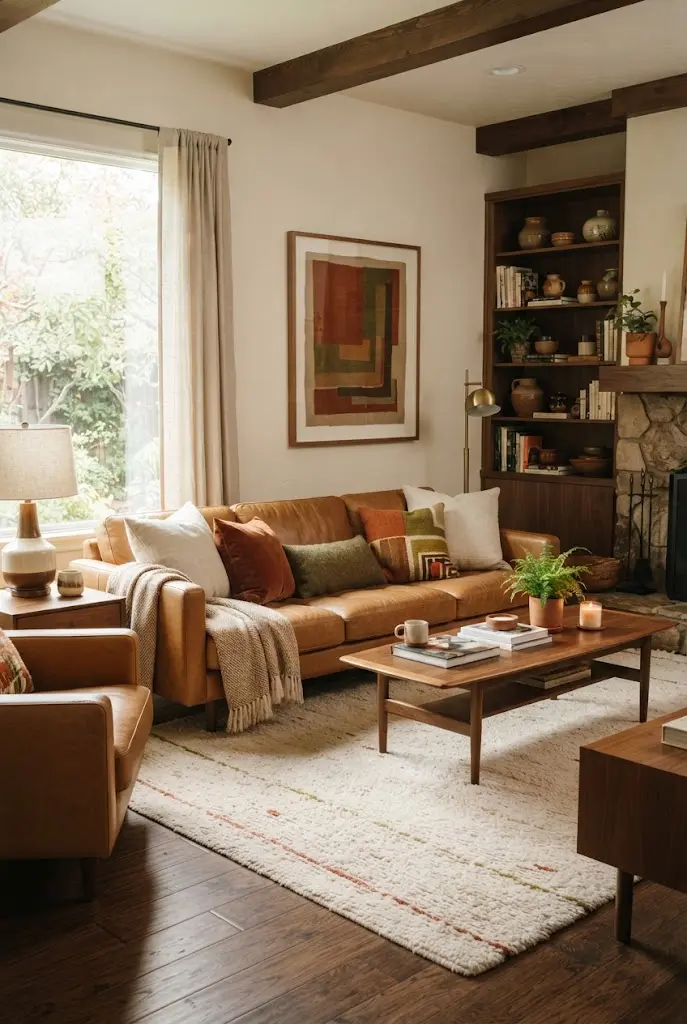
Texture is essential for making retro-inspired interiors feel warm and comfortable.
Mix wool, linen, cotton, velvet, boucle, leather, and woven fibers.
Layering different textures creates depth even when the color palette is restrained.
A wool rug can sit beneath a linen sofa and leather chair.
Velvet cushions can add a subtle touch of vintage luxury.
Woven throws and baskets provide natural contrast.
Choose a limited palette so the different materials work together harmoniously.
Texture is particularly effective in bedrooms and living rooms.
It also helps modern furniture feel less stark and formal.
The result is a cozy room with plenty of tactile character.
24. Introduce Vintage Posters and Artwork
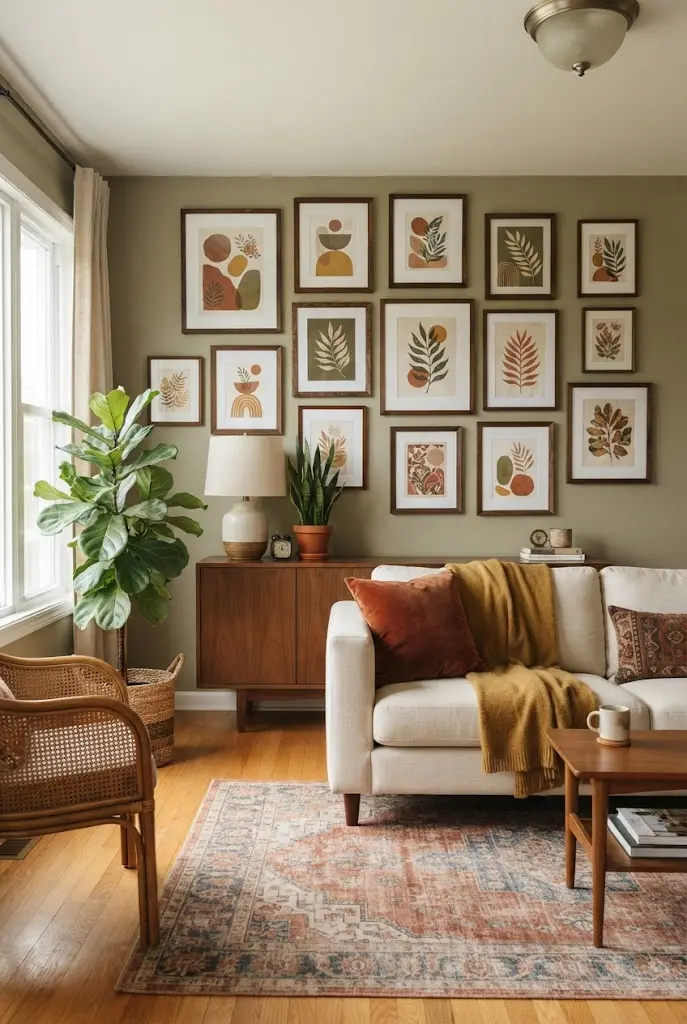
Artwork is an easy way to reference the decade without changing the architecture.
Look for abstract forms, botanical illustrations, photography, or vintage-inspired graphic prints.
Warm frames in walnut or dark wood can complement the overall palette.
Choose artwork that works with your personal taste rather than simply copying period trends.
A large statement piece can anchor a living room wall.
Smaller prints can be arranged above a console or reading nook.
Repeat colors from the artwork in nearby pillows or ceramics.
Avoid covering every wall because empty space helps artwork stand out.
Mixing vintage-looking pieces with contemporary art can create a collected atmosphere.
This makes the room feel personal rather than like a themed set.
25. Use Mushroom and Dome Shapes
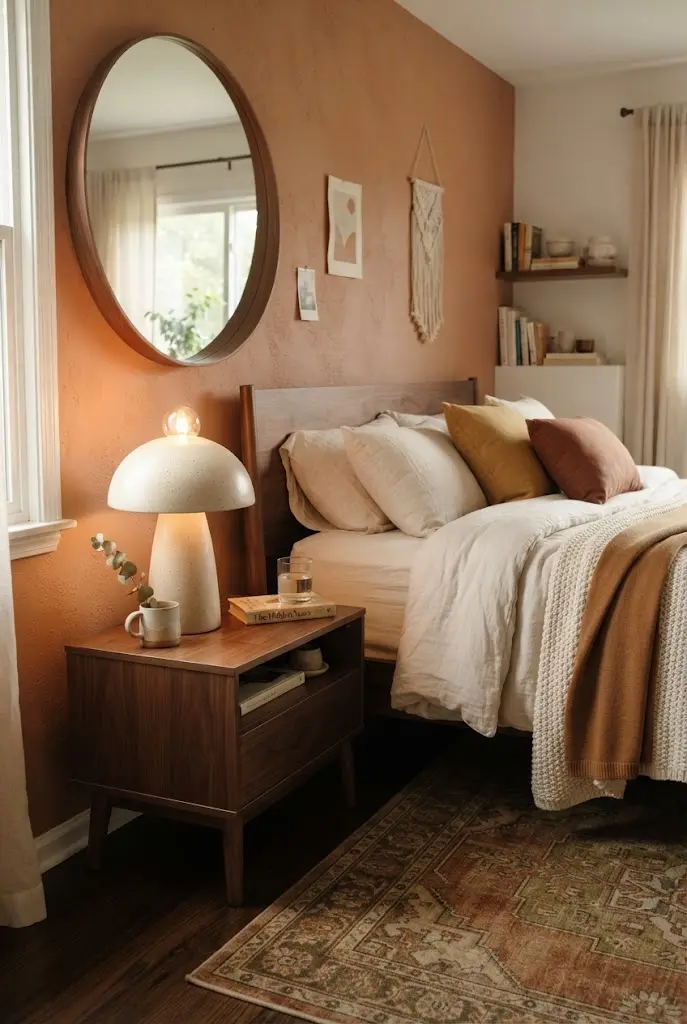
Rounded mushroom and dome silhouettes can create an understated retro feeling.
Try them in table lamps, pendant lights, chairs, mirrors, or decorative objects.
Their soft geometry contrasts nicely with straight-lined furniture.
Metal, ceramic, glass, and fabric versions can all work.
A mushroom-shaped lamp can become a small sculptural focal point on a side table.
Pair these shapes with warm wood and earthy colors for a cohesive look.
Avoid using the same rounded shape everywhere.
One or two carefully chosen pieces can make a stronger impression.
These forms also blend naturally with contemporary interiors.
They offer a subtle way to reference the ’70s without relying on obvious vintage motifs.
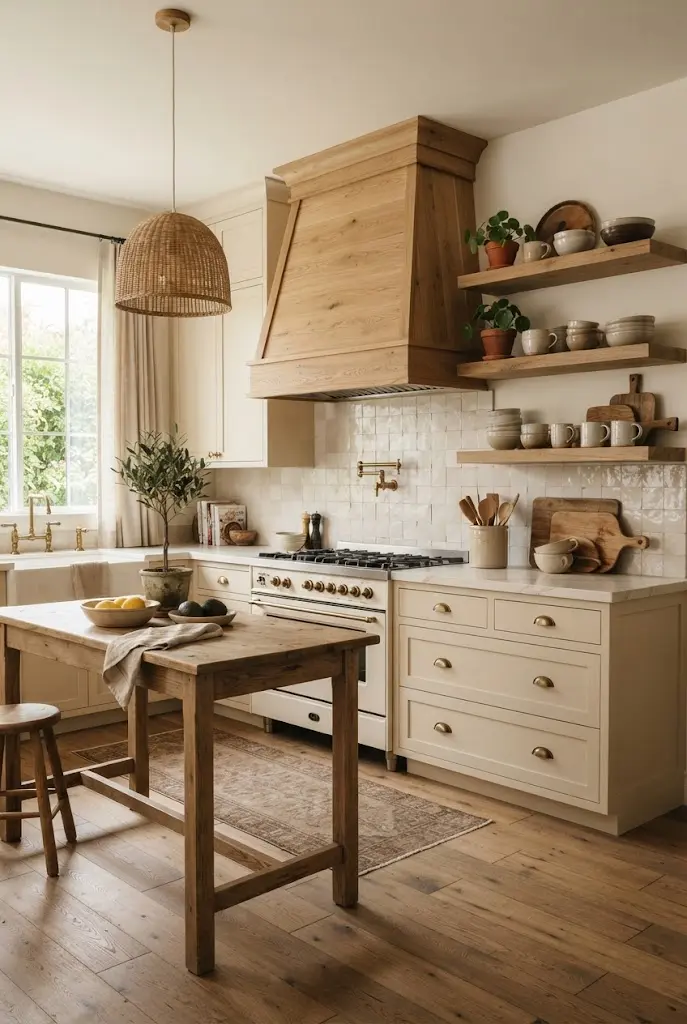
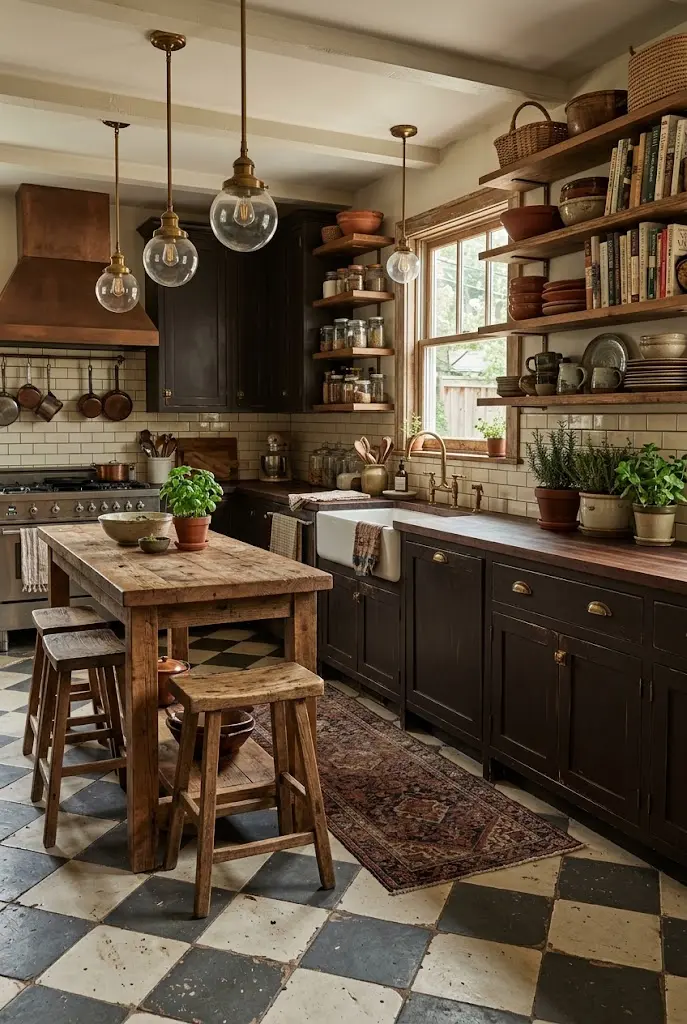
26. Style a Warm Retro Kitchen
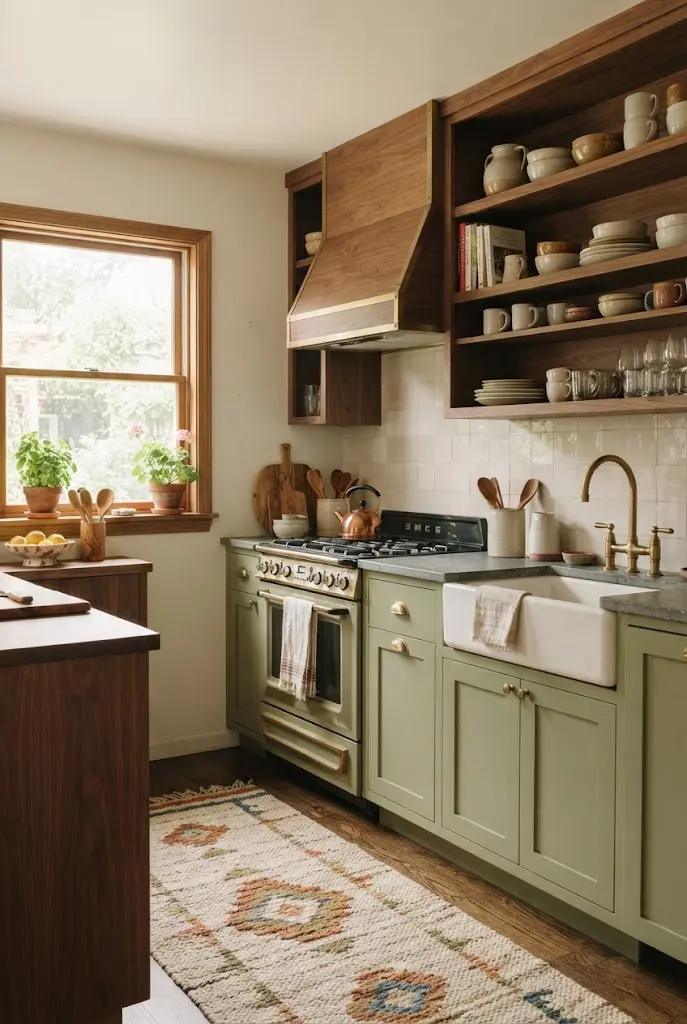
Kitchens can benefit from ’70s colors and natural materials without sacrificing modern function.
Consider cream or muted green cabinetry paired with walnut or wood accents.
Terrazzo, earthy tile, or stone-inspired surfaces can add retro character.
Open shelving can display handmade ceramics and colorful cookware.
Brass or aged-metal hardware can reinforce the warm palette.
A patterned runner adds softness and visual interest.
Use modern appliances where necessary while keeping the surrounding design period-inspired.
Wood cutting boards and woven accessories add natural texture.
Avoid combining too many strong patterns in a compact kitchen.
The result can feel nostalgic, practical, and distinctly American.
27. Choose Retro-Inspired Bathroom Tile
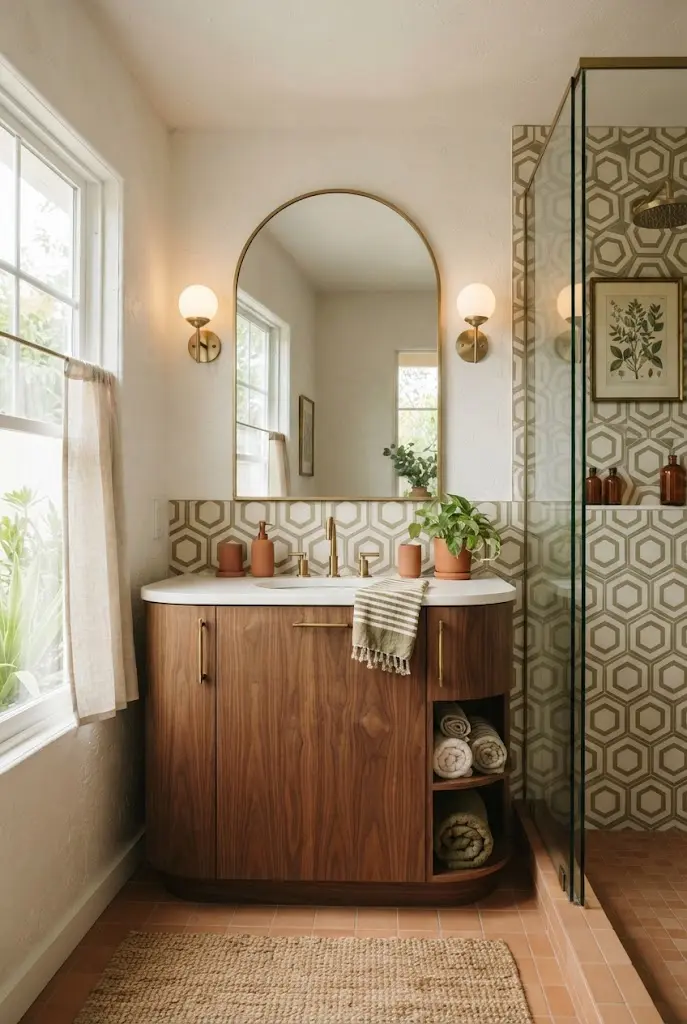
Bathrooms offer an excellent opportunity to experiment with retro-inspired materials.
Consider small-format tiles, earthy colors, rounded mirrors, and warm metal fixtures.
Muted mustard, olive, terracotta, cream, and brown can create a distinctive palette.
A checkerboard or geometric tile pattern can provide visual interest.
Keep the vanity and storage simple so the tile remains the main feature.
Natural wood accents can soften a tile-heavy space.
Warm lighting helps bring out earthy tones.
Vintage-inspired fixtures can complement modern plumbing and practical features.
Avoid making every element from the same era.
Combining period-inspired surfaces with contemporary conveniences creates a more livable result.
28. Add a Retro Bar Cart
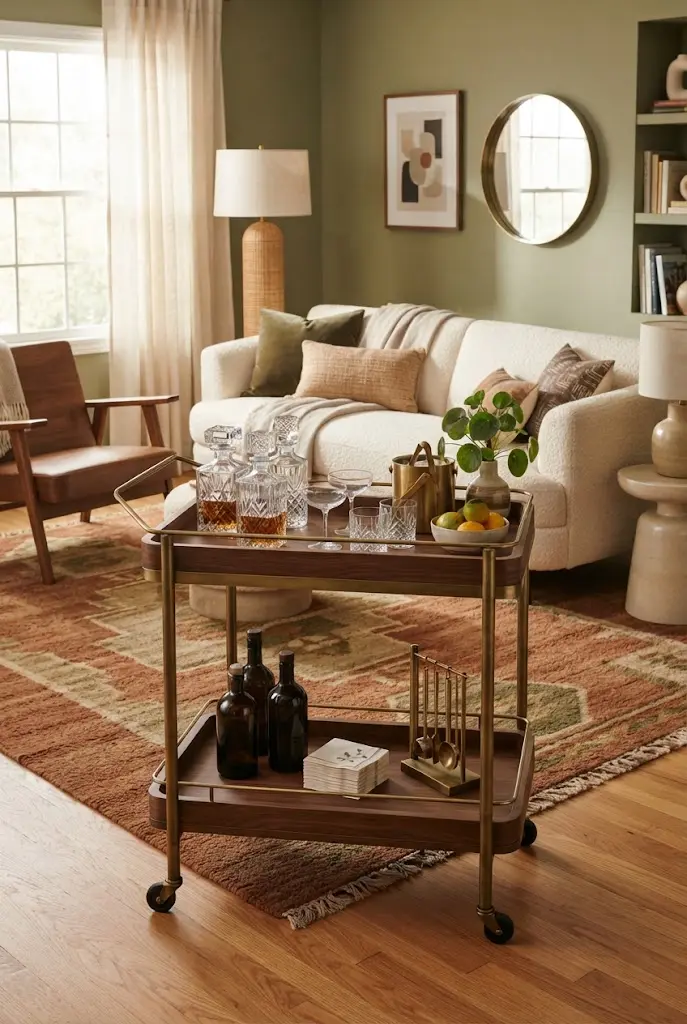
A bar cart can provide a classic entertaining detail in a ’70s-inspired home.
Choose a simple wood, brass, or mixed-material design.
Style it with glassware, a ceramic vase, cocktail accessories, and a small plant.
If you prefer not to use it for beverages, it can function as a coffee or display cart.
Rounded wheels and warm finishes can enhance the retro appearance.
Place it near a dining room or living room for convenient access.
Keep the arrangement visually tidy and avoid overcrowding the shelves.
A small framed artwork or decorative object can add personality.
The cart should complement the room rather than dominate it.
This detail brings a relaxed entertaining atmosphere into the space.
29. Use Arched Doorways and Details
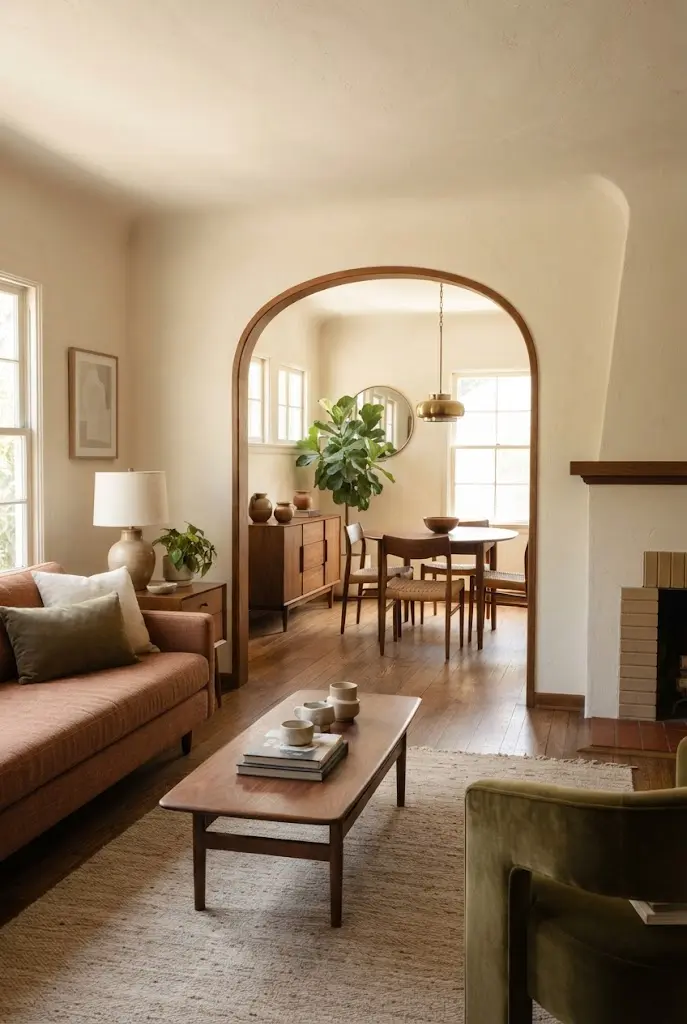
Arches can introduce a softer architectural quality inspired by retro interiors.
If your home already has an arch, emphasize it with warm paint or natural materials.
For renovations, an arched doorway can become a distinctive transition between rooms.
You can also create the effect through arched mirrors, niches, cabinets, or artwork.
Rounded forms work especially well with low-profile furniture.
Pair arches with earthy colors and walnut for a cohesive visual language.
Keep the surrounding architecture relatively simple so the shape remains noticeable.
Arches can also make narrow spaces feel more visually interesting.
A curved opening between a kitchen and dining area can create a welcoming transition.
This approach brings retro-inspired architecture into a modern American setting.
30. Create a Cozy ’70s-Inspired Bedroom
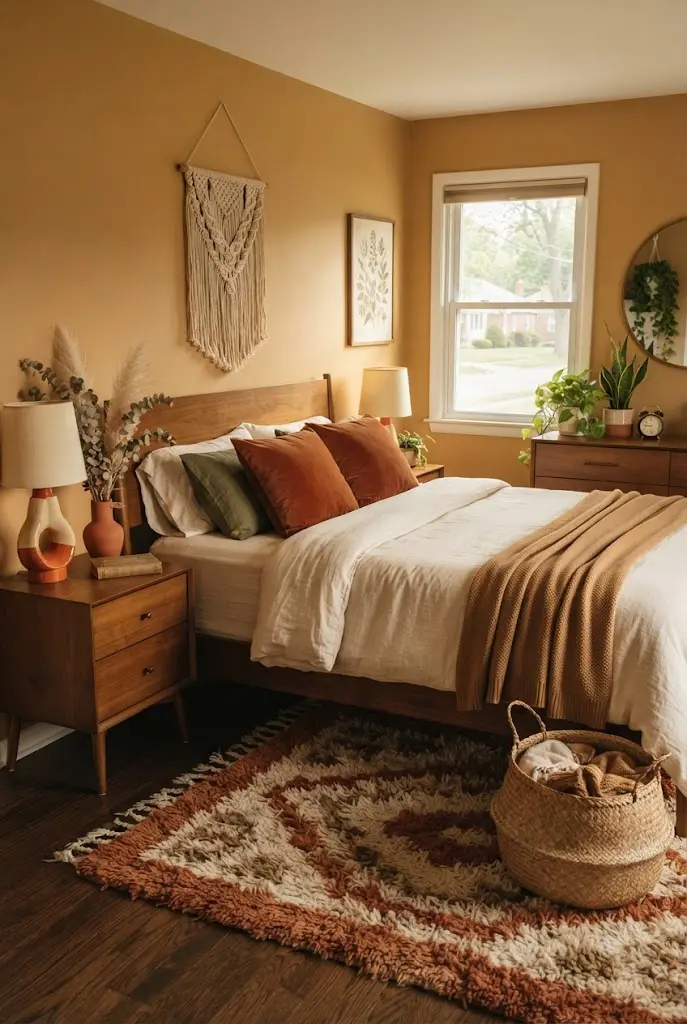
Bedrooms are ideal for using the softer and more comfortable side of retro design.
Choose warm bedding colors such as cream, rust, caramel, olive, or mustard.
A walnut bed frame or nightstand adds natural richness.
Textured rugs and woven accessories create additional warmth.
A rounded lamp or vintage-inspired artwork can provide subtle character.
Avoid using too many bold patterns because bedrooms benefit from visual calm.
Layering blankets and pillows can make the space feel relaxed and inviting.
Plants and handmade ceramics add organic details.
Warm lighting is particularly important for creating a comfortable evening atmosphere.
The result should feel nostalgic, peaceful, and practical for everyday living.
31. Mix ’70s Style With Modern Pieces
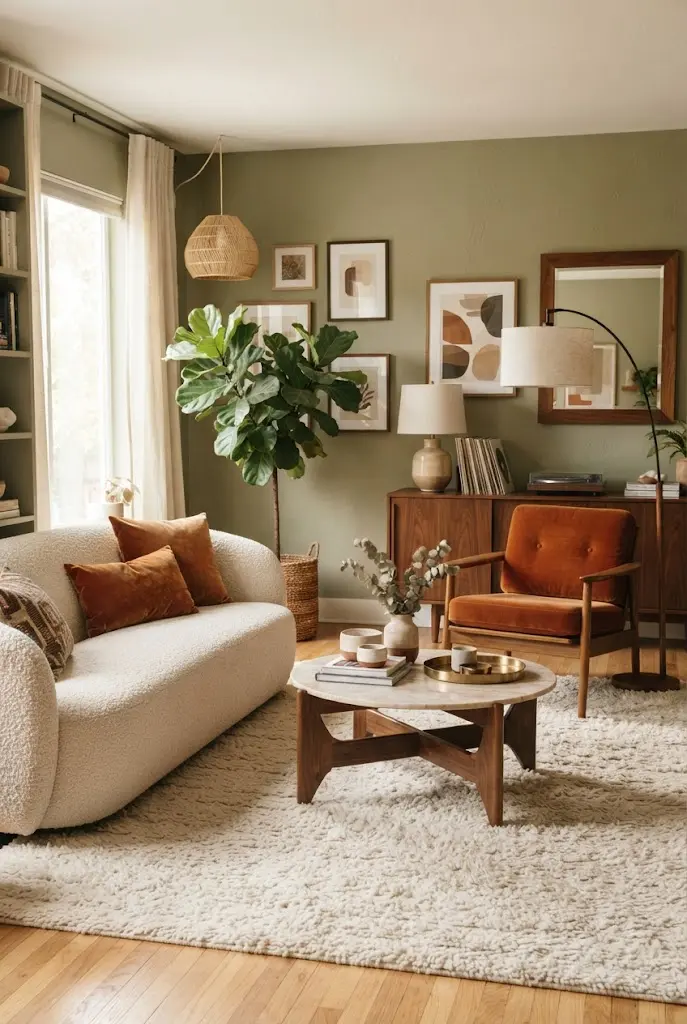
The most flexible way to embrace retro design is to mix vintage-inspired elements with contemporary pieces.
You do not need every item in a room to look like it came from the 1970s.
Combine a modern sofa with a vintage-inspired rug or walnut credenza.
Pair contemporary lighting with retro artwork and earthy accessories.
Modern cabinetry can work beautifully with terracotta, rattan, and warm wood.
This balance keeps the home functional while preserving nostalgic personality.
Use color and texture to connect pieces from different design periods.
Choose a few statement pieces and let them become the visual anchors.
The remaining furniture can stay simple and timeless.
This approach creates a home that feels inspired by the ’70s without becoming overly themed.