18 Must-Have Features for a ’70s Interior Design Retro Look
The 1970s brought a distinctive approach to American interior design that blended warmth, comfort, bold colors, and natural materials.
Today, ’70s-inspired interiors are returning with updated touches that make them feel stylish rather than dated.
Earthy palettes, wood surfaces, textured fabrics, and vintage-inspired furniture can instantly create a retro atmosphere.
Rounded shapes and cozy seating also help capture the relaxed character of the decade.
From kitchens and living rooms to bedrooms and dining spaces, these features can work throughout a home.
You can recreate the look with authentic vintage pieces or modern furniture inspired by classic ’70s design.
The key is combining nostalgic details with practical layouts and contemporary comfort.
Here are 18 must-have features to help create a warm and recognizable ’70s interior design look.
1. Earthy Color Palettes
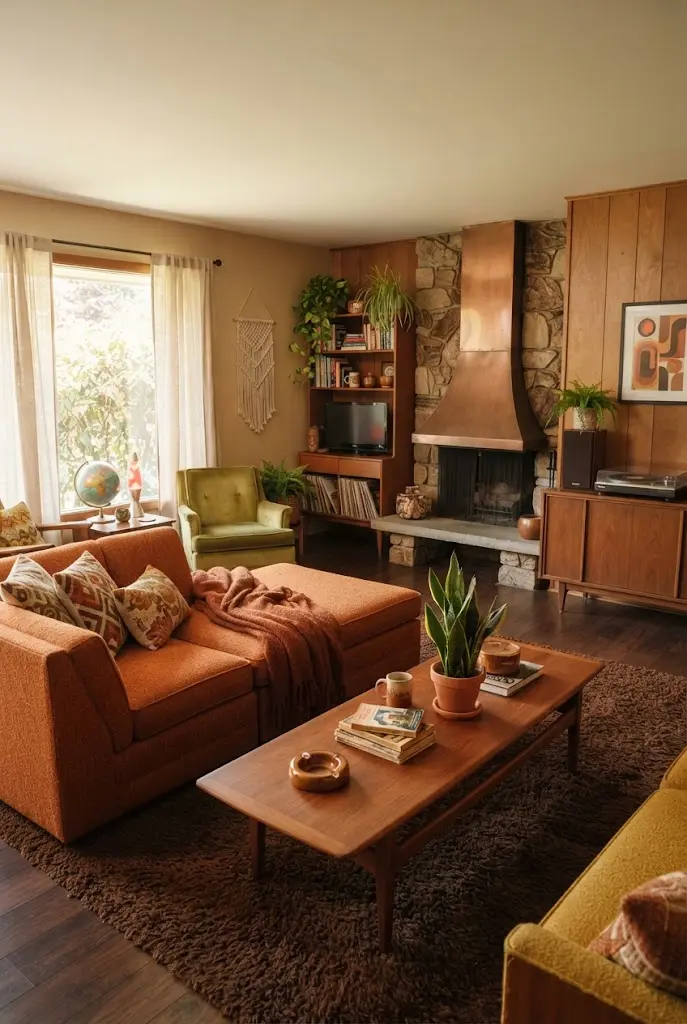
A warm earthy palette is one of the easiest ways to bring ’70s character into an American home.
Think burnt orange, avocado green, mustard yellow, warm brown, beige, and rust.
These shades can be used on walls, furniture, rugs, curtains, or decorative accessories.
For a modern interpretation, balance stronger colors with cream or soft neutral tones.
A mustard accent chair can add personality without overwhelming the room.
Rust-colored pillows and blankets can introduce smaller doses of retro color.
Olive and avocado-inspired greens work especially well with natural wood.
Brown leather can further strengthen the warm vintage atmosphere.
Using several related earthy shades creates a cohesive interior rather than a themed room.
This color combination captures the relaxed and expressive spirit associated with 1970s American homes.
2. Wood Paneling
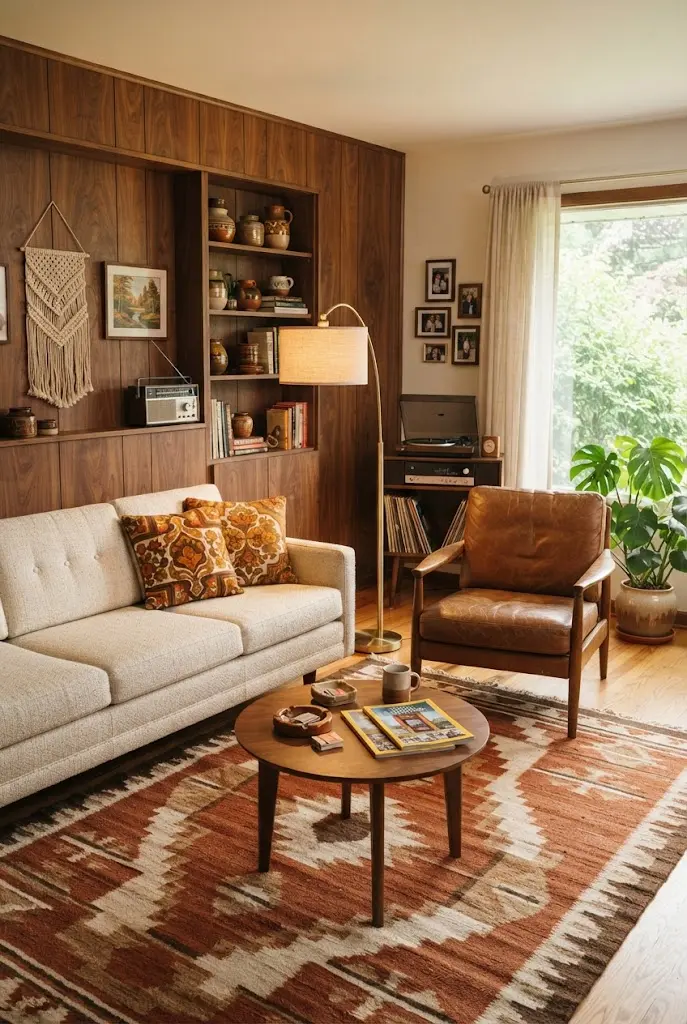
Wood paneling immediately adds warmth and visual texture to a ’70s-inspired interior.
Classic homes from the era often featured wood surfaces that made rooms feel cozy and grounded.
Today, you can recreate this look with natural oak, walnut, teak, or warm-toned wood finishes.
Full wall paneling can create a dramatic vintage statement in a living room or den.
For a lighter approach, use wood on one accent wall instead of covering the entire room.
Vertical or horizontal panel layouts can create different visual effects.
Pairing wood with cream upholstery keeps the room from feeling too dark.
Vintage artwork and woven accessories complement the natural material beautifully.
Modern lighting can also prevent the space from looking overly dated.
The result is a warm backdrop that connects strongly with classic ’70s interiors.
3. Shag Rugs
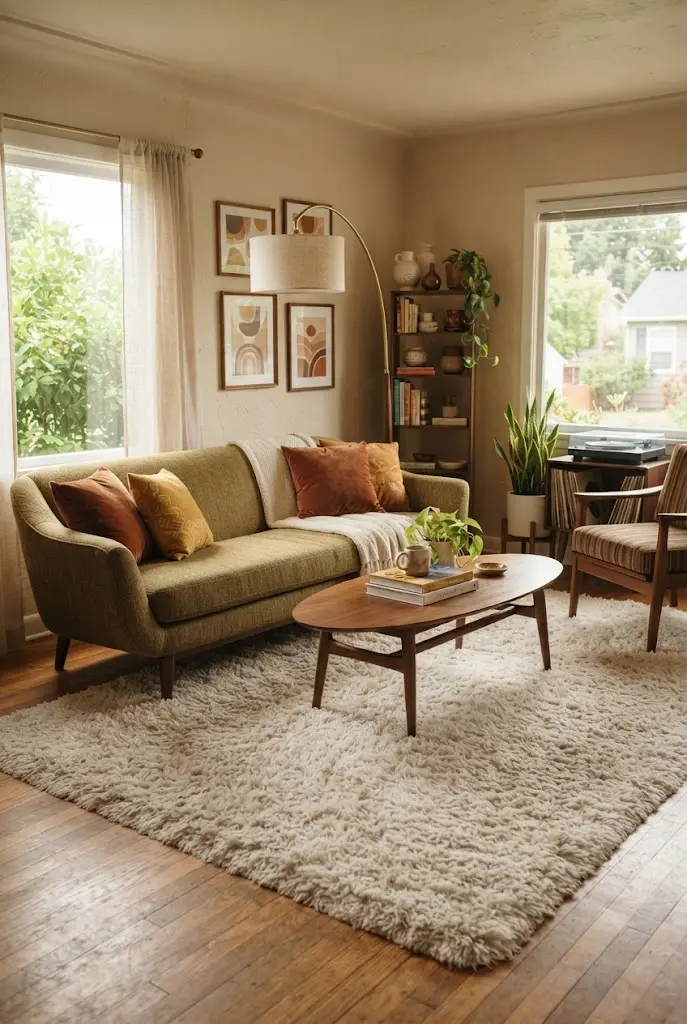
Shag rugs are an iconic way to introduce ’70s texture underfoot.
Their thick, soft fibers create the cozy feeling that made many interiors of the decade inviting.
Choose neutral cream, warm beige, brown, rust, or muted orange for an authentic appearance.
A large shag rug can anchor a living room seating arrangement.
Smaller versions can also work beside a bed or underneath a lounge chair.
Longer fibers add visual softness to rooms dominated by hard wood surfaces.
Pairing a shag rug with low-profile furniture strengthens the retro aesthetic.
Avoid filling every surface with heavy texture because the room can quickly feel cluttered.
Instead, allow the rug to become one of the main tactile features.
This simple addition can make a contemporary room feel noticeably more vintage-inspired.
4. Low-Profile Furniture
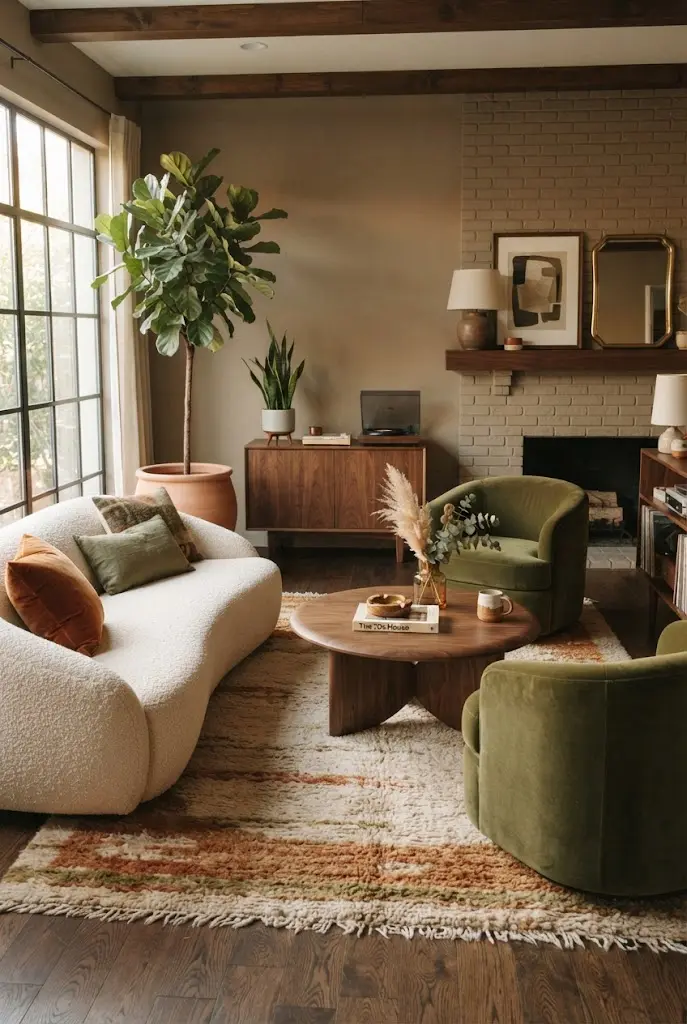
Low-profile furniture gives a room the relaxed silhouette associated with many ’70s interiors.
Look for sofas and chairs positioned closer to the floor than contemporary bulky furniture.
Rounded cushions and wide seats can make the arrangement feel especially authentic.
Leather, velvet, corduroy, and textured upholstery are useful choices for this style.
A low coffee table can reinforce the horizontal visual lines of the room.
Keep enough walking space around the furniture to maintain a practical layout.
Pairing low seating with taller plants creates attractive height contrast.
Warm wood frames can connect the furniture with other natural elements.
Choose pieces with comfortable proportions rather than purely decorative vintage shapes.
This approach creates a relaxed space that feels inspired by the ’70s while remaining functional today.
5. Rounded Furniture Shapes
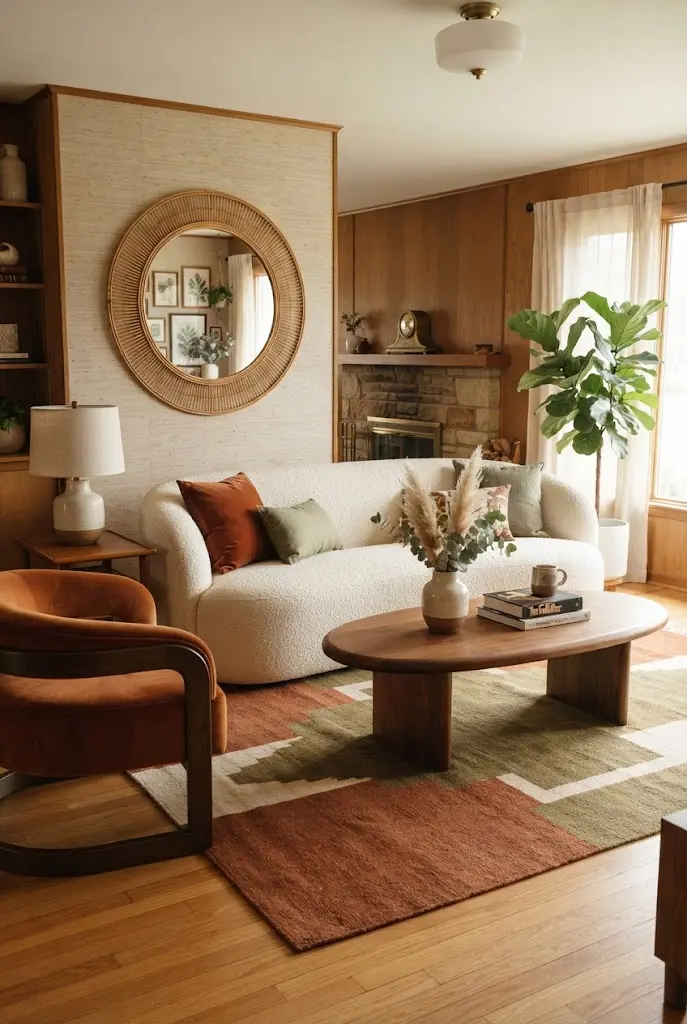
Rounded furniture is an excellent way to soften a retro-inspired room.
Curved sofas, circular chairs, oval tables, and rounded lamps can all reference ’70s design.
These shapes create a more relaxed appearance than sharp contemporary furniture.
A curved sofa can become the focal point of a spacious living room.
Round coffee tables work especially well with large area rugs.
You can also introduce curves through mirrors, ottomans, and decorative objects.
Keep the surrounding furniture relatively simple so the rounded pieces stand out.
Earthy upholstery colors make curved furniture feel especially connected to the decade.
Modern construction ensures the furniture remains comfortable and practical.
Combining nostalgic curves with contemporary functionality creates a balanced retro interior.
6. Velvet and Corduroy Textures
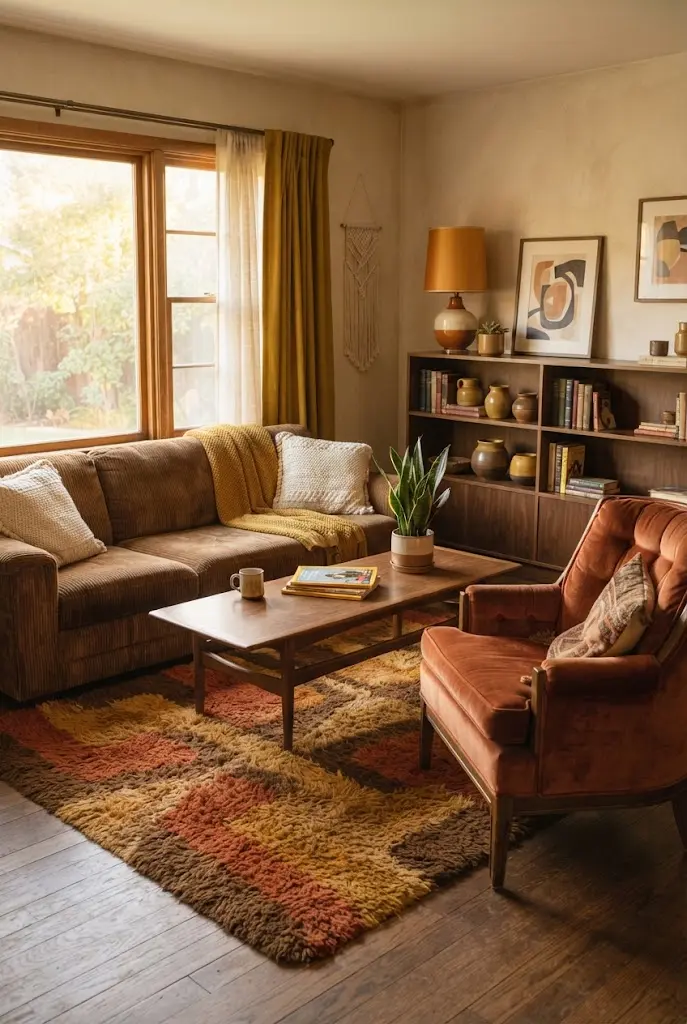
Rich textiles help create the tactile quality associated with ’70s interiors.
Velvet and corduroy are particularly effective for sofas, accent chairs, cushions, and ottomans.
Their visible texture adds depth without requiring dramatic architectural changes.
Mustard velvet can introduce a classic retro accent to a neutral room.
Brown or rust corduroy works beautifully with natural wood furniture.
For a more subtle look, use these materials on smaller accessories.
Mixing textured fabrics prevents the space from appearing flat or overly polished.
Natural daylight helps reveal the texture and richness of these materials.
Keep the color palette coordinated so multiple textures do not become visually chaotic.
These fabrics can make a modern room feel warmer and more connected to vintage design.
7. Statement Pendant Lighting
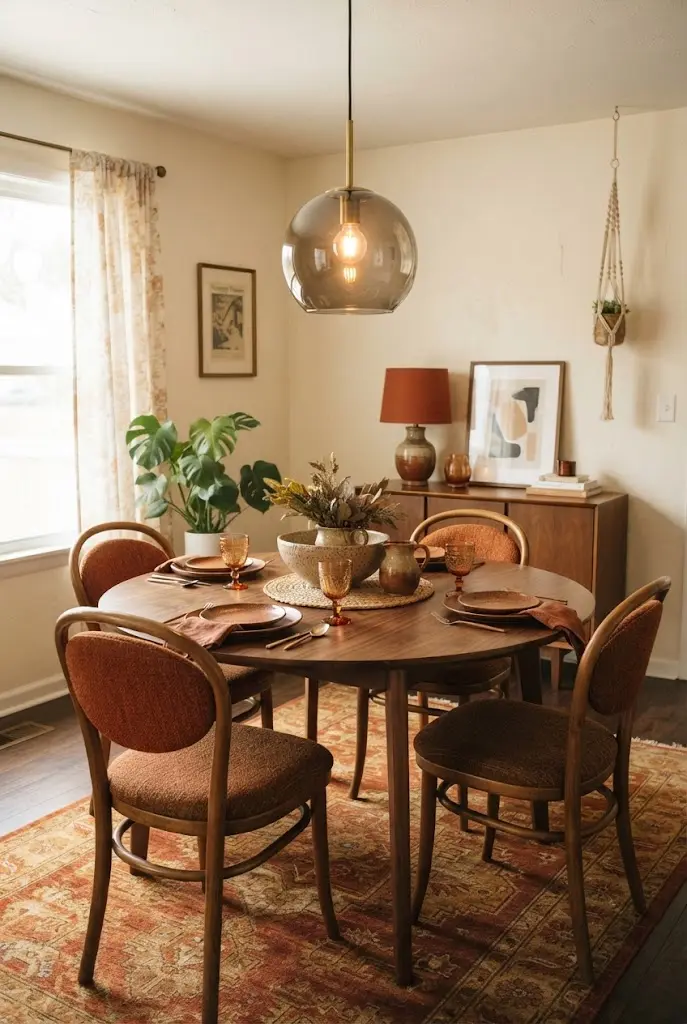
Statement lighting can transform a room while adding a strong retro focal point.
Pendant lights with globe, dome, or sculptural shapes work especially well.
Look for finishes such as brass, smoked glass, warm metal, or natural materials.
A large pendant can visually anchor a dining table or kitchen island.
Globe lighting creates a soft and nostalgic atmosphere when paired with warm bulbs.
Sculptural fixtures can also bring personality to a minimalist room.
Choose lighting that fits the scale of the space rather than simply selecting the largest fixture.
Warm illumination works better than harsh cool-white light for a vintage atmosphere.
Combining statement lighting with wood and earthy colors creates a cohesive look.
The right fixture can make the entire room feel intentionally designed.
8. Vintage-Inspired Wallpaper
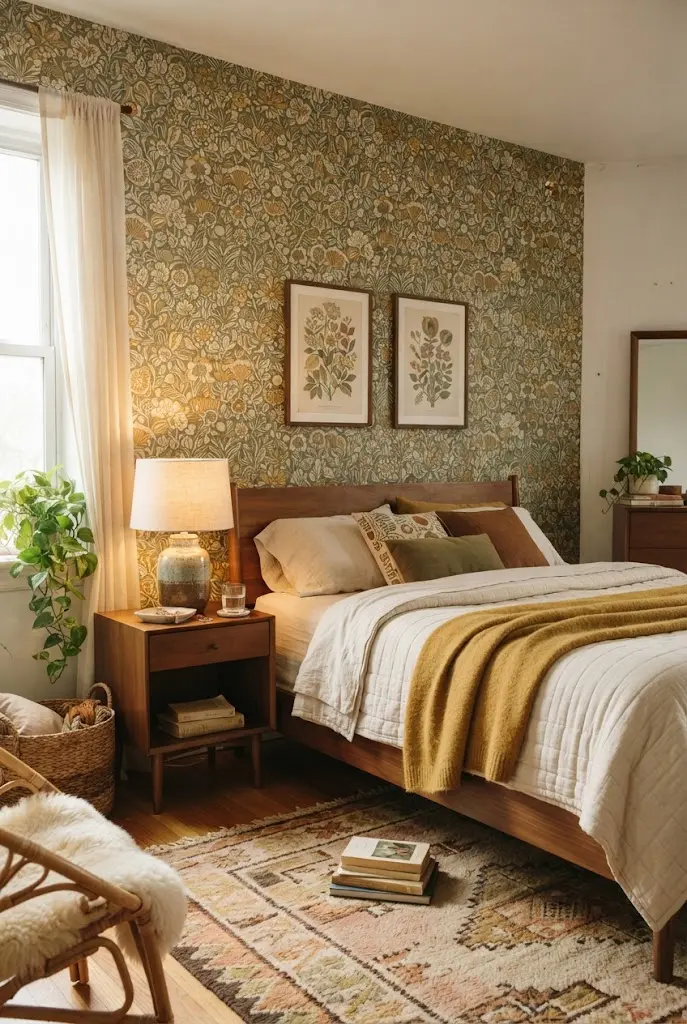
Wallpaper can bring bold personality to a ’70s-inspired room.
Geometric patterns, botanical motifs, abstract forms, and earthy prints are especially suitable.
You do not need to cover every wall to achieve the effect.
An accent wall behind a sofa or bed can create enough visual impact.
Choose colors that connect with the furniture and accessories already in the room.
Muted patterns tend to feel more sophisticated in modern American homes.
A bold wallpaper can also work inside a powder room or entryway.
Pair patterned walls with simpler furniture to prevent visual competition.
Small-scale patterns can make a room feel layered without overwhelming it.
Used thoughtfully, wallpaper becomes one of the most recognizable retro details in the space.
9. Houseplants
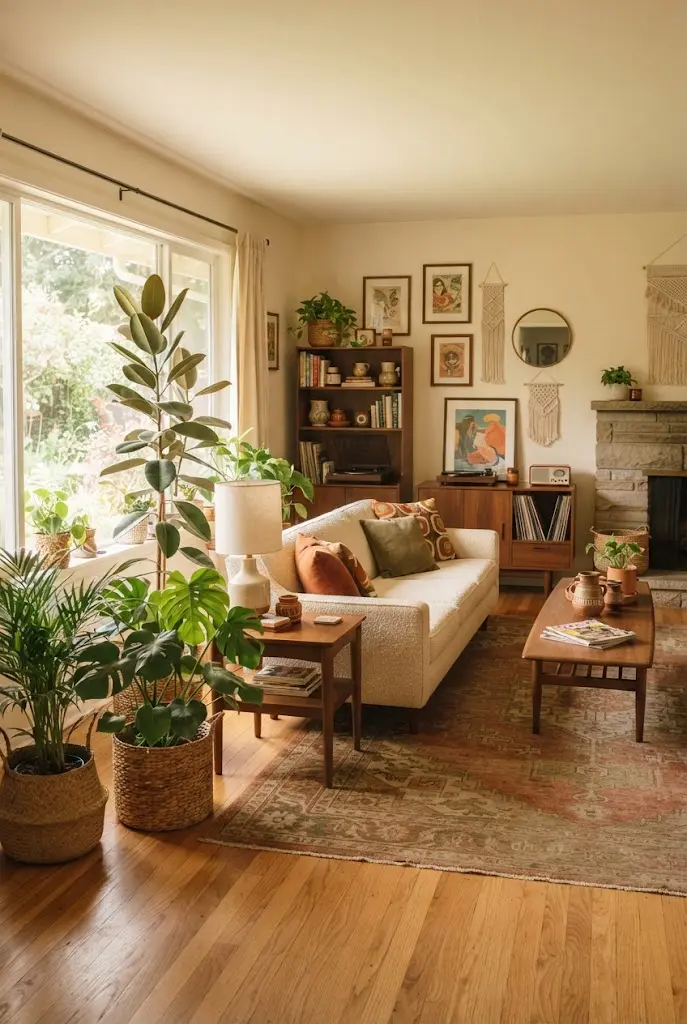
Houseplants bring natural color and organic texture into a retro interior.
Large leafy plants were especially compatible with the earthy design language of the 1970s.
Consider plants such as fiddle-leaf figs, rubber plants, palms, or monstera varieties.
Place larger plants beside sofas, windows, or empty corners.
Hanging planters can add another layer of visual interest.
Natural woven baskets make attractive containers for larger plants.
Green foliage works beautifully against wood paneling and warm-colored walls.
Use plants in different heights to create a more natural arrangement.
Avoid overcrowding the room because the furniture should remain visually accessible.
A thoughtful collection of greenery can make the space feel relaxed, fresh, and organic.
10. Natural Woven Materials
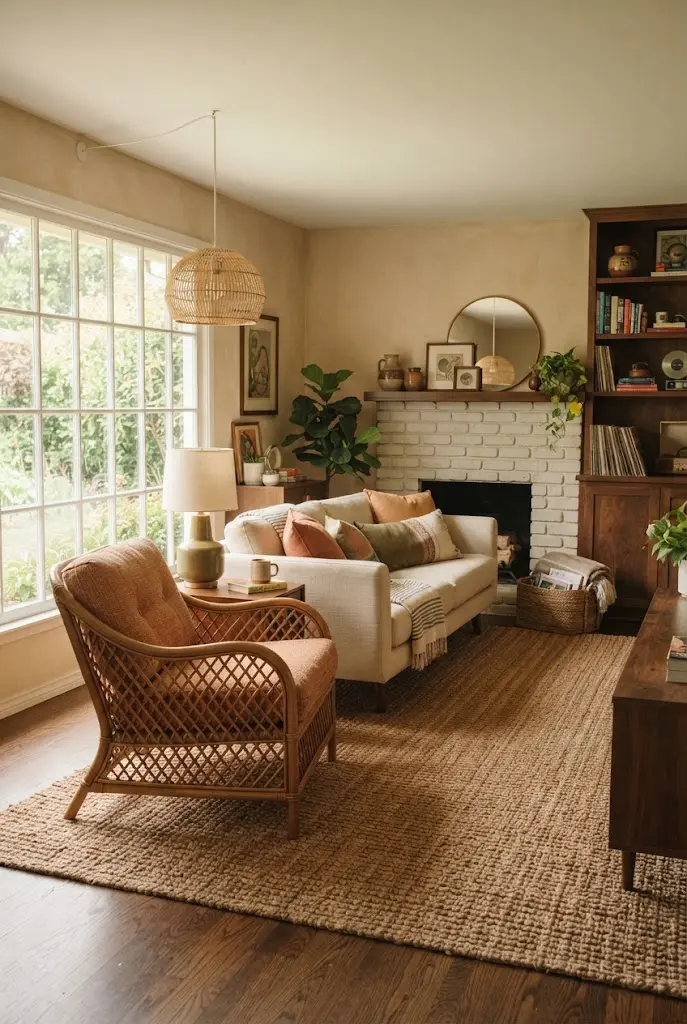
Woven materials add an earthy quality that fits naturally into retro interiors.
Rattan, wicker, jute, cane, and seagrass can all provide organic texture.
Use these materials for baskets, chairs, lampshades, rugs, or storage pieces.
A rattan lounge chair can become a relaxed statement piece in a living room.
Woven pendant shades create soft shadows and warm texture overhead.
Jute rugs provide a natural foundation beneath colorful furniture.
Baskets are also practical for storing blankets, magazines, and household items.
Pair woven materials with wood for a cohesive natural palette.
Mixing them with velvet or leather keeps the room from becoming too rustic.
These details add warmth while supporting the relaxed character of ’70s-inspired design.
11. Brown Leather Accents
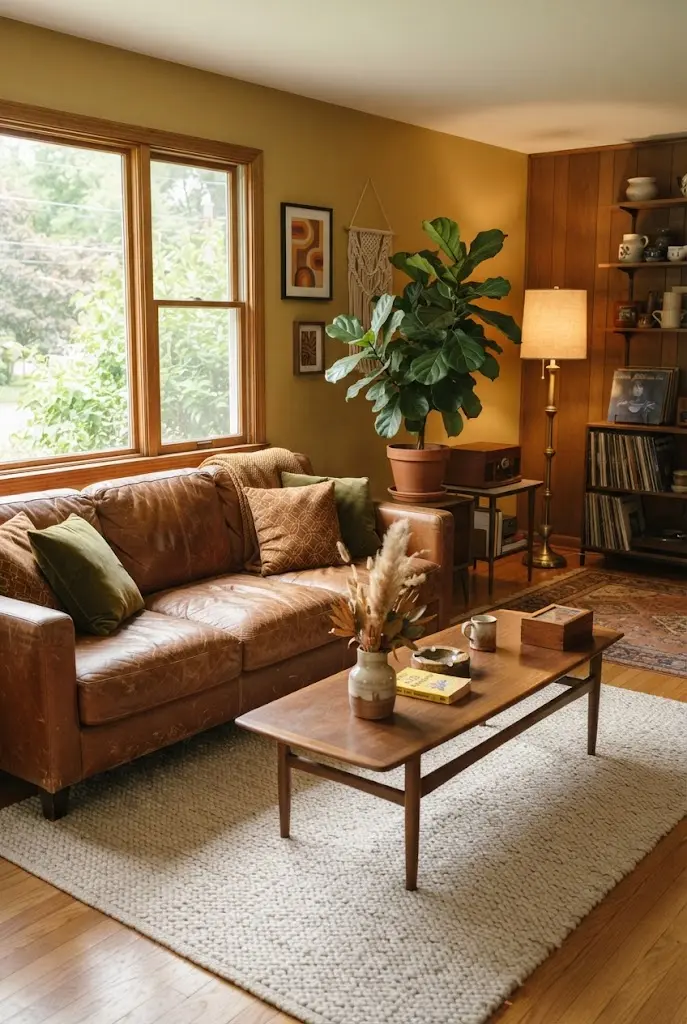
Brown leather is a practical material for adding vintage character to a ’70s-inspired home.
A leather sofa or lounge chair can immediately establish a warm retro foundation.
Choose cognac, caramel, tobacco, or deep brown finishes for the strongest effect.
Leather works particularly well alongside walnut and teak furniture.
Its natural variation and patina can make a room feel authentic rather than overly styled.
If a full leather sofa feels too dominant, use a single leather chair instead.
Leather ottomans and cushions provide smaller ways to introduce the material.
Pair leather with cream textiles to soften its visual weight.
Add plants and woven pieces to balance the harder surface.
The combination creates a comfortable interior with a timeless vintage quality.
12. Geometric Patterns
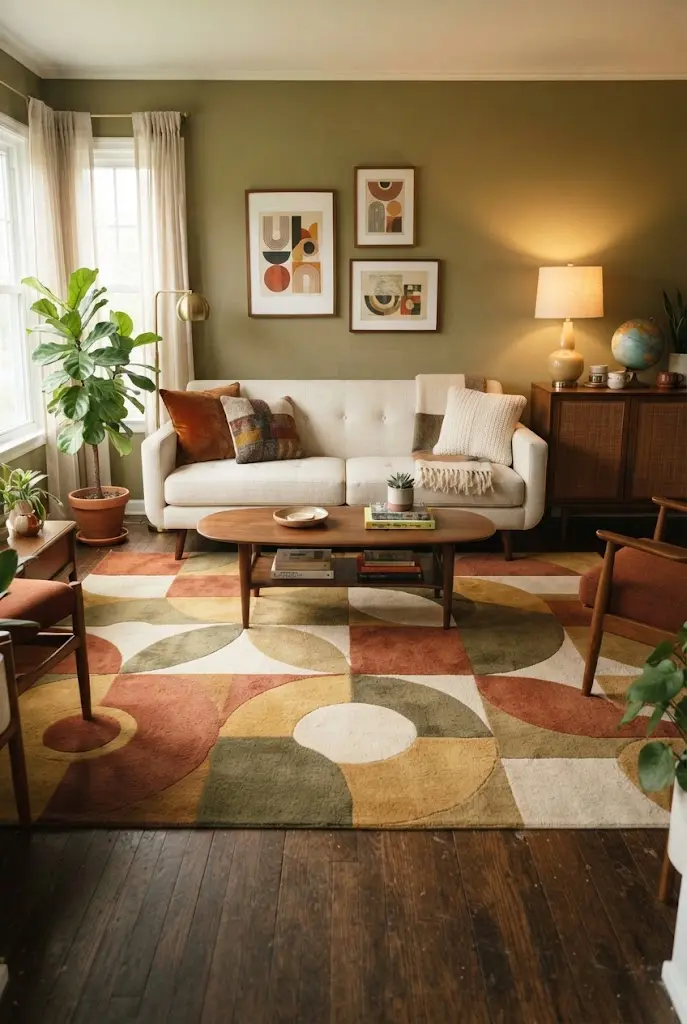
Geometric patterns can add playful visual energy to a retro room.
Look for circles, arches, stripes, diamonds, waves, and abstract repeated forms.
These patterns can appear on rugs, curtains, pillows, wallpaper, or artwork.
Using one strong geometric pattern keeps the room visually organized.
Smaller patterns can then be layered through accessories.
Choose earthy colors such as orange, brown, cream, green, and mustard.
Geometric rugs are especially effective beneath simple furniture.
Curtains with subtle patterns can create movement around large windows.
Balance patterned pieces with solid-colored upholstery and natural wood.
This approach captures the expressive side of ’70s design without making the room feel costume-like.
13. Conversation Pit Seating
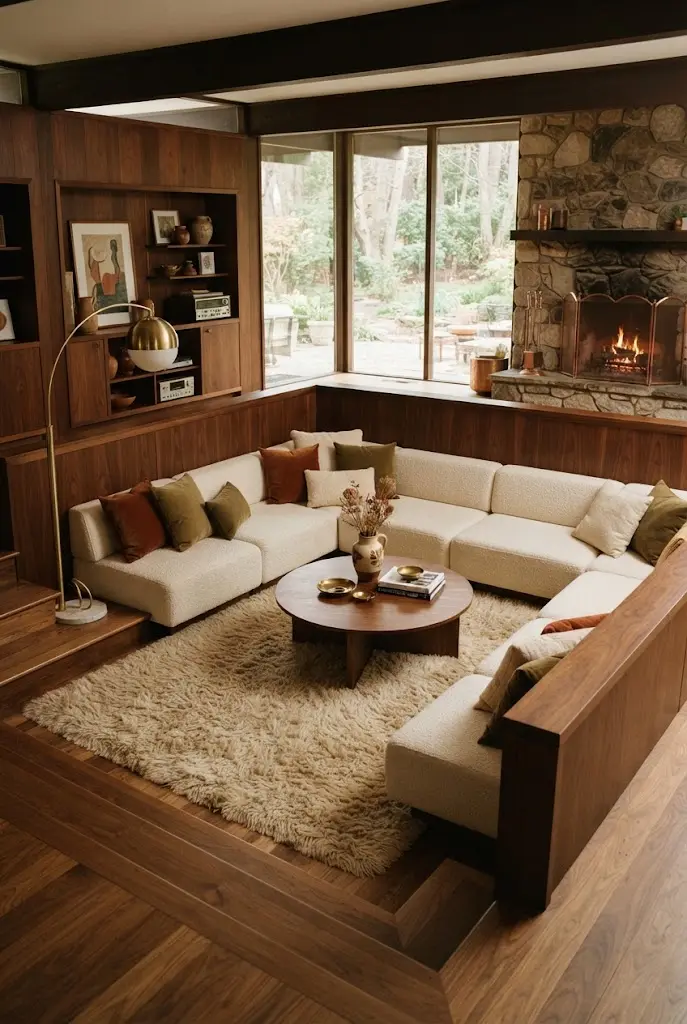
A conversation pit can create a dramatic nod to classic ’70s architecture.
This type of seating arrangement places a lounge area slightly below the surrounding floor.
It encourages relaxed conversation and gives the room a strong architectural identity.
If a permanent sunken pit is not practical, mimic the feeling with low modular seating.
Place several comfortable seats around a central coffee table.
Use plush upholstery and warm colors to emphasize comfort.
A large rug can help define the conversation area visually.
Lighting should remain soft and inviting rather than overly bright.
This feature works especially well in spacious living rooms and entertainment areas.
Even a modern interpretation can capture the social atmosphere associated with the era.
14. Macramé Wall Decor
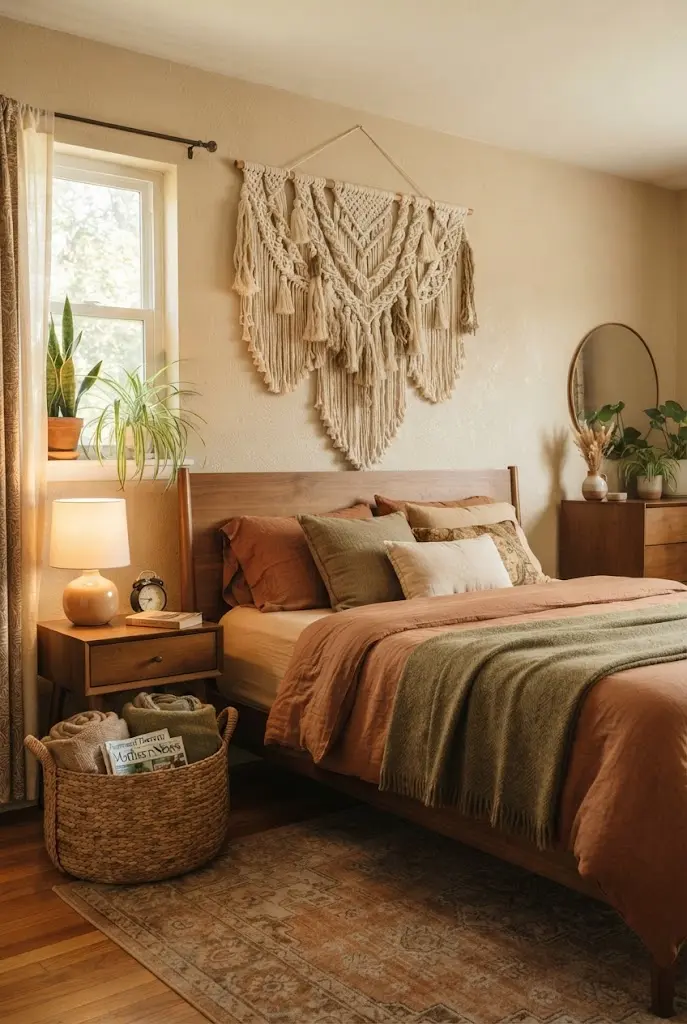
Macramé brings handcrafted texture into a retro-inspired room.
Large woven wall hangings can soften otherwise empty walls.
Cream, beige, tan, and natural cotton tones work particularly well with earthy interiors.
Hang a macramé piece above a sofa, console, or bed for a simple focal point.
The detailed knots create interesting shadows when illuminated by natural light.
Pairing macramé with wood furniture reinforces the handmade character of the style.
Keep the surrounding wall decor relatively simple to let the textile stand out.
Smaller woven pieces can also be grouped thoughtfully without creating clutter.
Natural fiber artwork works beautifully with plants and rattan furniture.
This detail adds warmth and craftsmanship without requiring a major renovation.
15. Sunken or Built-In Seating
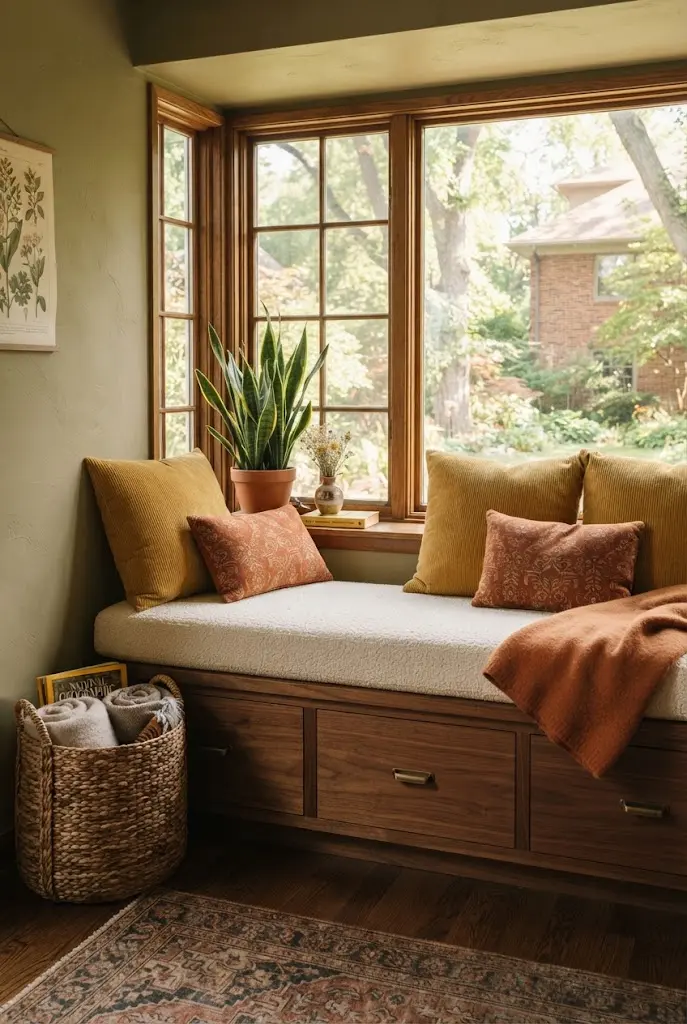
Built-in seating can make a retro room feel architectural and highly functional.
Long upholstered benches can fit naturally beneath windows or along walls.
A custom window seat can also provide a cozy place for reading or relaxing.
Use warm upholstery colors such as rust, olive, cream, or caramel.
Add removable cushions in contrasting textures for additional comfort.
Wooden bases can connect the seating with other natural materials in the room.
Built-in storage underneath the seat provides useful space for blankets and books.
Rounded edges can make the design feel more authentically retro.
Keep the surrounding decor simple so the seating remains the focal feature.
This approach blends the cozy functionality of modern homes with nostalgic ’70s design.
16. Brass and Warm Metal Details
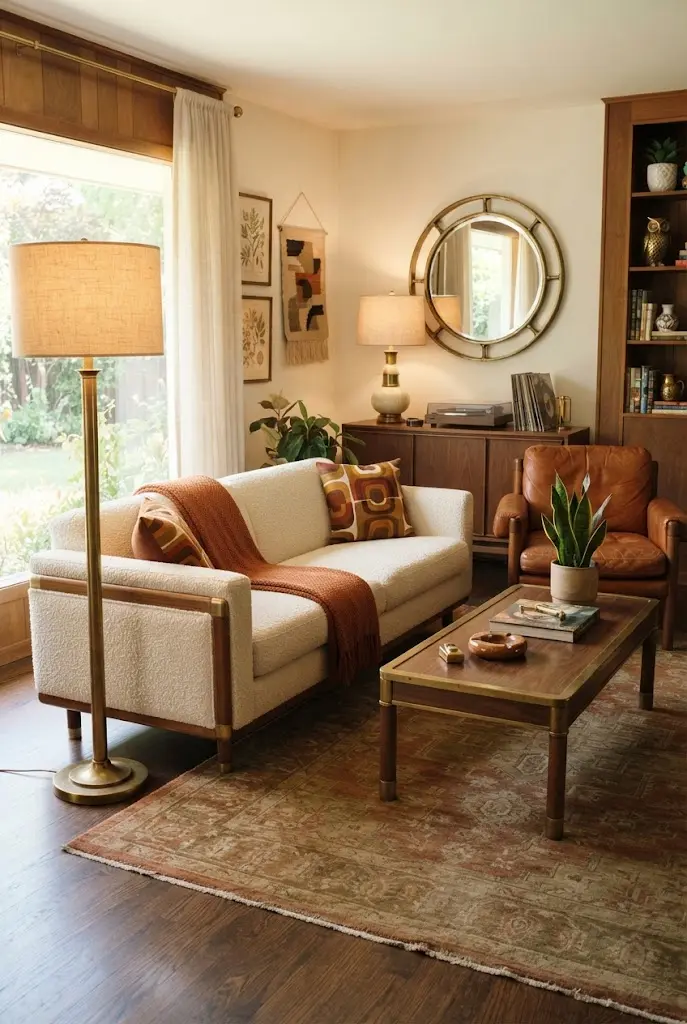
Warm metals add subtle sophistication to a retro interior.
Brass was commonly used for lighting, hardware, furniture accents, and decorative objects.
Choose brushed or aged finishes for a softer vintage appearance.
Brass table lamps can add warmth beside a sofa or bed.
Cabinet pulls and drawer handles offer an easy way to introduce the material.
A brass-framed mirror can also become an elegant wall accent.
Combine warm metal with walnut, leather, and earthy textiles for a cohesive palette.
Avoid using too much polished metal because it can make the space feel overly contemporary.
A few carefully chosen accents are usually enough to create visual continuity.
These details give a ’70s-inspired room a refined layer without losing its relaxed character.
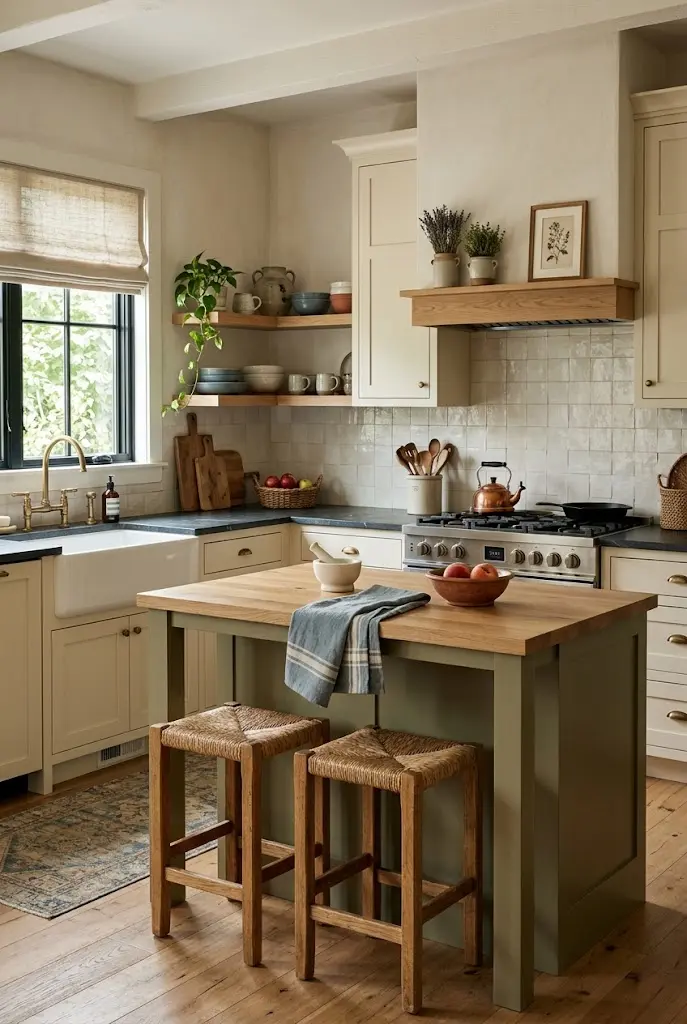
17. Retro Kitchen Design
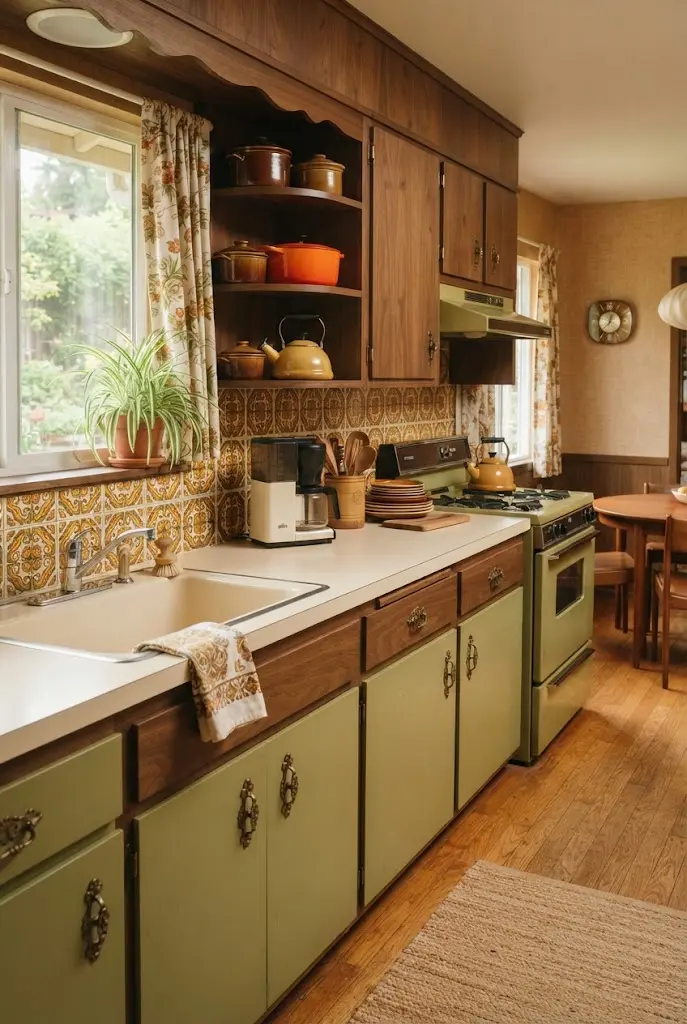
The kitchen is an ideal place to incorporate recognizable ’70s details.
Warm wood cabinets, colorful appliances, patterned flooring, and earthy tile can create the look.
Avocado green, harvest gold, brown, cream, and orange are classic-inspired color choices.
Modern appliances can still be used while keeping the surrounding design retro.
Wood or wood-look cabinetry adds warmth and visual depth.
Open shelving can display vintage-inspired ceramics and colorful cookware.
Patterned tile backsplashes provide an easy way to introduce geometric character.
Choose simple hardware in brass or warm metal finishes.
Keep countertops practical so the kitchen remains suitable for everyday American living.
The result can feel nostalgic while still offering the convenience expected from a modern kitchen.
18. Retro Artwork and Decorative Accessories
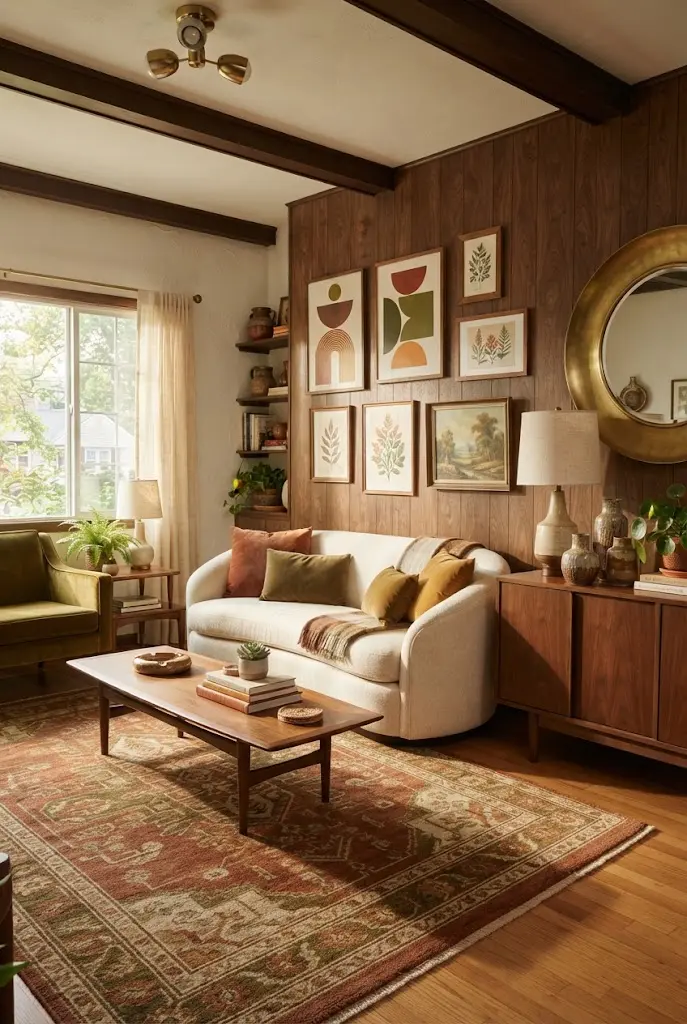
Artwork and accessories are an easy way to finish a ’70s-inspired interior.
Abstract prints, botanical illustrations, ceramic sculptures, and vintage-style posters can add personality.
Choose artwork that uses colors already present in the room.
Ceramic vases and sculptural objects work beautifully on shelves and coffee tables.
Vintage-inspired clocks and mirrors can also reinforce the decade’s aesthetic.
Use a mixture of sizes rather than arranging everything in a perfectly symmetrical display.
Wooden frames help connect artwork with other natural materials.
Textile wall art can add softness alongside framed prints.
Keep enough empty space around decorative objects so the room remains visually calm.
A thoughtful combination of accessories can complete the retro atmosphere without making the space feel like a museum.
Final Thoughts
Creating a ’70s-inspired interior does not require completely recreating a house from the decade.
A few carefully selected features can establish the right atmosphere while keeping the home comfortable and current.
Start with an earthy color palette and natural wood to create a warm foundation.
Then introduce vintage-inspired furniture, textured rugs, rounded shapes, and statement lighting.
Houseplants and woven materials can bring additional organic character to the space.
For a stronger retro statement, consider wallpaper, patterned textiles, or a distinctive kitchen design.
Mixing vintage-inspired elements with contemporary conveniences keeps the home practical for everyday life.
The most successful spaces usually combine several ’70s details rather than relying on one theme.
With thoughtful layering, you can create a home that feels nostalgic, welcoming, and distinctly personal.
The goal is to capture the warmth and creativity of ’70s design while making it work naturally for modern American living.