23 Retro Interior Design Ideas from the 1970s for a Nostalgic Home
The 1970s brought a distinctive mix of warmth, color, texture, and personality into American homes.
Interior spaces often featured earthy shades, natural wood, patterned fabrics, and statement furnishings.
Today, these recognizable details can be adapted for modern homes without making a room feel outdated.
Think avocado green, burnt orange, mustard yellow, warm brown, shag textures, and vintage-inspired patterns.
Wood paneling and rattan furniture can add authentic retro character to living spaces.
Meanwhile, modern lighting and streamlined layouts can keep the overall look comfortable and practical.
Whether you love full-on vintage decorating or subtle nostalgic touches, there are many ways to use 1970s inspiration.
These ideas can help you create a cozy American home with plenty of personality and retro charm.
1. Embrace Warm Earth-Tone Colors
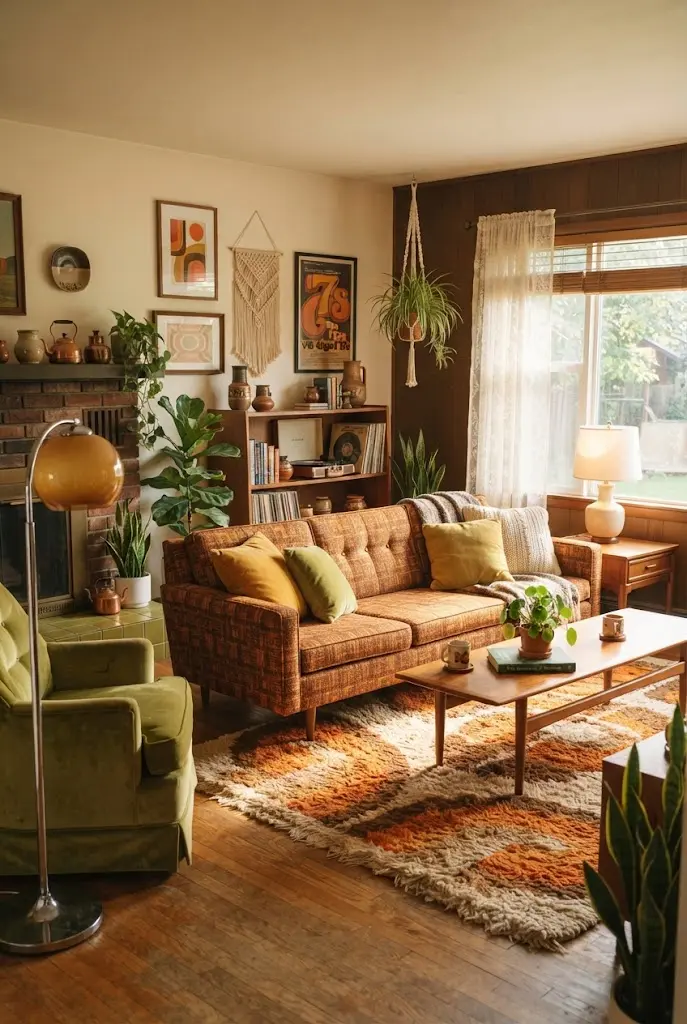
One of the easiest ways to capture 1970s interior style is by introducing warm earthy colors.
Shades such as burnt orange, mustard yellow, avocado green, rust, camel, and chocolate brown were especially recognizable.
In a modern American home, these colors can be used without covering every surface.
Try an accent wall, upholstered chair, area rug, or collection of decorative pillows.
Pairing warm colors with cream or soft beige helps prevent the room from feeling too heavy.
Natural wood furniture works especially well with this palette.
Vintage artwork can add another layer of period-inspired character.
For a more subtle approach, use earthy colors through accessories and textiles.
This creates nostalgia while keeping the room comfortable for everyday living.
The result is a welcoming space that clearly references the 1970s without becoming a time capsule.
2. Add Wood Paneling for Instant Retro Character
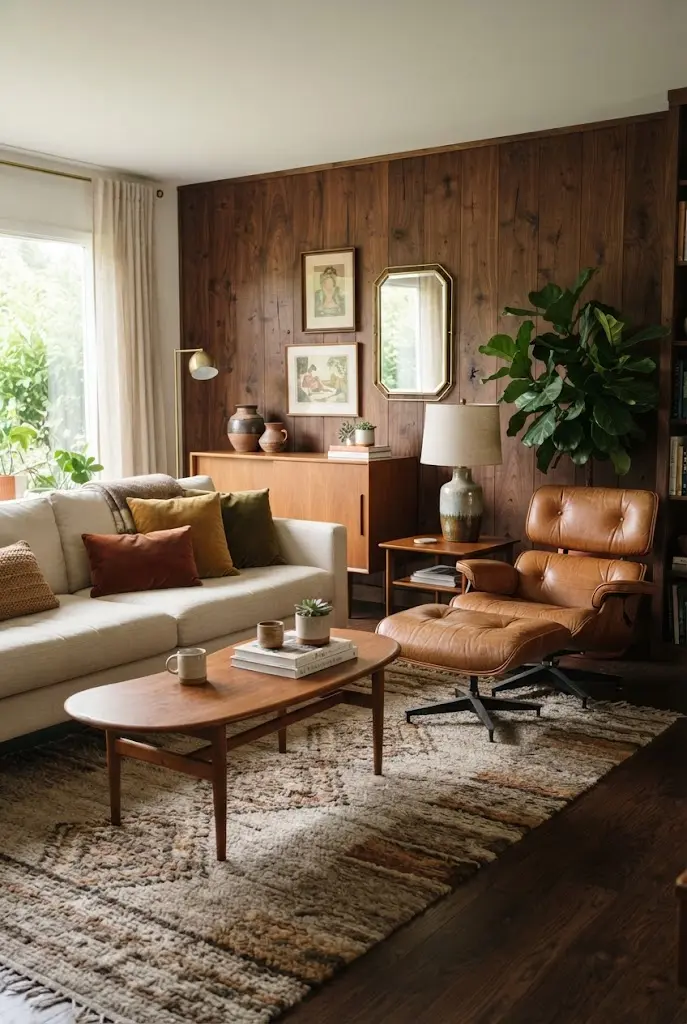
Wood paneling became an unmistakable feature of many American homes during the 1970s.
Dark walnut, teak, oak, and medium-brown paneling can instantly make a room feel warmer.
Instead of covering every wall, consider using paneling on one feature wall.
A paneled fireplace wall can become a strong focal point in a living room.
Modern furniture can balance the darker wood and keep the room from feeling dated.
Cream upholstery and neutral rugs provide useful contrast against brown wood surfaces.
Houseplants also work beautifully with this natural material.
For an authentic look, choose wood grain with visible variation rather than perfectly uniform finishes.
Lighting should be warm enough to highlight the texture of the paneling.
This approach brings recognizable 1970s character into a contemporary American setting.
3. Bring in a Shag Rug
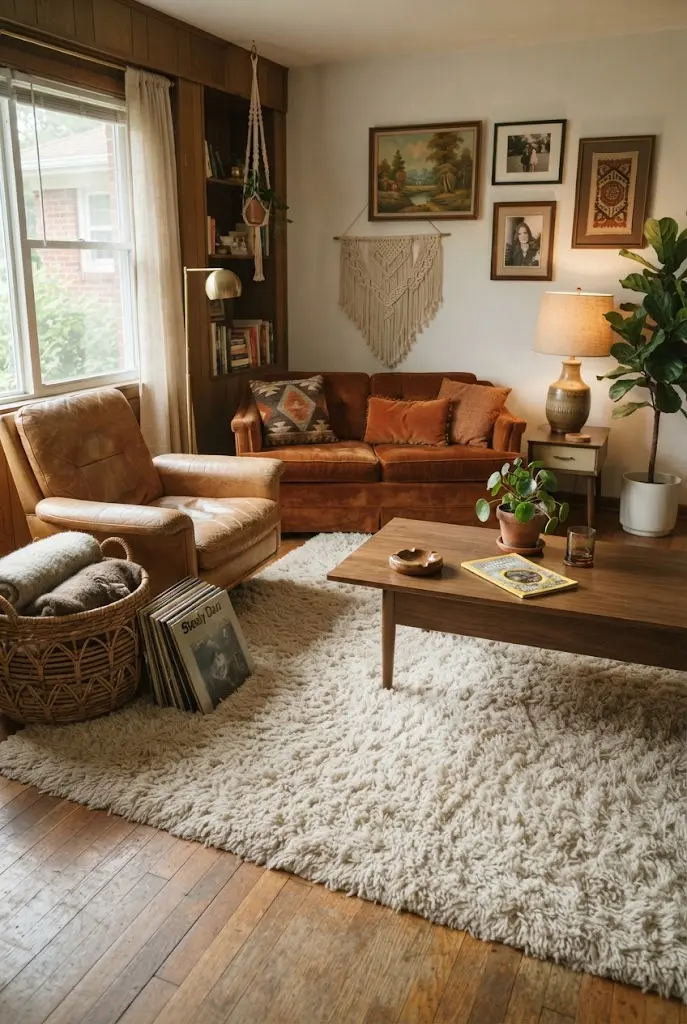
Few textures are more strongly associated with 1970s interiors than shag carpeting.
A shag rug can introduce softness and playful retro character without requiring permanent changes.
Choose cream, caramel, rust, brown, or muted orange for a period-inspired palette.
A large rug can visually anchor a living room or bedroom.
Pairing shag texture with smooth wood furniture creates an appealing contrast.
For a modern interpretation, use a smaller shag area rug rather than wall-to-wall carpeting.
Low-profile seating can make the rug feel especially authentic.
Layering it over a neutral floor keeps the room visually balanced.
Good lighting helps emphasize the dimensional texture of the fibers.
The finished space feels cozy, tactile, and unmistakably inspired by the 1970s.
4. Use Rattan and Wicker Furniture
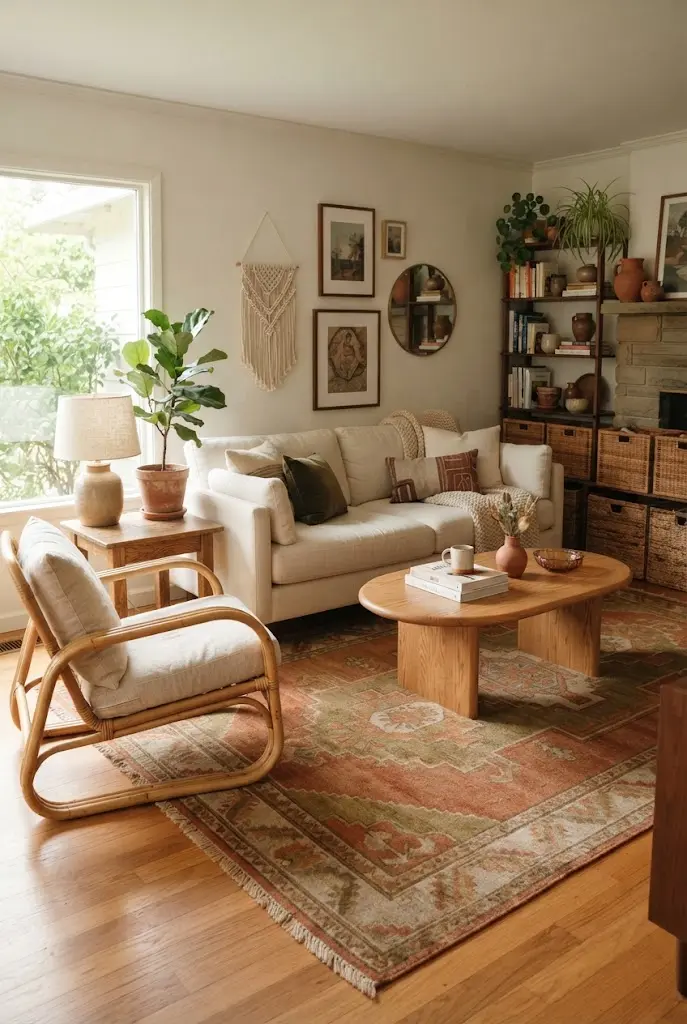
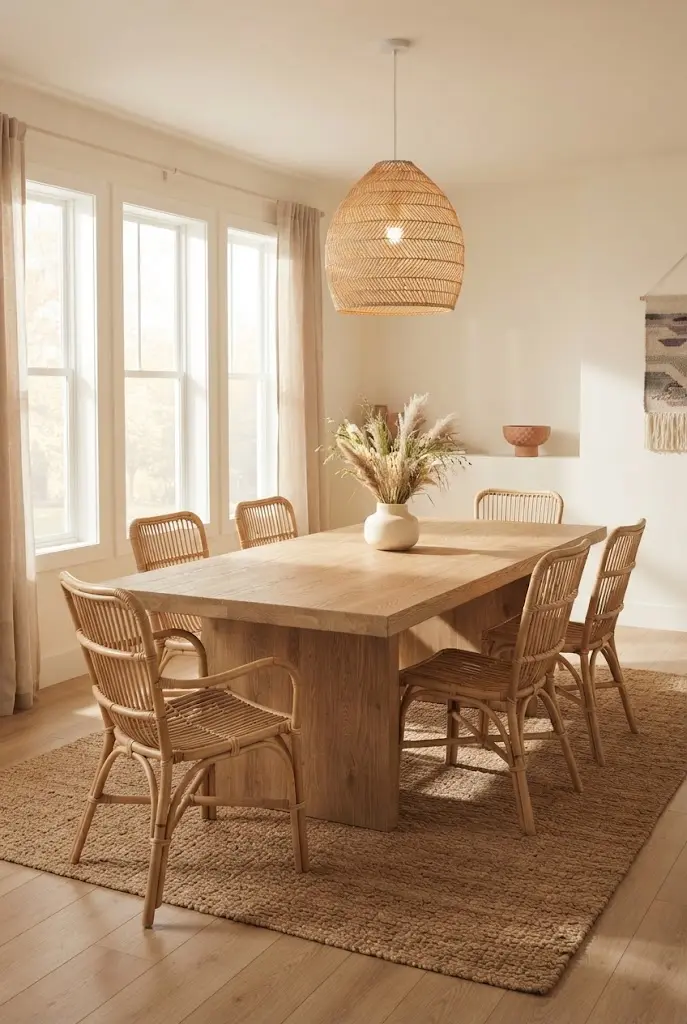
Rattan and wicker furniture fit naturally into the relaxed side of 1970s decorating.
These materials add organic texture while keeping a room visually light.
A rattan lounge chair can become a simple statement piece in a living room.
Wicker baskets can provide practical storage while reinforcing the vintage atmosphere.
Pair natural fibers with linen, cotton, leather, or velvet for a layered look.
Houseplants can make the combination feel even more connected to nature.
Choose warm natural finishes instead of overly polished surfaces.
A vintage-inspired rattan coffee table can work beautifully with a neutral sofa.
The mix of organic materials creates a relaxed American bohemian feeling.
This is an easy way to introduce retro influence without overwhelming the room.
5. Try a Conversation Pit-Inspired Seating Area
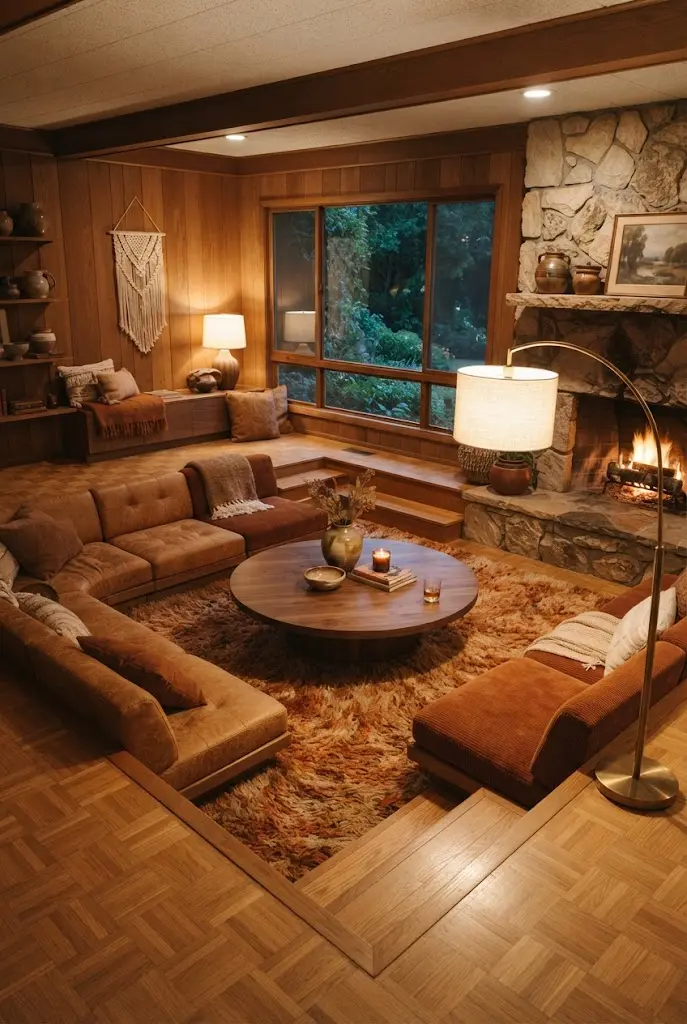
Conversation pits became one of the most memorable entertaining concepts associated with 1970s interiors.
They encouraged people to sit together in a relaxed, informal arrangement.
A true sunken conversation pit may not be practical for every modern home.
Instead, recreate the feeling with low seating arranged around a central coffee table.
Modular sofas and oversized cushions can provide the same social atmosphere.
Warm upholstery colors help strengthen the retro connection.
A large round or square rug can visually define the seating zone.
Floor lamps and low lighting create an intimate evening atmosphere.
Keep the surrounding furniture simple so the seating arrangement remains the focal point.
This interpretation captures the social spirit of 1970s American interiors in a practical way.
6. Decorate With Mustard Yellow Accents
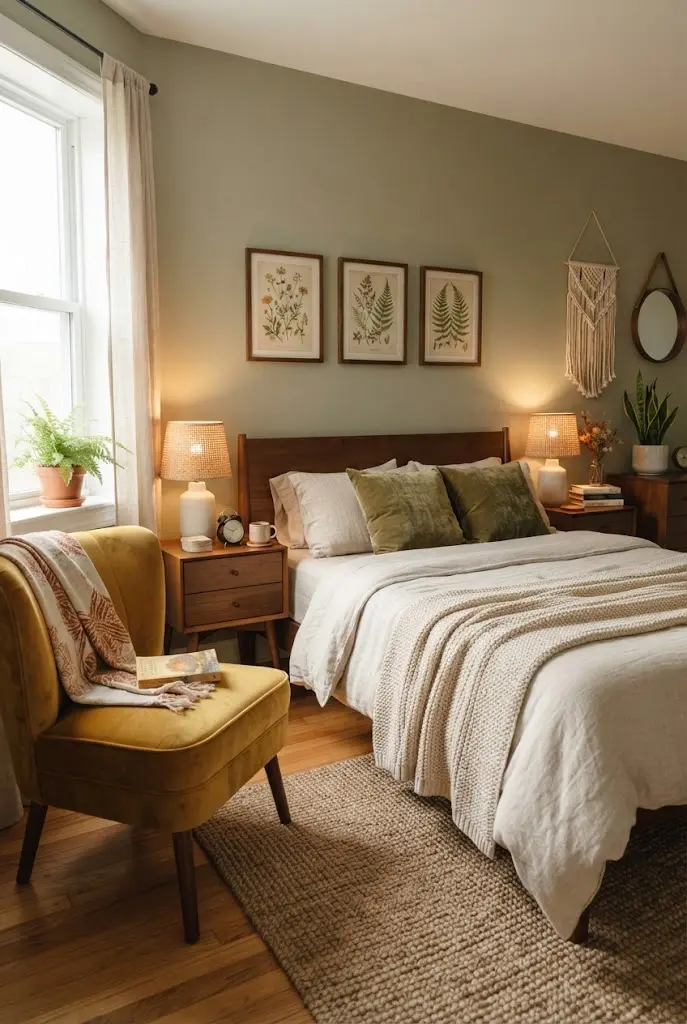
Mustard yellow was a popular color choice during the 1970s and remains surprisingly versatile today.
Its warm undertone works especially well with brown, cream, olive, and natural wood.
You can introduce mustard through curtains, cushions, lampshades, or accent chairs.
A mustard velvet chair can create a strong vintage-inspired focal point.
For a quieter approach, use only a few accessories around the room.
Pairing mustard with cream prevents the color from becoming visually overwhelming.
Dark wood furniture gives the palette additional depth.
Vintage botanical artwork can add another period-inspired element.
Soft lighting makes mustard tones appear especially warm and inviting.
Used thoughtfully, the color creates a nostalgic atmosphere without looking costume-like.
7. Introduce Avocado Green Details
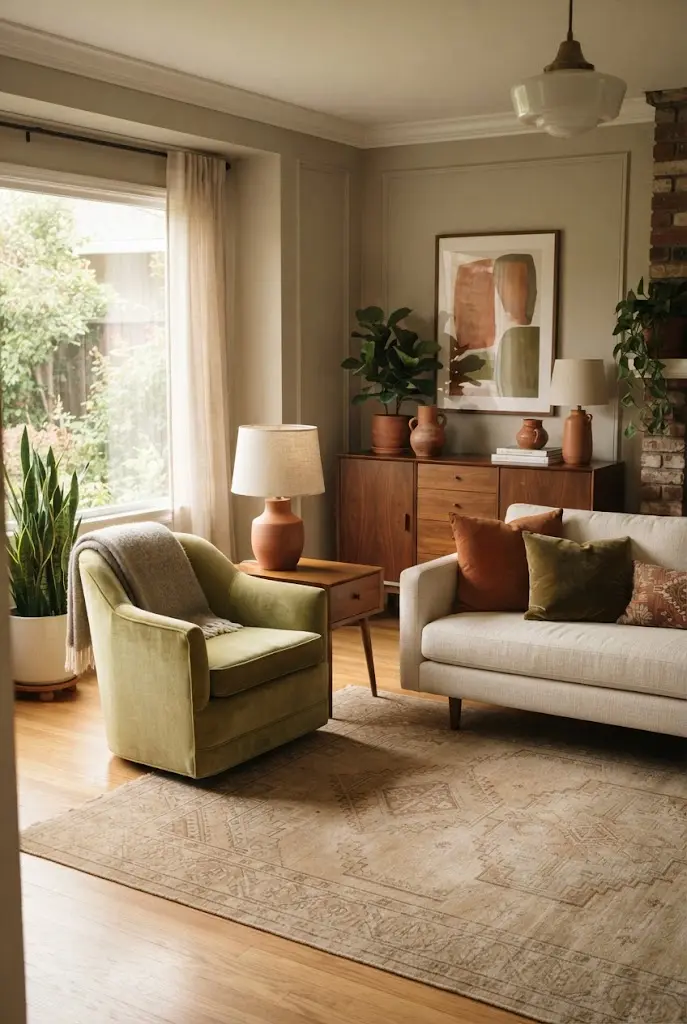
Avocado green is another unmistakable color from the 1970s design palette.
While a fully green room may feel intense, small doses can work beautifully today.
Consider using avocado green on a vintage-inspired chair or decorative cabinet.
Green ceramic pieces can provide an inexpensive way to introduce the shade.
Pair it with warm cream, walnut, tan, and muted orange for an authentic combination.
Natural plants can reinforce the connection to earthy colors.
A patterned rug can bring several of these colors together.
Avoid using too many competing bright shades in the same space.
The goal is to create a layered palette rather than a themed display.
This makes avocado green feel intentional and sophisticated.
8. Choose Low-Slung Furniture
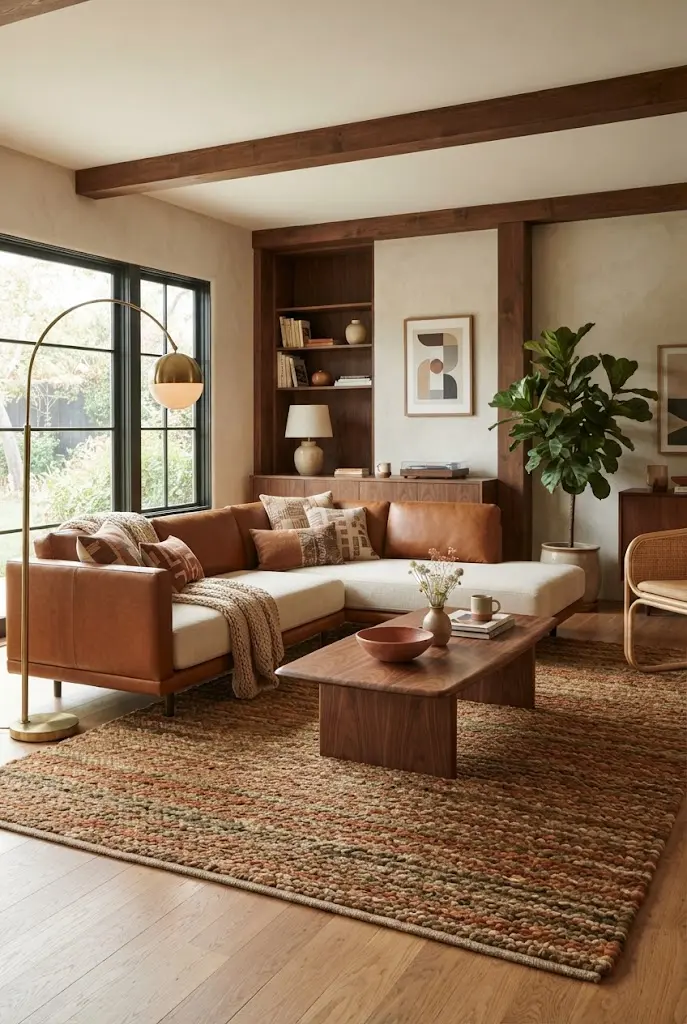
Low-slung furniture was an important part of the relaxed aesthetic associated with 1970s homes.
Deep sofas and lounge chairs often created a casual, comfortable atmosphere.
Look for furniture with broad cushions and relatively low profiles.
Earth-toned upholstery makes the style feel even more authentic.
A low wooden coffee table can reinforce the horizontal lines.
Avoid filling the room with too many tall pieces.
Keeping furniture arrangements open helps the room feel spacious.
Textured rugs can add comfort underneath the low seating.
Warm floor lamps can provide practical illumination without disrupting the relaxed layout.
This approach works especially well in informal American living spaces.
9. Add Bold Geometric Patterns
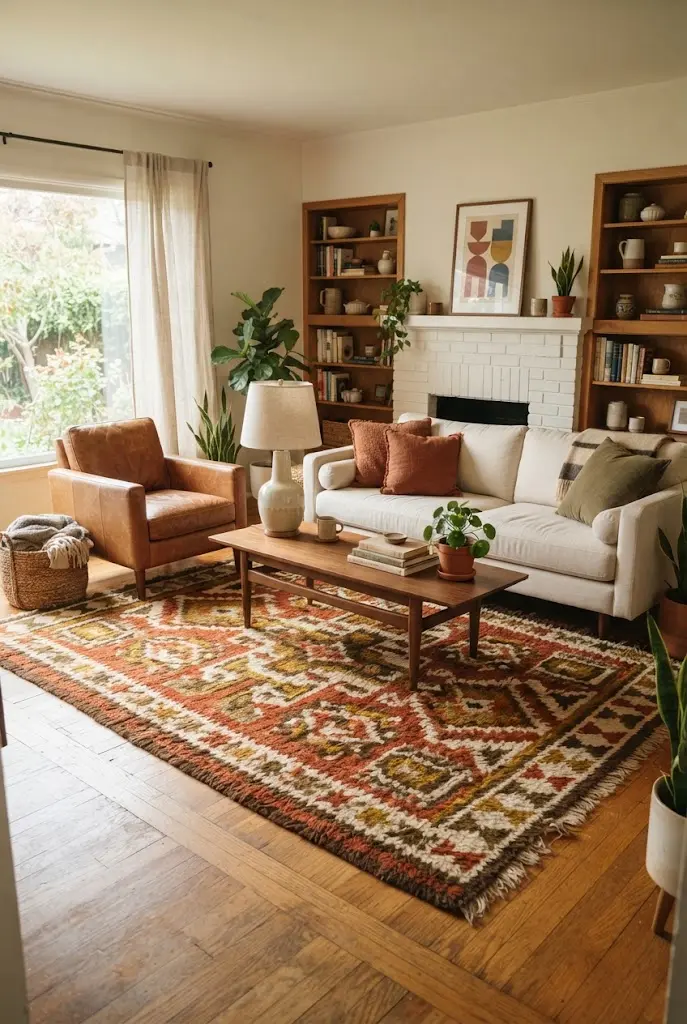
Geometric patterns can bring instant vintage energy to a neutral room.
During the 1970s, repeating shapes appeared on rugs, curtains, upholstery, and wallpaper.
Today, one carefully chosen pattern can make a stronger statement than several competing prints.
Try a geometric area rug beneath a simple sofa.
Pillows and throws can repeat one or two colors from the pattern.
Brown, cream, rust, orange, olive, and mustard are particularly suitable choices.
Keep surrounding furniture relatively simple to let the pattern stand out.
Vintage-inspired artwork can complement the design without copying it exactly.
Natural wood helps soften the stronger graphic elements.
The result feels playful, warm, and distinctly retro.
10. Install Retro-Inspired Wallpaper
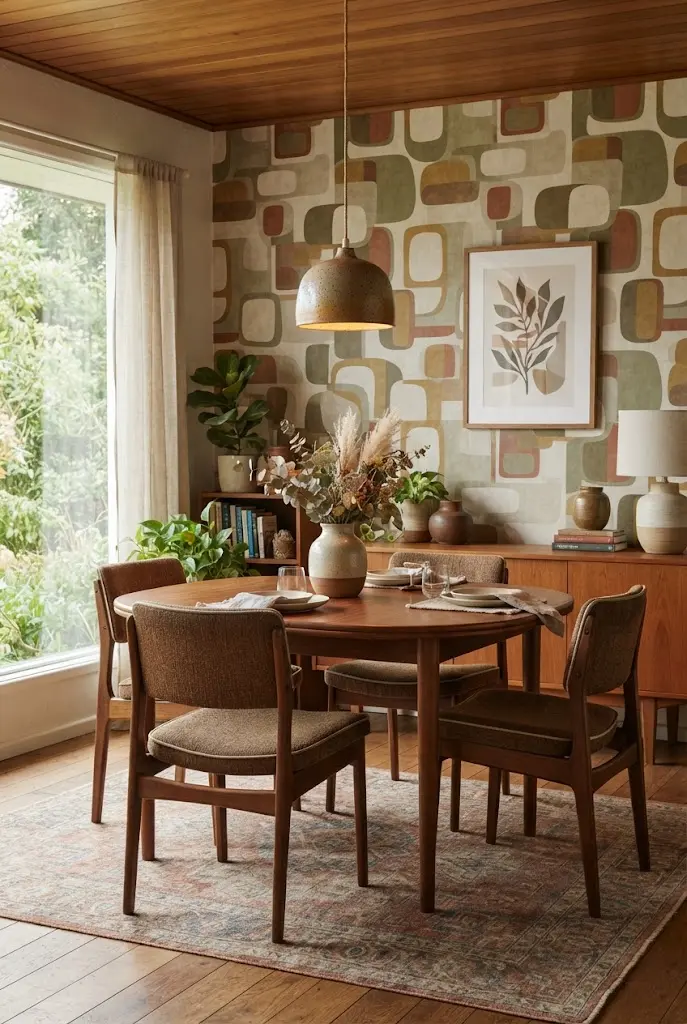
Wallpaper can transform a room much faster than structural renovations.
1970s-inspired patterns often featured organic shapes, florals, curves, and bold geometric designs.
For a modern home, consider placing wallpaper on one accent wall.
Muted orange, olive, brown, cream, and gold can create a warm vintage palette.
A patterned wall works well behind a bed, sofa, or dining table.
Keep larger furniture pieces relatively simple to avoid visual competition.
Natural wood furniture provides an excellent counterpoint to patterned wallpaper.
Small decorative objects can repeat colors from the wallpaper.
Good lighting is essential because it reveals the pattern and prevents the wall from feeling flat.
This technique creates a dramatic retro statement while remaining easy to update later.
11. Use Globe and Mushroom Lighting
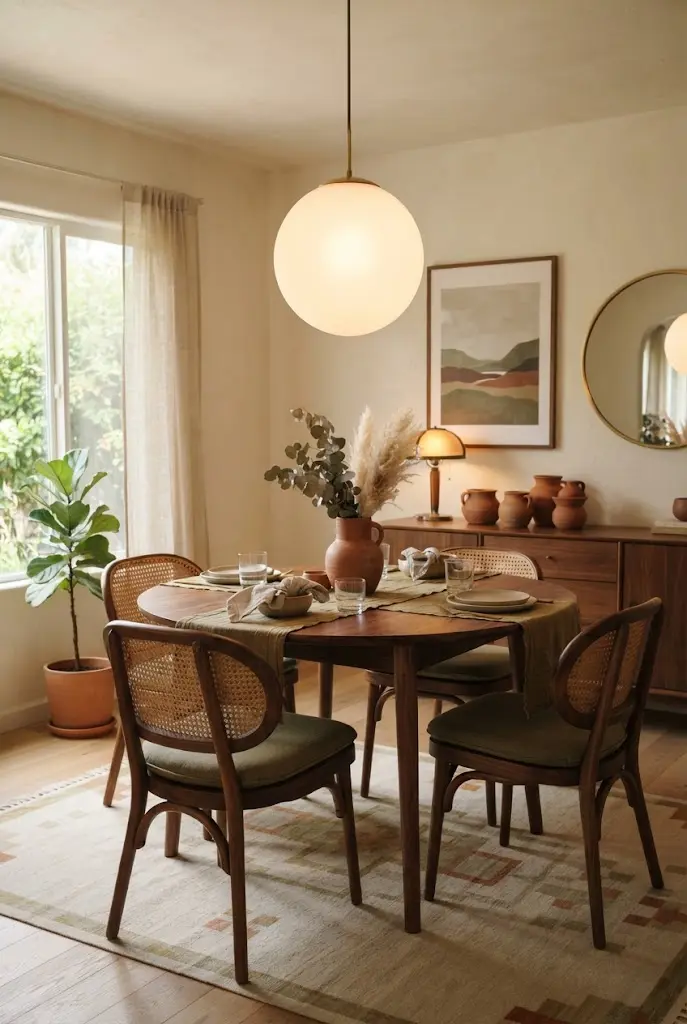
Lighting played a major role in creating the soft atmosphere of 1970s interiors.
Rounded globe lights and mushroom-shaped lamps are excellent ways to reference the era.
Their curved silhouettes contrast nicely with rectangular furniture.
Choose frosted glass, warm metal, or ceramic finishes for a convincing vintage appearance.
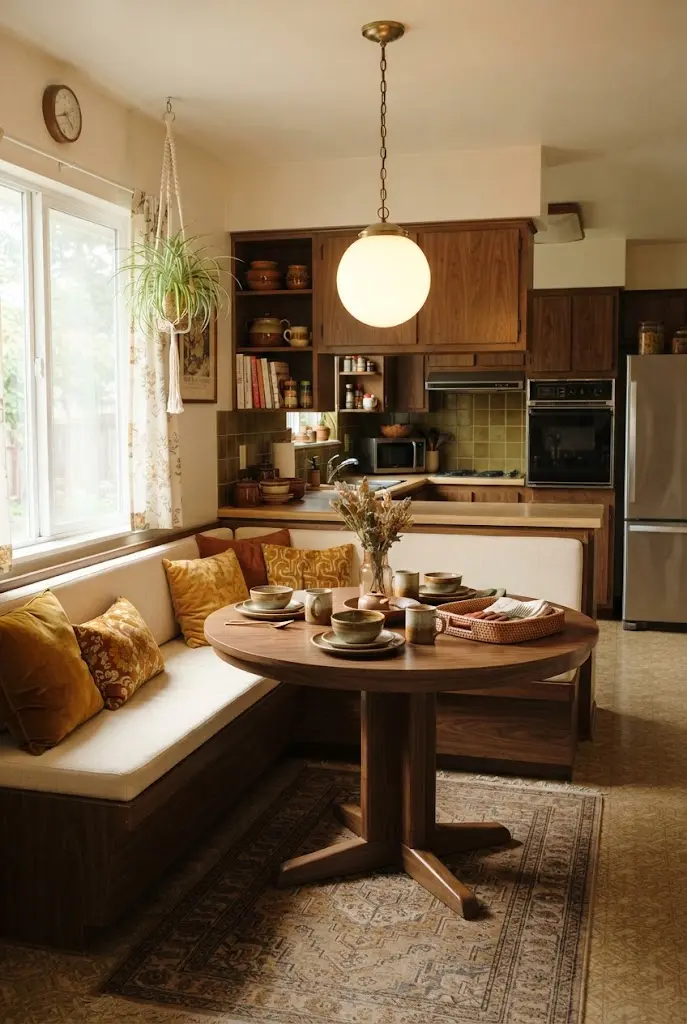
A globe pendant can work beautifully above a dining table.
A mushroom table lamp can add character to a sideboard or nightstand.
Warm bulbs help create a cozy evening environment.
Avoid overly bright white lighting because it can make earthy colors feel harsh.
Mixing vintage-inspired lighting with contemporary furniture keeps the room balanced.
These fixtures can become functional decor pieces in their own right.
12. Bring Back Earthy Ceramic Decor
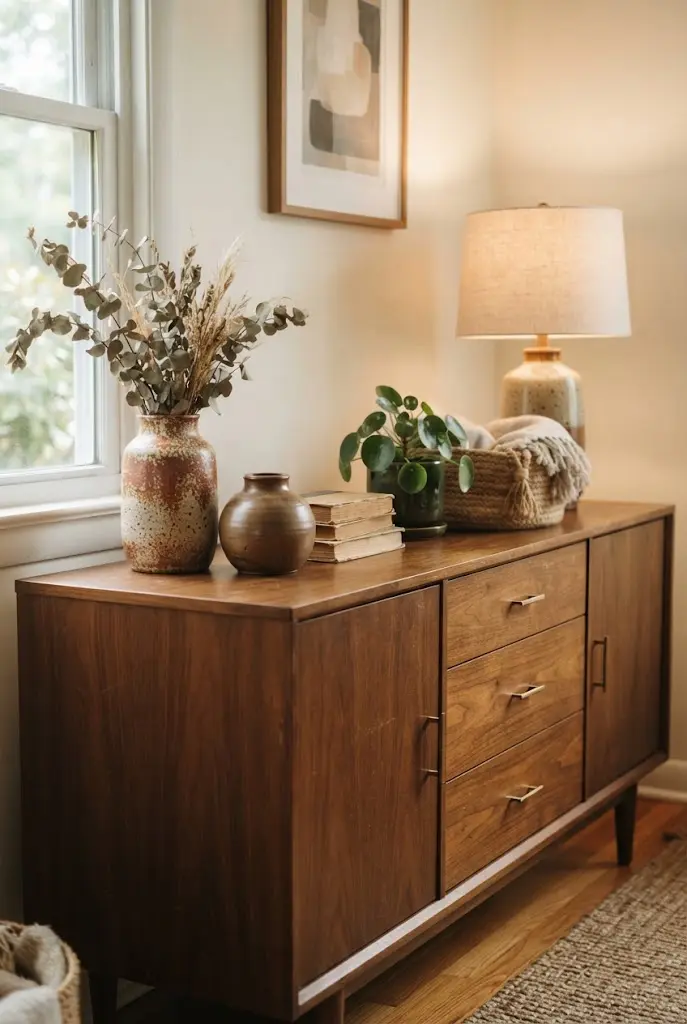
Ceramic accessories can add a handcrafted feeling that fits naturally with 1970s interiors.
Look for pieces with rounded shapes, matte surfaces, and earthy glazes.
Brown, ochre, olive, cream, and terracotta are especially suitable.
Display several pieces together on a wooden shelf or sideboard.
Avoid making every object identical because variation creates a more authentic collected appearance.
Large ceramic vases can serve as simple focal points.
Smaller pottery can be arranged around books, plants, and artwork.
Handmade-looking surfaces add visual texture to otherwise simple furniture.
Natural light helps reveal subtle differences in glaze and shape.
These small details can make a modern room feel more connected to vintage design.
13. Incorporate Velvet Upholstery
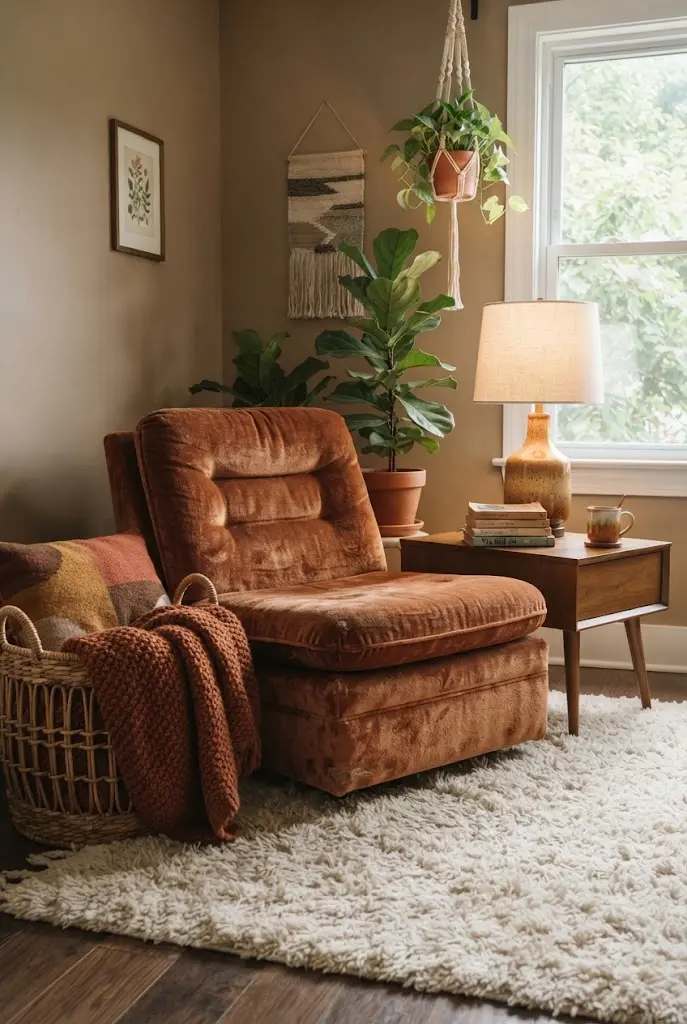
Velvet adds depth and softness to a retro-inspired room.
Its rich texture works especially well with the warm colors associated with the 1970s.
Consider a velvet lounge chair, sofa, bench, or pair of accent pillows.
Rust, mustard, olive, caramel, and deep brown can create a nostalgic atmosphere.
Balance velvet with rougher materials such as rattan, wood, or woven textiles.
This keeps the room from feeling overly formal.
A vintage-style chair can become a focal point without requiring a complete furniture makeover.
Soft lighting highlights the directional texture of velvet.
Keep other patterns relatively restrained when using a strong velvet color.
The combination feels luxurious, comfortable, and unmistakably retro-inspired.
14. Create a Retro-Inspired Home Bar
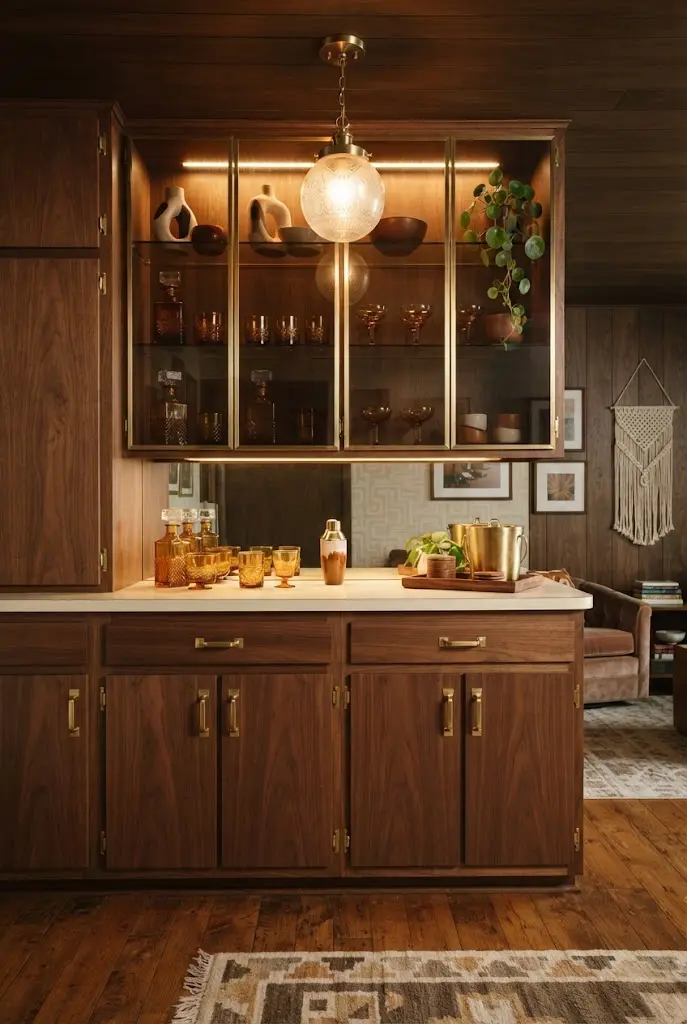
Home entertaining was an important part of the social atmosphere associated with 1970s interiors.
A dedicated home bar can recreate that feeling in a modern and practical way.
Use walnut cabinetry, brass details, smoked glass, and warm lighting.
A compact bar cart can work when space is limited.
Vintage glassware and ceramic accessories can provide visual interest.
Choose a simple color palette of brown, cream, amber, and olive.
A patterned backsplash can introduce additional retro personality.
Keep storage organized so the space remains functional.
A small pendant or globe lamp can create an intimate glow.
The finished area can feel like a stylish nod to classic American entertaining culture.
15. Mix Brown Leather With Natural Wood
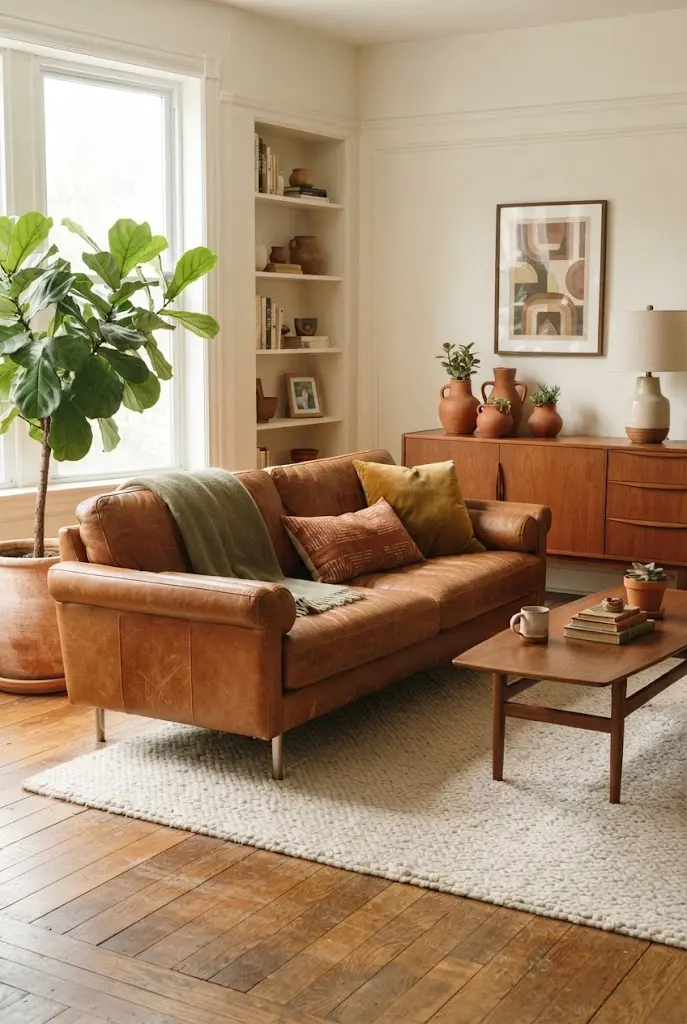
Brown leather and natural wood make a classic combination for a warm retro-inspired home.
Leather seating can add durability while reinforcing the masculine side of 1970s decorating.
Choose cognac, saddle brown, tobacco, or chocolate leather.
Pair it with walnut, teak, oak, or other warm wood finishes.
Cream textiles can soften the darker combination.
A patterned rug can introduce muted retro colors without overwhelming the room.
Brass or aged metal accents can add subtle warmth.
Houseplants provide a fresh contrast against leather and wood.
Use different textures to prevent the room from appearing too uniform.
This combination creates a comfortable, grounded look suitable for many American homes.
16. Add Macramé Wall Decor
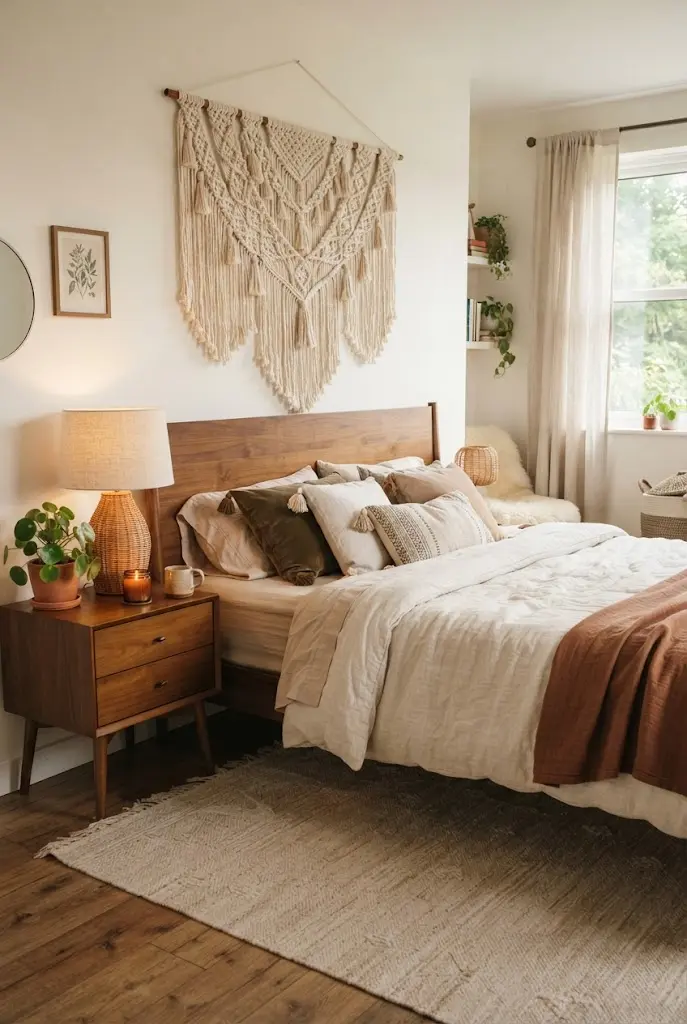
Macramé became closely associated with the handmade decorating culture of the 1970s.
A large woven wall hanging can add texture without taking up floor space.
Natural cream or beige fibers work particularly well with warm wood.
Hang macramé above a sofa, bed, or console table for an easy focal point.
Combine it with rattan, pottery, and houseplants for an organic atmosphere.
Keep the surrounding wall relatively simple so the woven texture remains visible.
A handmade appearance is preferable to perfectly uniform construction.
Soft daylight can reveal the individual strands and knots.
This accessory works especially well in bohemian and earthy interiors.
It adds nostalgic character while remaining compatible with modern decorating.
17. Use Curved Furniture Shapes
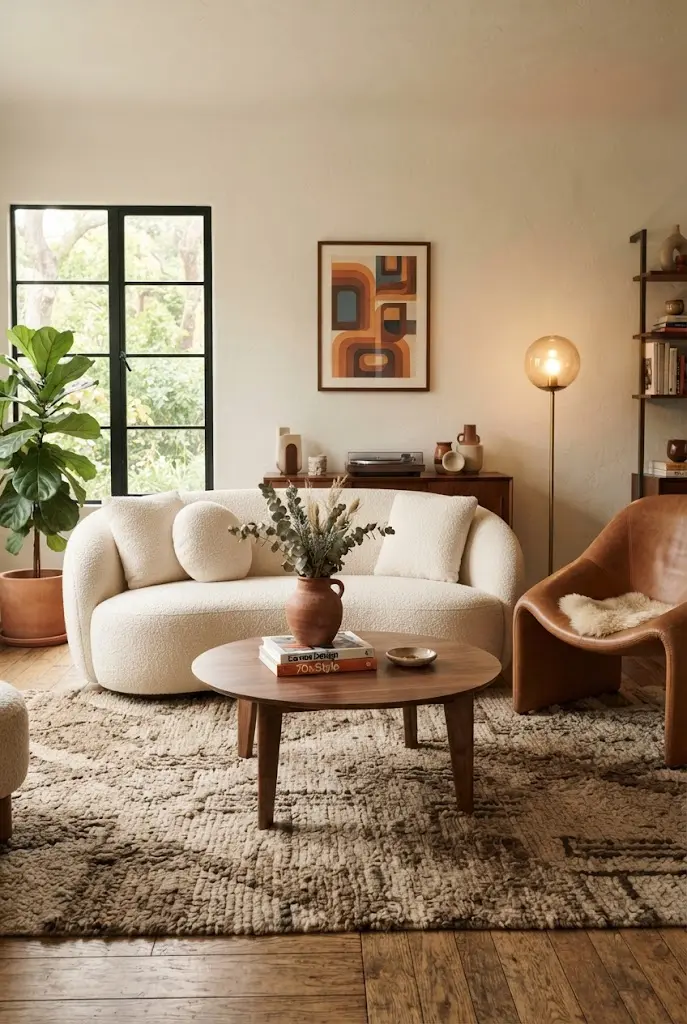
Curved furniture can soften a room and create the playful quality often associated with 1970s design.
Rounded sofas, chairs, tables, and lamps can replace some of the straight lines found in contemporary interiors.
A curved accent chair is an easy starting point.
Round coffee tables can make seating arrangements feel more conversational.
Bouclé, velvet, leather, and textured fabrics all work well with rounded forms.
Warm wood can keep curved furniture connected to the natural side of retro decorating.
Avoid using curves on every object because contrast creates a more interesting composition.
A few rounded pieces can be enough to establish the design direction.
Warm ambient lighting emphasizes their silhouettes in the evening.
The overall result feels relaxed, sculptural, and vintage-inspired.
18. Create a Sunken Lounge Feeling With Floor Cushions
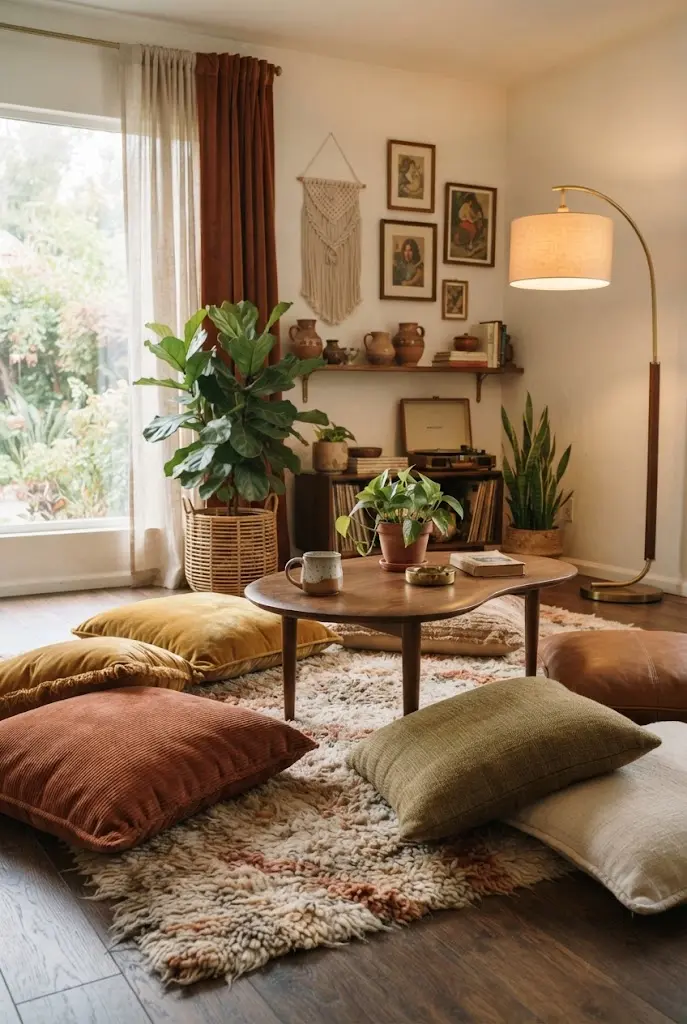
Floor-level seating can capture the relaxed spirit of 1970s entertaining without changing the architecture.
Large floor cushions can be arranged around a low wooden table.
Choose earthy fabrics such as rust, cream, olive, mustard, and brown.
Layering different textures makes the seating area feel comfortable and inviting.
A thick rug can define the zone and provide additional softness.
This arrangement works especially well in family rooms or casual entertainment spaces.
Add a few oversized pillows for extra comfort.
Keep nearby furniture at a relatively low height for visual consistency.
Natural materials such as rattan and wood reinforce the vintage mood.
The result is casual, intimate, and inspired by the social spaces of the era.
19. Install a Statement Fireplace
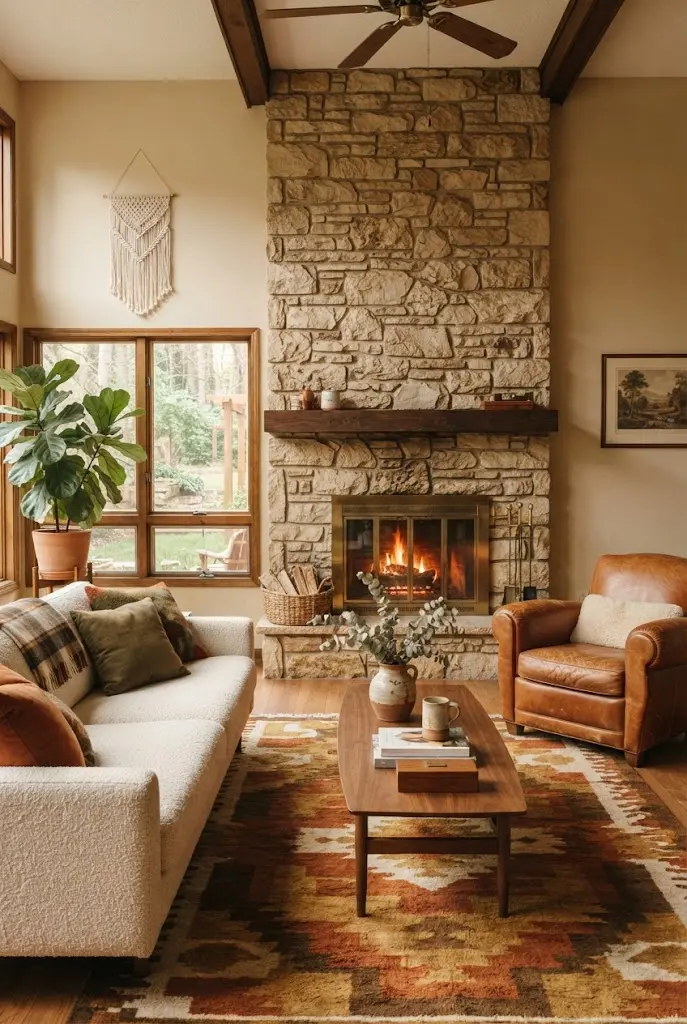
Fireplaces often served as major architectural focal points in 1970s American homes.
Stone, brick, tile, and wood were commonly used to give fireplaces visual weight.
A modern interpretation can emphasize natural materials without recreating every historical detail.
Stacked stone can create an earthy, organic appearance.
Warm wood furniture looks particularly attractive around a substantial fireplace.
A simple mantel can hold ceramics, plants, or vintage-inspired artwork.
Keep accessories limited so the fireplace remains the main feature.
A large rug can visually connect the fireplace with the seating arrangement.
Warm lighting makes the surrounding materials feel especially inviting.
This creates a cozy architectural centerpiece with strong retro influence.
20. Layer Different Natural Textures
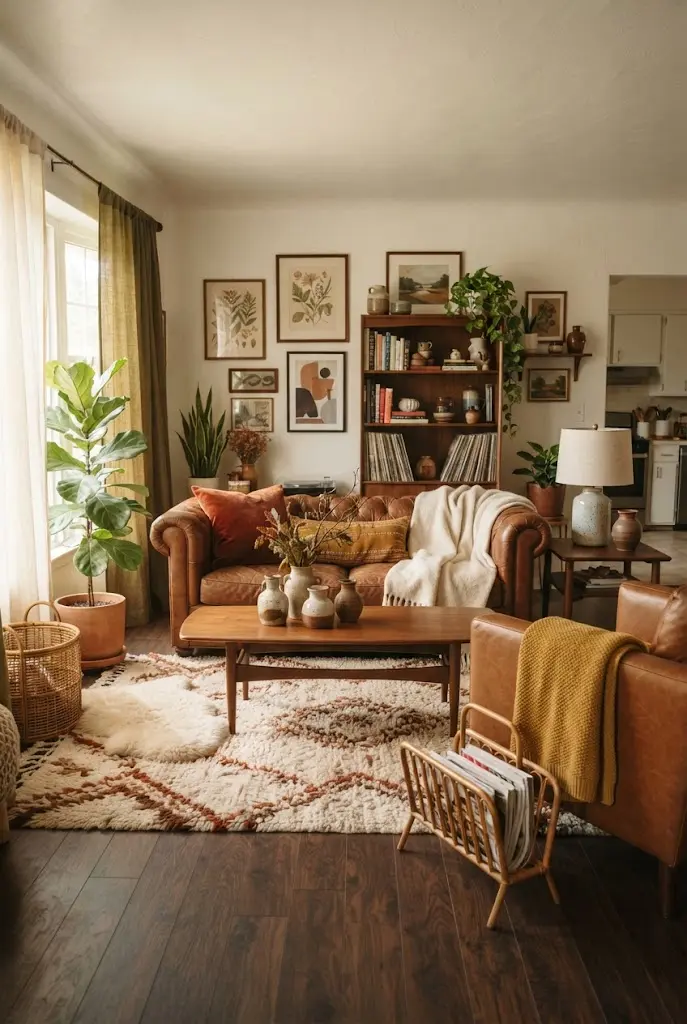
Texture was just as important as color in creating the distinctive feeling of a 1970s interior.
Combining wood, leather, rattan, wool, linen, ceramic, and woven fibers can make a room feel rich.
Start with one dominant material such as warm wood furniture.
Then introduce softer textiles through rugs, curtains, and cushions.
Rattan and wicker can add lightweight visual texture.
Ceramic pieces bring handmade character to shelves and tables.
Leather contributes a smooth, durable surface that contrasts with woven materials.
Keeping the color palette cohesive prevents the many textures from becoming chaotic.
Natural daylight helps reveal subtle variations across each surface.
The result is a comfortable, layered room with authentic retro warmth.
21. Use Retro Floral Patterns
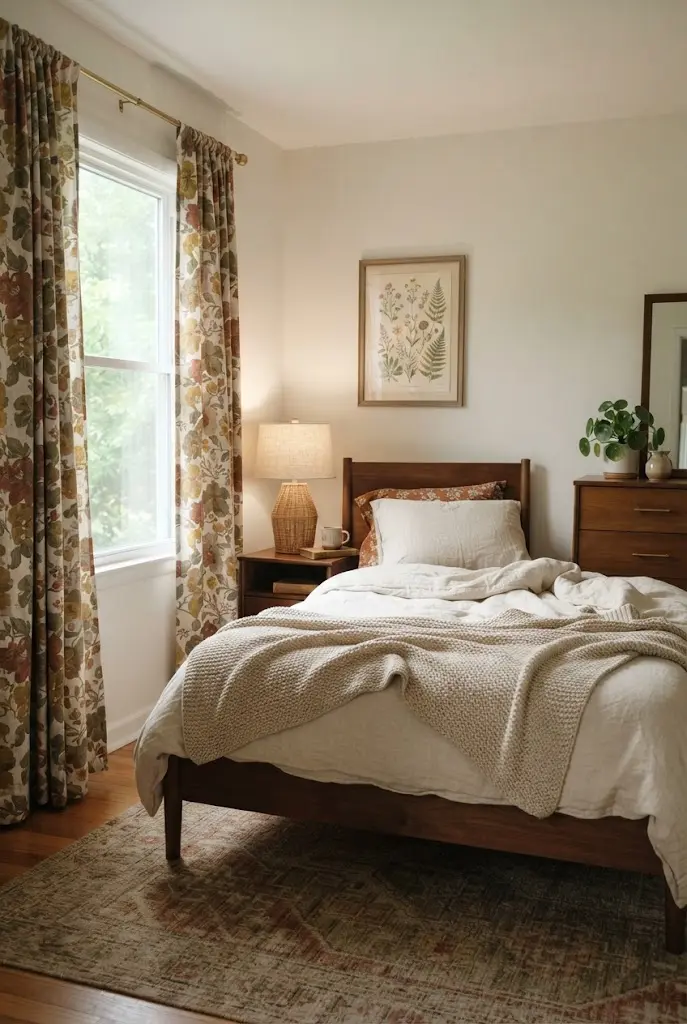
Floral patterns can add a softer side to 1970s interior design.
Large-scale botanical prints were often used on curtains, upholstery, wallpaper, and bedding.
For today’s homes, choose a restrained floral pattern instead of covering an entire room.
Curtains or accent pillows are simple ways to introduce the look.
Warm rust, olive, mustard, cream, and brown work especially well.
Pair floral textiles with plain furniture so the room remains balanced.
Natural wood provides a grounding element beneath the pattern.
A vintage botanical print can complement the fabric without making everything match.
Soft lamps and warm lighting enhance the cozy atmosphere.
The result is nostalgic, cheerful, and surprisingly adaptable.
22. Add a Vintage Record-Listening Corner
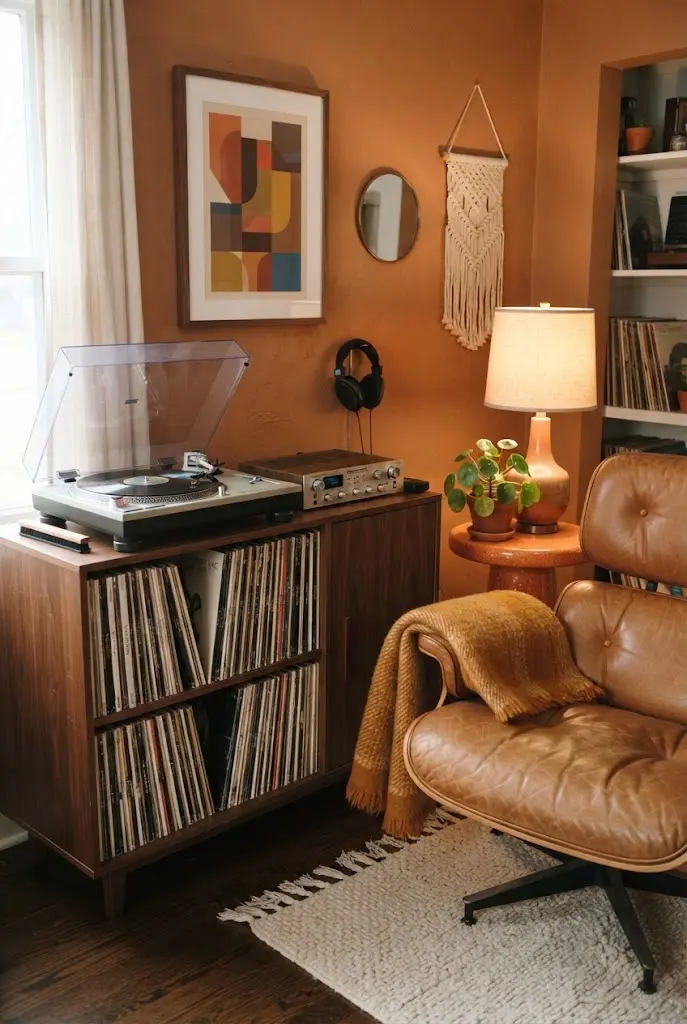
Music culture can be reflected in a home’s interior without turning the room into a themed display.
A compact record-listening corner can bring authentic nostalgic personality to a living room.
Use a warm wooden console or vintage-style record cabinet as the foundation.
A comfortable lounge chair can create a dedicated listening spot.
Keep records neatly organized on open shelving or inside cabinetry.
Add a small lamp with a warm glow for evening use.
Ceramic decor and framed vintage-inspired artwork can complete the corner.
Natural wood and leather work particularly well together here.
Keep the setup visually tidy so it feels like part of the room.
This creates a personal, nostalgic feature inspired by the lifestyle of the 1970s.
23. Balance Retro Pieces With Modern Neutrals
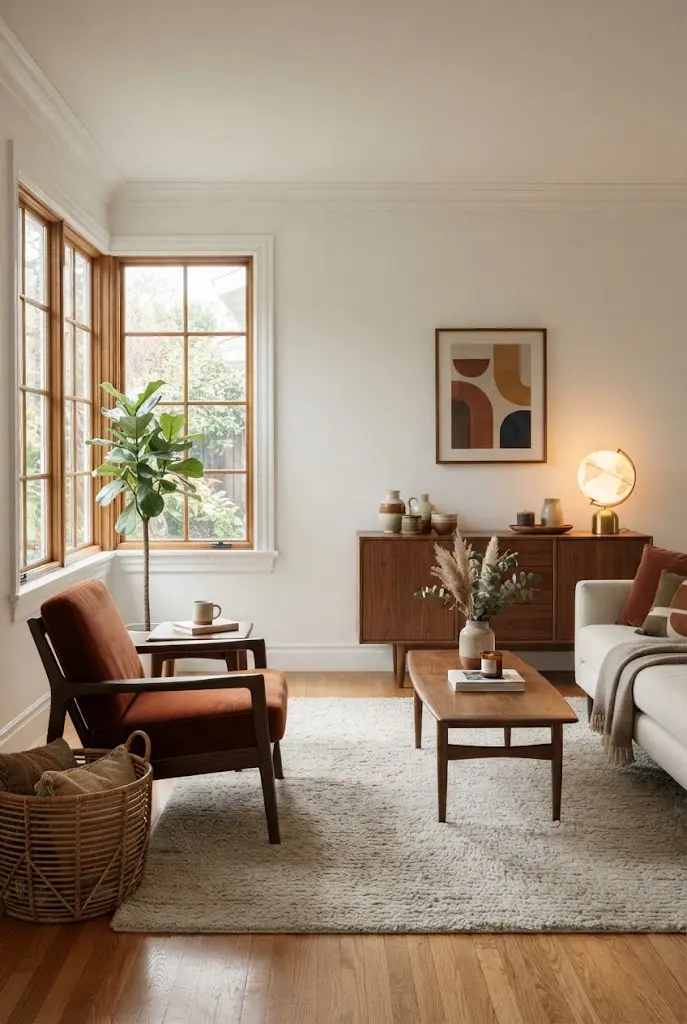
The easiest way to make 1970s design work today is to mix vintage-inspired elements with modern neutral pieces.
Instead of recreating an entire historical interior, choose a few recognizable details.
A walnut cabinet can sit comfortably beside a contemporary cream sofa.
A shag rug can soften a streamlined room without dominating it.
Retro artwork can provide personality against a simple neutral wall.
Warm lighting can connect the different elements visually.
Natural textures such as rattan and linen help bridge old and new styles.
Keep the overall palette warm rather than relying on too many saturated colors.
This approach allows you to enjoy nostalgic design while maintaining a practical modern home.
The finished space feels collected, comfortable, and inspired by the best visual qualities of the 1970s.