14 DIY Plant Wall Ideas to Bring Nature Into Your Living Room
A DIY plant wall can instantly bring natural beauty and fresh character into a living room.
It is a creative way to display greenery without taking up valuable floor space.
From simple hanging planters to wooden wall frames, there are many approaches to suit different interiors.
You can use real houseplants, trailing vines, herbs, or low-maintenance greenery depending on your lifestyle.
DIY plant walls also work beautifully with modern, boho, farmhouse, rustic, and minimalist decor.
With a few affordable materials, you can create a personalized living-room feature wall.
The ideas below offer practical inspiration for creating a welcoming and nature-inspired space.
1. Create a Wooden Slat Plant Wall
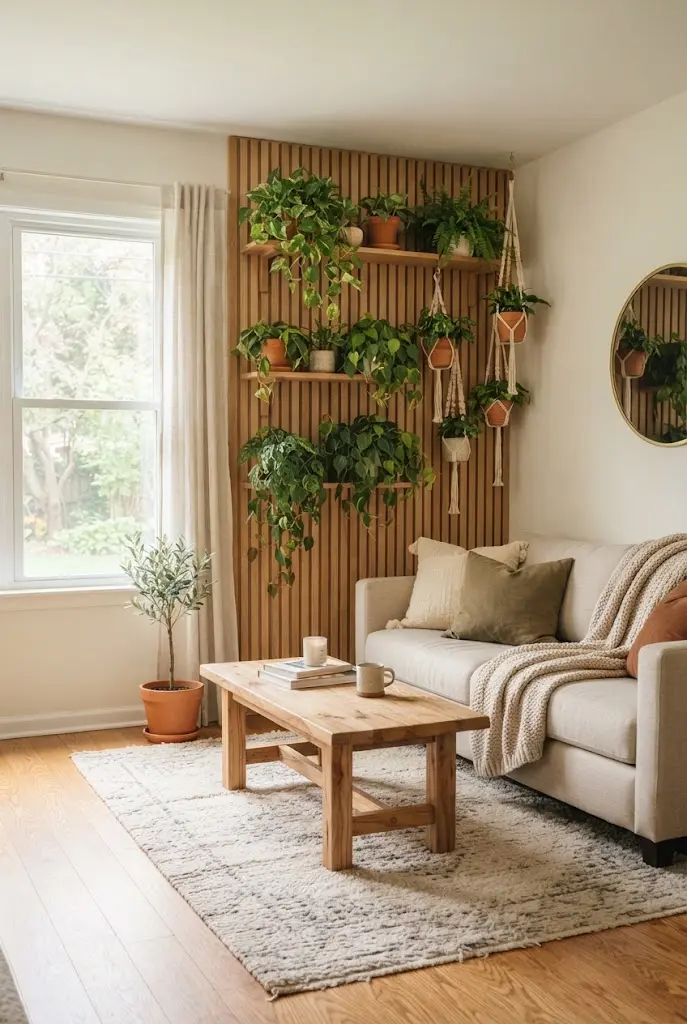
A wooden slat plant wall gives your living room a warm architectural feature while providing plenty of space for greenery.
Use narrow wood boards arranged vertically or horizontally across one section of the wall.
Attach small shelves, hooks, or plant holders between the slats.
Choose natural oak, pine, or walnut tones to complement your existing furniture.
Trailing pothos and heartleaf philodendrons can soften the structured wood design.
Small ceramic pots can add contrast without making the wall feel cluttered.
Leave some areas open so the wood remains visible behind the plants.
This approach works especially well in modern, Scandinavian, and boho-inspired rooms.
You can customize the spacing based on the number of plants you want to display.
The result is a living feature wall that combines natural wood with refreshing greenery.
2. Build a Hanging Macramé Plant Wall
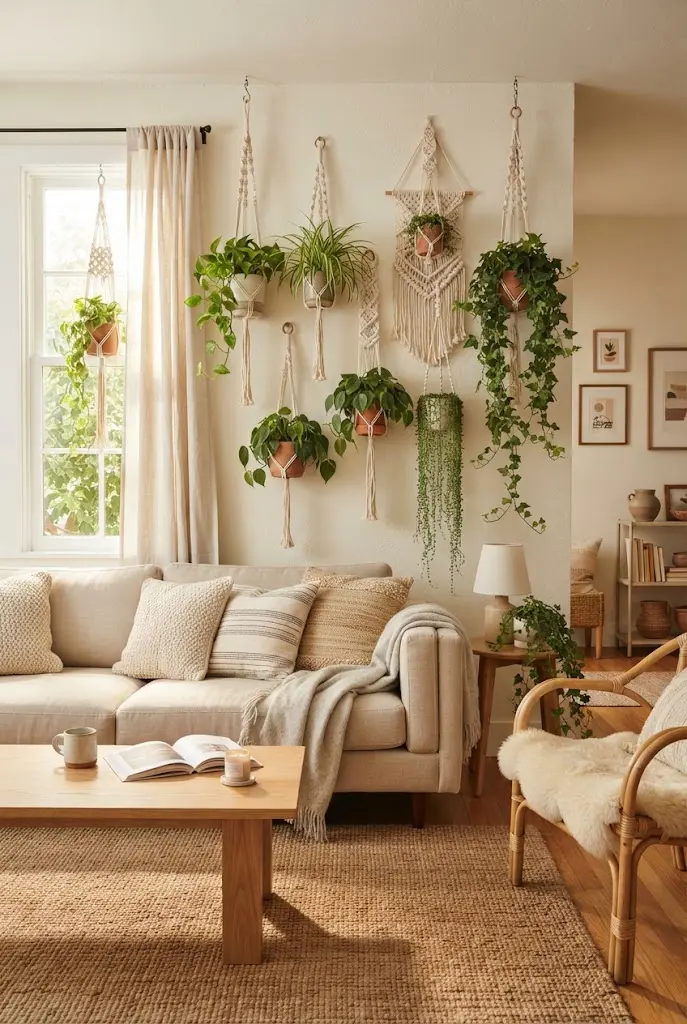
A macramé plant wall is an easy way to add texture and greenery to a living room.
Choose several handmade-looking cotton macramé holders in complementary lengths.
Hang them at different heights to create a relaxed layered arrangement.
Use lightweight ceramic or terracotta pots inside the holders.
Plants such as pothos, spider plants, and string of hearts work beautifully in this setup.
A warm cream wall provides a simple background that keeps the greenery noticeable.
You can arrange the holders symmetrically or create a more organic composition.
Macramé naturally complements boho, eclectic, and relaxed interiors.
Add a nearby wooden bench or woven basket to reinforce the natural theme.
This project can become a charming focal point without requiring a large construction project.
3. Make a Grid of Floating Plant Shelves
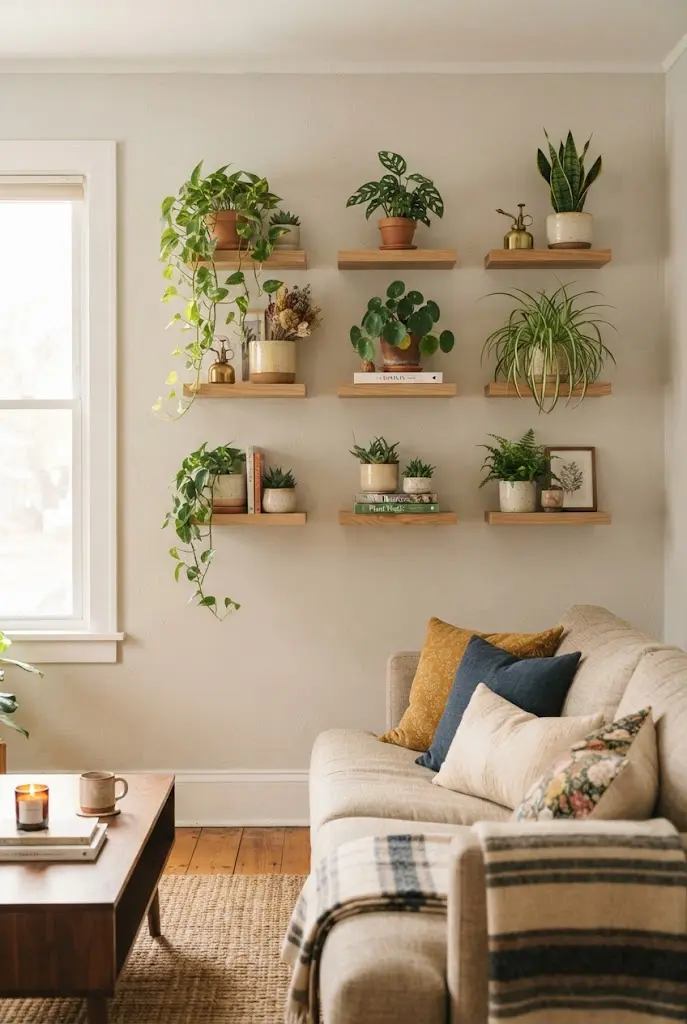
Floating shelves can turn an empty living-room wall into a practical vertical garden.
Install several slim shelves in a balanced grid arrangement.
Keep enough space between each shelf so the plants have room to grow naturally.
Mix small upright plants with trailing varieties for visual movement.
White, oak, or walnut shelves can be selected according to your room’s color palette.
Use matching pots for a clean appearance or mix handmade ceramics for a more collected look.
Avoid placing too many heavy pots on shelves that are not properly secured.
This idea is especially useful for renters when using suitable wall-safe mounting solutions.
The shelves can also hold small books and decorative objects between the plants.
The finished display combines storage, decoration, and greenery in one attractive feature.
4. Design a Vertical Pallet Plant Wall
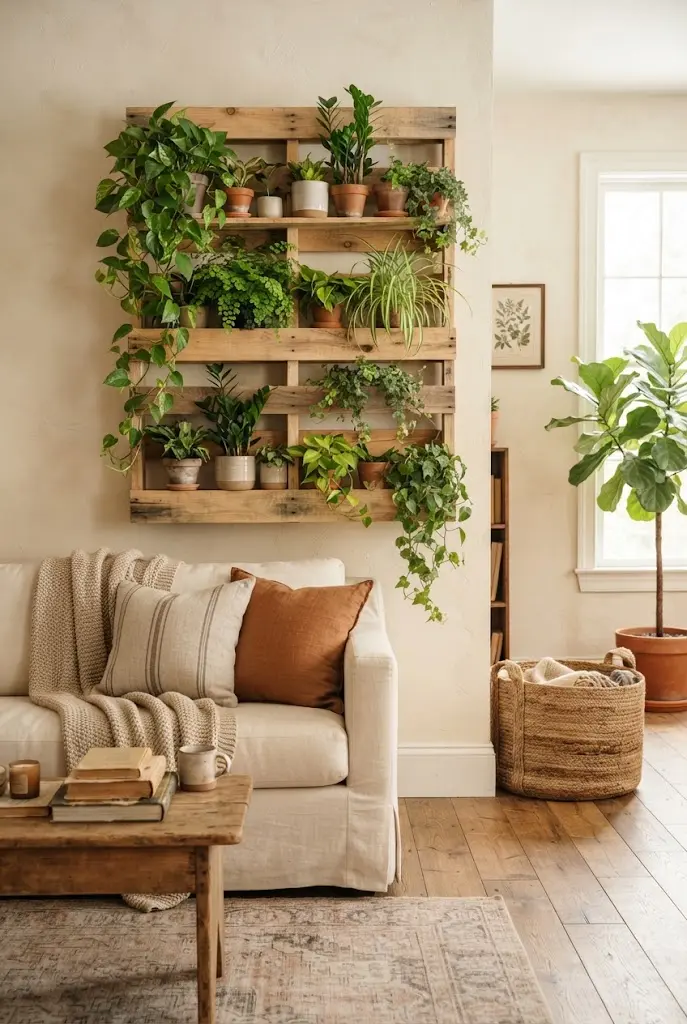
An old wooden pallet can be transformed into a rustic plant display with a little creativity.
Choose a sturdy pallet that is clean and suitable for indoor decorative use.
Sand the wood carefully and finish it with a natural stain if desired.
Attach small pots or planter boxes securely between the pallet boards.
Fill the containers with different varieties of leafy houseplants.
Use trailing plants near the upper sections so the greenery can cascade downward.
Keep the pallet against a wall where it receives appropriate indirect natural light.
This idea adds rustic texture to farmhouse, industrial, and casual living rooms.
You can personalize the pallet with different pots, plant labels, or small decorative accents.
It creates a distinctive vertical garden while giving reclaimed wood a useful second life.
5. Create a Geometric Plant Wall
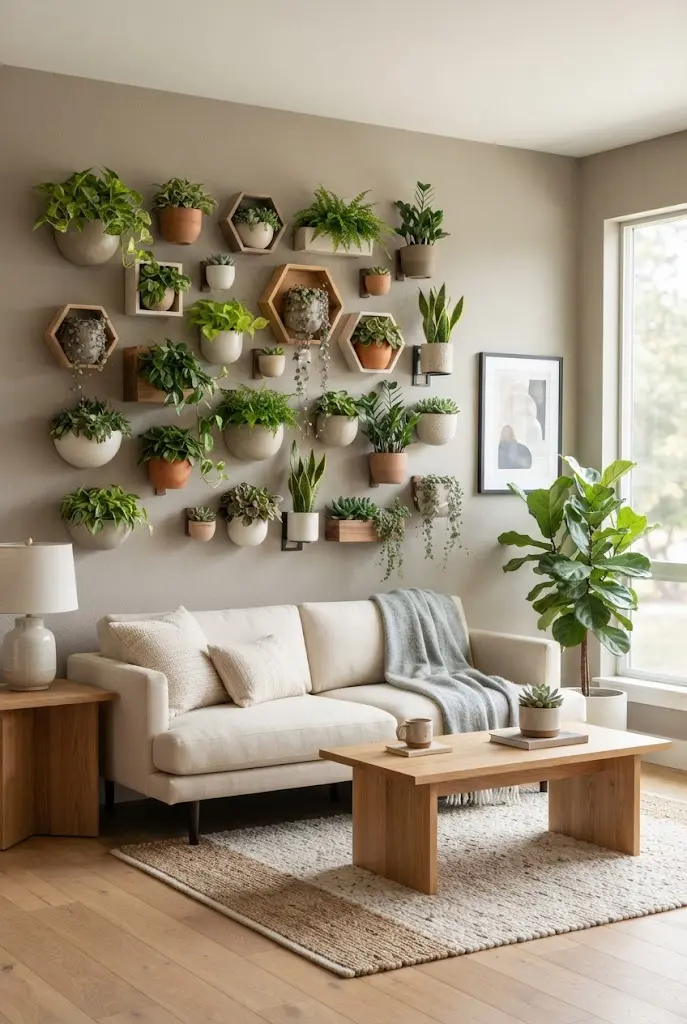
A geometric plant wall can give your living room a modern and artistic appearance.
Start with several small geometric wall planters in complementary shapes.
Arrange them into a balanced pattern rather than placing them randomly.
Use a combination of round, hexagonal, square, and rectangular forms.
Fill the planters with compact greenery that does not overwhelm the shapes.
Matte ceramic, natural wood, or muted metal finishes can create a sophisticated look.
Keep the surrounding wall relatively simple so the arrangement remains the focal point.
This design works particularly well in contemporary and minimalist interiors.
Choose plants with different leaf shapes to add subtle visual variety.
The result is a living wall installation that feels decorative as well as functional.
6. Use a Ladder as a Plant Display
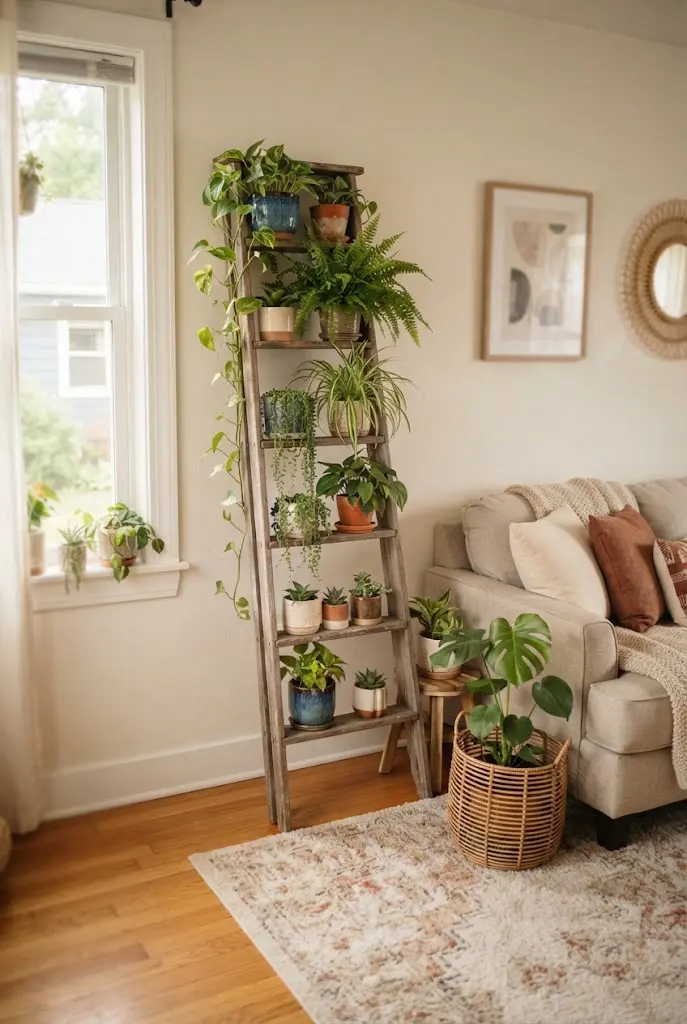
A decorative wooden ladder can become a simple vertical plant wall alternative.
Lean a narrow wooden ladder securely against a suitable living-room wall.
Place small planters on each ladder step or attach hanging pots to the sides.
Use plants with different heights to create an attractive layered effect.
Trailing vines can flow naturally from the upper levels toward the floor.
Choose unfinished or lightly stained wood for a warm organic appearance.
Keep the arrangement light enough that the ladder remains stable.
This project works especially well in small apartments where floor space is limited.
Pair the display with baskets, woven accessories, and natural textiles.
The result is a flexible plant feature that can be rearranged whenever your decor changes.
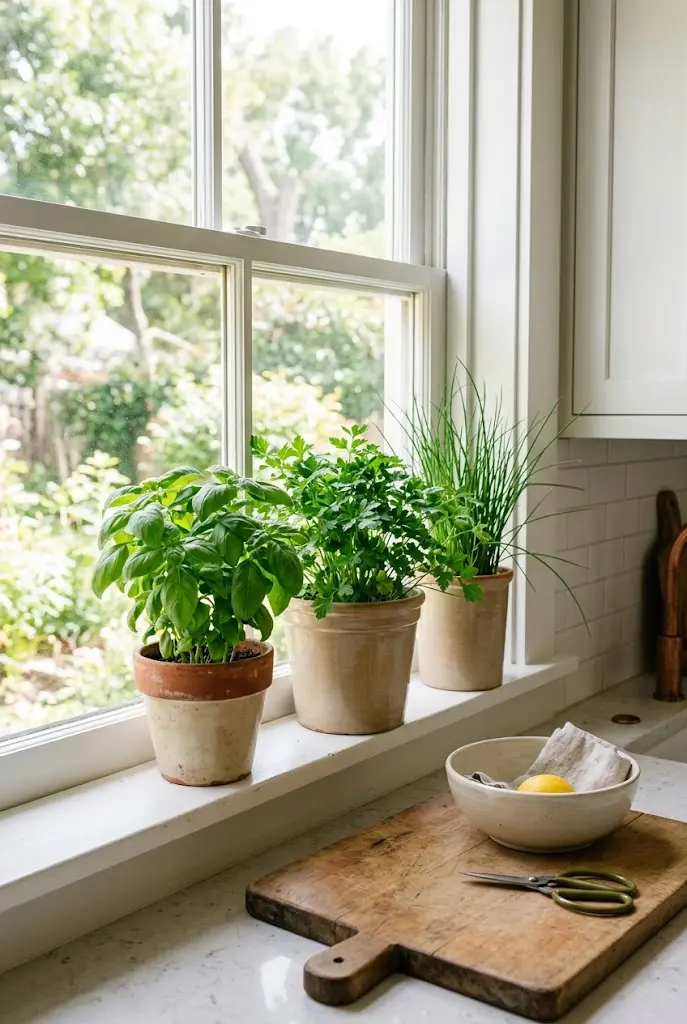
7. Build a Wall-Mounted Herb Garden
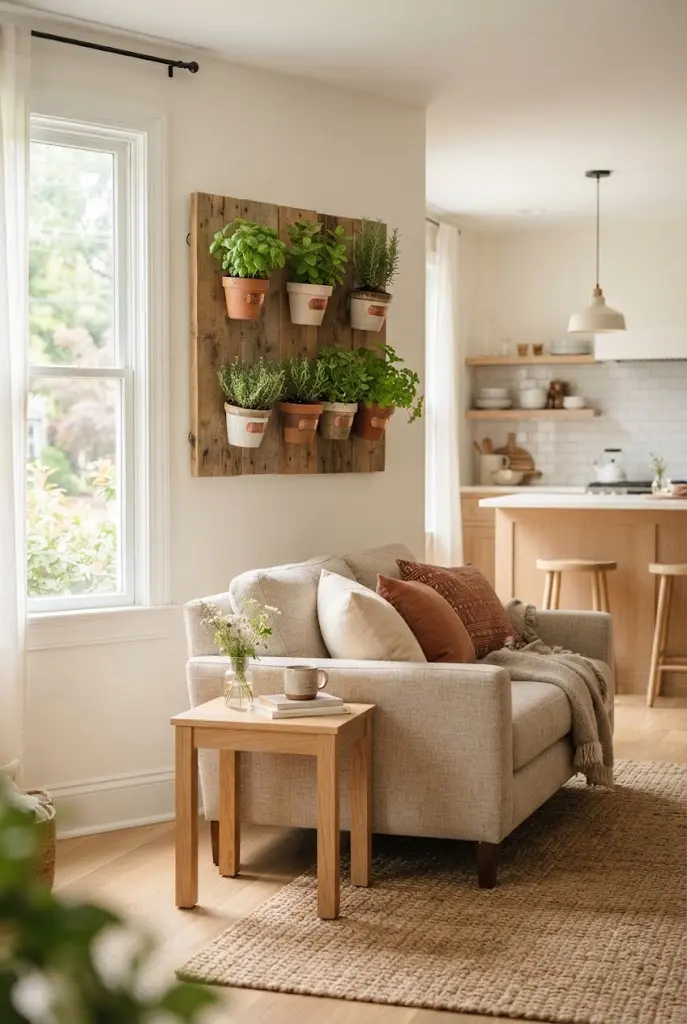
A wall-mounted herb garden can bring both greenery and useful plants into your living space.
Choose compact herbs that can thrive in the available indoor light.
Basil, mint, thyme, rosemary, and oregano can provide attractive foliage and pleasant aromas.
Use small labeled pots mounted onto a wooden board or narrow wall shelves.
Make sure the containers have appropriate drainage and protection from water damage.
Place the garden near a bright window whenever possible.
Use natural wood and terracotta to create a warm handcrafted appearance.
The display can work particularly well between an open living room and kitchen area.
Regular trimming will help keep the herbs compact and visually appealing.
This idea combines decorative greenery with a practical indoor gardening project.
8. Create a Framed Living Plant Wall
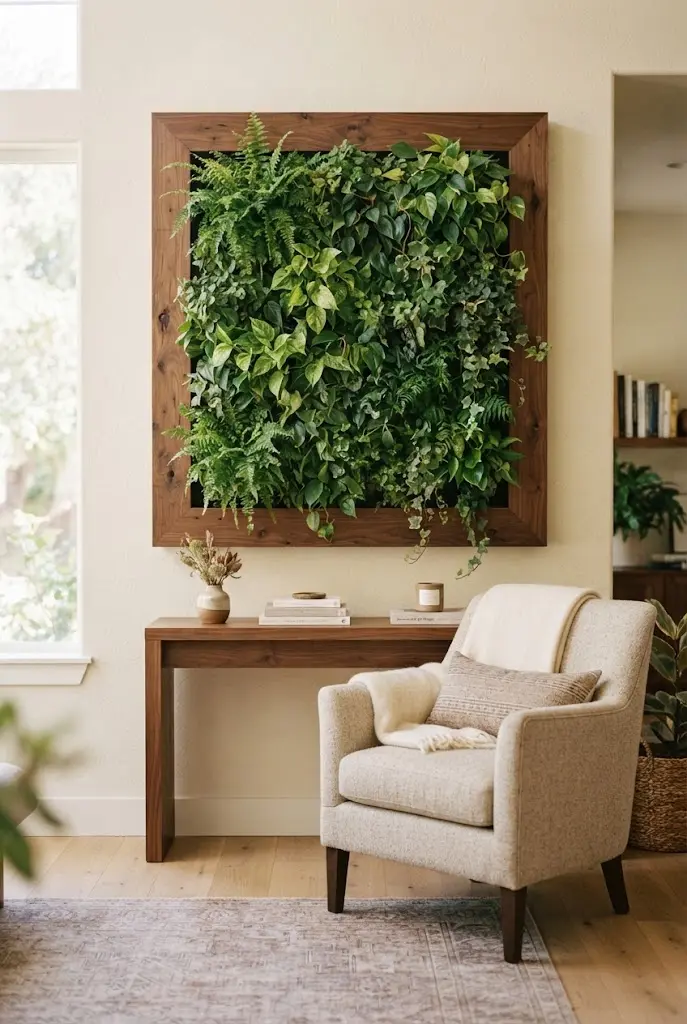
A large frame can make a plant wall look like a piece of living artwork.
Choose a deep wooden frame that provides enough space for small planters.
Mount it securely on the wall and arrange greenery inside its boundaries.
Use plants with different leaf shapes to create an artistic composition.
Trailing vines can extend slightly beyond the frame for a more natural appearance.
A dark wood frame can create contrast against a light wall.
Alternatively, a pale oak frame can create a softer Scandinavian-inspired look.
Keep nearby furniture simple so the framed garden remains visually important.
This concept is especially effective above a console table or behind a reading chair.
It creates an eye-catching combination of botanical beauty and wall art.
9. Make a Pegboard Plant Wall
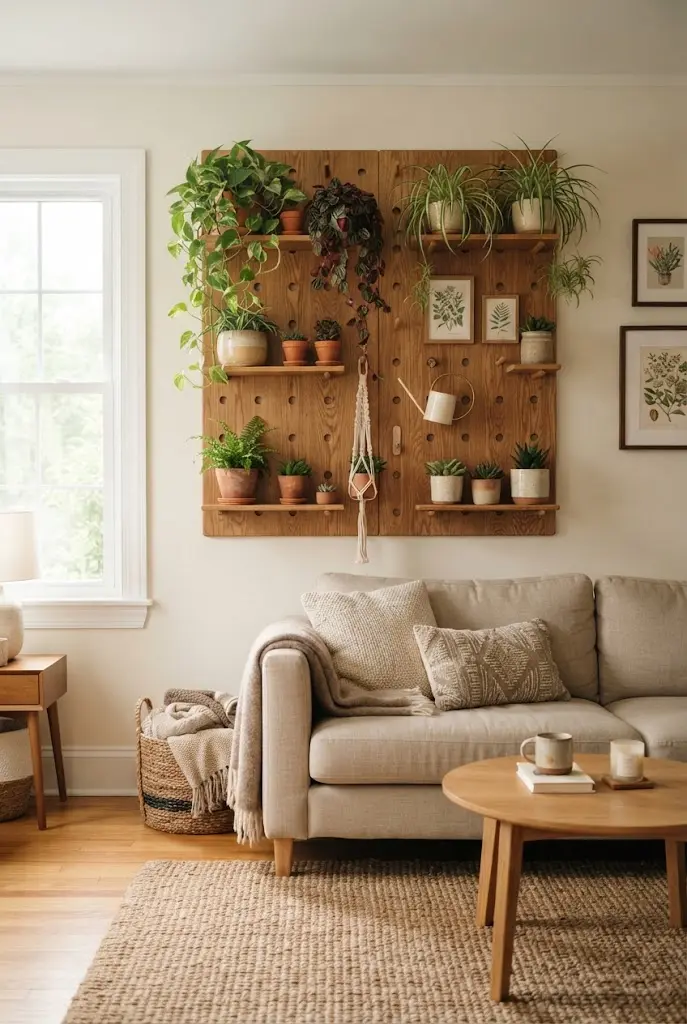
A wooden pegboard offers an adjustable way to create a personalized living-room plant wall.
Mount a large pegboard securely onto a suitable wall.
Use hooks and small shelves to hold different sizes of plant containers.
The arrangement can be changed whenever plants grow or your decorating style evolves.
Combine hanging planters with small decorative objects for a more curated appearance.
Natural wood pegboards work especially well with green foliage.
Choose lightweight pots for shelves and make sure all hardware is properly secured.
This idea suits modern, Scandinavian, craft-inspired, and minimalist interiors.
You can leave portions of the pegboard open to prevent the wall from feeling overcrowded.
It provides an easy foundation for experimenting with different plant arrangements over time.
10. Hang Plants From a Ceiling-to-Wall Frame
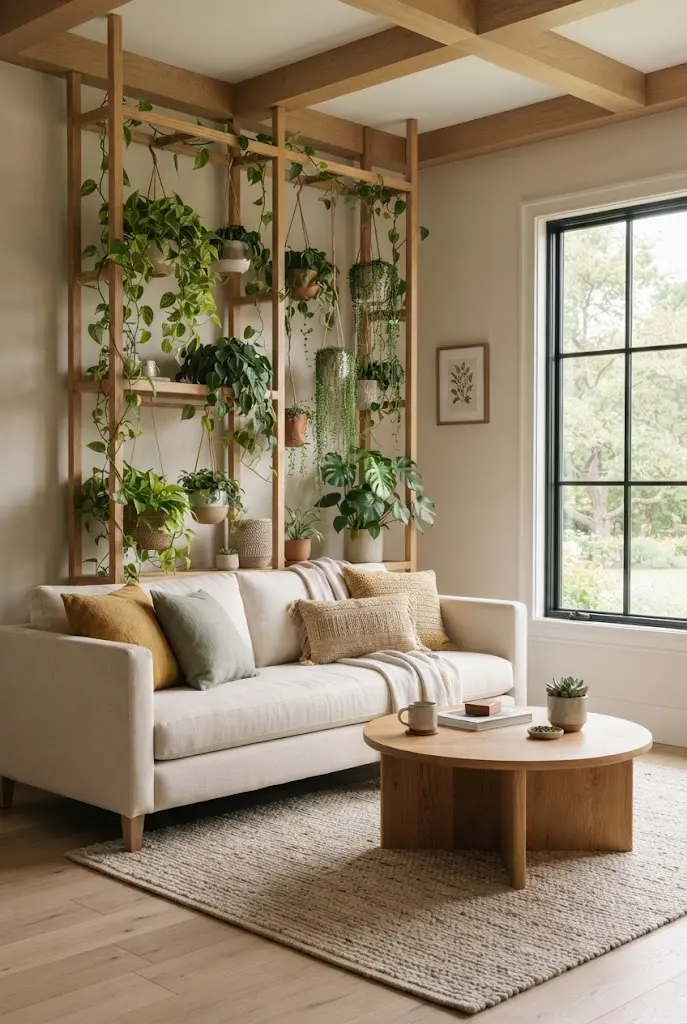
A ceiling-to-wall frame can create a dramatic vertical garden effect without covering the entire wall.
Use slim wooden or metal supports to create a simple open framework.
Hang several planters at staggered heights across the structure.
Choose trailing plants that naturally soften the straight architectural lines.
Leave enough open space between the plants to maintain an airy appearance.
This approach works well in rooms with taller ceilings and generous natural light.
Use neutral pots so the greenery remains the main visual feature.
The framework can also separate a living room seating area from another part of an open-plan home.
Make sure the structure is securely installed and capable of supporting the intended weight.
The finished design creates a dramatic botanical backdrop while preserving an open feeling.
11. Create a Terracotta Pot Wall
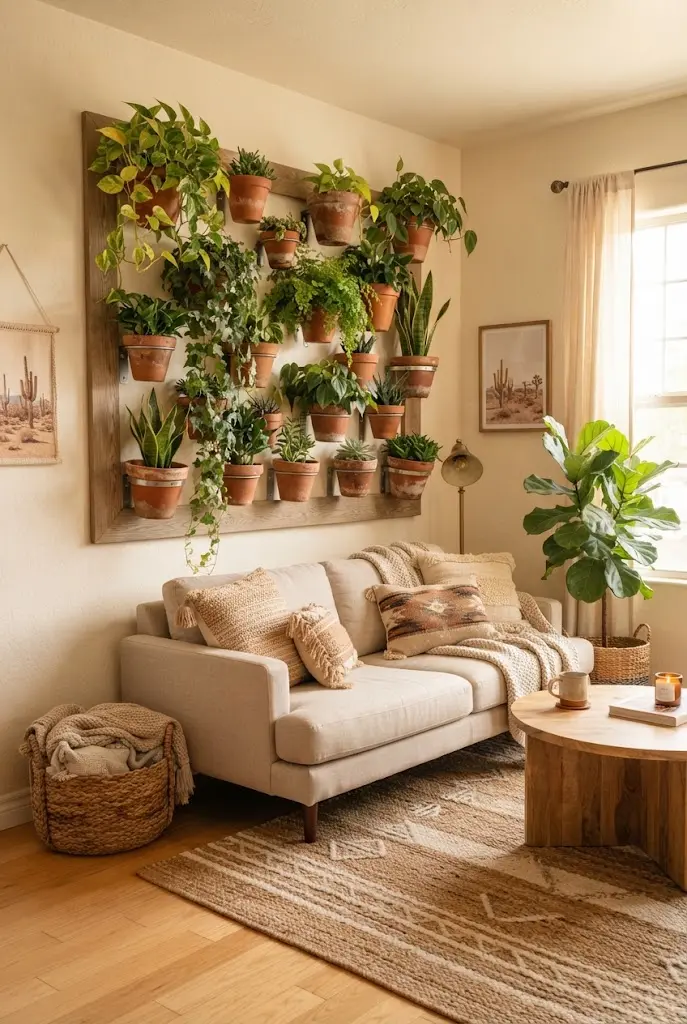
Terracotta pots can bring warmth and handmade character to a simple living-room plant wall.
Choose several pots in similar earthy tones for a coordinated appearance.
Mount them securely using appropriate wall brackets or a wooden support system.
Arrange the pots in rows, staggered levels, or an organic pattern.
Fill them with greenery that has different leaf shapes and growth habits.
The warm terracotta color pairs beautifully with cream, beige, olive, and natural wood interiors.
Use trailing plants around the lower sections to create movement.
Keep the number of pots manageable so watering remains practical.
This approach fits rustic, Mediterranean, Southwestern, and boho-inspired interiors.
It creates a warm botanical display with a distinctly handcrafted appearance.
12. Build a Minimalist White Planter Wall
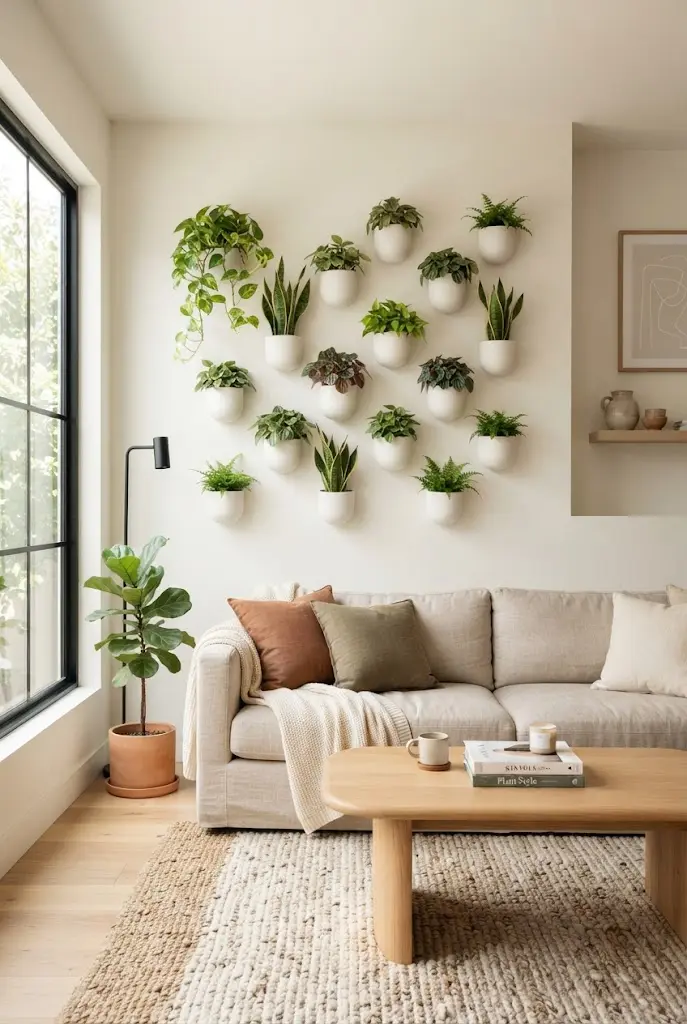
A minimalist white planter wall can make greenery feel especially fresh and contemporary.
Use simple white ceramic planters arranged in a clean vertical composition.
Choose plants with strong natural shapes to provide contrast against the white background.
Pothos, snake plants, peperomia, and small ferns can work well in this setting.
Keep the surrounding decor restrained so the wall does not feel visually crowded.
Natural wood furniture can add warmth to the otherwise crisp palette.
Use consistent planter sizes for a more organized appearance.
Place the arrangement where the plants can receive suitable indirect sunlight.
This idea works particularly well in modern apartments and minimalist living rooms.
The finished wall creates a calm botanical statement with a clean and timeless appearance.
13. Make a Reclaimed Wood and Plant Wall
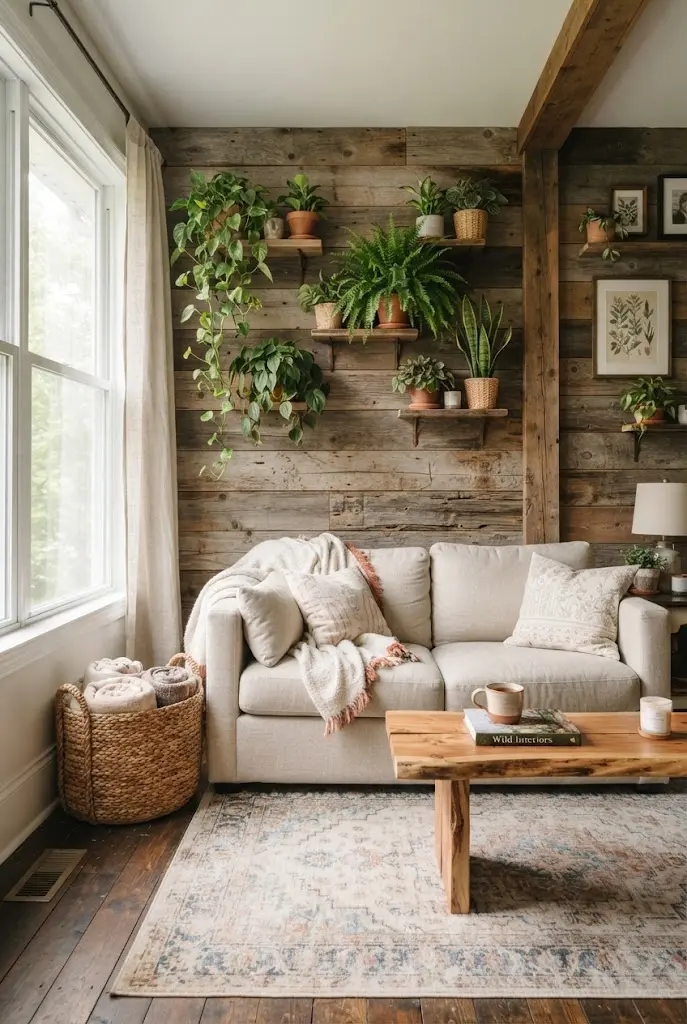
Reclaimed wood provides character and texture while creating an excellent background for greenery.
Select several boards with naturally varied grain and subtle signs of age.
Secure the boards together to form a compact wall panel.
Attach small shelves or planter brackets across different sections.
Use a mixture of upright and trailing houseplants to create visual depth.
Keep the wood finish relatively natural so its authentic character remains visible.
Green foliage creates a beautiful contrast against warm brown and weathered wood.
This idea fits farmhouse, rustic, industrial, and modern organic interiors.
Add woven baskets and neutral textiles nearby to reinforce the natural theme.
The finished wall feels handcrafted, warm, and connected to the outdoors.
14. Create a Living Room Corner Plant Wall
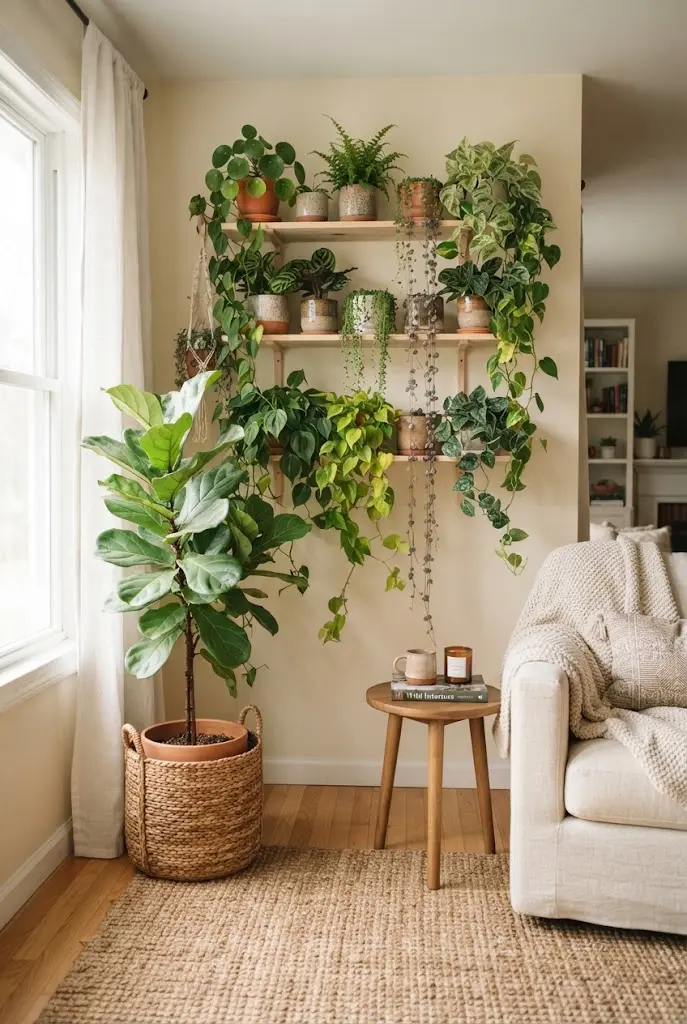
You do not need an entire wall to create an impressive vertical garden.
A living-room corner can become a beautiful green feature with a carefully planned arrangement.
Use narrow shelves, hanging planters, and a tall plant to build vertical height.
Place larger plants near the floor and smaller plants higher on the wall.
Trailing varieties can connect the different levels visually.
Keep the corner slightly open so the room still feels spacious.
A natural wood shelf system can add warmth against a light neutral wall.
Use pots in complementary colors to make the collection feel intentional.
This approach works particularly well in apartments, reading corners, and small living rooms.
The result is a cozy botanical nook that brings nature into an otherwise unused space.