21 Faux Plant Wall Ideas to Create a Lush Indoor Look
Faux plant walls are an easy way to bring a lush, natural feeling into your home without the maintenance of real plants.
They work especially well in apartments, small rooms, entryways, living rooms, bedrooms, and home offices.
Modern artificial greenery can look remarkably realistic when combined with natural textures and thoughtful styling.
You can create a full feature wall or use smaller arrangements for a more subtle botanical accent.
Faux plants also provide year-round color without needing sunlight, watering, or regular pruning.
From simple DIY panels to creative framed displays, there are many ways to personalize the look.
These ideas are perfect for homeowners and renters who want an effortless indoor garden atmosphere.
1. Full Faux Greenery Feature Wall
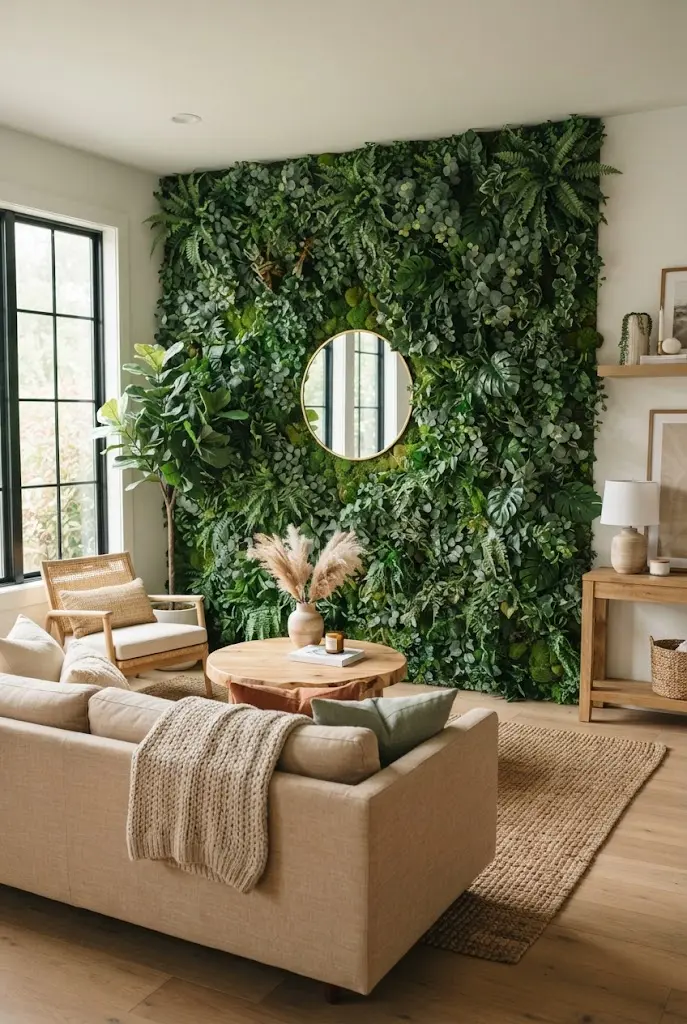
A full faux greenery wall can instantly transform a plain room into a lush botanical retreat.
Use several artificial greenery panels to cover one entire accent wall.
Mix different leaf shapes to make the installation look more natural.
Choose greenery with varied shades of green rather than a single uniform color.
A neutral wall nearby helps the greenery become the main visual feature.
This approach works beautifully behind a sofa, dining area, or reading nook.
Add warm lighting to create depth and make the leaves look more realistic.
Natural wood furniture can complement the organic appearance of the wall.
Keep surrounding decor simple so the greenery does not feel visually overwhelming.
The result is a dramatic indoor garden effect with very little maintenance.
2. Faux Plant Wall Behind a Sofa
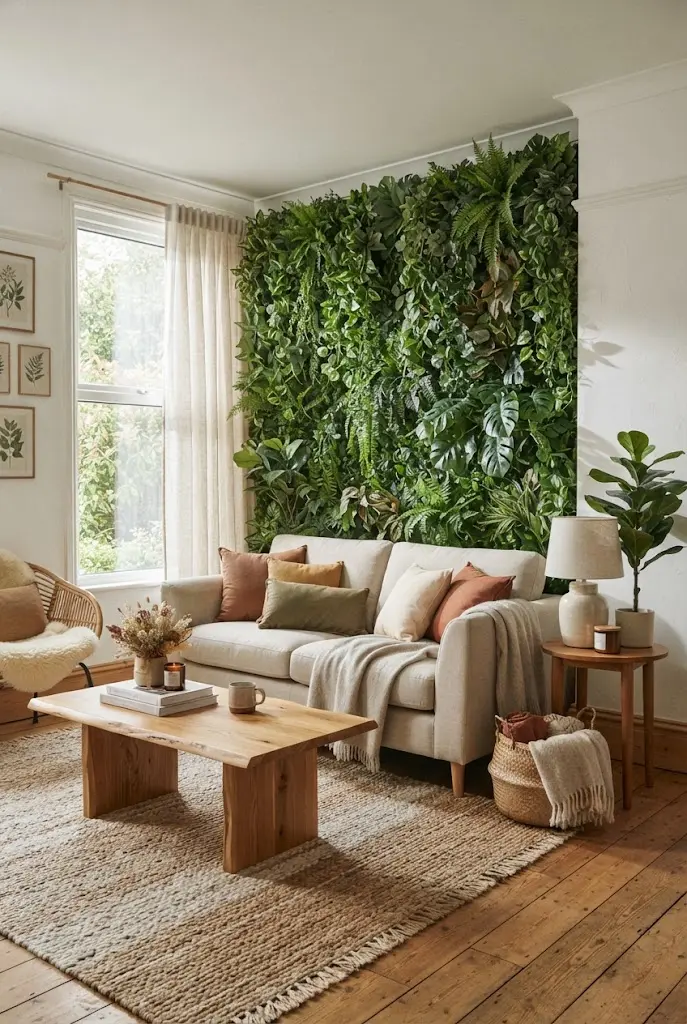
Placing a faux plant wall behind the sofa creates an attractive living room focal point.
Choose greenery panels that extend slightly wider than the sofa for balanced proportions.
A combination of leafy vines and small fern-style leaves can add visual depth.
Keep the sofa in a soft neutral shade such as beige, cream, or warm gray.
Wooden side tables can reinforce the natural theme without competing with the greenery.
Add a few simple cushions in earthy colors for a coordinated appearance.
Warm wall lighting can highlight the texture of the artificial leaves in the evening.
This arrangement works particularly well in modern apartments and smaller homes.
The faux plants provide the feeling of nature without taking up floor space.
It is an easy way to make a basic sofa wall feel more decorative and inviting.
3. Framed Faux Plant Wall Art
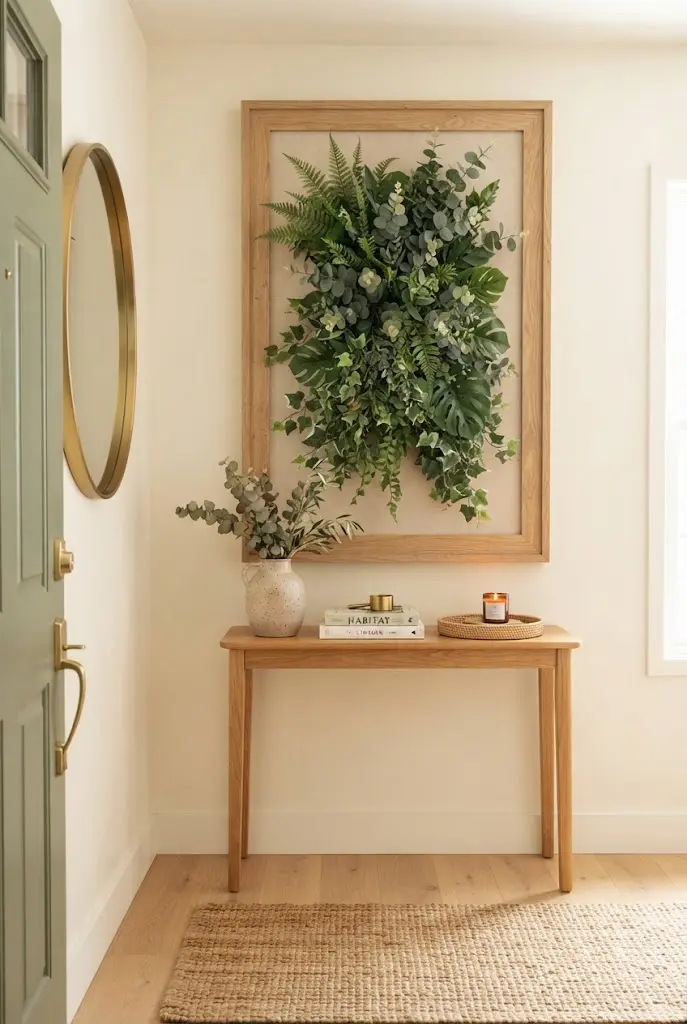
Turn artificial greenery into decorative wall art by placing smaller faux plants inside large frames.
Use a simple wooden frame to give the display a polished and intentional appearance.
Different foliage varieties can be arranged inside the frame for a layered botanical effect.
This idea is especially useful when you do not want to cover an entire wall.
A dark frame can create contrast against pale walls and light furniture.
For warmer interiors, natural oak or walnut frames work beautifully.
Hang the framed greenery above a console table or small cabinet.
You can also combine two or three frames in different sizes.
Keep the surrounding artwork minimal to maintain a clean botanical theme.
This creates a sophisticated faux plant display that resembles oversized botanical artwork.
4. Faux Ivy Wall for a Cozy Corner
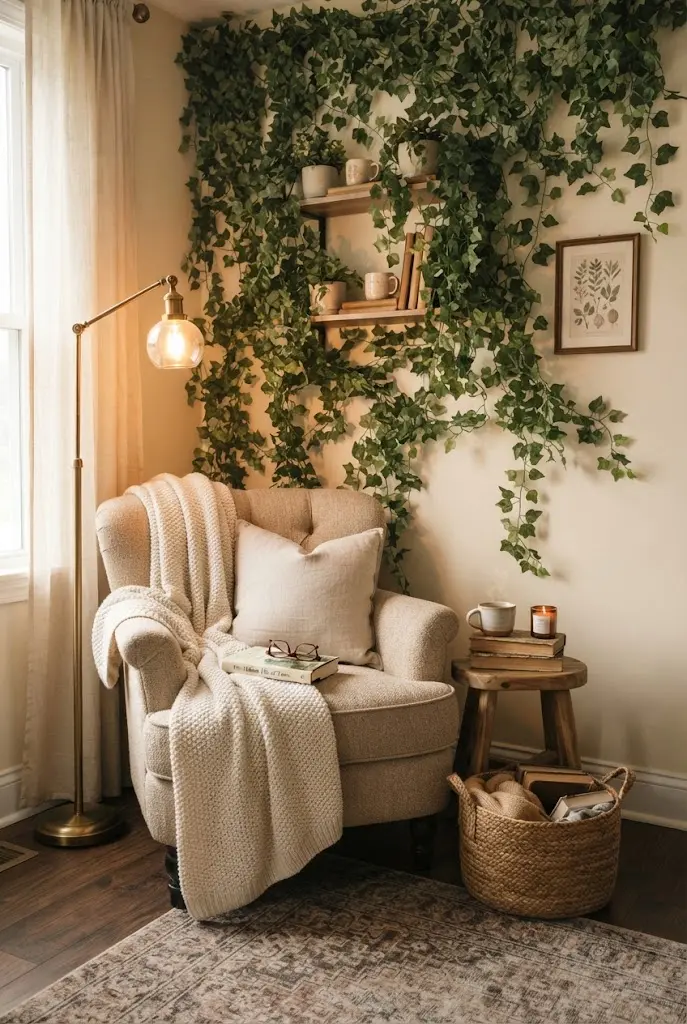
Faux ivy is one of the easiest choices for creating a relaxed green wall indoors.
Its trailing leaves can make a small corner feel softer and more inviting.
Use several ivy strands across a wall panel for a fuller appearance.
Allow some vines to hang naturally rather than arranging every leaf symmetrically.
A cozy chair positioned nearby can turn the area into a small reading corner.
Add a woven basket, wooden stool, or rattan accessory to strengthen the natural style.
Soft cream and beige colors work particularly well with green ivy.
Warm floor or table lighting can make the greenery feel especially cozy at night.
Because faux ivy requires no sunlight, it can brighten darker corners of the home.
This is a simple project for adding greenery where real plants may struggle.
5. Faux Plant Wall in a Home Office
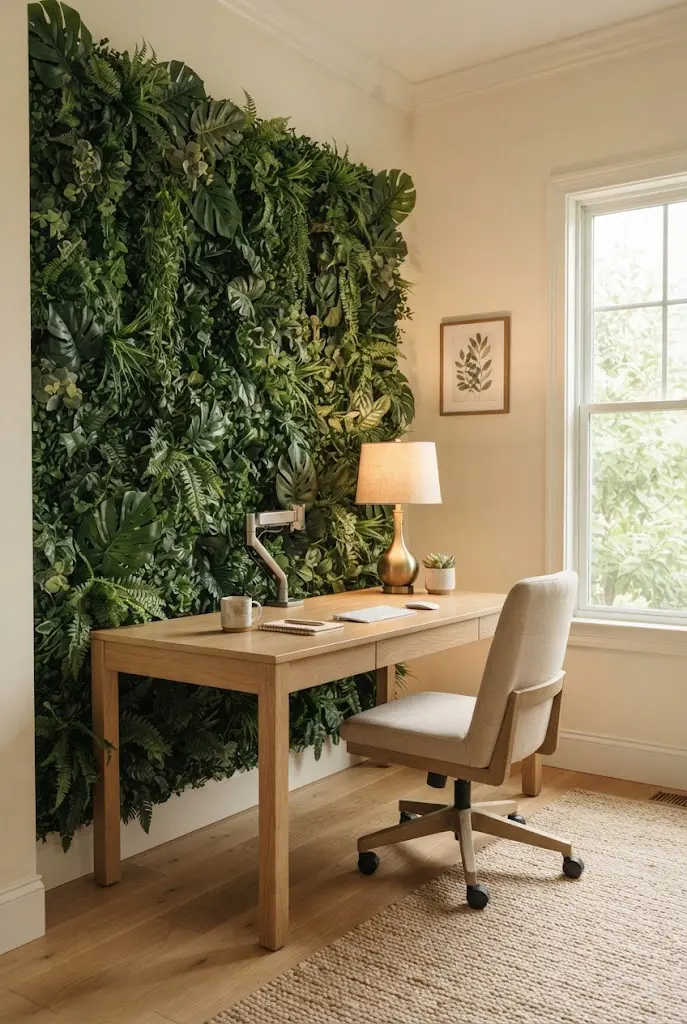
A faux plant wall can add visual interest to a home office without requiring desk space.
Install greenery behind the desk to create a calming background for the room.
Choose medium-sized leaves that do not make the space feel too dense.
A simple wood desk pairs naturally with artificial greenery.
Neutral office accessories help keep the overall appearance sophisticated.
A small desk lamp can provide warm contrast against the green wall.
The greenery can also make video-call backgrounds look more visually appealing.
Use a partial wall installation if a complete greenery wall feels too dramatic.
Keep cables and office equipment organized so the botanical backdrop remains clean.
This creates a refreshing workspace while avoiding the upkeep associated with real plants.
6. Small Faux Plant Wall Panel
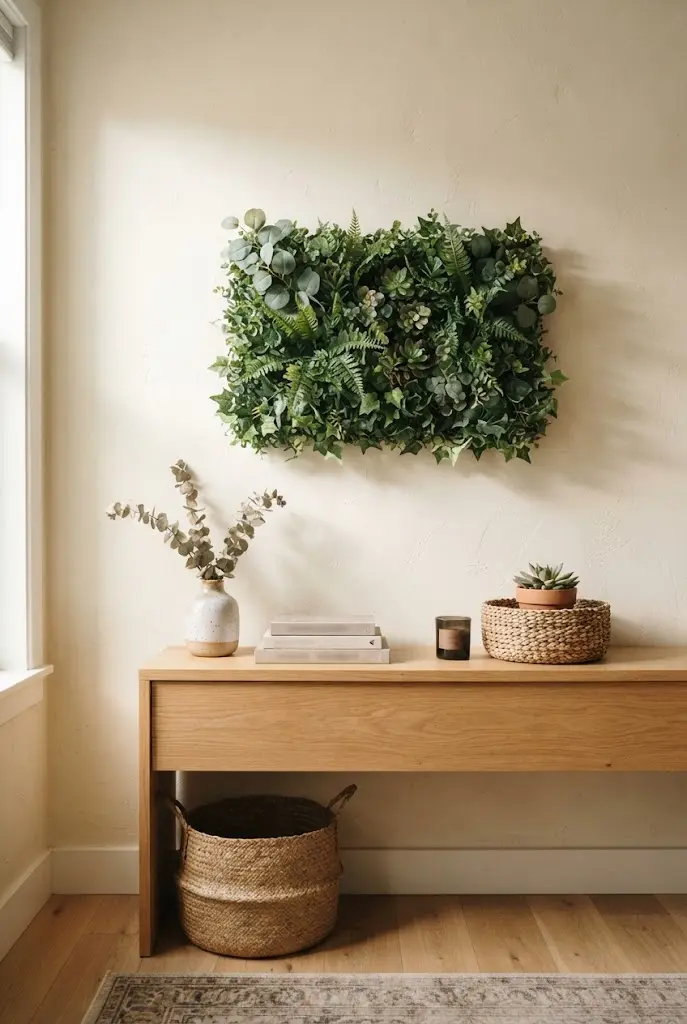
A small faux plant panel is perfect when you want greenery without covering an entire wall.
Choose a compact rectangular panel that fits above a console, desk, or cabinet.
Mix different foliage styles to prevent the panel from looking too uniform.
A simple frame around the edges can give the project a finished appearance.
This approach is also convenient for renters who want temporary decorating solutions.
Use removable mounting hardware when appropriate for the wall surface.
A small panel can become a focal point without overwhelming a compact room.
Pair it with neutral ceramics, wood accents, or woven accessories.
You can easily move the panel to another room when your decor changes.
It is one of the simplest ways to experiment with faux greenery at home.
7. Faux Tropical Leaf Accent Wall
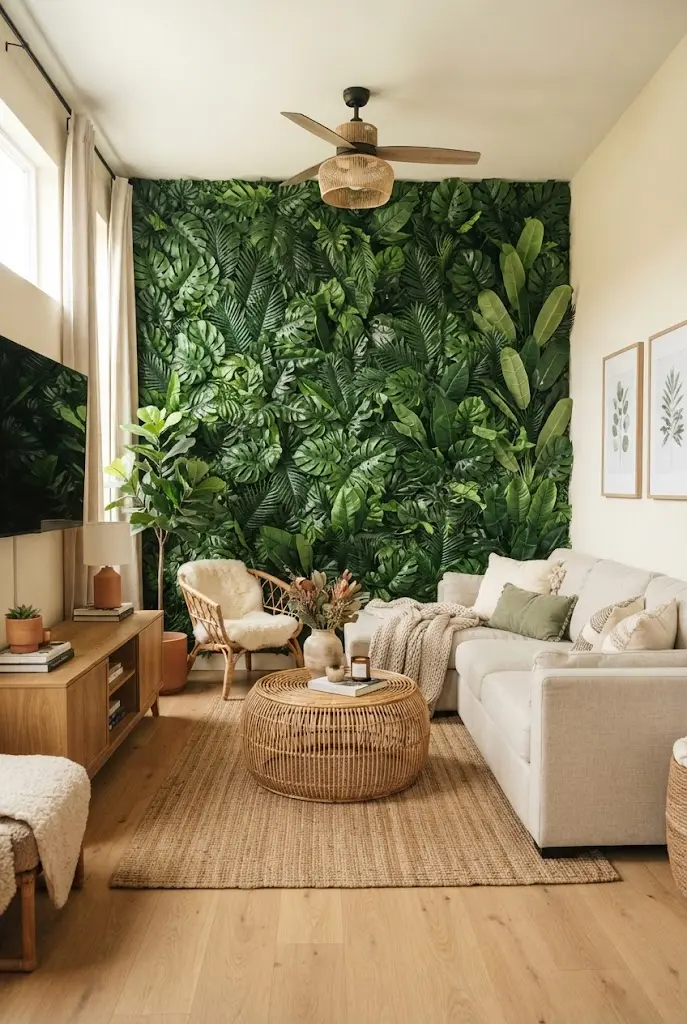
Large tropical leaves can create a bold and contemporary faux plant wall.
Choose artificial monstera, palm, or banana leaves for a dramatic botanical effect.
Use a mixture of large and medium foliage to create depth.
Keep the rest of the room relatively simple so the large leaves remain the focal point.
Cream walls and warm wood furniture provide a natural backdrop.
A few woven accessories can make the tropical theme feel more intentional.
This style works particularly well in living rooms, bedrooms, and sunroom-inspired spaces.
You can install the leaves across one section instead of covering the entire wall.
Avoid arranging every leaf at identical angles because natural plants rarely look perfectly uniform.
The finished wall can create a resort-inspired atmosphere inside the home.
8. Faux Plant Wall With Wood Slats
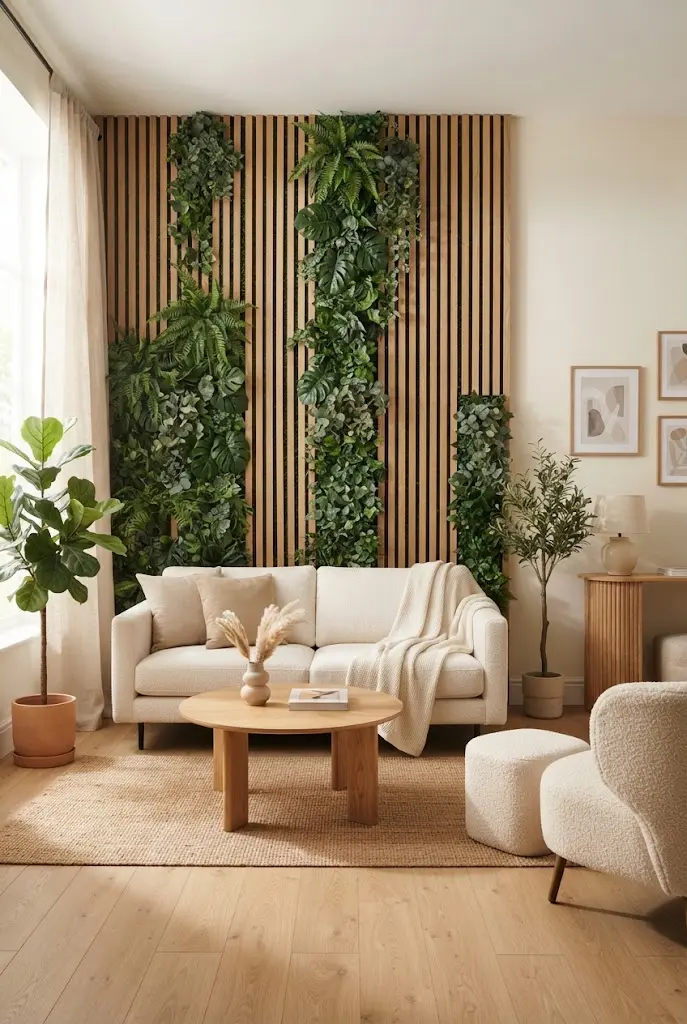
Combining artificial greenery with wood slats creates a modern organic feature wall.
Install narrow vertical wood slats behind or beside sections of faux foliage.
The warm wood adds texture while the greenery introduces a natural color contrast.
Use medium-density greenery so the wood remains visible.
This design works beautifully behind a television, sofa, desk, or dining area.
Choose light oak for a Scandinavian-inspired look or darker wood for a richer atmosphere.
Warm lighting can emphasize both the slats and the leaves.
Keep other furniture streamlined so the wall remains visually organized.
The combination of wood and greenery can make a modern room feel warmer.
It is an excellent option for homeowners seeking a more architectural faux plant display.
9. Faux Plant Wall Around a Mirror
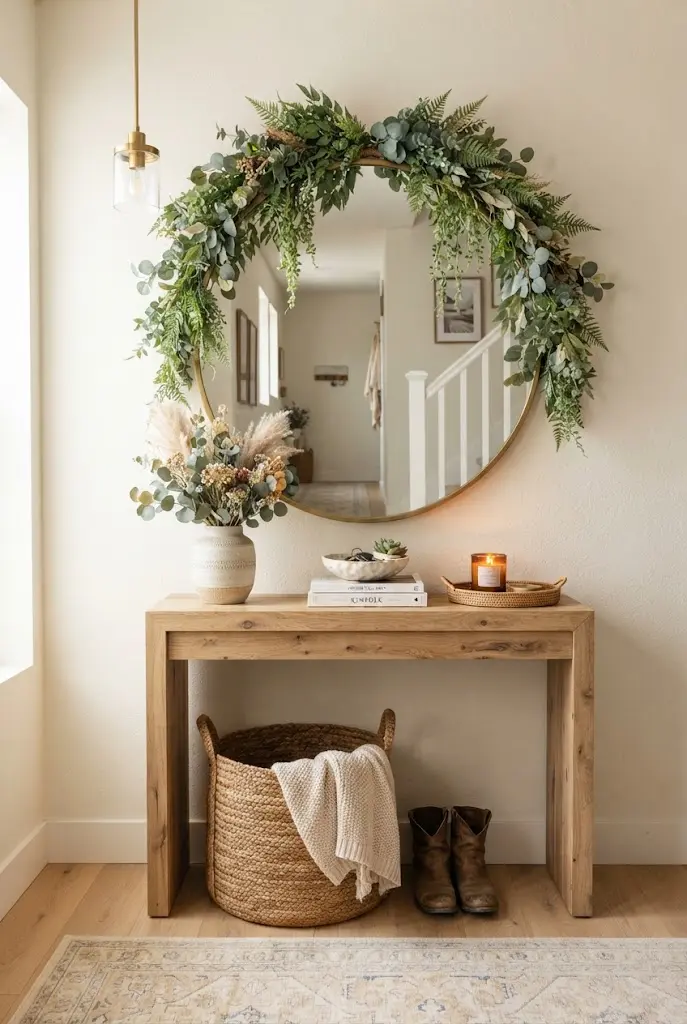
Surrounding a large wall mirror with faux greenery creates a decorative botanical frame.
Choose a simple round or arched mirror as the central feature.
Arrange artificial vines and leaves around selected sections of the mirror.
Avoid covering too much of the reflective surface.
The mirror will reflect the greenery and make the display appear fuller.
Place the arrangement above a console or dresser for added functionality.
Natural wood and woven accents can complement the organic appearance.
Soft lighting around the mirror can create a warm evening atmosphere.
This idea works particularly well in entryways, bedrooms, and dressing areas.
It combines practical functionality with the decorative effect of a plant wall.
10. Faux Fern Wall Display
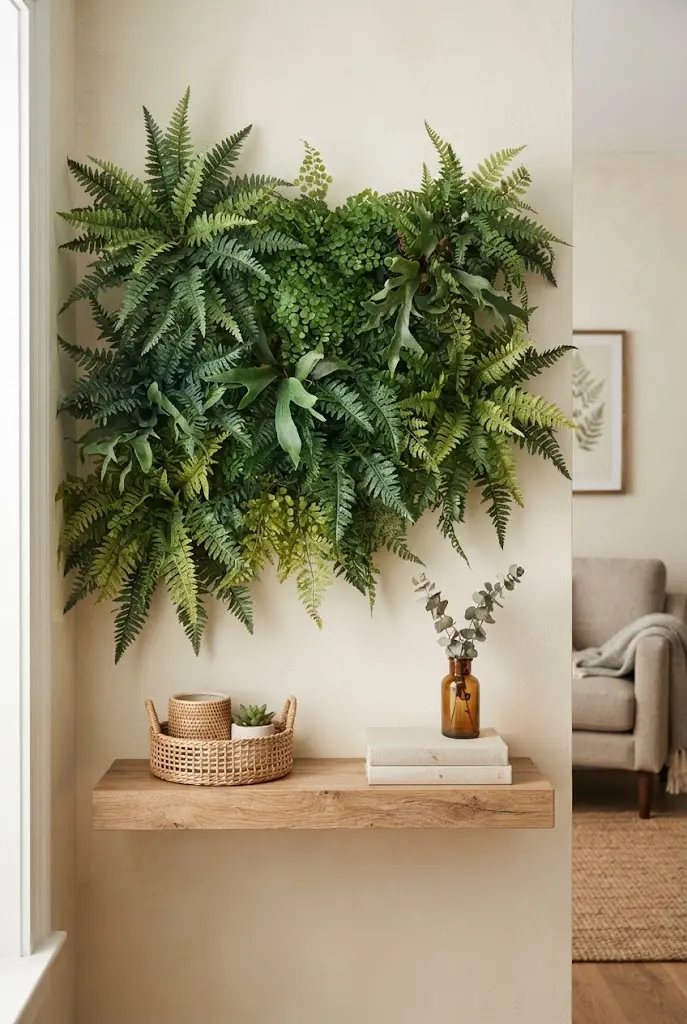
Faux ferns can create a soft, layered appearance that feels similar to a real indoor garden.
Use several fern varieties with different frond shapes and shades of green.
Arrange them closely together to create a lush visual effect.
Leave small gaps between some plants so the installation does not look artificial.
A neutral wall color allows the fine fern leaves to stand out beautifully.
This style is ideal for bedrooms, bathrooms, hallways, and quiet reading areas.
Add natural wood shelves nearby for small decorative objects.
Woven baskets and linen textiles can reinforce the relaxed botanical feeling.
Ferns are especially useful when you want texture without large tropical leaves.
The final display can feel soft, natural, and understated while remaining maintenance-free.
11. Faux Plant Wall in the Bedroom
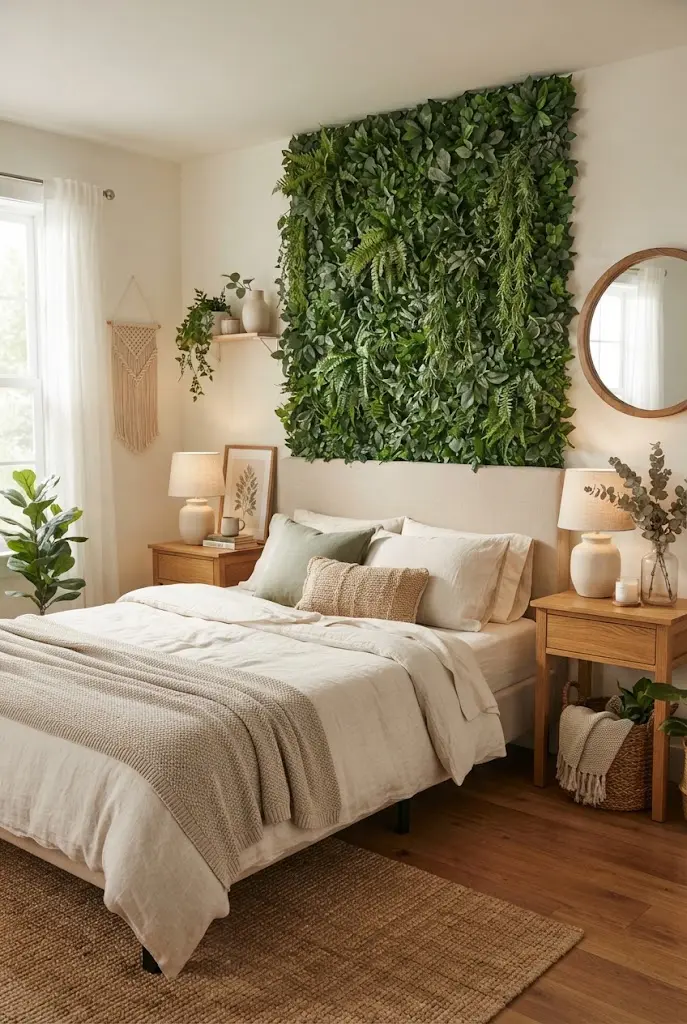
A faux plant wall can give a bedroom a calm botanical atmosphere.
Place the greenery behind the headboard to create a natural feature wall.
Choose softer foliage rather than extremely large tropical leaves for a relaxing appearance.
Muted green shades pair well with cream, beige, and warm wood furnishings.
Keep bedding simple so the greenery becomes the main decorative element.
Warm bedside lamps can create a beautiful contrast against the green leaves.
A few natural textures such as linen and woven baskets can complete the look.
Because the plants are artificial, you do not need to worry about nighttime watering or maintenance.
A partial greenery wall can work especially well in smaller bedrooms.
The result is a peaceful botanical backdrop that feels cozy throughout the year.
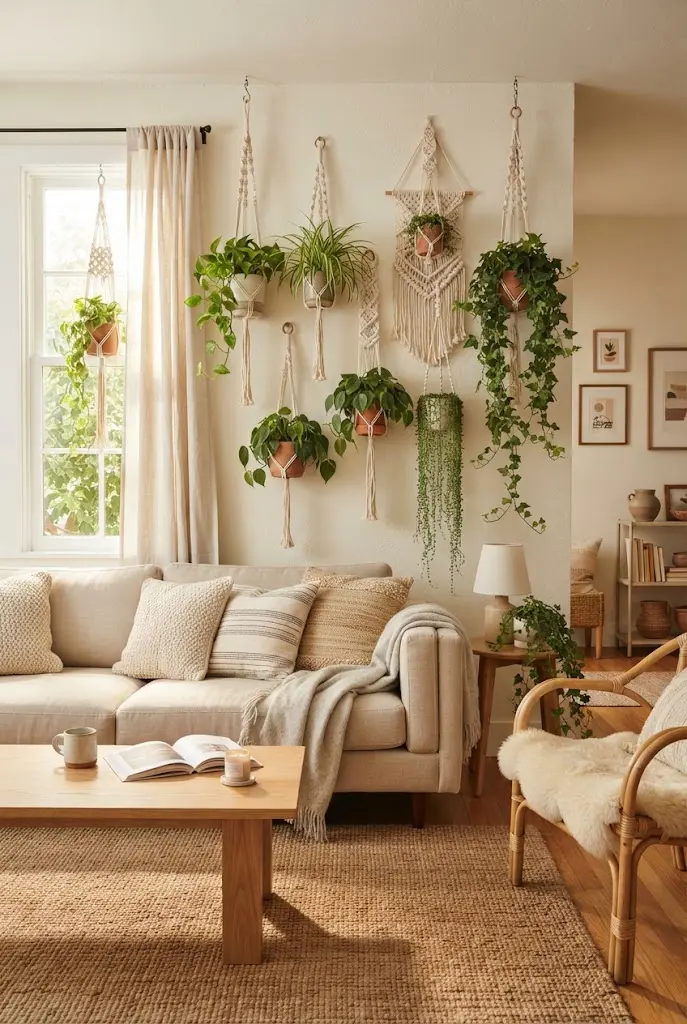
12. Faux Plant Wall With Hanging Vines
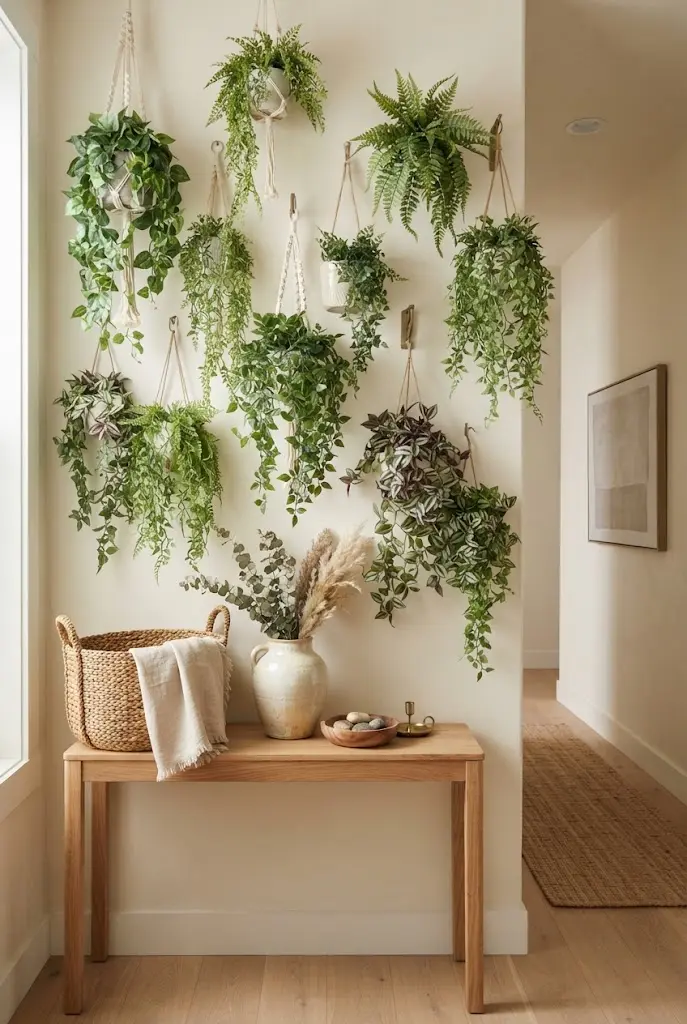
Hanging vines can make a faux plant wall feel more dynamic and organic.
Attach several artificial trailing plants at different heights.
Allow the vines to cascade naturally rather than creating perfectly straight rows.
Mix trailing foliage with a few compact leafy plants for variety.
This approach works well on narrow walls and awkward vertical spaces.
A console table or floating shelf can provide a visual base beneath the greenery.
Choose neutral decor to prevent the display from becoming too busy.
Natural wood, rattan, and woven materials complement the hanging vines beautifully.
The cascading foliage can soften hard architectural lines in modern rooms.
It is a simple project that adds movement and texture to an otherwise plain wall.
13. Faux Plant Wall in the Entryway
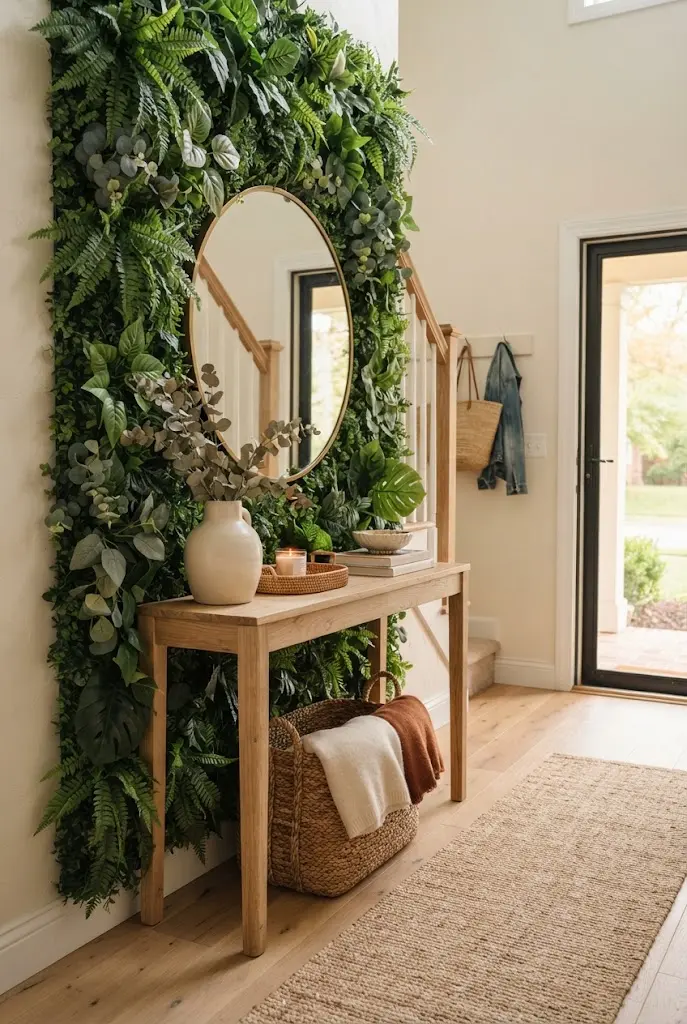
An entryway faux plant wall can create a welcoming first impression as soon as guests enter the home.
Choose a manageable section of wall near the front door.
Combine artificial greenery with a slim console or floating shelf.
A mirror can be added to make the area more functional.
Warm wood tones help the greenery feel natural rather than overly decorative.
Keep baskets and storage pieces neatly arranged underneath the display.
Use soft neutral colors throughout the entryway for a polished look.
The greenery can also soften an otherwise plain hallway wall.
Since faux plants require no sunlight, they are useful in darker entrances.
This project creates a fresh focal point without requiring complicated maintenance.
14. Faux Plant Wall With Floating Shelves
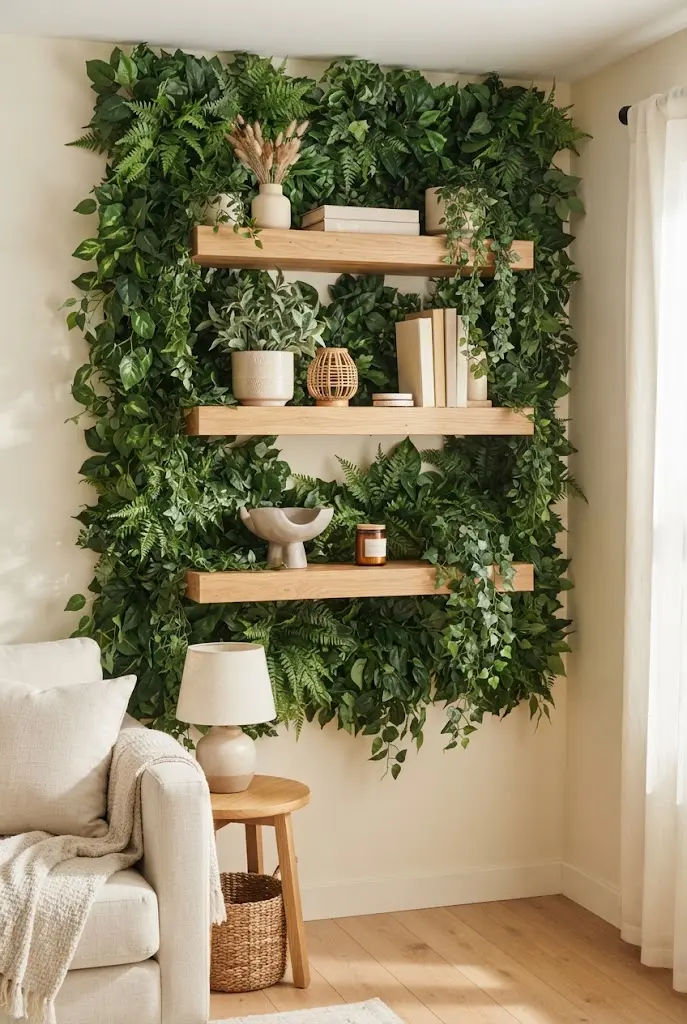
Floating shelves can make a faux plant wall more functional and visually interesting.
Install two or three simple wooden shelves across a greenery backdrop.
Place small decorative objects between sections of artificial foliage.
Use ceramics, books, candles, or small woven pieces for additional texture.
Keep the shelves lightly decorated so the greenery remains prominent.
Natural wood shelves work especially well with leafy green tones.
This arrangement can be adapted for living rooms, offices, bedrooms, or hallways.
A mixture of trailing vines and upright foliage creates more depth.
Avoid overcrowding the shelves because too many objects can hide the plant wall.
The finished display combines storage, decoration, and greenery in one feature.
15. Faux Plant Wall With Rattan Accents
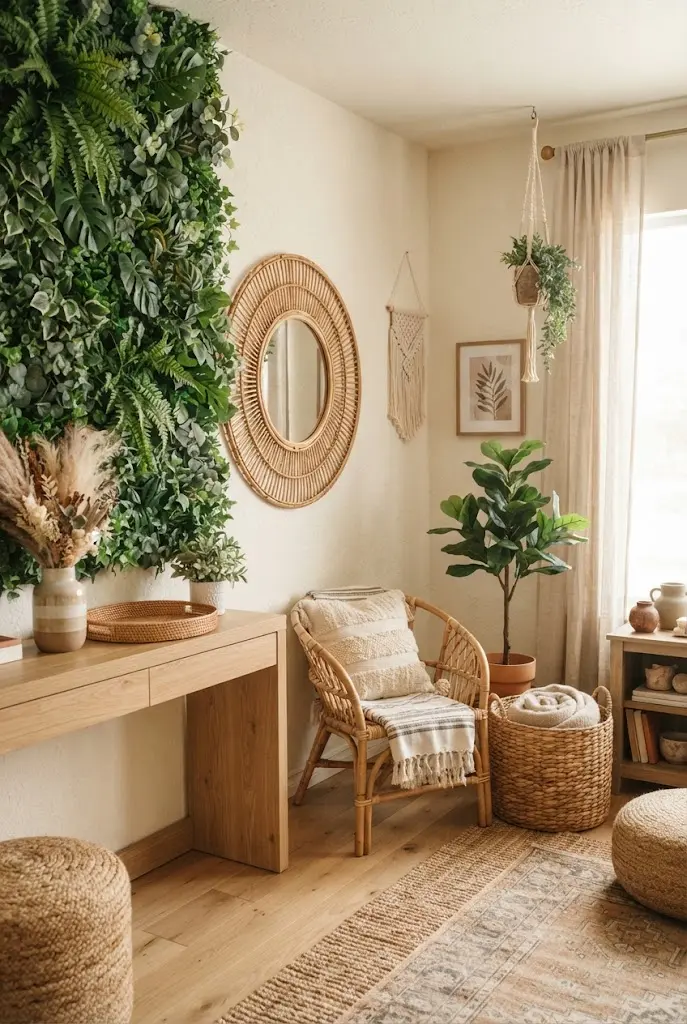
Rattan accessories can enhance the warm, natural character of a faux plant wall.
Use rattan baskets, mirrors, or decorative wall pieces around the greenery.
The woven texture creates an attractive contrast with smooth artificial leaves.
Choose warm beige, tan, and natural wood tones to keep the palette cohesive.
This combination works especially well with boho and organic home decor.
A small rattan chair can help complete a cozy corner nearby.
Keep the greenery varied so it feels more like a natural collection of plants.
Soft sunlight can highlight the texture of both the foliage and woven materials.
Avoid excessive decoration so the display remains calm and balanced.
The finished look feels relaxed, warm, and inspired by natural materials.
16. Faux Succulent Wall Display
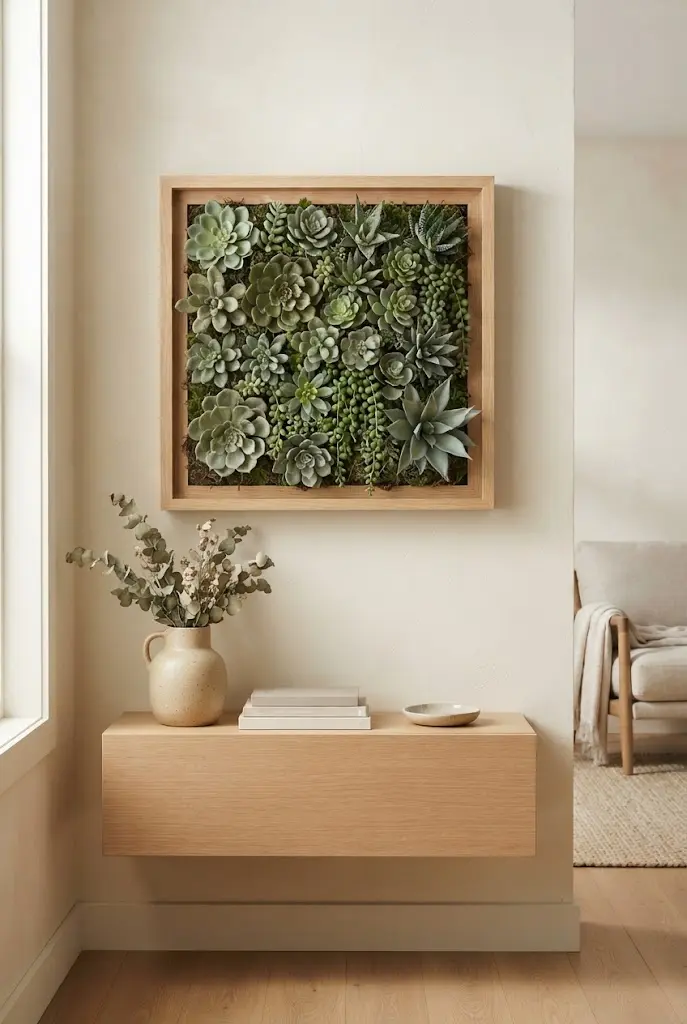
A faux succulent wall offers a structured alternative to traditional leafy greenery.
Choose artificial succulents in different shapes, sizes, and muted green tones.
Arrange them inside a shallow wall planter or decorative frame.
The compact forms create a clean and contemporary appearance.
This style works especially well in offices, kitchens, bathrooms, and small apartments.
Use a neutral background to emphasize the sculptural shapes of the succulents.
Small wooden details can add warmth to the display.
Avoid placing too many identical plants together because variety makes the arrangement more realistic.
A few subtle faux moss accents can fill visual gaps between plants.
The result is a low-maintenance botanical display with a modern character.
17. Faux Plant Wall in a Dining Area
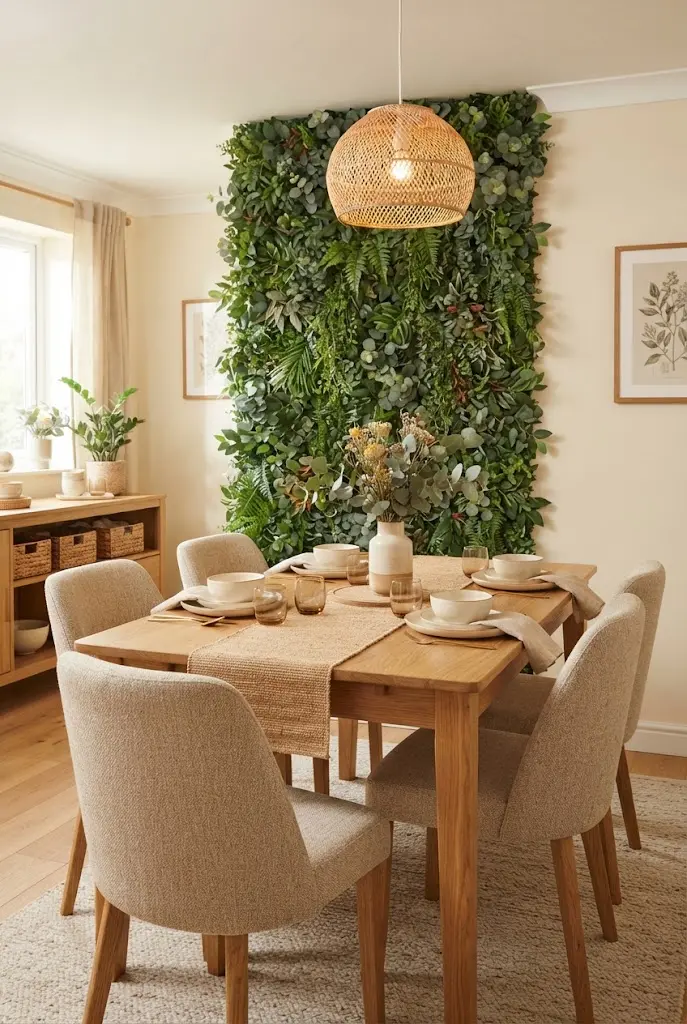
A faux plant wall can make a dining area feel warmer and more inviting.
Place greenery along one wall near the dining table rather than covering every surface.
Choose foliage that complements the room’s furniture and lighting.
A natural wood dining table pairs beautifully with artificial greenery.
Use simple neutral chairs to keep the botanical wall as the focal point.
Warm pendant lighting can create a cozy atmosphere during evening meals.
Add a few earthy ceramics or woven accessories for subtle coordination.
The greenery can visually separate the dining zone from the rest of an open-plan home.
A partial wall installation is often enough to create a strong decorative effect.
This approach creates a fresh dining backdrop without requiring real plants in the eating area.
18. Faux Plant Wall With Neon or Sign Accent
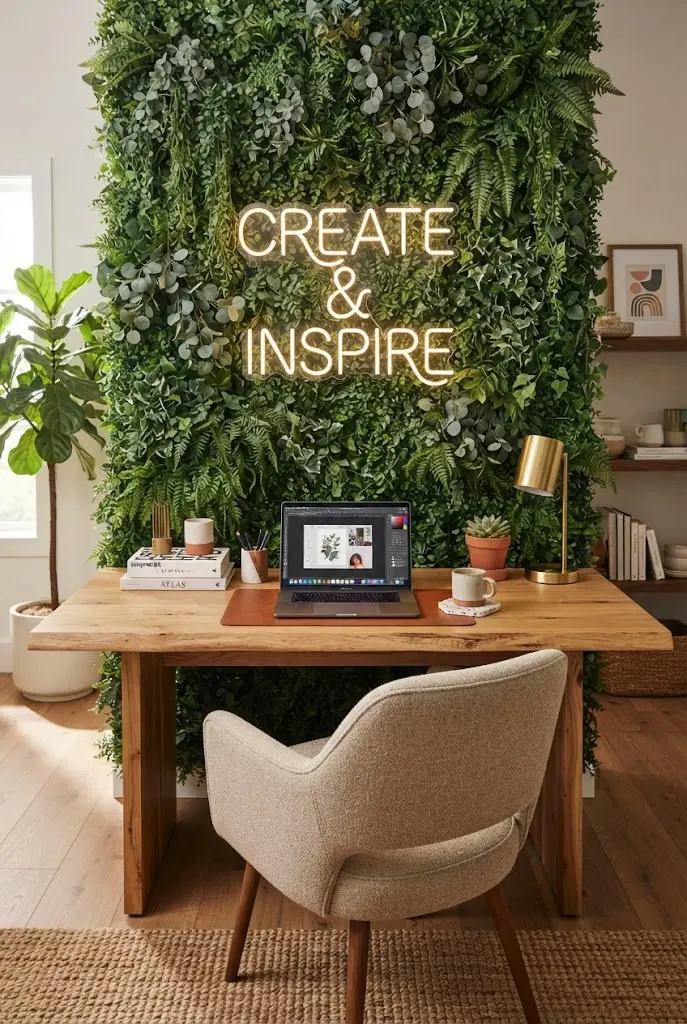
For a more playful look, combine a faux plant wall with a simple decorative sign or neon-style accent.
The greenery provides a natural background while the sign creates a contrasting focal point.
Use a short decorative phrase or simple symbol that suits the room.
Keep the typography understated so the wall does not become visually cluttered.
Artificial vines can frame the sign from several directions.
This idea works particularly well in home offices, entertainment spaces, or creative rooms.
Warm wood furniture can balance the more modern decorative element.
Use soft lighting to make the display attractive after sunset.
Avoid excessive colors so the greenery remains the dominant visual texture.
The result is a personalized feature wall with a contemporary personality.
19. Faux Plant Wall in a Bathroom
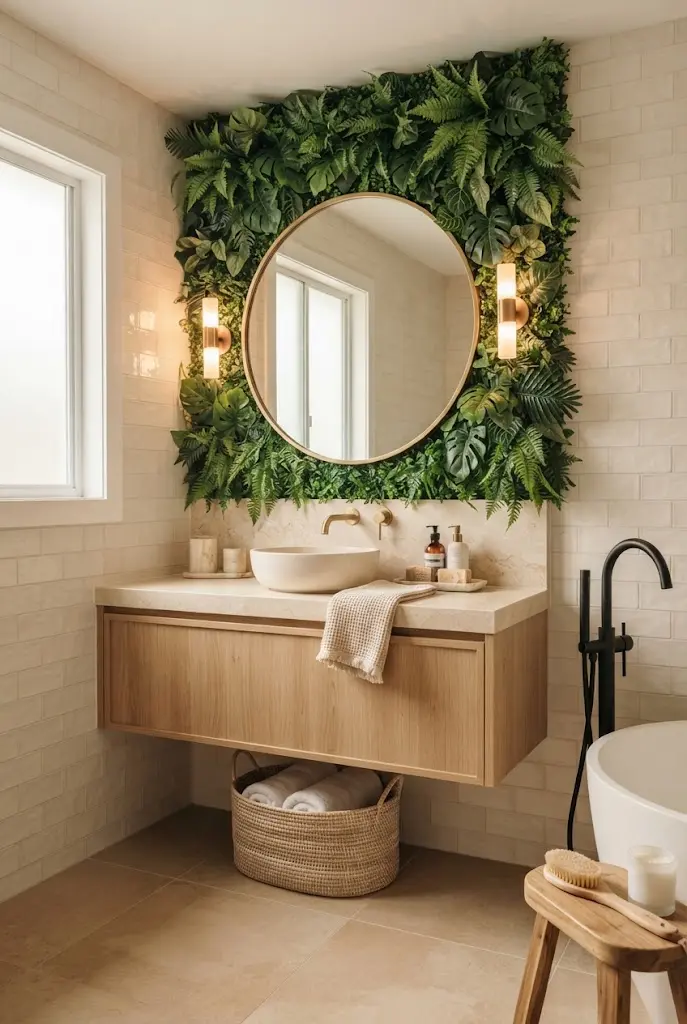
Artificial greenery can bring a spa-inspired feeling to a bathroom without worrying about plant care.
Use moisture-resistant faux foliage designed for decorative indoor use.
Place greenery on one wall near a vanity, bathtub, or open shelving.
Large leafy plants can create a relaxing tropical atmosphere.
Pair the foliage with light wood, stone, or warm neutral finishes.
Keep the plant arrangement away from areas where it could interfere with normal bathroom use.
A round mirror can add another natural shape to the composition.
Soft lighting helps create a calm spa-like mood.
Use only a moderate amount of greenery if the bathroom is small.
The finished space can feel fresh and relaxing while remaining easy to maintain.
20. Faux Plant Wall With Earthy Decor
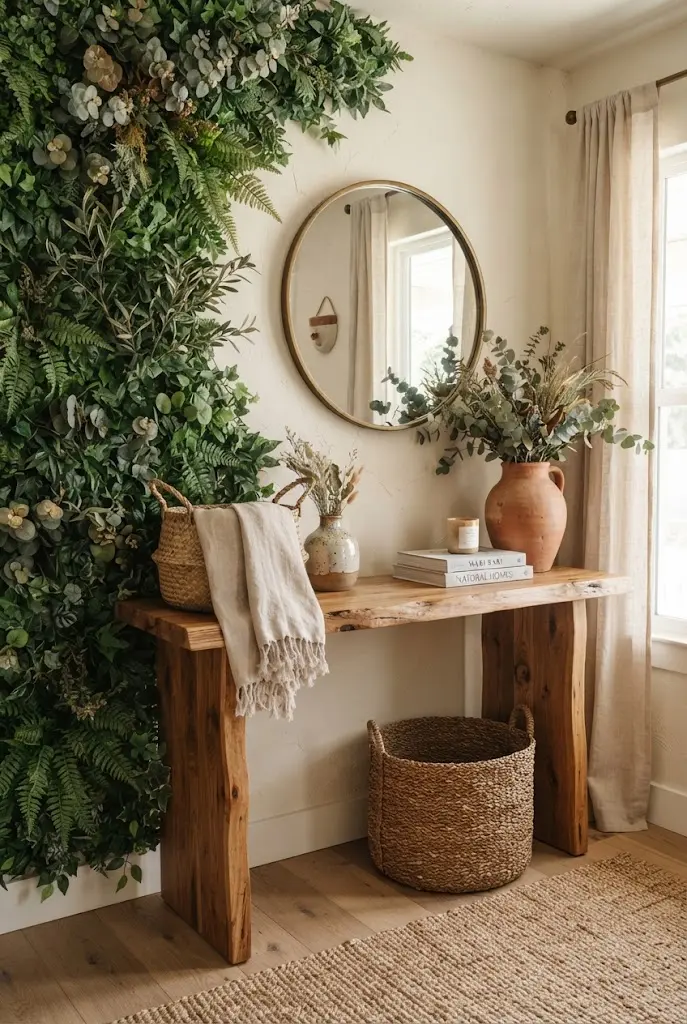
Pairing artificial greenery with earthy decor can create a warm and grounded interior.
Use terracotta, clay, wood, linen, and woven accessories around the plant wall.
Choose foliage in several shades of green for a more natural appearance.
Warm beige walls can make the entire arrangement feel soft and cohesive.
A wooden console or bench can anchor the greenery visually.
Add a few handmade-looking ceramics for texture and personality.
Keep the color palette restrained so the green foliage remains visually connected to the earthy accents.
Natural daylight can bring out the subtle textures of the materials.
This style works especially well in boho, organic modern, and rustic-inspired interiors.
The result is a cozy botanical feature that feels connected to natural materials.
21. DIY Faux Plant Wall With Mixed Greenery
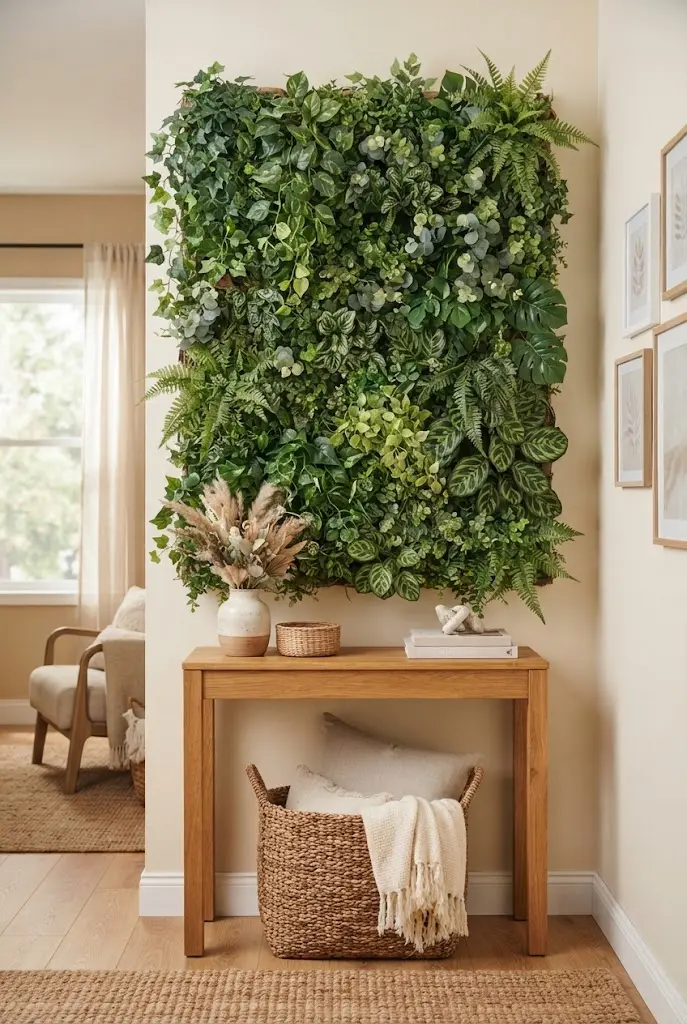
A mixed greenery wall lets you combine different artificial plants for a personalized DIY project.
Start with a simple base and gradually layer different leaf shapes across the surface.
Use vines, ferns, broad leaves, and smaller foliage to create visual variety.
Arrange larger leaves toward the back and smaller pieces toward the front.
Leave occasional areas of the background visible to make the display look more natural.
A mixture of green shades helps prevent the wall from appearing flat.
You can customize the density depending on the size of your room and personal style.
Wood, rattan, linen, and neutral colors pair naturally with the finished greenery.
Because the plants are artificial, the arrangement stays consistent throughout the year.
This flexible DIY idea makes it easy to create a lush indoor feature that reflects your own decorating style.
Final Thoughts
A faux plant wall is a versatile way to introduce greenery without the ongoing care required by living plants.
You can create a dramatic full wall or start with a small framed panel.
Mixing different artificial leaves can make the installation feel more natural and dimensional.
Wood, rattan, woven materials, and earthy colors are especially useful for completing the look.
Think about the room’s existing furniture and lighting before choosing the greenery style.
A simple arrangement can often have more impact than an overcrowded display.
Faux greenery also works well in rooms where natural sunlight is limited.
With a little creativity, an ordinary wall can become a beautiful botanical focal point.
Choose a design that fits your home’s existing style rather than trying to copy every trend.
The result can be a lush, inviting indoor space that stays green throughout the year.