23 Ways to Embrace Modern ’70s Decor in Your Home
Modern ’70s decor brings together the warmth and character of retro interiors with the clean lines of contemporary American homes.
Think earthy colors, natural wood, sculptural furniture, textured fabrics, and statement lighting.
The style feels nostalgic without making your home look like a time capsule.
Warm browns, caramel, olive green, rust, mustard, and cream create the foundation.
Modern silhouettes help keep those vintage-inspired colors and materials feeling fresh.
Curved furniture and organic shapes can soften rooms with contemporary architecture.
Natural materials such as wood, rattan, leather, stone, and wool add authentic texture.
Vintage-inspired artwork and accessories can introduce personality without overwhelming the space.
The key is balancing retro details with practical, modern American living.
These 23 ideas can help you create a comfortable home with unmistakable ’70s character.
1. Choose a Warm Earth-Tone Palette
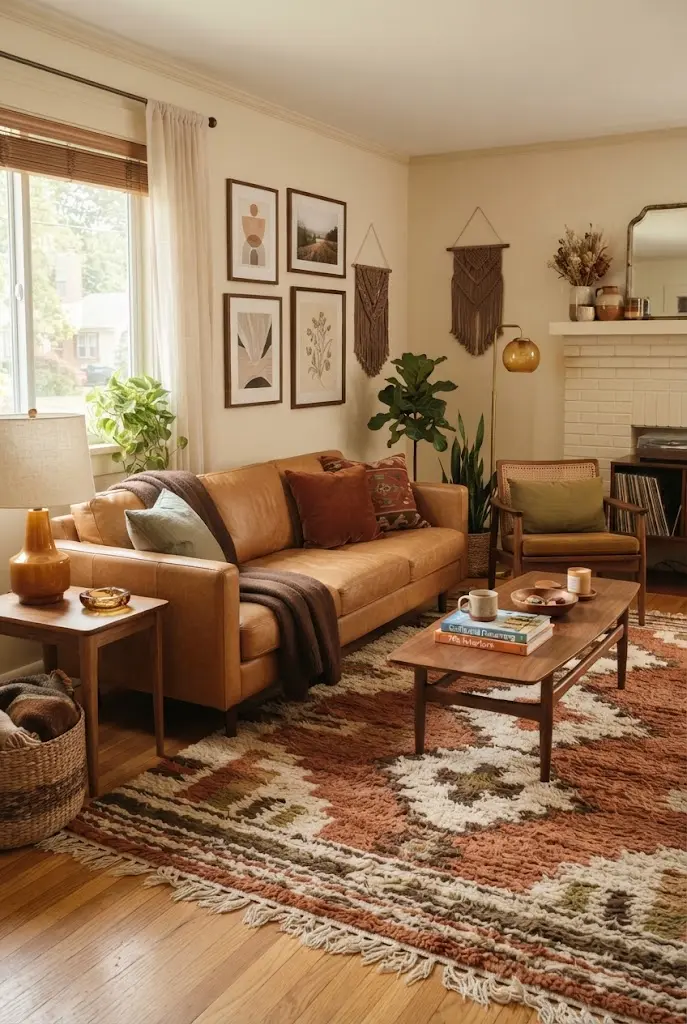
A warm earth-tone palette is one of the easiest ways to introduce modern ’70s style.
Start with shades such as caramel, chocolate brown, rust, olive, ochre, and warm cream.
Use lighter neutrals on walls or larger surfaces to keep the room feeling open.
Bring deeper colors through sofas, accent chairs, rugs, curtains, and artwork.
A caramel leather sofa can instantly establish a vintage-inspired foundation.
Olive green cushions or a rust-colored throw can add smaller doses of retro color.
Natural wood furniture works especially well with this palette.
Avoid using every classic ’70s color at the same intensity in one room.
Instead, choose two or three dominant shades and layer complementary tones.
This approach creates a nostalgic atmosphere that still feels sophisticated and current.
2. Add a Caramel Leather Sofa
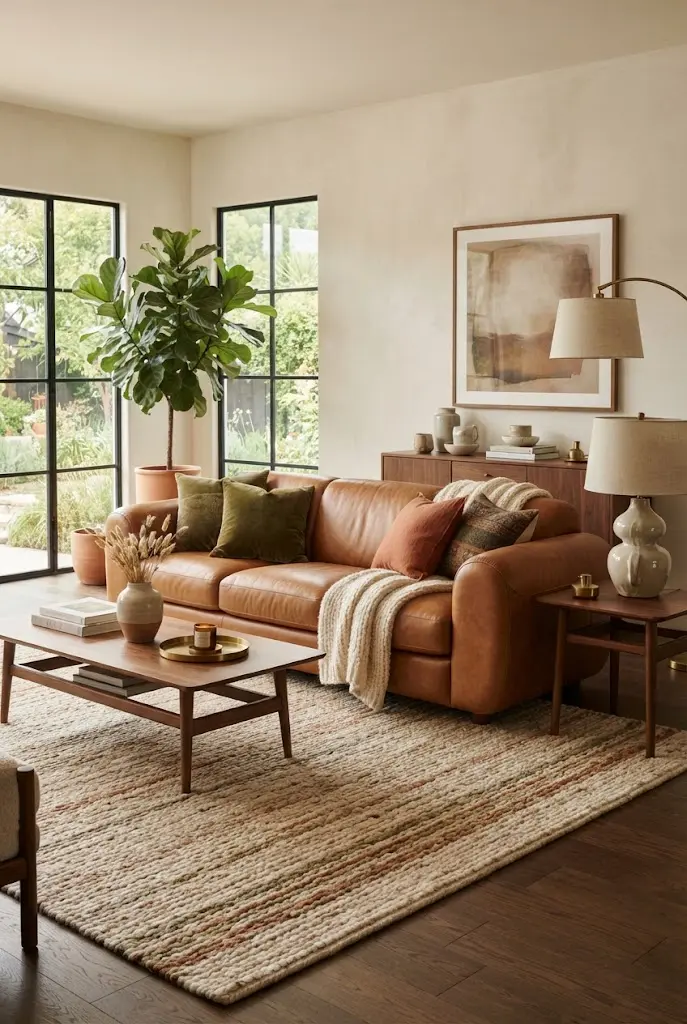
A caramel leather sofa can become the centerpiece of a modern ’70s living room.
Choose a design with clean proportions rather than an overly ornate vintage shape.
Warm cognac or caramel leather provides natural richness and visual depth.
Look for gently rounded edges to bring an organic quality into the space.
Pair the sofa with cream walls and walnut or teak-inspired furniture.
A large textured rug can make the seating area feel comfortable and grounded.
Add pillows in rust, olive, mustard, and neutral woven fabrics.
Keep surrounding accessories relatively simple so the sofa remains the focal point.
Brass or aged-metal lighting can complement the warm leather beautifully.
The result is retro-inspired, comfortable, and polished enough for a contemporary American home.
3. Bring in Walnut Wood Furniture
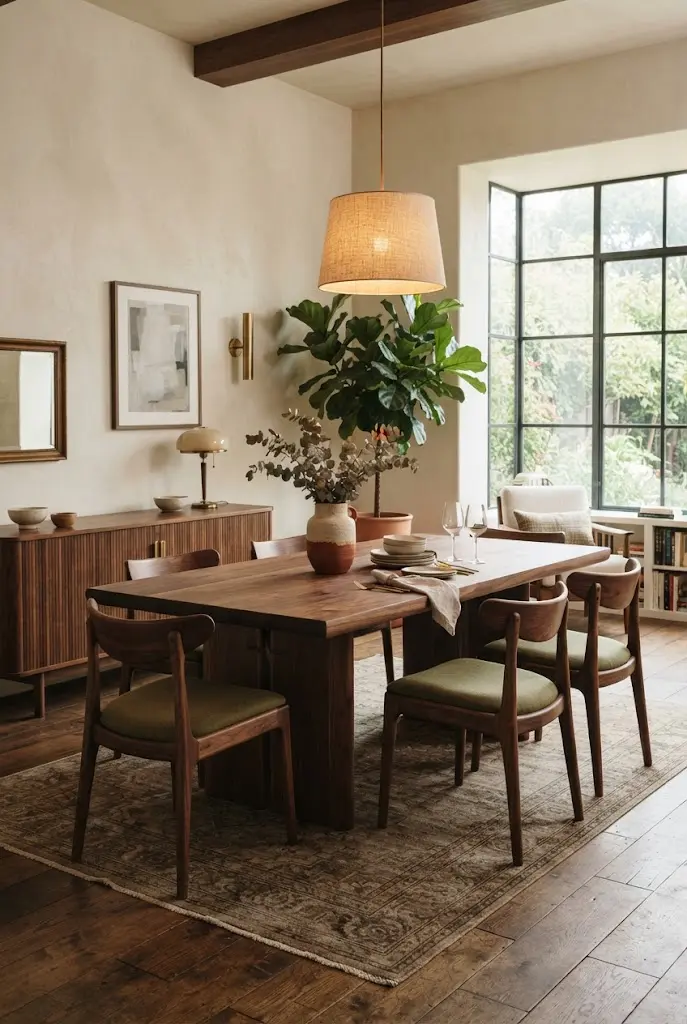
Walnut wood adds depth and warmth while fitting naturally into a modern ’70s interior.
Use walnut for coffee tables, sideboards, dining tables, shelving, or bedroom furniture.
Its rich brown tone works particularly well with earthy retro colors.
Choose pieces with simple geometry to prevent the room from feeling dated.
A low walnut credenza can provide both storage and a strong visual anchor.
Pair it with cream upholstery and textured fabrics for contrast.
Curved or softly rounded furniture shapes can make the wood feel more contemporary.
Mix walnut with small amounts of brass, ceramic, glass, or natural stone.
Avoid filling every surface with dark wood because the room may become visually heavy.
Balanced with lighter finishes, walnut creates a refined connection to ’70s design.
4. Use Curved Furniture
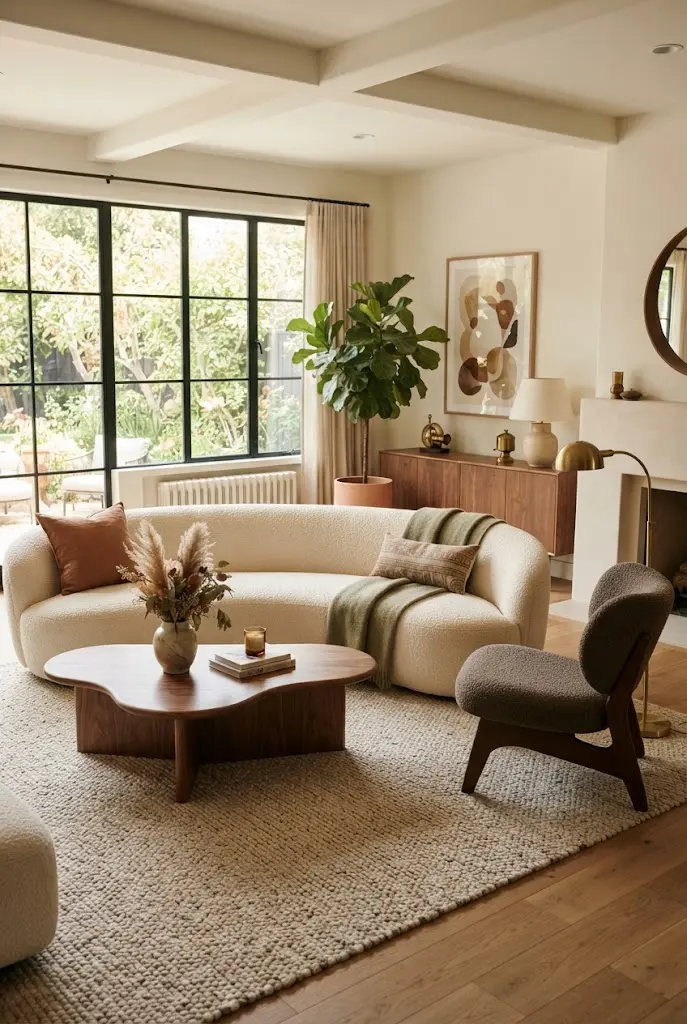
Curved furniture captures the playful organic character associated with many 1970s interiors.
A rounded sofa, barrel chair, circular ottoman, or curved lounge chair can soften a room.
Modern versions often have cleaner silhouettes and more restrained upholstery.
Choose one or two curved pieces instead of making every object rounded.
A curved cream sofa can work beautifully against a warm neutral wall.
Pair it with a round coffee table to reinforce the organic shapes.
Angular shelving or rectangular artwork can provide useful contrast.
Bouclé, velvet, leather, and woven upholstery all work well with rounded forms.
Keep the color palette grounded in warm neutrals and earthy tones.
This combination makes the room feel nostalgic while remaining distinctly contemporary.
5. Install a Statement Pendant Light
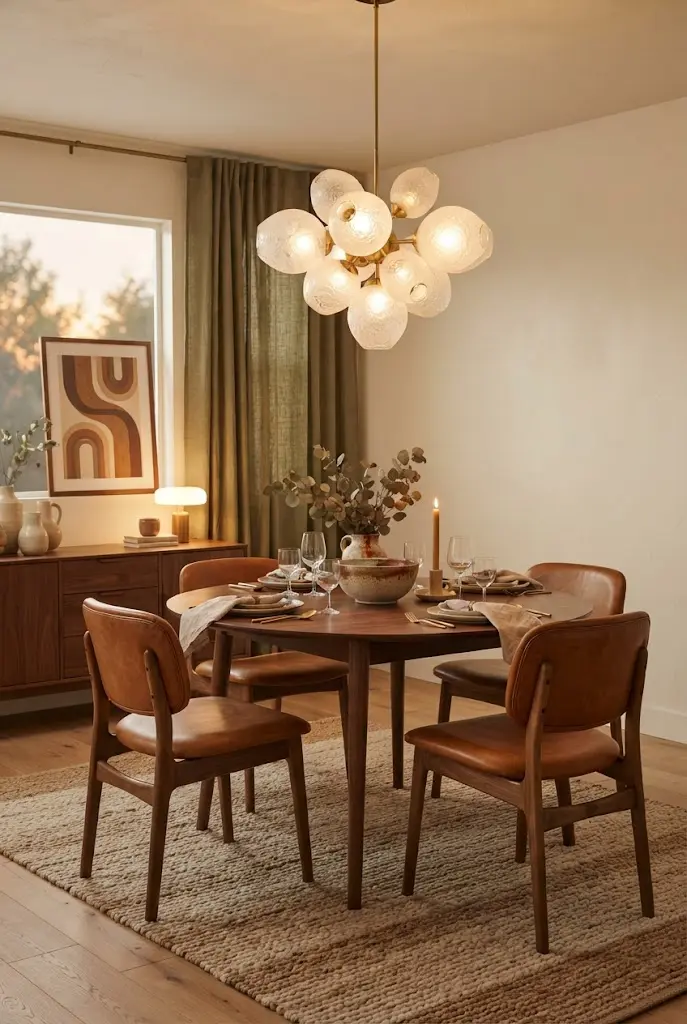
Lighting can transform a simple room into a convincing modern ’70s-inspired space.
Look for oversized pendants with globe, mushroom, dome, or sculptural silhouettes.
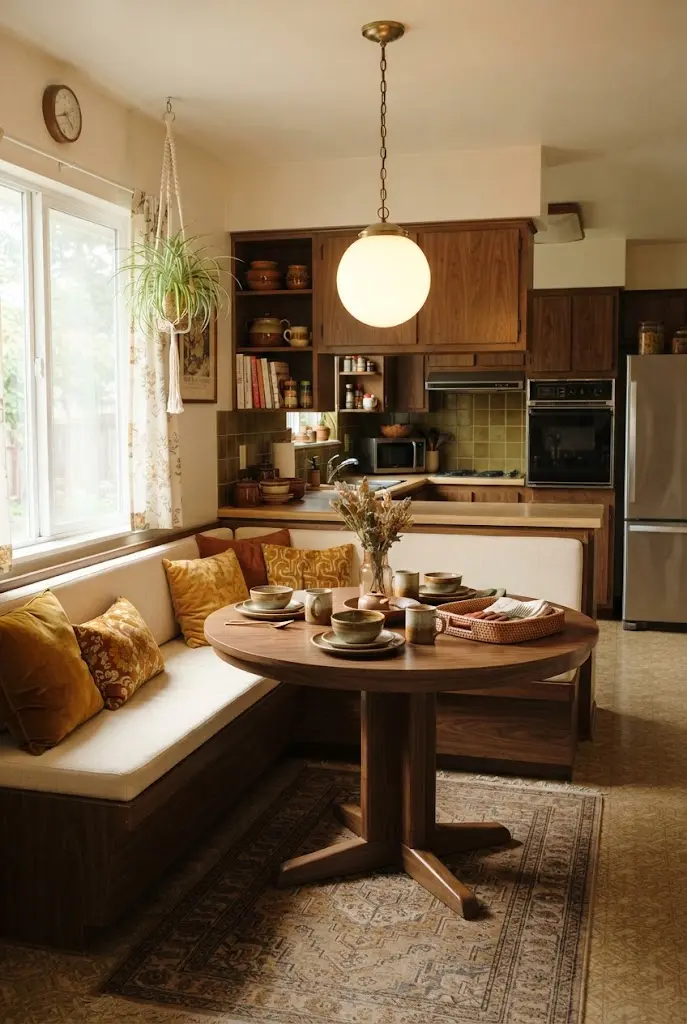
Opal glass creates a soft glow that works especially well in living and dining areas.
Brushed brass and warm metal finishes can add subtle vintage character.
A large pendant above a dining table immediately establishes a visual focal point.
Choose contemporary construction so the fixture feels intentional rather than theatrical.
Pair statement lighting with simple ceiling and wall finishes.
Multiple small lamps can provide additional layers of warm illumination.
Avoid overly cool white bulbs because they can weaken the cozy atmosphere.
Warm, layered lighting helps modern ’70s decor feel inviting from morning through evening.
6. Layer in Shaggy or High-Pile Rugs
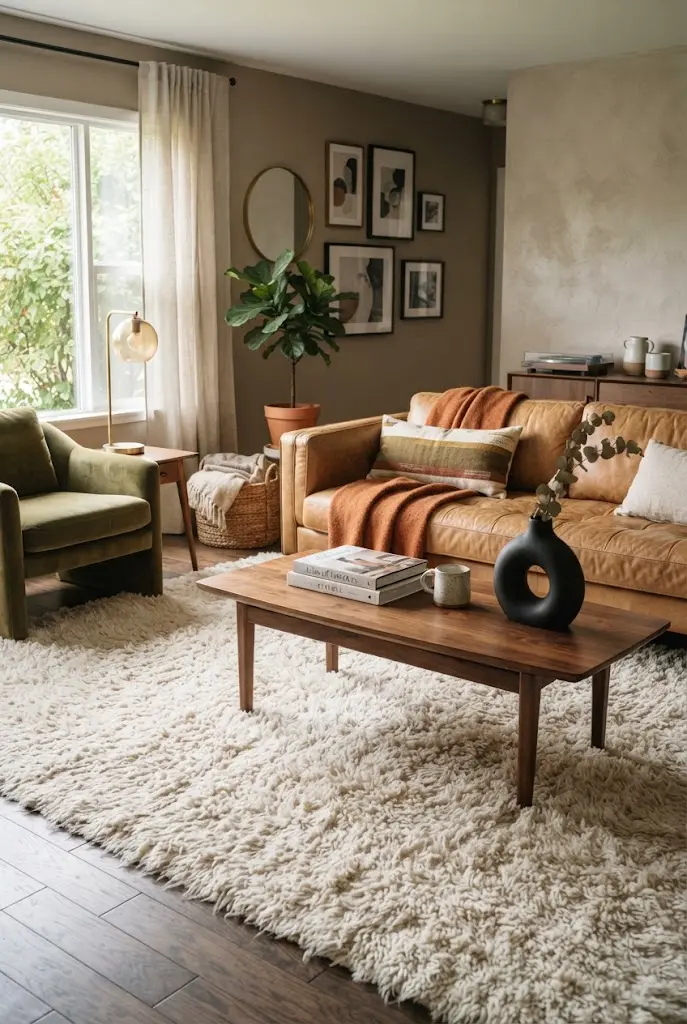
A textured high-pile rug can introduce instant retro softness without dominating the room.
Choose a modern neutral version in cream, oatmeal, camel, or warm brown.
For more color, consider muted rust, olive, or ochre patterns.
A thick rug works especially well beneath a low-profile sofa or lounge chair.
The texture adds warmth and makes contemporary furniture feel more relaxed.
Keep the rest of the room relatively streamlined to avoid visual overload.
Natural wool is an excellent option for an elevated interpretation of the look.
Vintage-inspired patterns can add personality without requiring actual vintage furniture.
Use the rug to visually connect the main seating pieces.
This simple layer can make a modern room feel substantially warmer and more nostalgic.
7. Decorate With Smoked or Amber Glass
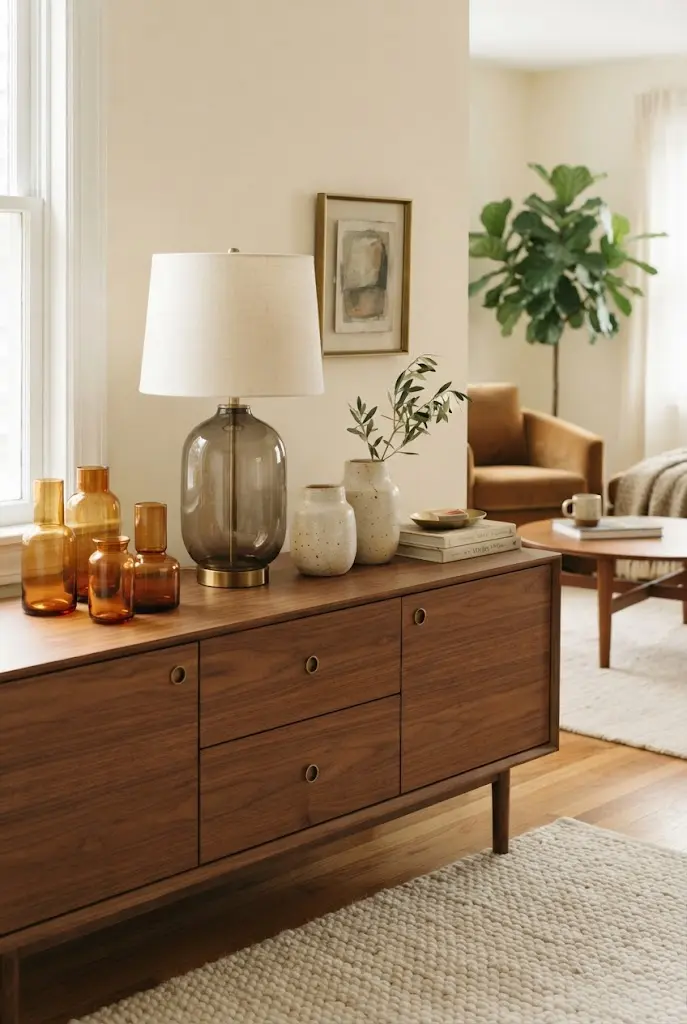
Smoked and amber glass accessories can add a subtle vintage reference.
Try amber vases, smoked-glass lamps, candleholders, or decorative bowls.
These materials catch warm light beautifully and create gentle visual depth.
Place a few pieces on a walnut console or open shelving.
Amber glass works especially well with cream, rust, brown, and olive colors.
Smoked glass can provide contrast against lighter walls and upholstery.
Choose simple silhouettes rather than collecting too many decorative objects.
Mix glass with ceramic, wood, and woven materials for a more layered composition.
Natural daylight can make translucent accessories especially attractive.
Used sparingly, glass accents give the room a polished modern-retro character.
8. Add Earthy Geometric Patterns
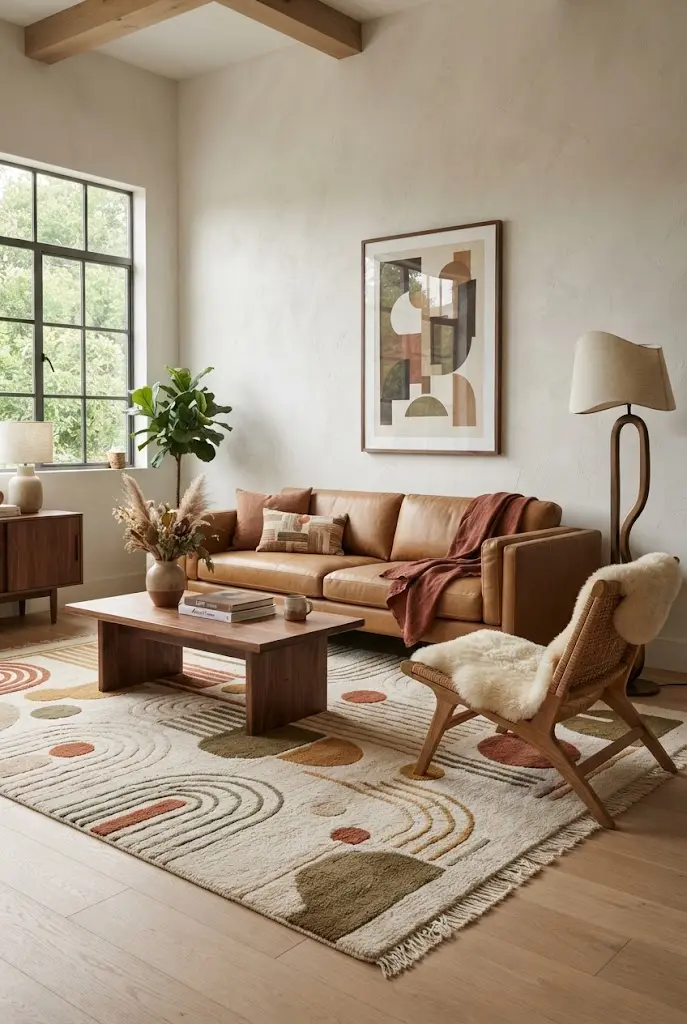
Geometric patterns can reference 1970s design while still feeling fresh.
Look for simple arches, circles, stripes, checkerboards, or abstract shapes.
Use them on rugs, pillows, curtains, or small upholstered pieces.
Warm brown, cream, rust, mustard, and olive are ideal choices for the palette.
A patterned rug can become the strongest graphic element in the room.
If the rug is bold, keep surrounding furniture relatively quiet.
Small geometric pillows can provide a less permanent way to experiment.
Artwork is another excellent place to introduce retro-inspired shapes.
Avoid combining too many competing patterns in one space.
One dominant pattern supported by two subtle textures usually feels more sophisticated.
9. Use Olive Green Accents
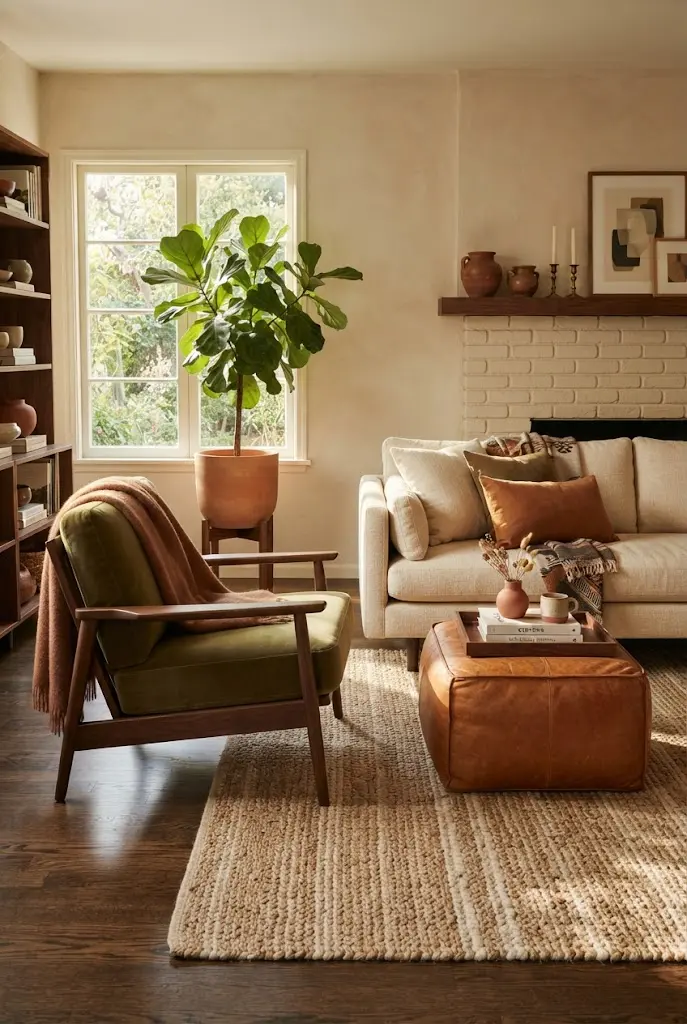
Olive green provides a natural connection between vintage color palettes and modern interiors.
Use it on accent chairs, cushions, curtains, cabinetry, or painted furniture.
The muted quality of olive makes it easier to live with than brighter greens.
Pair olive with warm white, walnut, caramel leather, and aged brass.
An olive accent chair can add color without overwhelming a neutral living room.
In a kitchen, olive cabinetry can create a particularly sophisticated retro atmosphere.
Plants can reinforce the connection to natural green tones.
Use different shades of green sparingly for subtle variation.
Balance the color with warm wood and tactile neutral fabrics.
This creates a relaxed room that feels inspired by the ’70s without becoming overly themed.
10. Try a Wood-Paneled Accent Wall
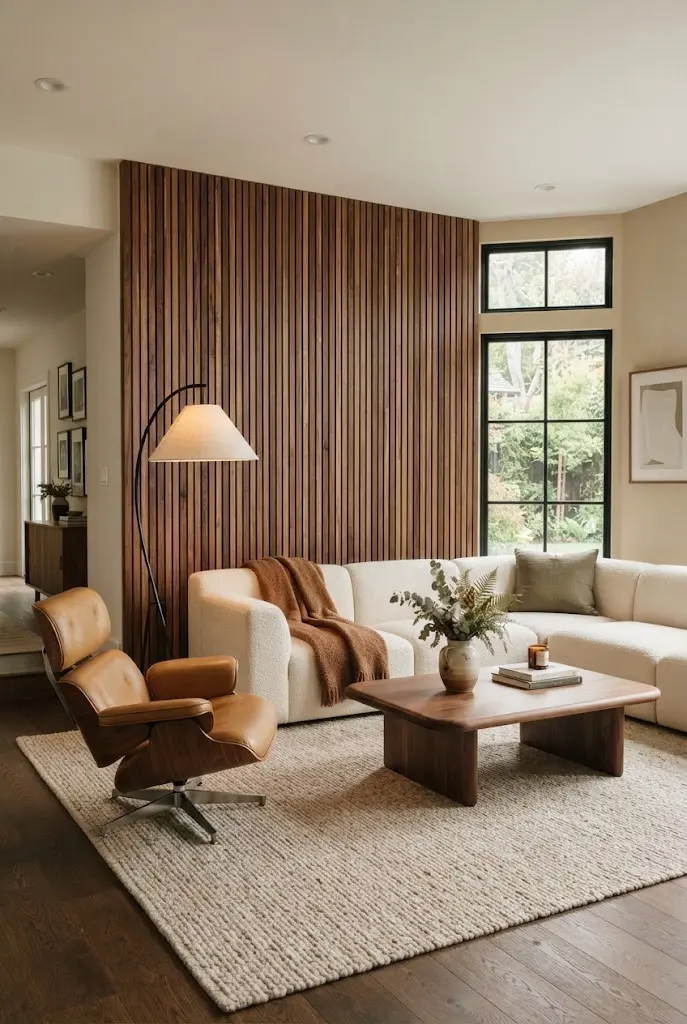
Wood paneling can create a strong architectural statement inspired by the 1970s.
For a modern interpretation, use carefully selected natural wood rather than excessive dark paneling.
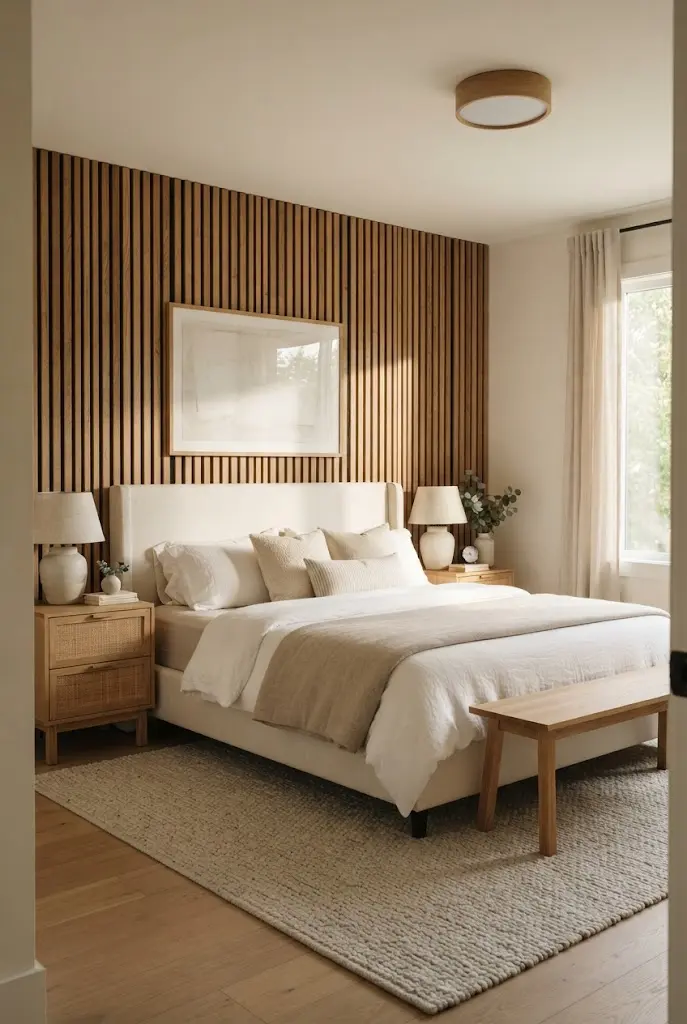
Walnut, oak, or medium-toned wood can add warmth behind a sofa or television.
Vertical slats can make a ceiling feel higher and provide contemporary structure.
Flat panels can create a more traditional retro reference.
Keep surrounding walls light so the wood feature does not overwhelm the room.
Pair the wall with simple furniture and minimal decorative clutter.
Soft lighting can highlight the grain and natural variation of the wood.
Textiles in cream, olive, rust, and camel complement the finish beautifully.
A single feature wall is often enough to establish the desired atmosphere.
11. Bring in Rattan and Woven Details
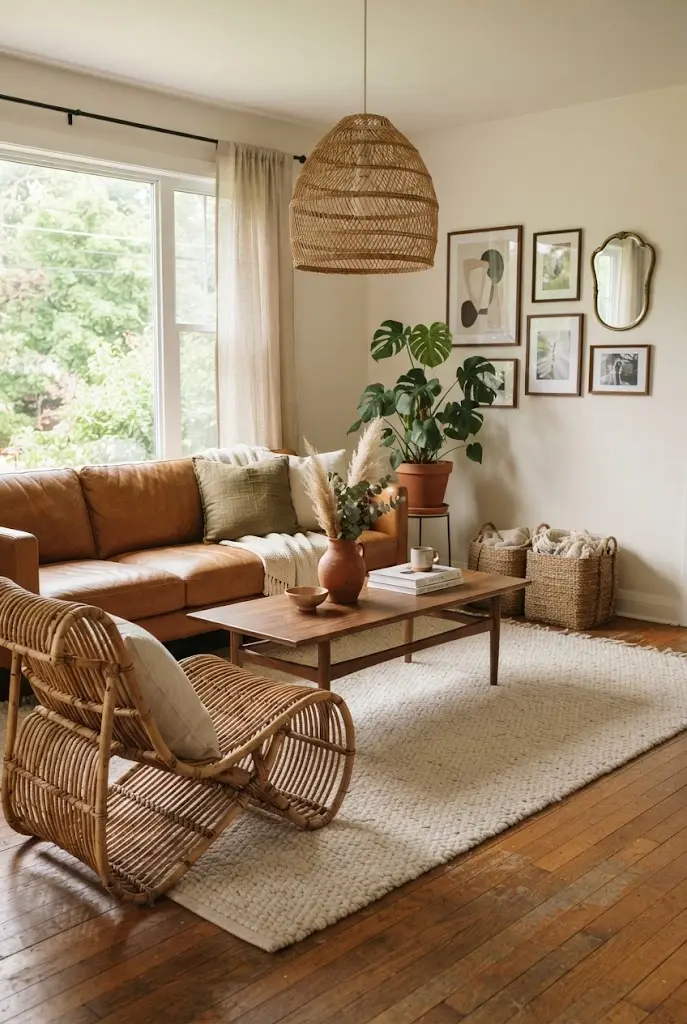
Rattan and woven materials add natural texture to a modern ’70s room.
Use them on lounge chairs, baskets, pendant shades, stools, or decorative accessories.
Their lighter color can balance darker walnut and brown furniture.
A woven pendant can create beautiful shadows when illuminated at night.
Rattan chairs pair naturally with cream upholstery and earthy textiles.
Add a woven basket beside a sofa for practical storage.
Keep the woven elements varied in scale so the room feels collected.
Natural fibers also work well with houseplants and warm wood.
Avoid using too many matching woven pieces because the room may feel overly coordinated.
A few carefully chosen details can provide plenty of texture and personality.
12. Choose Low-Profile Seating
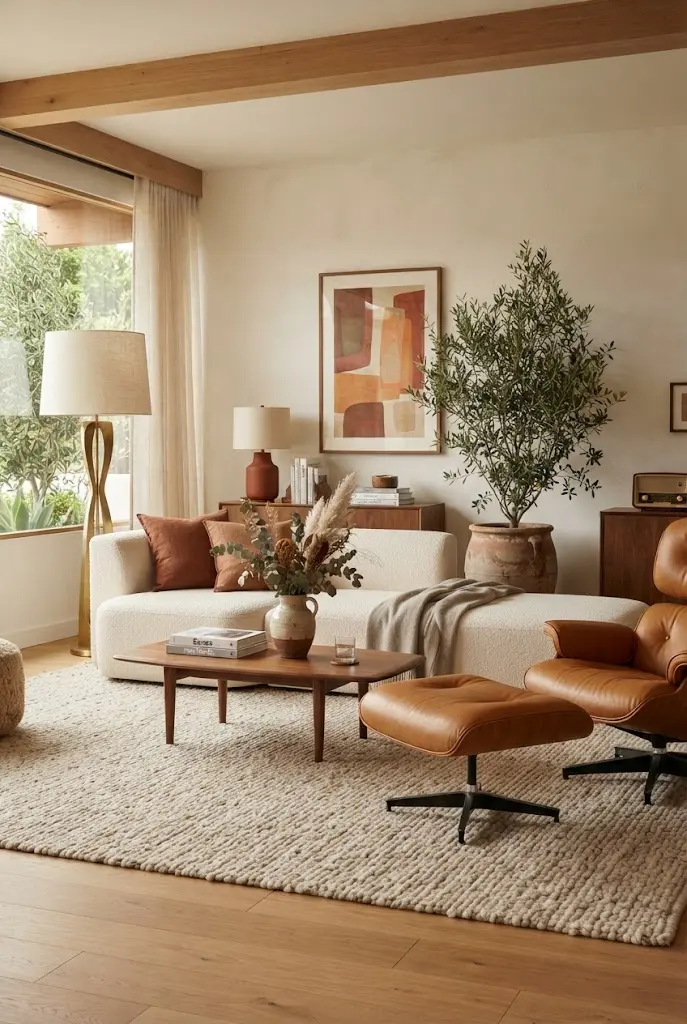
Low-profile seating is a simple way to capture the relaxed attitude of ’70s interiors.
Look for sofas and lounge chairs with lower seats and generous proportions.
Modern upholstery can keep these pieces looking clean and comfortable.
Cream boucle, caramel leather, olive fabric, and warm brown textiles work particularly well.
Pair low furniture with a substantial rug to define the seating area.
A low walnut coffee table can reinforce the horizontal composition.
Avoid making every piece extremely low because the room still needs practical function.
Use floor lamps or tall plants to add vertical height.
This contrast creates a balanced composition with both horizontal and vertical elements.
The overall effect feels relaxed, grounded, and distinctly retro-inspired.
13. Style a Sunken-Lounge-Inspired Space
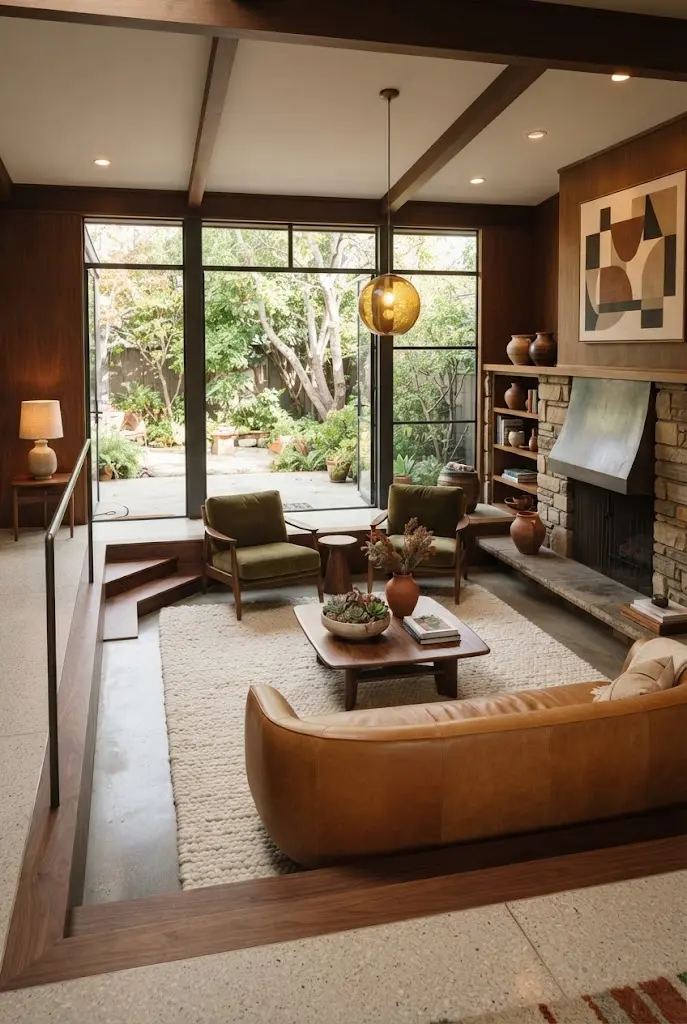
A sunken-lounge-inspired layout can bring a dramatic architectural nod to 1970s interiors.
If your home already has a lower conversation area, emphasize its cozy proportions.
For most homes, you can recreate the feeling with furniture placement rather than construction.
Arrange sofas and chairs around a central low table.
Use a large rug to visually define the conversation zone.
Warm wood, caramel leather, cream upholstery, and earthy accents work beautifully here.
Add soft lighting at different heights to enhance the intimate feeling.
Keep pathways clear so the arrangement remains practical for everyday use.
Modern artwork can prevent the room from feeling like a historical recreation.
The goal is to capture the social, relaxed character rather than copy every original detail.
14. Add Sculptural Ceramic Decor
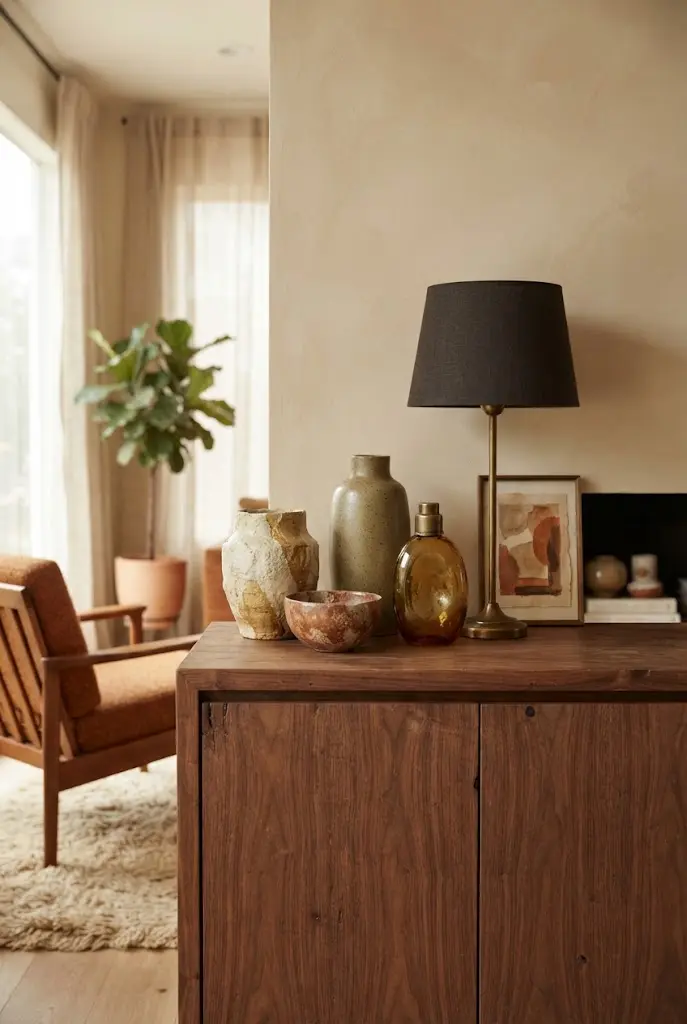
Handmade-looking ceramics can make a modern ’70s room feel collected and artistic.
Look for rounded vases, organic bowls, textured lamps, and sculptural vessels.
Cream, brown, rust, ochre, and muted green are especially suitable.
Place larger ceramic pieces on a console, coffee table, or open shelf.
Mix smooth glazed finishes with rougher handmade textures.
A single oversized vase can become a strong decorative focal point.
Keep smaller objects grouped rather than scattering them throughout the room.
Pair ceramics with natural wood and woven materials.
Their imperfect forms help soften the clean lines of contemporary furniture.
This detail adds craftsmanship and personality without relying on obvious retro symbols.
15. Use Velvet in Small Doses
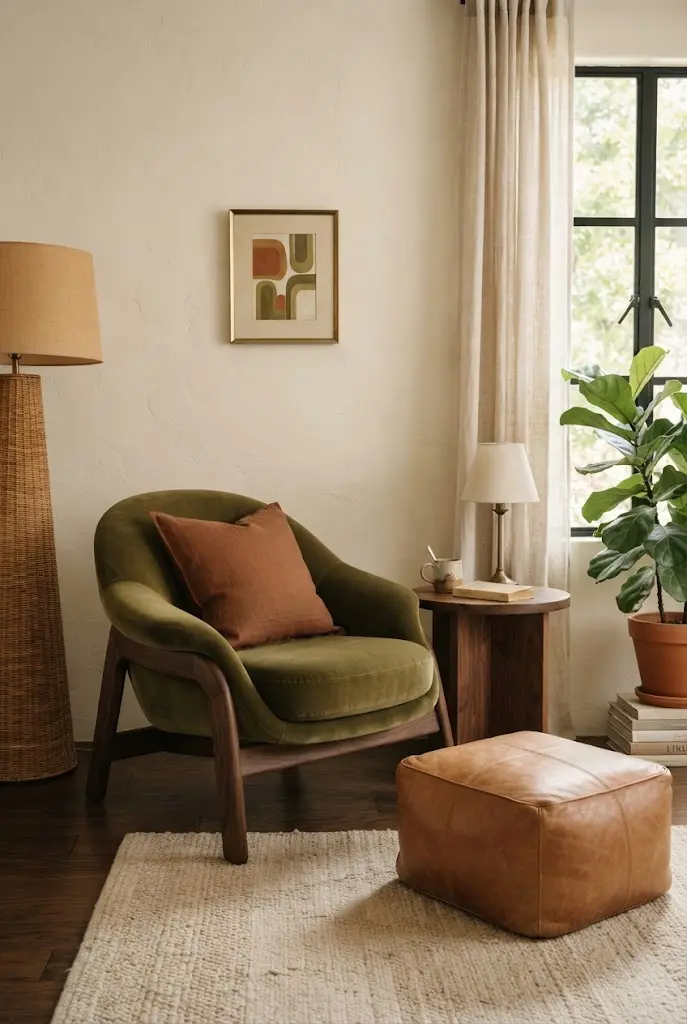
Velvet can introduce the luxurious tactile quality associated with retro interiors.
Instead of covering an entire room in velvet, start with one accent piece.
An olive, rust, mustard, or chocolate velvet chair can make a strong statement.
Velvet cushions can offer a more affordable way to experiment with the texture.
Pair velvet with leather, linen, wool, and natural wood for contrast.
A velvet ottoman can add softness without taking over the room.
Choose modern shapes so the material feels contemporary.
Avoid excessive shiny surfaces because they can make the room feel theatrical.
Matte walls and natural textures help keep velvet grounded.
The result is warm, tactile, and subtly glamorous.
16. Hang Abstract Retro-Inspired Artwork
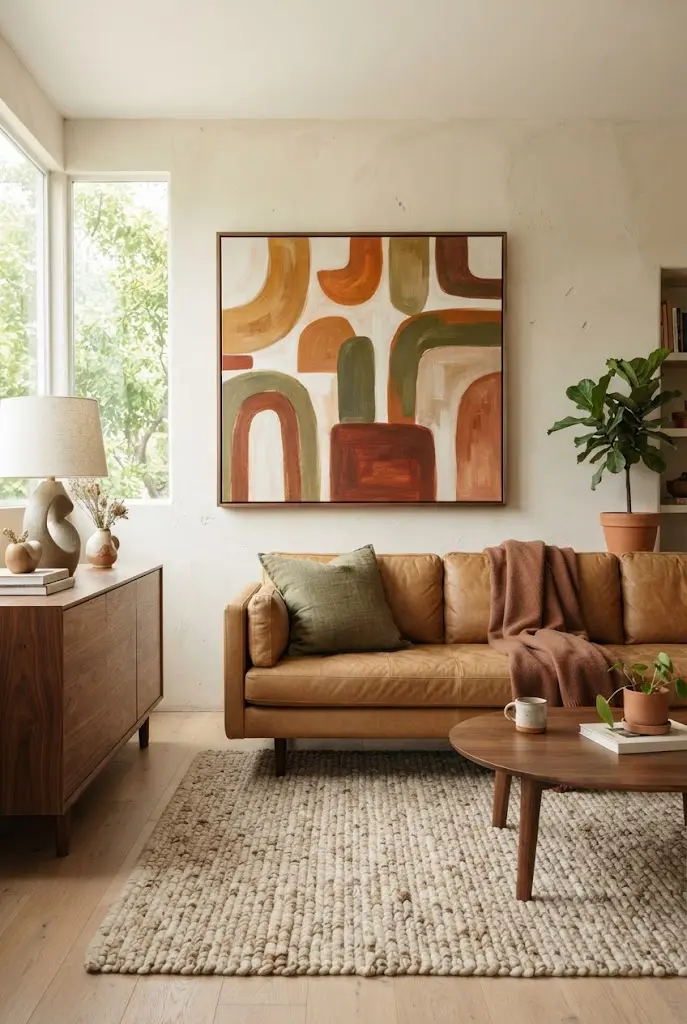
Artwork is an easy way to introduce personality without changing your furniture.
Choose abstract compositions inspired by the colors and shapes of the 1970s.
Arches, organic curves, geometric blocks, and earthy color fields work especially well.
Look for artwork using rust, brown, mustard, olive, cream, and muted orange.
Large-scale pieces can anchor a living room wall above a sofa or credenza.
Smaller prints can create a curated gallery arrangement.
Use simple wood or thin metal frames to keep the display modern.
Avoid filling every wall with artwork if you want a calm atmosphere.
One strong piece can often create more impact than several competing decorations.
This approach makes the room feel personal rather than like a themed showroom.
17. Create a Cozy Conversation Area
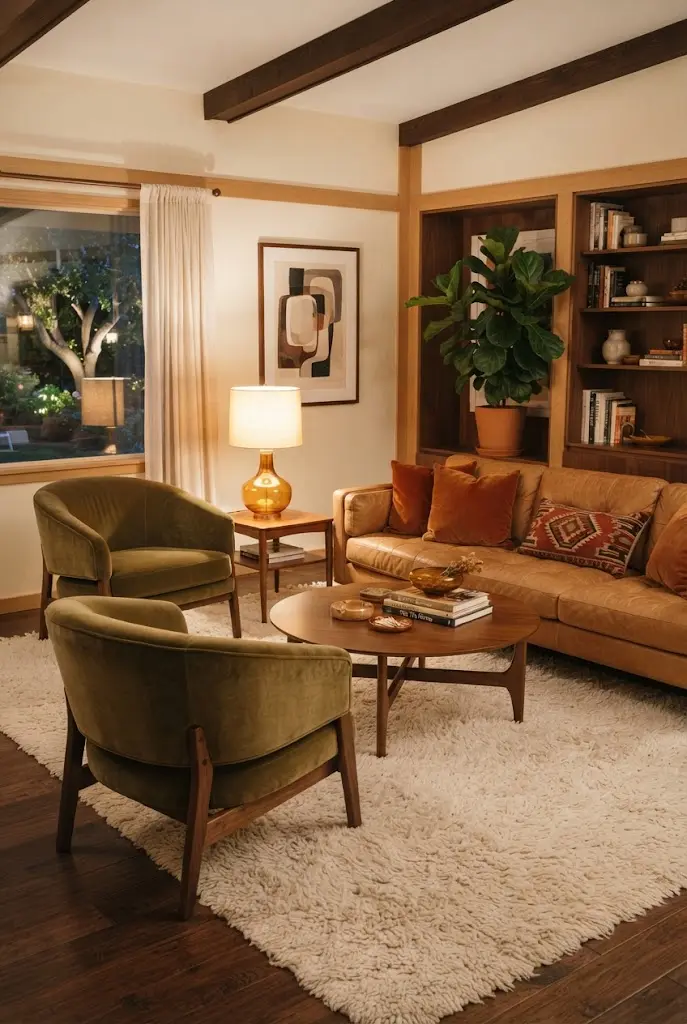
The ’70s were strongly associated with comfortable spaces designed for gathering and conversation.
Create a seating arrangement that encourages people to face one another.
Place two lounge chairs opposite a sofa rather than pointing everything toward a television.
A round or oval coffee table can make the arrangement feel more social.
Use a large rug to visually connect all the seating pieces.
Warm lighting at multiple levels can make the area feel intimate in the evening.
Add cushions and throws in tactile natural fabrics.
Keep a small side table within easy reach of each main seat.
Use earthy colors to make the entire arrangement feel cohesive.
The result is practical for modern living while retaining the relaxed spirit of the era.
18. Introduce Warm Stone and Terrazzo
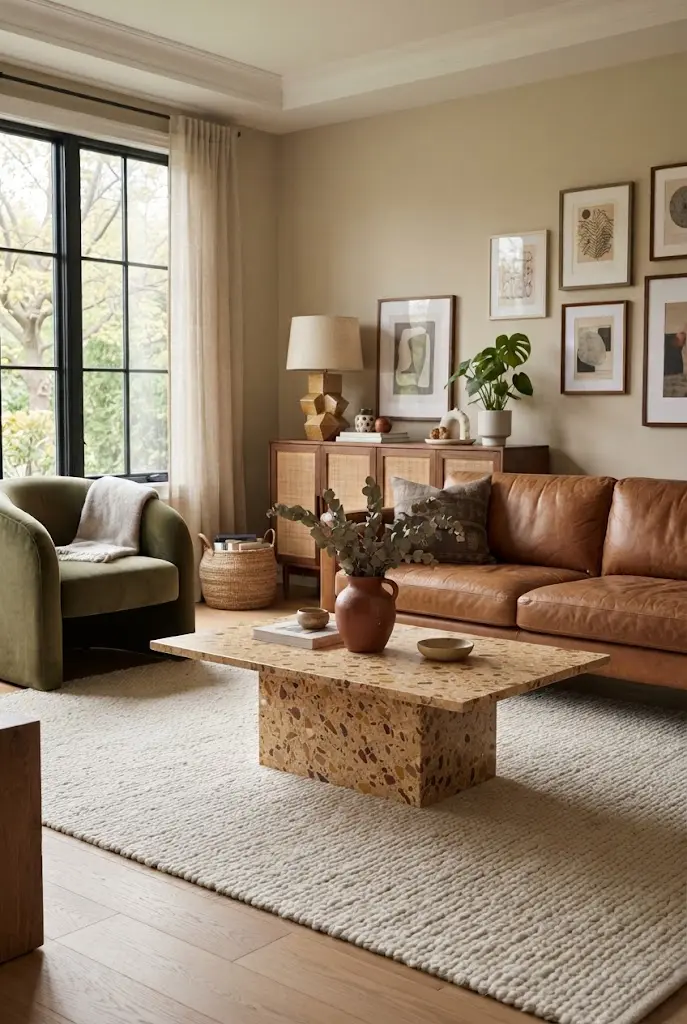
Natural stone and terrazzo can connect retro-inspired colors with contemporary surfaces.
Consider a stone coffee table, terrazzo side table, or stone kitchen countertop.
Warm beige, cream, tan, and subtle brown tones work beautifully with walnut.
Terrazzo can provide a playful texture without looking excessively vintage.
Keep the surrounding materials simple so the surface remains noticeable.
Stone also pairs naturally with leather, wool, ceramic, and rattan.
In kitchens, warm stone countertops can soften modern cabinetry.
In bathrooms, terrazzo floors can create a subtle retro reference.
Choose finishes with natural variation rather than perfectly uniform surfaces.
These materials add durability and a sophisticated connection to earthy design.
19. Mix Vintage and Contemporary Pieces
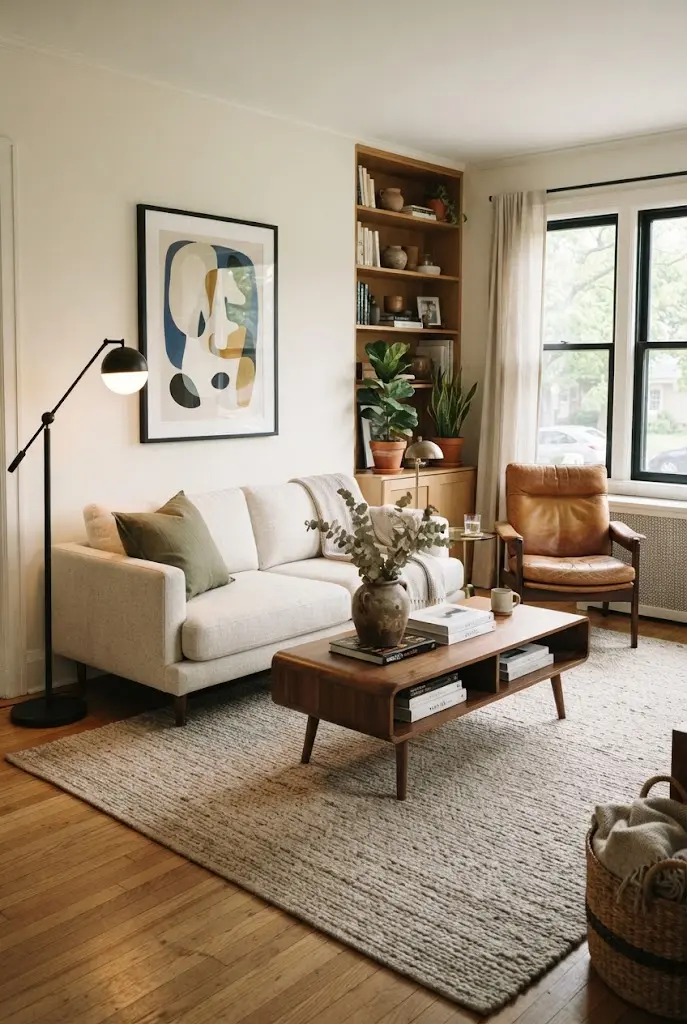
The most successful modern ’70s interiors usually combine old-looking character with modern practicality.
You do not need to fill your home with authentic vintage furniture.
Instead, combine one or two vintage-inspired pieces with contemporary essentials.
A modern sofa can sit beside a retro-style lounge chair or vintage-looking lamp.
Contemporary cabinetry can work with an antique-inspired mirror or wooden stool.
Keep the overall color palette consistent to make the mixture feel intentional.
Different periods can coexist beautifully when materials share warm tones.
Avoid creating a room where every object appears to belong to the same decade.
Contrast gives the interior more personality and makes it feel naturally collected.
This balance is what makes the style feel modern rather than like a historical replica.
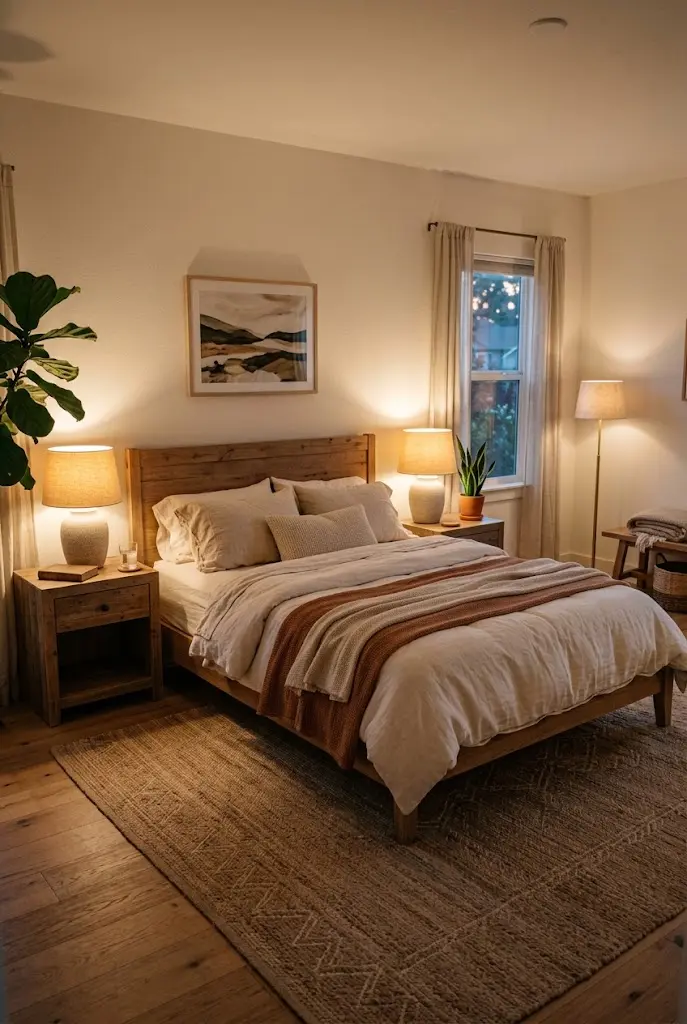
20. Style a Retro-Inspired Bedroom
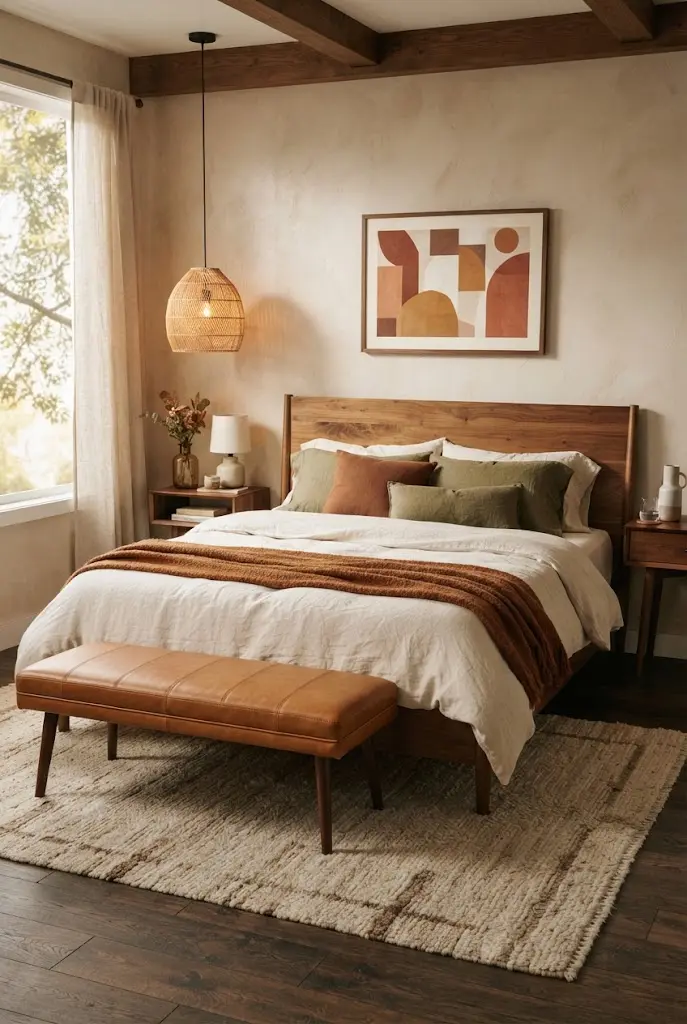
Bedrooms can benefit from the warm, calming side of modern ’70s decor.
Start with natural wood furniture and a soft earthy color palette.
A walnut or oak bed frame can establish a warm foundation.
Layer cream bedding with rust, olive, camel, or brown accents.
Use textured linen, cotton, wool, or boucle fabrics to add comfort.
A sculptural bedside lamp can provide a subtle retro reference.
Abstract artwork above the bed can reinforce the palette without becoming overwhelming.
Choose soft warm lighting rather than harsh overhead illumination.
Keep patterns restrained so the bedroom remains restful.
The finished room should feel cozy, mature, and contemporary with a nostalgic undertone.
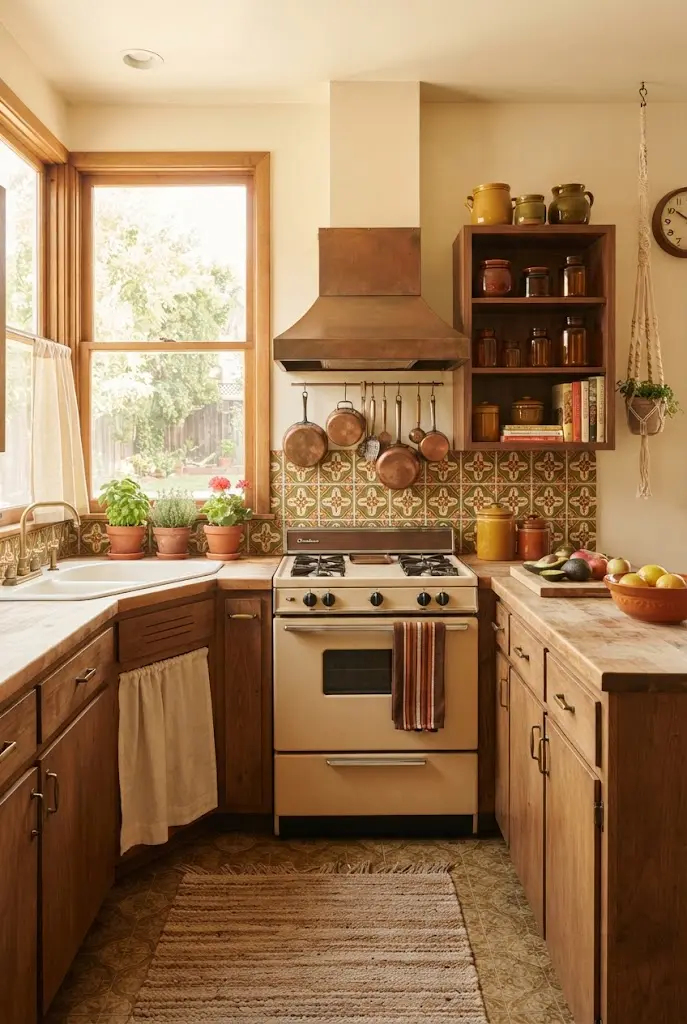
21. Add Retro-Inspired Kitchen Details
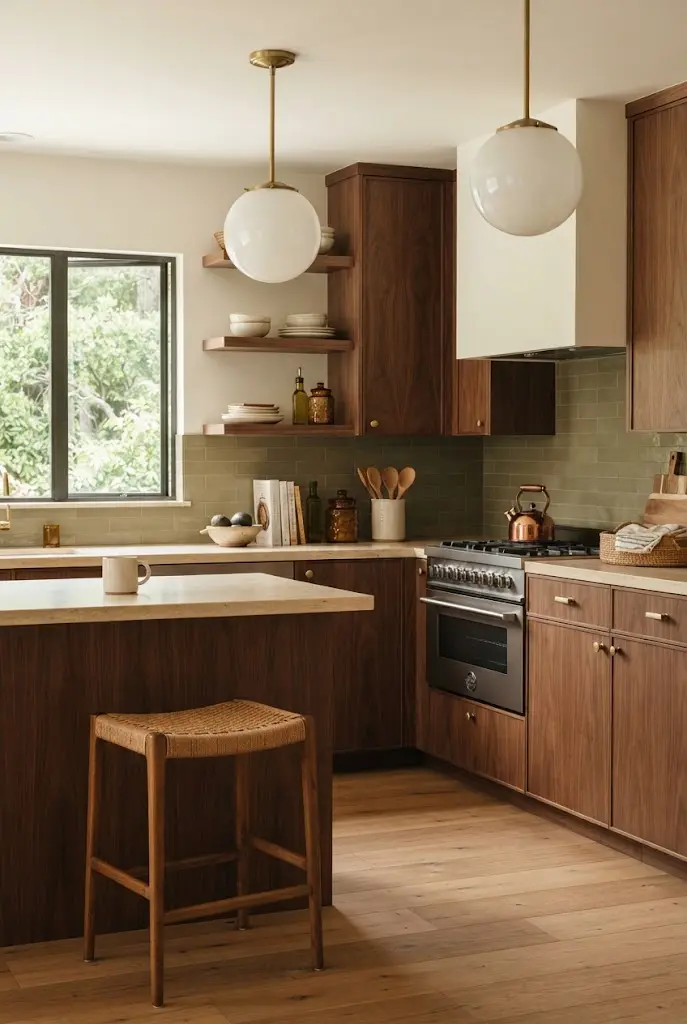
The kitchen can embrace modern ’70s style through color, materials, and hardware.
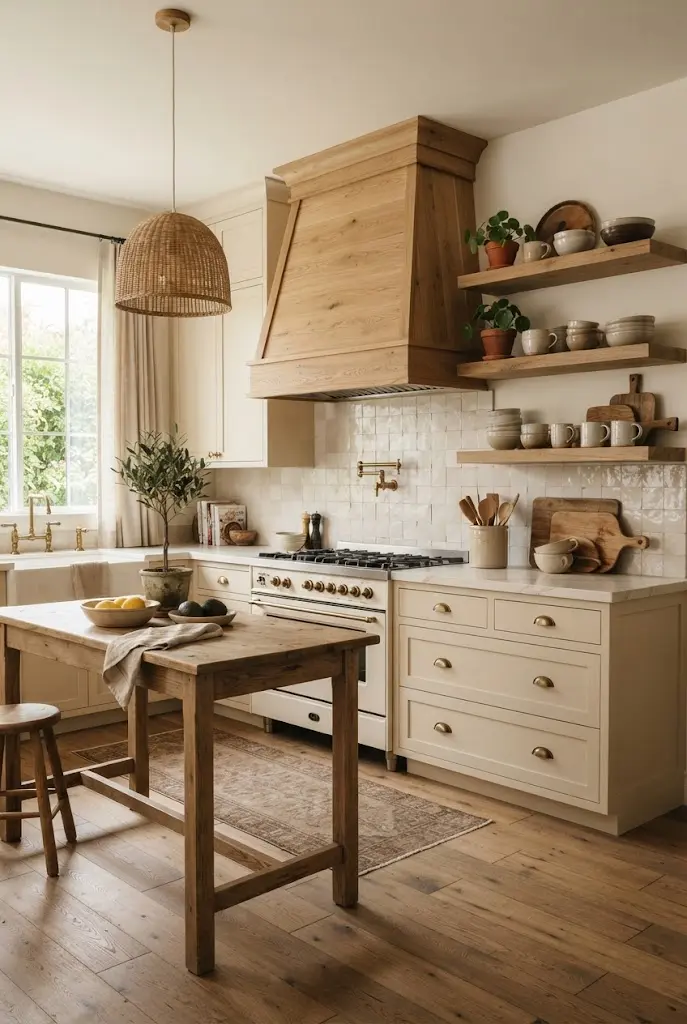
Consider warm wood cabinetry paired with cream or stone countertops.
Olive, rust, or muted mustard can be introduced through backsplash tile or accessories.
Rounded pendant lights can provide a subtle vintage reference above an island.
Open shelving can display handmade ceramics and amber glass.
Natural stone or terrazzo can add texture to counters and floors.
Choose contemporary appliances for everyday convenience.
Keep hardware simple in aged brass, bronze, or another warm metal.
A few vintage-inspired accessories can soften a highly functional kitchen.
The result should feel nostalgic while remaining practical for modern American households.
22. Use Houseplants as Natural Accents
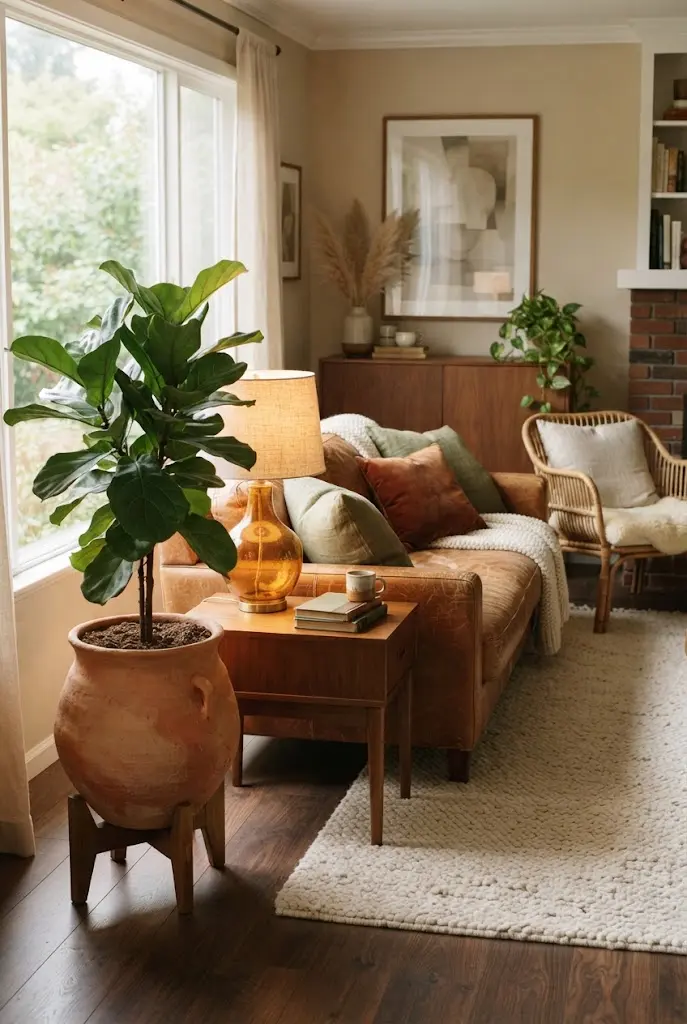
Houseplants fit beautifully into the earthy, organic character of modern ’70s interiors.
Large leafy plants can bring height and movement into a living room.
Place them in terracotta, ceramic, woven, or sculptural planters.
Plants work especially well beside walnut furniture and rattan accents.
Use greenery to soften corners that might otherwise feel empty.
A tall plant can also create useful vertical contrast against low-profile furniture.
Choose plants that suit your home’s natural light and maintenance needs.
Do not overcrowd the room with greenery if the goal is a refined look.
One large plant and a few smaller specimens can be enough.
The combination of natural foliage and earthy materials reinforces the relaxed retro atmosphere.
23. Keep the Overall Look Modern and Minimal
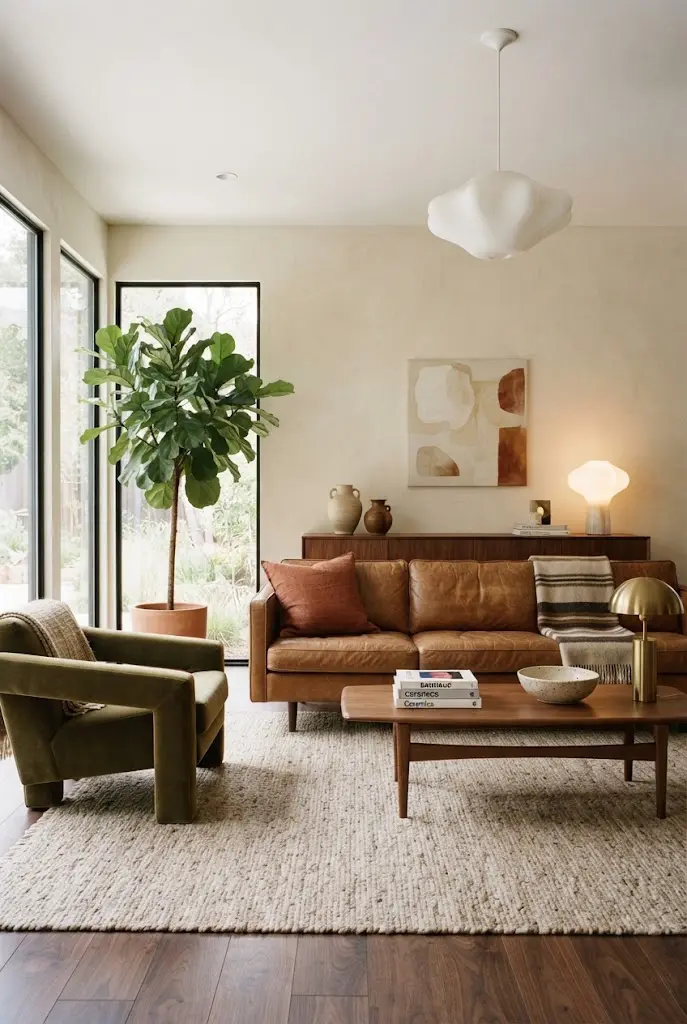
The final step is knowing when to stop adding retro details.
Modern ’70s decor works best when nostalgia is balanced with contemporary simplicity.
Choose a few strong vintage-inspired elements rather than decorating every surface.
Keep architectural backgrounds relatively calm and uncluttered.
Use modern storage solutions to keep everyday items organized.
Let warm wood, earthy colors, tactile fabrics, and sculptural lighting provide the character.
Avoid excessive novelty accessories that make the room feel like a themed set.
Give furniture and artwork enough breathing room to remain visually important.
Mix clean modern lines with organic shapes for a balanced composition.
When edited carefully, the result feels warm, sophisticated, personal, and effortlessly inspired by the 1970s.