21 Boho Kitchen Cabinets and Design Elements for a Warm Space
Boho kitchens are all about warmth, personality, natural materials, and relaxed everyday living. In American homes, this style works especially well because it can be adapted to everything from compact apartment kitchens to spacious open-concept homes. Boho kitchen cabinets often combine warm wood tones, painted finishes, vintage-inspired hardware, and handmade-looking details. Natural textures such as rattan, woven baskets, ceramic pottery, linen, and stone can make the space feel layered without looking overly designed. Earthy colors help create a welcoming atmosphere while still allowing the kitchen to feel fresh and modern. Open shelving can display favorite dishes, plants, and collected objects instead of hiding everything behind closed doors. Vintage rugs and handmade accessories add character and soften harder kitchen surfaces. The best boho kitchens balance practicality with a collected, personal appearance. You can achieve the look with a few carefully chosen changes rather than remodeling the entire room. These 21 ideas will help you create a warm boho kitchen that feels comfortable, stylish, and naturally lived-in.
1. Warm Natural Wood Kitchen Cabinets
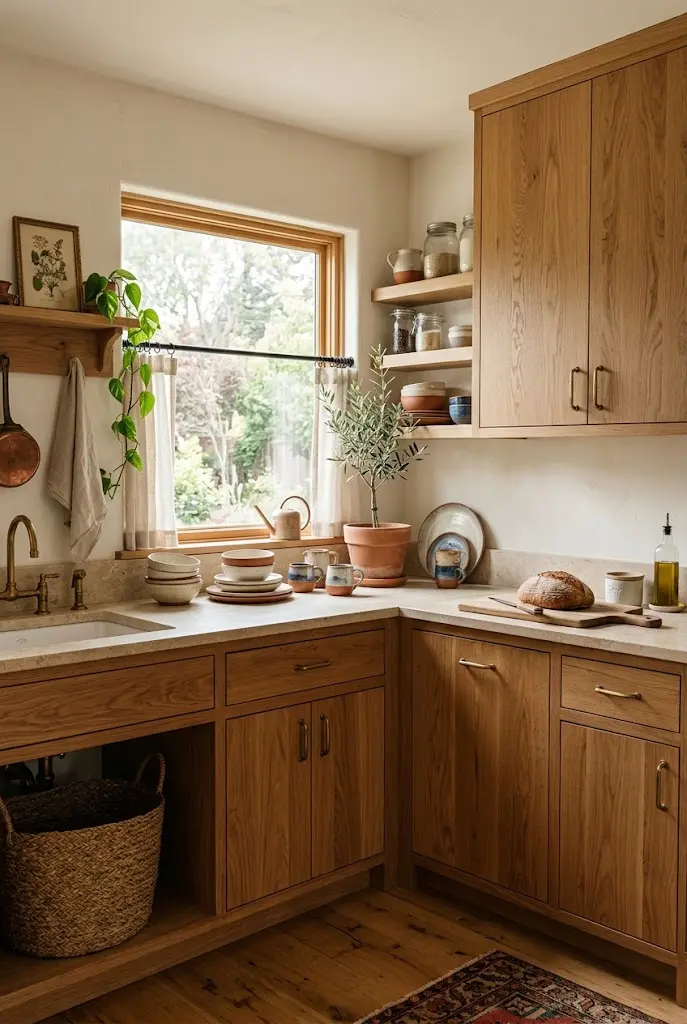
Natural wood cabinets are one of the easiest ways to establish a warm boho atmosphere. Choose oak, walnut, maple, or another naturally textured wood with a finish that allows the grain to remain visible. Light and medium wood tones work particularly well in American kitchens because they pair beautifully with white walls, neutral countertops, and natural flooring. Instead of making every cabinet perfectly uniform, introduce handcrafted-looking details through simple pulls and open shelving. Wood cabinets can also create visual warmth in kitchens with modern appliances and contemporary layouts. Pair them with woven pendant lights to bring additional texture into the room. A few ceramic accessories can make the cabinetry feel more collected and personal. Green plants provide a fresh contrast against the warm wood. Keep the countertop styling relatively simple so the cabinet grain remains a major visual feature. The result is a relaxed kitchen that feels both timeless and distinctly bohemian.
2. Cream Boho Cabinets with Natural Wood Accents
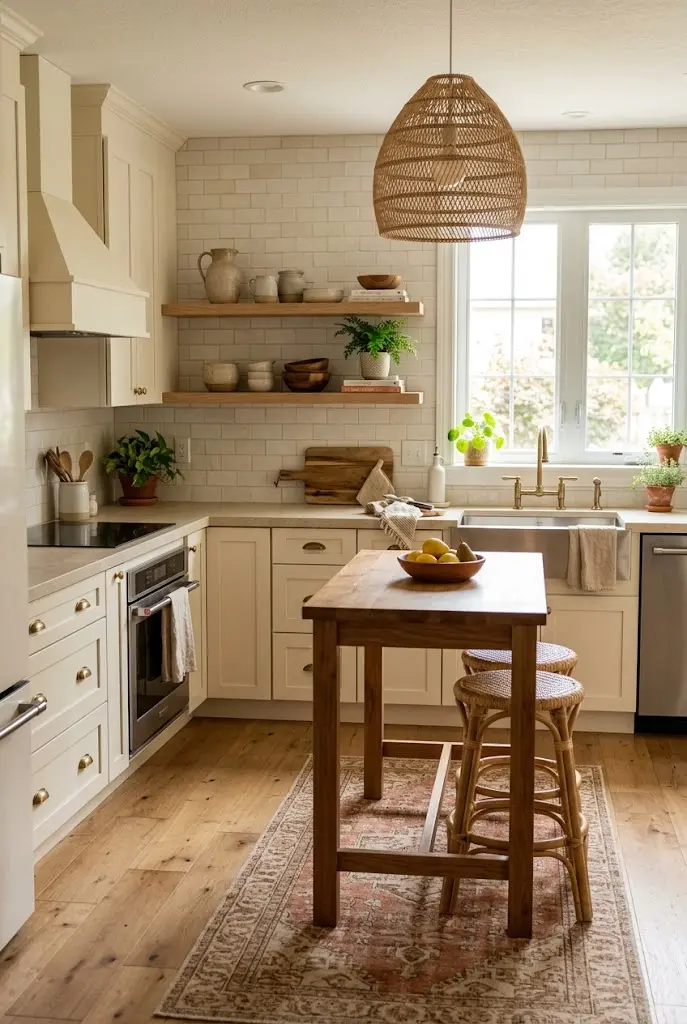
Cream cabinets provide a soft foundation for a warm boho kitchen while keeping the room bright and inviting. A creamy off-white finish feels less stark than pure white and works beautifully with natural materials. Add wood accents through open shelves, a butcher-block island, or exposed wooden stools. Warm brass or antique bronze hardware can reinforce the relaxed character of the design. Consider pairing cream cabinets with handmade ceramic backsplash tiles for subtle variation. Woven pendant lights can add another organic layer above an island or dining area. Plants and wooden cutting boards can be displayed naturally rather than arranged too perfectly. This combination is especially useful for smaller kitchens because light cabinet colors help maintain an airy feeling. Neutral textiles can soften the overall appearance without adding visual clutter. The finished space feels warm, casual, and welcoming while remaining practical for everyday American living.
3. Earthy Sage Green Kitchen Cabinets
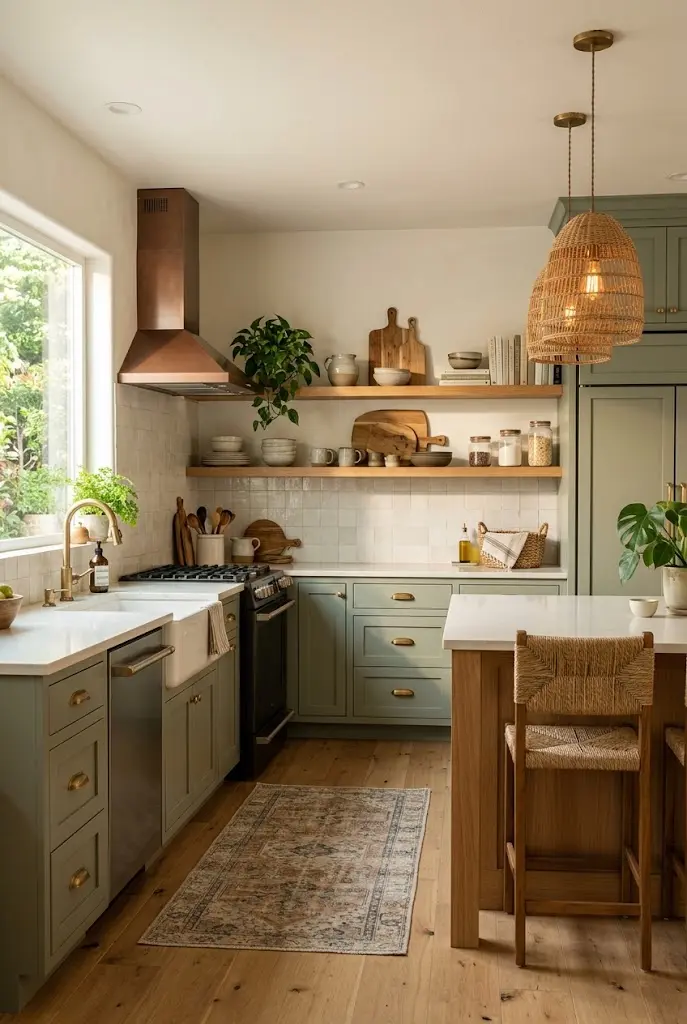
Sage green is an excellent cabinet color for creating a nature-inspired boho kitchen. Its muted quality feels sophisticated while still bringing personality into the room. Pair sage cabinets with warm wood countertops or shelves to prevent the green from feeling too cool. Natural brass hardware adds a subtle vintage quality that works well with the bohemian aesthetic. Handmade ceramic pieces can introduce creamy and sandy neutral tones. Add plants near windows, on shelves, or beside the sink to strengthen the connection with nature. A patterned runner can bring a small amount of color without overwhelming the cabinetry. Choose warm lighting instead of overly cool white bulbs to maintain the cozy atmosphere. Sage cabinets also work well with light-colored walls and natural flooring. This design creates a calm kitchen that feels collected, comfortable, and welcoming.
4. Rattan and Woven Cabinet Details
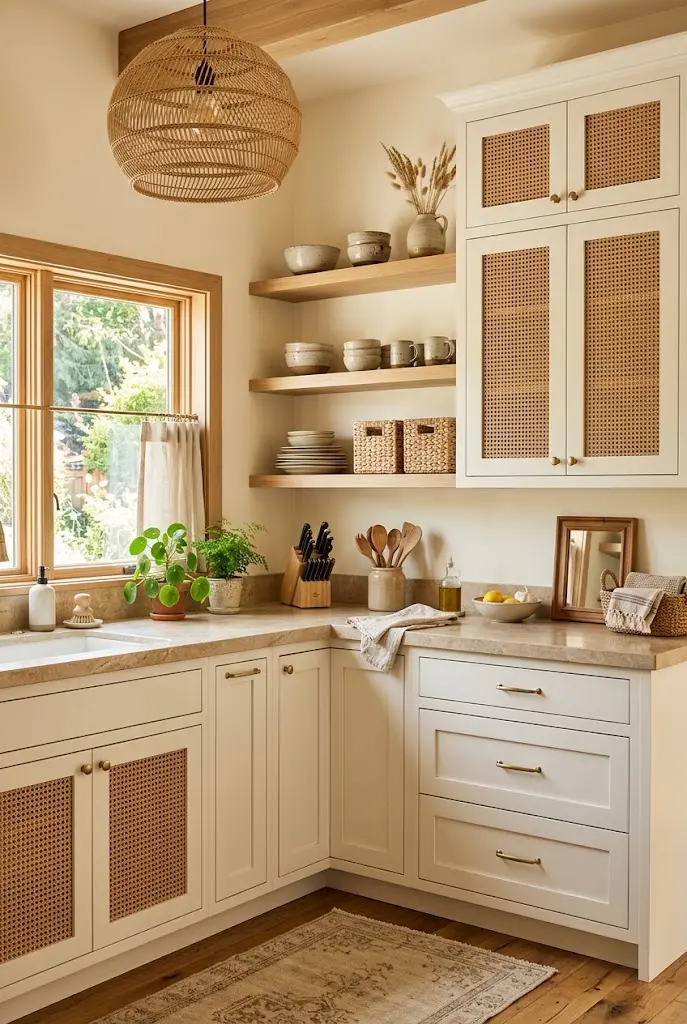
Rattan and woven materials instantly add texture to a boho kitchen. Instead of replacing an entire cabinet system, consider using woven inserts on selected doors or incorporating rattan baskets into open shelving. These details can soften the harder surfaces of countertops, cabinetry, and appliances. Natural rattan works especially well alongside white, cream, beige, and warm wood finishes. Use woven storage baskets to organize towels, produce, or pantry accessories while keeping the space attractive. A rattan pendant light can repeat the texture overhead. Ceramic pottery and wooden utensils add complementary handmade qualities. Keep the woven elements concentrated in a few areas so the kitchen does not become visually overwhelming. This approach is particularly useful for renters or homeowners who want a boho update without a major renovation. The overall effect is casual, tactile, and naturally warm.
5. Boho Kitchen with Open Wood Shelving
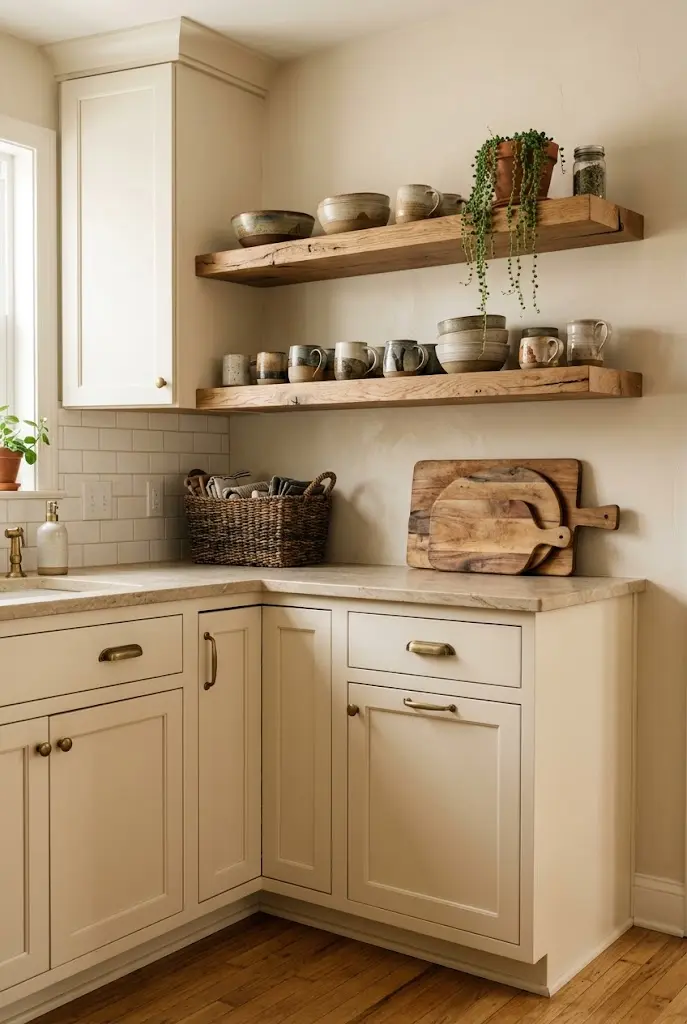
Open wood shelving is a simple design element that can make a kitchen feel more personal and relaxed. Replace one section of upper cabinetry with thick natural wood shelves to create a display area for everyday dishes and decorative objects. Warm wood shelves contrast beautifully with painted cabinets and neutral walls. Display handmade mugs, ceramic bowls, small plants, woven baskets, and wooden cutting boards. Avoid filling every inch because negative space helps the kitchen feel calm rather than cluttered. Choose shelves with natural variation instead of perfectly polished finishes. Brass brackets can add a subtle vintage detail if the kitchen needs more visual character. Open shelving also makes frequently used items easy to reach. This idea works particularly well in open-concept American kitchens where the kitchen is visible from the living area. The result feels collected and functional at the same time.
6. Terracotta-Inspired Boho Kitchen Accents
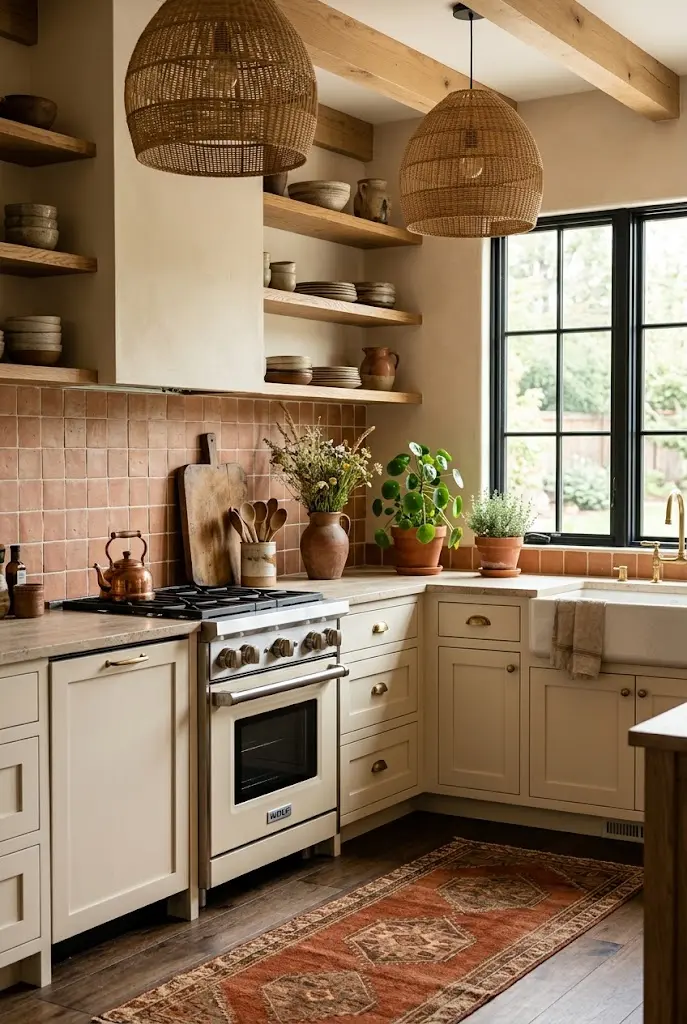
Terracotta tones can bring warmth and Mediterranean-inspired character to a boho kitchen. Use terracotta through backsplash tiles, pottery, planters, textiles, or small decorative accents rather than covering the entire room in orange. Cream cabinets create a beautiful neutral backdrop for these earthy shades. Natural wood helps bridge the terracotta and neutral elements together. Add handmade pottery with slightly irregular shapes to create an artisan feel. A vintage-style rug can introduce related rust and clay tones underfoot. Keep countertops relatively neutral so the warmer accessories remain the focus. Terracotta accents are particularly attractive in kitchens with plenty of natural sunlight. They create a cozy atmosphere that feels relaxed rather than formal. This approach can also be updated easily as decorating preferences change.
7. Vintage-Inspired Cabinet Hardware
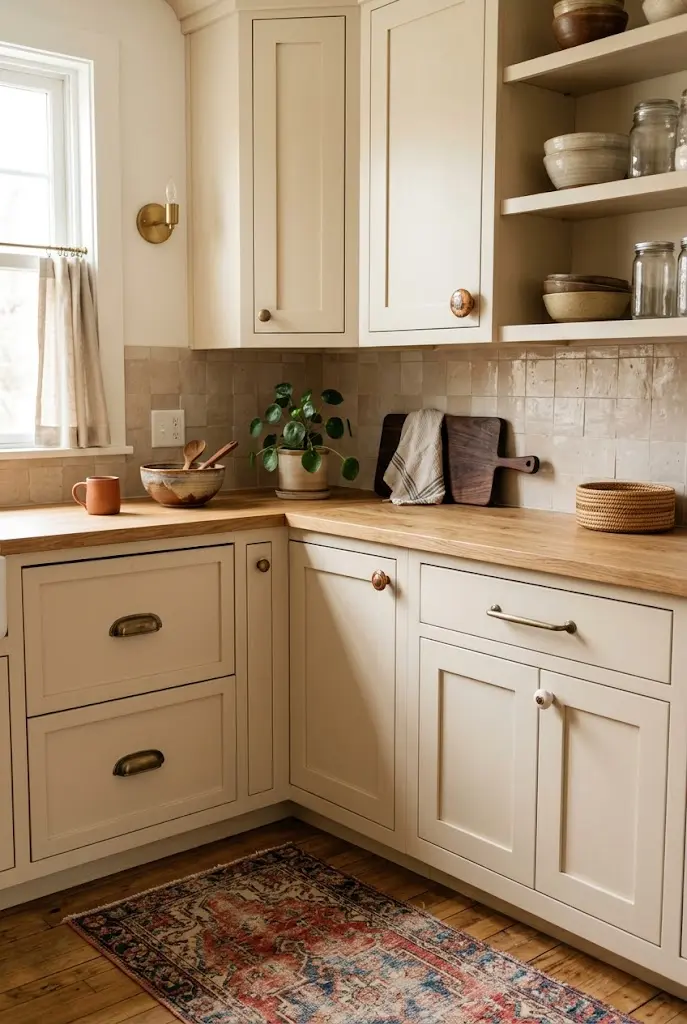
Changing cabinet hardware is a small update that can completely alter the personality of a kitchen. Boho kitchens benefit from hardware that looks aged, handcrafted, or collected over time. Antique brass, aged bronze, dark metal, and ceramic knobs can all work beautifully. Consider combining simple pulls on drawers with small knobs on cabinet doors. Ceramic hardware can add an artisan touch without requiring a major renovation. Choose finishes that complement the existing cabinet color rather than competing with it. Warm metal hardware looks especially attractive against cream, green, walnut, and natural oak cabinets. Keep the overall hardware selection coordinated even if individual pieces have subtle variations. This is an affordable way to introduce vintage character into an otherwise modern American kitchen. The final effect can make standard cabinetry feel much more distinctive and personal.
8. Natural Stone Countertops with Boho Cabinets
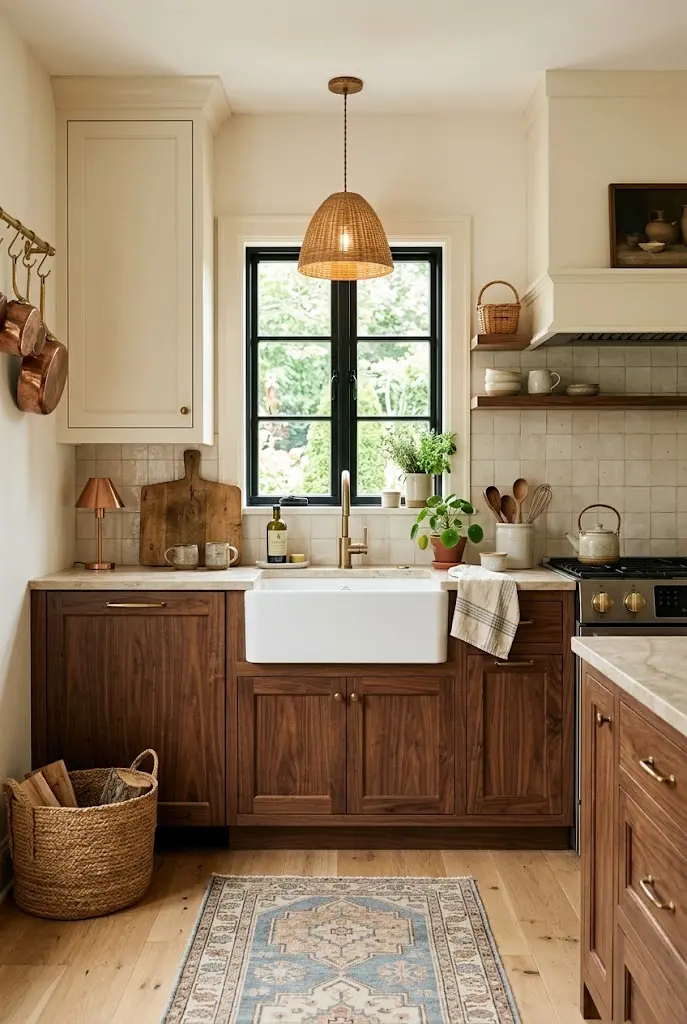
Natural stone countertops can balance the warmth of boho cabinetry with an organic, sophisticated surface. Look for stone with subtle veining and warm neutral undertones rather than extremely dramatic patterns. Cream, beige, tan, and softly veined quartz or natural stone can work beautifully with wood cabinets. Pair the countertop with handmade ceramic accessories and woven textures to keep the space relaxed. A wooden cutting board can provide another layer of warmth while remaining useful. Keep decorative objects intentionally limited so the countertop remains functional. Natural stone also provides a timeless surface that can complement changing decor over the years. Warm under-cabinet lighting can emphasize the texture and color of the countertop. This combination is ideal for homeowners who want bohemian character without sacrificing a polished appearance. It creates a kitchen that feels both practical and beautifully layered.
9. Dark Wood Cabinets for a Cozy Boho Look
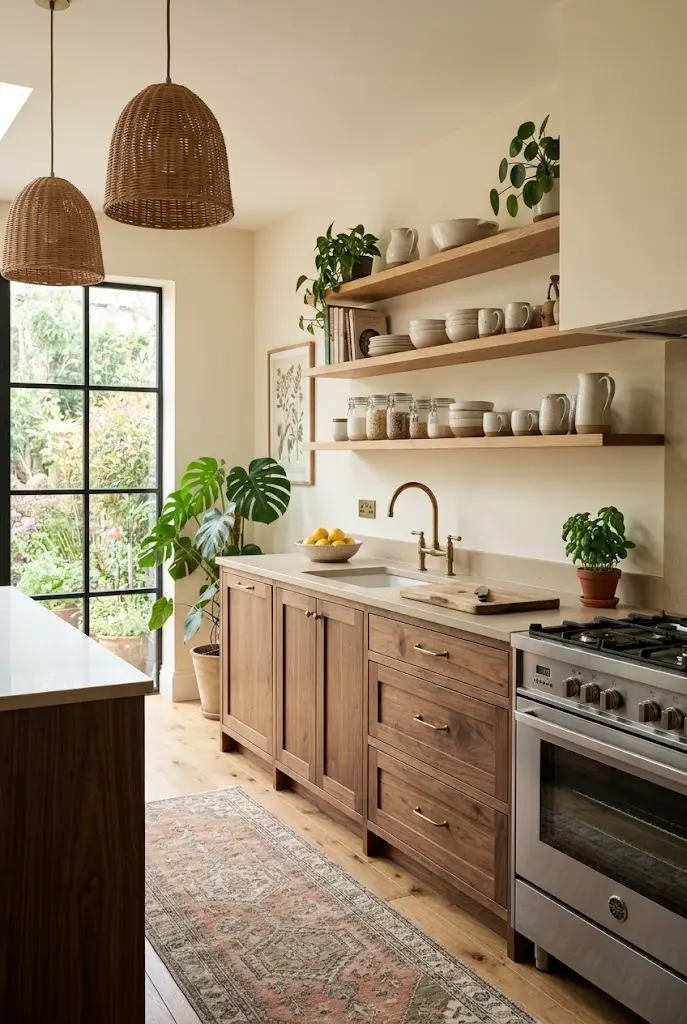
Dark wood cabinets can create a dramatic yet comfortable boho kitchen when balanced with lighter materials. Walnut is especially effective because its natural grain adds richness without appearing overly formal. Pair dark cabinets with cream walls, warm beige countertops, and light natural textiles. Open shelves can break up the darker cabinetry and provide space for pottery and plants. Brass hardware can add warmth and a subtle vintage quality. Use woven lighting fixtures to soften the visual weight of the dark wood. A patterned rug can introduce muted earthy colors without competing with the cabinetry. Plenty of natural daylight will keep the kitchen from feeling too heavy. This style works especially well in larger American kitchens or kitchens with generous windows. The final look feels intimate, sophisticated, and distinctly bohemian.
10. Boho Cabinets with Handmade Ceramic Backsplash
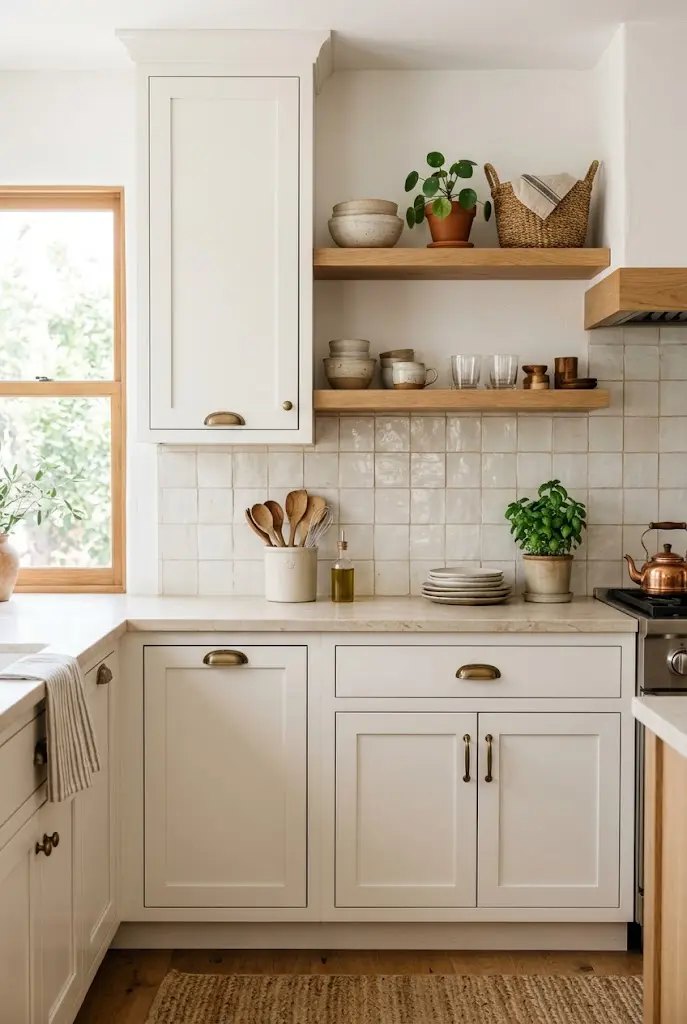
A handmade ceramic backsplash can add subtle texture and individuality to standard kitchen cabinets. Slight variations in tile shape, glaze, and color help create an artisan-inspired appearance. Pair creamy or warm white cabinets with tiles in ivory, sand, muted beige, or soft earthy tones. Natural wood shelves can add warmth and break up the tiled surface. Keep the grout relatively subtle to maintain a relaxed appearance. Display a few handmade bowls or ceramic vases on the countertop to repeat the handcrafted theme. Brass hardware can introduce another warm detail without overwhelming the design. Plants and woven accessories provide organic contrast against the hard ceramic surface. This approach feels especially appropriate for a kitchen designed around slow living and natural materials. It creates a distinctive backdrop while keeping the overall space calm and timeless.
11. Warm Wood Kitchen Island
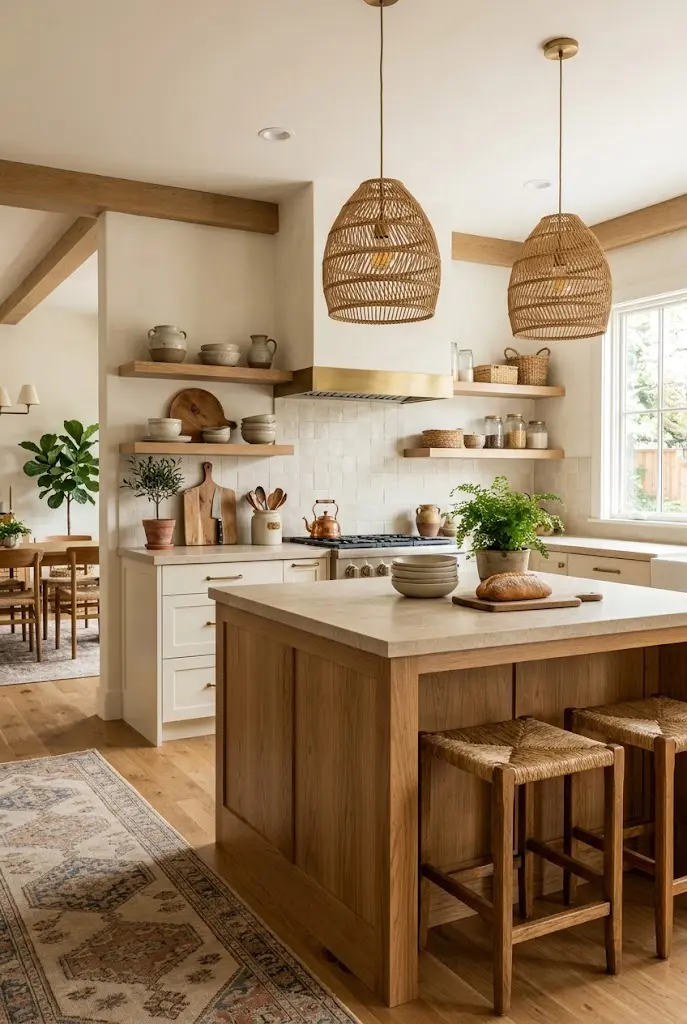
A wood kitchen island can become the centerpiece of a boho kitchen while adding useful preparation and gathering space. Choose a warm oak, walnut, or reclaimed-looking wood finish that contrasts gently with the surrounding cabinets. The island can include simple shaker cabinetry, open shelving, or woven storage baskets. Pair it with comfortable wooden or woven counter stools for a cohesive look. A few ceramic bowls and a wooden cutting board can make the island feel naturally lived-in. Pendant lights above the island should provide both useful illumination and decorative texture. Avoid overly glossy finishes because matte and natural surfaces fit the boho aesthetic better. The island can also visually connect the kitchen with an adjacent dining or living area. This creates a welcoming environment for casual meals, entertaining, and everyday family life. The result feels practical without losing its relaxed personality.
12. White Cabinets with Earthy Boho Decor
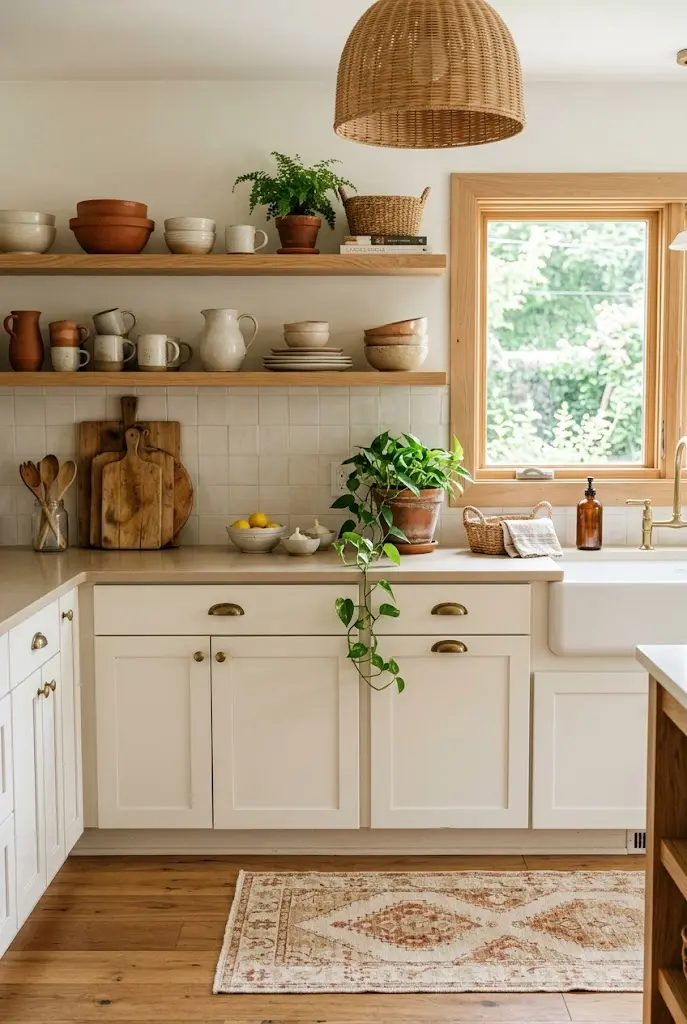
White kitchen cabinets can still look distinctly bohemian when surrounded by warm natural textures. Choose a soft warm white rather than a cold bright white to create a more inviting foundation. Add wood through shelving, stools, cutting boards, and flooring. Earthy pottery in terracotta, beige, brown, and cream can bring subtle color to the room. Woven baskets provide useful storage while adding texture. A vintage-inspired runner can introduce pattern without making the kitchen feel busy. Green plants can soften the white cabinetry and reinforce the natural theme. Brass or bronze hardware can provide a gentle vintage accent. This approach is particularly useful for American homes that already have white cabinetry and need a decorative refresh. With the right accessories, a basic white kitchen can become warm, collected, and comfortably bohemian.
13. Boho Kitchen Cabinets with Open Pantry Storage
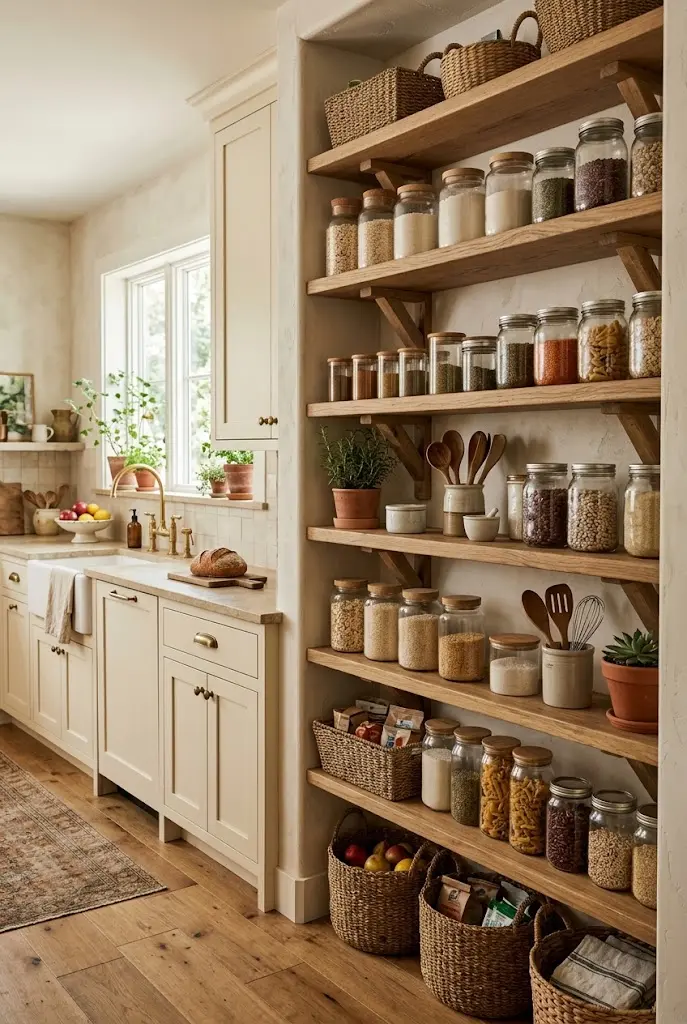
Open pantry storage can make a boho kitchen feel casual and accessible while providing a place to display beautiful everyday ingredients. Use natural wood shelving with woven baskets to organize dry goods and kitchen essentials. Glass jars can create a simple and attractive storage system while keeping ingredients visible. Pair the open pantry with warm cream, sage, or natural wood cabinets. Handmade labels can add personality, although the overall scene should remain visually uncluttered. Baskets can conceal less attractive items while maintaining the woven texture associated with boho style. Add a few ceramic containers and wooden utensils to reinforce the natural materials. This type of storage works particularly well in larger kitchens with a dedicated pantry wall. The arrangement should look organized without appearing overly perfect. The result is functional, practical, and full of relaxed character.
14. Layered Neutral Tones
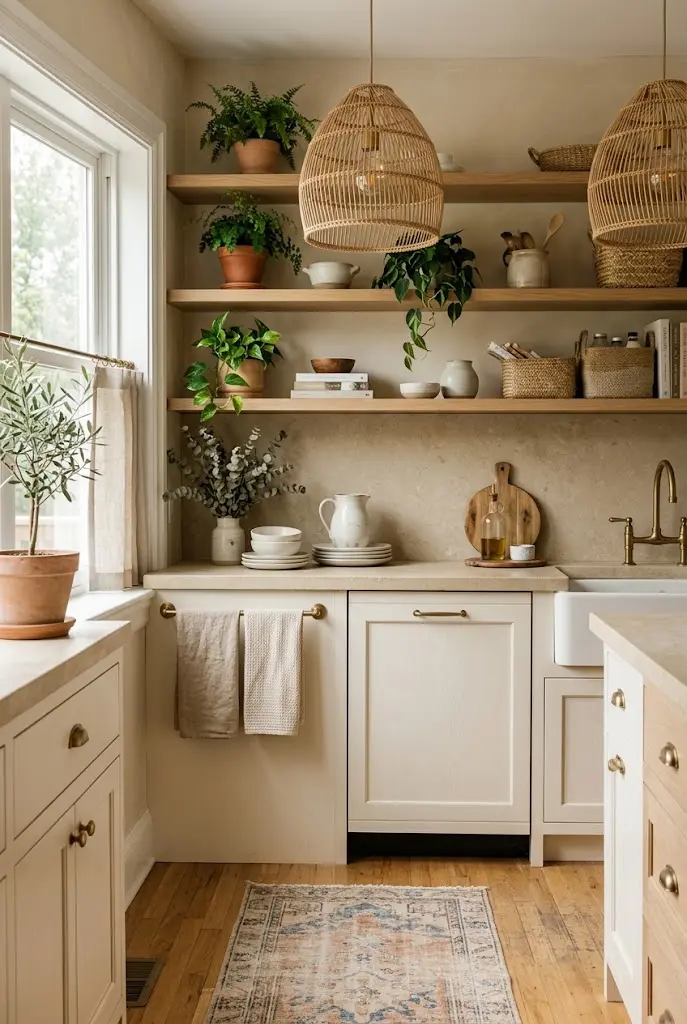
Layering several neutral shades is an effective way to create a sophisticated boho kitchen without relying on strong colors. Combine cream cabinets with beige walls, warm wood, sandy stone, and natural woven materials. Different textures keep the monochromatic palette from looking flat. Choose linen, rattan, ceramic, wood, and stone to introduce visual variety. Small green plants can provide a natural accent without disrupting the neutral palette. Antique brass hardware can add a subtle metallic highlight. A faded vintage rug can bring gentle pattern and additional warmth underfoot. Keep the shapes simple so the materials remain the focus. This approach works well in both traditional and modern American homes. The result is a calm, timeless kitchen with plenty of tactile interest.
15. Patterned Tile Flooring with Simple Cabinets
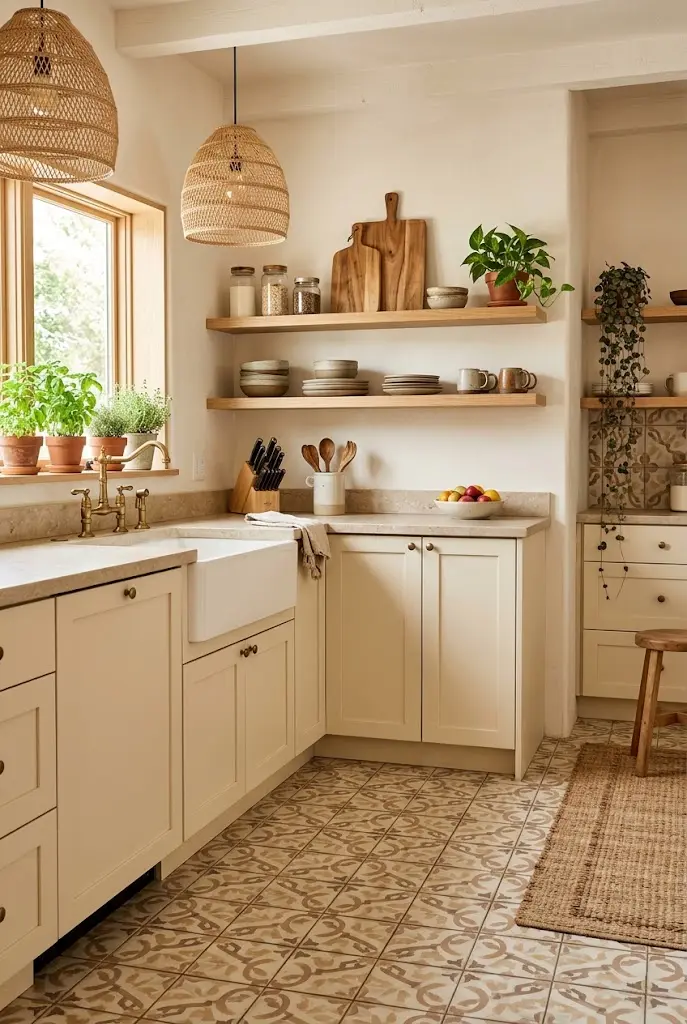
Patterned flooring can become the decorative foundation of a boho kitchen while allowing the cabinets to remain simple. Choose muted geometric or Moroccan-inspired patterns in warm neutrals, cream, clay, and soft brown. Pair the floor with plain cream, white, sage, or natural wood cabinets so the room remains balanced. Natural wood shelves can connect the flooring to other organic materials. Keep the countertop neutral and uncluttered to prevent competing patterns. A woven pendant light can add another layer of texture without introducing a second strong pattern. Plants and handmade ceramics can provide small natural accents. This style works particularly well in kitchens where the flooring is visible from the adjoining living spaces. The combination feels artistic but still practical for everyday use. It creates a strong boho identity without requiring elaborate cabinetry.
16. Boho Kitchen with Butcher Block Countertops
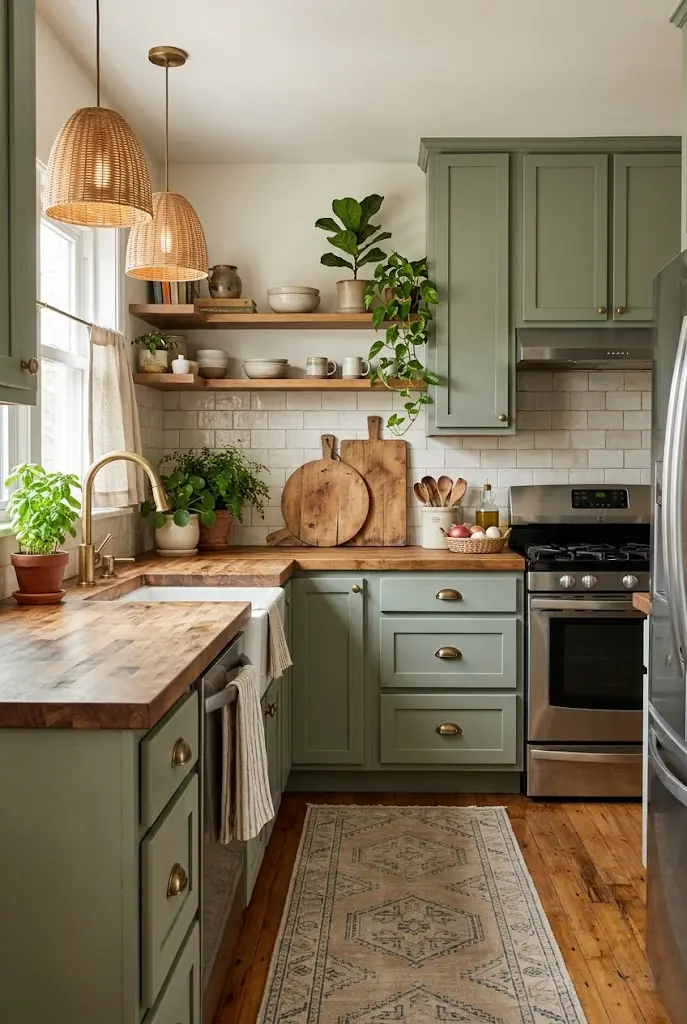
Butcher block countertops bring natural warmth and practical character to a boho kitchen. The wood surface pairs beautifully with painted cabinets and handmade accessories. Choose a warm wood tone that complements the cabinetry rather than matching it exactly. Cream, sage, muted blue, and warm beige cabinets can all work with butcher block. Display wooden cutting boards and utensils to reinforce the material connection. Ceramic pottery and woven baskets can prevent the kitchen from looking too wood-heavy. Plants placed near the sink or window add freshness. A vintage rug can soften the transition between the cabinetry and floor. Regular maintenance can help preserve the beauty of the wood surface in an active kitchen. The result feels inviting, tactile, and especially well suited to a casual American home.
17. Mixed Cabinet Colors for a Collected Look
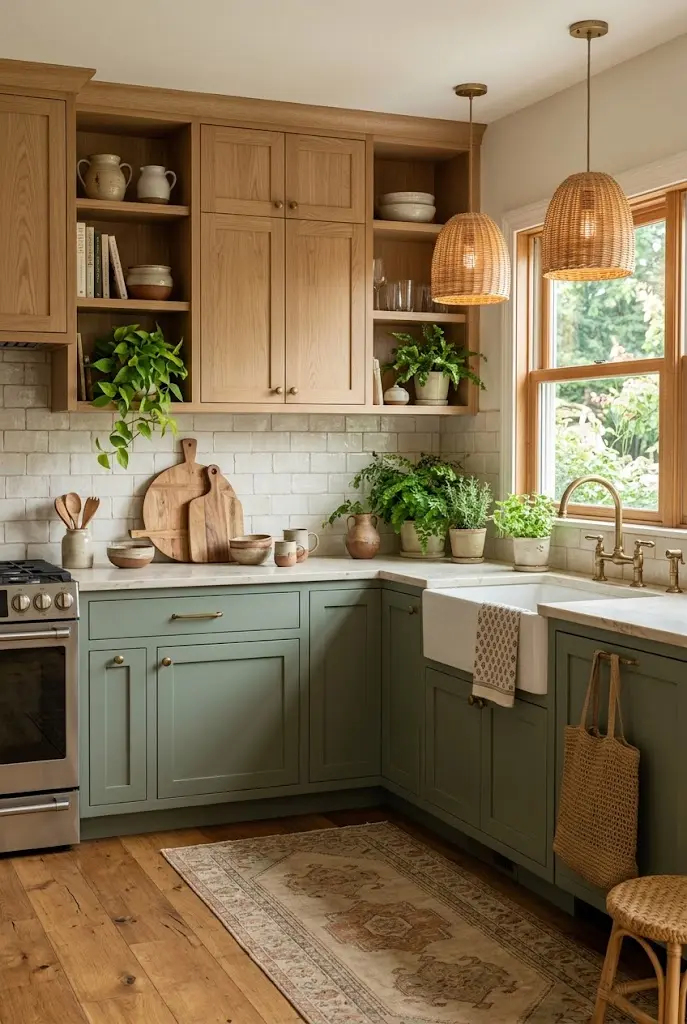
Mixing cabinet colors can give a boho kitchen a collected appearance while adding visual depth. Use one color for the lower cabinets and another complementary shade for the upper cabinets or island. For example, cream lowers with natural wood uppers can create a warm organic combination. Sage green paired with oak is another attractive option. Keep the hardware finish consistent to connect the different cabinet colors. Use neutral countertops and backsplashes to keep the design from becoming too busy. Handmade pottery can repeat the colors subtly throughout the space. A woven light fixture can provide a common natural texture. This style is especially effective when you want the kitchen to feel customized rather than like a matching showroom. The result is expressive, warm, and full of personality.
18. Vintage Rug in Front of Boho Cabinets
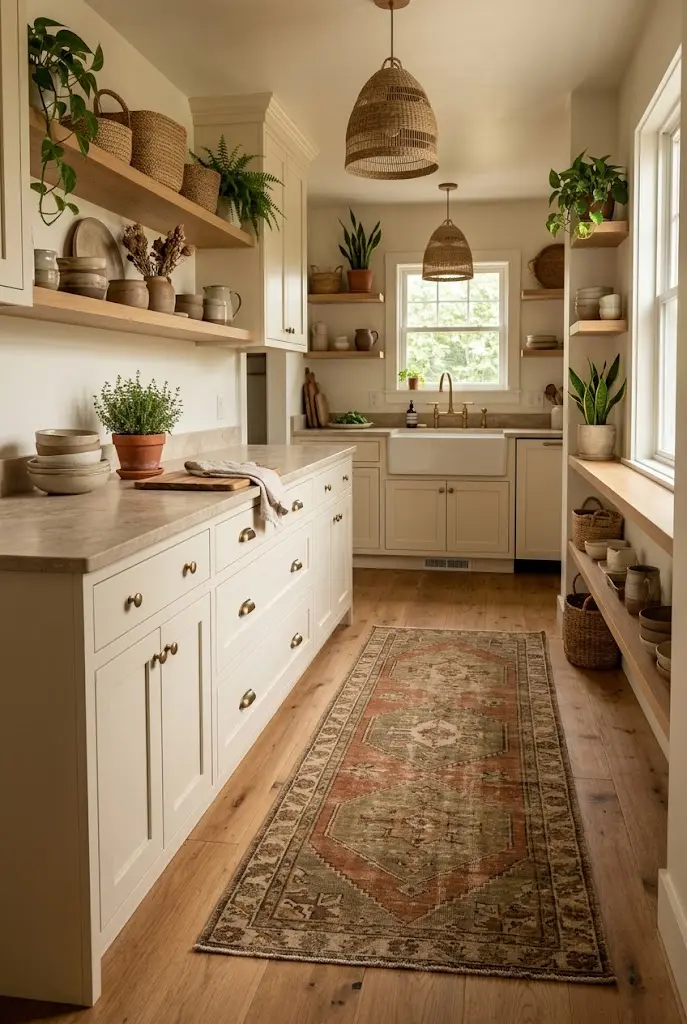
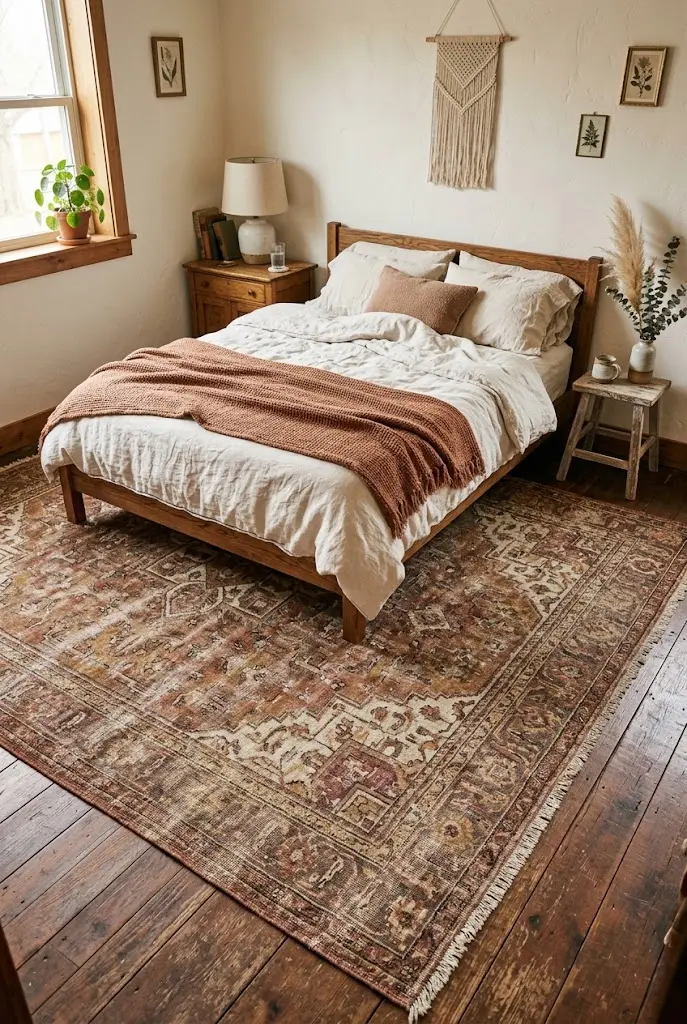
A vintage-inspired rug can instantly soften a kitchen and make standard cabinetry feel more bohemian. Choose a low-pile runner with faded earthy colors such as rust, beige, olive, brown, or muted blue. Place it along the main cabinet run or in front of the sink. The rug should be appropriately sized for the kitchen walkway and should not block cabinet doors. Pair it with warm wood or cream cabinets for a relaxed appearance. Natural baskets and ceramic accessories can repeat the rug’s earthy character. Keep the rest of the kitchen relatively simple so the rug becomes a decorative accent rather than visual clutter. A washable runner can also be practical for busy American households. The combination of soft textiles and hard kitchen surfaces creates a more comfortable atmosphere. This small change can make the kitchen feel significantly warmer.
19. Hanging Plants Around Boho Cabinets
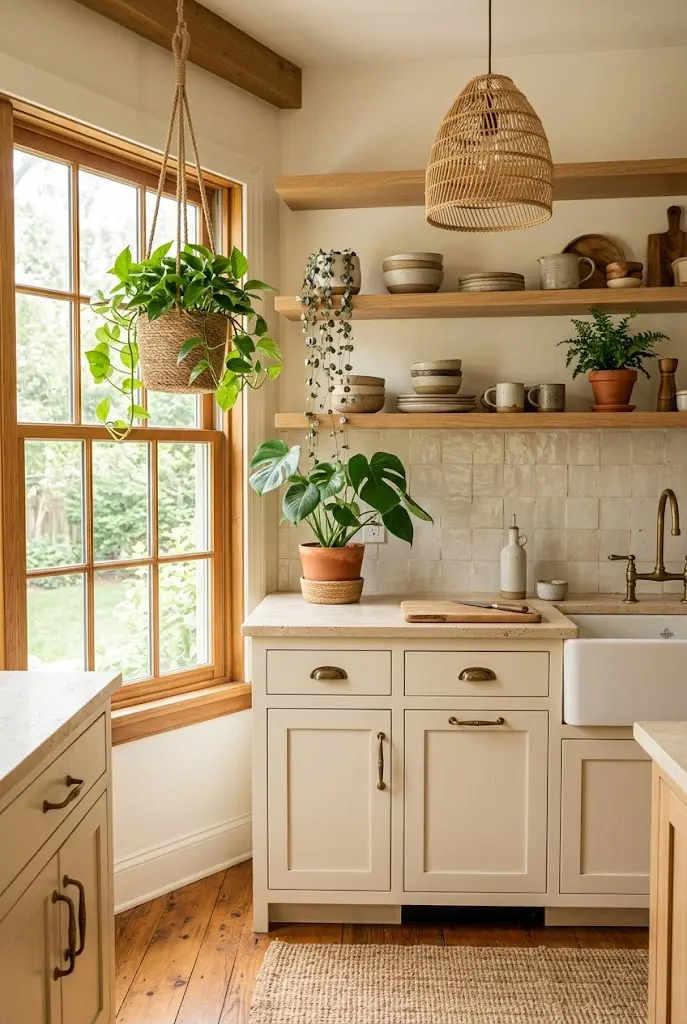
Plants are an easy way to make a kitchen feel connected to nature. Hanging plants can be positioned near windows, shelves, or an open section of cabinetry where they receive appropriate natural light. Trailing varieties can introduce gentle movement against the straight lines of kitchen cabinets. Pair greenery with warm wood, woven baskets, and ceramic pots for a cohesive boho appearance. Avoid overcrowding the kitchen with plants because a few well-placed specimens usually create a stronger effect. Choose simple natural planters in terracotta, ceramic, or woven materials. Cream and sage cabinets provide especially attractive backgrounds for green foliage. Plants can also make an otherwise modern kitchen feel more relaxed and lived-in. The greenery adds freshness without requiring bold decorative colors. This is one of the easiest ways to personalize a kitchen.
20. Cozy Boho Breakfast Nook
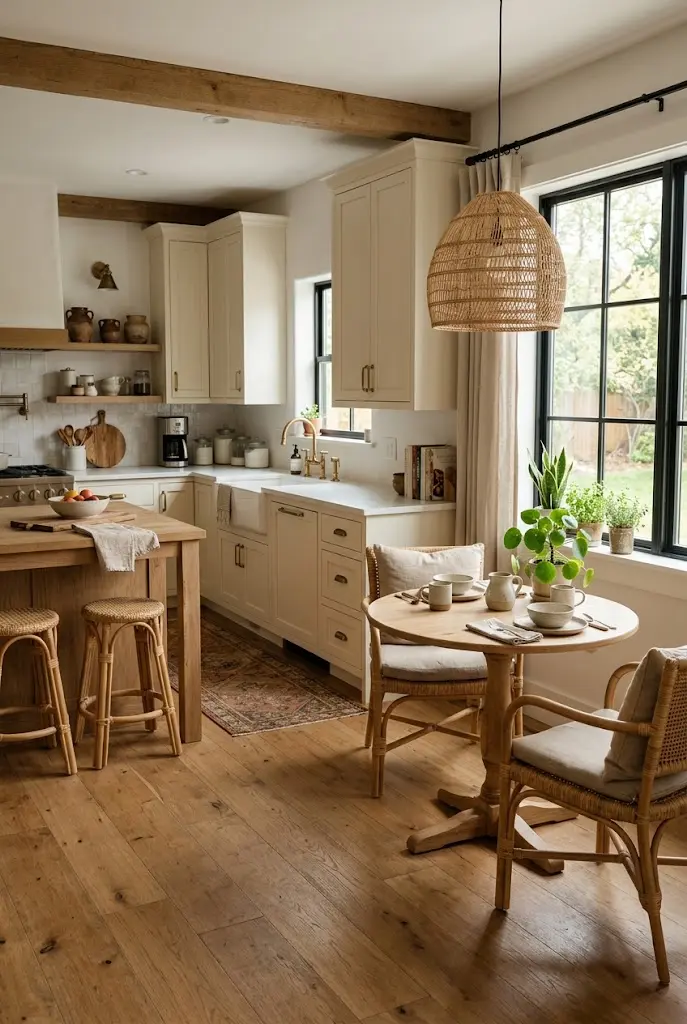
A breakfast nook can extend the boho kitchen style into a comfortable everyday gathering space. Position a small wooden table near the kitchen with a simple bench or woven chairs. Coordinate the nook with the cabinet materials by using matching or complementary wood tones. Add cushions in linen, cotton, or muted earthy patterns for softness. A small pendant light above the table can create a warm focal point. Open shelving nearby can display ceramics, cookbooks, or plants. Keep the color palette connected to the kitchen through cream, beige, wood, and subtle earthy colors. This setup is especially useful in American homes with eat-in kitchens or open floor plans. The nook can serve as a casual breakfast spot, homework area, or place for coffee. It makes the kitchen feel more like a welcoming living space rather than simply a workspace.
21. Layered Boho Kitchen with Natural Textures
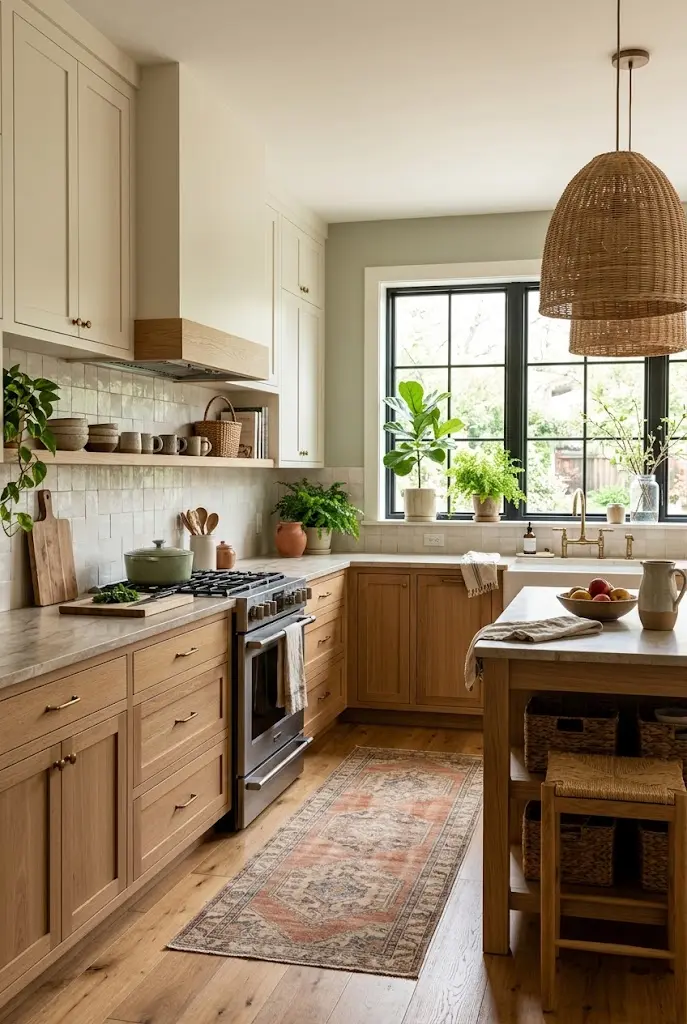
The most successful boho kitchens usually combine several natural materials instead of relying on one decorative feature. Start with warm cabinets and build layers through wood, stone, rattan, ceramic, linen, greenery, and vintage textiles. Keep the primary colors grounded in cream, beige, brown, sage, clay, and other earthy shades. Use open shelves to display meaningful objects while keeping closed cabinetry available for practical storage. Add a vintage runner for softness and woven lighting for texture. Handmade ceramics can provide subtle imperfections that make the space feel personal. Plants bring freshness and help connect the kitchen with the outdoors. Hardware should feel warm and understated rather than overly shiny or modern. The goal is not to make every element perfectly coordinated but to create a natural sense of harmony. With thoughtful layering, even a standard American kitchen can become a warm, inviting boho retreat.
Conclusion
Creating a warm boho kitchen does not require completely replacing every cabinet or starting a major renovation. Small changes such as natural wood shelves, vintage hardware, woven lighting, earthy accessories, and handmade ceramics can dramatically change the atmosphere. Cabinet color is another powerful tool, with cream, sage, natural oak, walnut, and other warm finishes working particularly well. Layering different natural materials keeps the room interesting without making it feel overly decorated. Plants, vintage rugs, and handcrafted accessories can make even a modern kitchen feel more personal. For American homes, the most successful approach is to combine bohemian character with practical storage, durable surfaces, and realistic everyday functionality. Focus on warmth, texture, and personality rather than trying to make every element match perfectly. A relaxed combination of collected pieces will give the kitchen an authentic boho feeling. Whether you are refreshing an existing kitchen or planning a complete remodel, these ideas offer plenty of ways to create a welcoming space. The finished kitchen should ultimately feel comfortable, useful, natural, and unmistakably your own.