28 Living Room Ideas to Create a Beautiful Home You’ll Love
A living room should feel comfortable, inviting, and reflective of your personal style. Whether you prefer a modern, farmhouse, traditional, or cozy layered look, small changes can make a big difference. From furniture placement and warm lighting to natural textures and statement walls, there are countless ways to refresh your space. These living room ideas are inspired by popular home styles and practical decorating approaches used in homes across the USA. You can mix several ideas together to create a room that feels polished without looking overly decorated. Focus on colors, textures, furniture, and accessories that make your everyday space more enjoyable. Even simple updates such as new pillows, curtains, or artwork can transform the atmosphere. Use these ideas as inspiration and adapt them to the size, layout, and personality of your own home.
1. Create a Warm Neutral Living Room
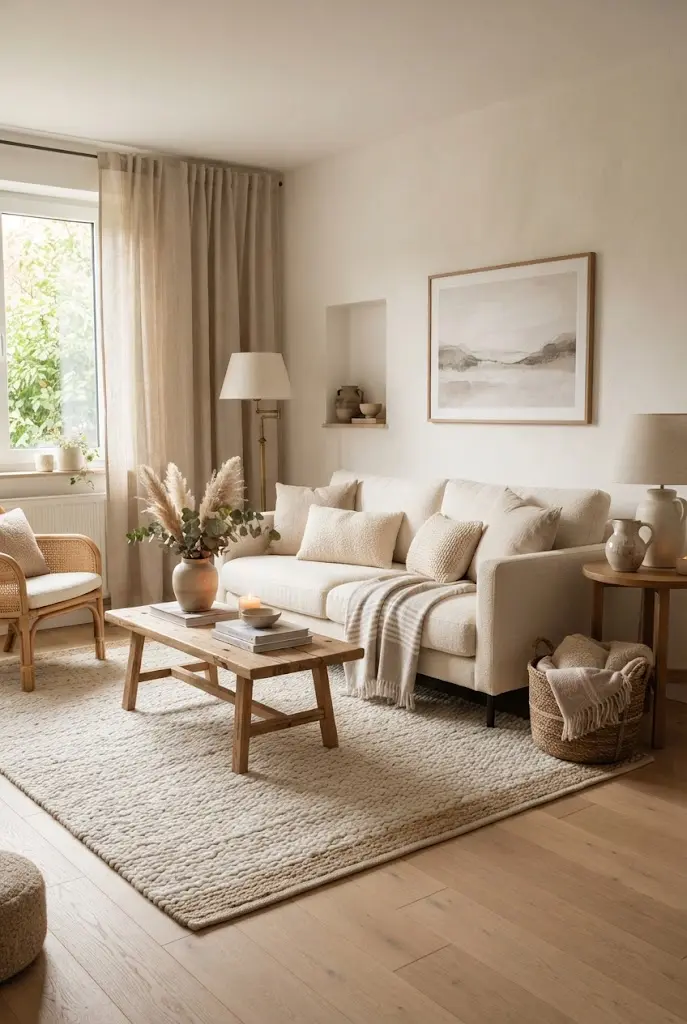
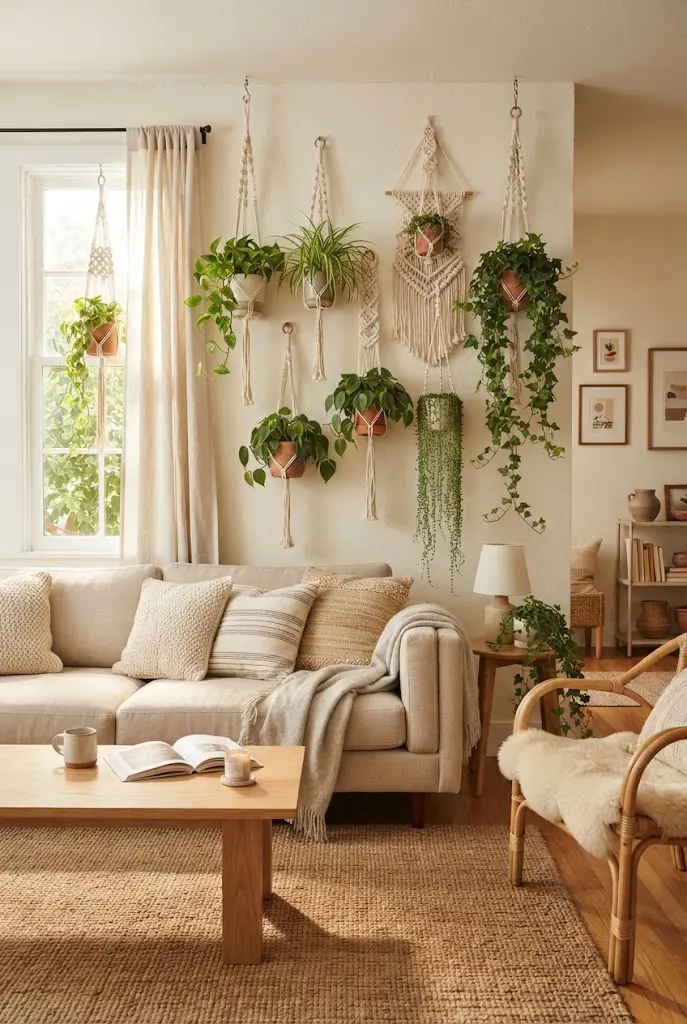
A warm neutral living room creates an inviting atmosphere that feels timeless and easy to live with. Use shades such as cream, beige, taupe, warm white, and soft brown throughout the space. Choose a comfortable sofa in a light neutral fabric as the main foundation. Layer the seating area with textured pillows and a soft throw blanket. A natural wood coffee table can add warmth without overwhelming the room. Use woven baskets, ceramic accessories, and linen curtains for additional texture. A large area rug can visually connect the furniture and make the room feel complete. Keep the walls simple with understated artwork or framed prints. Warm lamps and soft accent lighting can make the neutral palette feel especially cozy. This approach works beautifully for both contemporary and traditional American homes.
2. Add a Statement Fireplace
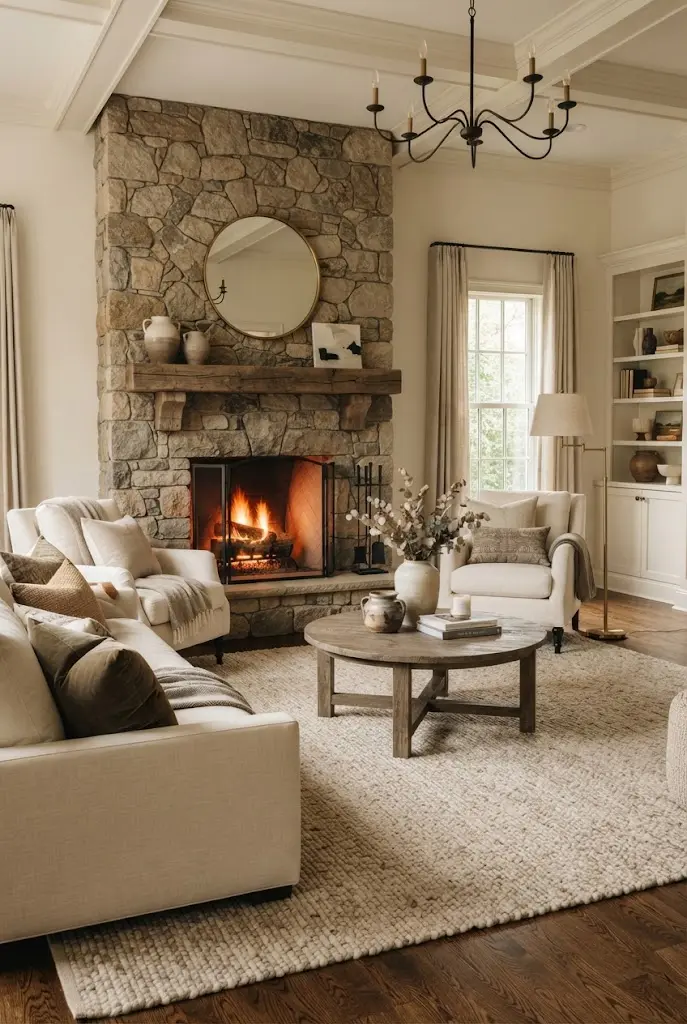
A fireplace can instantly become the visual focal point of a living room. If your home already has one, emphasize it with carefully selected surrounding decor. A simple mantel can be styled with artwork, candles, ceramics, or greenery. For a modern appearance, consider a clean-lined fireplace surround in stone or plaster. Traditional homes can benefit from brick, natural stone, or classic wood detailing. Keep the furniture arranged toward the fireplace to create a comfortable conversation area. A large rug can define the seating zone and make the room feel more cohesive. Use warm lighting around the mantel to highlight its architectural character. Avoid overcrowding the fireplace with too many accessories. A thoughtfully styled fireplace can make the entire room feel more welcoming.
3. Use a Large Area Rug
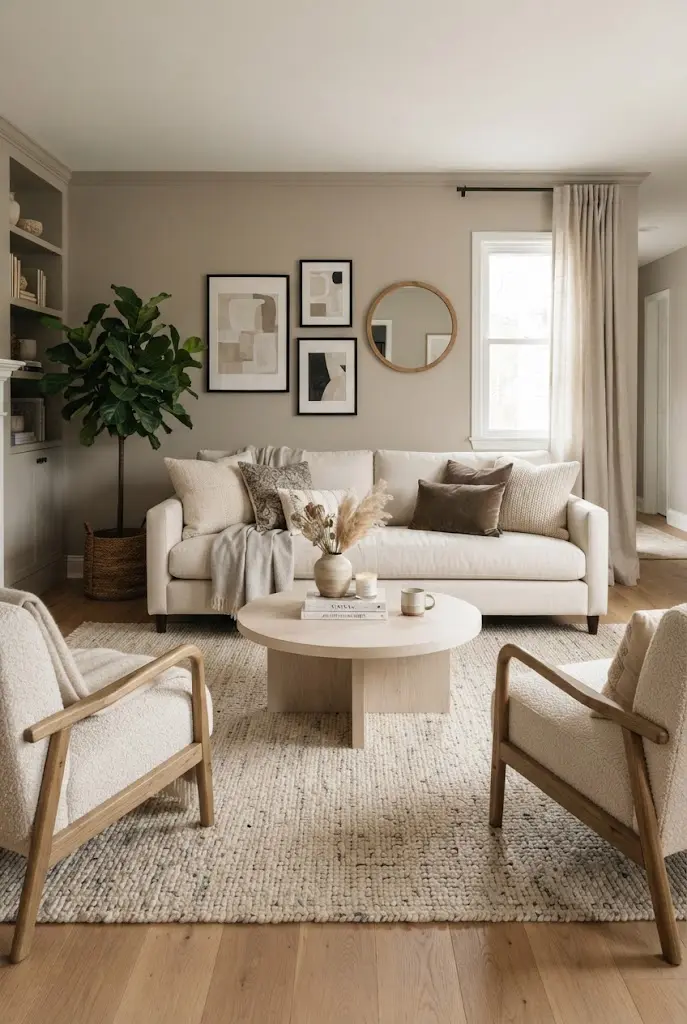
A large area rug can completely change how a living room feels and functions. Choose a rug large enough for at least the front legs of the main seating pieces to sit on it. This helps visually connect the sofa, chairs, and coffee table. Neutral rugs work well when you want furniture and artwork to become the focal points. Patterned rugs can introduce personality into an otherwise simple room. For a cozy look, choose wool, cotton, or another naturally textured material. Make sure the rug complements the existing flooring rather than competing with it. Layering a smaller patterned rug over a larger natural rug can create additional depth. A rug can also soften hard flooring and make the room more comfortable. Choose a style that supports the overall color palette of the living room.
4. Bring in Natural Wood
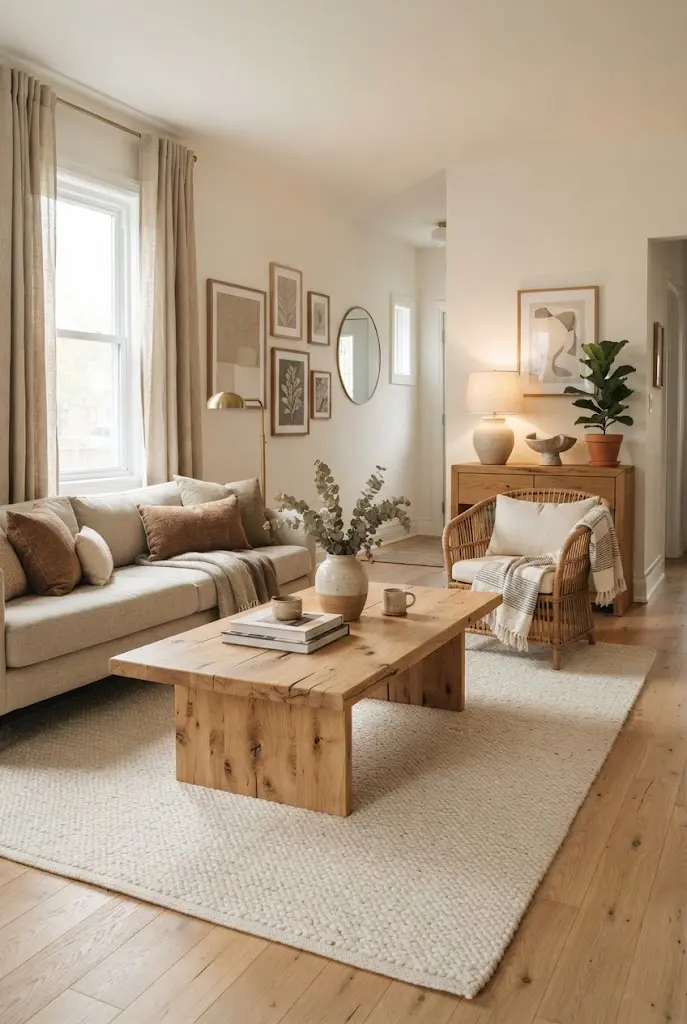
Natural wood adds warmth and character to almost any living room style. Use wooden furniture pieces such as coffee tables, side tables, consoles, or shelving. Choose finishes that complement the existing flooring and architecture. Light oak works especially well in bright modern interiors. Medium and darker wood tones can create a richer traditional or transitional appearance. Avoid matching every wooden piece perfectly because variation creates a more natural look. Pair wood with linen, cotton, wool, and woven materials for a balanced atmosphere. A wooden accent chair can also introduce warmth without making the room feel heavy. Keep accessories simple so the beauty of the material remains visible. Natural wood works particularly well when combined with neutral walls and earthy colors.
5. Style a Cozy Reading Corner

A small reading corner can make an unused part of your living room feel purposeful. Choose a comfortable lounge chair that fits the room without blocking the main walkway. Place a small side table nearby for books, drinks, or a table lamp. A floor lamp can provide focused lighting for evening reading. Add a soft throw and textured cushion to make the chair more inviting. A nearby bookcase can give the corner additional personality and storage. Plants can soften the space and introduce a natural element. Position the chair near a window whenever possible to take advantage of daylight. Keep the surrounding decor simple so the corner feels calm rather than cluttered. This setup creates a relaxing spot for reading, coffee, or quiet time.
6. Create a Modern Gallery Wall

A gallery wall can personalize your living room while making a large blank wall more interesting. Choose artwork that shares a common color palette for a cohesive appearance. Mix photography, abstract art, line drawings, and decorative prints for variety. Different frame sizes can create a relaxed collected look. For a more organized style, use frames with similar finishes and consistent spacing. Lay the artwork out on the floor before hanging anything on the wall. Keep the overall arrangement connected to the furniture below it. A gallery wall above a sofa can serve as the main visual feature of the room. Choose pieces that reflect your personality instead of simply filling empty space. The result should feel curated, personal, and naturally integrated into the room.
7. Layer Different Textures
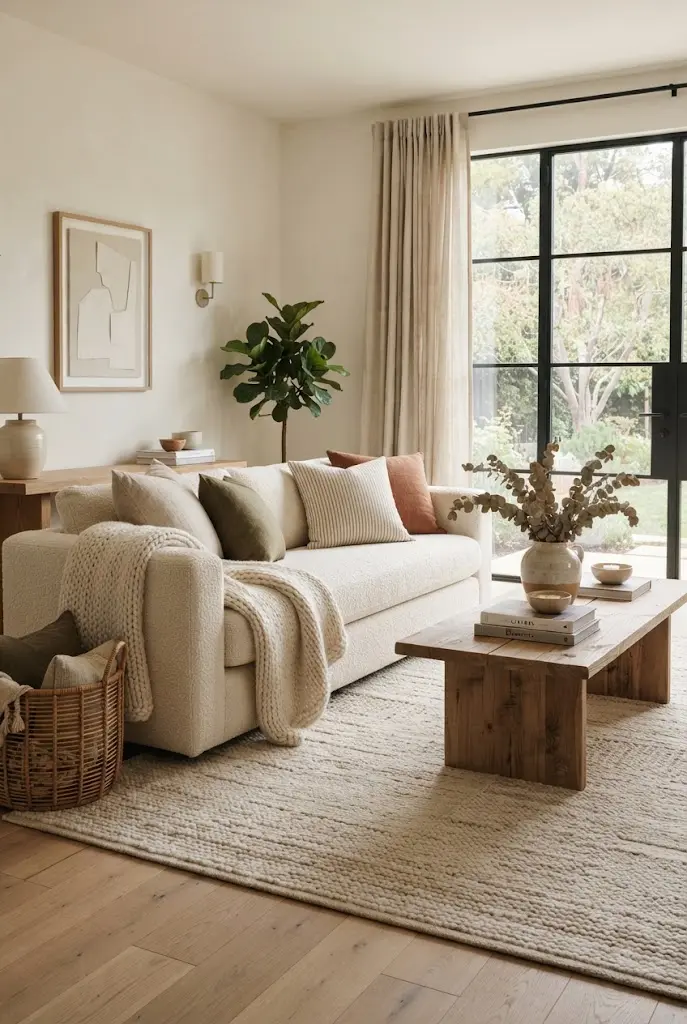
Layering textures can make a living room feel comfortable and visually interesting without adding excessive color. Start with a soft sofa and add pillows in linen, cotton, boucle, or woven fabrics. A chunky throw can introduce another tactile element. Combine a smooth wooden table with a textured rug underneath. Woven baskets can provide both storage and natural texture. Ceramic objects can add contrast against soft fabrics. Curtains made from linen or cotton can soften windows and walls. Try to repeat a few textures throughout the room so the design feels intentional. Texture is especially useful in neutral spaces where color differences are subtle. A thoughtful combination of materials can make a simple living room feel layered and sophisticated.
8. Add an Oversized Houseplant
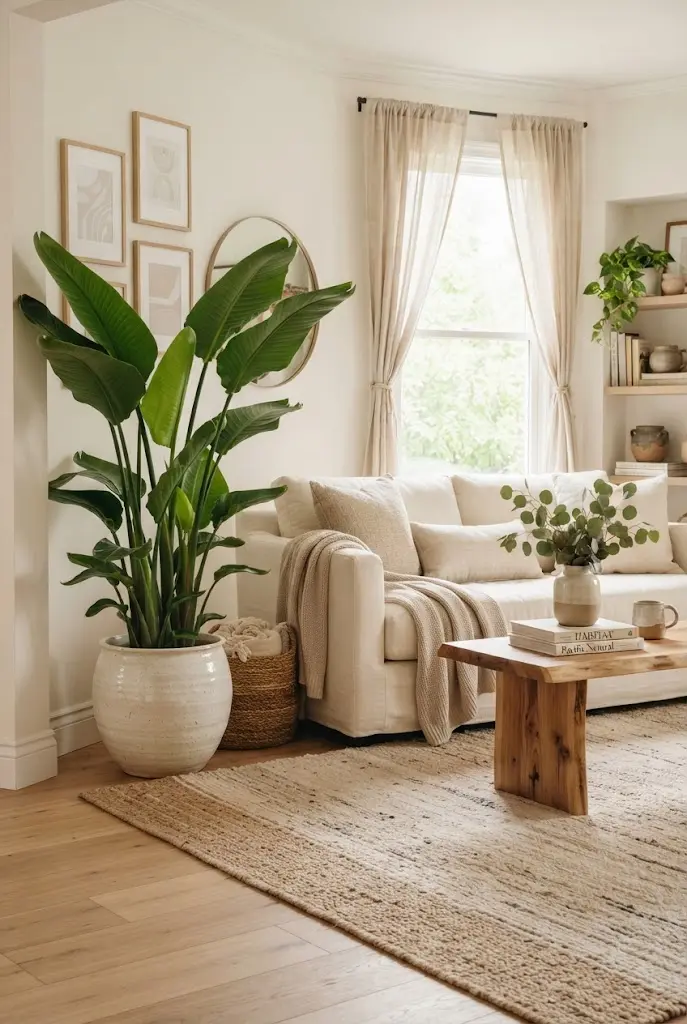
A large houseplant can bring life and natural color into a living room. Choose a plant that suits the amount of natural light available in the space. Tall plants work especially well beside sofas, consoles, and empty corners. Place the plant in a simple ceramic, woven, or natural-toned planter. Large leafy plants can soften modern furniture and clean architectural lines. Smaller plants can be grouped on shelves or side tables. Avoid filling every surface with greenery because negative space keeps the room balanced. Natural plants can also complement wooden furniture and earthy textiles. Position larger plants where they will not interfere with walking paths. A well-placed plant can become an easy and affordable decorative focal point.
9. Choose a Comfortable Sectional
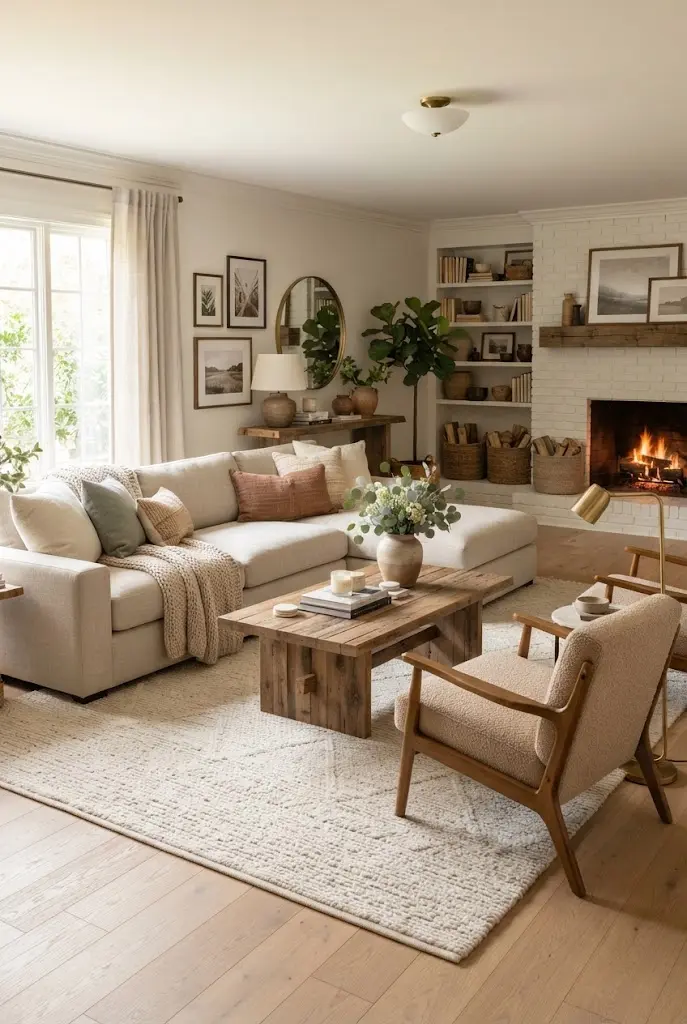
A sectional sofa can make a living room especially comfortable for families and entertaining. Choose a size that fits the room while leaving enough space for movement around it. Neutral sectionals are easy to decorate and can work with many different styles. A chaise section can provide extra lounging space for movie nights or reading. Layer the sofa with pillows in complementary colors and textures. A large rug can help visually anchor the sectional. Place a coffee table within comfortable reach of the main seating areas. If the room is large, add one or two accent chairs to create a conversation zone. Avoid pushing every piece of furniture directly against the walls. A well-planned sectional arrangement can make a spacious living room feel more intimate.
10. Mix Vintage and Modern Pieces
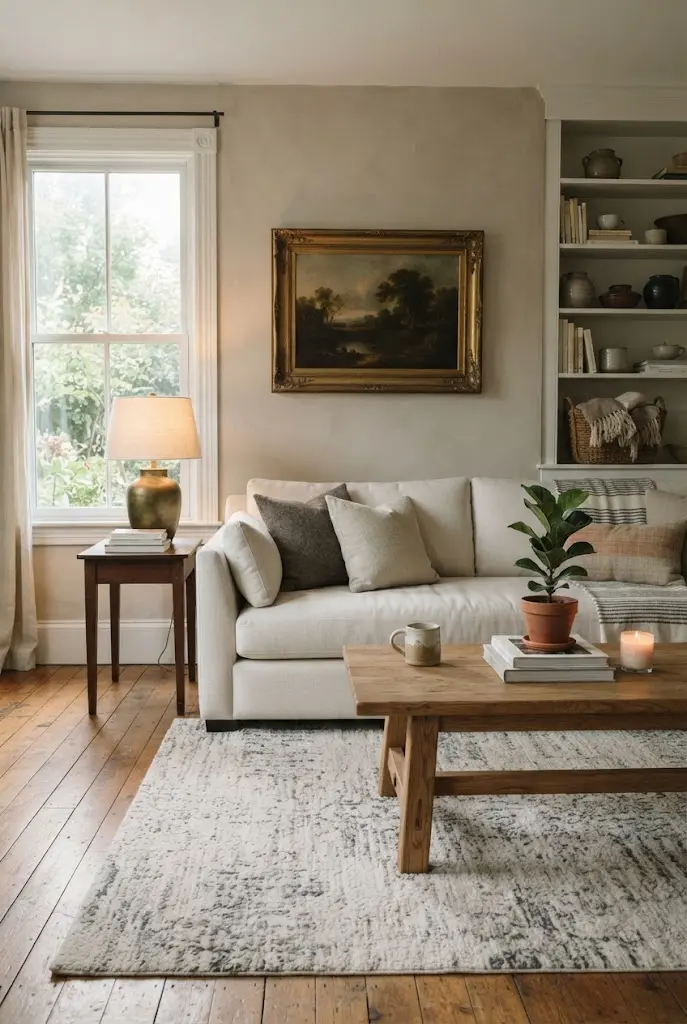
Combining vintage and modern furniture can give a living room a collected and personal feeling. Start with contemporary basics such as a clean-lined sofa or modern rug. Then introduce vintage elements through a side table, cabinet, mirror, or artwork. Older pieces can add character that new furniture sometimes lacks. Look for materials such as aged wood, brass, leather, or antique-inspired ceramics. Avoid making every piece from the same period. A mixture of eras usually feels more natural when the colors connect the different pieces. Modern lighting can also provide a fresh contrast against traditional furniture. Use vintage accessories selectively so the room remains visually balanced. The finished space can feel comfortable, unique, and thoughtfully collected over time.
11. Use Soft Layered Lighting

Good lighting can dramatically change the atmosphere of a living room throughout the day. Instead of relying only on an overhead fixture, combine several light sources. Use table lamps on side tables or consoles for a warm evening glow. A floor lamp can illuminate a reading corner or dark area. Wall sconces can provide architectural interest while adding useful light. Choose warm-toned bulbs to create a comfortable residential atmosphere. Natural daylight should remain an important part of the lighting plan. Use curtains that allow you to control brightness and privacy. Place lighting at different heights to create depth throughout the room. Layered lighting makes the living room feel welcoming during both daytime and evening.
12. Create a Cozy Farmhouse Living Room

A farmhouse-inspired living room can feel relaxed, warm, and welcoming. Use natural wood, comfortable upholstery, woven materials, and simple decorative accents. A neutral color palette works well with farmhouse interiors. Add black or aged-metal accents for subtle contrast. Shiplap-inspired wall detailing can introduce architectural character when appropriate. Use baskets for blankets, books, or everyday storage. A vintage-style rug can make the room feel more established. Choose practical furniture that encourages comfortable family living. Keep decorative accessories intentional rather than overly rustic. The goal is a welcoming farmhouse atmosphere with a fresh and livable appearance.
13. Add Built-In Shelving
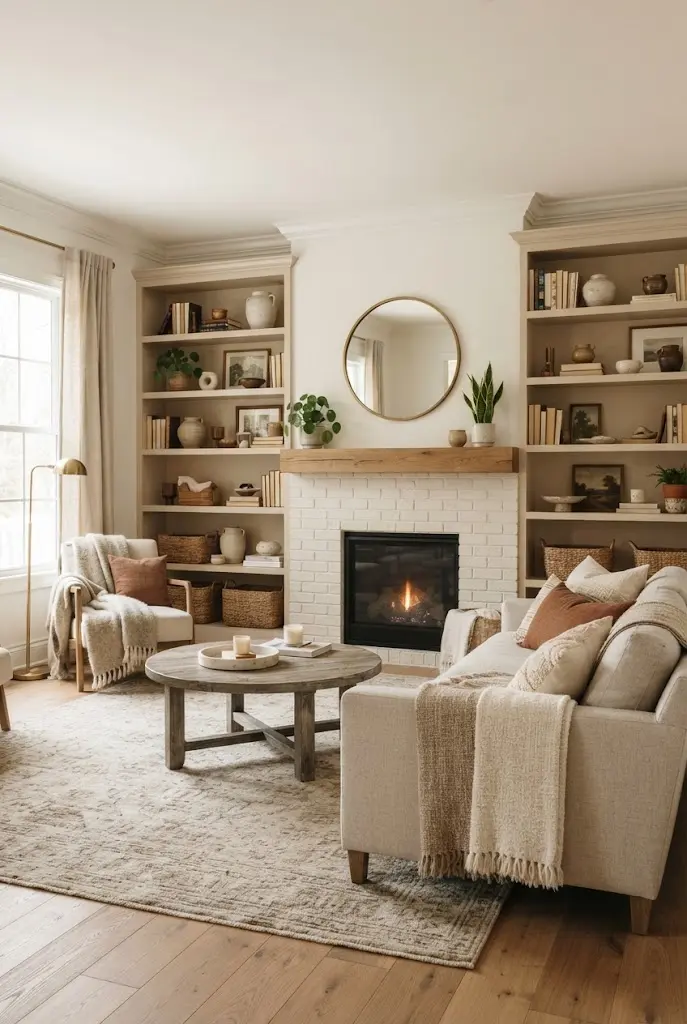
Built-in shelving can provide storage while creating a strong architectural feature. Use shelves to display books, artwork, plants, ceramics, and meaningful objects. Keep some sections intentionally empty so the arrangement does not feel crowded. Group accessories in different heights to create visual movement. Books can add color and personality without requiring additional artwork. Use baskets or closed storage for items you do not want on display. If the shelves surround a fireplace, allow the fireplace to remain the central focal point. Wood shelves can introduce warmth into a white or neutral room. Painting the shelving in a contrasting tone can make the architectural feature stand out. Thoughtfully styled built-ins can make a living room feel both practical and custom-designed.
14. Decorate With Earthy Colors

Earthy colors can make a living room feel grounded and connected to nature. Try shades such as terracotta, olive green, warm beige, camel, rust, and muted brown. You do not need to repaint the entire room to introduce these colors. Accent pillows, artwork, rugs, and ceramics can provide subtle color changes. Natural wood furniture works beautifully with earthy tones. Keep the largest furniture pieces relatively neutral if you want flexibility. Then use earthy accessories to create warmth and personality. Green plants can reinforce the natural color palette. Warm metals such as aged brass can complement the overall scheme. This approach creates a cozy living room without relying on overly bright colors.
15. Make the Coffee Table a Focal Point

A coffee table can serve as more than a practical surface in a living room. Choose a table with a shape and material that complement the rest of the furniture. Wood creates warmth, while glass can make smaller rooms feel visually lighter. Stone tables can introduce a sophisticated natural element. Style the surface with a small stack of books, a tray, a candle, and a ceramic object. Avoid covering the entire surface because functional space is still important. Use different heights to create a balanced arrangement. A small vase with greenery can add a natural finishing touch. Keep the coffee table proportional to the sofa and surrounding seating. A carefully styled table can quietly become one of the room’s most attractive details.
16. Use Floor-to-Ceiling Curtains
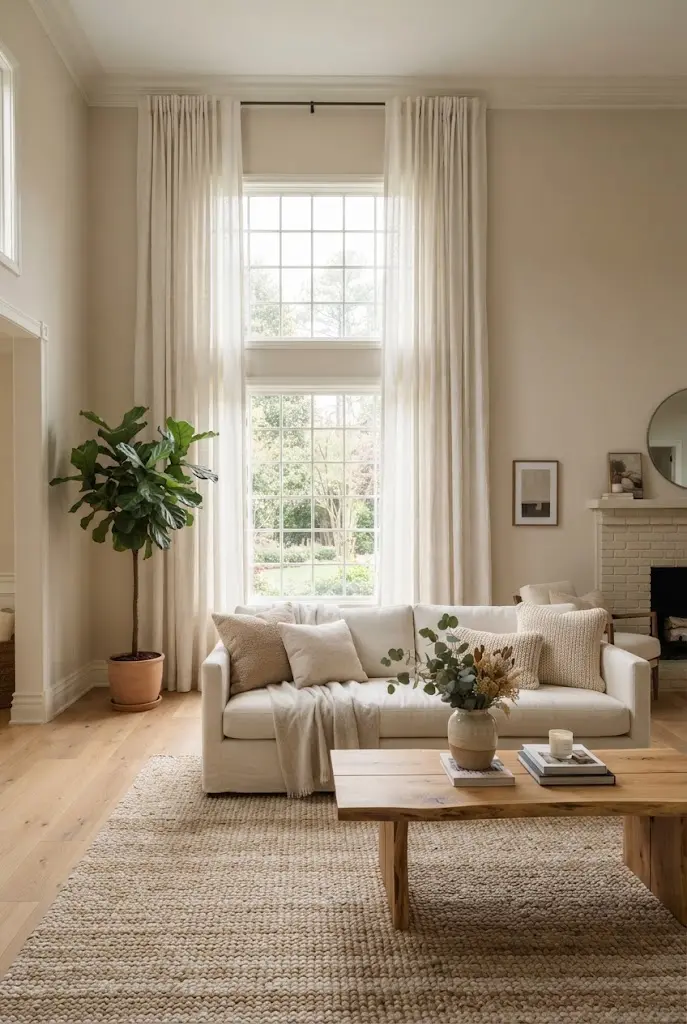
Floor-to-ceiling curtains can make windows appear taller and give the living room a more polished appearance. Hang the curtain rod higher than the top of the window whenever the architecture allows. Let the fabric extend close to the floor for an elegant vertical effect. Linen curtains are ideal for a relaxed and naturally textured look. Heavier curtains can provide additional warmth and privacy. Neutral colors work well with a wide range of furniture styles. Choose curtains that complement the wall and upholstery rather than competing with them. Allow natural light to filter through during the day. Use layered window treatments when you need both privacy and flexibility. Well-positioned curtains can visually enhance the proportions of the entire room.
17. Create a Moody Living Room

A moody living room can feel intimate and sophisticated when darker colors are balanced carefully. Consider deep olive, charcoal, navy, chocolate brown, or muted burgundy accents. You can use a darker wall color or introduce deeper tones through furniture and accessories. Warm wood helps prevent dark colors from feeling cold. Soft lighting becomes especially important in a moody space. Use lamps and accent lights instead of relying entirely on overhead lighting. Textured fabrics can add depth against darker walls. Keep some lighter elements to maintain visual balance. Artwork and metallic accents can create subtle contrast. A carefully layered dark palette can make a living room feel cozy and dramatic.
18. Add a Large Mirror
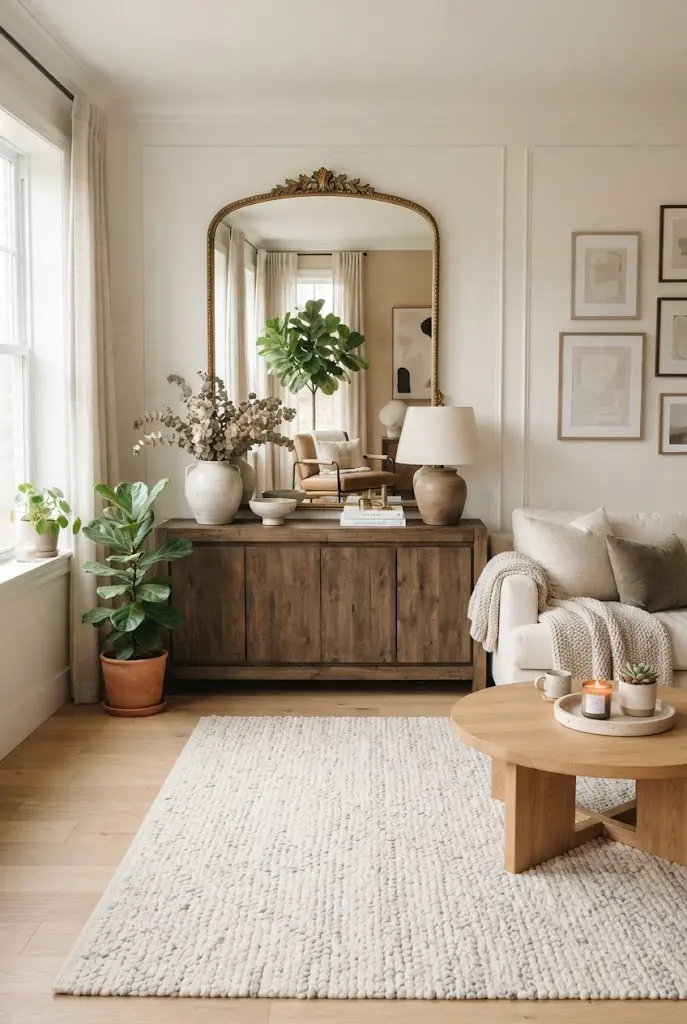
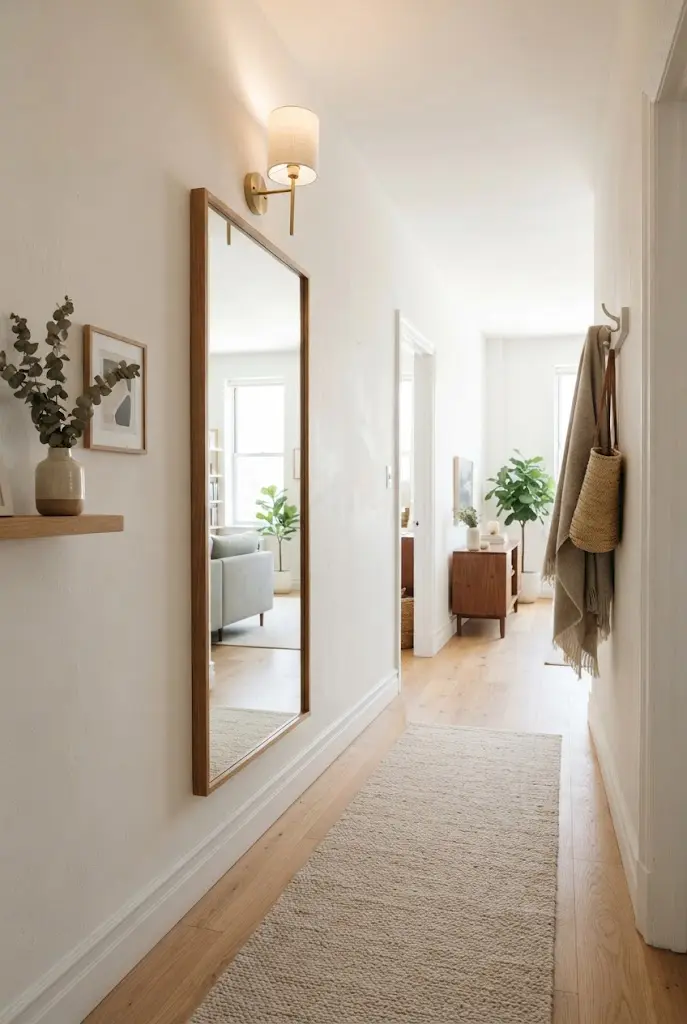
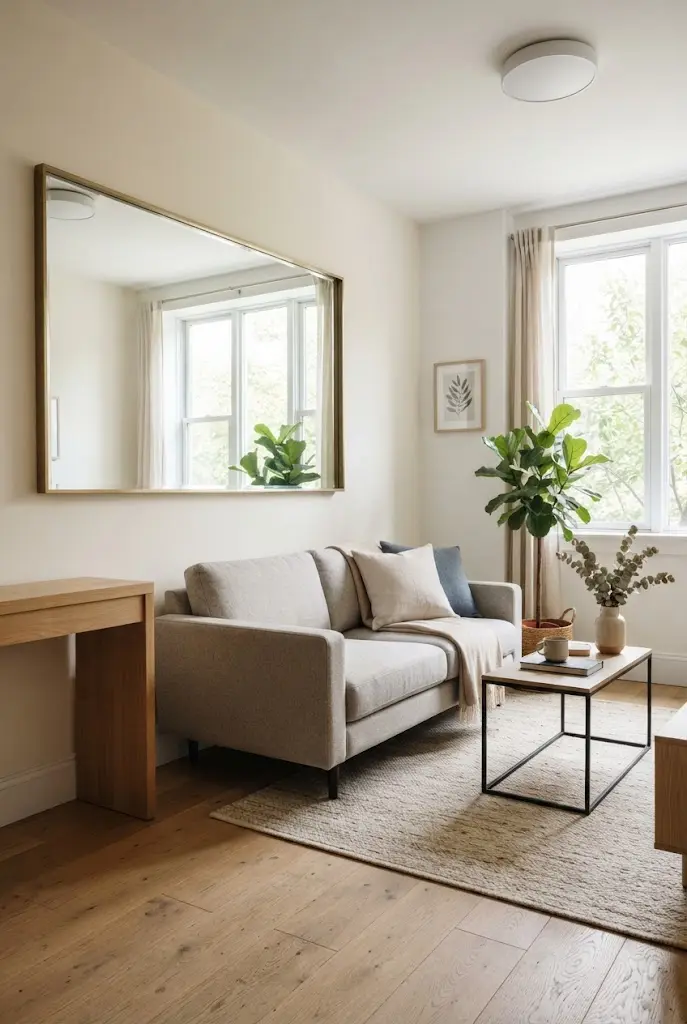
A large mirror can reflect light and make a living room feel more open. Choose a frame that complements the style of your furniture and architecture. A wood frame can reinforce a natural or farmhouse-inspired design. A brass frame can create a more traditional or elegant appearance. Position the mirror where it can reflect natural light or an attractive part of the room. Avoid placing it where it reflects clutter or an unattractive view. A large mirror above a console can become an attractive focal point. Lean a substantial mirror against the wall for a relaxed contemporary look. Keep surrounding accessories simple so the mirror remains visually strong. This is an easy way to add depth and brightness without changing the entire room.
19. Introduce a Leather Accent Chair

A leather accent chair can bring warmth and character to a neutral living room. Choose cognac, tan, or deep brown leather for a classic appearance. Pair the chair with softer textiles to balance its visual weight. A woven throw or fabric cushion can make the chair more inviting. Place it near a sofa to create a comfortable conversation area. Leather works particularly well with wood, wool, linen, and natural fibers. Vintage-inspired leather chairs can add character to modern spaces. Keep the surrounding furniture relatively simple if the chair is visually distinctive. A small side table and reading lamp can turn it into a useful corner. The result is a living room that feels warm, comfortable, and layered.
20. Use Symmetrical Furniture Placement
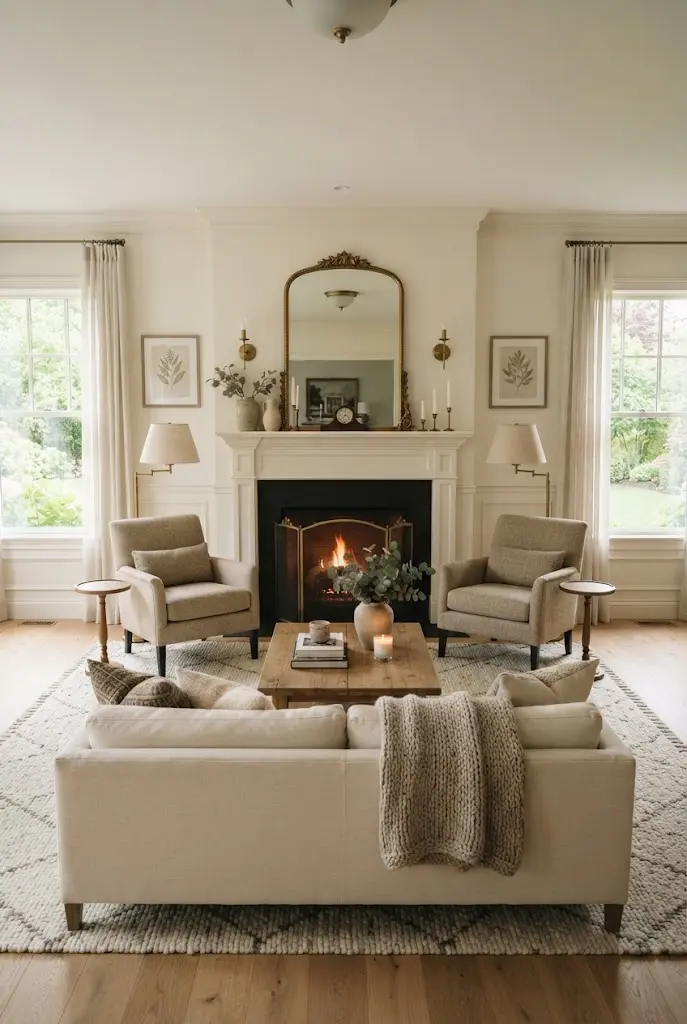
Symmetry can make a living room feel organized and visually calm. Start by choosing a strong central focal point such as a fireplace, artwork, or coffee table. Place matching or visually similar chairs on either side when the space allows. Use matching lamps or side tables to reinforce the balanced arrangement. The furniture does not need to be identical to create visual symmetry. Similar shapes, colors, or heights can achieve the same effect. Symmetrical arrangements work especially well in traditional and transitional interiors. Keep enough open space between furniture pieces for comfortable movement. Use pillows and accessories to reinforce the visual balance. This arrangement creates a polished room without requiring complicated decoration.
21. Create a Minimalist Living Room

A minimalist living room focuses on simplicity, comfort, and intentional decoration. Choose a limited color palette with neutral walls and clean-lined furniture. Avoid filling every surface with accessories. Instead, select a few pieces that are useful or visually meaningful. Natural materials such as wood, linen, stone, and wool can prevent the space from feeling sterile. Use hidden storage to keep everyday clutter out of sight. A large piece of artwork can provide a focal point without adding many small decorations. Keep pathways open and furniture appropriately scaled. Soft textures can make the minimalist room feel comfortable rather than empty. The result is a calm and functional living room with a clean visual appearance.
22. Add a Cozy Layered Throw Collection
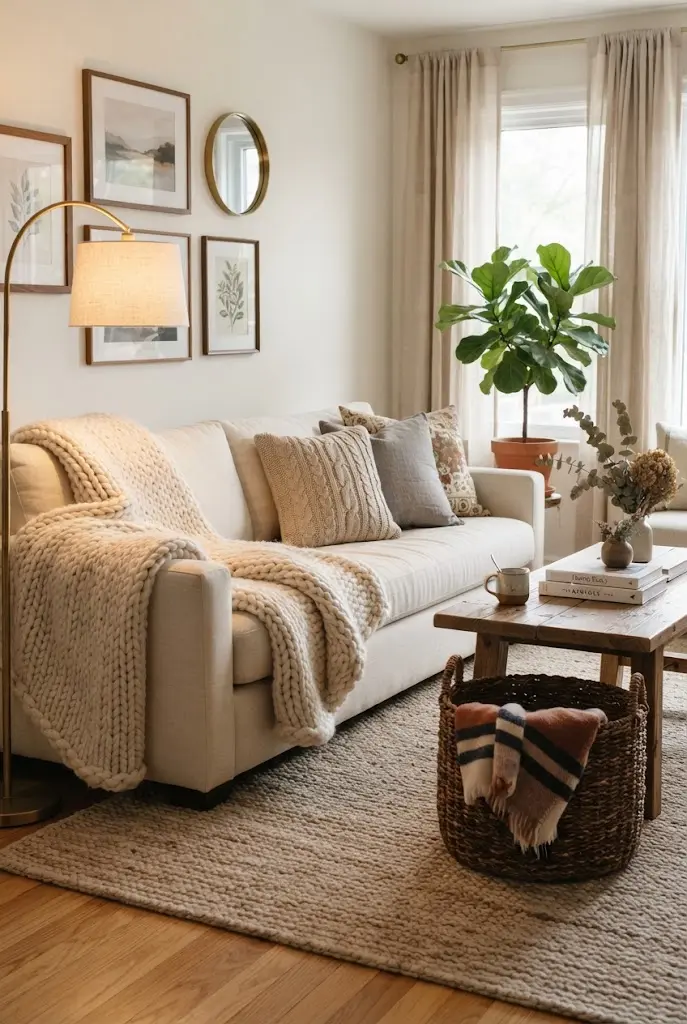
Throws are an easy way to make a living room feel more comfortable and inviting. Choose blankets in materials such as wool, cotton, linen, or chunky knit. Keep the colors connected to the existing furniture and rug. Drape one casually over the arm of a sofa or chair. Fold another neatly inside a woven basket for easy access. Mixing subtle patterns can add personality without overwhelming the room. Textured throws are especially useful in neutral spaces. Choose fabrics that feel comfortable for everyday use. Avoid displaying too many blankets at once because visual simplicity keeps the room polished. A few thoughtfully placed throws can make the entire living room feel warmer.
23. Decorate With Black Accents
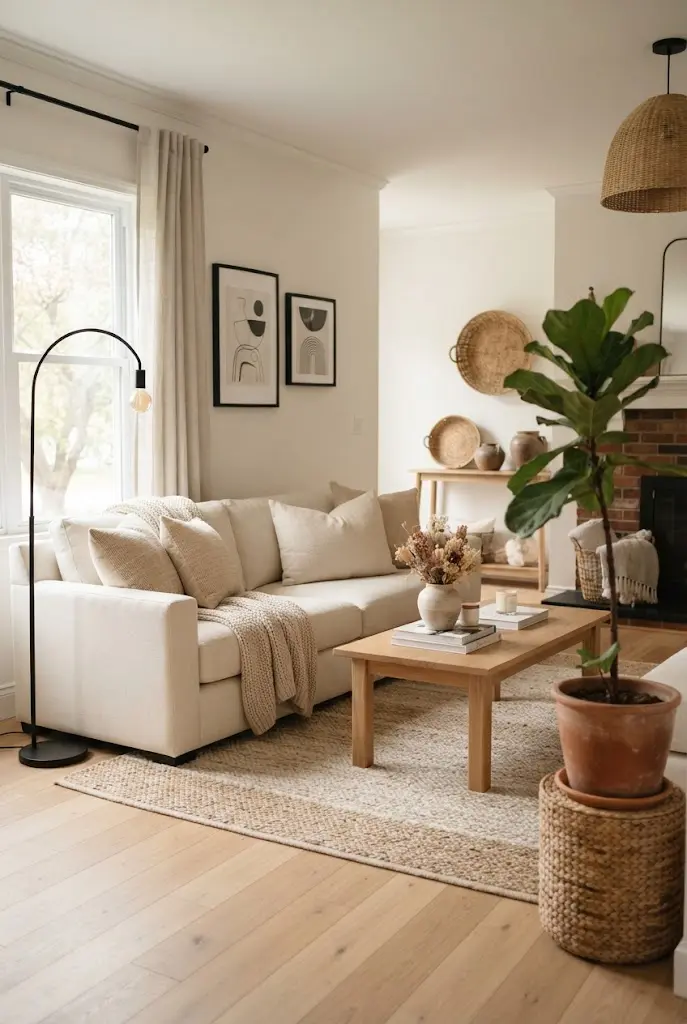
Small black accents can give a neutral living room stronger definition. Consider black picture frames, lamps, curtain rods, side tables, or decorative objects. Use black sparingly so it creates contrast without dominating the room. Black metal pairs beautifully with natural wood and warm neutral fabrics. A black-framed mirror can become an attractive focal point. Dark legs on chairs or tables can visually anchor lighter furniture. Repeat black in a few locations so the accent feels intentional. Combine it with warm colors rather than an overly cool palette. Plants can soften the contrast and introduce organic shapes. This simple technique can make a neutral living room feel more structured and contemporary.
24. Build a Family-Friendly Living Room
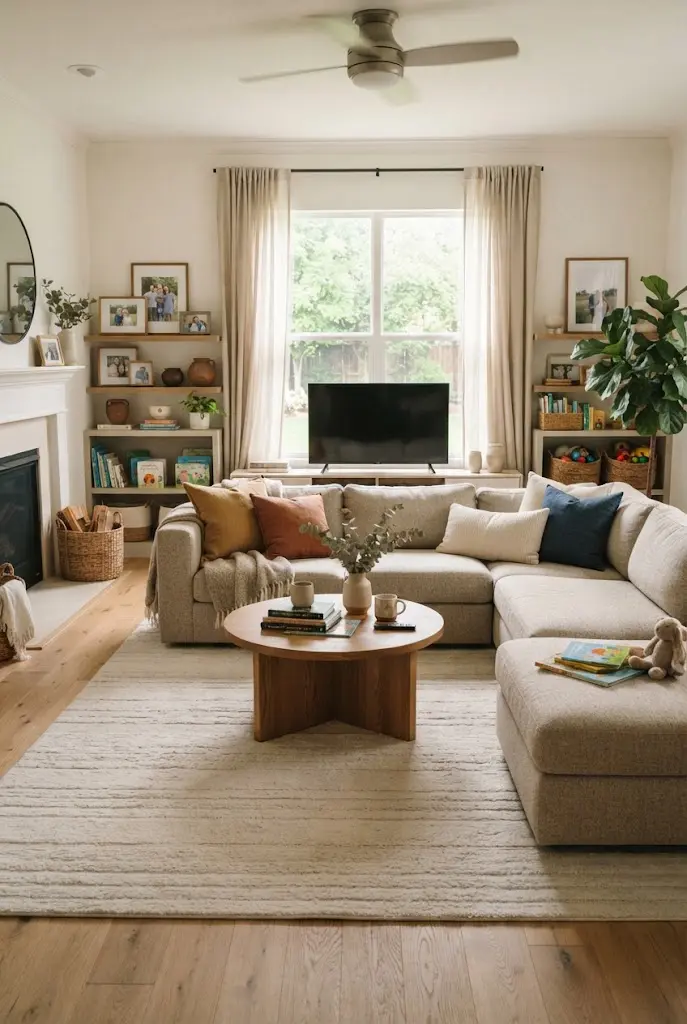
A family-friendly living room should balance comfort, practicality, and style. Choose durable upholstery that can handle everyday use. Performance fabrics can be useful for busy households. Use washable or easy-care rugs when appropriate. Provide baskets or cabinets where toys, blankets, and everyday items can be stored quickly. Choose a coffee table with a practical shape and safe proportions for the household. Keep fragile accessories limited to areas where they are less likely to be disturbed. Comfortable seating encourages everyone to spend time together. A few colorful pillows or artwork pieces can make the room feel cheerful. The best family living rooms feel organized without looking overly formal.
25. Create an Indoor-Outdoor Connection
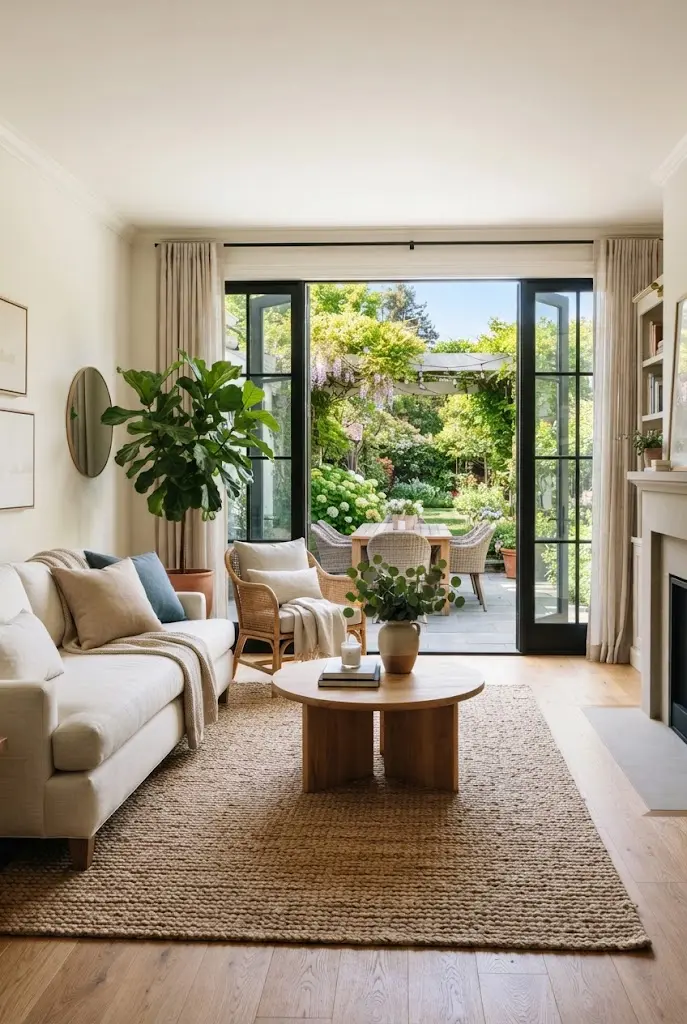
A living room connected to a patio or backyard can feel brighter and more spacious. Use large windows or glass doors to visually connect indoor and outdoor areas. Keep the interior palette inspired by natural outdoor colors. Wood, linen, woven materials, and greenery can strengthen the connection. Position seating so the outdoor view remains visible from the main seating area. Use curtains that can frame the windows without completely blocking the view. Indoor plants can visually connect the living room to the garden. Keep furniture placement practical around doors and walking paths. Natural daylight should remain a major feature of the design. This approach creates a relaxed atmosphere that feels connected to the surrounding home environment.
26. Use a Statement Chandelier
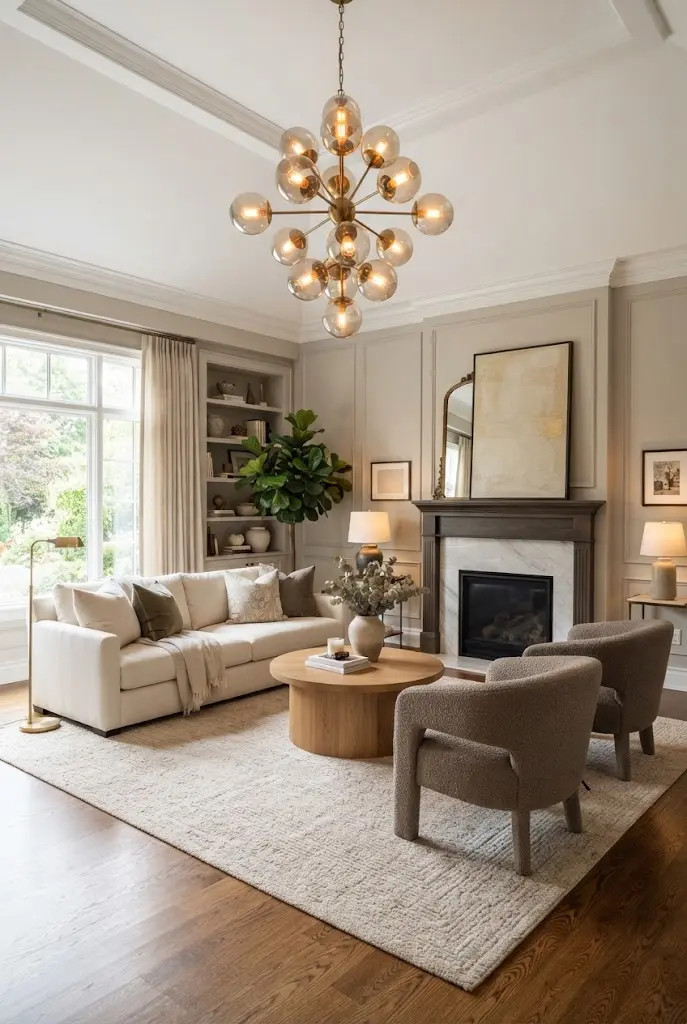
A statement chandelier can add personality and architectural interest to a living room. Choose a fixture that fits the scale of the ceiling and furniture below it. Oversized fixtures can work beautifully in rooms with high ceilings. Simple sculptural designs complement modern interiors. Traditional chandeliers can enhance classic or transitional spaces. Use the fixture as a focal point without allowing it to compete with every other element. Keep surrounding accessories relatively simple if the light fixture is dramatic. Warm bulbs can create a comfortable evening atmosphere. Make sure the chandelier is positioned appropriately over the main seating zone. A carefully chosen fixture can make the room feel finished and sophisticated.
27. Create a Cozy TV Lounge

A comfortable TV lounge can still look stylish when the technology is integrated thoughtfully. Place the television where it can be viewed comfortably from the main seating area. A large sectional can provide plenty of space for family movie nights. Use a media console with closed storage to hide cables and equipment. Add soft pillows and throws to make the seating inviting. A textured rug can improve comfort and visually define the entertainment area. Keep surrounding decor simple so the television does not compete with too many focal points. Warm accent lighting can make evening viewing more comfortable. Natural wood furniture can soften the appearance of modern electronics. The result can be both practical for everyday entertainment and attractive enough for guests.
28. Finish With Personal Decor

Personal decor is what ultimately makes a living room feel like home. Display artwork, photographs, books, travel finds, or objects that have meaning to you. Mix these pieces with everyday decorative elements so the room feels naturally collected. Choose a few meaningful items rather than covering every surface. Books can provide both personality and useful color. Framed photographs can add warmth to shelves and side tables. Handmade ceramics can introduce texture and individuality. A favorite vintage object can become a conversation piece. Keep the overall arrangement balanced with enough open space around special items. A living room becomes much more inviting when its decor reflects the people who actually live there.