27 Cottage Garden Dining Area Features for a Charming Outdoor Space
A cottage garden dining area can turn an ordinary backyard into a welcoming place for meals, conversations, and relaxed afternoons. In the USA, this style works beautifully in both small suburban yards and larger garden spaces. The look usually combines natural materials, flowering plants, comfortable furniture, and an informal sense of charm. Soft colors, weathered finishes, and abundant greenery help create a cozy outdoor atmosphere. A thoughtfully designed dining area can also connect the home with the surrounding landscape. From rustic tables to twinkling lights, small details can make the space feel special. These cottage-inspired features can be adapted to different climates, budgets, and yard sizes. The goal is to create an outdoor dining space that feels comfortable, lived-in, and connected to nature.
1. Rustic Wooden Dining Table
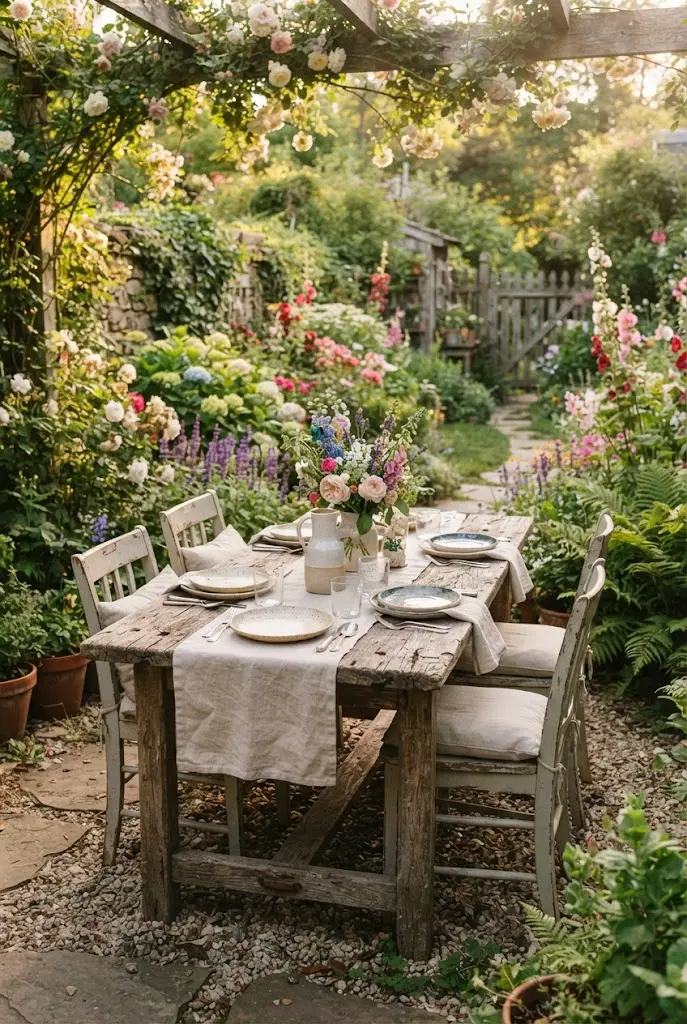
A rustic wooden dining table can become the main focal point of a cottage garden dining area. Choose a solid wood design with a naturally weathered or lightly distressed finish. Oak, cedar, pine, and reclaimed wood can all create a warm outdoor appearance. A long rectangular table works well for family gatherings and casual entertaining. For smaller gardens, a round or square table can provide a more intimate arrangement. Keep the tabletop relatively simple so the surrounding flowers and greenery remain part of the visual story. Outdoor-rated wood should be properly sealed to handle changing weather conditions. Pair the table with mismatched or coordinated chairs for a relaxed cottage character. A simple linen runner or small floral centerpiece can finish the setting. The overall result should feel welcoming rather than overly formal.
2. Comfortable Dining Chairs
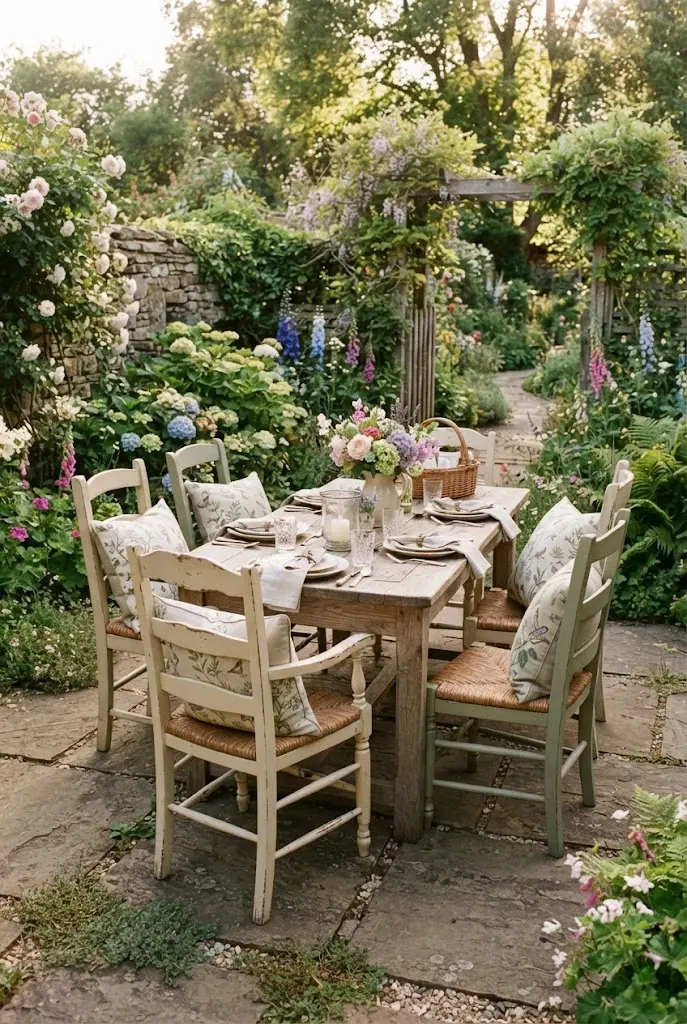
Comfortable dining chairs make an outdoor cottage dining space much more enjoyable. Look for chairs with supportive backs and weather-resistant construction. Painted wood chairs can introduce soft colors such as cream, sage, dusty blue, or muted green. Woven seats can add texture while maintaining a natural cottage feeling. Mixing two complementary chair styles can make the arrangement feel collected over time. Cushions in floral, striped, or small botanical patterns can provide additional comfort. Choose outdoor fabrics designed to resist moisture and fading. Keeping the chairs slightly relaxed rather than perfectly formal suits the cottage aesthetic. Consider enough space between each chair so guests can sit comfortably. A beautiful garden dining area should feel inviting enough for long meals and lingering conversations.
3. Flower-Filled Garden Borders
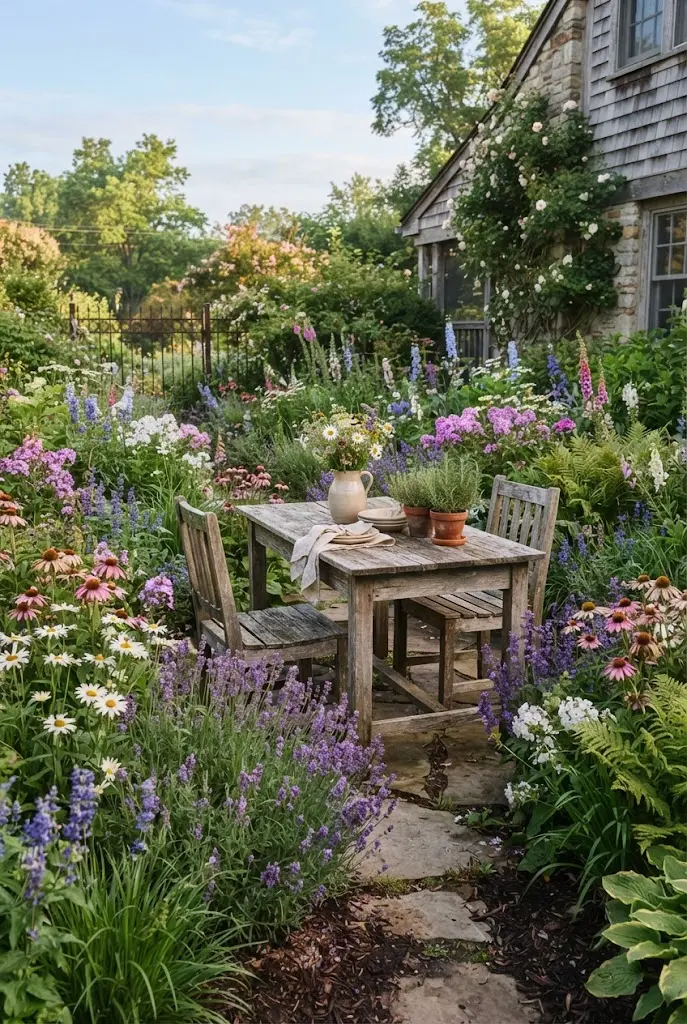
Flower-filled borders can make the dining area feel naturally embedded within the cottage garden. Instead of separating the dining space from the planting beds, surround it with informal layers of flowers and foliage. Perennials such as coneflowers, lavender, daisies, salvia, and garden phlox can provide seasonal color in many U.S. regions. Use different heights to create depth around the seating area. Taller plants can form a soft background while lower flowers remain visible near the table. Avoid making the planting arrangement look overly symmetrical. Cottage gardens are generally more charming when plants appear naturally grouped. Include foliage plants to maintain visual interest between flowering periods. A mixture of textures can make even a small dining area feel lush. The result should resemble a peaceful garden retreat rather than a formal landscape installation.
4. Pergola or Garden Arbor
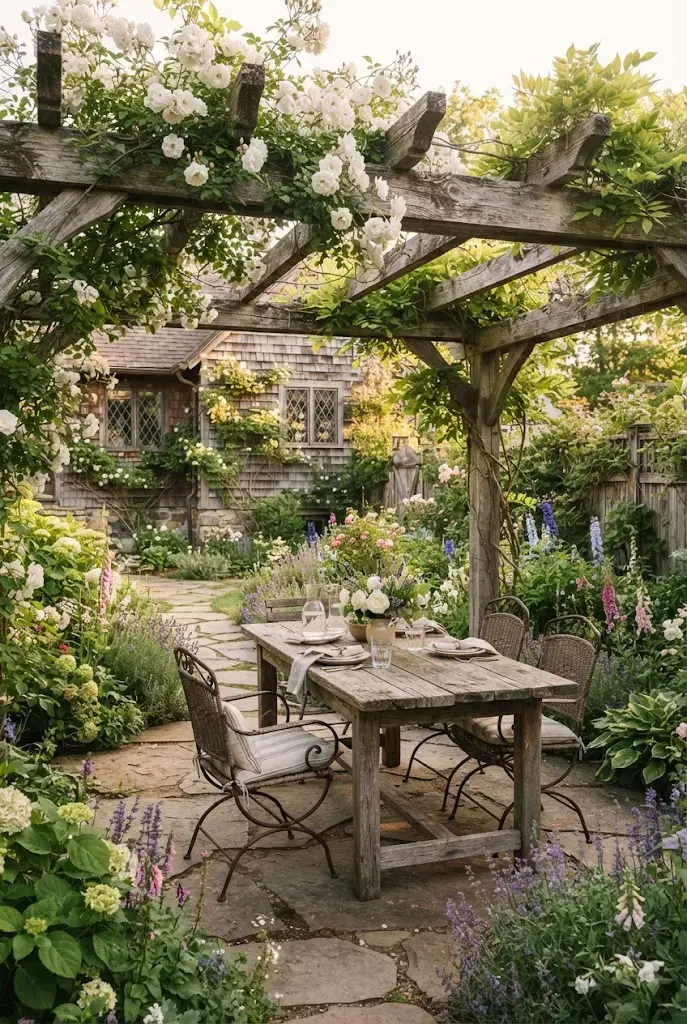
A pergola or garden arbor can give the dining area a defined architectural structure. A simple wooden frame works particularly well with cottage-style landscaping. Climbing roses, clematis, jasmine, or other suitable vines can soften the structure over time. The overhead framework can also provide a place for hanging lights or lightweight decorative elements. Choose materials that complement the home’s existing exterior and garden structures. Natural wood can create a warm rustic appearance, while painted finishes offer a more traditional cottage look. Keep the structure visually open so the dining space still feels connected to the garden. A pergola can also help establish a sense of privacy without completely enclosing the area. Its vertical shape adds height to a landscape filled with low flowers and shrubs. With mature climbing plants, it can become one of the most memorable features of the garden.
5. String Lights
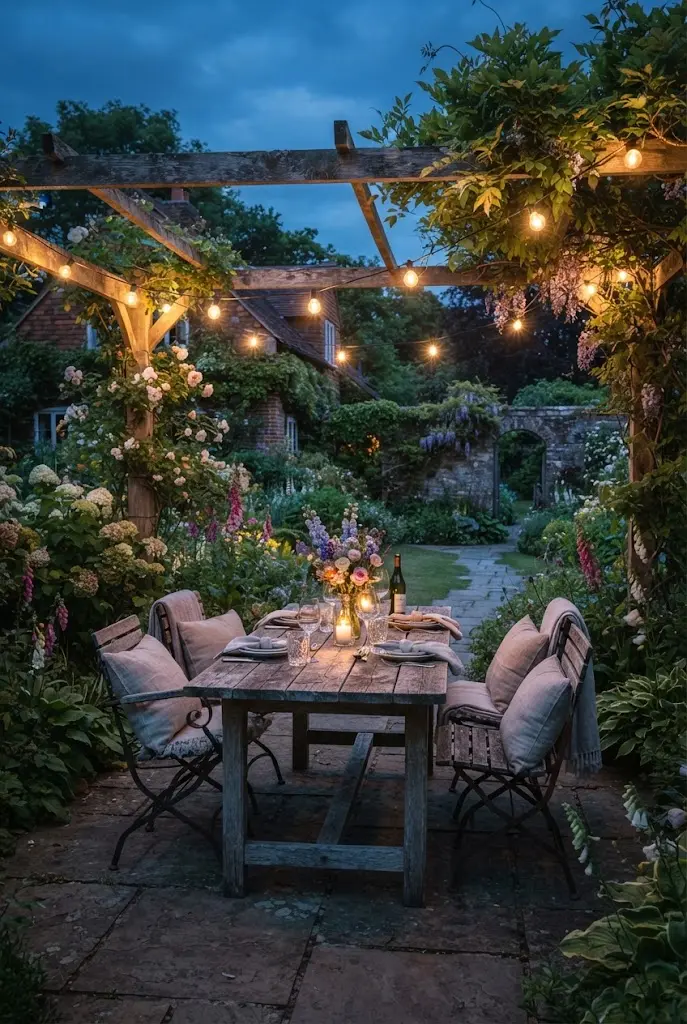
String lights can add a warm glow to a cottage garden dining area after sunset. Choose outdoor-rated lights designed for safe exterior use. Warm-white bulbs usually complement the relaxed atmosphere better than harsh cool lighting. Hang them along a pergola, across a nearby structure, or around a garden fence. Keep the installation neat while allowing the lighting to feel casual. Smaller bulbs can create a subtle sparkle without overwhelming the garden. Consider combining string lights with candles or lanterns for layered illumination. During the day, the lights can remain a quiet decorative element within the landscape. At night, they can make the dining area feel intimate and inviting. Proper placement can also help define the dining zone within a larger yard.
6. Vintage-Inspired Garden Furniture
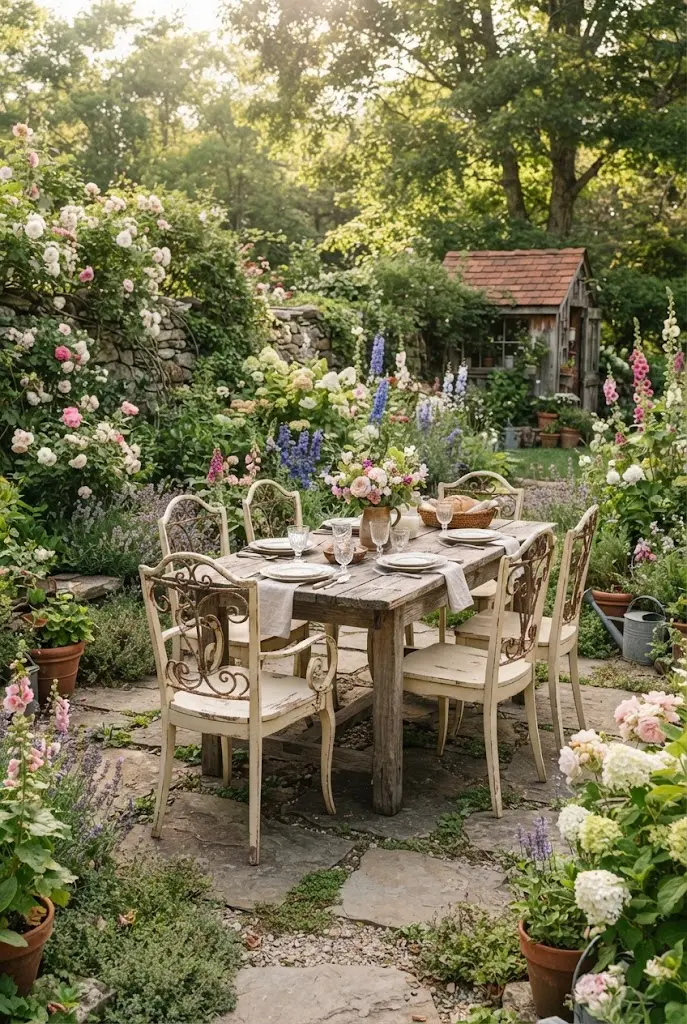
Vintage-inspired furniture can give a cottage dining area a sense of history and personality. Look for pieces with simple silhouettes and gently aged finishes. A weathered farmhouse table or painted metal chairs can work beautifully in the garden. The goal is not necessarily to use genuinely antique pieces but to capture a timeless appearance. Softly faded paint can complement flowers without competing with them. Wrought iron furniture can introduce delicate visual detail and a traditional garden character. Wooden pieces can provide warmth and a more casual atmosphere. Mix old-looking furniture with modern outdoor cushions for practical comfort. Avoid overcrowding the dining area with too many decorative pieces. A few carefully selected furniture items can create a collected, authentic cottage feel.
7. Outdoor Area Rug
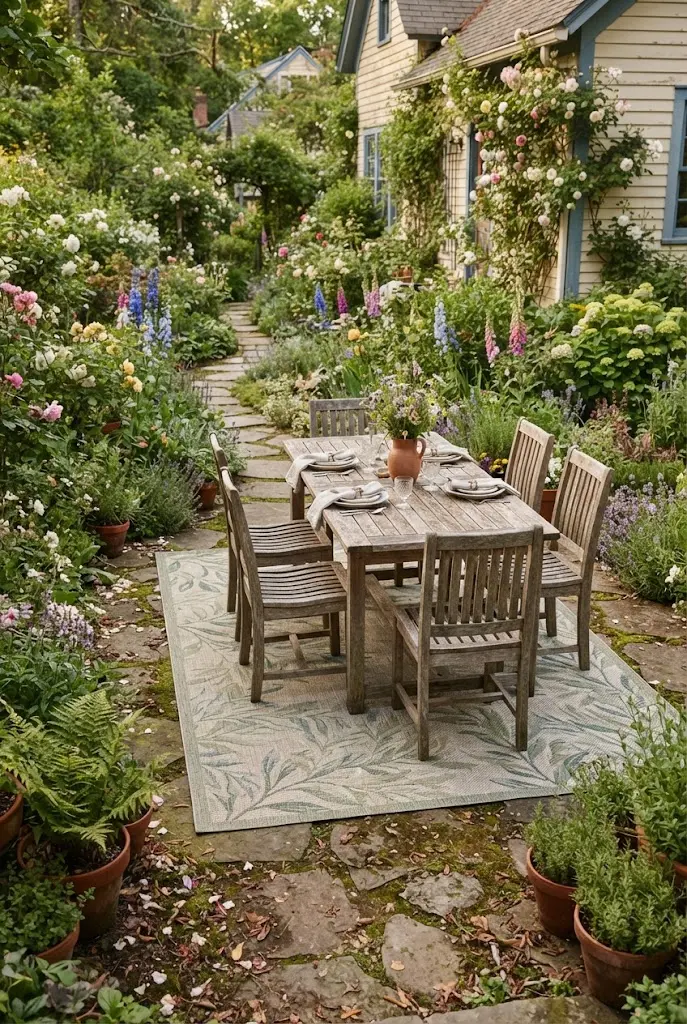
An outdoor rug can visually anchor the dining arrangement and make the space feel more like an outdoor room. Choose a rug made from weather-resistant materials suitable for exterior use. Soft botanical patterns, faded stripes, or understated geometric designs can complement a cottage garden. Neutral backgrounds allow colorful flowers to remain the main attraction. Place the rug beneath the table and chairs so the furniture sits comfortably within the defined area. Make sure the rug is large enough that chair legs remain on it when guests move their seats. Low-pile outdoor designs are generally easier to maintain. A subtle pattern can hide everyday garden debris better than a completely plain surface. This feature can add softness without requiring permanent construction.
8. Climbing Roses
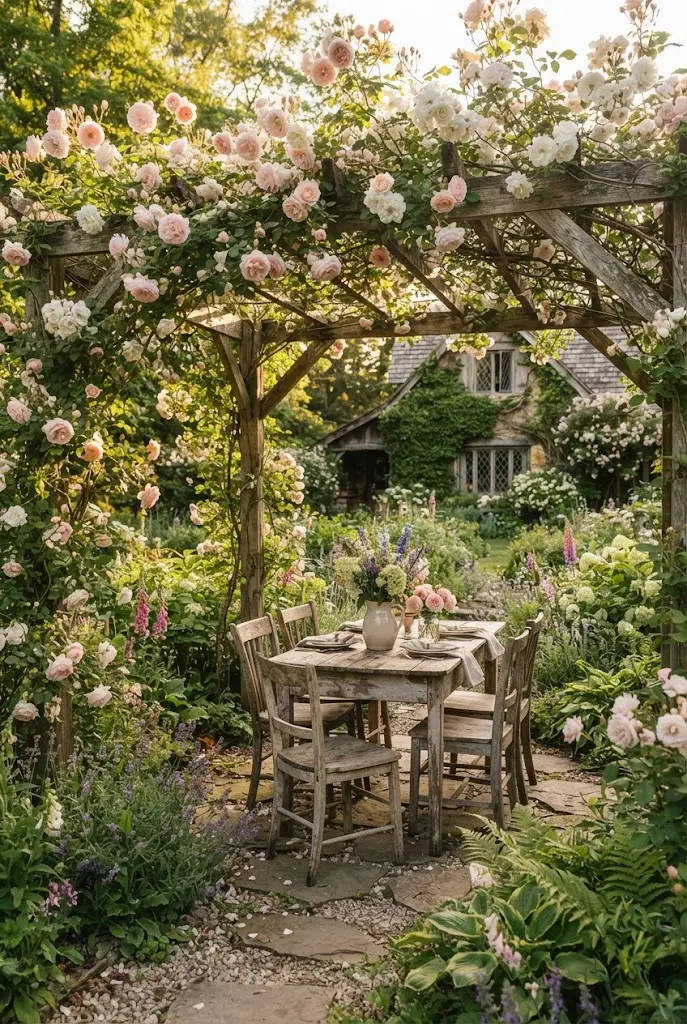
Climbing roses are a classic feature for creating romantic cottage garden atmosphere. Train them along a pergola, arbor, trellis, or sturdy garden wall. Their blooms can provide a beautiful backdrop around the dining area during the flowering season. White, blush, pink, and soft peach varieties can work especially well with cottage-style palettes. Make sure the chosen rose variety suits the growing conditions of the specific region. Give the plants enough support and room for healthy growth. Their foliage can provide additional greenery even when flowers are not blooming. Avoid placing thorny growth where guests will frequently brush against it. With thoughtful placement, climbing roses can frame the dining area without making it feel enclosed. Their natural movement adds softness to the hard lines of furniture and structures.
9. Natural Stone Flooring
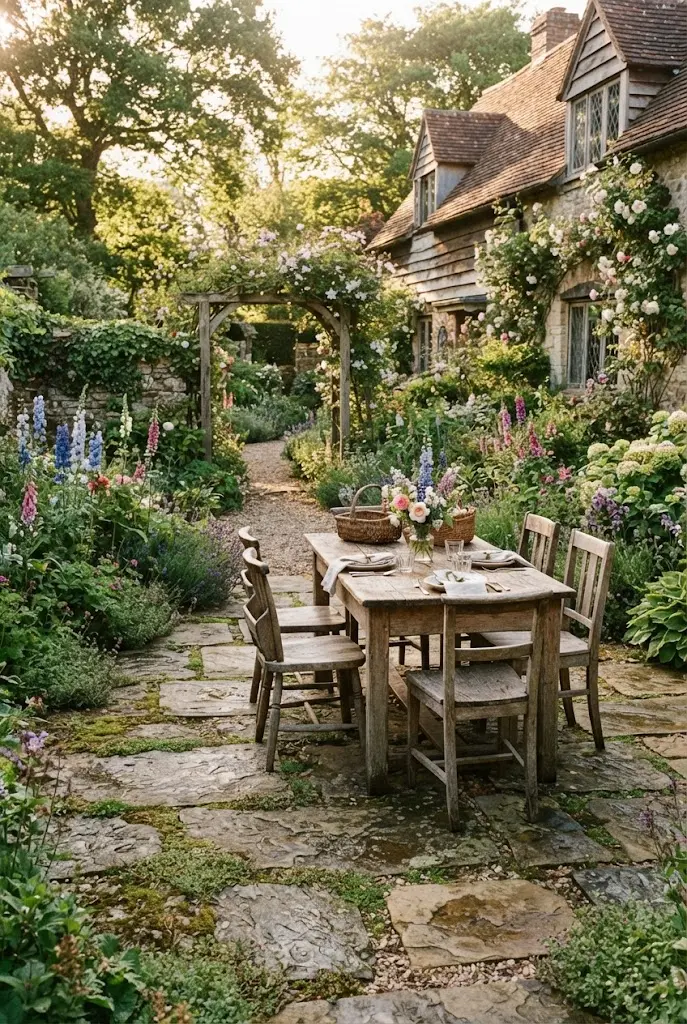
Natural stone flooring can give a cottage dining area a durable and organic foundation. Materials such as flagstone, limestone, or locally appropriate natural stone can blend beautifully with garden surroundings. Irregular stone shapes create a relaxed appearance that suits informal cottage landscaping. Use earthy neutral tones that complement the home’s exterior and surrounding plants. The joints between stones can be filled with suitable outdoor material or planted groundcover where practical. A slightly weathered surface can make the space feel established rather than newly constructed. Ensure the finished surface is stable and suitable for dining furniture. Good drainage is especially important in outdoor dining areas. Natural stone also pairs well with wood, metal, wicker, and other cottage-style materials. Over time, the flooring can develop additional character as the surrounding garden matures.
10. Potted Herbs
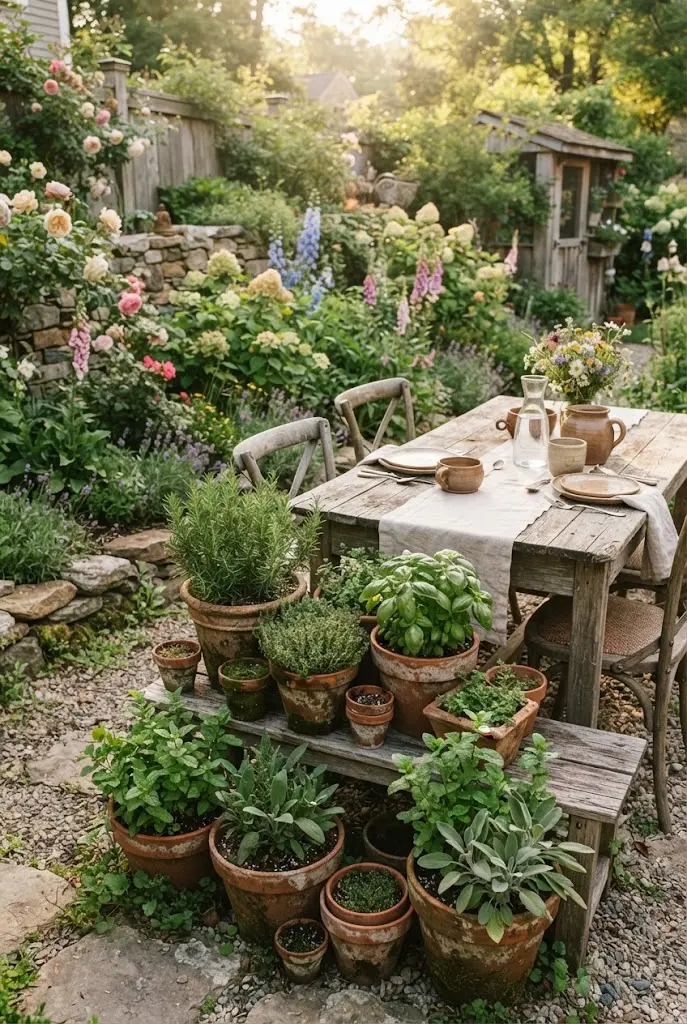
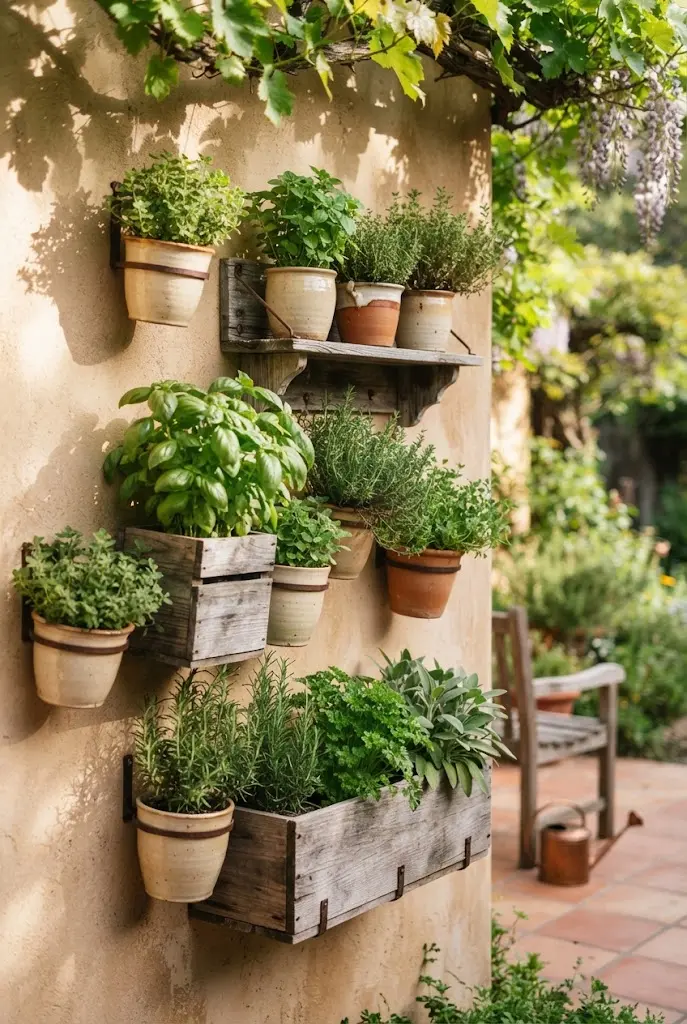
Potted herbs can combine beauty and usefulness around an outdoor dining area. Place containers of rosemary, thyme, basil, mint, or sage near the table where they are easy to access. Terracotta pots can reinforce the warm, traditional cottage aesthetic. Group several containers at different heights for a relaxed display. Use attractive weather-resistant planters if terracotta is not practical for the local climate. Herbs can provide fragrant foliage and useful ingredients for outdoor meals. Keep mint in containers because it can spread aggressively when planted directly in garden beds. Choose herbs according to local growing conditions and seasonal temperatures. A small herb display can also add visual interest to an otherwise simple dining corner. The combination of edible plants and decorative flowers reflects the practical spirit of cottage gardening.
11. Floral Table Centerpiece
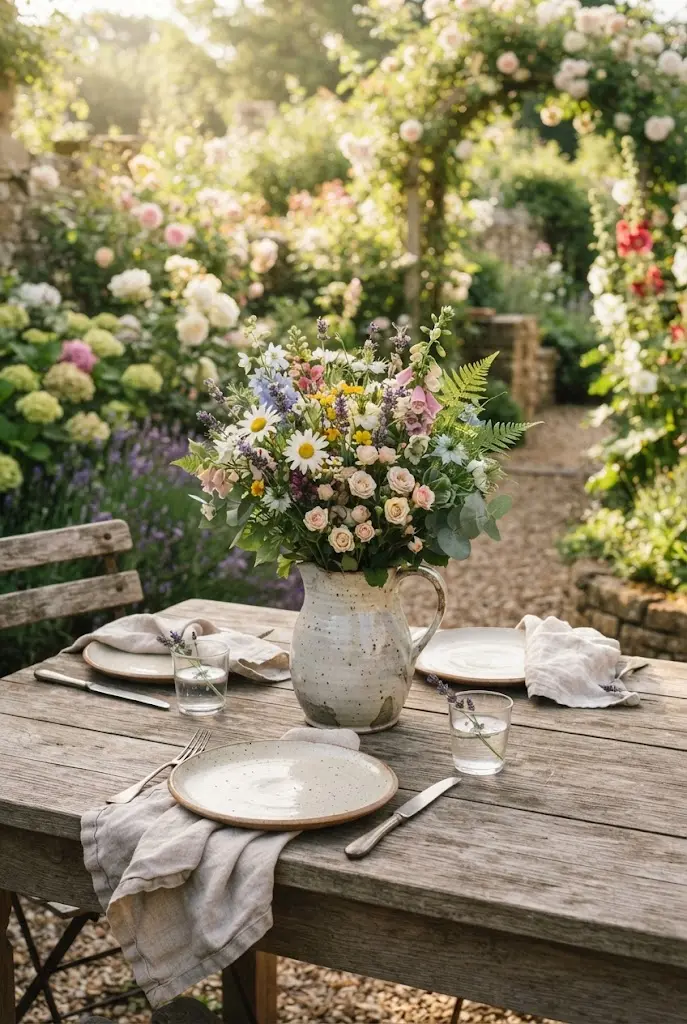
A floral centerpiece can bring the surrounding garden directly onto the dining table. Use flowers that feel informal rather than perfectly arranged. A simple ceramic pitcher filled with garden blooms can create an effortless cottage appearance. Include different flower heights, textures, and foliage for a naturally gathered effect. Seasonal flowers can keep the centerpiece connected to the time of year. Small arrangements can work better than oversized displays that block conversation across the table. Consider using flowers from the garden when appropriate and sustainable. Neutral pottery can provide a calm backdrop for colorful blooms. Add a few sprigs of greenery to make the arrangement feel less structured. The centerpiece should enhance the dining experience while keeping the table practical.
12. Weathered Wooden Fence
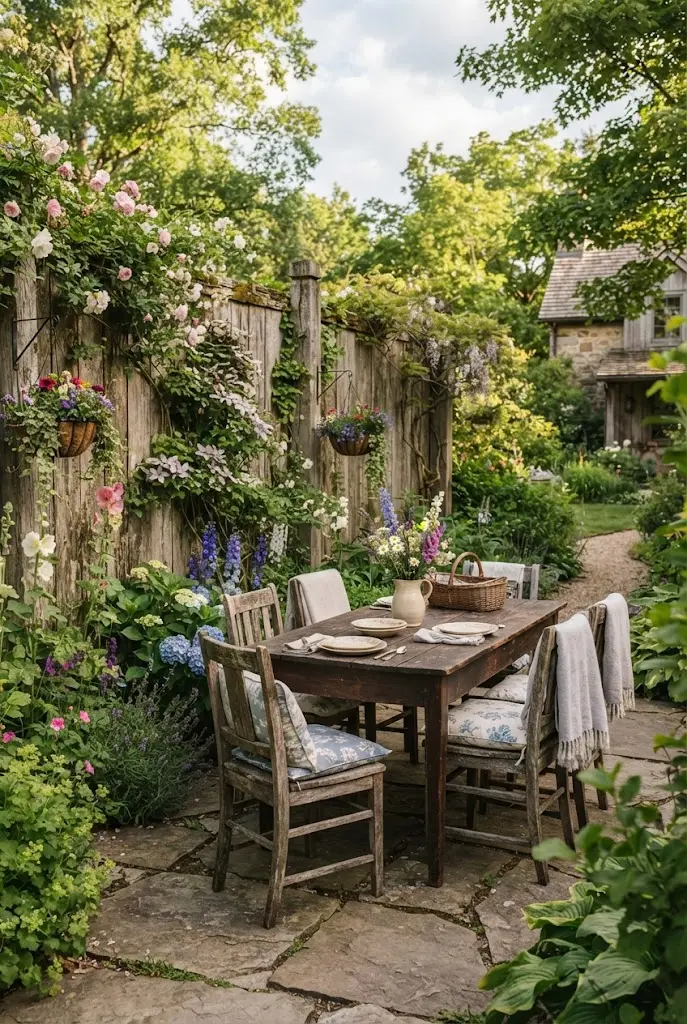
A weathered wooden fence can provide a charming backdrop for a cottage dining area. Choose natural timber or a softly painted finish that complements the garden. The aged appearance can make the landscape feel established and relaxed. Use the fence as a background for climbing plants, hanging baskets, or simple outdoor artwork. Avoid placing too many decorations on it because the natural texture can already provide visual interest. Horizontal boards can create a clean backdrop, while traditional vertical fencing can feel more rustic. Make sure the structure is properly maintained despite its weathered appearance. A fence can also help define the dining area without requiring solid walls. Planting shrubs and flowers along its base can soften the transition between wood and garden. Together, these elements create a layered and inviting outdoor setting.
13. Garden Lanterns
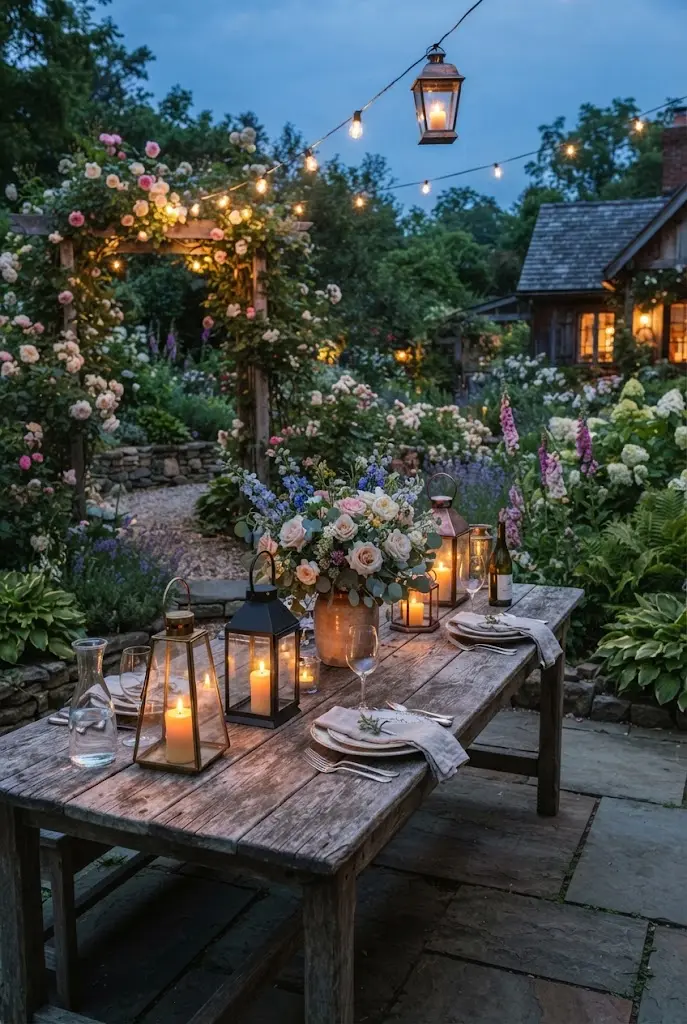
Garden lanterns can add both atmosphere and visual interest to an outdoor dining space. Place lanterns on the dining table, nearby steps, or a low garden wall. Choose weather-resistant designs made from metal, glass, or durable outdoor materials. Soft candlelight can create an intimate mood during evening meals. Solar lanterns can provide a practical alternative where electrical access is limited. Lantern shapes with simple traditional details tend to work well with cottage gardens. Avoid positioning open flames near dry plants or flammable materials. Varying lantern sizes can create a more natural arrangement. Keep the number of lanterns balanced so the dining table remains functional. Their warm glow can make the space feel especially welcoming after sunset.
14. Woven Outdoor Textiles
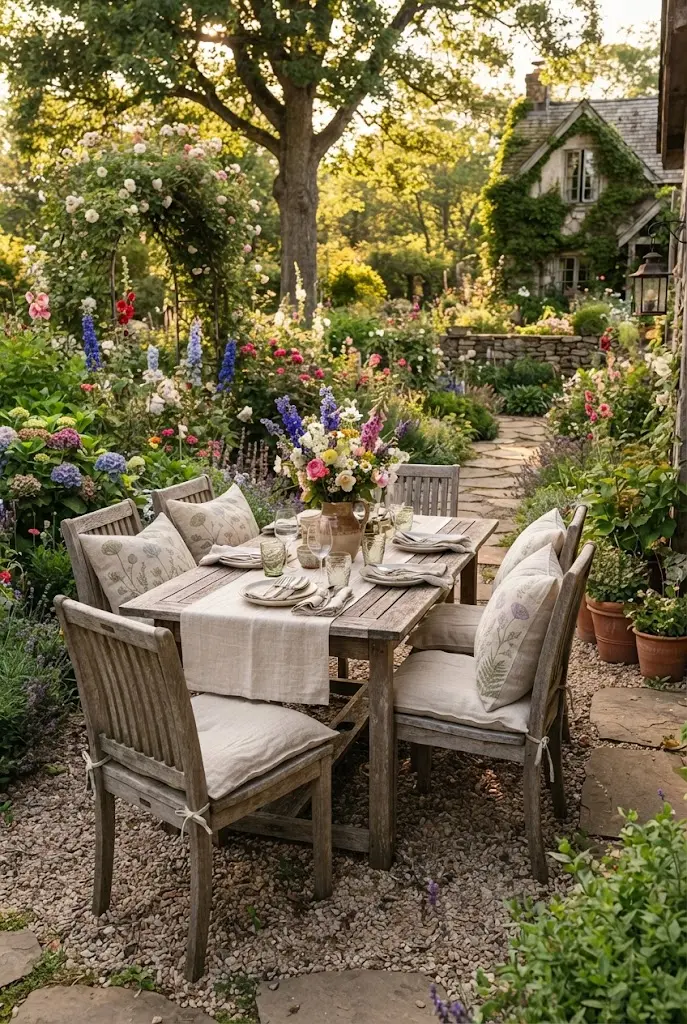
Woven outdoor textiles can add warmth and texture to a cottage dining area. Consider seat cushions, table runners, throws, or outdoor pillows made from durable fabrics. Natural-looking materials such as textured cotton blends can complement wood and greenery. Choose subtle stripes, checks, botanical motifs, or soft solid colors. Cream, sage, muted blue, terracotta, and warm beige can all work with cottage-inspired landscaping. Keep patterns coordinated rather than matching every textile exactly. Outdoor-rated materials are important for areas exposed to moisture and sunlight. Washable fabrics can make seasonal maintenance easier. Textiles also provide a simple way to refresh the dining area without replacing furniture. A few thoughtfully chosen pieces can make the garden dining space feel comfortable and lived-in.
15. Climbing Vine Trellis
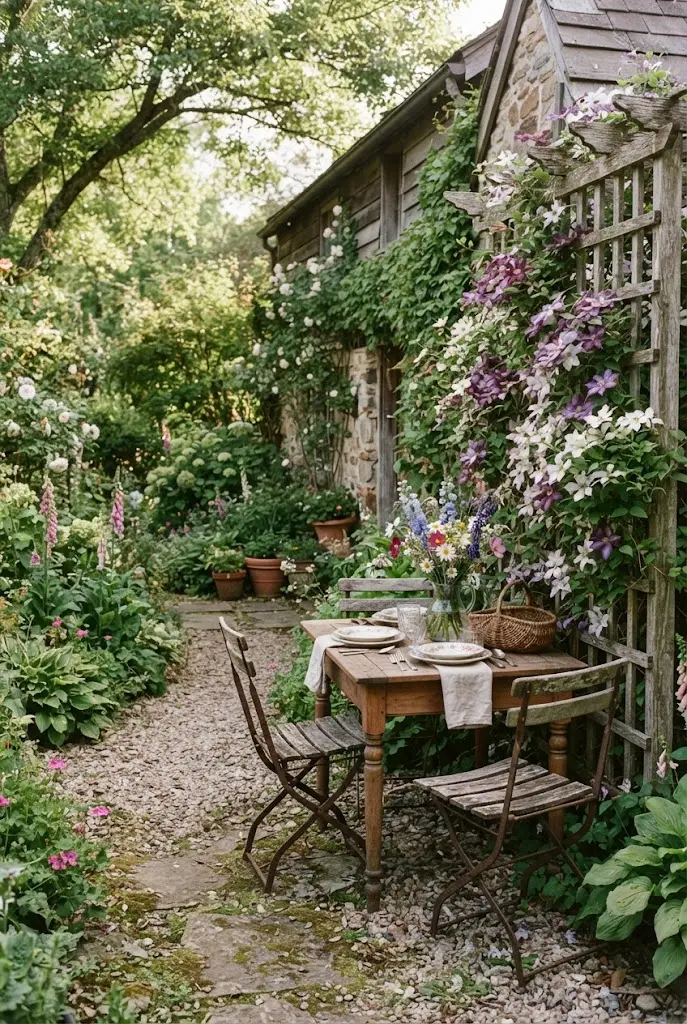
A trellis can add vertical interest while supporting beautiful climbing plants around the dining area. Choose a sturdy wooden or metal structure that complements the garden’s overall style. Position it behind the dining table or beside a garden wall to create a natural backdrop. Clematis, honeysuckle, climbing roses, or suitable local vines can gradually cover the structure. The open pattern of the trellis allows sunlight and air to move through the planting. A partially covered trellis can provide privacy without making the dining area feel enclosed. Keep plant growth controlled so pathways remain clear. The structure can also become a seasonal feature as different plants bloom throughout the year. Its combination of architecture and greenery is particularly suited to cottage gardens.
16. Soft Garden Privacy
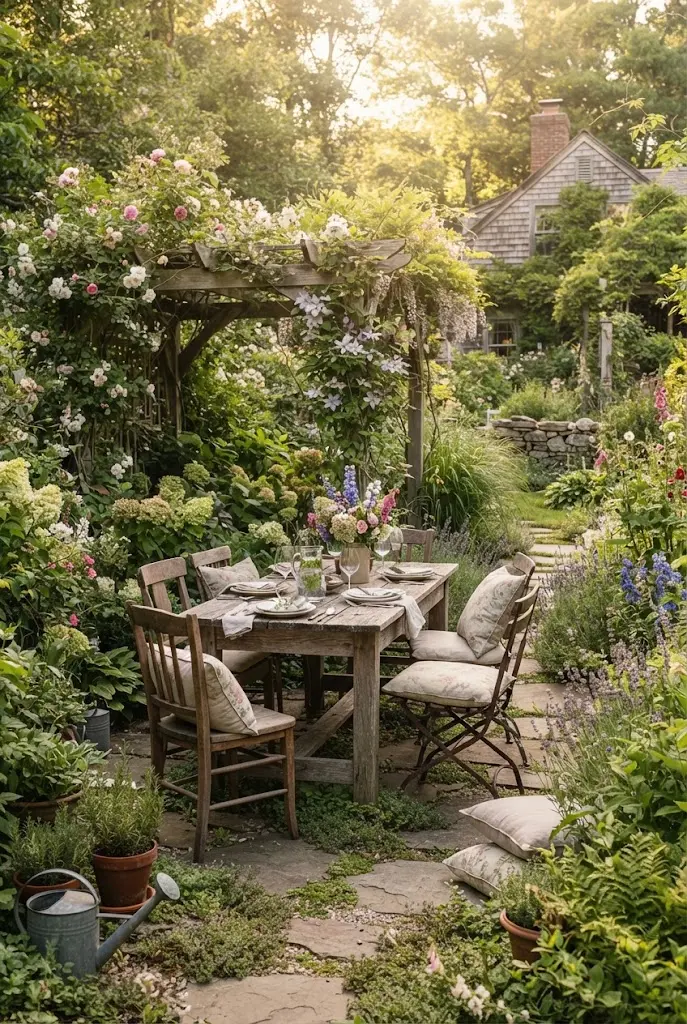
A little privacy can make an outdoor dining area feel more peaceful and intimate. Instead of building a solid enclosure, use plants, shrubs, trellises, or lightweight screens. Tall ornamental grasses can provide movement while creating a soft visual boundary. Evergreen shrubs can offer year-round structure in suitable climates. A partially planted border can separate the dining area from the rest of the yard without blocking views. Choose privacy plants according to local conditions and mature size. Avoid placing dense vegetation too close to the dining furniture if airflow or maintenance becomes difficult. Layering plants of different heights creates a natural cottage-garden appearance. The goal is to create a cozy sense of separation rather than complete isolation. This approach keeps the dining space connected to the rest of the garden.
17. Cottage-Style Tableware
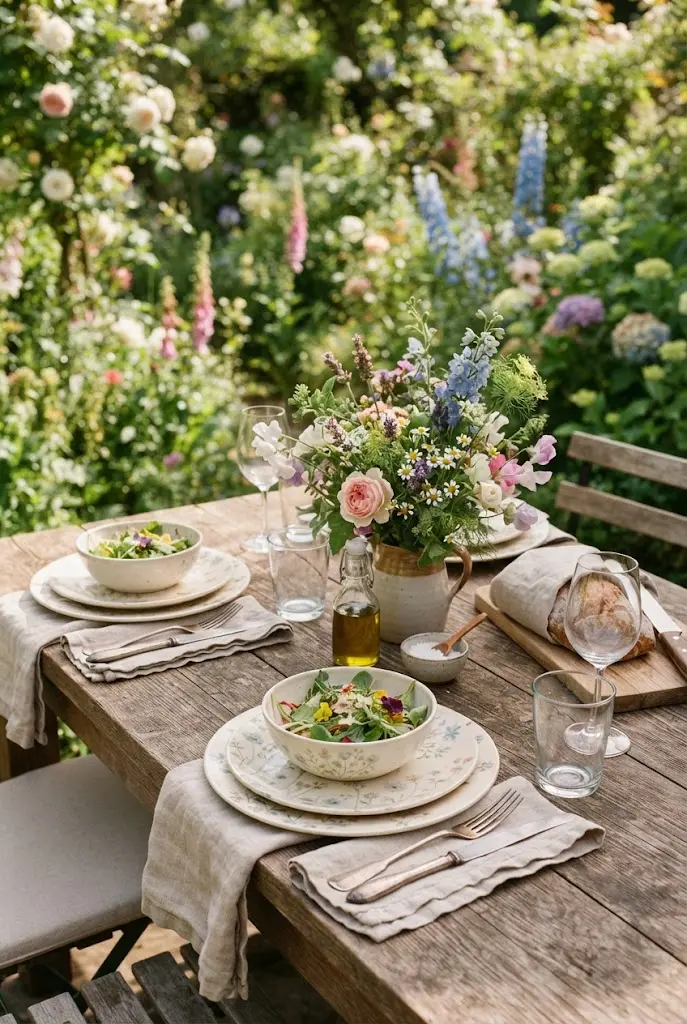
Cottage-style tableware can make outdoor meals feel more intentional without becoming overly formal. Look for ceramic plates with subtle floral patterns, soft colors, or handmade-looking finishes. Stoneware is particularly suited to the relaxed character of a garden dining setting. Mix complementary pieces rather than trying to create a perfectly matched table. Linen or cotton napkins can add additional texture. Simple glassware keeps the table practical and visually light. Choose durable pieces suitable for outdoor use and entertaining. A few natural elements such as small flowers or herbs can complete the setting. Keep decorative objects low enough that guests can comfortably talk across the table. The finished table should feel inviting, practical, and connected to the garden.
18. Built-In Garden Bench
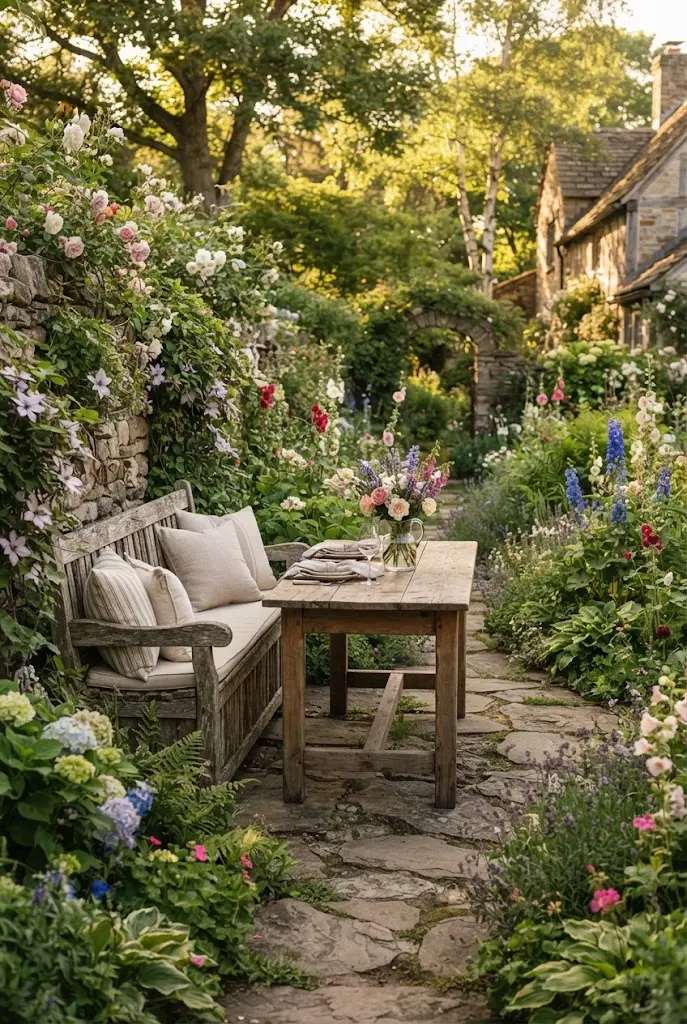
A built-in garden bench can provide flexible seating along the edge of the dining area. Construct it from weather-resistant wood, stone, or another material suitable for outdoor conditions. A wooden bench can match a rustic dining table and create a cohesive cottage look. Add removable outdoor cushions for greater comfort. Positioning the bench against a wall or fence can make efficient use of limited space. It can also provide extra seating when hosting several guests. During everyday use, the bench can become a quiet spot for reading or enjoying the garden. Keep the design simple so it blends with surrounding planting. Soft climbing plants or flowers nearby can make the structure feel integrated into the landscape. This multifunctional feature works particularly well in compact yards.
19. Bird-Friendly Garden Features
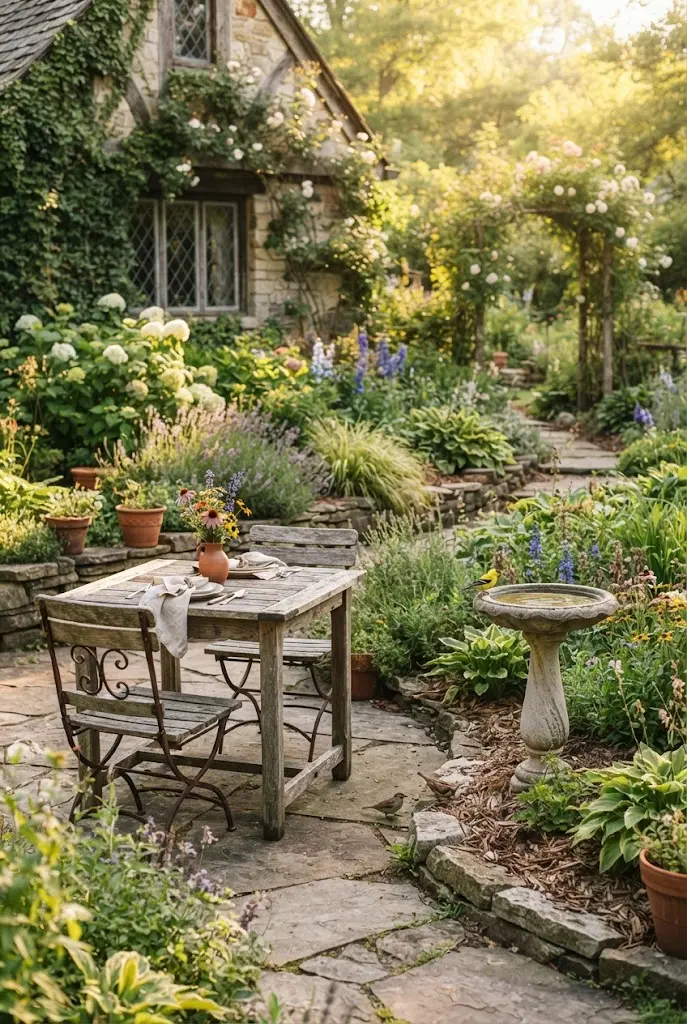
Bird-friendly features can bring additional life and movement to a cottage garden dining area. A small birdbath placed at a safe distance from the table can become an attractive garden focal point. Native plants that provide food and shelter can make the surrounding landscape more useful to local birds. Choose a shallow birdbath that can be cleaned regularly. Position it where birds have nearby cover but where predators are less likely to hide. Avoid placing feeders directly above dining areas because falling debris can create a hygiene issue. Natural bird activity can make outdoor meals feel more connected to the surrounding environment. Select plants suited to the region rather than relying only on ornamental varieties. Keep water features maintained and refreshed as needed. These details can add gentle movement and natural interest to the dining space.
20. Seasonal Flower Displays
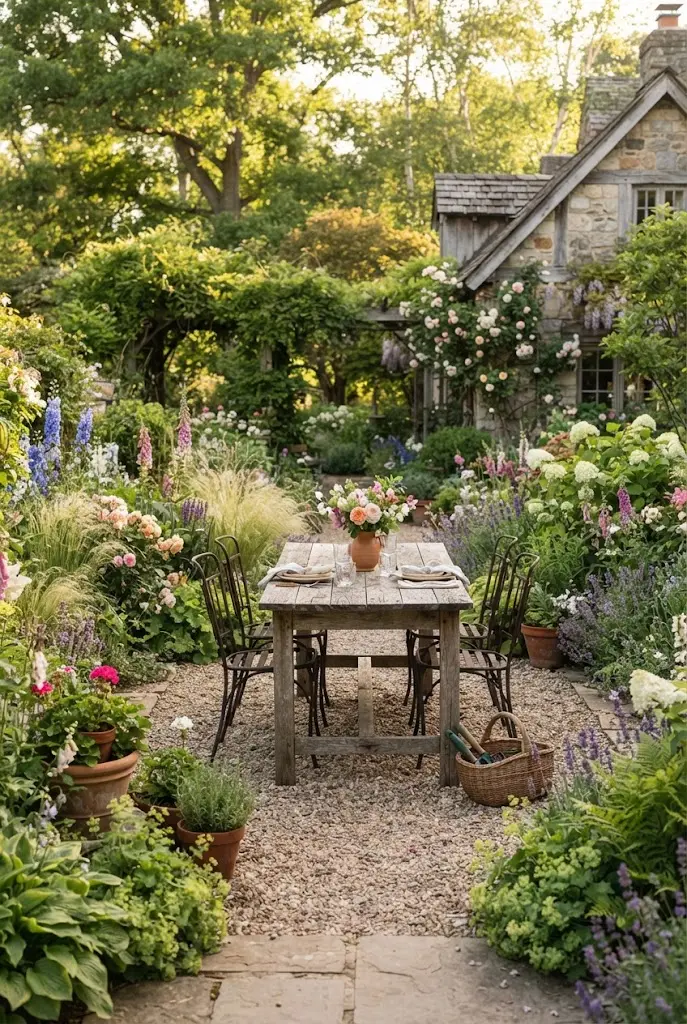
Seasonal flowers can keep the cottage dining area visually interesting throughout the year. Spring bulbs can introduce early color, while summer perennials can create abundant displays. In fall, ornamental grasses, chrysanthemums, and warm foliage can provide a different atmosphere. Choose plants appropriate for the local climate and growing conditions. Containers make it easier to change displays as the seasons progress. A mix of permanent shrubs and seasonal flowers provides a stable foundation. Use a restrained color palette if the surrounding garden is already very colorful. Seasonal changes can make the dining area feel fresh without requiring major renovations. Consider flowers that bloom at different times to extend the period of visual interest. The result is a dining space that changes naturally with the garden.
21. Small Water Feature
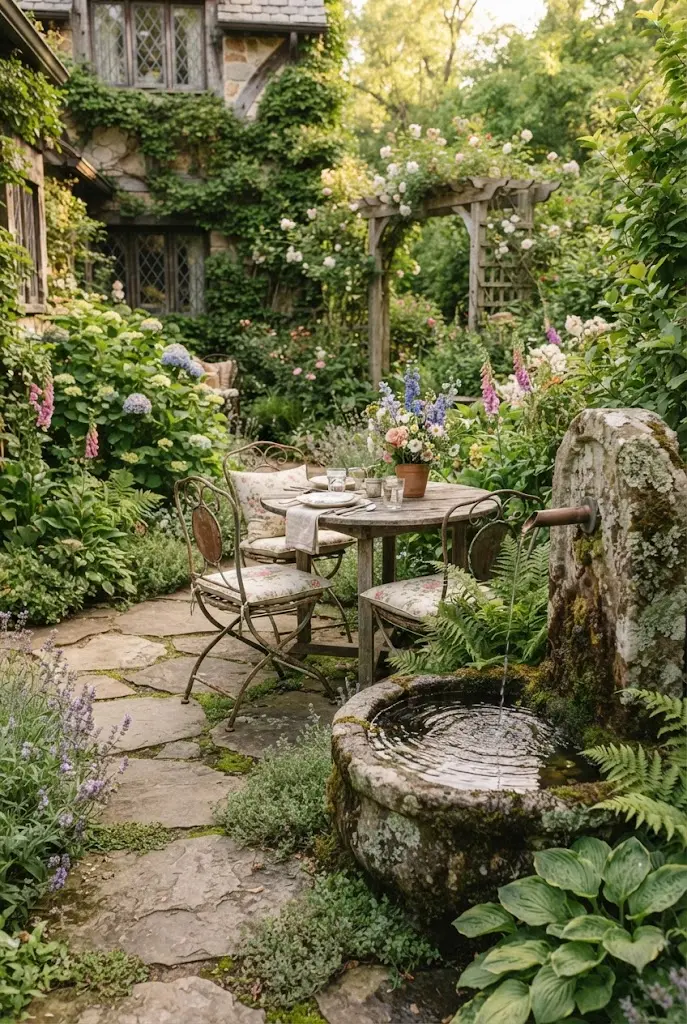
A small water feature can add a soothing sensory element near an outdoor dining space. Consider a simple stone basin, compact fountain, or small recirculating feature. The design should complement the informal character of the cottage garden. Natural stone and aged metal can work particularly well with flowers and weathered wood. Place the feature close enough to hear gently moving water without allowing it to dominate conversation. Regular maintenance is important to keep the water clean and the feature functioning properly. Avoid overly elaborate designs that make the garden feel formal. Surround the water feature with moisture-tolerant plants where appropriate. The sound of water can make the dining area feel more secluded and peaceful. Even a small feature can create a noticeable change in the garden’s atmosphere.
22. Natural Shade
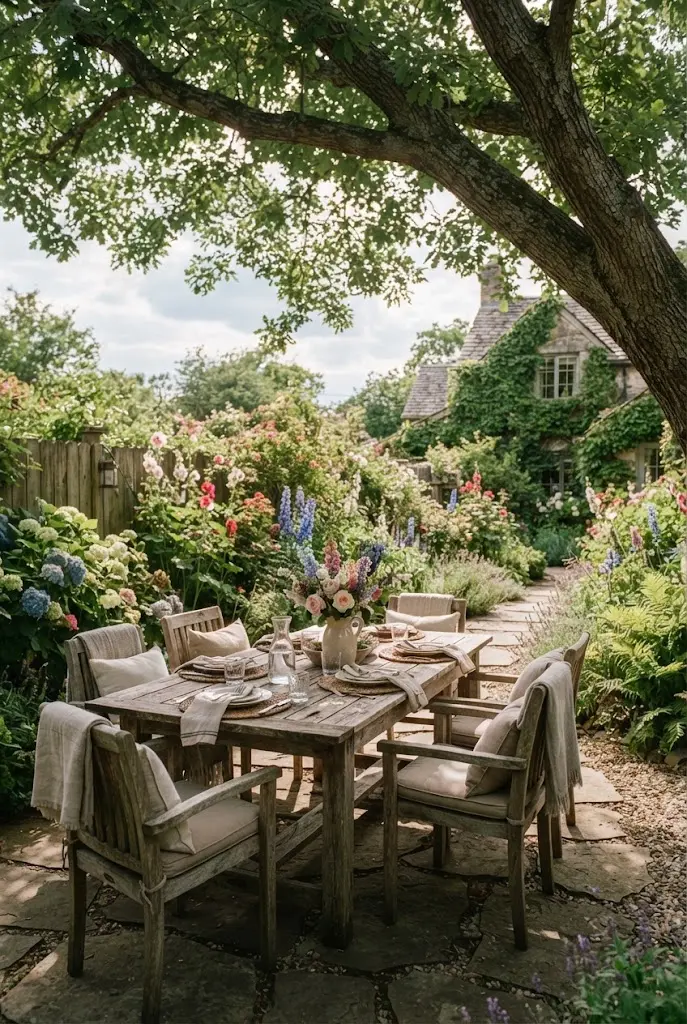
Natural shade can make a cottage garden dining area more comfortable during sunny days. A mature tree can provide beautiful overhead coverage while adding character to the landscape. Position the dining table beneath an appropriate tree with sufficient clearance for furniture and guests. Consider how seasonal sunlight changes before deciding on the exact placement. Tree branches can also create beautiful patterns of filtered light across the dining table. Avoid placing furniture where falling branches or unstable growth could create safety concerns. If mature trees are not available, a pergola with climbing plants can create a similar visual effect over time. Keep the shade structure connected visually to the surrounding garden. The result can be a cool and inviting place for relaxed outdoor meals.
23. Herb and Flower Combination Beds
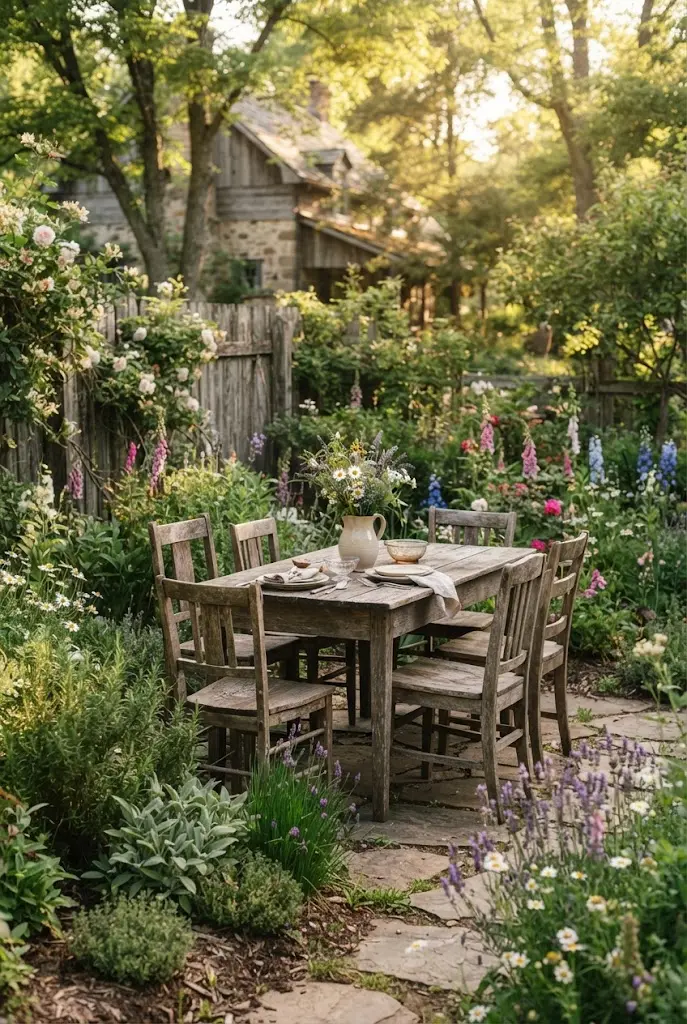
Combining herbs and flowers can create a practical and beautiful planting design around the dining area. Place culinary herbs among flowering plants for a relaxed cottage-garden appearance. Rosemary, sage, thyme, chives, and parsley can provide useful greenery while flowers add seasonal color. Choose plants according to local climate and sunlight conditions. Keep taller plants toward the back and lower herbs near accessible edges. This layered approach creates depth without making the planting feel overly structured. Fragrant herbs can also add subtle sensory interest when guests move through the garden. Avoid plants that may become invasive or difficult to maintain. Small raised beds or decorative containers can work when ground planting is limited. The combination brings together ornamental and edible gardening in one cohesive setting.
24. Decorative Garden Gate
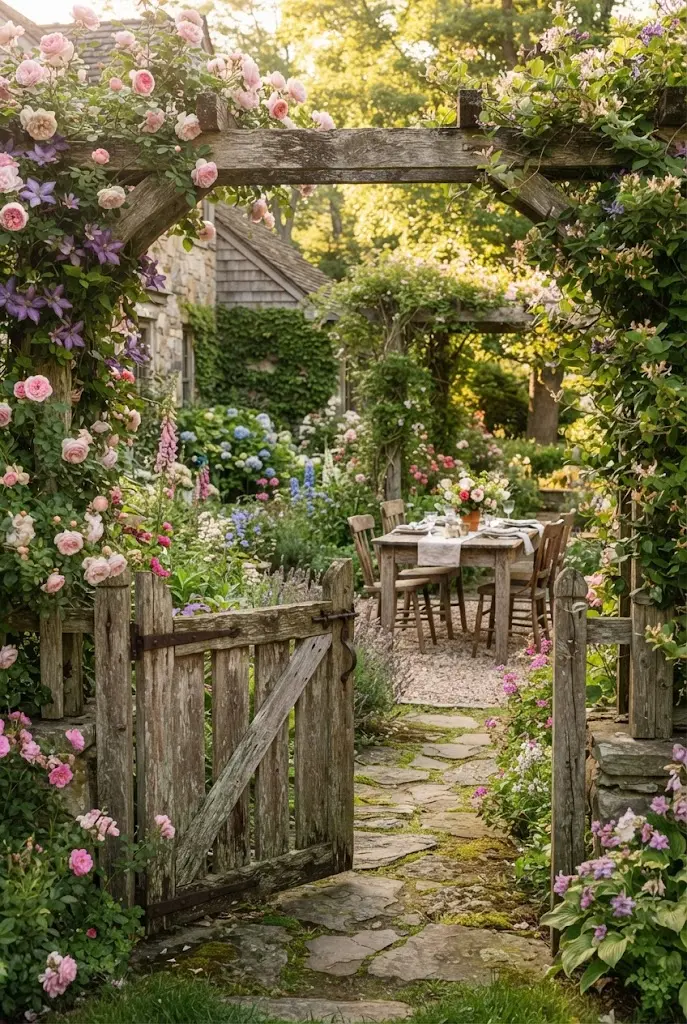
A decorative garden gate can create a charming entrance to the dining area. Choose a simple wooden or metal gate that complements existing fences and structures. An aged finish can add character without looking overly polished. Frame the entrance with climbing flowers, shrubs, or vines to make it feel naturally connected to the garden. A gate can subtly separate the dining space from the lawn or other outdoor areas. Keep the opening wide enough for comfortable movement and furniture access. Avoid excessive ornamentation if the surrounding garden already contains many decorative details. A small gate can create a sense of arrival and make the dining area feel like a destination. Natural materials help maintain the relaxed cottage aesthetic. With seasonal planting around it, the entrance can become a memorable garden feature.
25. Outdoor Serving Station
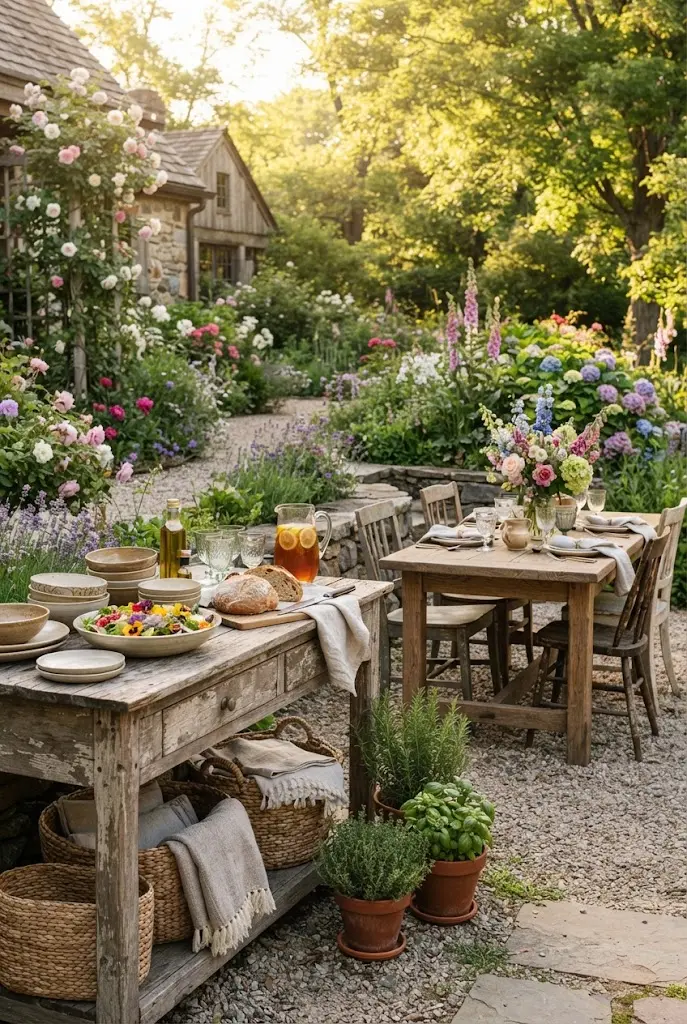
An outdoor serving station can make garden meals more convenient. A small weather-resistant console, bar cart, or wooden sideboard can hold dishes, glasses, napkins, and serving utensils. Choose a design that matches the dining table and surrounding garden materials. Keep frequently used items within easy reach while leaving the dining table uncluttered. A lower shelf can store baskets or outdoor-safe serving pieces. Use sealed wood or suitable outdoor materials to withstand changing weather. Decorative pottery or potted herbs can make the station feel integrated into the garden. Avoid storing delicate items outside unless they are protected from moisture and temperature changes. The serving station is especially useful when entertaining guests. It adds function without sacrificing the relaxed cottage character.
26. Cozy Candlelit Details
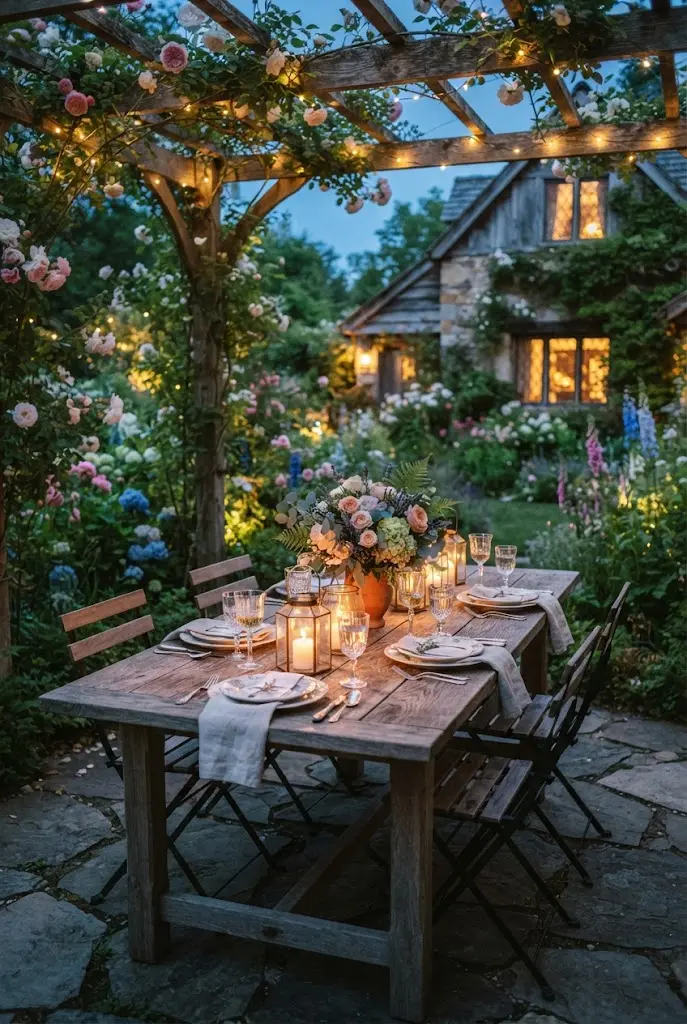
Candlelit details can create an intimate atmosphere for evening dining. Use sturdy outdoor lanterns or protected candle holders rather than exposed flames. Group a few lights along the center of the table without taking away valuable dining space. Unscented candles can be a practical choice around food. Combine candlelight with soft string lights for layered illumination. Warm lighting can highlight nearby flowers and garden textures after dark. Keep all flame sources away from dry foliage, fabrics, and other combustible materials. Battery-powered candle alternatives can provide a similar appearance where open flames are unsuitable. Small details such as these can make an ordinary dinner feel more special. The key is to keep the lighting subtle and natural rather than overly bright.
27. A Relaxed Connection to the Garden
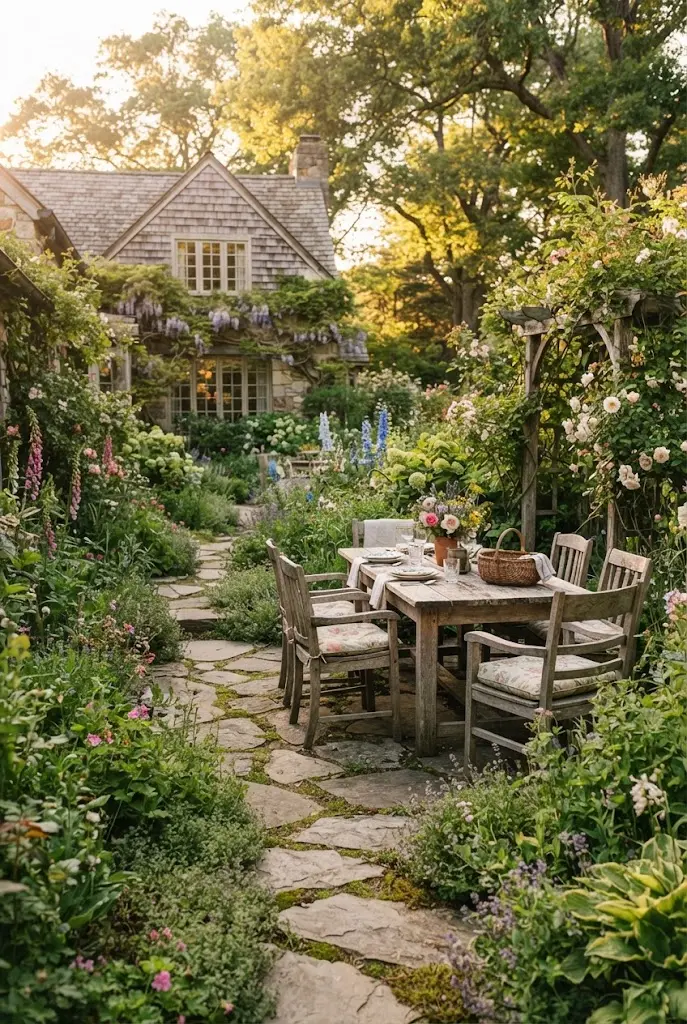
The most important feature of a cottage garden dining area is a natural connection between the dining space and the surrounding landscape. Avoid making the table feel isolated on a large empty patio. Instead, use flowers, paths, shrubs, vines, and natural materials to blend the dining area into the garden. Keep transitions soft and informal rather than relying on rigid borders. Let greenery appear around furniture while keeping walking routes practical. Use a cohesive palette of natural wood, stone, soft fabrics, and garden colors. Comfortable seating encourages people to stay and enjoy the surroundings. Seasonal changes can become part of the dining experience. Small imperfections can actually strengthen the authentic cottage character. Ultimately, the space should feel like an extension of the garden rather than a separate outdoor room.