16 Garden Dining Area Ideas for Charming Outdoor Entertaining
A beautiful garden dining area can turn everyday meals into memorable outdoor experiences. With the right furniture, lighting, greenery, and accessories, your backyard can feel like an inviting dining retreat. Garden dining spaces work well for casual family dinners, weekend brunches, and summer gatherings with friends. Natural materials such as wood, wicker, stone, and linen help create a relaxed outdoor atmosphere. Thoughtful lighting can make the space feel especially welcoming after sunset. You can also add flowers, potted herbs, textiles, and seasonal decorations for extra character. Whether you have a spacious yard or a small patio garden, there are many ways to create an attractive dining setup. These ideas are designed to inspire practical and charming outdoor entertaining spaces for American homes.
1. Create a Rustic Wooden Dining Setup
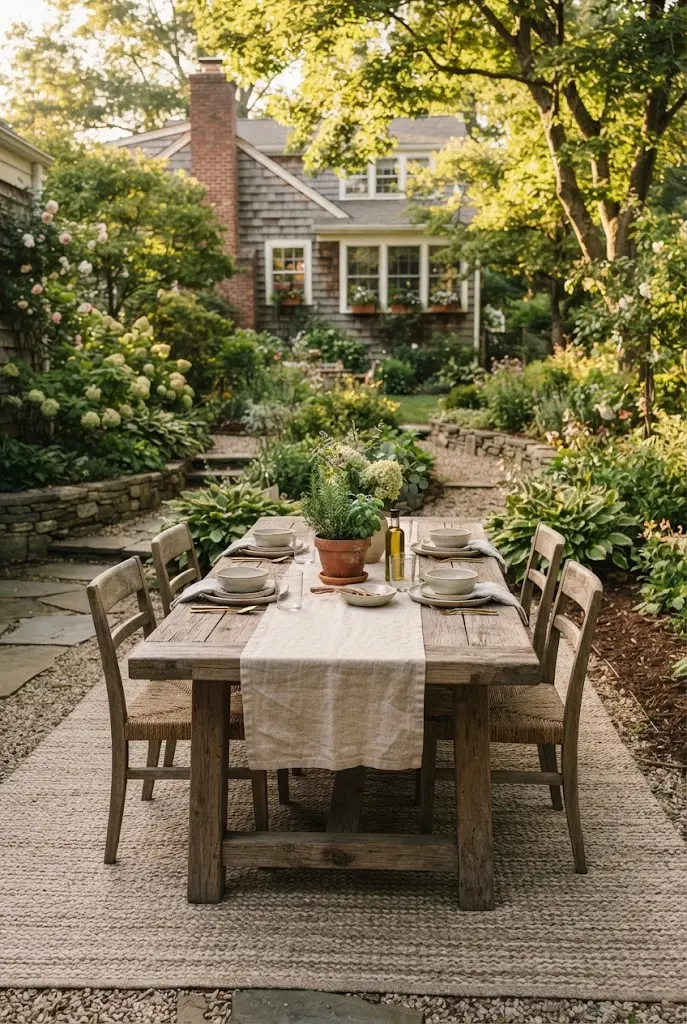
A rustic wooden dining table can give a garden dining area a warm and welcoming personality. Choose a solid wood table with a naturally textured finish that complements surrounding plants and landscaping. Pair it with comfortable wooden or woven chairs for a coordinated look. A simple linen runner can add softness without making the table feel overly formal. Place ceramic dinnerware and neutral-colored serving pieces on the table for casual entertaining. Potted herbs or small flower arrangements can become natural centerpieces. A nearby outdoor rug can visually define the dining zone. String lights overhead can provide a cozy glow during evening meals. This setup works especially well in gardens with mature trees and natural landscaping. The overall effect should feel relaxed, comfortable, and easy to maintain.
2. Add a Pergola Over the Dining Area
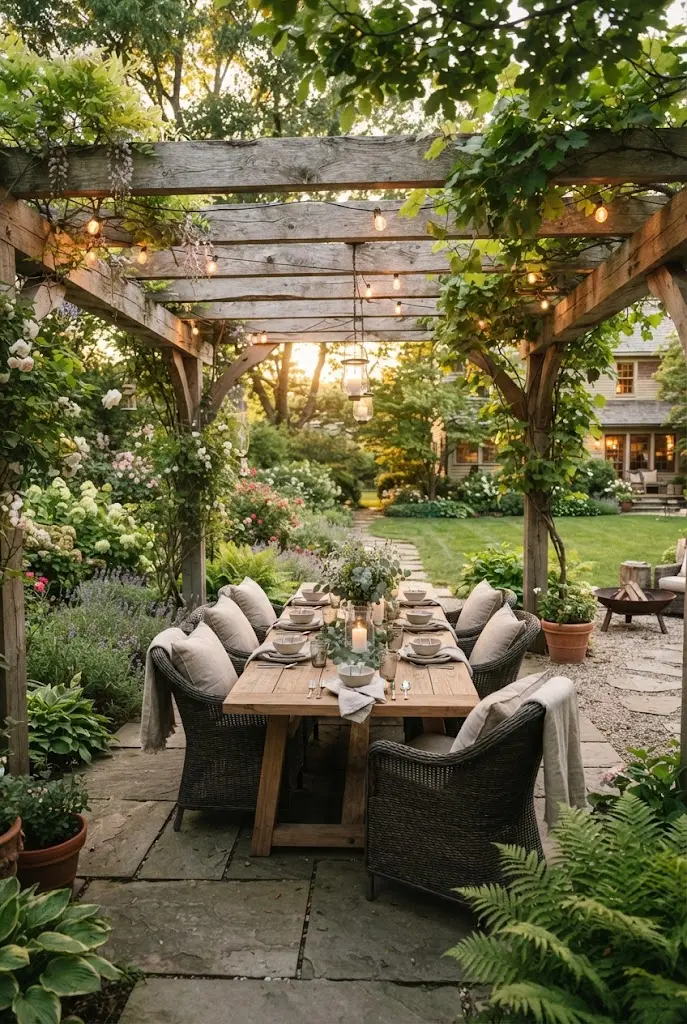
A pergola can make a garden dining area feel more defined and inviting. The overhead structure provides architectural character while creating a natural framework for outdoor entertaining. Wooden pergolas work particularly well with gardens filled with greenery and flowering plants. Climbing vines can gradually soften the structure and create a romantic garden atmosphere. Add a large dining table underneath with comfortable weather-resistant chairs. Hanging lanterns or warm string lights can provide attractive evening illumination. Keep the tabletop relatively simple with seasonal flowers and neutral tableware. A nearby planter can help connect the dining space with the rest of the garden. Choose outdoor fabrics that coordinate with the surrounding landscape. This arrangement can become a dedicated destination for family dinners and weekend gatherings.
3. Use a Long Farmhouse Dining Table
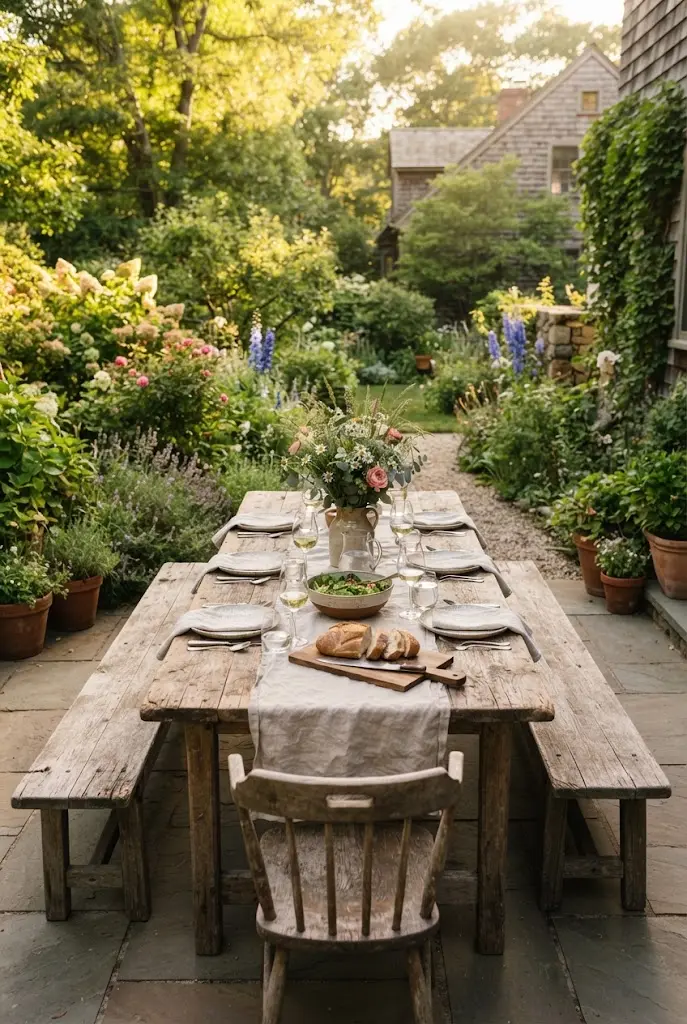
A long farmhouse-style table is an excellent choice when you regularly host several guests outdoors. Its generous surface provides plenty of room for plates, serving dishes, drinks, and decorative details. Choose a weather-resistant wood finish that can withstand outdoor conditions. Pair the table with simple benches on one or both sides for a relaxed entertaining style. Individual chairs can be added at the ends for additional comfort. A neutral table runner helps create a polished but casual appearance. Mason-jar-style glassware and simple ceramic dishes can reinforce the farmhouse feeling. Surround the table with flowering shrubs, herbs, and potted greenery. Soft outdoor lighting can make the arrangement inviting after dark. This style works particularly well for family-style meals and larger garden gatherings.
4. Incorporate Comfortable Outdoor Cushions
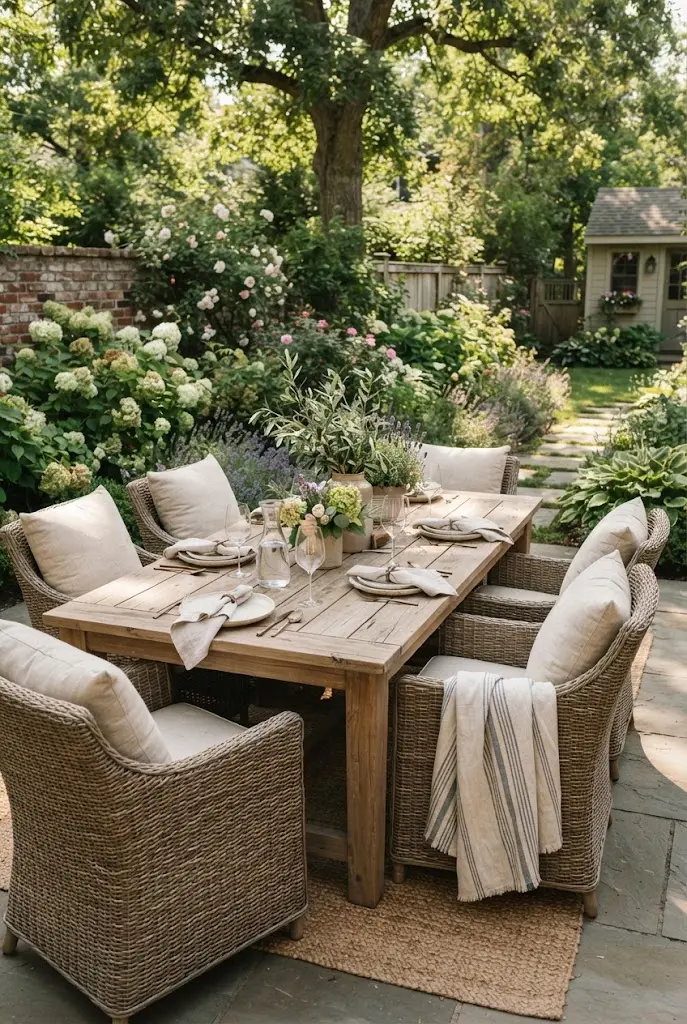
Comfort is an important part of creating an inviting garden dining space. Outdoor cushions can make firm dining chairs much more comfortable during long meals. Choose fabrics designed to resist moisture and fading for better outdoor durability. Neutral shades such as cream, beige, taupe, or soft olive can blend beautifully with garden surroundings. Patterned cushions can also introduce personality without overwhelming the space. Keep the dining table simple so the seating remains the visual focus. Add coordinating throw pillows to nearby lounge chairs if space allows. Weather-resistant textiles can provide softness while remaining practical. A few potted plants can frame the dining area naturally. This approach is especially useful for patios that connect directly to landscaped gardens. Comfortable seating encourages guests to stay longer and enjoy relaxed conversations.
5. Create an Intimate Bistro-Style Garden
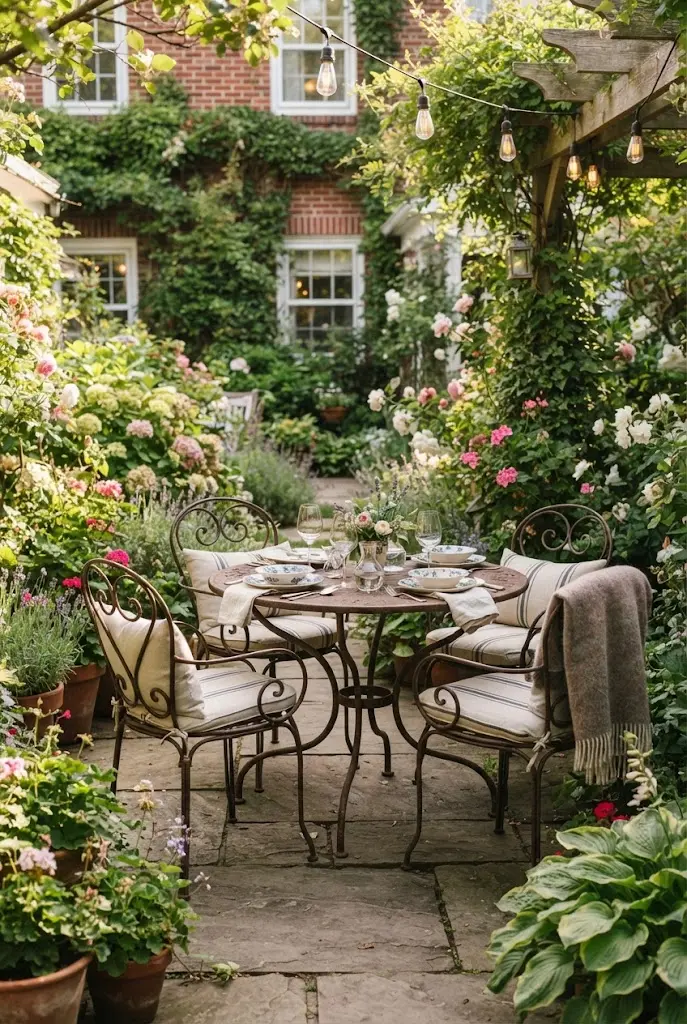
A small bistro-style dining area can work beautifully in compact gardens and patios. Choose a round or square table that takes up minimal space while still providing enough room for two to four people. Metal, wood, or stone-look furniture can complement different garden styles. Place the table near flowering plants or a small tree to make the setting feel connected to nature. Comfortable cushions can soften metal chairs and introduce color. A small centerpiece of fresh flowers can add charm without taking up too much space. Hanging lanterns or wall-mounted outdoor lights can provide evening illumination. Keep accessories minimal so the area remains open and uncluttered. This arrangement is ideal for morning coffee, intimate dinners, and relaxed weekend lunches. Even a small garden can feel special when the dining area is thoughtfully arranged.
6. Hang Warm String Lights
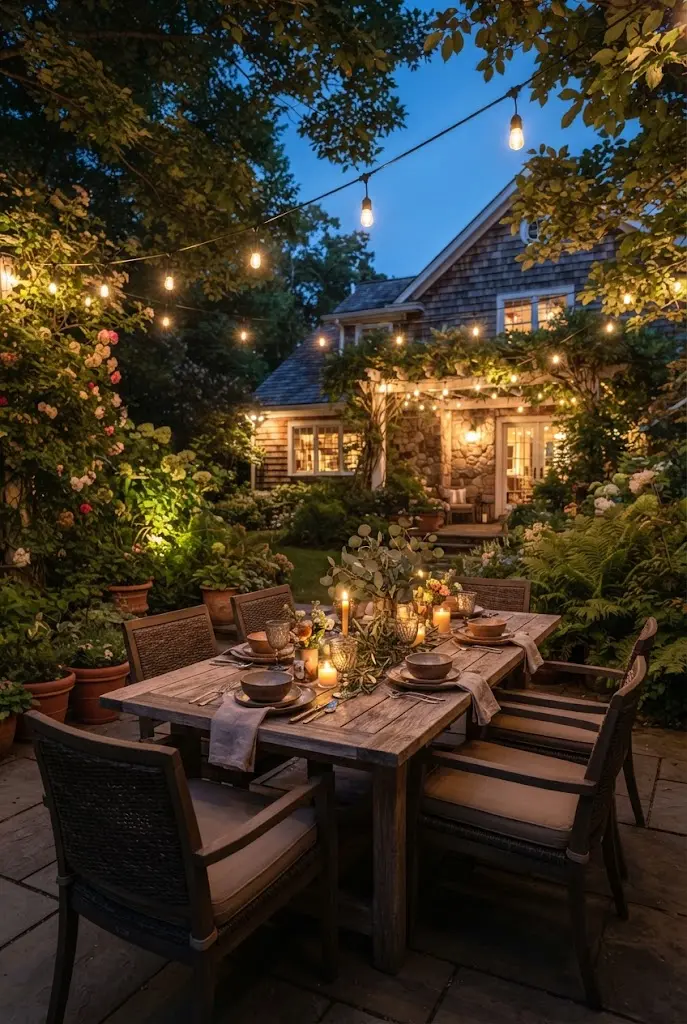
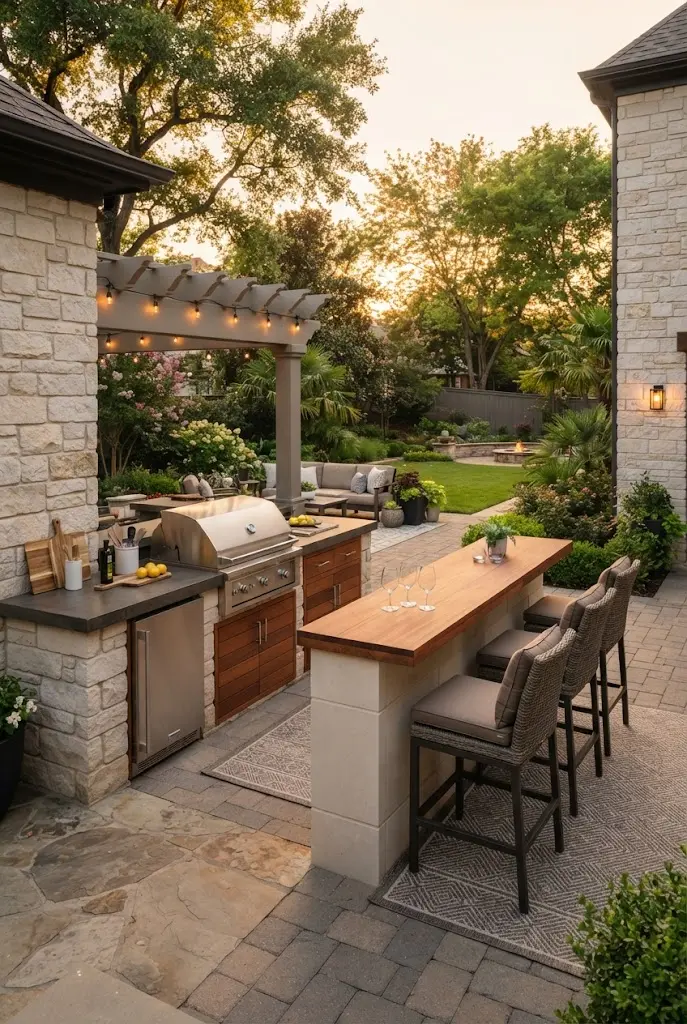
String lights can instantly create a welcoming atmosphere around an outdoor dining table. Hang them above the dining area, across a pergola, or between sturdy garden posts. Warm white bulbs usually provide a soft glow that feels comfortable rather than harsh. Keep the wiring neatly arranged so the installation looks intentional. Pair the lighting with natural wood furniture and simple outdoor textiles. Candles or small lanterns can provide additional layers of light on the table. Avoid excessive decorations so the bulbs remain a subtle highlight. Green foliage can look especially beautiful when softly illuminated at night. This setup is perfect for dinners that continue into the evening. It also gives a garden dining area a relaxed entertaining atmosphere.
7. Add a Built-In Garden Bench
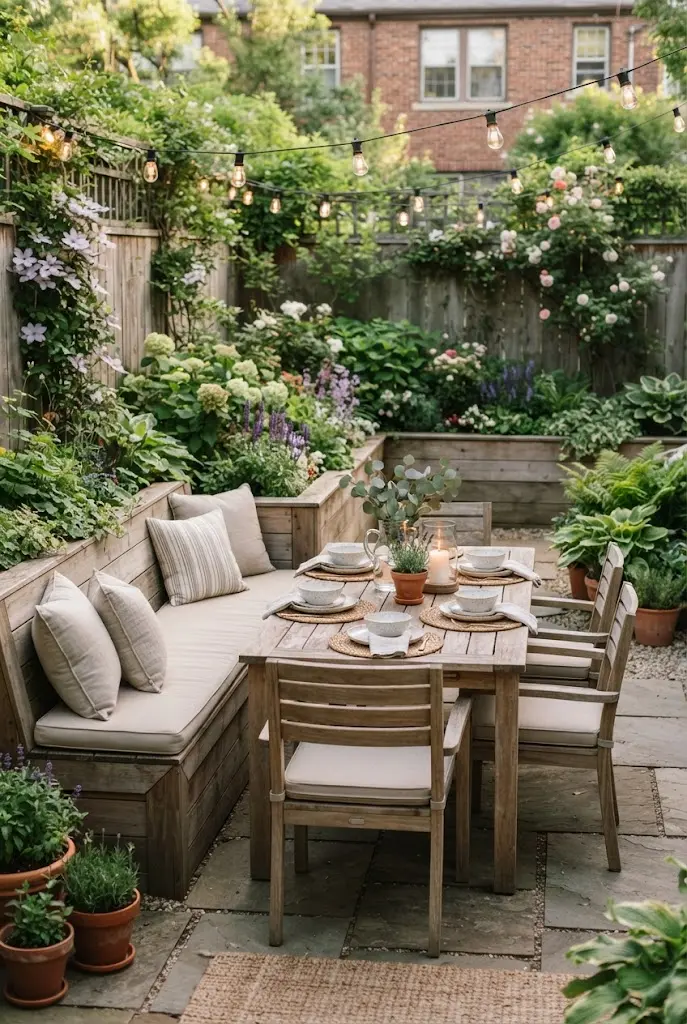
A built-in bench can make a garden dining area feel more permanent and integrated with the landscape. Position the bench along a wall, fence, raised planter, or sturdy garden boundary. Add weather-resistant cushions to improve comfort during longer meals. A wooden bench can introduce warmth while a stone or masonry bench can provide a more architectural appearance. Pair the bench with a freestanding dining table and individual chairs opposite it. Surrounding plants can soften the edges and create a natural transition into the garden. Keep the bench cushions in a neutral outdoor fabric for easy coordination. Small lanterns can provide additional evening charm. This seating solution can also save space compared with several individual chairs. It is especially useful for families who want flexible seating during outdoor gatherings.
8. Surround the Table With Potted Plants
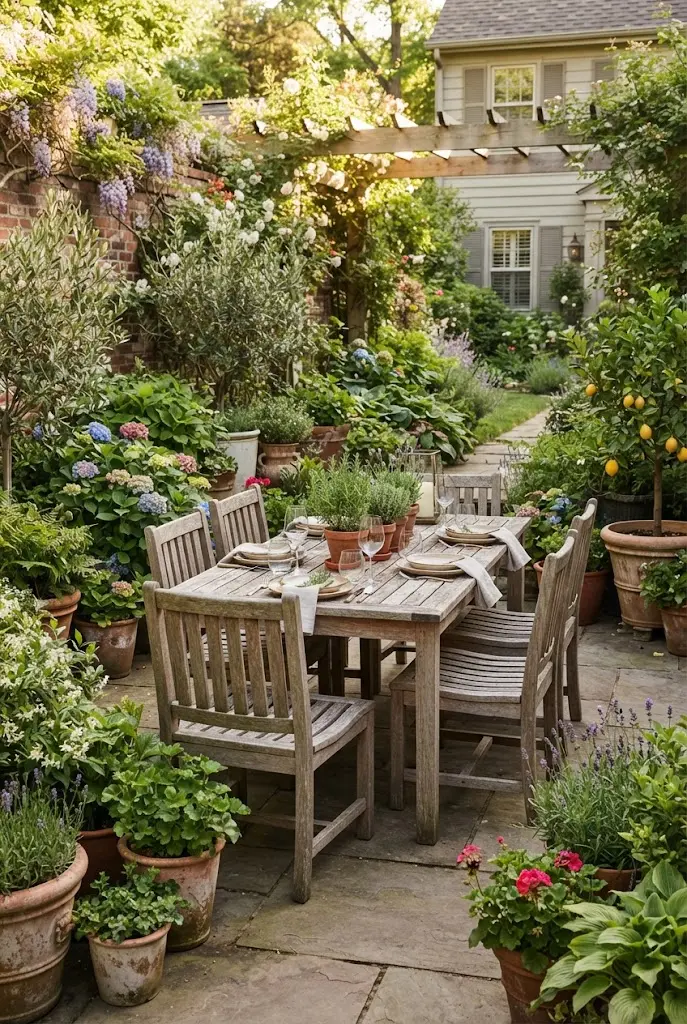
Potted plants can help a dining area feel immersed in the garden. Use a combination of large planters, smaller pots, and elevated containers to create visual variety. Choose plants that suit the local climate and the amount of sunlight available. Terracotta pots can provide warmth while stone or ceramic planters create a more refined appearance. Place larger containers around the outer edges rather than crowding the table. Small herb pots can serve as attractive centerpieces while also being useful for cooking. Varying plant heights can create a layered garden effect. Keep enough open space around the chairs so guests can move comfortably. Greenery can also provide a natural sense of privacy around the dining area. This simple approach works in both large backyards and compact patios.
9. Choose a Natural Stone Patio
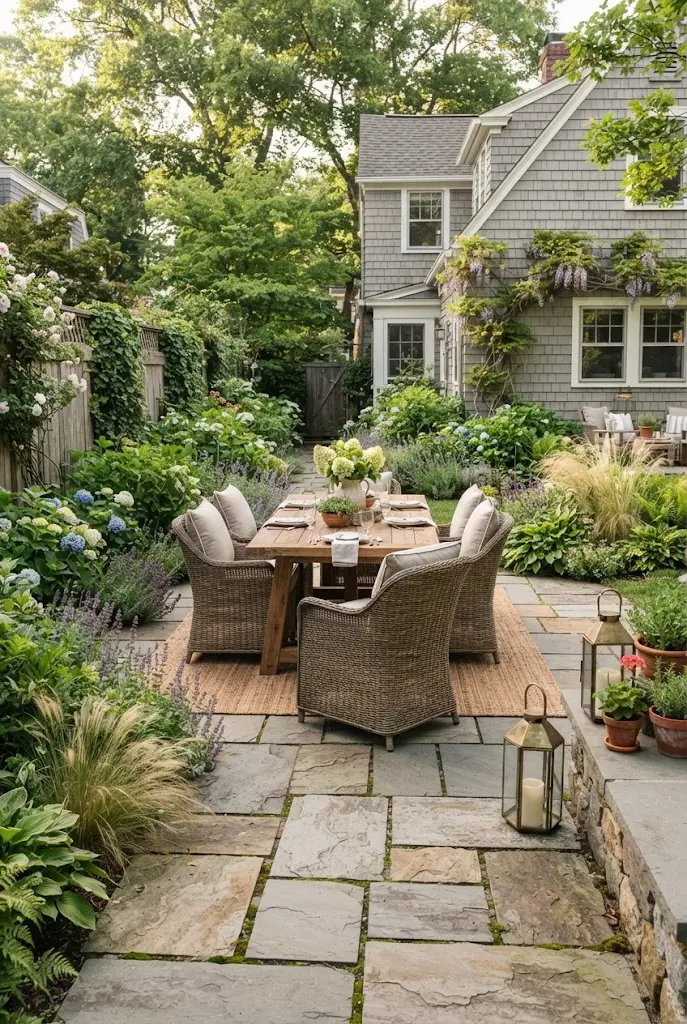
A natural stone patio can provide a durable and visually beautiful foundation for an outdoor dining area. Materials such as flagstone, limestone, or slate can complement garden landscaping naturally. Choose furniture that balances the texture of the stone rather than competing with it. A wooden dining table can add warmth against cooler stone surfaces. Neutral outdoor cushions can soften the overall appearance. Surround the patio edges with flowering plants, ornamental grasses, and shrubs. A large outdoor rug can visually define the dining zone while adding comfort. Simple lanterns can create a welcoming atmosphere in the evening. The natural variation in stone makes every patio feel unique. This foundation can support a garden dining area for many seasons with proper maintenance.
10. Use a Round Dining Table
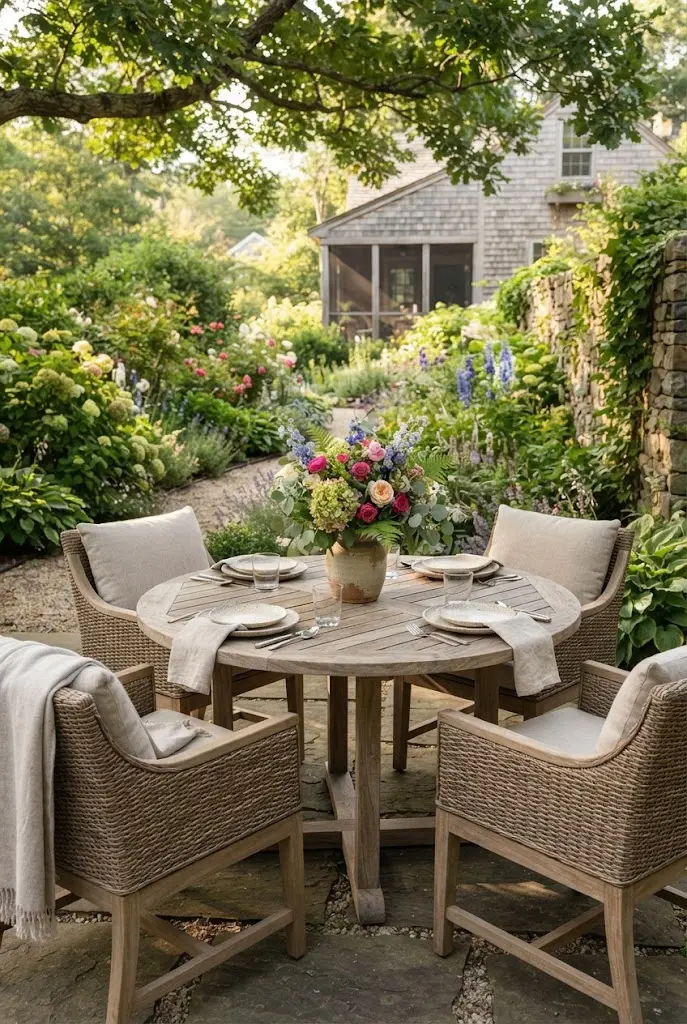
A round dining table can encourage conversation because everyone faces toward the center. It is also a practical choice for smaller garden dining areas where a rectangular table may feel bulky. Choose a weather-resistant material such as treated wood, metal, or durable outdoor composite. Surround the table with comfortable chairs that leave enough space for movement. A small vase of garden flowers can make an easy centerpiece. Place the table beneath a tree or umbrella for natural shade during sunny afternoons. Nearby planters can frame the dining area without making it feel crowded. Neutral textiles keep the arrangement relaxed and versatile. Round tables can work equally well for breakfast, lunch, or evening drinks. This layout creates a naturally social atmosphere for small outdoor gatherings.
11. Add an Outdoor Dining Umbrella
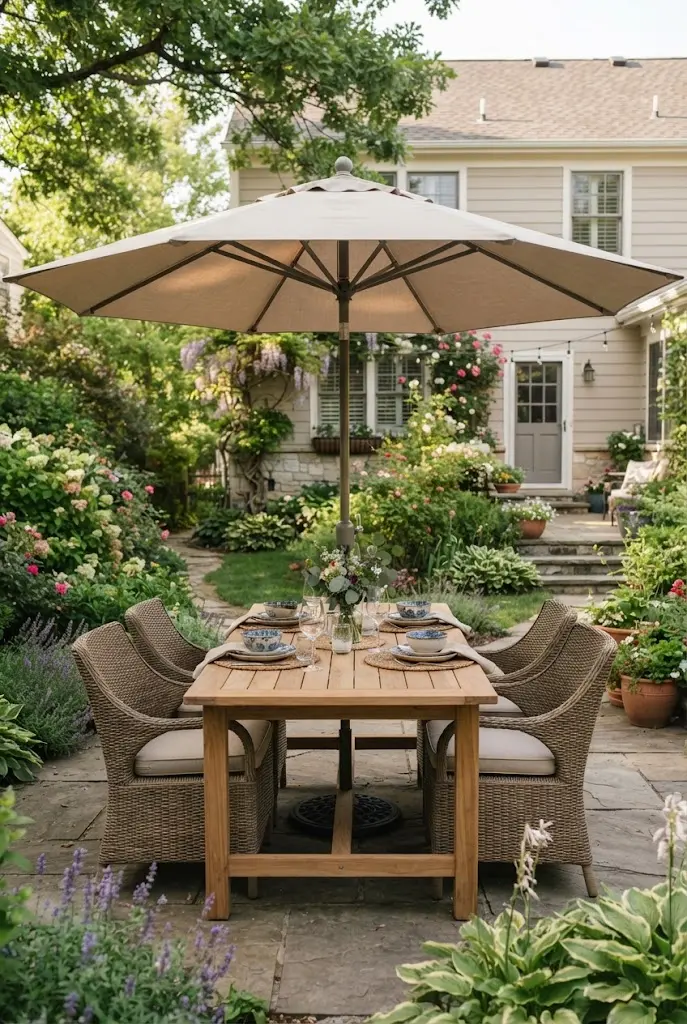
An outdoor umbrella can provide valuable shade while adding visual structure to a garden dining area. Choose a large umbrella that comfortably covers the dining table without overwhelming the surrounding space. Neutral canvas shades blend easily with greenery and natural furniture. A wooden or powder-coated frame can coordinate with the table and chairs. Keep the area beneath the umbrella open and uncluttered so guests can move comfortably. Add a simple centerpiece and durable outdoor dinnerware for a polished appearance. Position the dining area near flowers and shrubs for a strong connection with nature. An umbrella also makes the space more comfortable during bright summer afternoons. Choose a sturdy, outdoor-rated design suitable for local weather conditions. This combination creates a practical setting for casual lunches and family meals.
12. Decorate With Fresh Garden Flowers
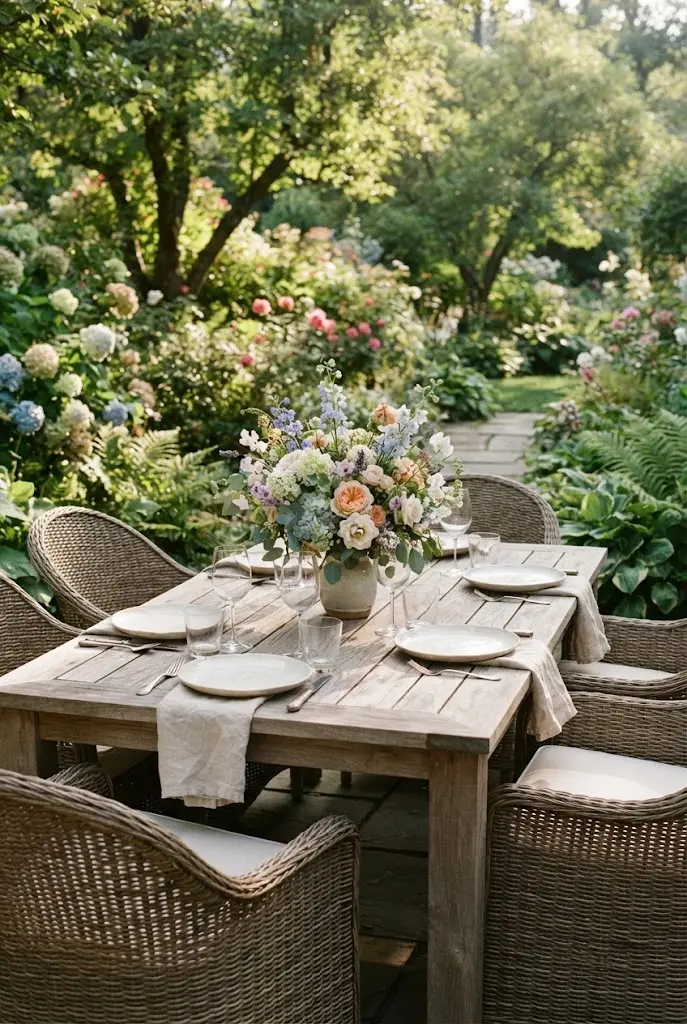
Fresh flowers can make an outdoor dining table feel special without requiring elaborate decoration. Choose flowers that coordinate naturally with the plants already growing around the garden. A small ceramic vase can keep the centerpiece casual and understated. Wildflowers, roses, hydrangeas, or seasonal garden blooms can all work beautifully. Avoid creating arrangements that are so tall they block conversation across the table. Pair the flowers with simple linen napkins and neutral dinnerware. Natural wood furniture can make the colors of the flowers stand out beautifully. Surround the table with greenery to create a cohesive outdoor setting. Replace flowers seasonally to keep the dining area feeling fresh. This idea works particularly well for weekend brunches and special outdoor dinners.
13. Create a Covered Outdoor Dining Room
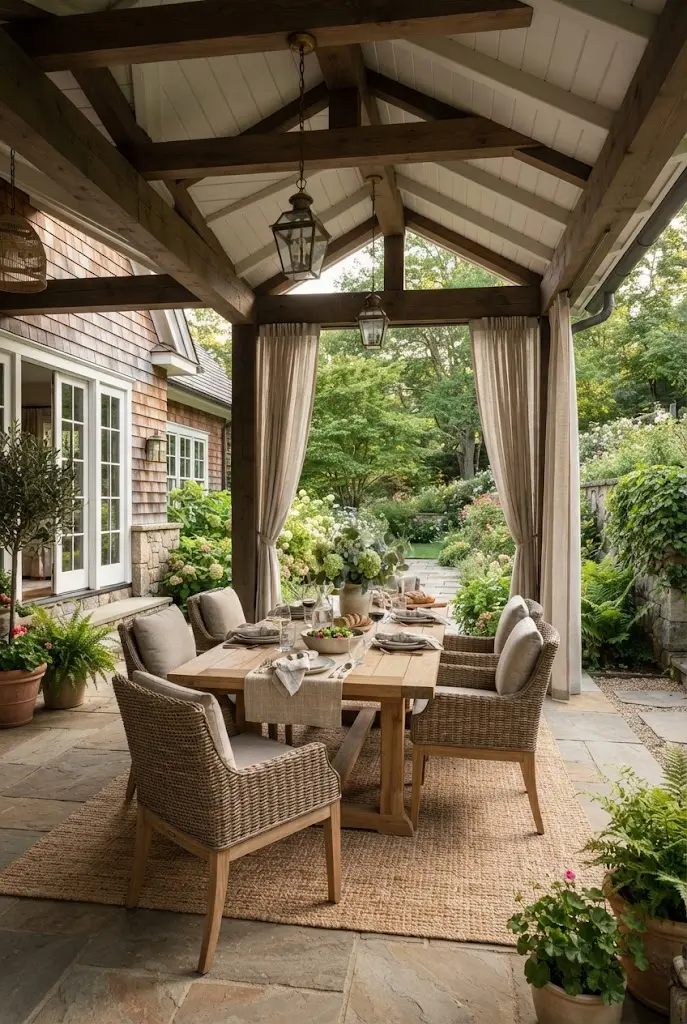
A covered outdoor dining area can provide more protection from sun and light weather while extending the usefulness of your garden space. A roofed patio, screened porch, or covered terrace can function almost like an additional dining room. Choose weather-resistant furniture with comfortable seating for everyday use. Outdoor curtains can add privacy and soften the architecture. A large table creates room for family meals and entertaining. Layer in rugs, lanterns, and natural textiles to make the area feel finished. Plants in large containers can bring the garden directly into the dining space. Keep the palette coordinated with the home’s exterior for a cohesive appearance. Good ventilation and appropriate lighting are important for comfort. The result can be a versatile space for dining throughout much of the year.
14. Use a Coastal-Inspired Garden Palette
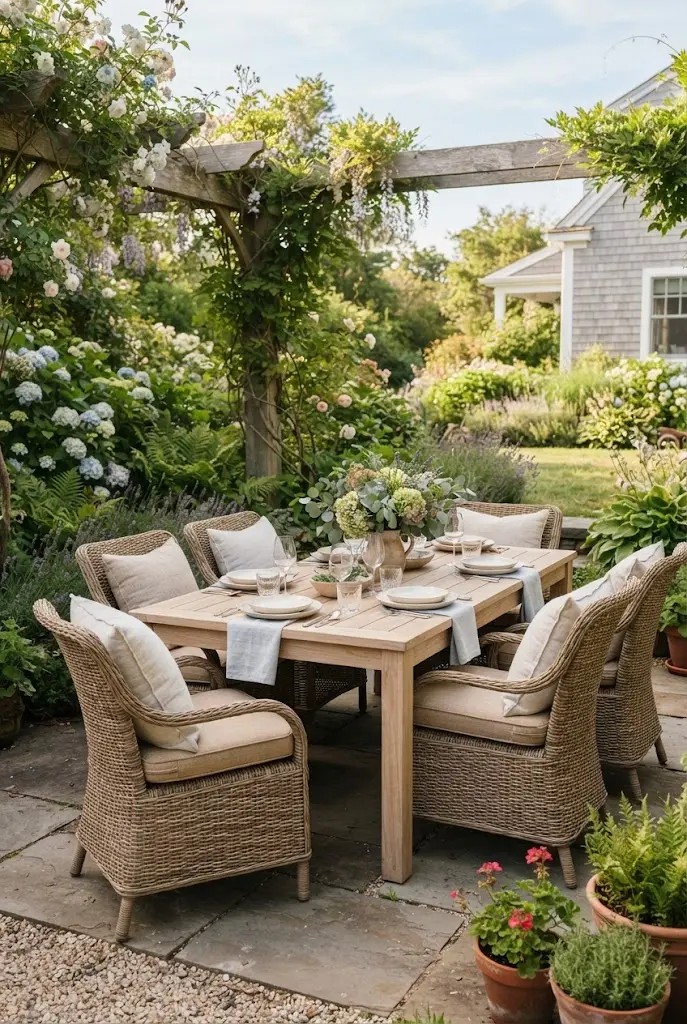
A coastal-inspired palette can give a garden dining area a light and relaxed feeling even when the home is far from the coast. Use soft whites, sandy beige, pale blue, and natural wood tones for the furniture and textiles. Woven chairs can add texture while maintaining an airy appearance. Keep table decorations simple with ceramic dishes, glassware, and subtle greenery. Light-colored cushions can make the seating feel especially inviting. Surround the dining space with natural plants rather than overly formal landscaping. Weathered wood accessories can reinforce the relaxed coastal character. Soft outdoor lighting can keep the atmosphere welcoming after sunset. This palette works especially well for summer entertaining. The goal is to create a breezy garden atmosphere without making the décor feel themed or excessive.
15. Add a Fire Pit Near the Dining Area
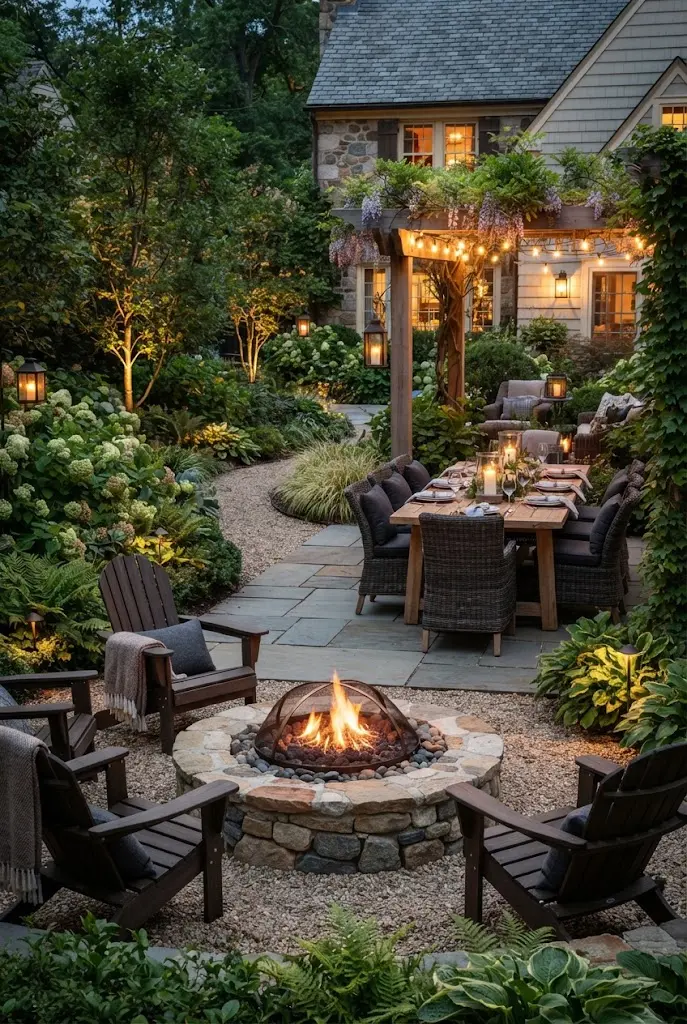
A fire pit positioned near the dining area can make outdoor entertaining more comfortable after sunset. Keep the fire feature at a safe distance from the dining table and follow local safety requirements. A circular stone or metal fire pit can complement natural garden materials. Arrange the dining furniture so guests have both a comfortable dining zone and a nearby place to gather around the fire. Warm lighting can create continuity between the two spaces. Use weather-resistant seating and textiles throughout the area. Natural stone, gravel, and greenery can help integrate the fire feature into the landscape. Keep decorations away from the heat source and maintain clear pathways. This layout is especially suitable for cool evenings and casual gatherings. The dining area becomes part of a larger outdoor entertaining space rather than an isolated table.
16. Build a Garden Dining Area Around a View
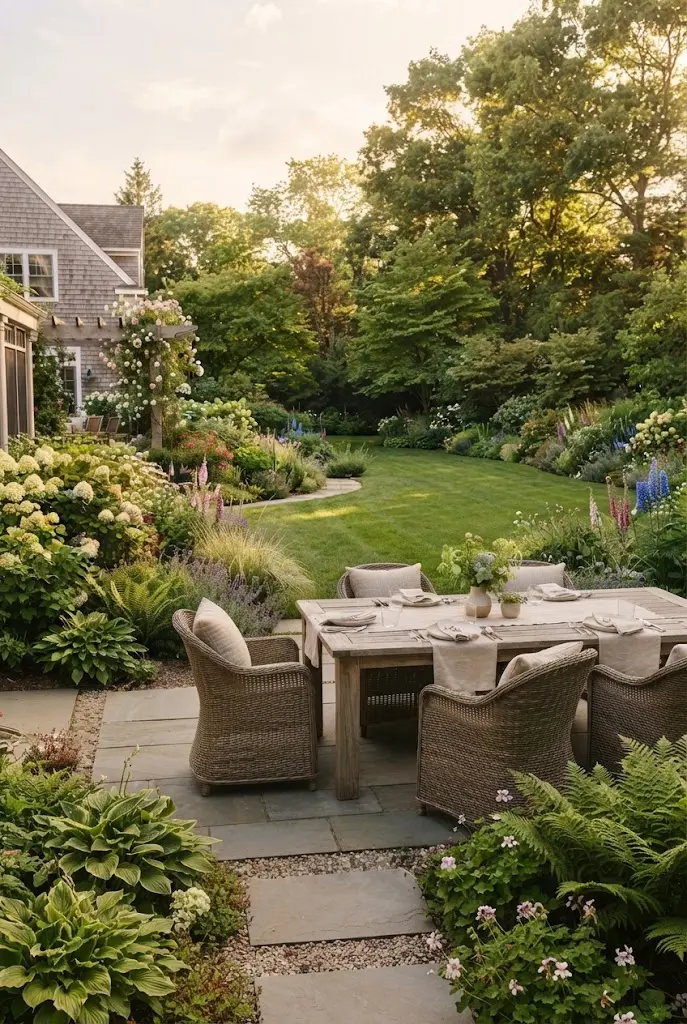
If your backyard has a beautiful garden view, arrange the dining furniture so guests can enjoy it while eating. Position the table toward flowering beds, mature trees, a landscaped lawn, or another attractive focal point. Keep the furniture low enough that it does not block the scenery. Neutral colors allow the garden to remain the visual star. Comfortable chairs encourage guests to linger and enjoy the surroundings. A simple centerpiece can add interest without competing with the view. Use natural materials such as wood, wicker, stone, and linen for a harmonious look. Outdoor lighting can preserve the atmosphere after sunset without overpowering the landscape. This approach turns the garden itself into part of the dining experience. Thoughtful placement can make even a simple table feel like a memorable outdoor destination.