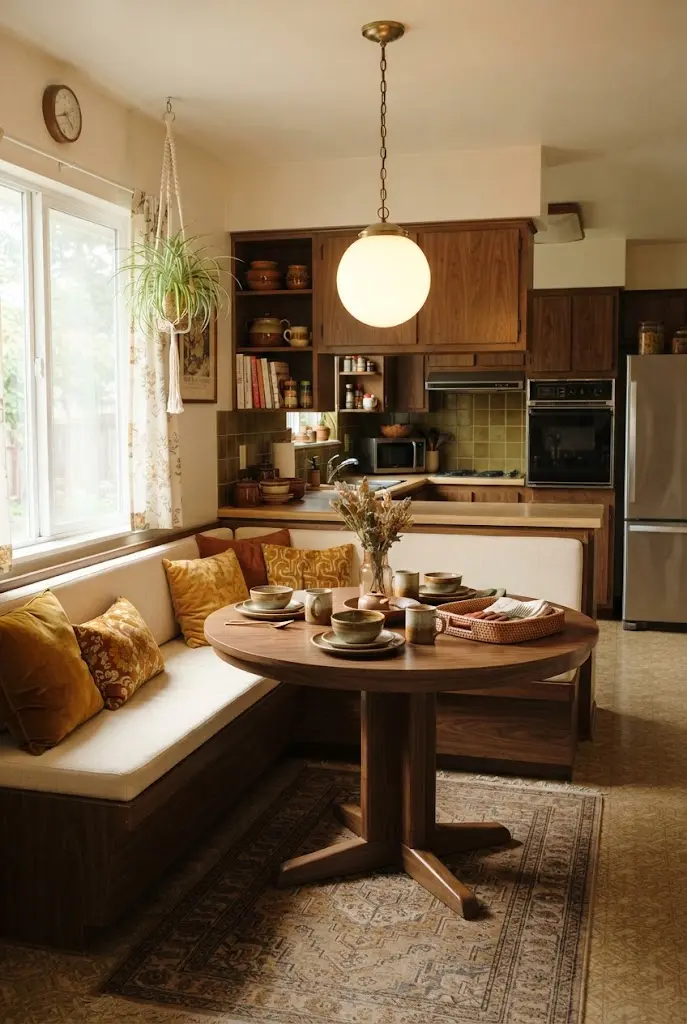
16 Indoor Plant Wall Decor Ideas for Beautiful Green Walls
Indoor plant walls are an easy way to bring a fresh, natural feeling into American homes without requiring a complete interior makeover. From small apartment corners to spacious living rooms, wall-mounted greenery can add texture, color, and personality. You can use real houseplants, preserved greenery, faux plants, or a combination of different styles. Plant walls also work beautifully in bedrooms, kitchens, entryways, home offices, and dining areas. Shelves, hanging planters, trellises, and vertical gardens make it possible to create a look that fits almost any decorating style. Whether your home is modern, farmhouse, boho, minimalist, or traditional, there is an indoor plant wall idea to match it. These ideas can help you create an inviting green focal point while making better use of vertical space.
1. Floating Shelves Filled With Greenery
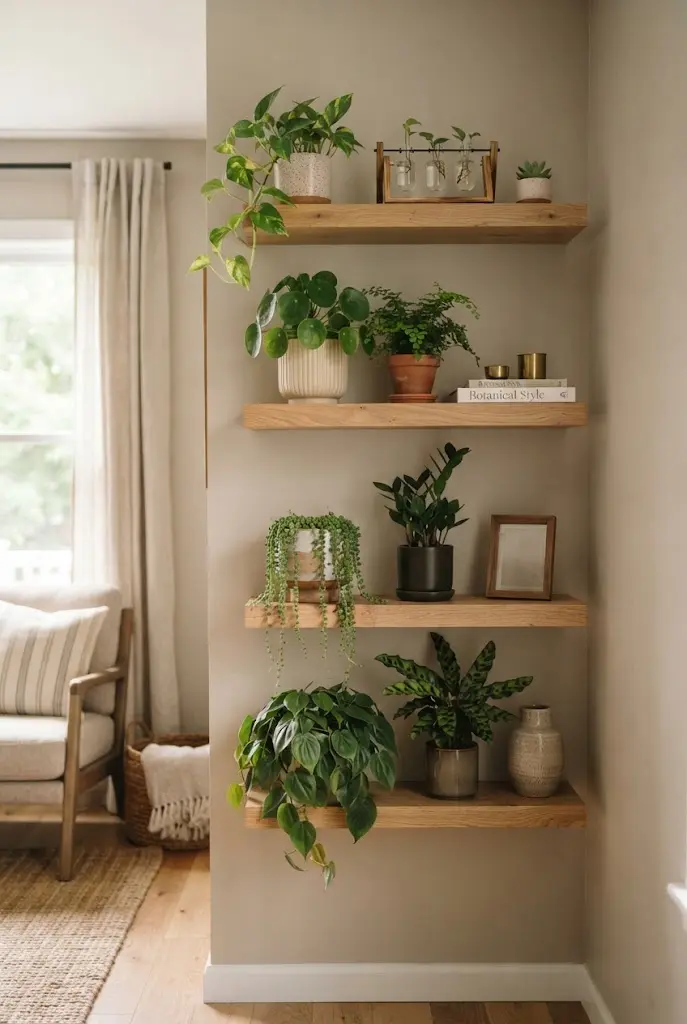
Floating shelves are one of the easiest ways to create an indoor plant wall without permanently covering the entire wall. Install several wooden shelves vertically with enough space between them for plants to grow naturally. Mix trailing pothos, compact snake plants, small ferns, and decorative pots for visual variety. Natural wood shelves can create a warm farmhouse or Scandinavian-inspired appearance. White shelves work especially well against darker walls because the greenery becomes the main focal point. For American apartments and smaller homes, this arrangement is especially useful because it uses vertical space instead of valuable floor space. Place the shelves near a bright window when using real plants. Decorative books and small pottery pieces can be mixed between plants for a layered display. Keep the arrangement slightly asymmetrical to make it feel more natural. The result is a simple green wall that looks stylish without becoming overwhelming.
2. Vertical Plant Trellis Wall
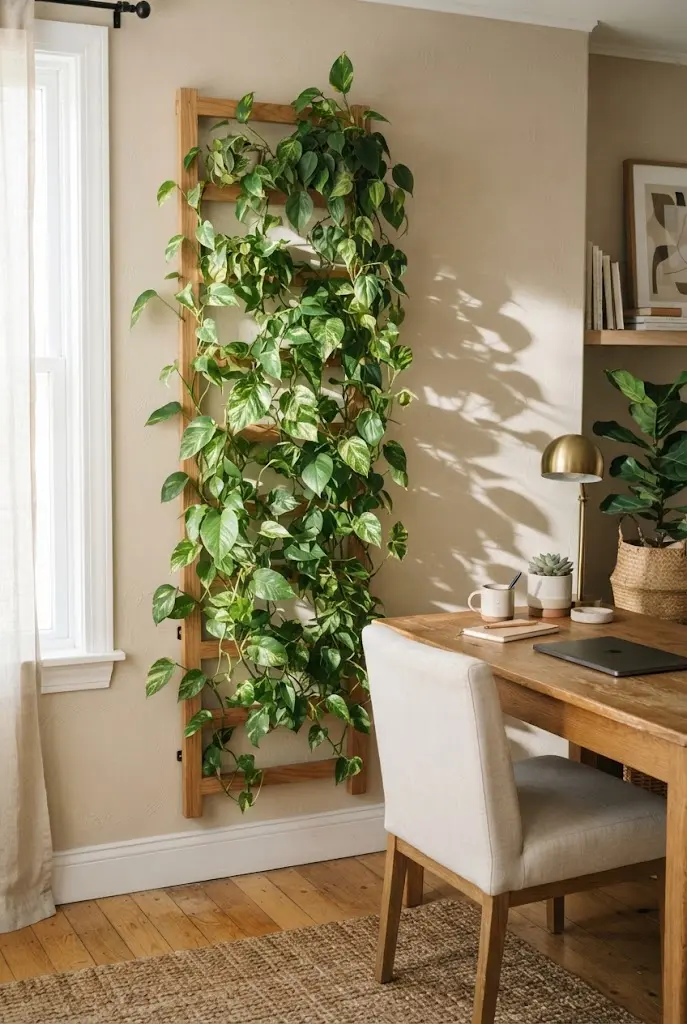
A vertical trellis can turn a plain interior wall into a living-looking botanical feature. Choose a wooden or metal trellis that complements the existing furniture and flooring. Climbing plants such as pothos, philodendrons, and certain indoor vines can gradually create a fuller appearance. The structure provides support while also adding architectural interest to the wall. A natural wood trellis works particularly well in boho, organic modern, and farmhouse interiors. Keep the surrounding decor simple so the greenery remains the main attraction. A few small planters at the base can make the wall feel more connected to the floor. For homes with pets, choose plant varieties carefully and place potentially unsafe plants where animals cannot reach them. This style works beautifully beside a reading chair or home office desk. Over time, the growing vines can make the wall feel like a natural indoor garden.
3. Hanging Planter Gallery Wall
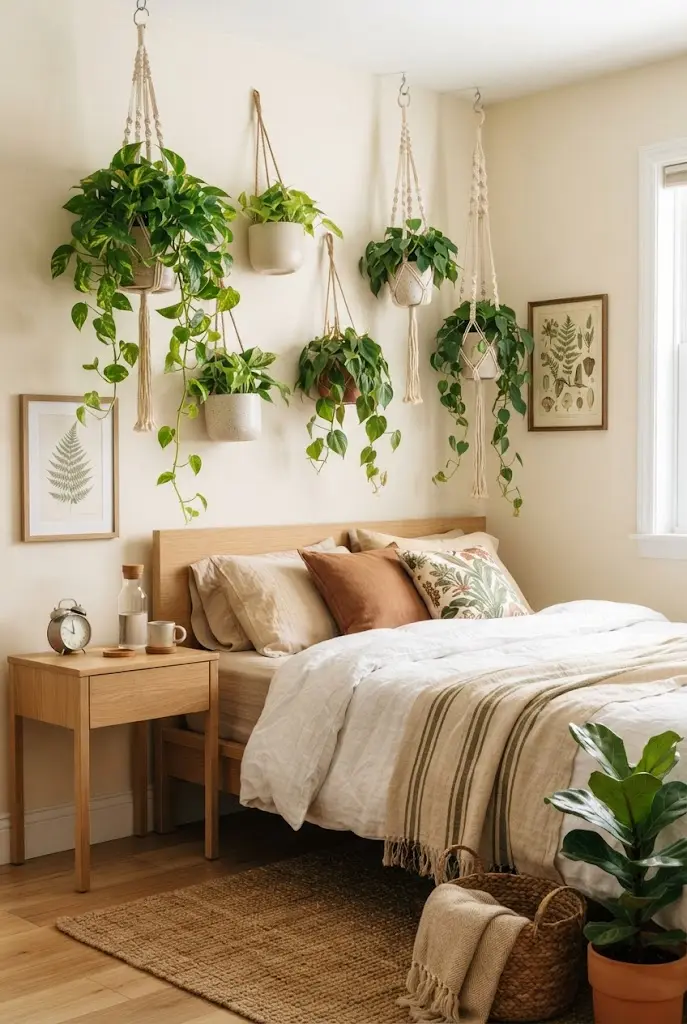
Turn your plant collection into a decorative gallery by arranging hanging planters at different heights. Use matching or complementary planters to keep the display visually organized. Macrame holders can add a relaxed boho feeling, while ceramic wall planters create a cleaner contemporary appearance. Choose plants with different leaf shapes to prevent the wall from looking repetitive. Trailing plants can soften the edges and create beautiful cascading greenery. This idea works particularly well in bedrooms, living rooms, and cozy reading corners. Keep enough distance between each planter so that every plant has room to stand out. A neutral wall provides an excellent backdrop for colorful green foliage. If using real plants, consider watering access before installing the planters. This approach creates a decorative focal point while maintaining a light and airy feeling.
4. Large Statement Plant Wall
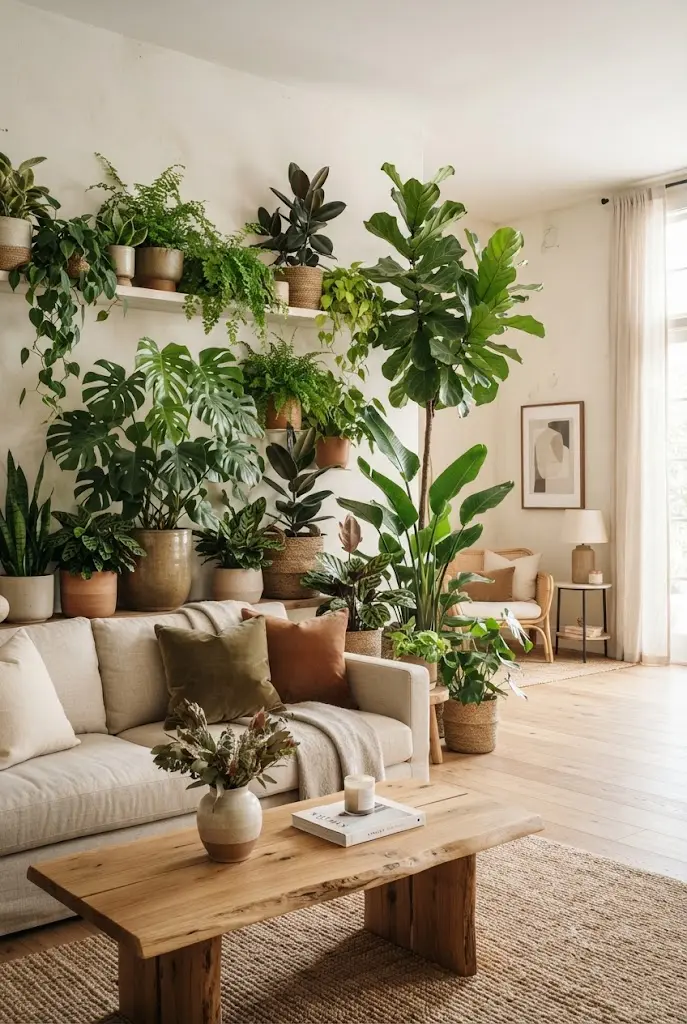
If you want your greenery to become the main feature of a room, create a large statement plant wall. Use multiple plants at different heights to build a layered botanical effect. Large monstera, fiddle-leaf fig, bird-of-paradise, and rubber plants can provide dramatic foliage. Place smaller plants around the larger varieties to create depth. A neutral wall allows the different shades of green to become more noticeable. This style can work especially well behind a sofa or in a spacious dining area. Use attractive planters in earthy materials such as ceramic, terracotta, stone, or woven fiber. Make sure the wall receives enough natural light if you are using living plants. A statement plant wall can make a room feel more connected to nature without needing additional artwork. Keep nearby accessories understated so the greenery remains visually dominant.
5. Small Plant Wall for an Apartment
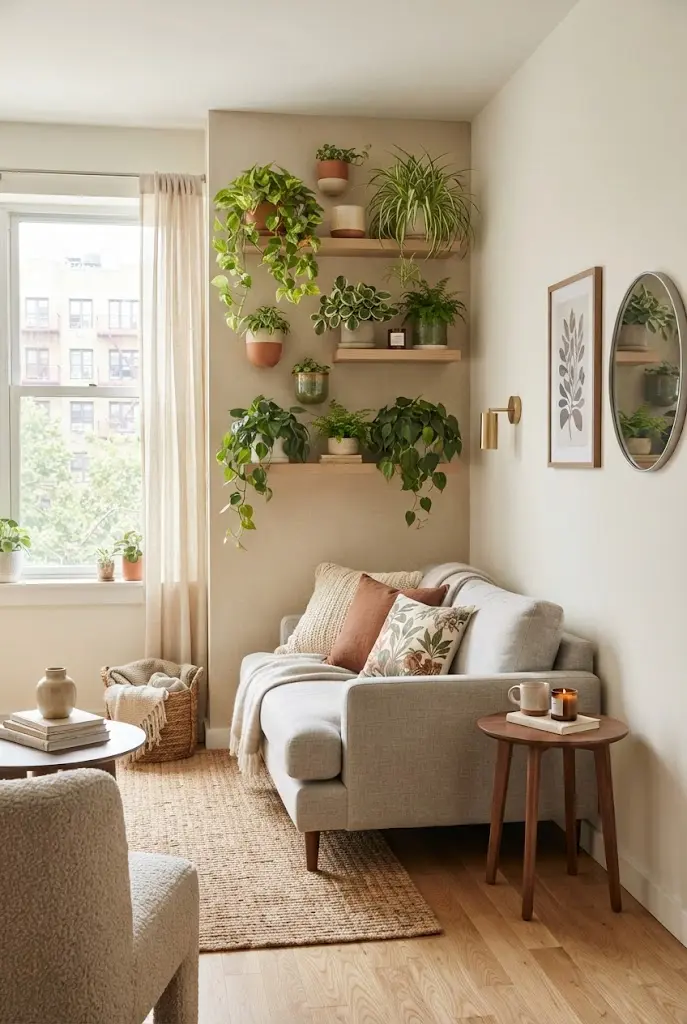
You do not need a large house to enjoy a beautiful indoor plant wall. A narrow section of wall can accommodate several compact plants without taking up much floor space. Use slim wall-mounted planters, small shelves, or hanging pots to maximize vertical space. Choose plants such as pothos, spider plants, peperomia, and small ferns. This arrangement is especially practical for apartments and condos where floor space may be limited. Keep the planter colors coordinated for a cleaner appearance. A warm white, beige, or light gray wall can make the greenery feel brighter. Consider placing the display near a window that provides suitable indirect light. Avoid overcrowding the arrangement because a little negative space helps small displays look intentional. The result is a compact indoor garden that adds personality to even the smallest home.
6. Boho Macrame Plant Wall
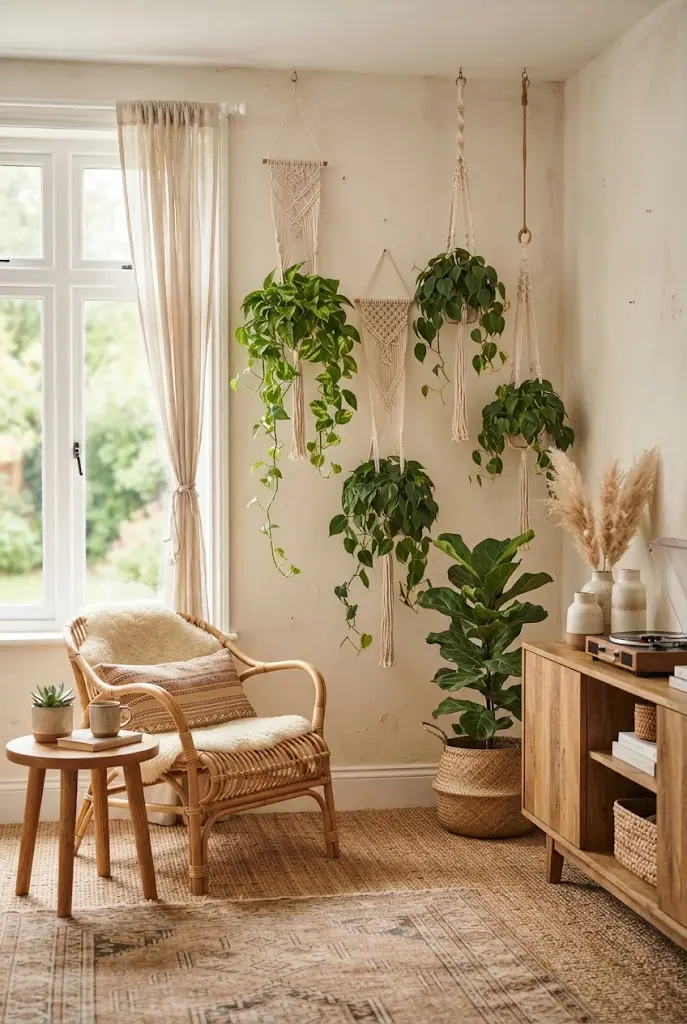
Macrame plant holders can give an indoor plant wall a warm and relaxed bohemian character. Choose natural cotton macrame in cream, ivory, or warm beige tones. Hang several holders at different heights to create a casual layered arrangement. Trailing plants are especially attractive because their leaves can fall naturally from the holders. Add woven baskets, rattan furniture, and textured textiles nearby to strengthen the boho theme. Avoid making every planter identical if you want a collected-over-time appearance. A warm neutral wall can make the greenery and woven textures stand out beautifully. This design works well in bedrooms, living rooms, and cozy corners. Use sturdy hooks and appropriate mounting hardware for the weight of each planter. With the right combination of texture and greenery, a macrame plant wall can become a relaxed decorative centerpiece.
7. Indoor Herb Wall in the Kitchen
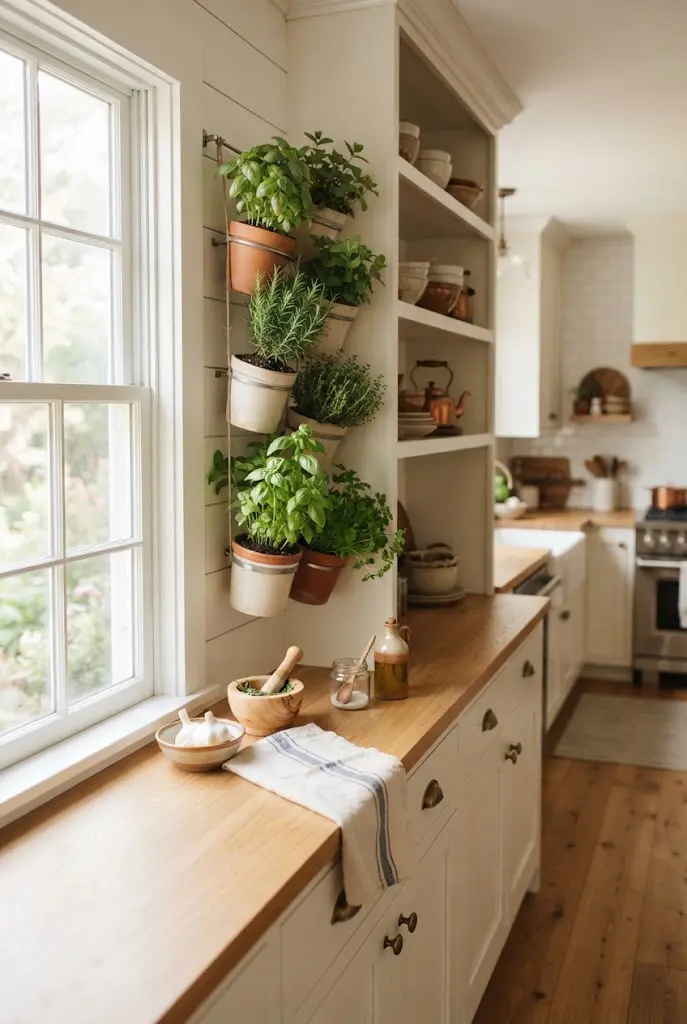
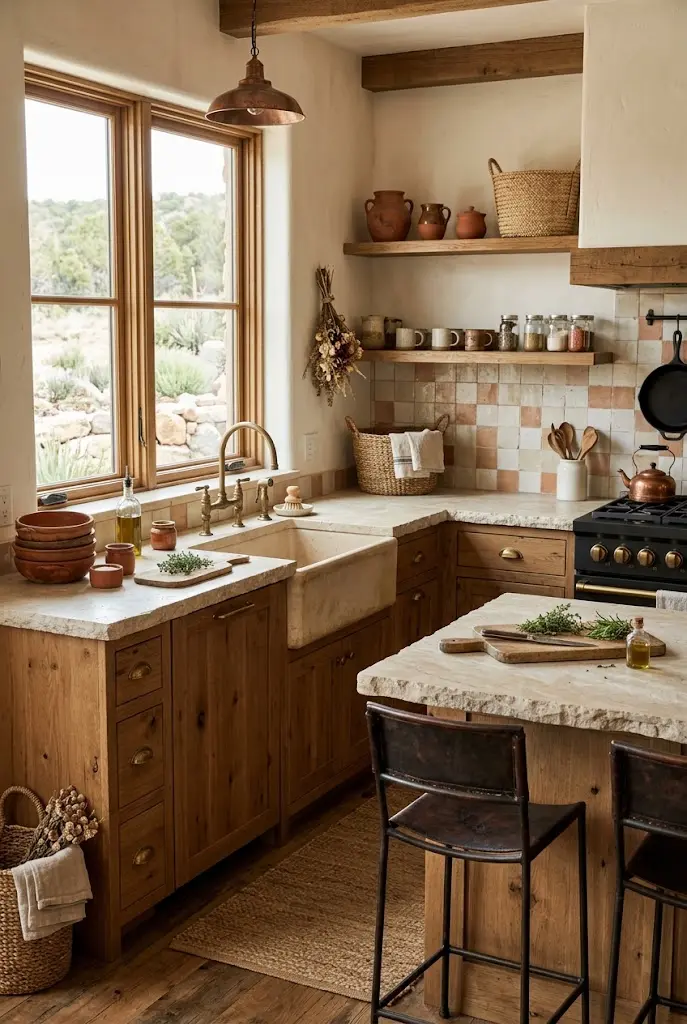
A kitchen plant wall can combine decoration with useful greenery. Install small wall-mounted planters for herbs such as basil, thyme, rosemary, mint, and parsley. Place the planters somewhere they can receive enough light for healthy growth. A sunny kitchen window wall can provide an attractive location for this arrangement. Use matching terracotta or ceramic pots to keep the display cohesive. Wooden labels can add a farmhouse-inspired touch, although the wall can also look beautiful without labels. Keep the plants away from areas where they could interfere with cooking or cleaning. This idea is especially suitable for homeowners who enjoy fresh ingredients. The greenery can soften hard surfaces such as tile, stone, and stainless steel. A compact herb wall can therefore provide both visual interest and everyday practicality.
8. Living Room Plant Shelf Wall
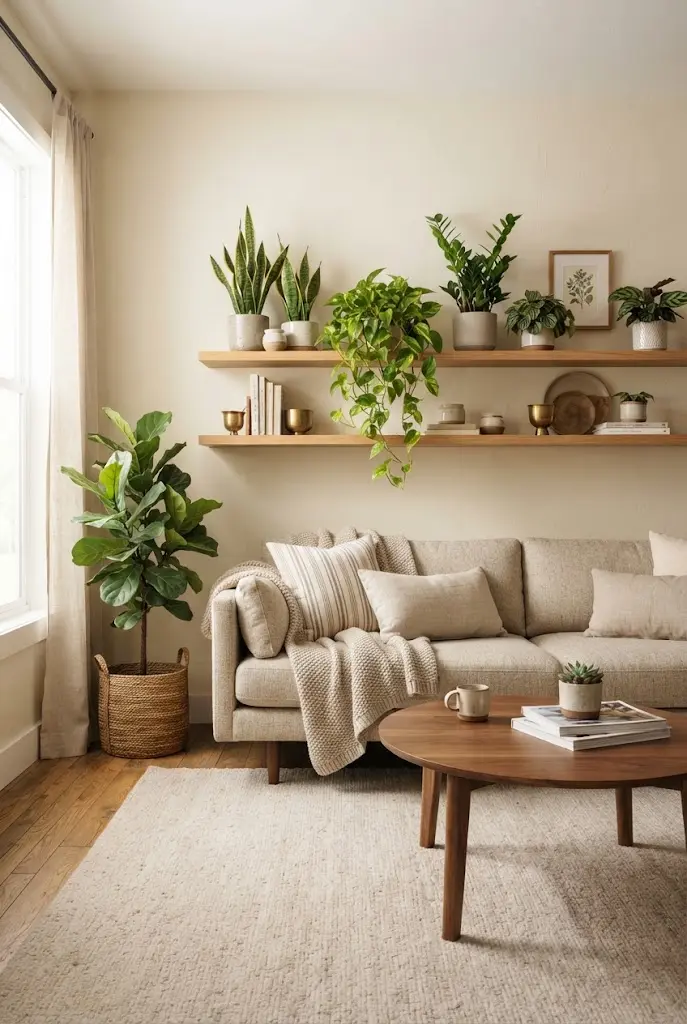
A full-width plant shelf can transform an otherwise plain living room wall into a botanical display. Use one long shelf or several staggered shelves depending on the available space. Combine upright plants with trailing varieties for contrast. Plants can be arranged alongside framed artwork, books, pottery, and small decorative objects. Keep the color palette restrained so the greenery remains visually cohesive. Natural wood shelves pair particularly well with neutral sofas and organic textures. This design can suit modern, Scandinavian, farmhouse, or transitional American interiors. If using real plants, place varieties with similar lighting requirements together. Leave some open shelf space to avoid creating a cluttered appearance. The finished wall can feel decorative, warm, and naturally inviting.
9. Bedroom Green Wall
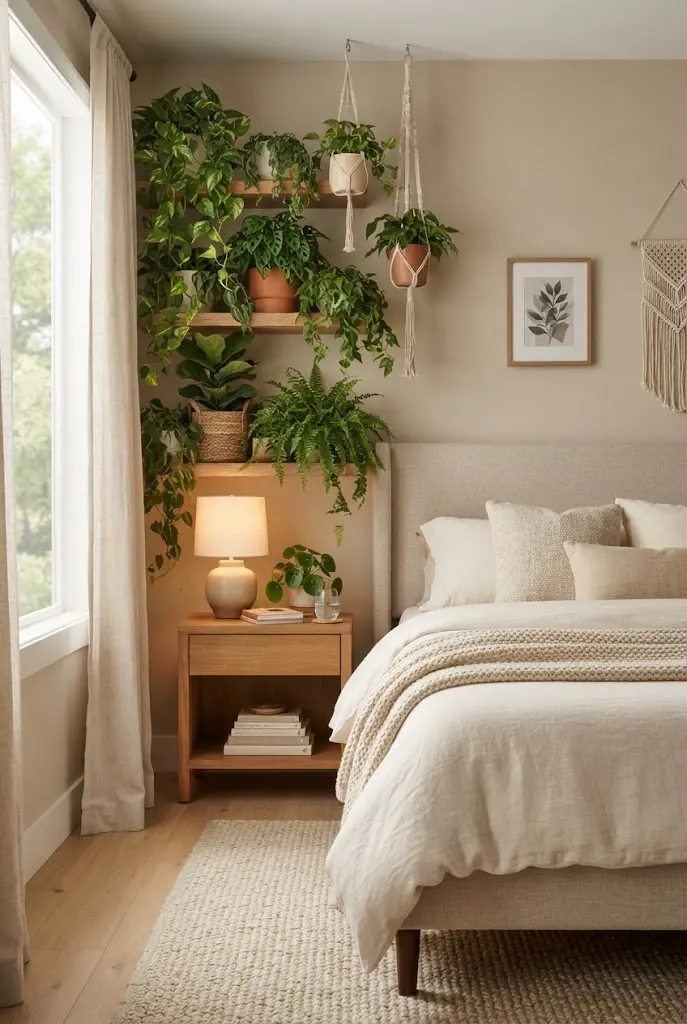
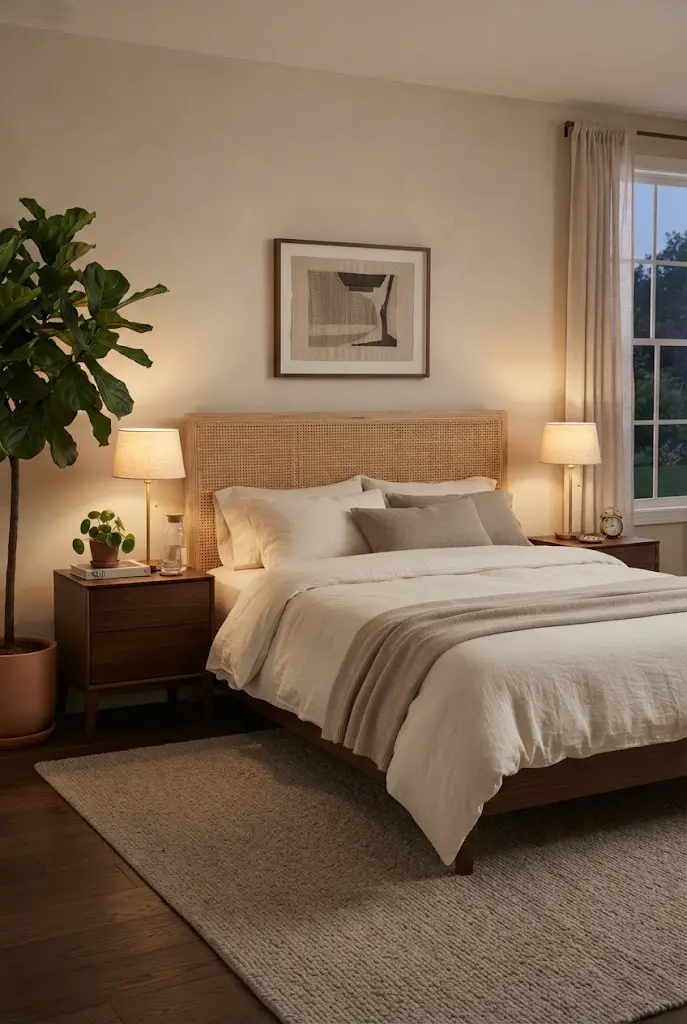
Adding plants to a bedroom wall can create a calming connection with nature. Choose plants with attractive foliage and arrange them around a headboard, beside the bed, or on an adjacent wall. Hanging planters and floating shelves can keep the display visually light. Soft green leaves pair beautifully with neutral bedding, natural wood, and woven textures. Avoid creating an arrangement that feels too crowded because bedrooms benefit from a sense of calm. Use low-maintenance plants if you do not want regular upkeep. If your bedroom receives limited sunlight, consider plants that tolerate lower-light conditions. Keep planters securely mounted, especially when they are positioned above furniture. A thoughtfully designed green wall can make the bedroom feel peaceful and refreshing. It can also provide a beautiful natural backdrop for everyday photographs.
10. Minimalist Green Wall
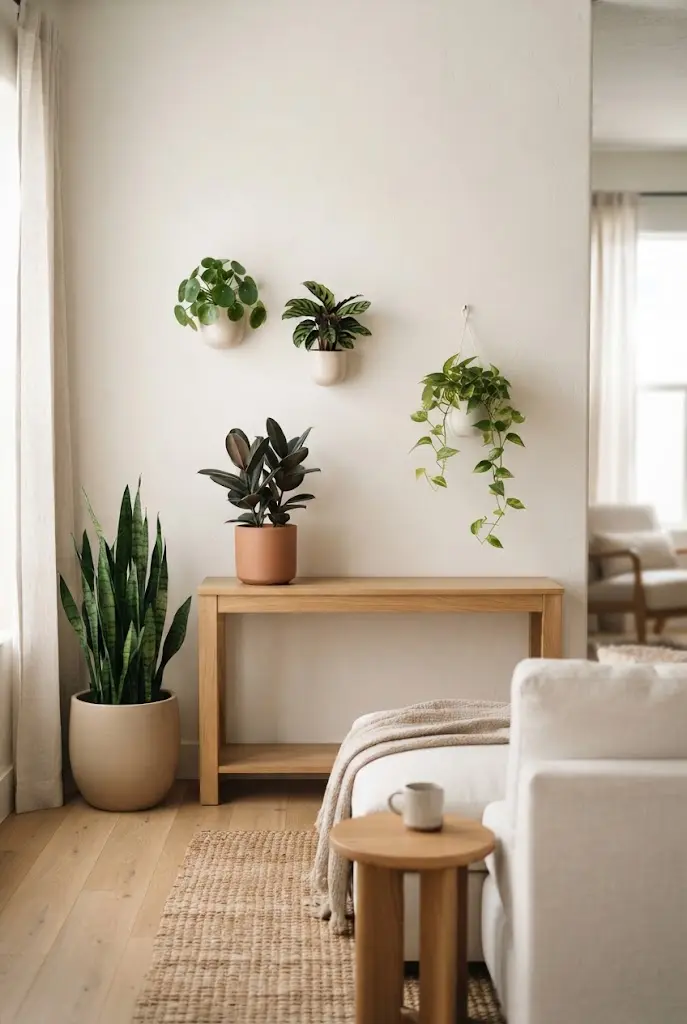
Minimalist interiors benefit from carefully selected plants rather than an excessive collection. Choose three to five plants with distinct silhouettes and place them in simple planters. White, beige, black, or natural stone planters can complement a clean neutral wall. Keep the arrangement spacious and intentional. A single large plant can be paired with two smaller wall-mounted plants for balance. This approach is perfect for contemporary American homes that favor uncluttered decor. Simple wooden shelves can add warmth without distracting from the greenery. Use plants with attractive architectural shapes, such as snake plants or rubber plants. The goal is to create visual interest while maintaining a peaceful atmosphere. A minimalist plant wall proves that a small number of carefully chosen pieces can have a strong decorative effect.
11. Rustic Wood Plant Wall
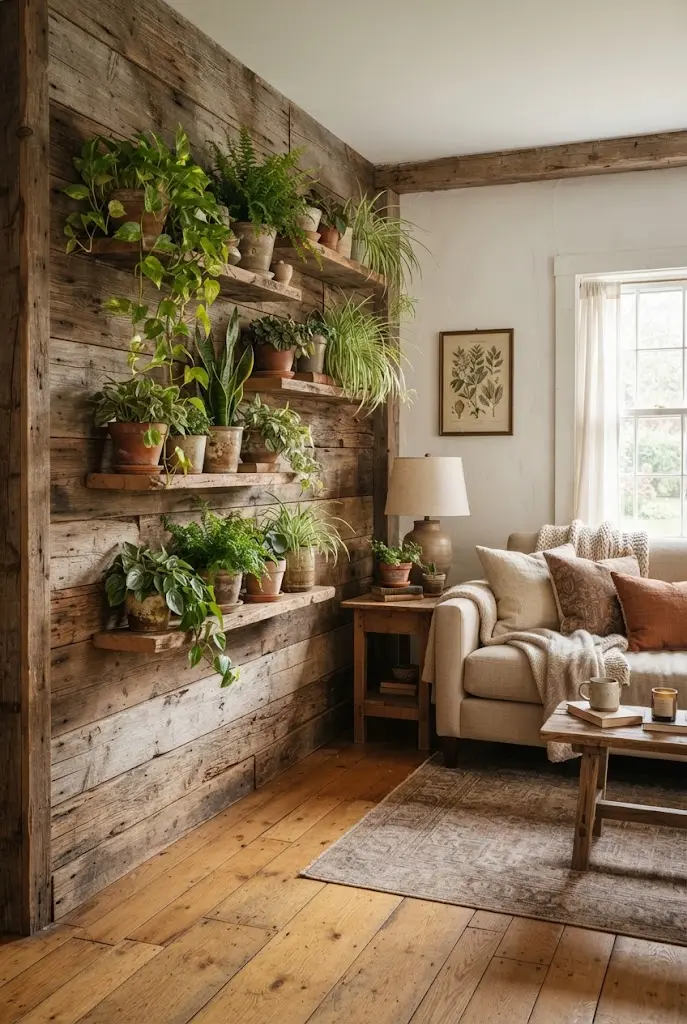
Rustic wood can give an indoor plant wall a cozy and authentic appearance. Reclaimed-looking boards, natural shelves, and wooden brackets can create a warm backdrop for greenery. Pair the wood with terracotta pots or handmade ceramic planters for additional texture. Trailing plants can soften the harder lines of the wood. This design works especially well in farmhouse, rustic, cottage, and lodge-inspired interiors. Choose wood with visible grain and subtle imperfections for a believable appearance. A few vintage-inspired accessories can complement the display without overpowering it. Place the arrangement in a living room, entryway, or dining space. Natural daylight will highlight both the wood texture and plant leaves. The combination of organic materials can make the entire room feel warmer and more welcoming.
12. Entryway Plant Wall
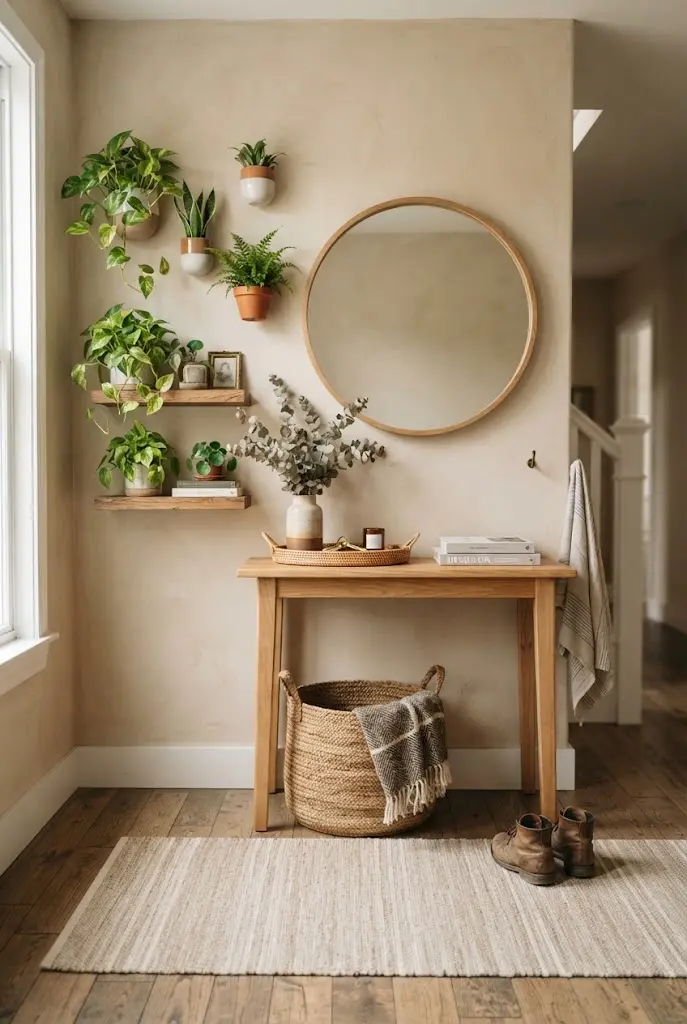
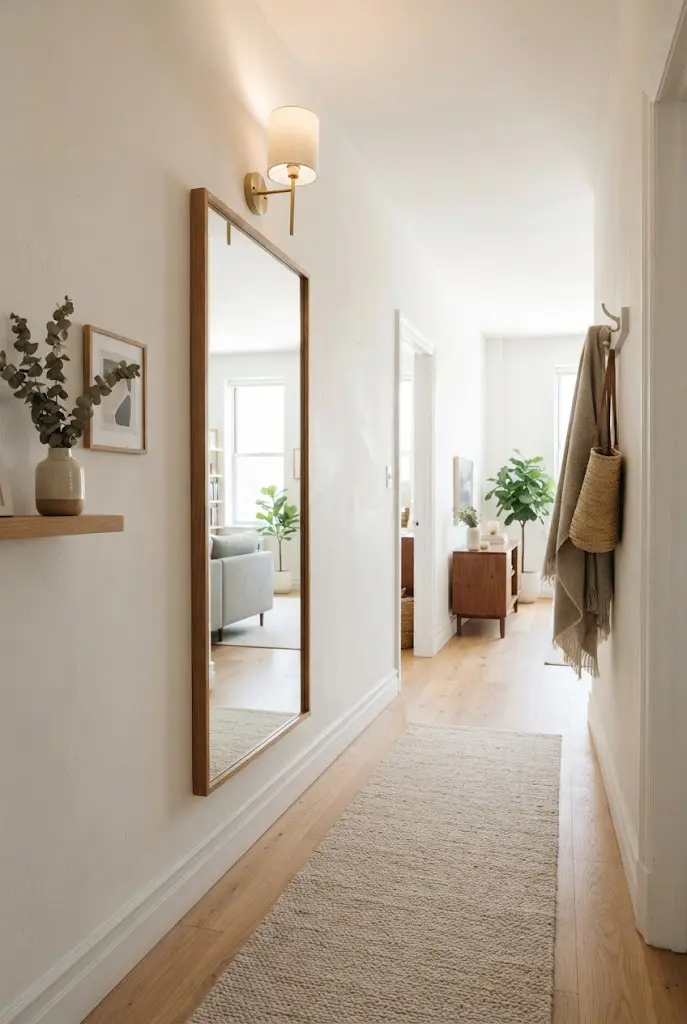
An entryway plant wall can make the first part of your home feel welcoming and fresh. Use a narrow console table with wall-mounted planters or shelves above it. Select plants that do not require constant attention if the entryway has limited natural light. Small ferns, pothos, snake plants, and artificial greenery can work depending on the conditions. Keep the arrangement relatively compact so that the walkway remains open. A mirror can be positioned nearby to reflect light and make the space feel larger. Natural wood, woven baskets, and neutral ceramics can complement the plants. This setup works particularly well in apartments and suburban homes where entryway space is limited. Choose secure wall hardware so nothing can easily fall into a walking area. A green entryway creates a simple but memorable transition into the rest of the home.
13. Home Office Plant Wall
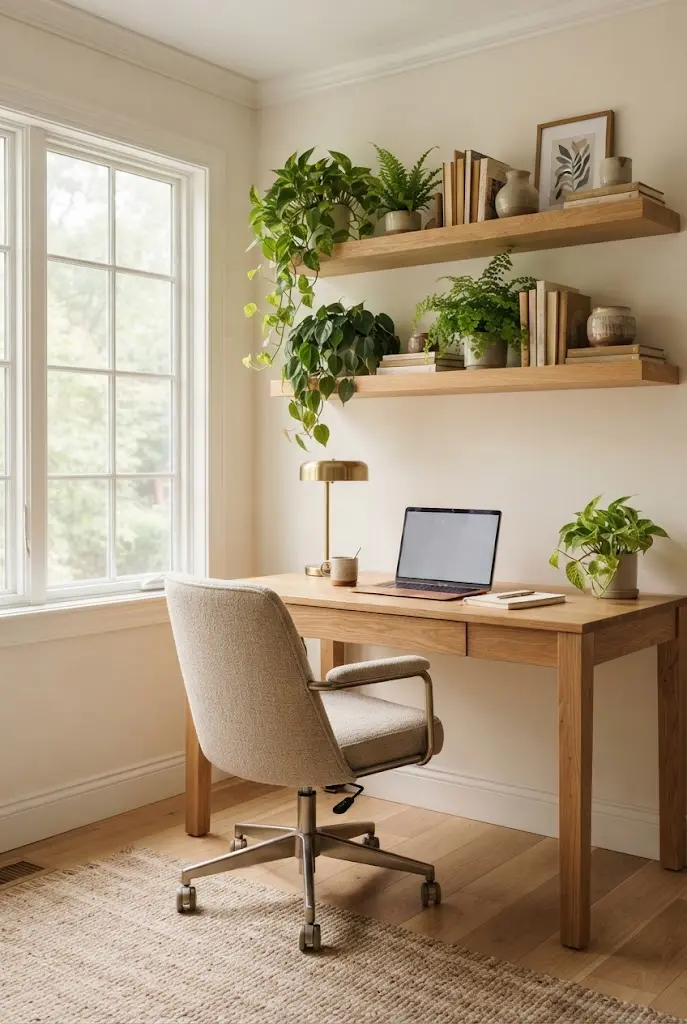
Plants can add softness and visual interest to a home office without taking away from its functionality. Install a few shelves above or beside your desk for easy access and attractive organization. Combine plants with books, stationery, framed prints, and simple decorative objects. Choose plants that suit the available natural light. Trailing greenery can add movement while upright plants create stronger vertical lines. Natural wood shelves work particularly well with neutral desks and ergonomic furniture. Keep the plant arrangement away from electronics and work surfaces where water could cause problems. A green backdrop can make video-call backgrounds feel more inviting when arranged thoughtfully. Avoid overcrowding the workspace because functionality should remain the priority. The finished setup can make working from home feel more comfortable and connected to nature.
14. Bathroom Plant Wall
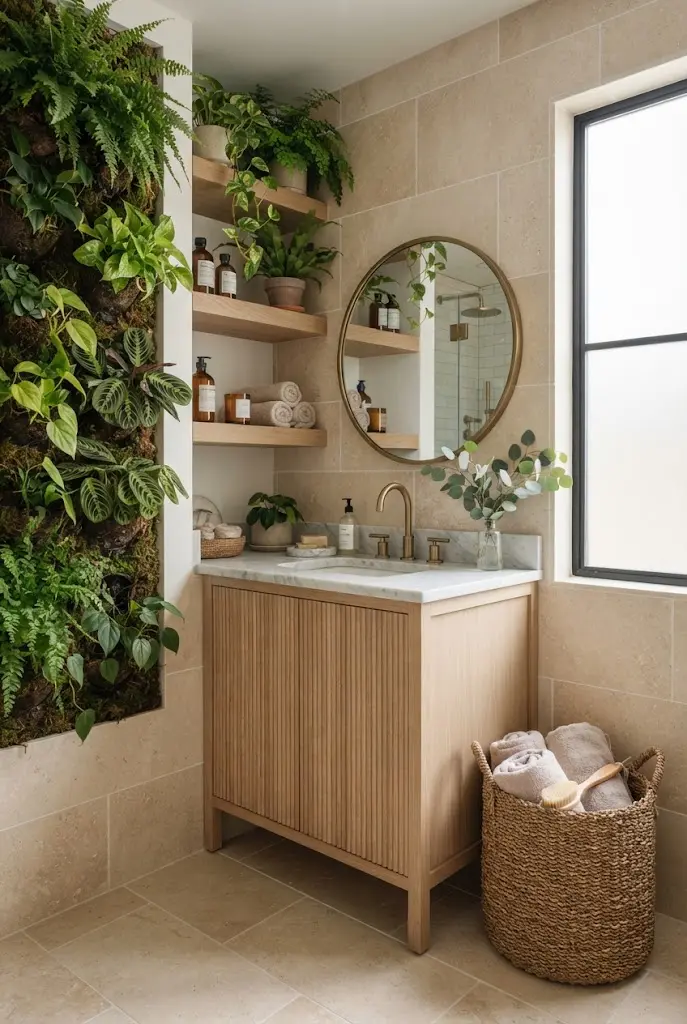
A bathroom can become a refreshing indoor garden with the right plant wall arrangement. Use moisture-loving plants such as certain ferns, pothos, or other varieties suited to humid conditions. Wall shelves can provide space for small pots without taking up valuable counter space. Natural wood and stone accessories can reinforce a spa-inspired atmosphere. Keep plants away from areas where they could obstruct showers, sinks, or electrical fixtures. A light-colored wall can make the greenery appear especially vibrant. Hanging plants can also soften the hard edges of tile and glass. Choose waterproof or moisture-resistant mounting materials for safety and durability. This approach can turn an ordinary bathroom into a relaxing retreat. The combination of greenery and natural materials creates a calm, spa-like feeling.
15. Faux Plant Wall for Low-Maintenance Decor
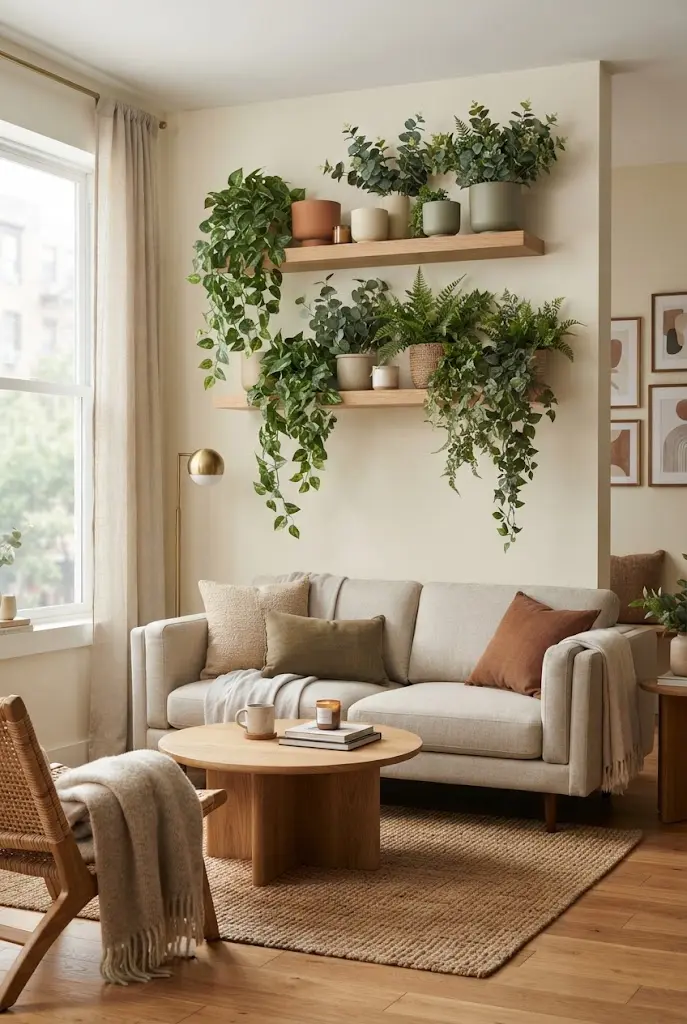
A faux plant wall is a practical option for rooms that do not receive enough natural light for living plants. High-quality artificial greenery can provide the visual effect of a botanical wall without watering or pruning. Choose realistic leaves with varied shades of green rather than overly uniform plastic-looking foliage. Combine faux vines with wall-mounted planters, shelves, or decorative panels. This option can work especially well in dark apartments, basements, offices, and interior hallways. Keep the arrangement simple and believable so it does not appear artificial. Dust the leaves regularly to maintain a fresh appearance. Neutral planters can help the greenery blend naturally with the room. Faux plants can also be combined with a few real plants elsewhere in the room. With careful selection, a low-maintenance green wall can remain attractive throughout the year.
16. Dining Room Botanical Wall
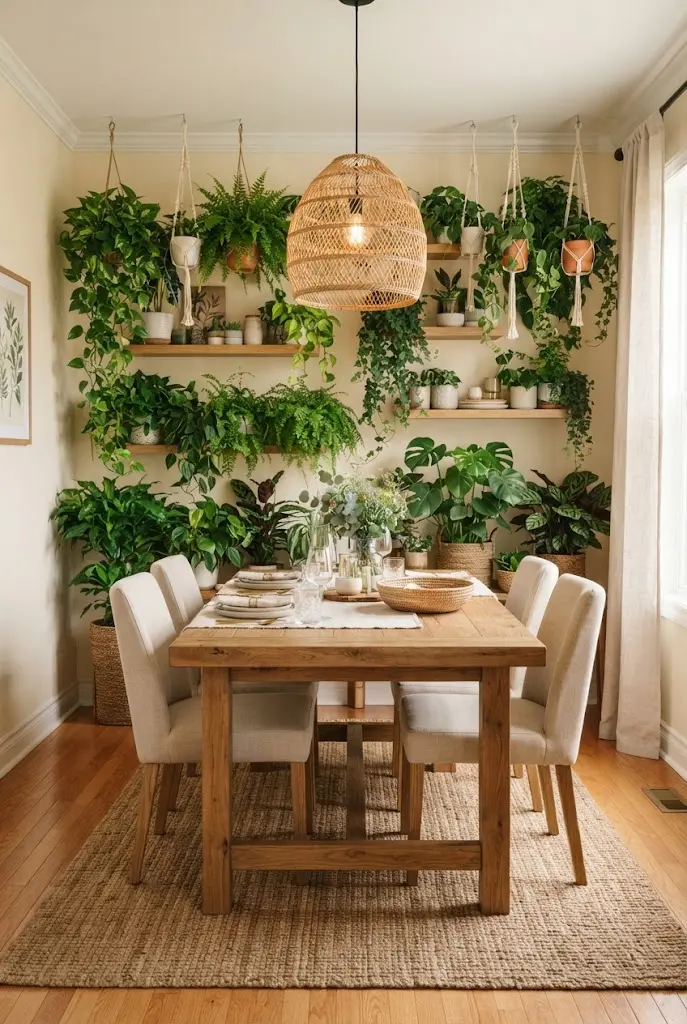
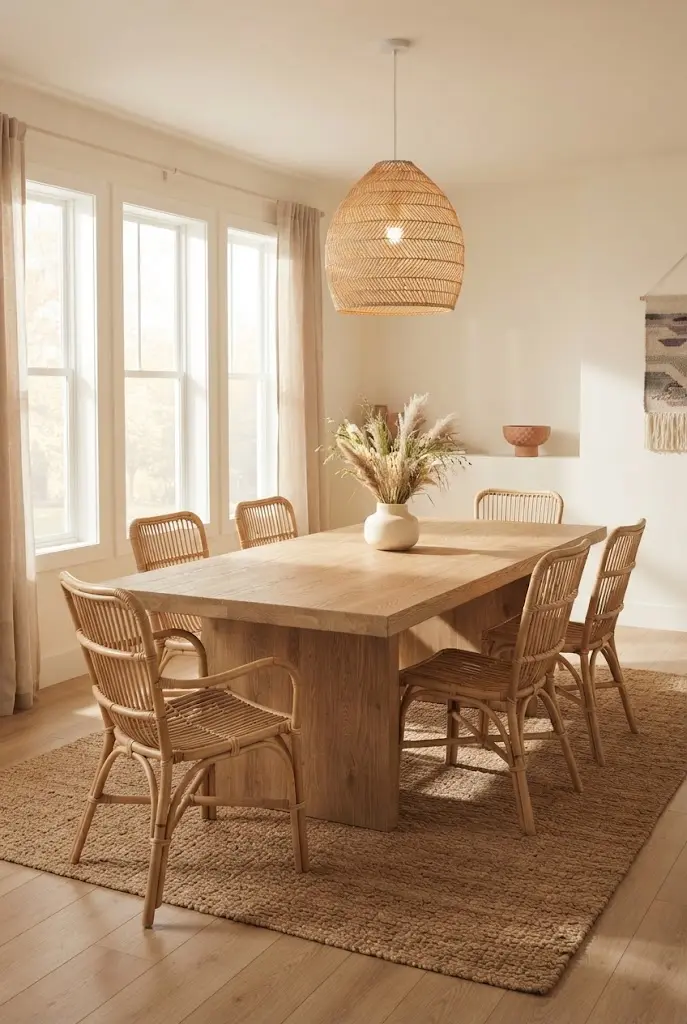
A botanical wall can make an everyday dining area feel more inviting and connected to nature. Use wall shelves, hanging planters, or a combination of both to create a layered arrangement. Plants with different leaf shapes can provide visual contrast around the dining table. Natural wood furniture pairs especially well with greenery and neutral walls. Keep the plants positioned high enough that they do not interfere with seating or dining activities. A large botanical display can serve as artwork while also adding texture to the room. Choose plants according to the available light near the dining area. Warm pendant lighting can make the greenery feel especially cozy in the evening. Keep the rest of the wall decor simple so the plant display remains the focal point. This approach can turn an ordinary dining room into a warm, natural gathering space.