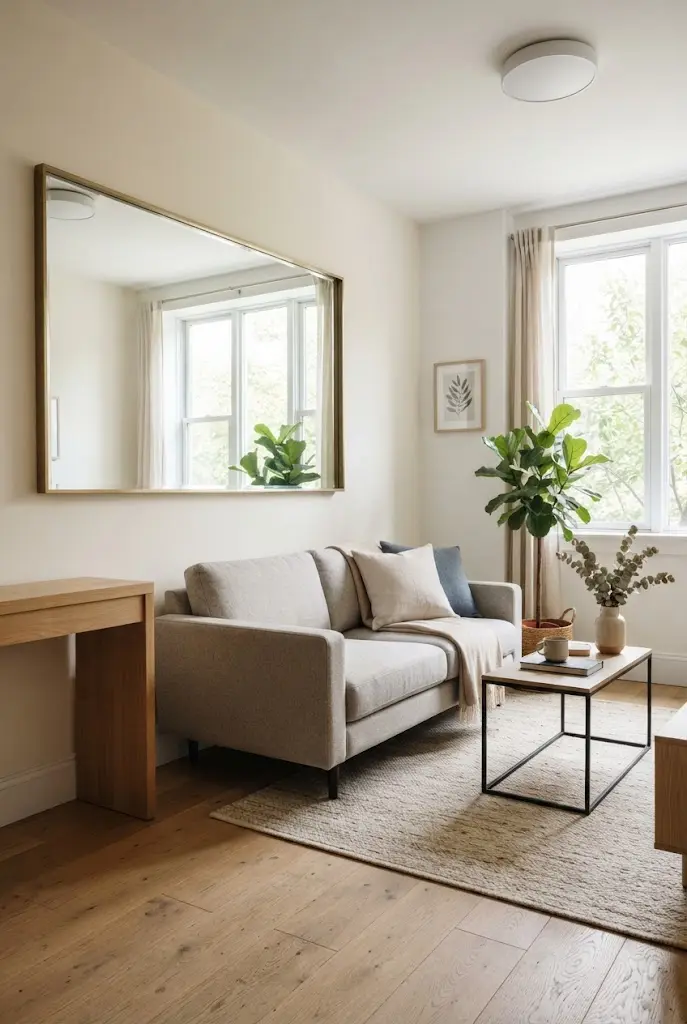
14 Easy-Care Plants for a Fresh and Beautiful Windowsill
1. Pothos for Relaxed Trailing Greenery
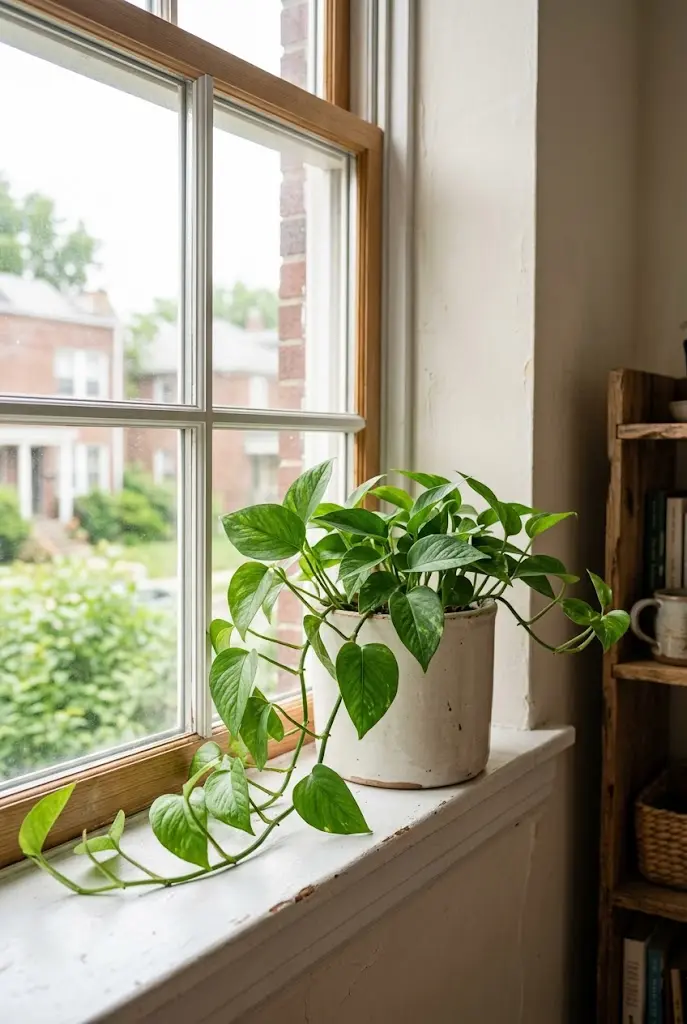
Pothos is a practical choice when you want greenery that looks abundant without requiring a complicated routine. Its heart-shaped leaves and trailing stems can soften the hard lines of a window frame, particularly when the pot is positioned near one end of the sill.
Bright, indirect light generally encourages fuller growth and stronger variegation in patterned varieties. Pothos can tolerate lower-light conditions, but growth may become slower. Avoid leaving the plant in constantly wet soil; a container with drainage makes moisture management much easier.
On a narrow windowsill, periodically trimming longer vines helps keep the plant proportional to the space. You can let a few stems cascade beside the window while guiding others along the sill for a naturally layered look.
2. Snake Plant for Strong Vertical Shape
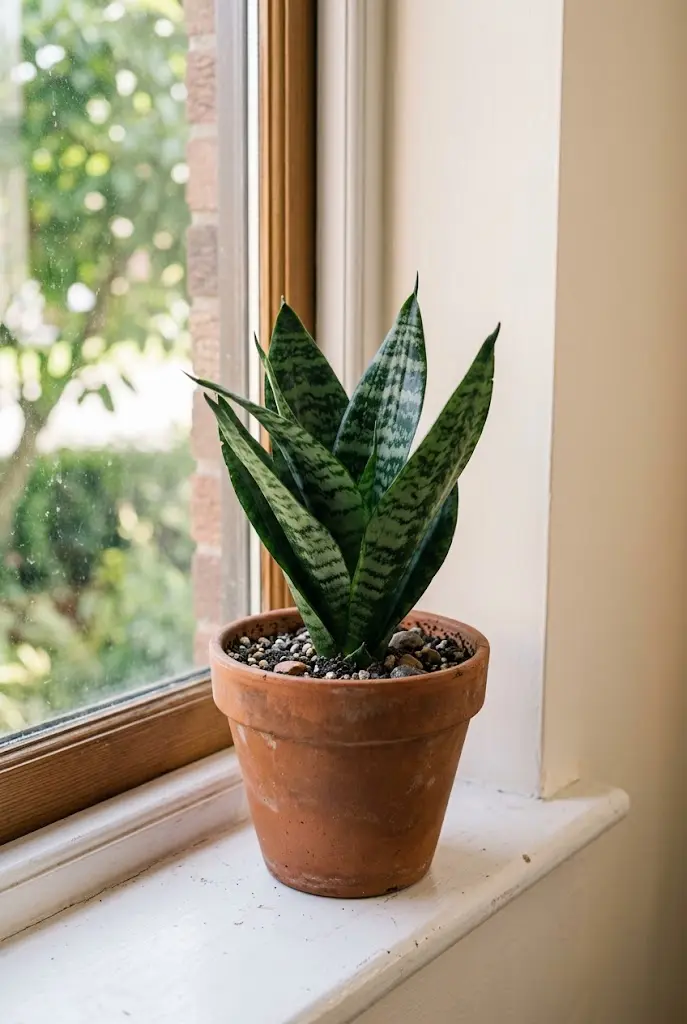
A compact snake plant brings structure to a windowsill because its leaves grow upward rather than spreading widely across the surface. That makes smaller varieties particularly useful where sill depth is limited.
Snake plants handle a range of indoor light conditions, although brighter indirect light can support stronger growth. Their thick leaves store moisture, so frequent watering is usually unnecessary. Allowing the potting mix to dry between waterings helps reduce the problems associated with consistently soggy soil.
Choose a compact cultivar rather than a tall floor-sized specimen for a standard windowsill. A low, weighty pot also helps create a stable base.
3. Aloe Vera for a Sunny Kitchen Window
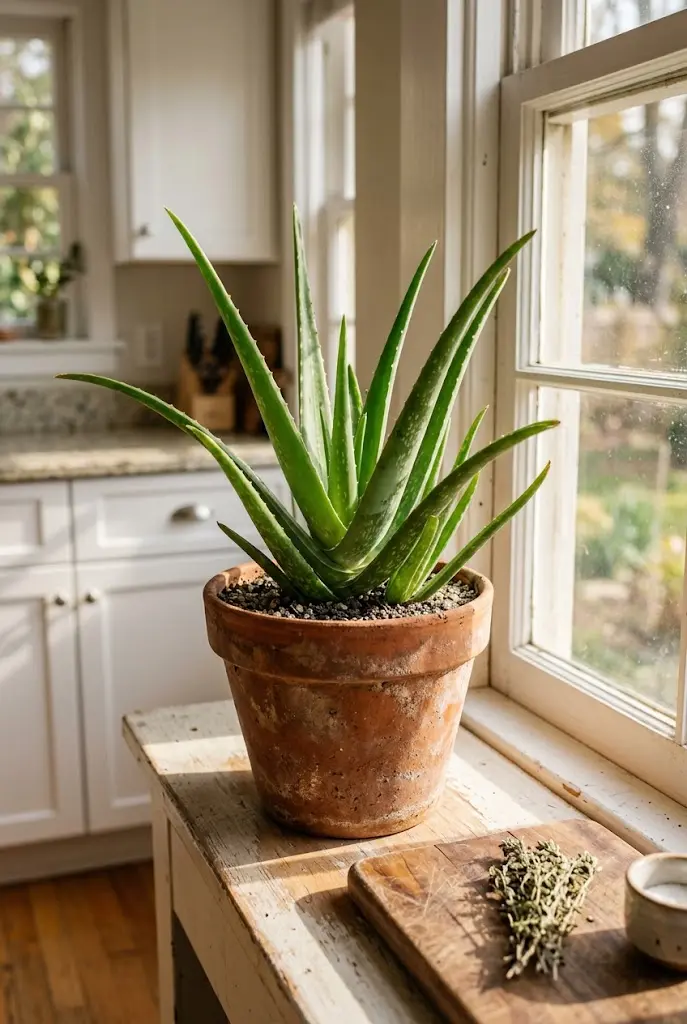
Aloe vera combines sculptural foliage with relatively straightforward care. Its fleshy, pointed leaves make it visually different from softer trailing houseplants, which can help create variety when several plants share one sill.
A bright window is generally the better location for aloe. Because its succulent leaves store water, the plant should not be treated like a moisture-loving tropical houseplant. Use a well-draining growing medium and allow it to dry appropriately between waterings.
A simple clay or terracotta container works especially well visually and practically. Keep the mature size in mind when choosing a location, since aloe can eventually need more room than a tiny starter plant suggests.
4. African Violet for a Touch of Color
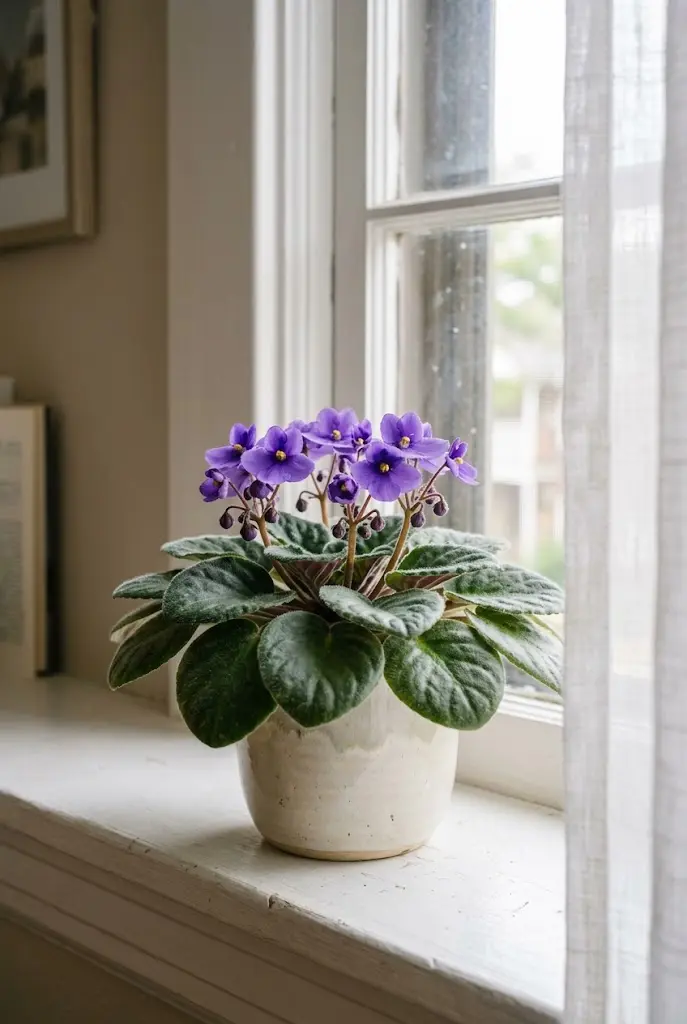
Not every windowsill garden needs to rely entirely on green foliage. African violets can introduce compact clusters of colorful flowers without occupying the amount of space required by many larger flowering houseplants.
They generally appreciate bright, indirect light rather than harsh prolonged sun. Consistent but careful moisture management is important; avoid keeping the growing medium saturated.
Because African violets remain relatively compact, several small plants can create a charming display without overwhelming a standard sill. Let the flowers provide the color and keep the containers comparatively simple.
5. Spider Plant for Airy, Arching Leaves
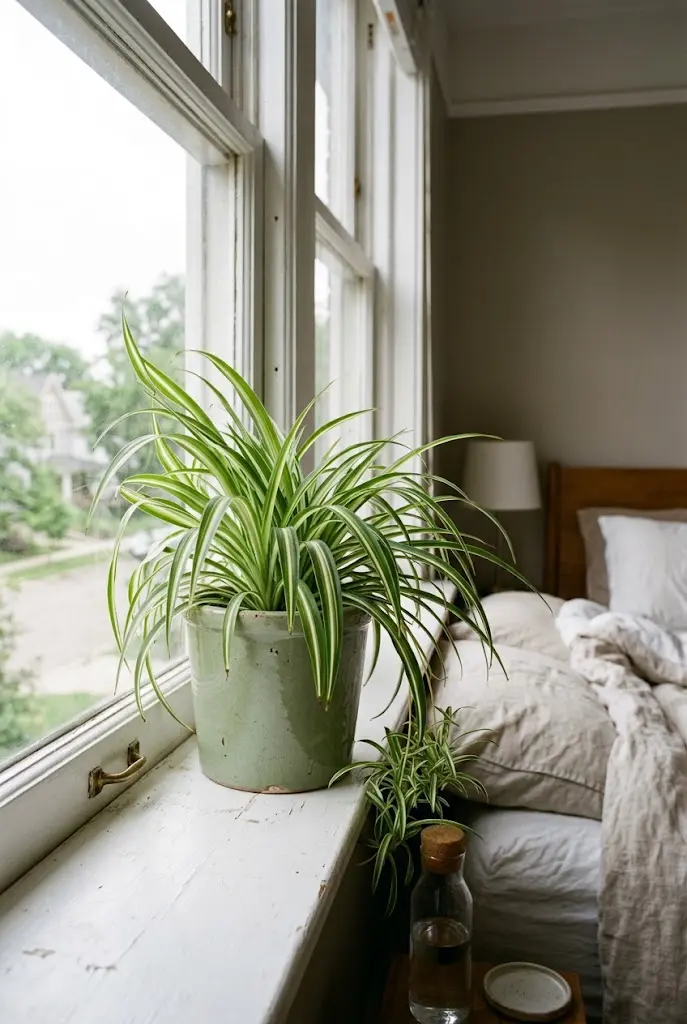
Spider plants provide a completely different silhouette from upright succulents. Their long, narrow leaves curve outward, creating movement and making even a single plant look lively.
Bright, indirect light is a useful starting point. The plant can adapt to different indoor conditions, but intense direct sun may be harder on its foliage. Water according to the condition of the growing medium rather than following a rigid calendar.
A young spider plant works especially well on a wider windowsill. As it develops longer stems and plantlets, consider allowing them to fall over the front or side rather than crowding them against the glass.
6. Haworthia for the Smallest Sills
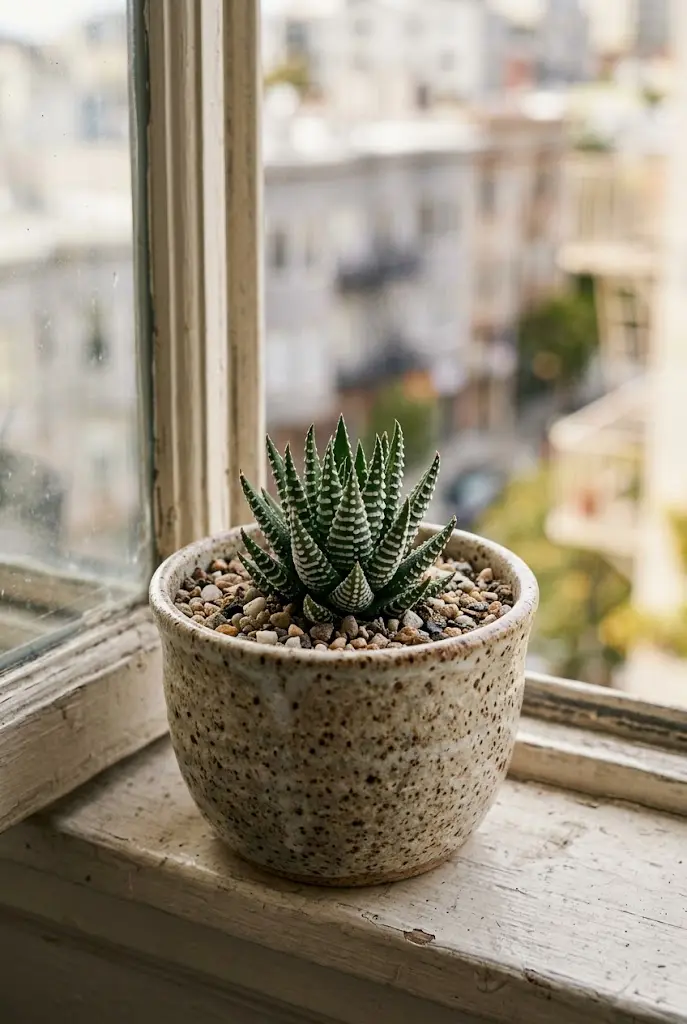
When available surface area is the main limitation, haworthia can be particularly useful. Many types stay compact and form tidy rosettes of thick leaves, giving you the sculptural quality of a succulent without requiring a large container.
Give it plenty of appropriate light while being cautious about suddenly exposing a plant accustomed to indoor conditions to extremely intense sun. A fast-draining succulent potting mix and a pot with a drainage hole are sensible choices.
Its small footprint also makes haworthia useful for grouping. Pair it with two other miniature plants in different pot shapes rather than filling the sill with many tiny containers.
7. Peperomia for Compact, Interesting Foliage
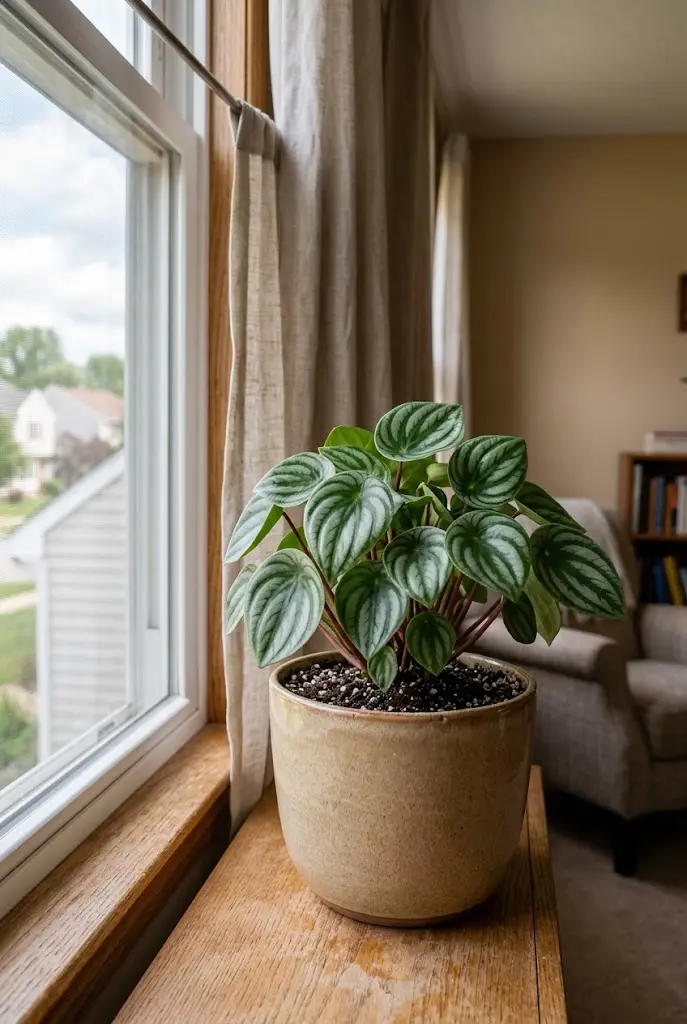
Peperomia varieties offer plenty of visual choice in a relatively small package. Depending on the type, leaves may be rounded, rippled, glossy, striped, or deeply textured.
Most windowsill displays benefit from giving peperomia bright, indirect light rather than treating it as a full-sun plant. Avoid oversized containers that hold excessive moisture around a relatively small root system.
Peperomia is especially attractive when you want your windowsill garden to feel curated rather than crowded. One interesting foliage variety can act as a focal point among simpler green plants.
8. Jade Plant for a Miniature Tree Effect
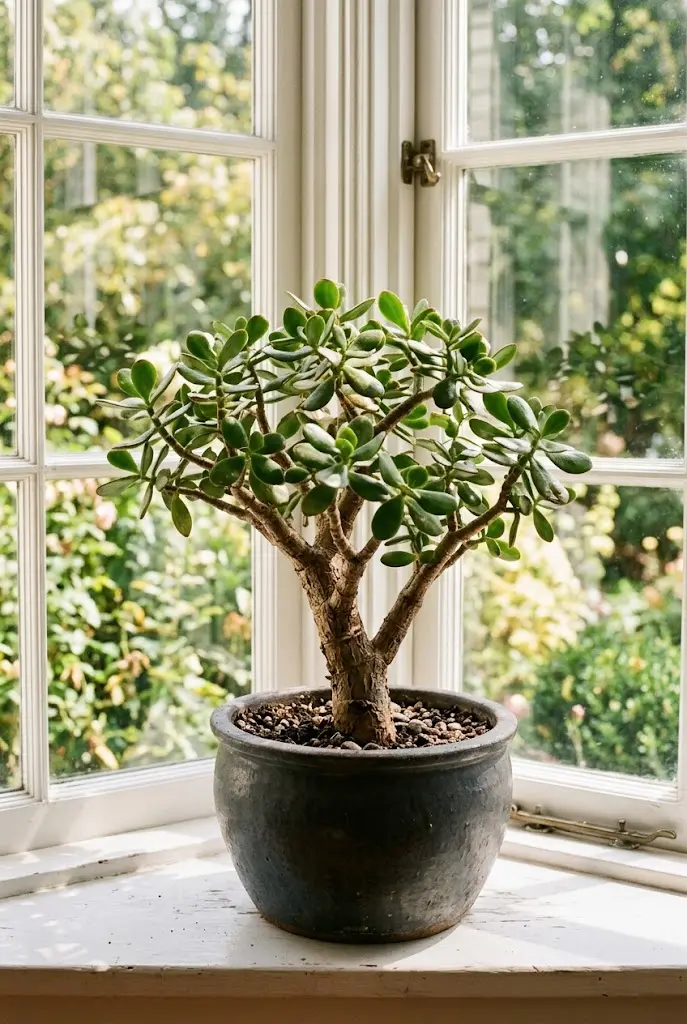
A mature jade plant develops thick stems and fleshy leaves that can give it the appearance of a miniature tree. This makes it a strong choice when you prefer one substantial-looking windowsill plant over a collection of delicate foliage.
Jade plants generally benefit from abundant light. As with other succulents, good drainage matters, and constantly wet soil is not desirable.
Turn the container periodically if the growth begins leaning strongly toward the light. A substantial ceramic or terracotta pot can balance the visual weight of a more mature specimen while providing stability.
9. ZZ Plant for a Polished Foliage Display
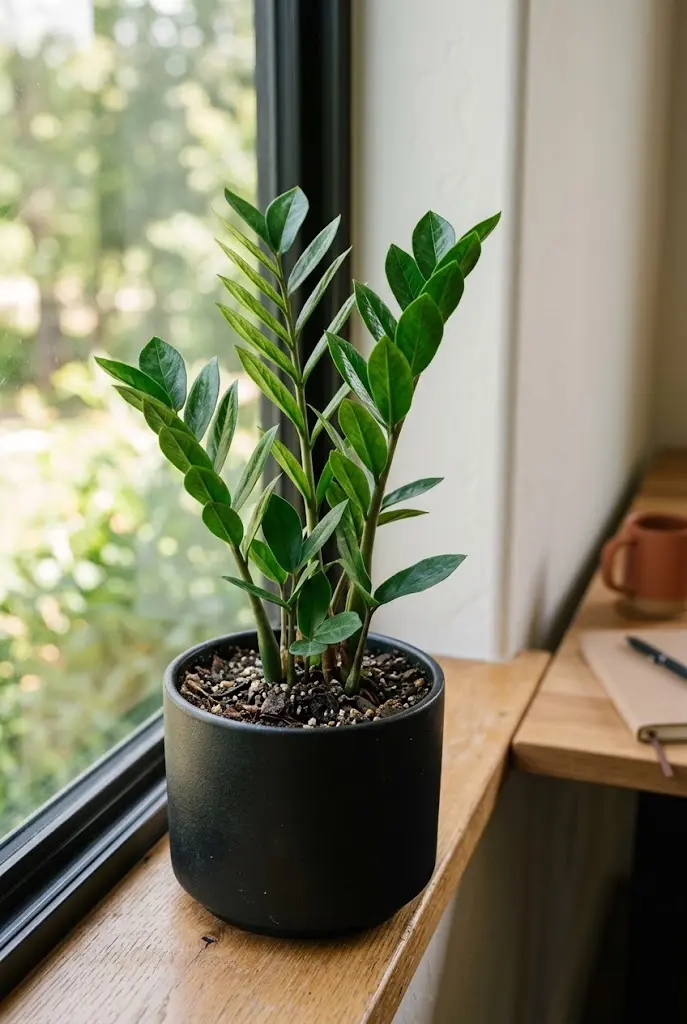
A young ZZ plant brings glossy, structured foliage to a windowsill and can work particularly well in rooms where you want greenery to feel clean and understated.
ZZ plants are known for adapting to a range of indoor light levels, although a bright location without excessive harsh exposure can encourage healthy-looking growth. Their underground rhizomes store water, making overwatering an important issue to avoid.
For a windowsill, start with a smaller specimen. Mature plants can become too large for the location, at which point moving the plant to a nearby stand or floor planter will give it more appropriate room.
10. Burro’s Tail for Cascading Succulent Texture
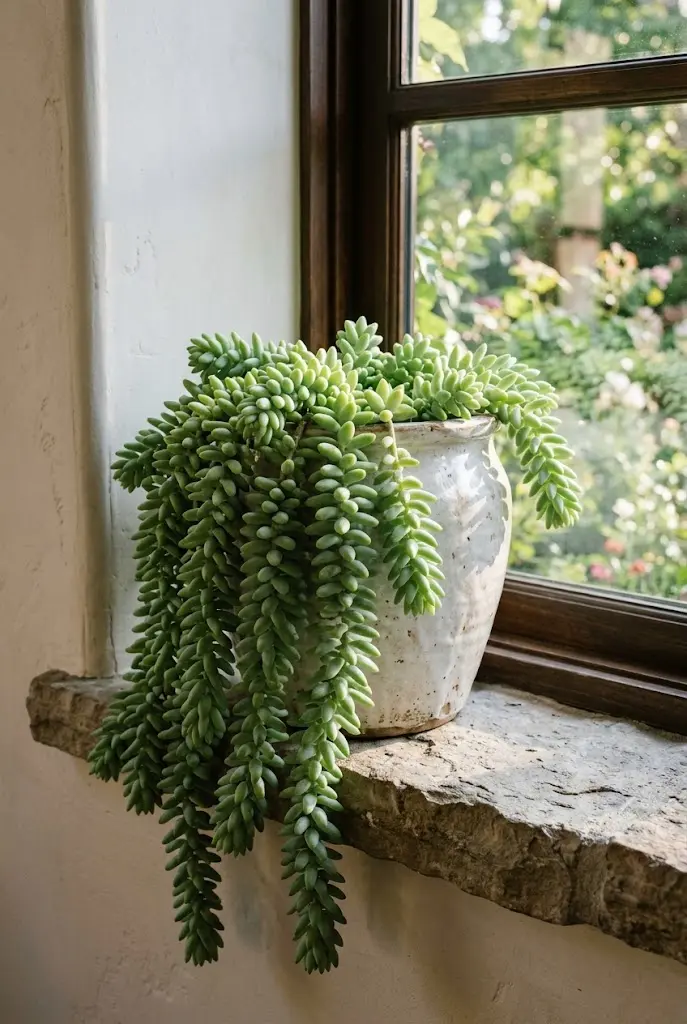
Burro’s tail can turn the edge of a sunny windowsill into a cascading display. Its stems are covered with densely arranged fleshy leaves, giving it a distinctive texture that looks especially effective when the container sits slightly above or near the edge of the sill.
Provide strong appropriate light and excellent drainage. The fleshy leaves and stems are relatively delicate, so position the plant where it will not constantly be bumped while curtains are opened or windows are used.
Instead of moving it frequently, choose a suitable location from the beginning and let the stems gradually become part of the window composition.
11. Chinese Money Plant for Playful Round Leaves
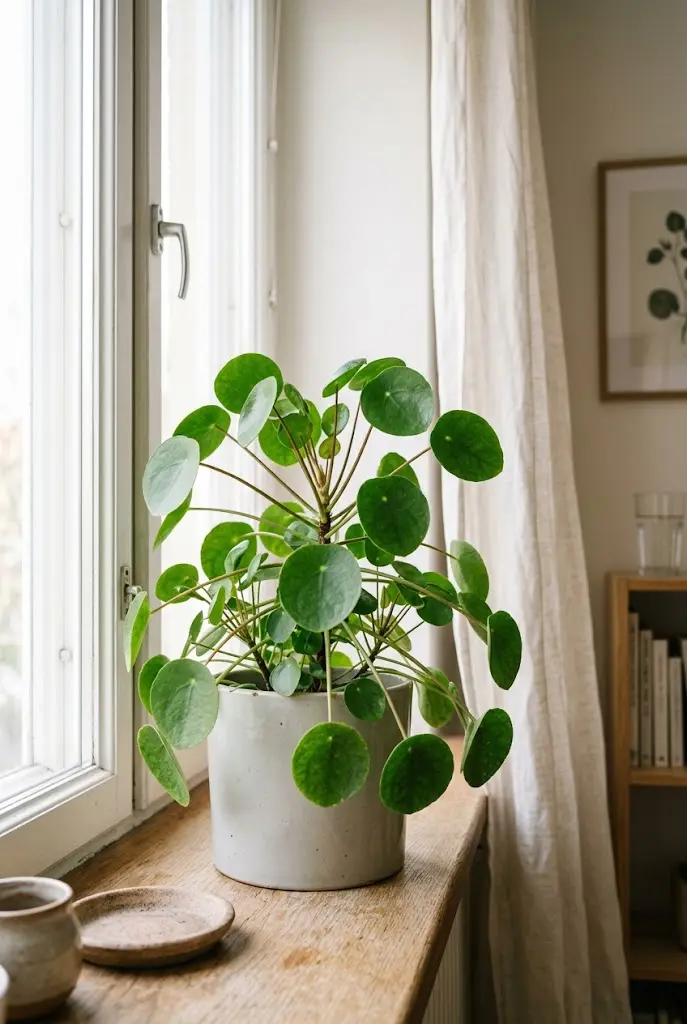
The Chinese money plant, or Pilea peperomioides, has round leaves held on slender stems, giving it a light, graphic appearance. It works particularly well in modern or Scandinavian-inspired interiors because the foliage itself provides most of the decoration.
Bright, indirect light is generally suitable. Because plants naturally orient themselves toward the light, rotating the pot occasionally can help encourage a more balanced overall shape.
Use a container that leaves room for drainage rather than choosing purely by appearance. A simple pot also prevents the distinctive circular leaves from competing with an overly decorative pattern.
12. Echeveria for a Neat Rosette
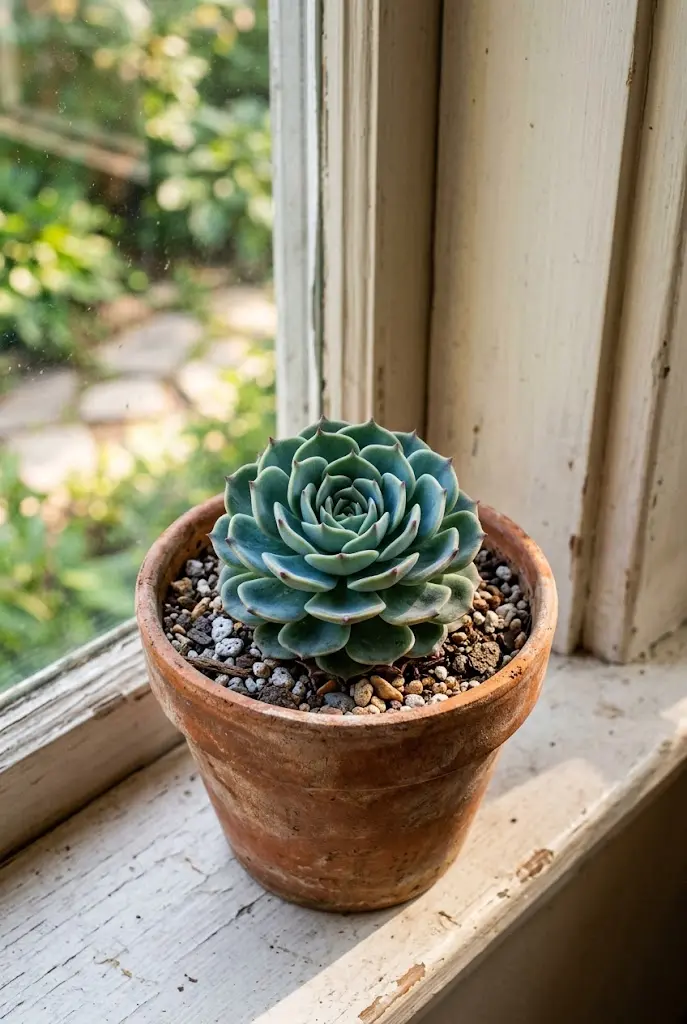
Echeveria offers a compact, highly defined rosette that works beautifully when you want a windowsill plant to look almost sculptural. Different varieties offer subtle variations in green, blue-green, gray-green, and softly tinted foliage.
Light is especially important for maintaining compact succulent growth, so reserve a suitably bright window for this plant. Use a fast-draining medium and avoid treating it like a plant that requires constantly moist soil.
A shallow terracotta pot can emphasize the rosette shape without visually overwhelming it. One well-grown specimen often looks more intentional than filling the container with unrelated decorative objects.
13. Heartleaf Philodendron for Soft Trailing Foliage
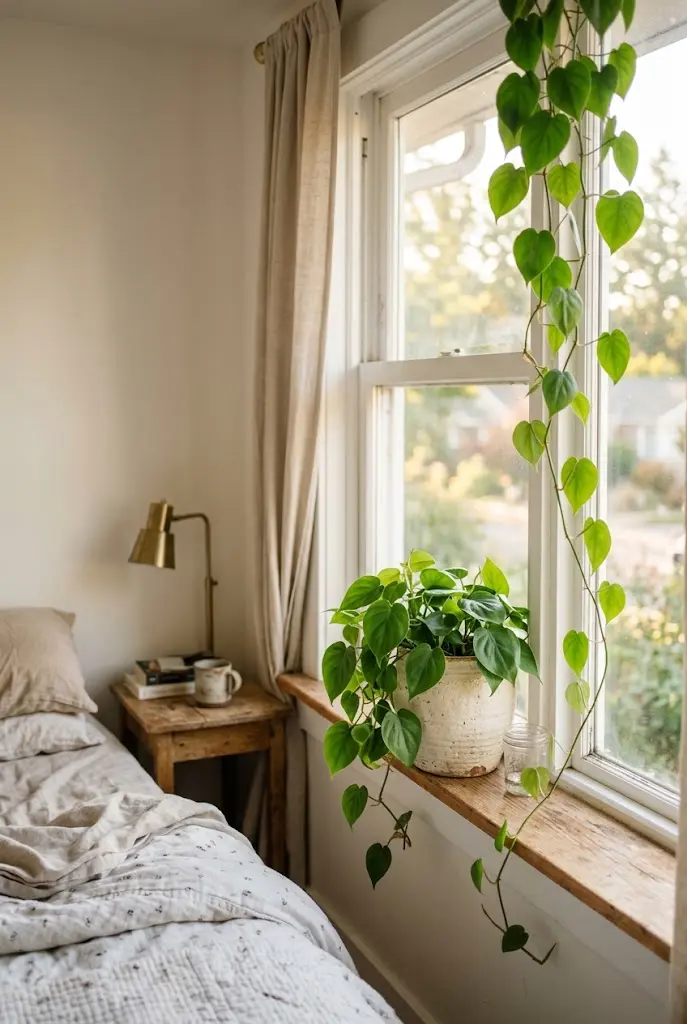
Heartleaf philodendron can soften a window in much the same way as pothos, but its foliage creates its own distinctive look. Allowing a few vines to trail naturally makes the plant particularly useful for a bedroom, reading nook, or relaxed living area.
Bright, indirect light is a practical location choice, although it can adapt to less intense indoor light. Water based on the condition of the growing medium rather than simply adding water on the same day every week.
If vines become excessively long or sparse, pruning can help maintain a fuller, windowsill-friendly form. Give the leaves enough room to hang freely instead of wedging them tightly between objects.
14. Create a Mixed Windowsill Herb Garden
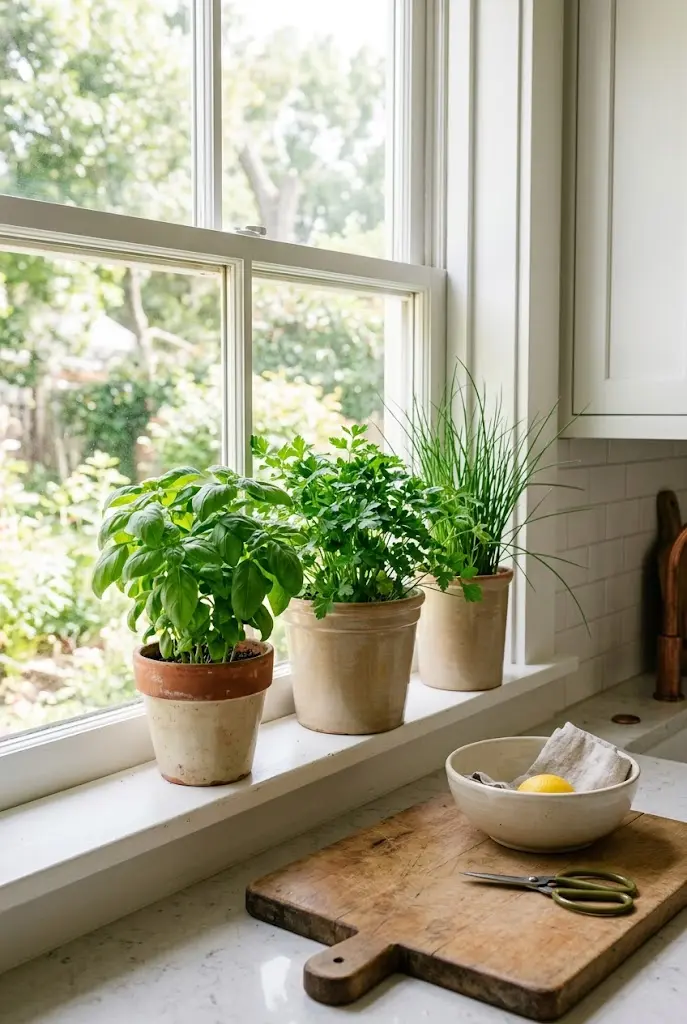
For the final option, turn a bright kitchen window into a small collection of useful herbs rather than choosing another ornamental houseplant. Basil, parsley, chives, and other commonly grown culinary herbs can create a fresh, informal look while keeping greenery close to the cooking area.
The exact light and watering requirements vary by herb, so avoid treating every pot identically simply because they share the same windowsill. A sufficiently sunny window is particularly important for many culinary herbs, and containers should have effective drainage.
Use separate pots rather than packing plants with different needs into one decorative container. Three or four coordinated pots can still look unified while allowing each herb to be managed individually.
It is also worth accepting that indoor herbs are not necessarily permanent decor. Some may need replacing, pruning, harvesting, or moving as their growth and seasonal light conditions change.
How to Keep a Windowsill Garden Looking Its Best
The easiest way to maintain an attractive windowsill collection is to choose plants for the window rather than choosing plants first and hoping they adapt. Observe how much direct sunlight reaches the sill and how that changes throughout the day and year.
Drainage also deserves attention. Decorative pots can look beautiful, but excess water needs somewhere to go. Where necessary, use a nursery pot with drainage inside a decorative outer container, removing excess water rather than allowing the inner pot to sit in it.
Avoid squeezing too many plants together. Leaving visible space between containers allows individual foliage shapes to stand out and makes watering, pruning, cleaning, and checking plants much easier.
Finally, remember that windows can create changing conditions. A sill that feels comfortable in spring may become significantly hotter in strong summer sun or colder during winter. Moving a plant a short distance away from the glass can sometimes be more sensible than insisting it stay in exactly the same position year-round.
Choosing Plants for Different Windows
Bright, sunny windows: Succulents such as aloe, jade, haworthia, and echeveria are natural candidates when the available light suits them.
Bright indirect light: Pothos, peperomia, pilea, spider plant, African violet, and heartleaf philodendron can be useful options depending on the precise conditions.
Lower-light situations: Snake plants and ZZ plants are comparatively adaptable, although low light should not be confused with a completely dark corner.
Instead of relying only on compass direction, observe the actual light reaching your particular window. Nearby buildings, trees, roof overhangs, blinds, and seasonal changes can dramatically affect exposure.
A Simple Way to Style Your Windowsill
You do not need fourteen plants on one window. In fact, a smaller arrangement often looks more considered.
Try combining one upright plant, one rounded or rosette-shaped plant, and one trailing plant. The contrasting silhouettes create visual interest without requiring decorative clutter. Repeat one or two pot materials—such as terracotta and warm-white ceramic—to make different plants feel connected.
For an especially narrow sill, choose miniature plants and leave enough clearance to operate the window safely. If the sill becomes crowded as plants mature, move the largest specimen elsewhere rather than continually adding smaller pots around it.
A successful windowsill garden should ultimately work with your home and routine. Choose plants whose light, space, and maintenance requirements match the conditions you can realistically provide, and even a small window can become a fresh green focal point.